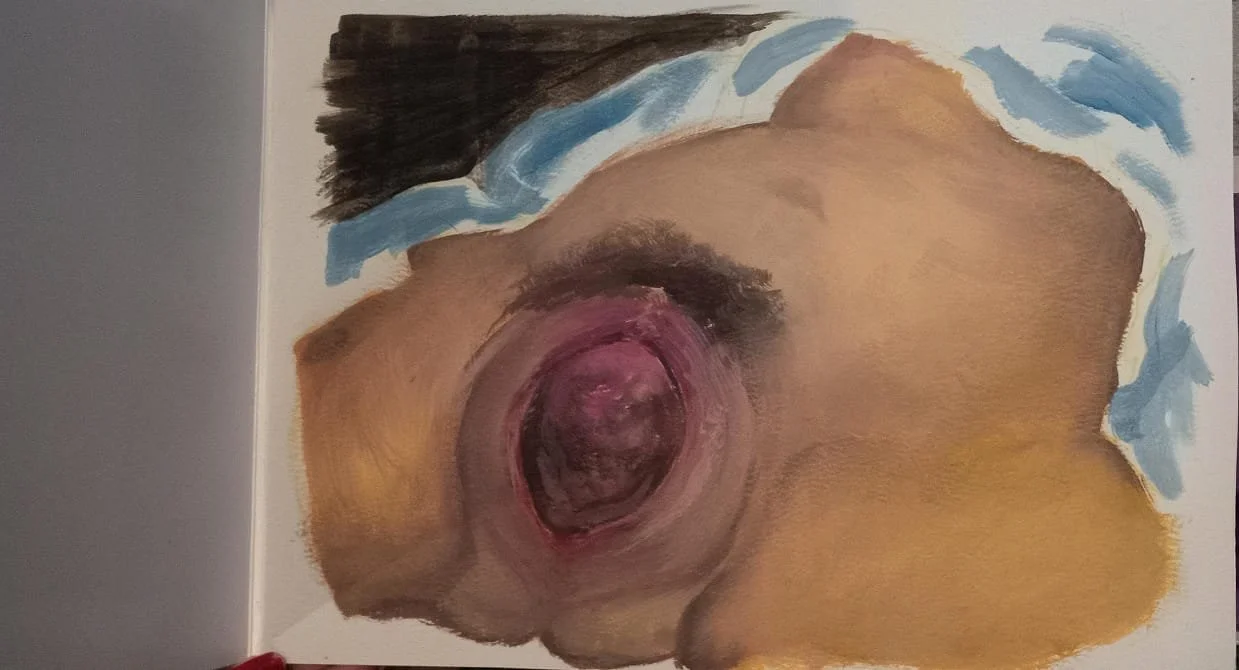
El origen es una reactivación contemporánea, crítica y política de El origen del mundo (1866), la célebre pintura de Gustave Courbet conservada en el Musée d’Orsay de París. La obra reproduce y transforma la imagen original para desplazarla de su posición histórica y cultural. Si Courbet convirtió la vulva en una representación del origen, Azcona introduce en esa imagen aquello que tradicionalmente ha sido excluido: el parto, la sangre, la apertura del cuerpo y la violencia inherente al nacimiento. La obra parte también de las numerosas reproducciones y reinterpretaciones realizadas por artistas como ORLAN. Sin embargo, frente a una tradición de imágenes que muestran la vulva cerrada, inmóvil y separada del acto de parir, El origen plantea una pregunta esencialmente política: si se habla del origen del mundo, ¿por qué no mostrar un cuerpo abierto, en el momento preciso de originar?
La pieza no constituye una reproducción literal de la obra de Courbet, sino una reactivación transformada desde la experiencia autobiográfica de Azcona. Su ejecución se desarrolla entre 2024 y 2026 y será presentada como exposición individual en octubre de 2026. La obra ha sido fechada entre 1988 y 2024, ya que toma como punto de partida el nacimiento de Abel Azcona y los acontecimientos que lo precedieron y sucedieron.
Azcona nació el 1 de abril de 1988, fruto de un embarazo no deseado. Pocos días después de su nacimiento, su madre —una joven en situación de prostitución y con problemas de politoxicomanía— lo abandonó. Desde entonces, la búsqueda de la figura materna ha atravesado de manera constante su vida y su práctica artística durante más de treinta y cinco años. El origen convierte así la imagen del nacimiento en un territorio de confrontación política, autobiográfica y simbólica. El cuerpo que aparece no es un cuerpo idealizado ni pasivo, sino un cuerpo que pare, sangra y origina verdaderamente. La obra aborda de este modo la violencia de un nacimiento no elegido y la herida originaria que inaugura, al mismo tiempo, la vida y la búsqueda de una madre.
The Origin is a contemporary, critical and political reactivation of The Origin of the World (1866), Gustave Courbet’s celebrated painting held at the Musée d’Orsay in Paris. The work reproduces and transforms the original image in order to shift its historical and cultural position. If Courbet turned the vulva into a representation of origin, Azcona introduces what has traditionally been excluded from that image: birth, blood, the opening of the body and the violence inherent in being born. The work also engages with the numerous reproductions and reinterpretations created by artists such as ORLAN. Yet, in contrast to a tradition of images that present the vulva as closed, still and detached from the act of giving birth, The Originposes an essentially political question: if this is meant to represent the origin of the world, why not show an open body at the precise moment of originating?
The piece is not a literal reproduction of Courbet’s painting, but a transformed reactivation rooted in Azcona’s autobiographical experience. Its execution took place between 2024 and 2026, and it will be presented as a solo exhibition in October 2026. The work is dated 1988–2024 because it takes Abel Azcona’s birth and the events surrounding it as its point of departure.
Azcona was born on 1 April 1988, following an unwanted pregnancy. A few days after his birth, his mother —a young woman who worked in prostitution and struggled with polydrug addiction— abandoned him. Since then, the search for the maternal figure has continuously shaped both his life and his artistic practice for more than thirty-five years.
The Origin therefore turns the image of birth into a political, autobiographical and symbolic territory of confrontation. The body that appears is neither idealised nor passive, but a body that gives birth, bleeds and truly originates. In this way, the work addresses the violence of an unchosen birth and the originary wound that inaugurates, at once, life and the search for a mother.
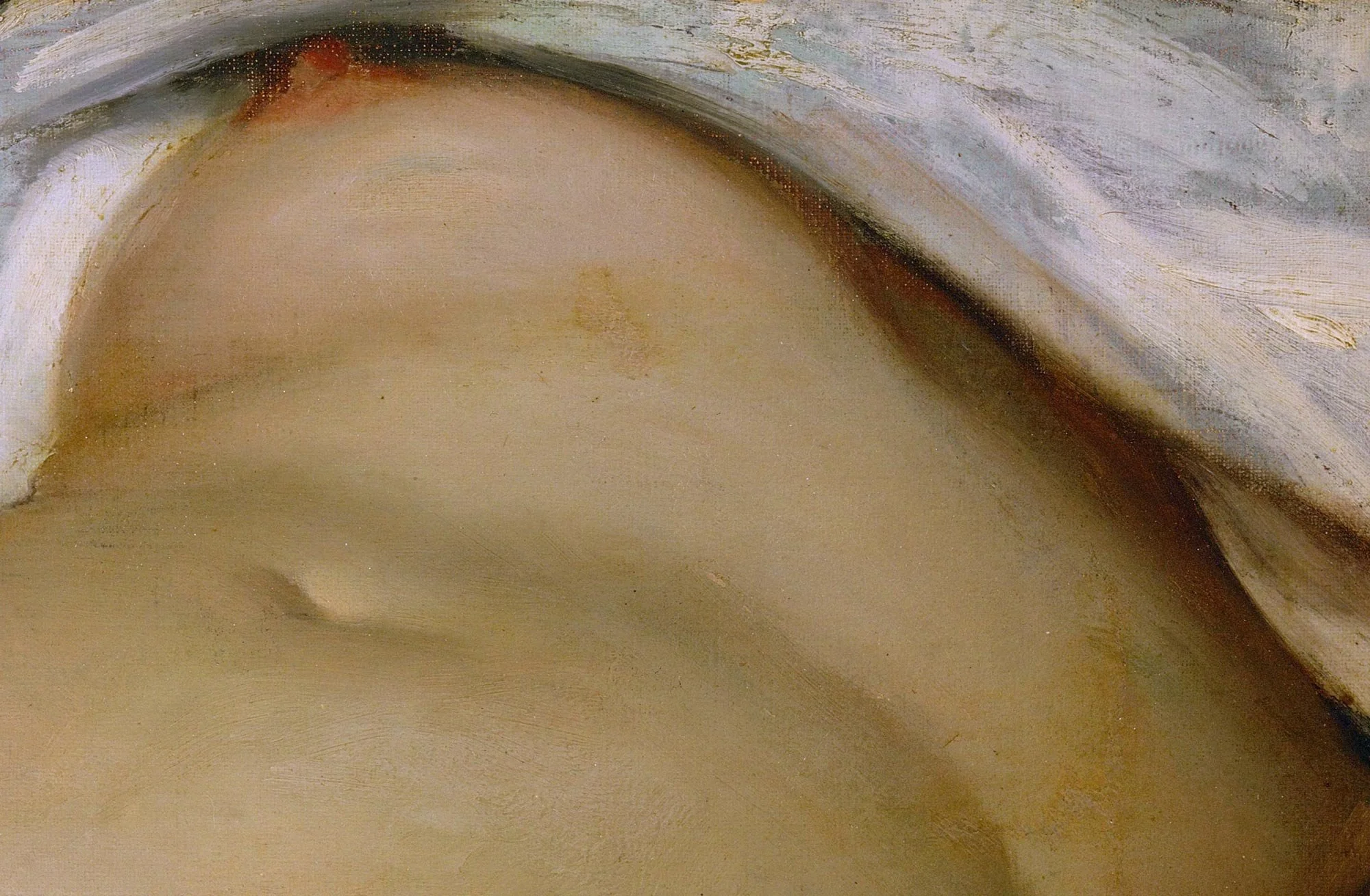
The work presented will be available at the end of the exhibition in October 2026 in Mexico City. / La obra expuesta estará disponible al finalizar la exposición, en octubre de 2026, en Ciudad de México.
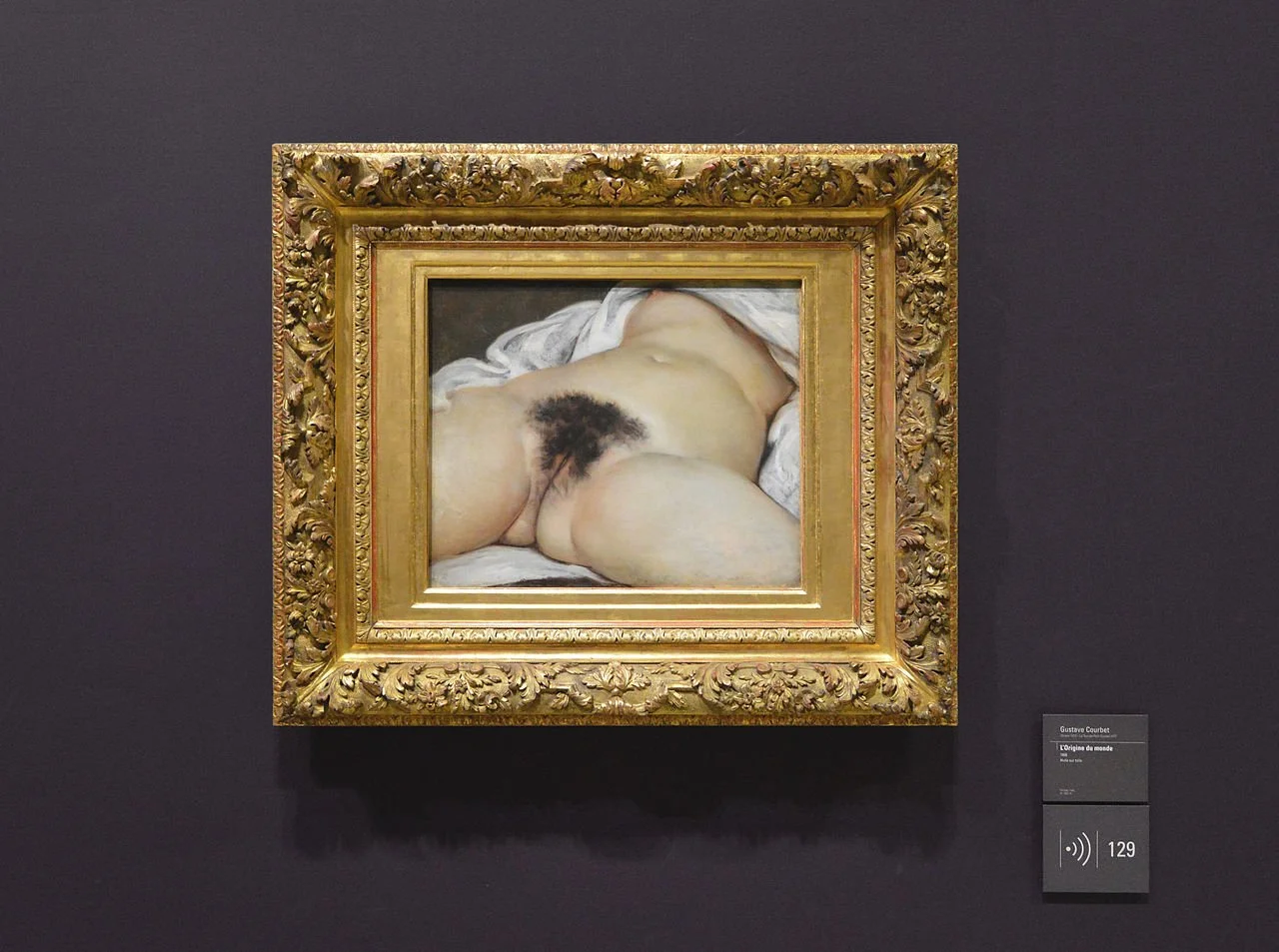
The Origin of the World (L’Origine du monde) is a painting made by Gustave Courbet in 1866. Probably commissioned by the Turkish-Egyptian diplomat Khalil-Bey, the work remained hidden behind a curtain for years in his private collection and circulated within highly restricted circles. Its frontal and radically desidealised representation of the female sex challenged the artistic and moral conventions of its time. After passing through several collections, it was acquired by the French state in 1995 and entered the collection of the Musée d’Orsay in Paris, where it became one of its most recognisable and controversial works.
El origen del mundo (L’Origine du monde) es una pintura realizada por Gustave Courbet en 1866. Encargada probablemente por el diplomático turco-egipcio Khalil-Bey, la obra permaneció durante años oculta tras una cortina en su colección privada y circuló en ámbitos muy restringidos. Su representación frontal y radicalmente desidealizada del sexo femenino desafió las convenciones artísticas y morales de su época. Tras pasar por distintas colecciones, fue adquirida por el Estado francés en 1995 mediante una dación y quedó integrada en la colección del Musée d’Orsay, en París, donde se convirtió en una de sus obras más reconocibles y controvertidas.
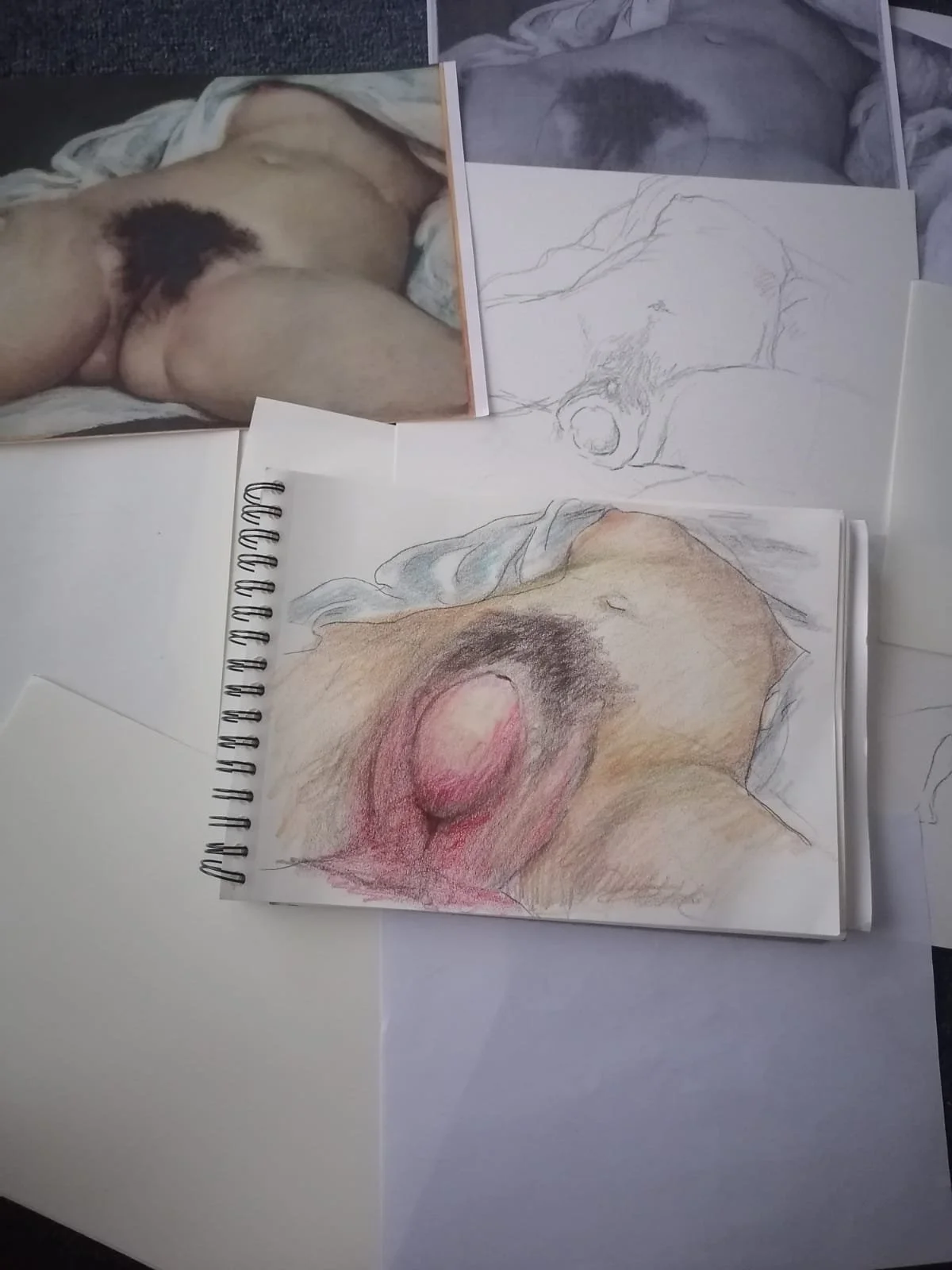
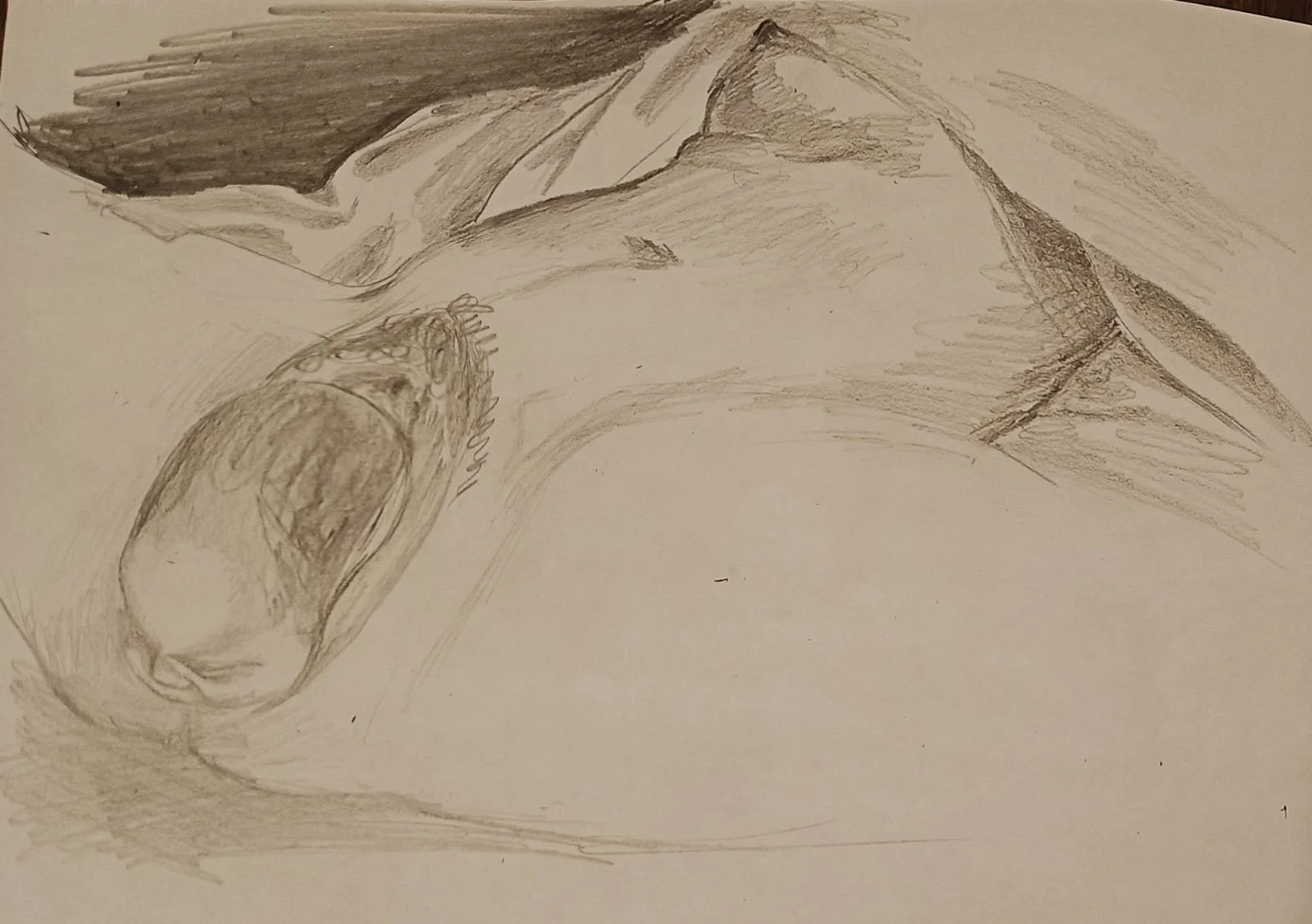
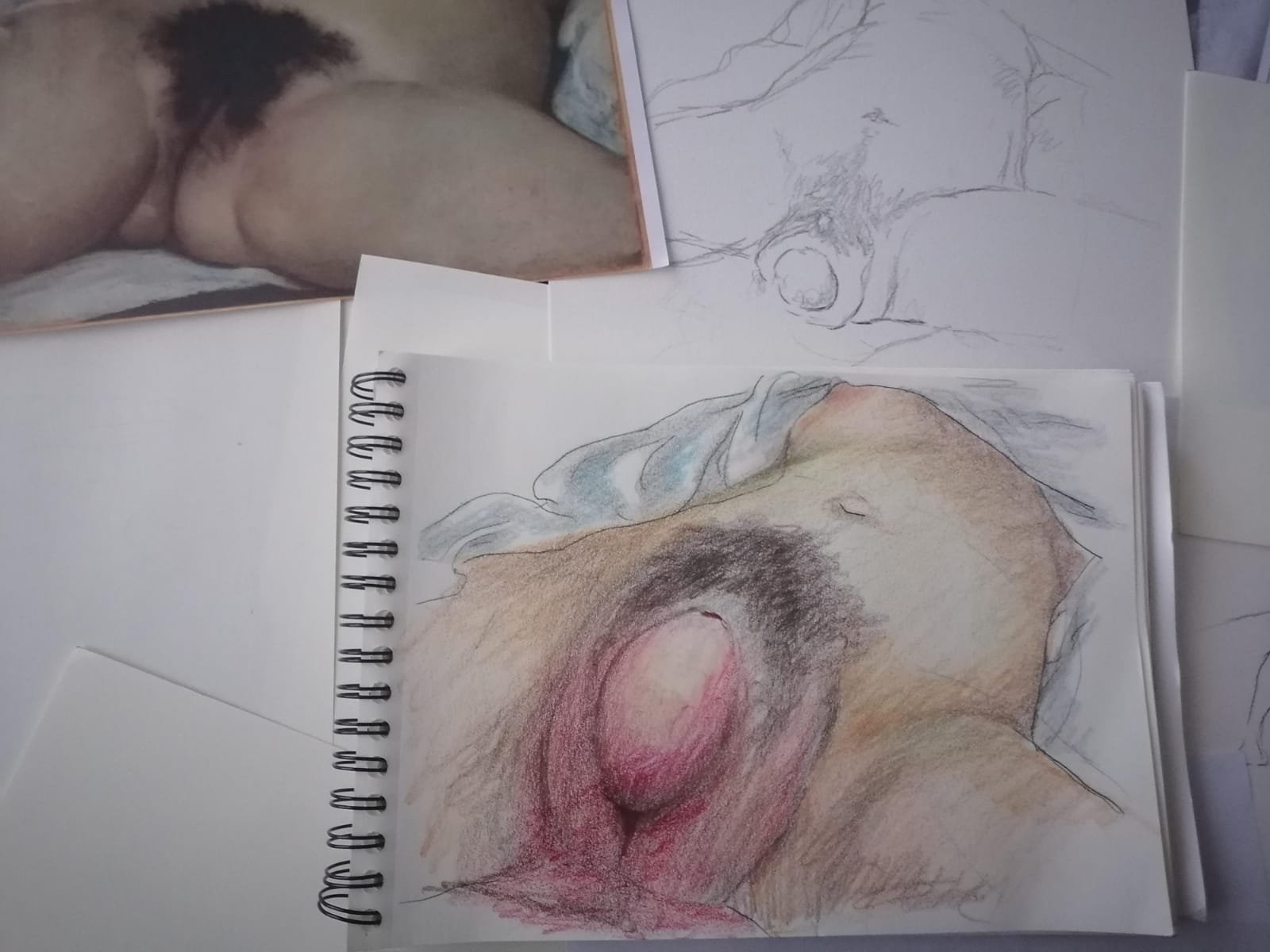
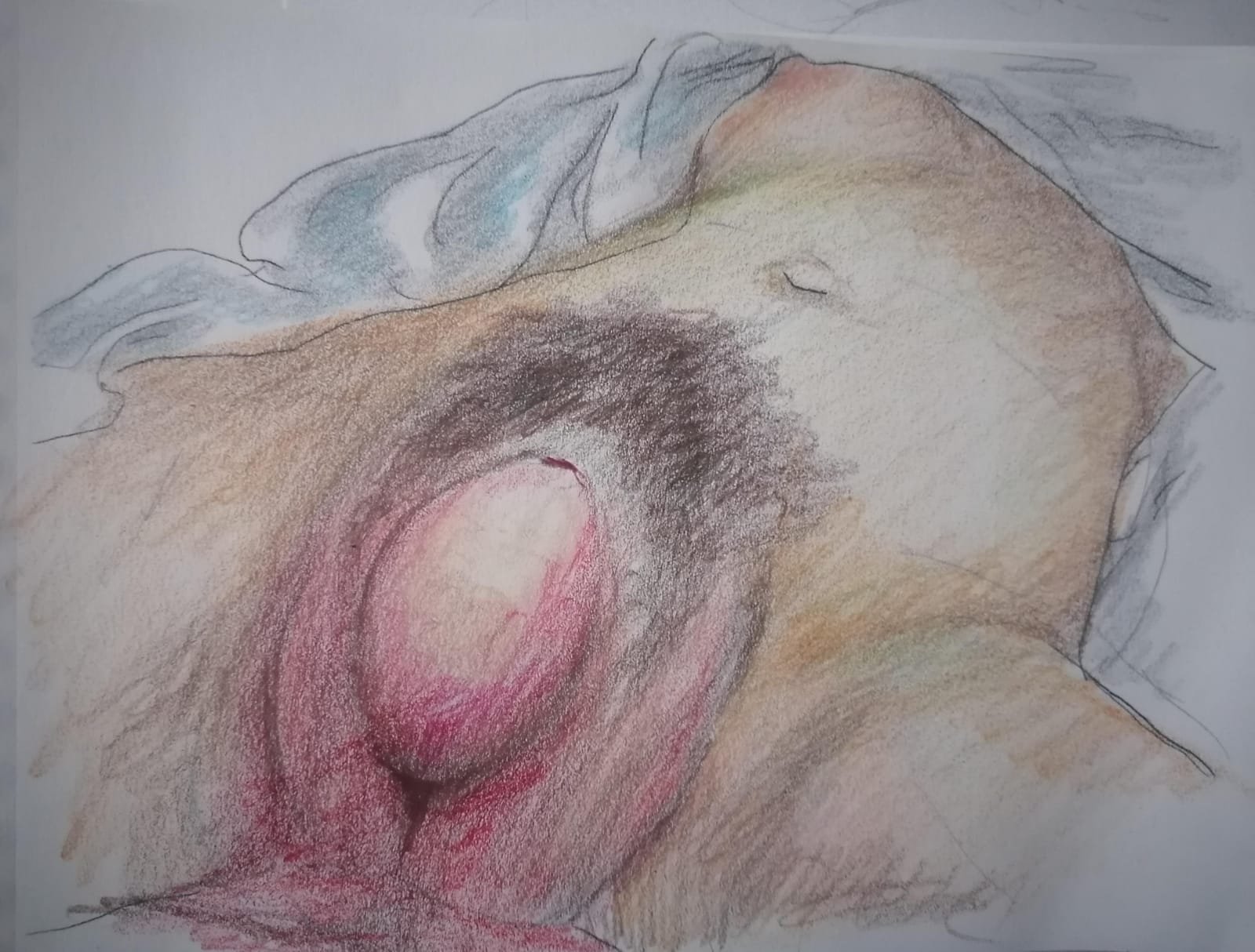
First sketches for The Origin of My World. / Primeros bocetos de «El origen de mi mundo».