“Not to have been born is best; and, once born, to return as quickly as possible to the place from which one came.”
—Sophocles, Oedipus at Colonus
«No haber nacido es lo mejor; y, una vez nacido, volver cuanto antes al lugar de donde se viene».
—Sófocles, Edipo en Colono

Plaque at the Montesa Clinic (1988–2020)
Object and performance.
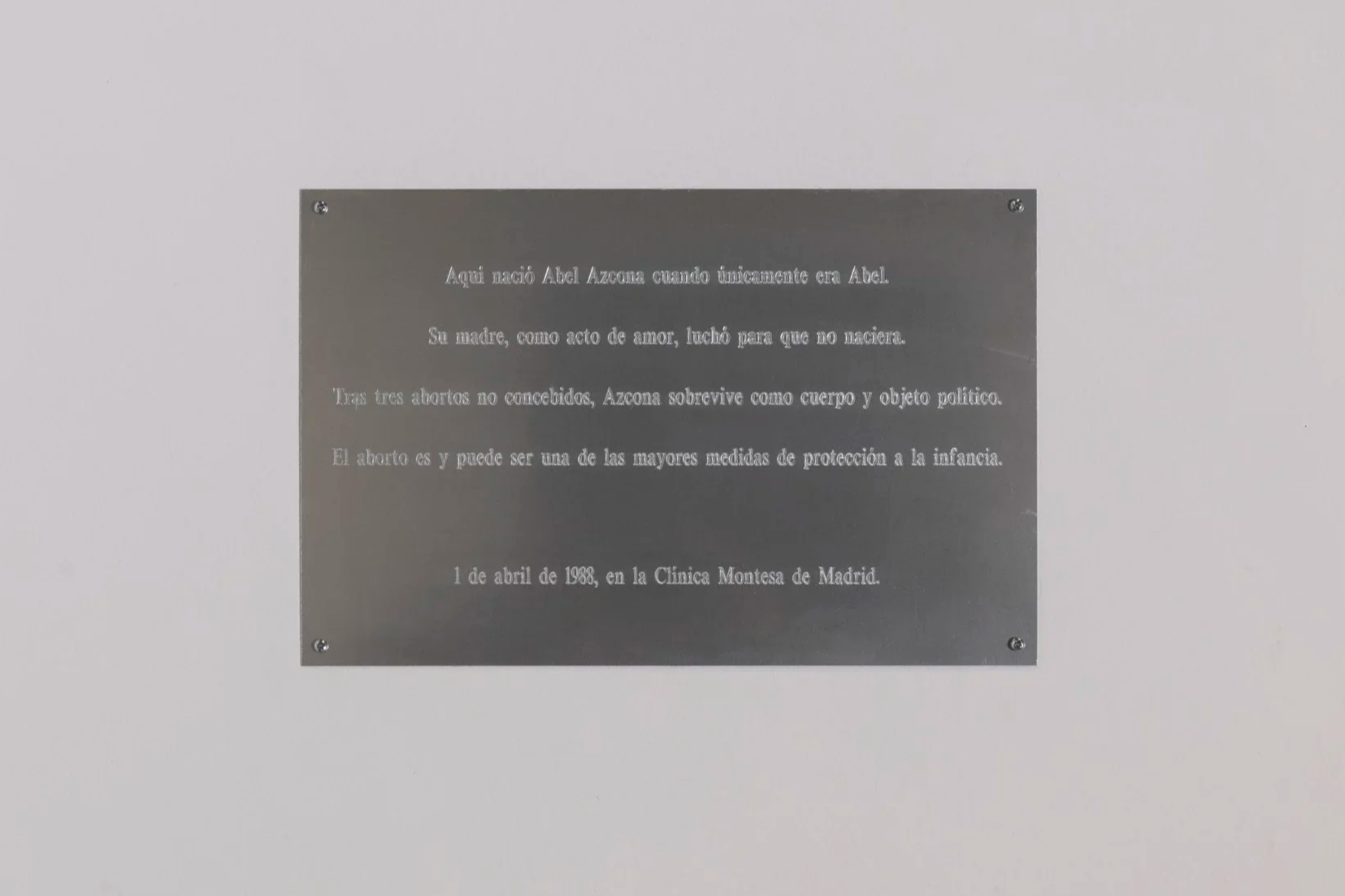
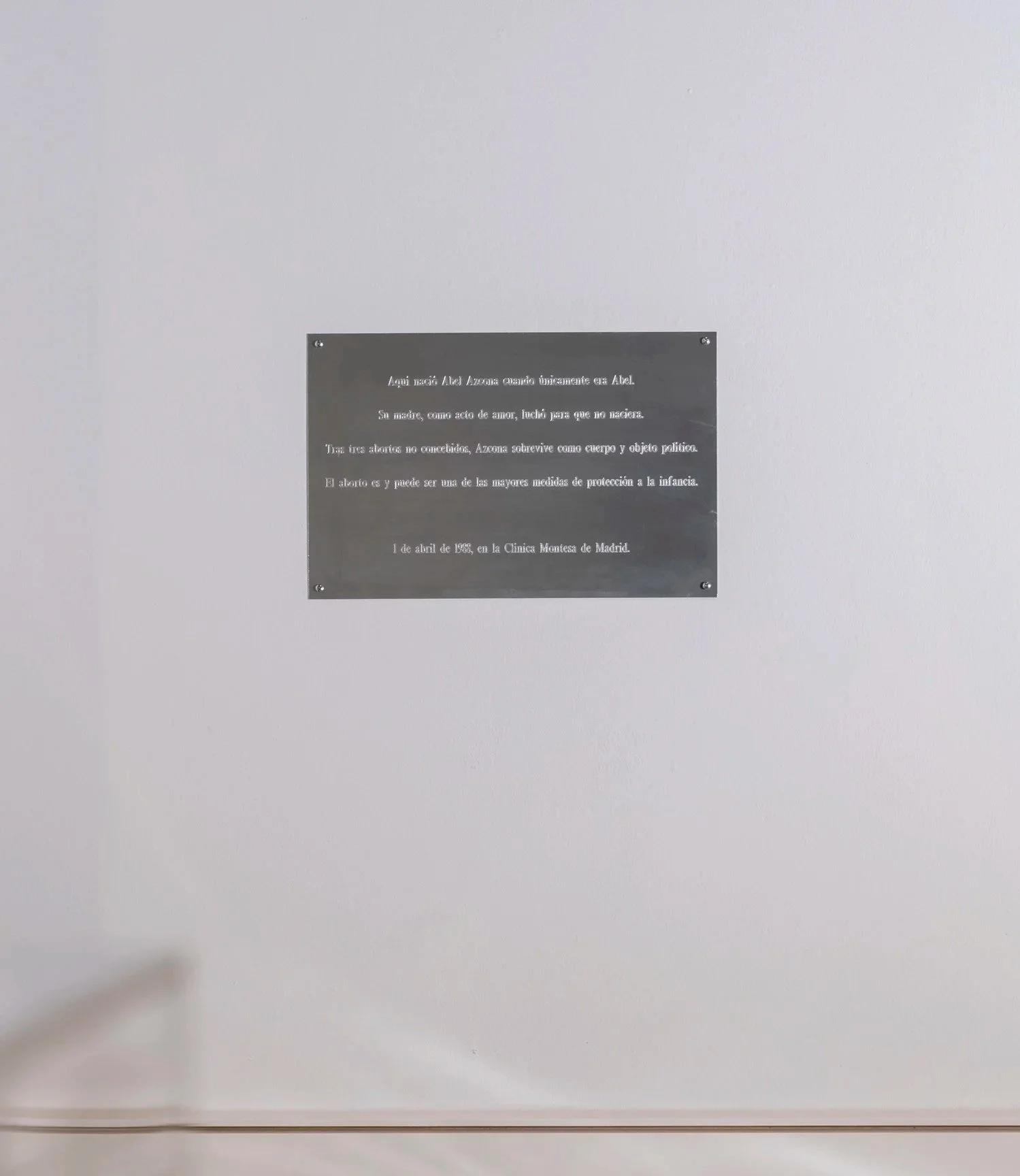
A performative and object-based work activated in December 2020. Artist Abel Azcona installed a plaque at the Montesa Clinic in Madrid, where he was born, commemorating the right not to have been born and advocating abortion “as one of the greatest measures for the protection of childhood.” In his case, Azcona states that he should never have been born, having entered the world in a context of drug use, prostitution, and extreme precarity. The piece generated considerable controversy: it was denounced, and the plaque was removed and vandalized by anti-abortion and pro-life organizations such as Derecho a Vivir.
Abel Azcona was born on April 1, 1988, the result of an unwanted pregnancy, at the Montesa Clinic in Madrid, an institution run by a religious congregation and intended for people at risk of social exclusion and homelessness. His father was unknown. His mother, then registered as Victoria Luján Gutiérrez and whose real name is Isabel Gómez Aranda, was a young woman engaged in prostitution and struggling with polysubstance addiction. She abandoned him at the maternity clinic a few days after his birth. The nuns handed the newborn over to a man connected to his mother, who assumed paternity despite having met Victoria when she was already pregnant and having been her occasional partner.
Placa en la Clínica Montesa (1988–2020)
Objeto y performance.
Obra performativa y objetual activada en diciembre de 2020. El artista Abel Azcona instaló en la Clínica Montesa de Madrid, lugar donde nació, una placa que rememoraba el derecho a no haber nacido y reivindicaba el aborto «como una de las mayores medidas de protección a la infancia». En su caso, Azcona afirma que no debería haber nacido, al haberlo hecho en un contexto de consumo de drogas, prostitución y precariedad absoluta. La pieza generó una gran controversia: fue denunciada y la placa, retirada y saboteada por organizaciones provida y antiabortistas como Derecho a Vivir.
Abel Azcona nació el 1 de abril de 1988, fruto de un embarazo no deseado, en la Clínica Montesa de Madrid, una institución regentada por una congregación religiosa y destinada a personas en situación de riesgo de exclusión social e indigencia. De padre desconocido, su madre, registrada entonces como Victoria Luján Gutiérrez y cuyo nombre real es Isabel Gómez Aranda, era una joven que ejercía la prostitución y sufría politoxicomanía. Lo abandonó en la propia maternidad pocos días después de su nacimiento. Las religiosas entregaron al recién nacido a un hombre vinculado a su madre, quien asumió su paternidad a pesar de haber conocido a Victoria cuando ya estaba embarazada y de haber sido su compañero sentimental de manera esporádica.

Headlines from various media outlets in which Azcona discusses abortion directly. / Titulares de varios medios en los que Azcona habla directamente del aborto.
The Plaque of the Montesa Maternity Hospital, or The Right Not to Have Been Born, is one of Abel Azcona’s most powerful performative and object-based works. In it, the artist installs a plaque at the maternity hospital which, rather than celebrating birth, asserts the right not to have been born—both his own and his mother’s, a right that was denied to them. Through this piece, Azcona questions the obligation to be born in a deeply Catholic country such as Spain and points to the paradox of a society that defends birth but abandons people once they are born.
La placa de la Maternidad de Montesa o el derecho a no haber nacido es una de las obras performativas y objetuales más contundentes de Abel Azcona. En ella, el artista instala en la maternidad una placa que, en lugar de celebrar el nacimiento, reivindica el derecho a no haber nacido, tanto suyo como de su madre, un derecho que les fue negado. Con esta pieza, Azcona cuestiona la obligatoriedad de nacer en un país profundamente católico como España y señala la paradoja de una sociedad que defiende el nacimiento, pero abandona a las personas una vez nacidas.
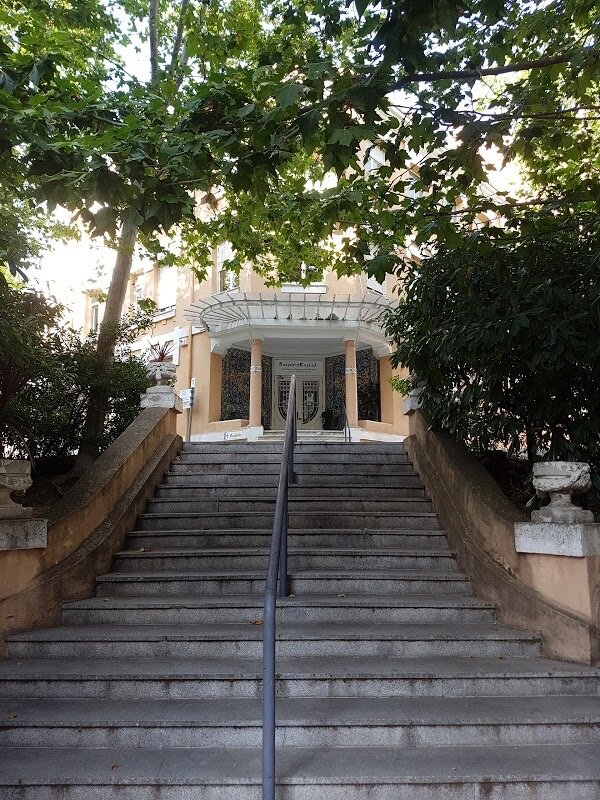
Stairway leading to the Montesa Clinic, where Azcona carried out his autobiographical performance. / Escalera de acceso a la Clínica Montesa, donde Azcona realizó su performance autobiográfica.

Photograph of Montesa Street in Madrid, taken by Azcona before the performance began in December 2020. / Fotografía de la calle Montesa, en Madrid, realizada por Azcona antes de comenzar la performance en diciembre de 2020.

Installation at Espacio Tangente in Burgos, presented as part of the exhibition The Artist’s Duty of Recidivism within the Framework of the Assumption of Disobedience as a Positioning. / Instalación en Espacio Tangente de Burgos, presentada en el marco de la exposición «El deber de reincidencia del artista en el marco de la asunción de la desobediencia como posicionamiento».
«By the end of March 1988, my mother and her partner were travelling to Madrid from Pamplona. Unexpectedly and prematurely, they ended up at a clinic on Montesa Street. In the adjacent rooms, homeless women and prostitutes were giving birth. At the entrance, people were injecting heroin. Two days later, in the room at the end of the corridor, Victoria, who was planning to abandon me, gave birth to me. Going for the first time to the clinic where you were born to install a plaque defending your right not to have been born is something you remember. In the same way, I will never forget my mother’s words when she told us that, before giving birth to me, she had tried to have an abortion three times. For me, that was the greatest act of love anyone will ever offer me. Pain is inherent to life. Nevertheless, if, before birth, a pregnancy is besieged by daily alcohol and heroin use, and the mother cannot access an abortion because of her limited financial resources and the prohibitions imposed by her environment, it is evident that the newborn will enter the world with wounds and difficulties. At what point is it necessary to be born simply for the sake of being born? I should never have been born.
The Plaque of the Montesa Clinic was a performance in which I installed a plaque on the building’s façade bearing the following inscription: Here was born Abel Azcona, when he was only Abel. As an act of love, his mother fought for him not to be born. After three denied abortions, Azcona survives as a body and political object. Abortion is, and can be, one of the greatest measures for the protection of childhood. The plaque was denounced by anti-abortion and ultra-Catholic organizations and was subsequently removed. Since then, it has been exhibited as a work in different exhibition spaces.»
«A finales de marzo de 1988, mi madre y su compañero viajaban a Madrid desde Pamplona. De forma imprevista y prematura, terminaron en una clínica de la calle Montesa. En las habitaciones contiguas parían indigentes y prostitutas. En la entrada, algunas personas se inyectaban heroína. Dos días después, en la habitación del fondo del pasillo, Victoria, que planeaba abandonarme, me parió. Ir por primera vez a la clínica donde naciste para colocar una placa en defensa de tu derecho a no haber nacido es algo que se recuerda. Del mismo modo, nunca olvidaré las palabras de mi madre cuando nos contó que, antes de darme a luz, había intentado abortar hasta en tres ocasiones. Para mí, ese fue el mayor acto de amor que nadie hará nunca por mí. El dolor es inherente a la vida. No obstante, si antes de nacer la gestación está asediada por el consumo diario de alcohol y heroína, y la madre no puede abortar debido a sus escasos recursos y a las prohibiciones de su entorno, resulta evidente que el recién nacido llegará al mundo con heridas y dificultades. ¿En qué momento es necesario nacer por nacer? Yo no debería haber nacido nunca.
La placa de la Clínica Montesa fue una performance en la que coloqué en la fachada del edificio una placa que rezaba: Aquí nació Abel Azcona cuando únicamente era Abel. Su madre, como acto de amor, luchó para que no naciera. Tras tres abortos no concedidos, Azcona sobrevive como cuerpo y objeto político. El aborto es y puede ser una de las mayores medidas de protección a la infancia. La placa fue denunciada por organizaciones antiabortistas y ultracatólicas, y posteriormente retirada. Desde entonces, se expone como obra en diferentes espacios expositivos.»


The work The Plaque of the Montesa Maternity Hospital is key to understanding Azcona’s assertion of his own right not to have been born, and it has been included in every exhibition focused on the artist’s life and family narrative. / La obra La placa de la Maternidad de Montesa es clave para comprender la reivindicación de Azcona de su derecho a no haber nacido y ha sido incluida en todas las exposiciones centradas en el relato vital y familiar del artista.