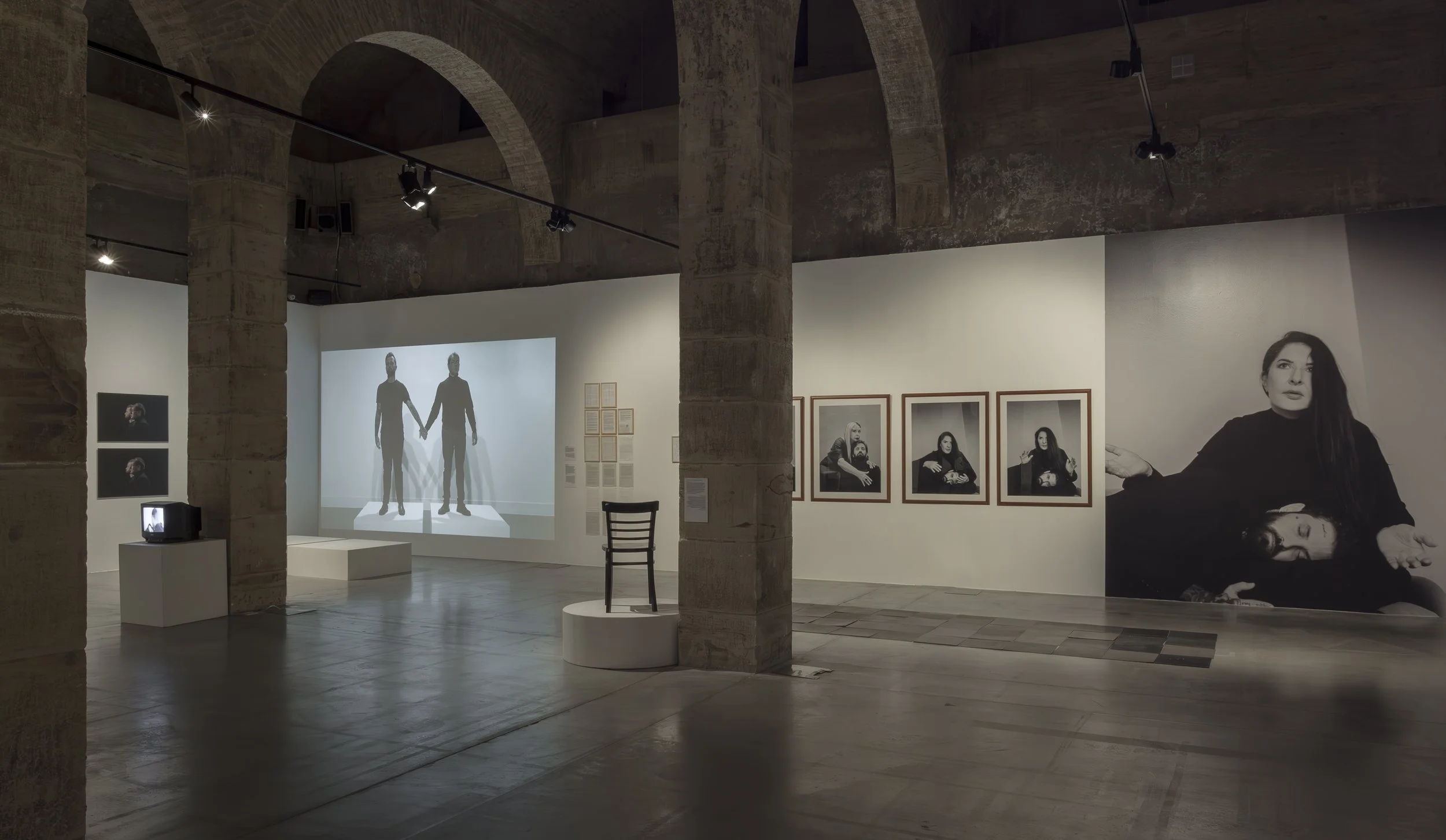
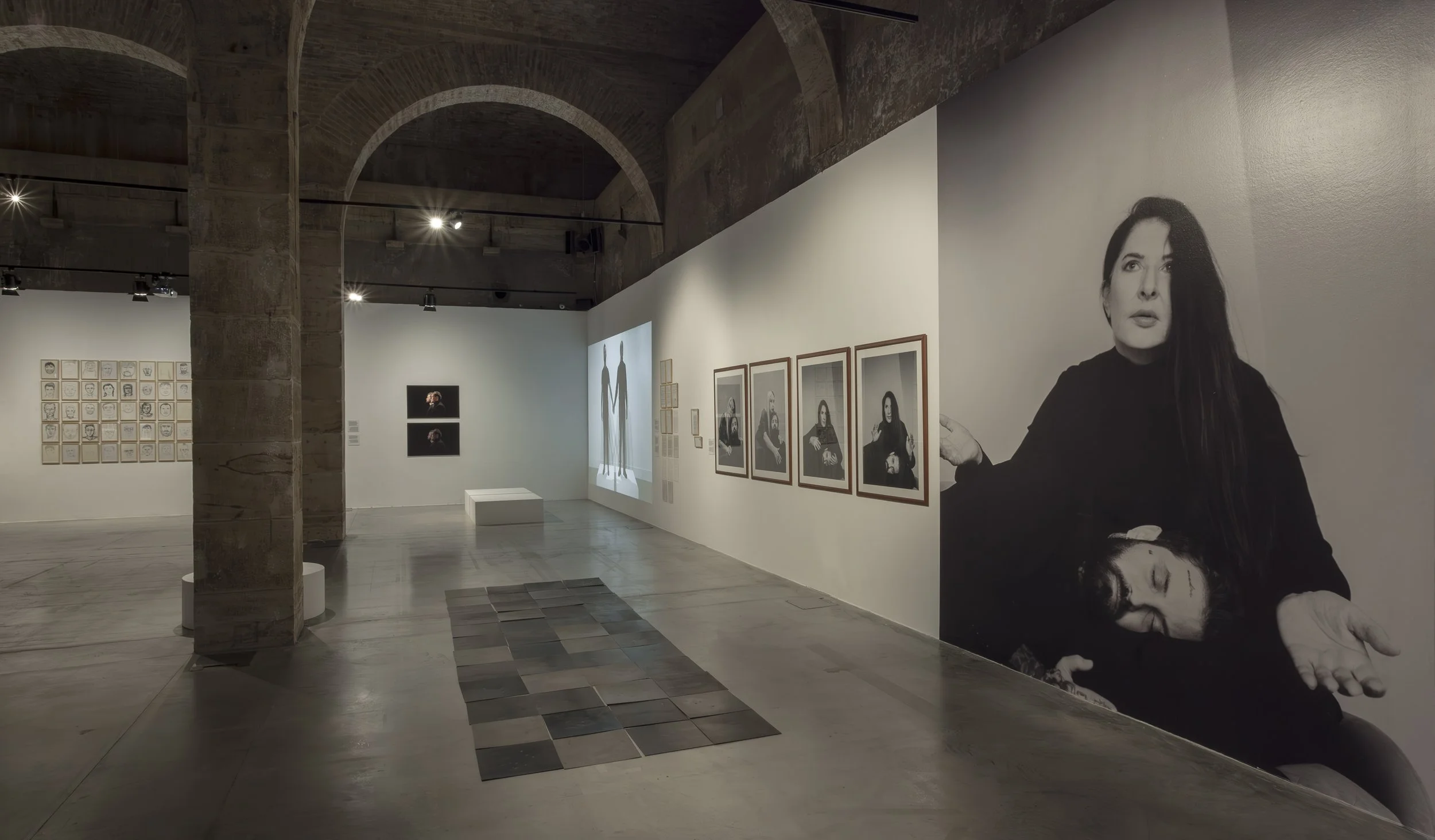
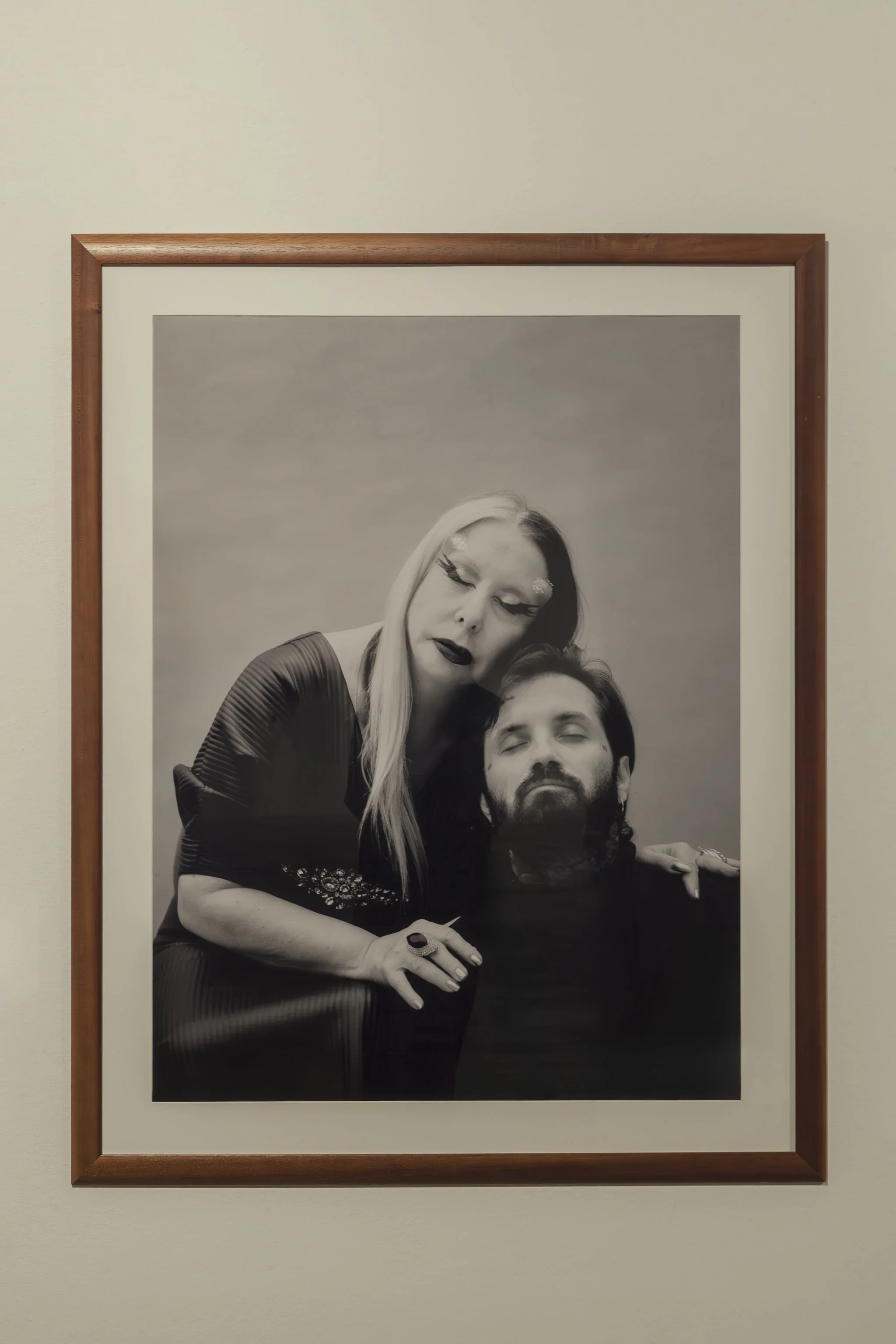
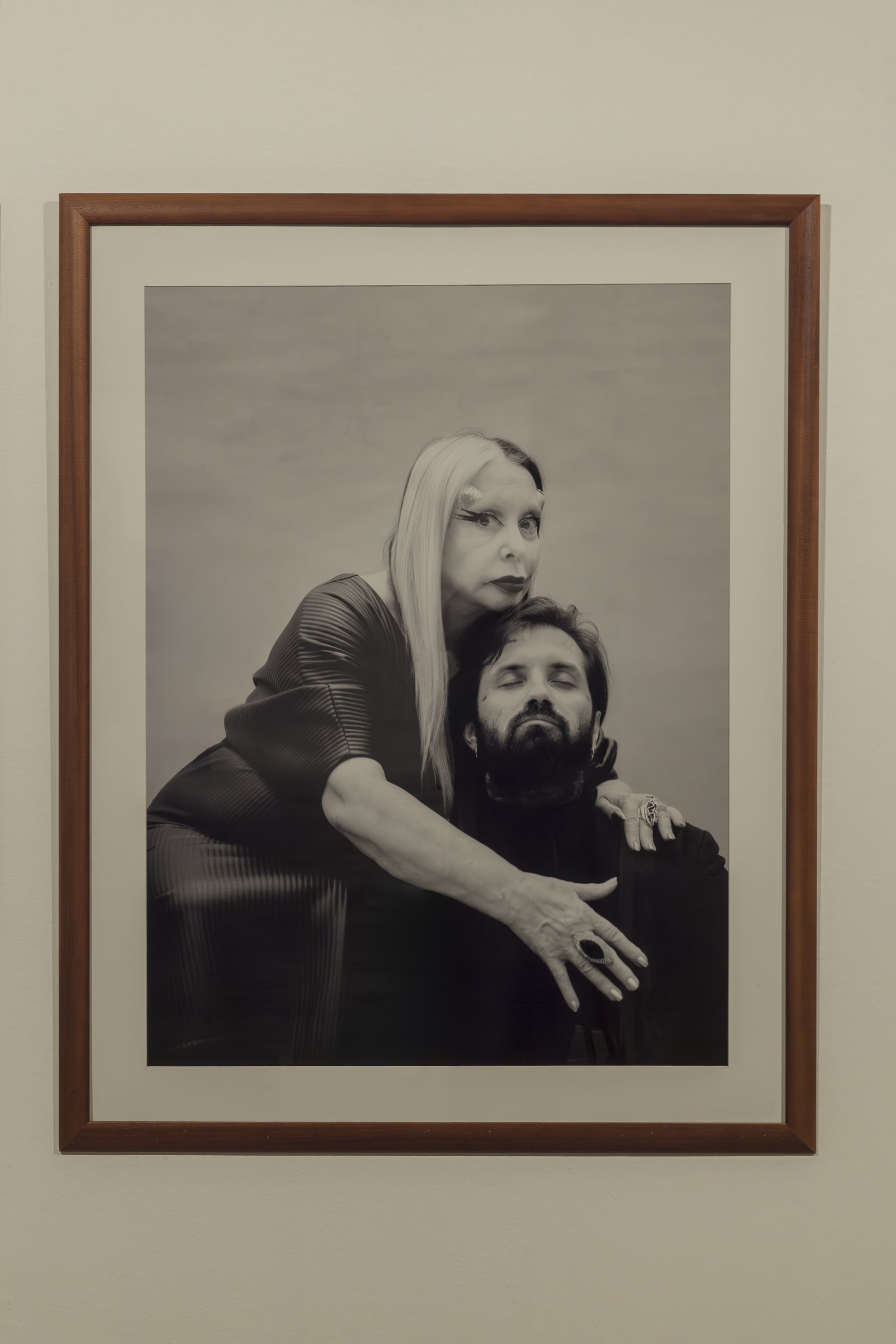
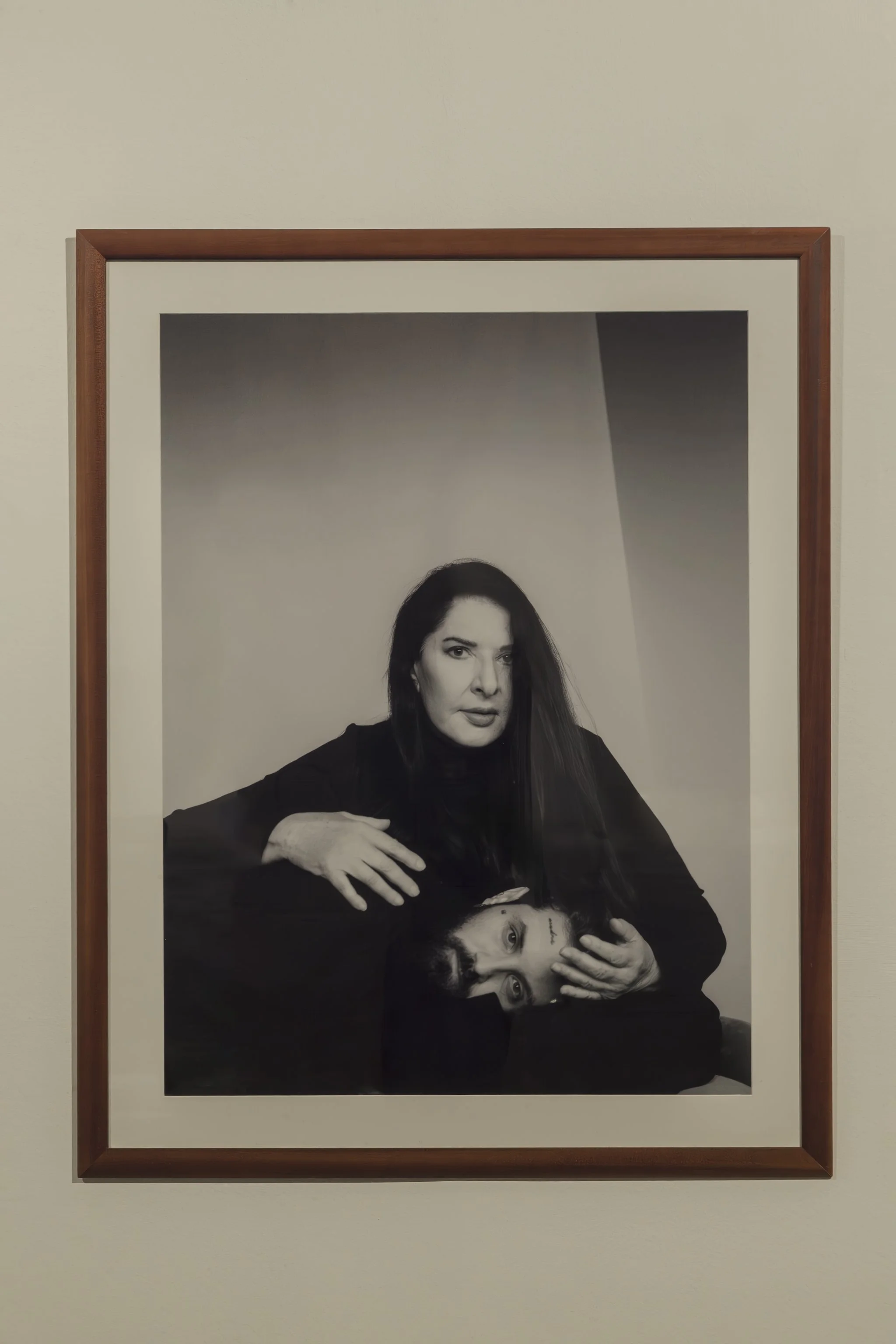
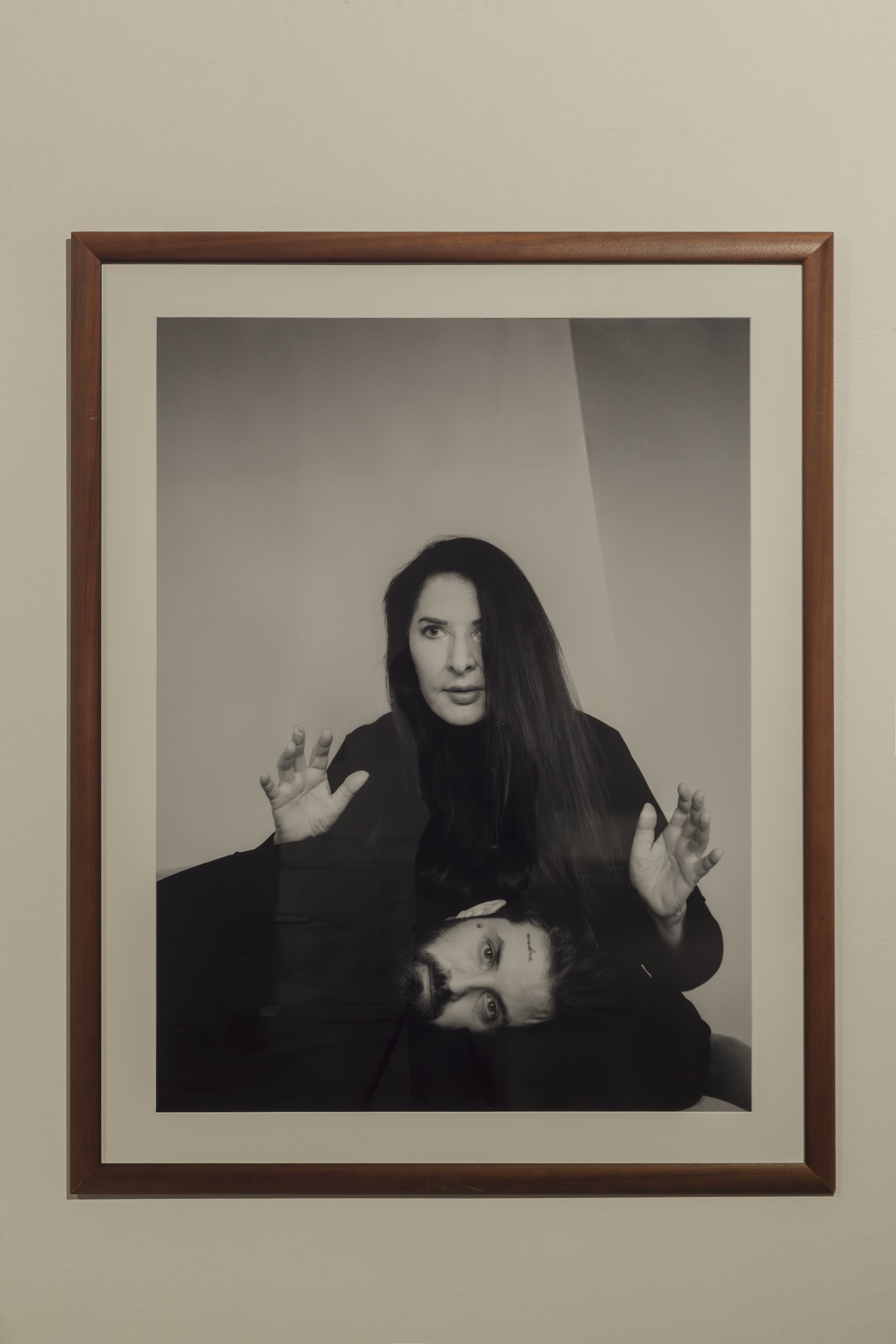
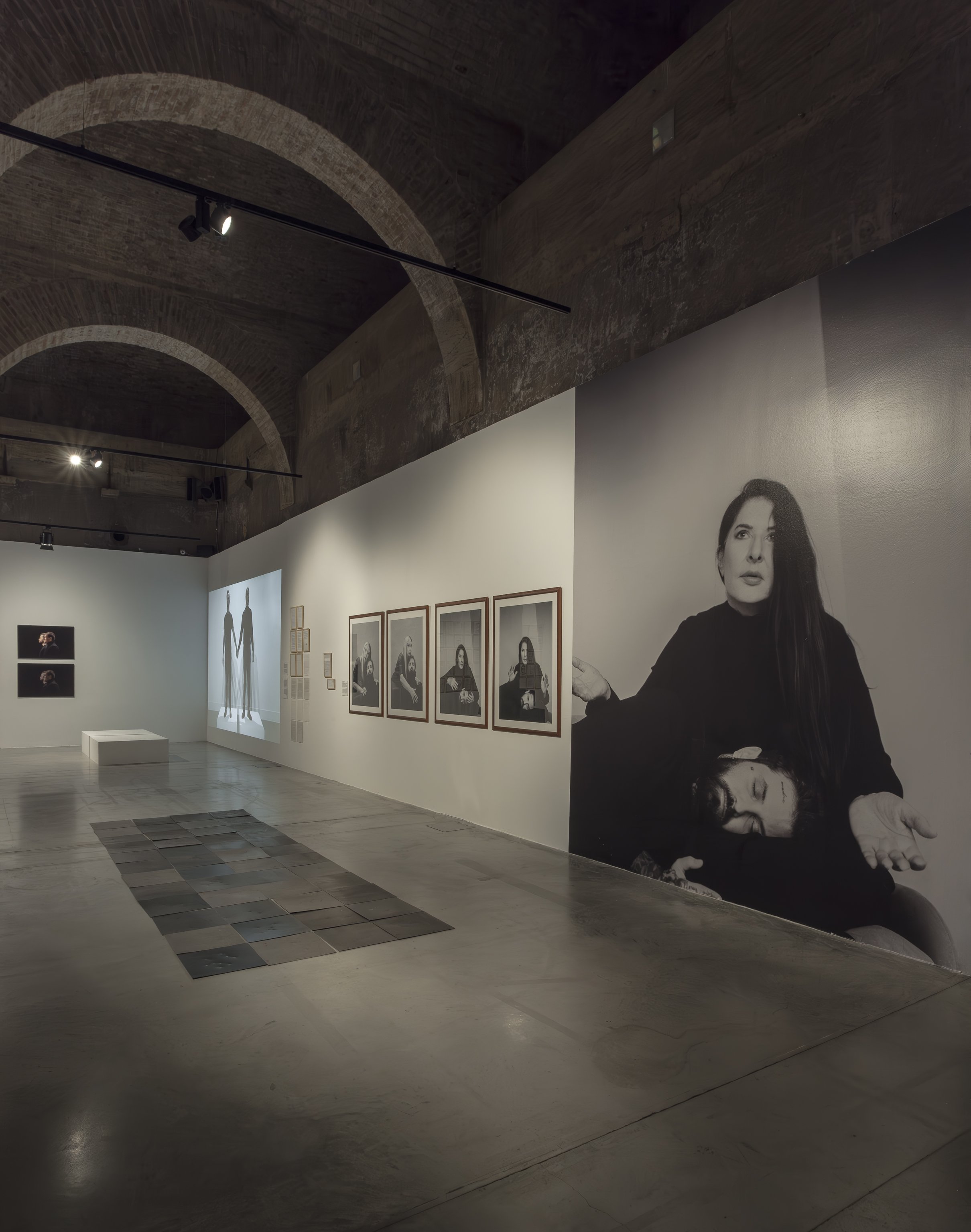
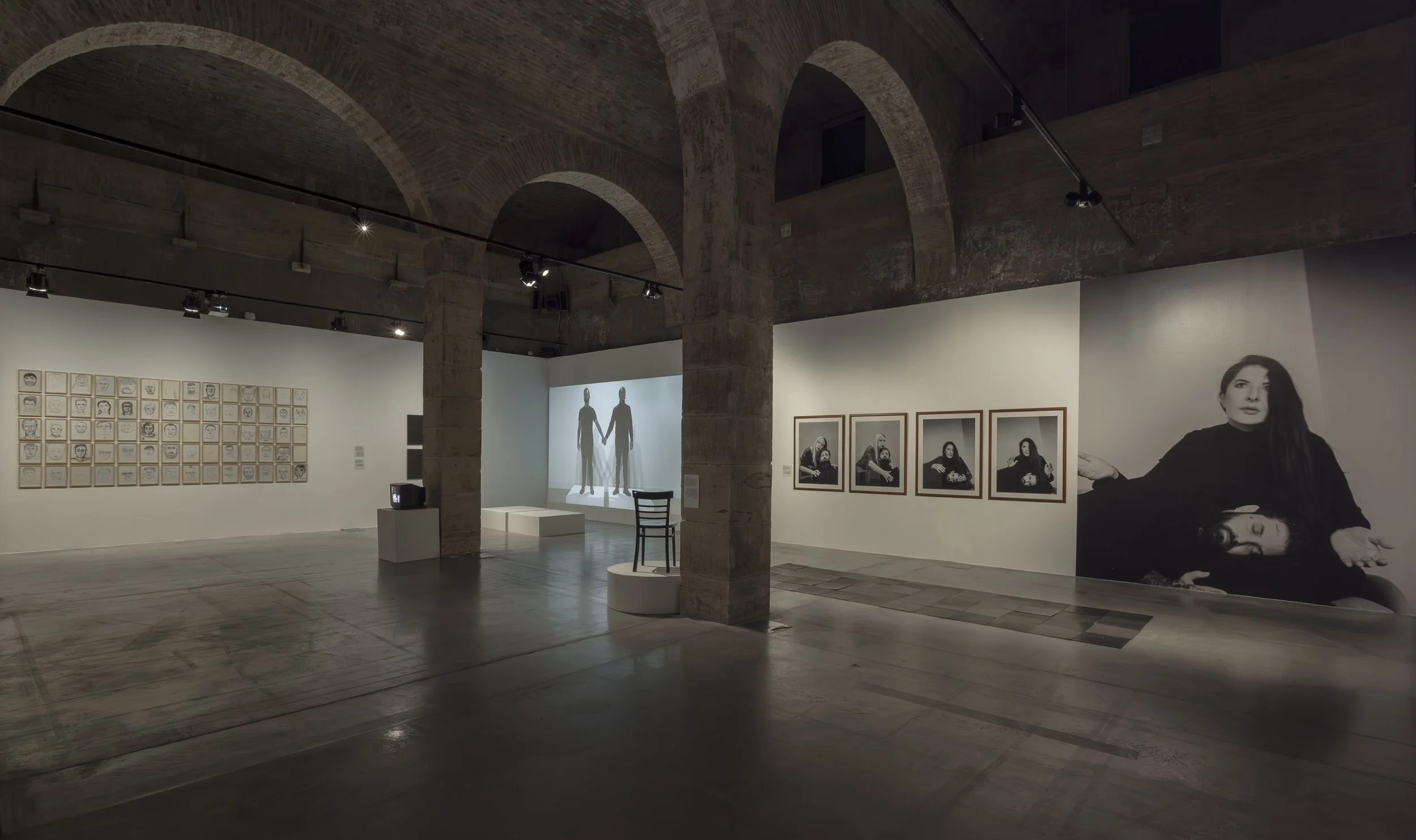
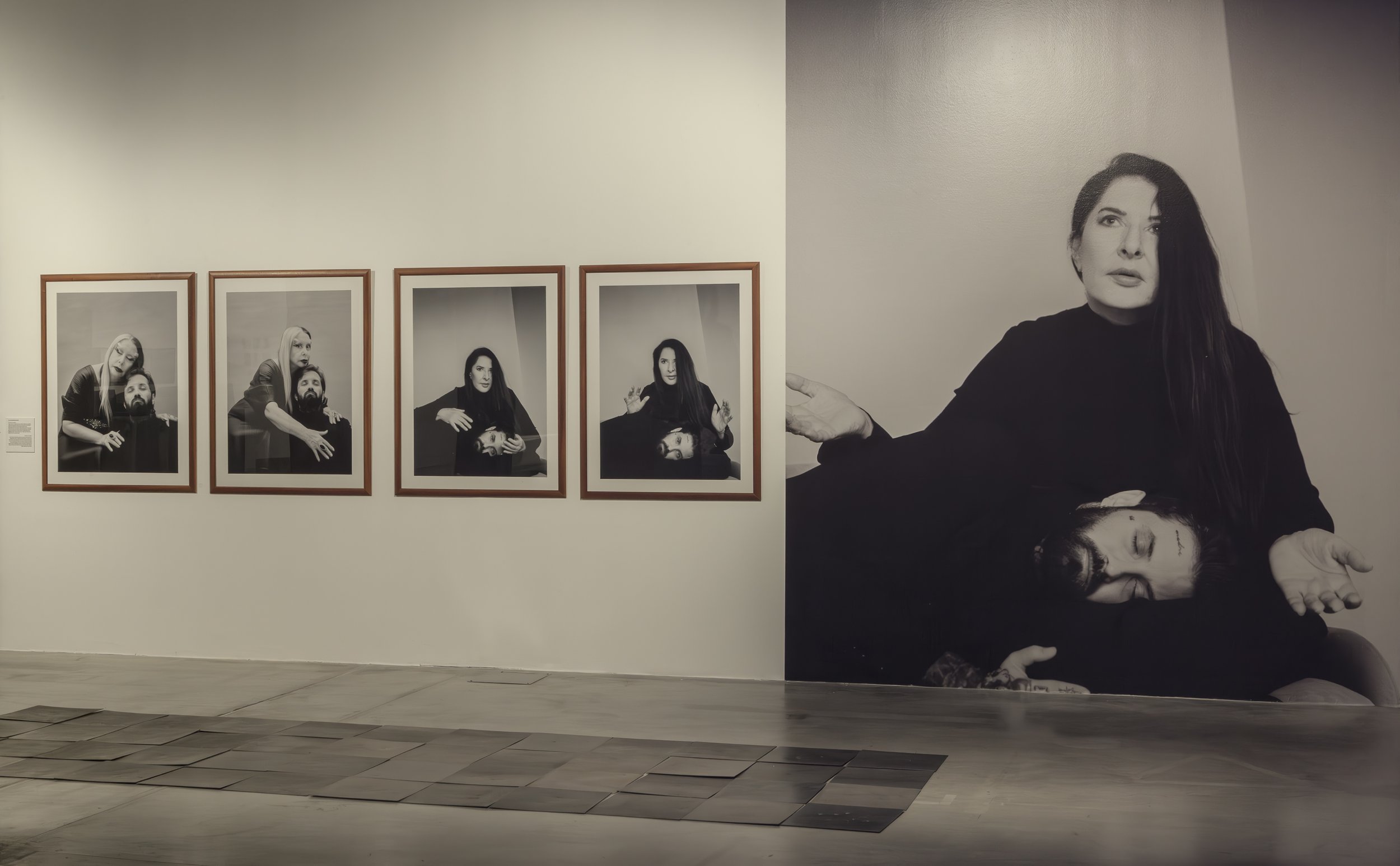
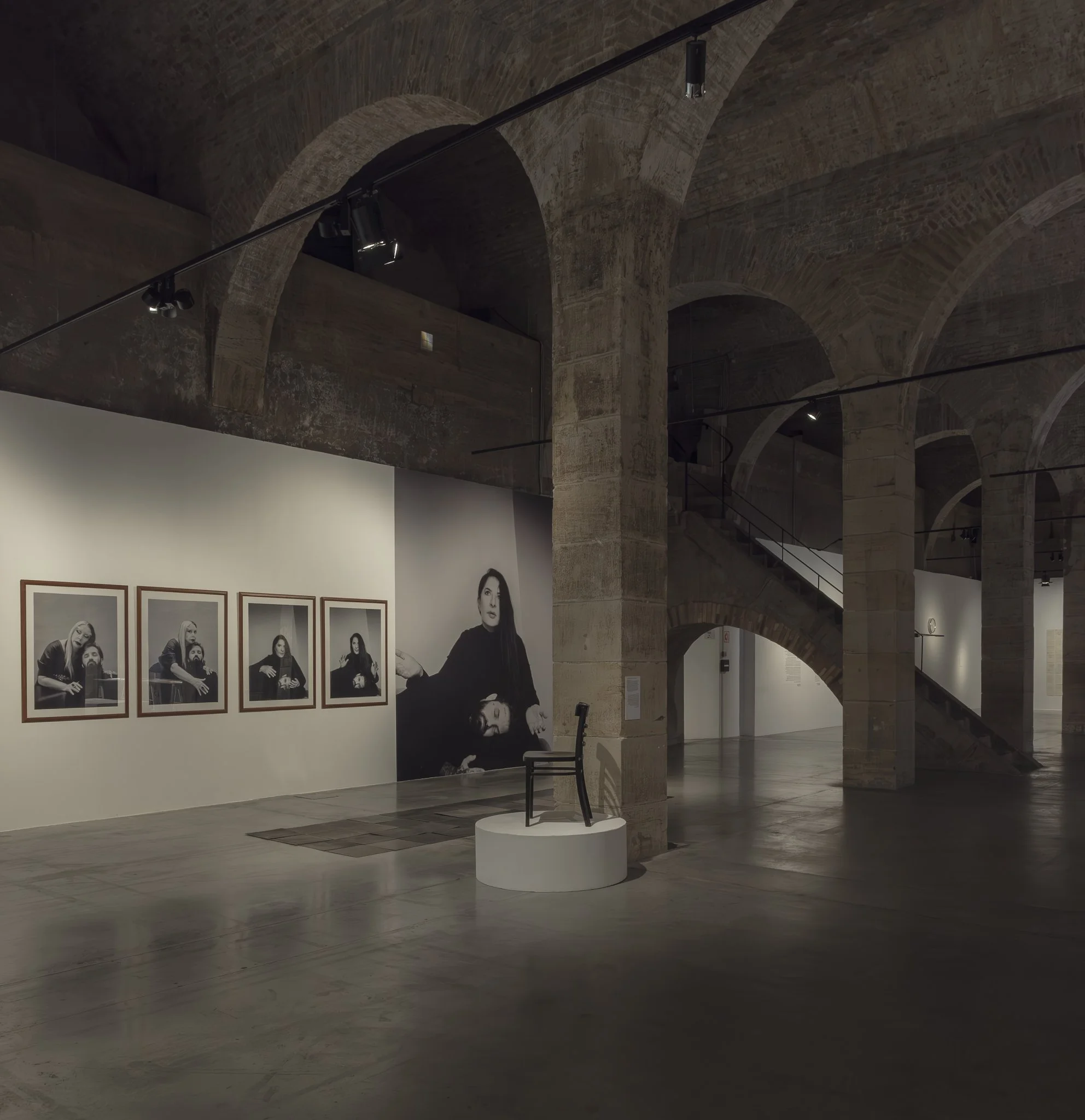
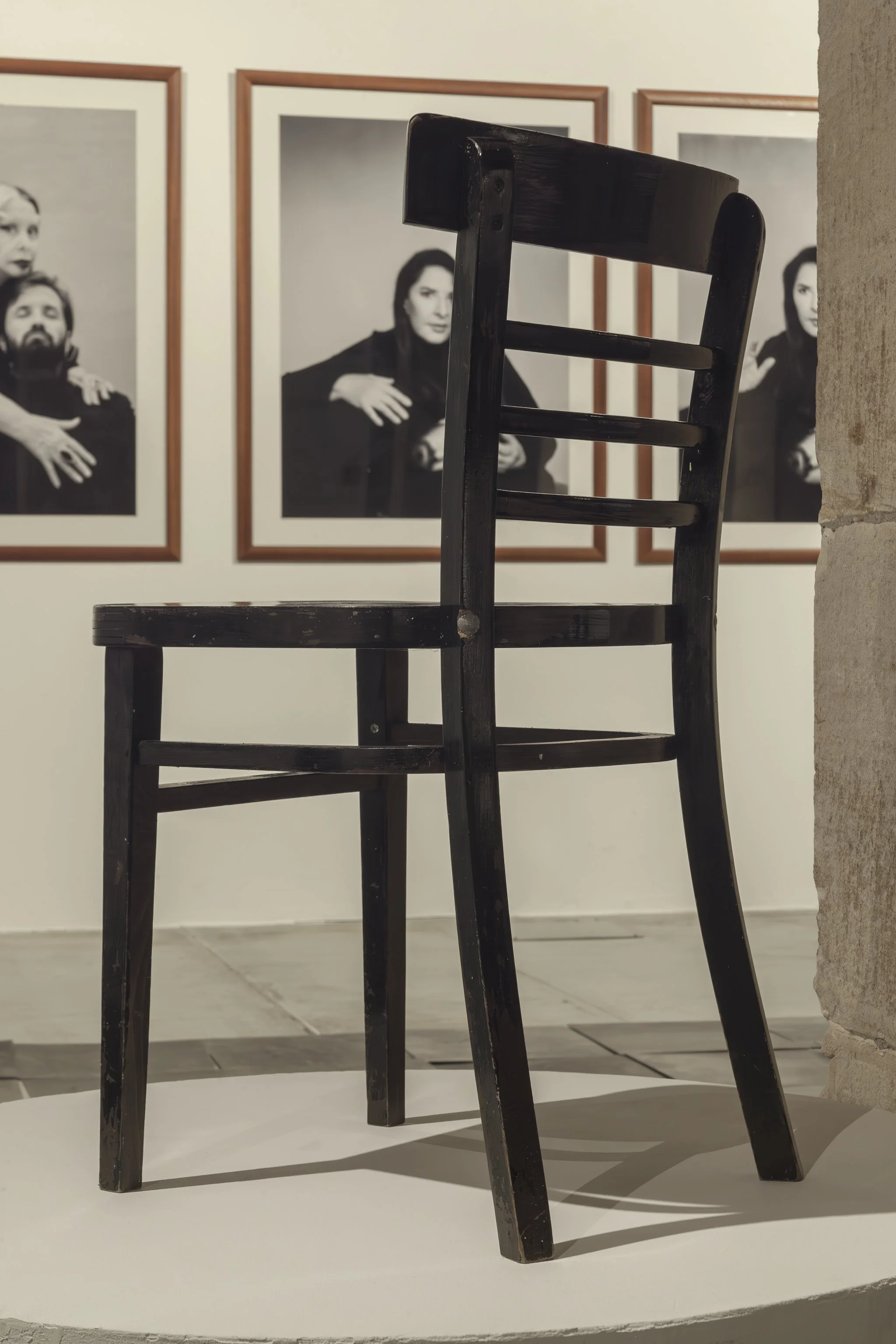
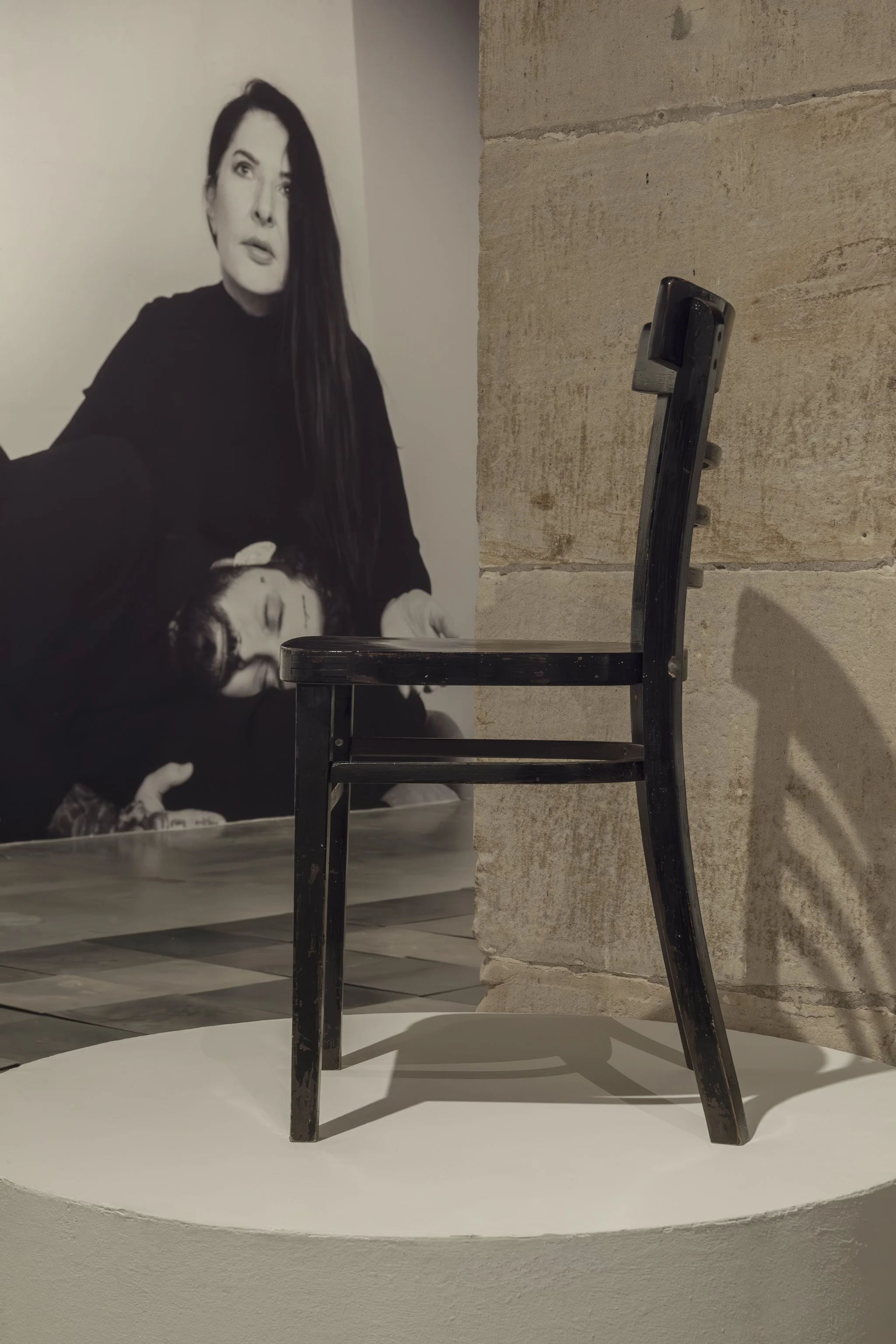
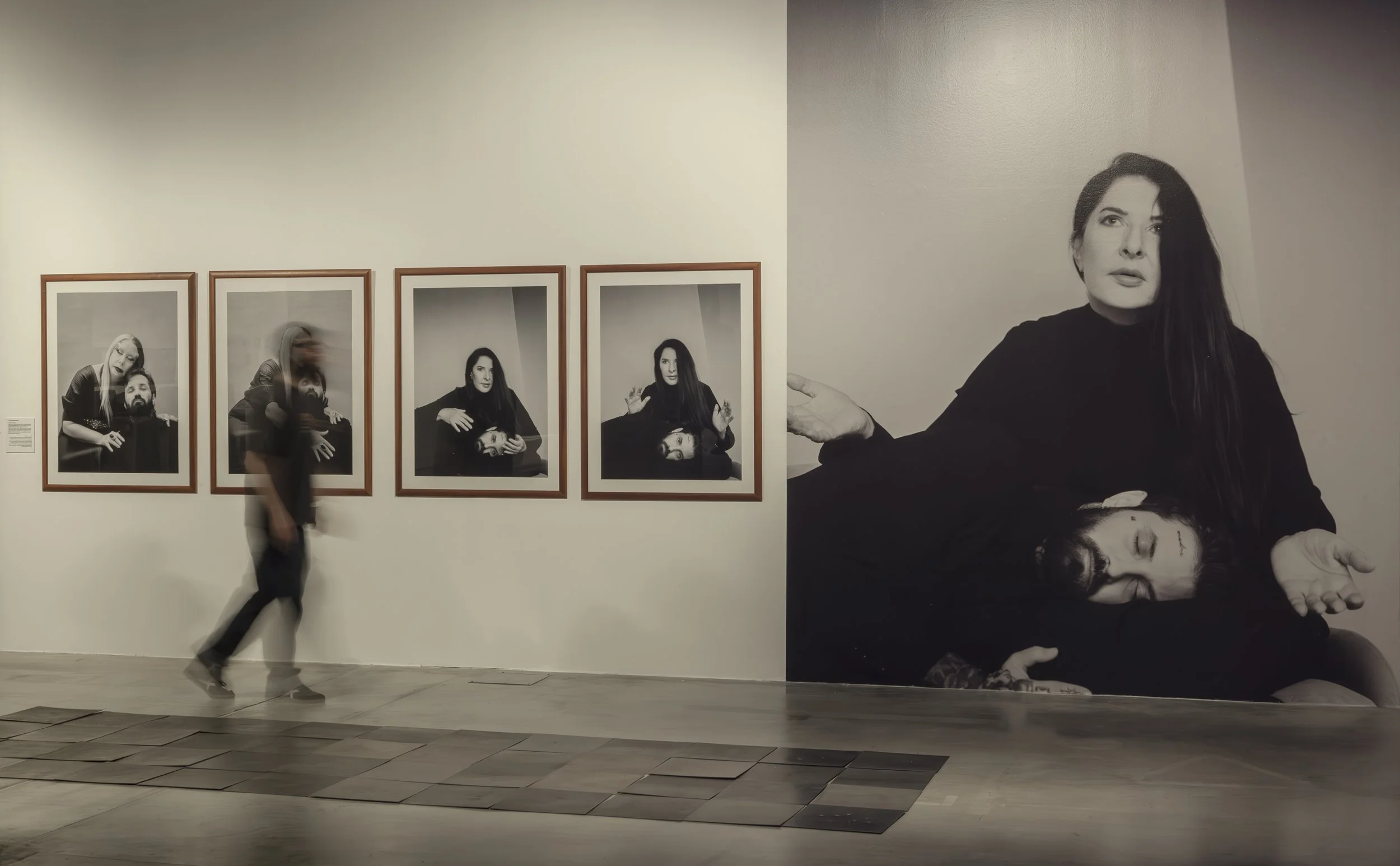
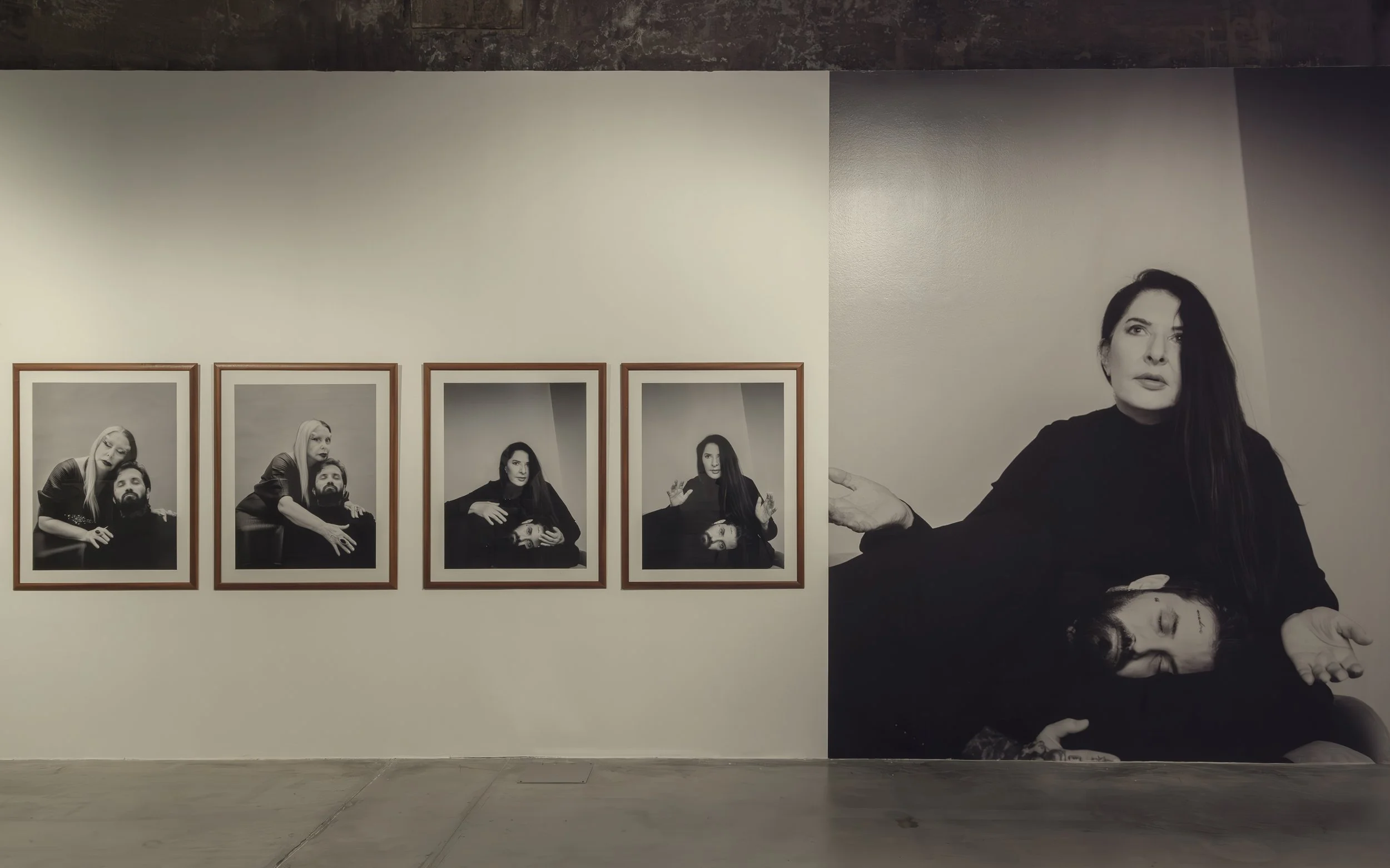
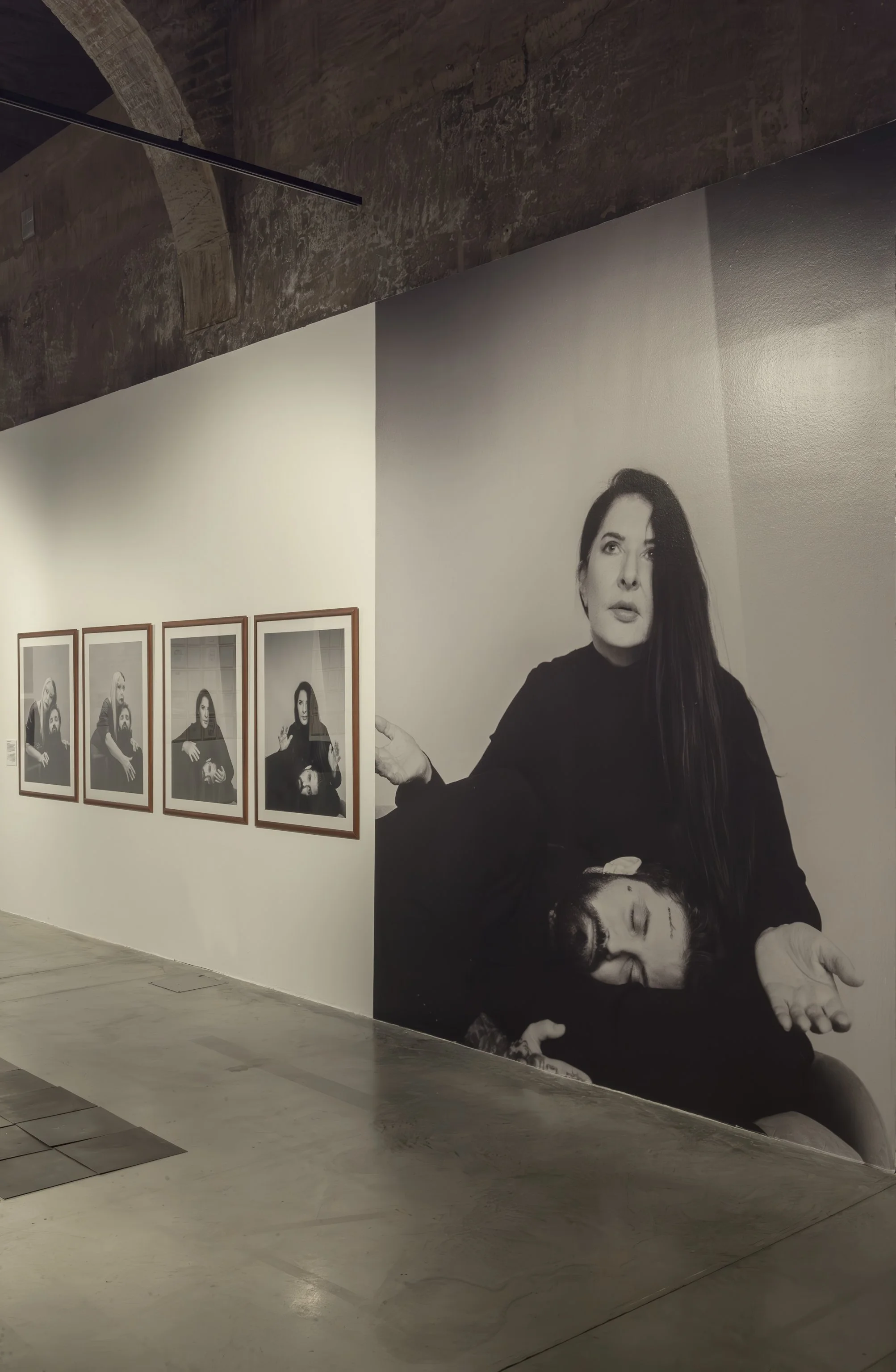
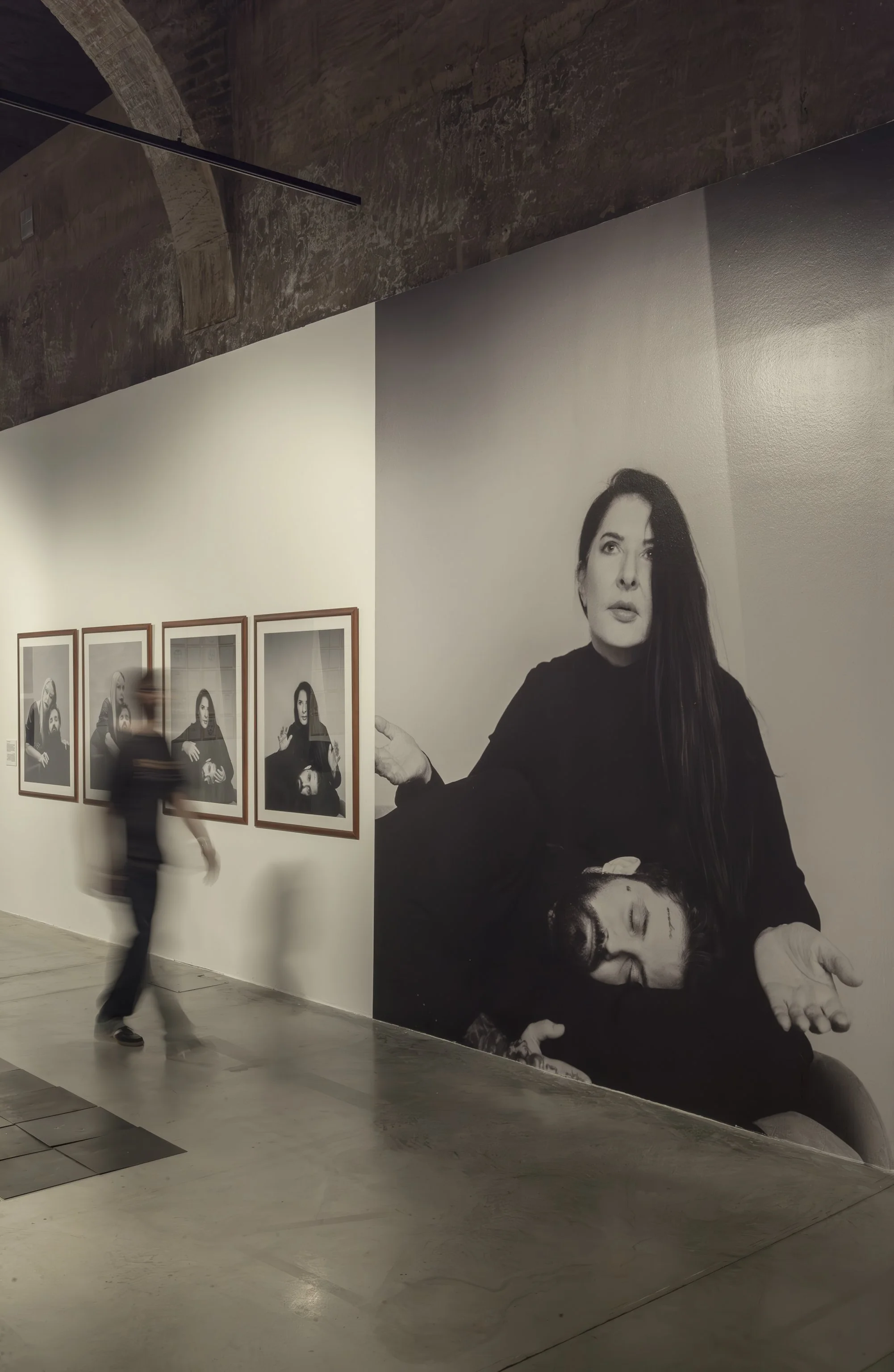
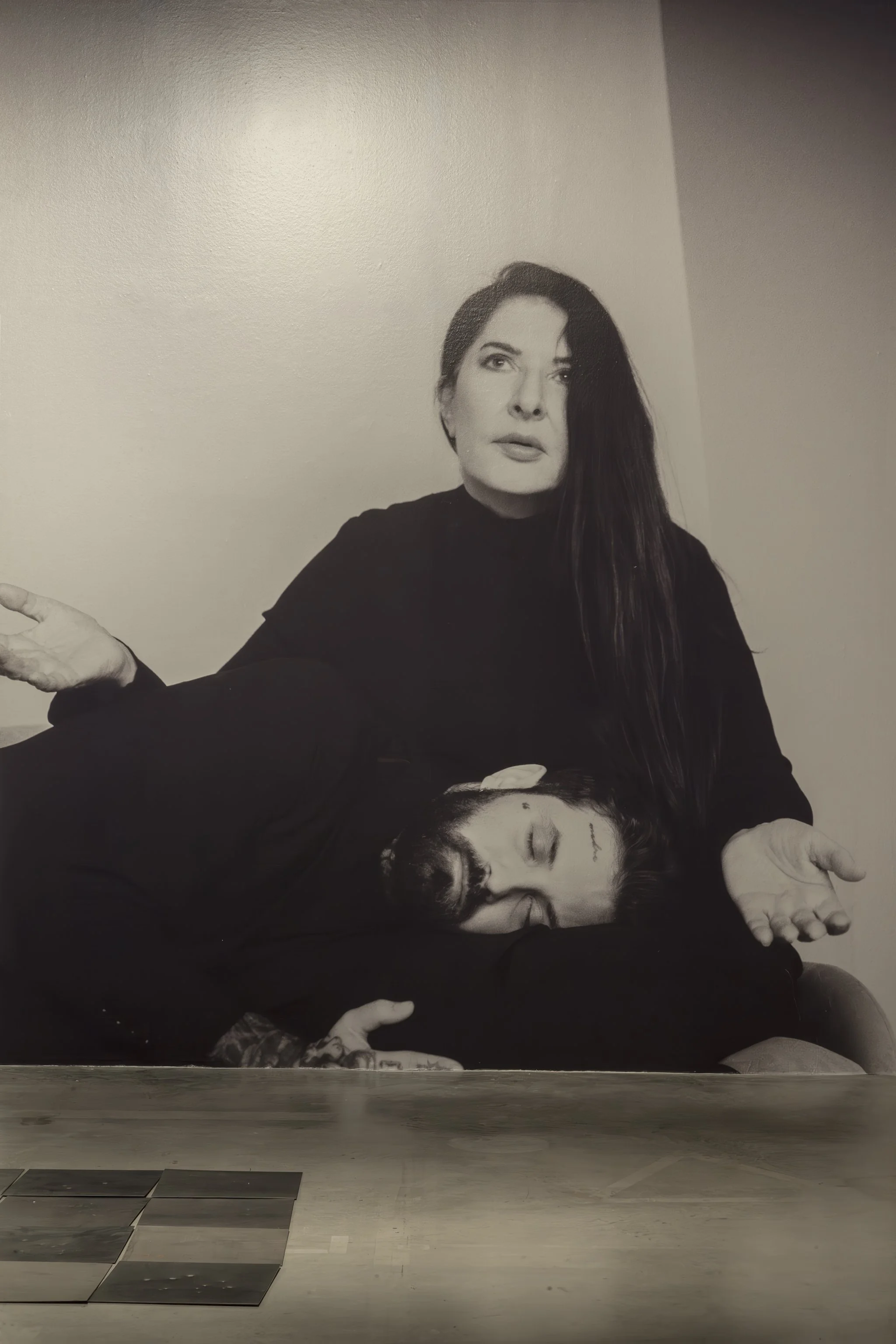
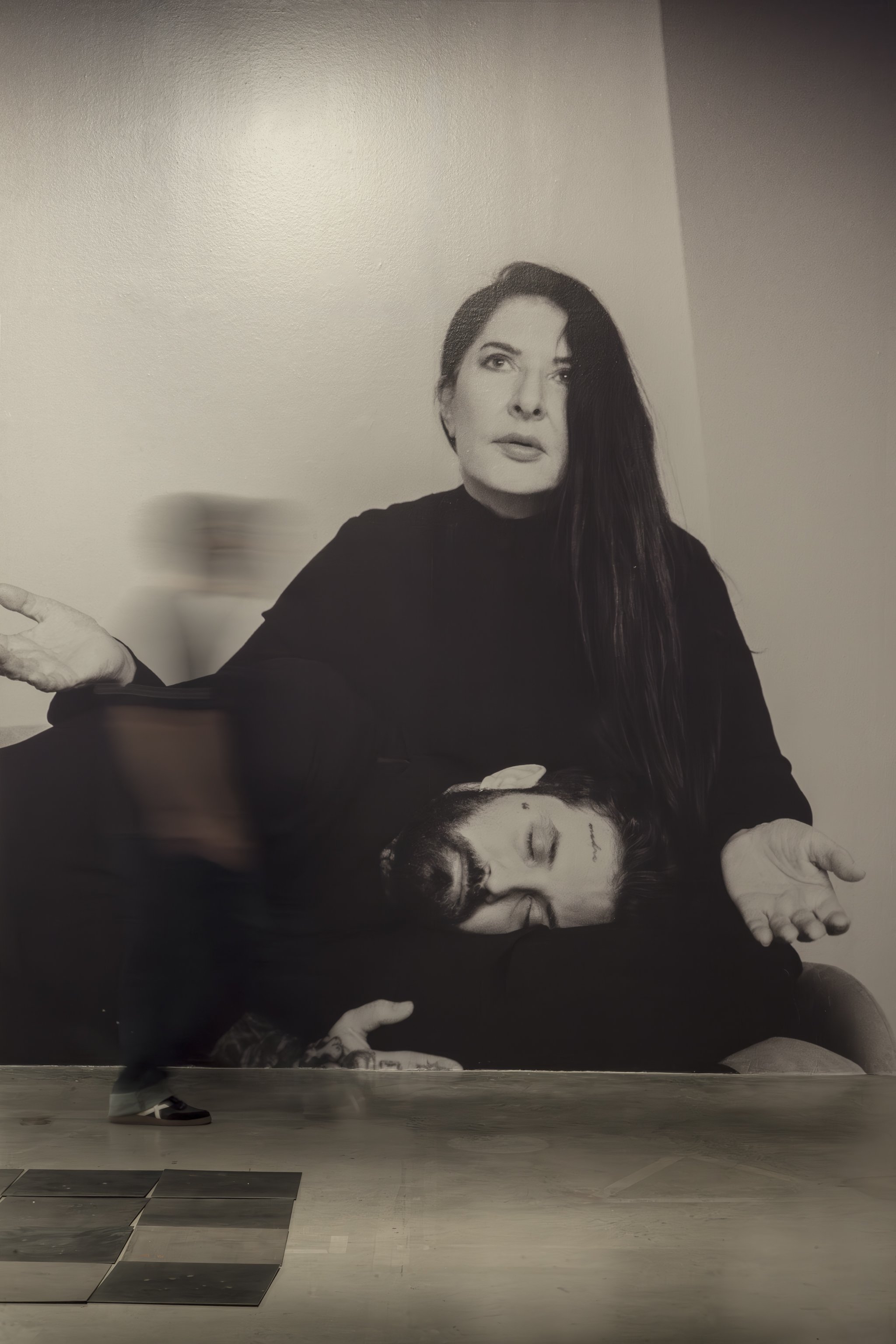
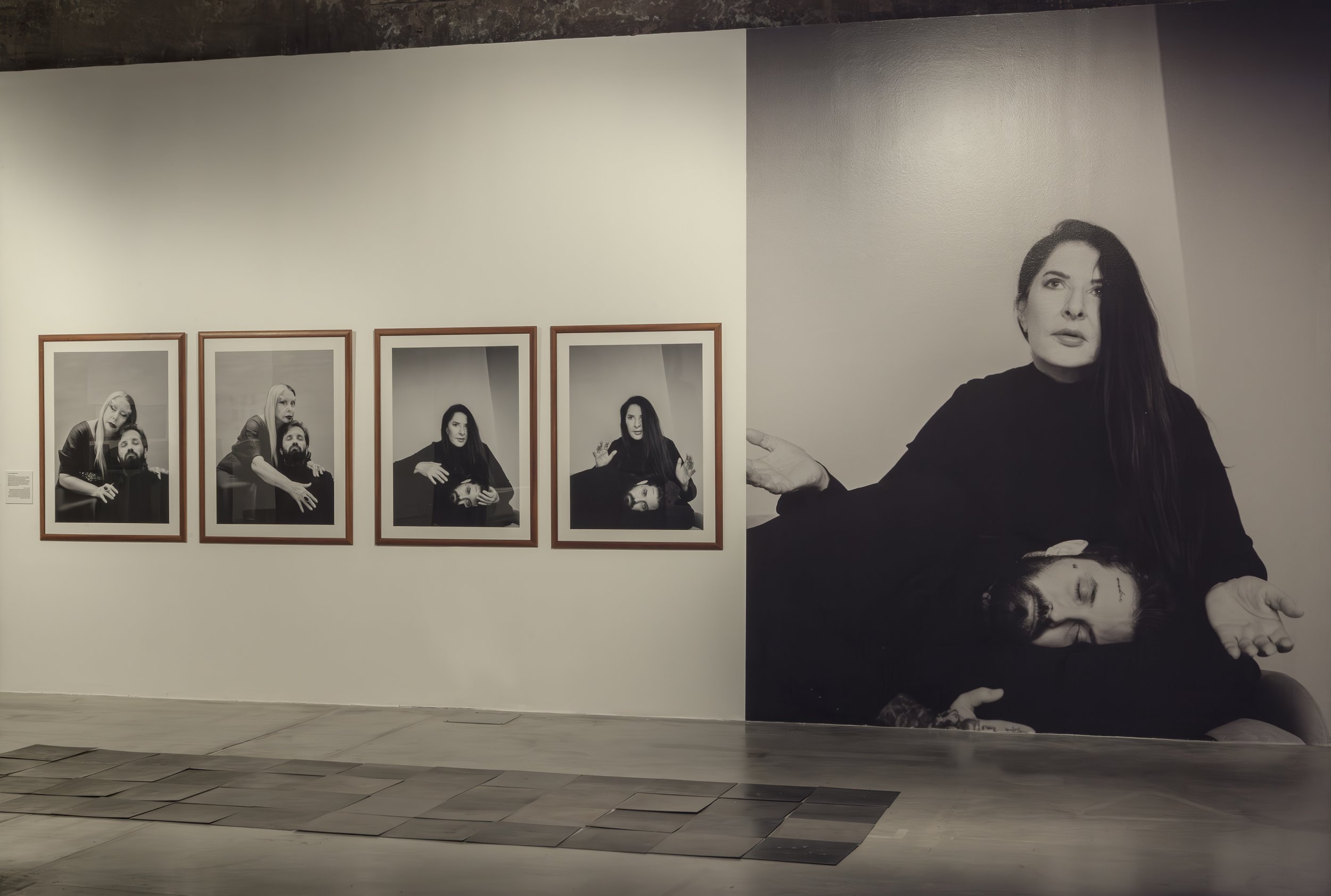
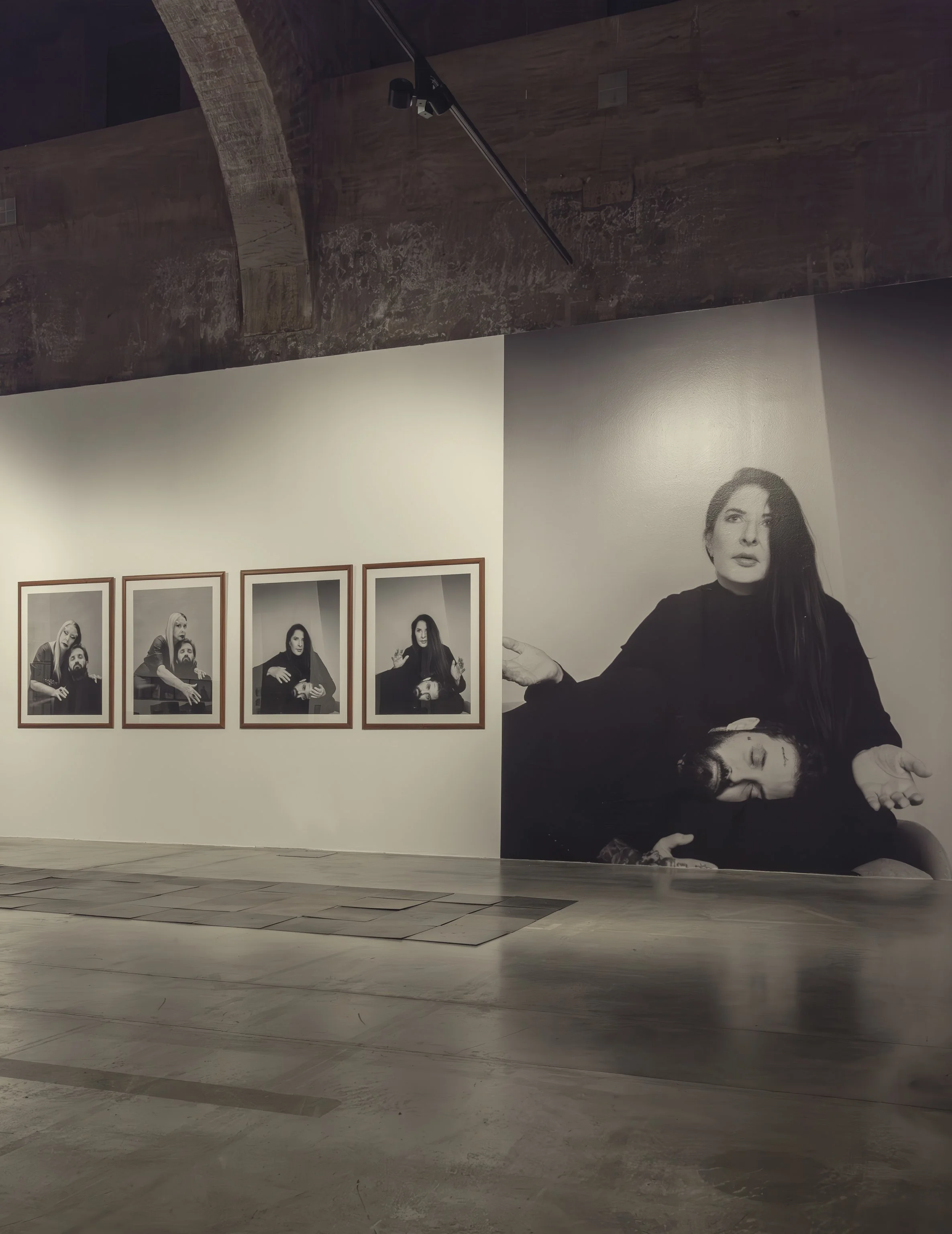
Losing a mother is painful, and I have lost three. That is why there is always a continuous thread of searching for the mother in my creative process. A surrogate mother, a mother who won't abandon me, or a mother who tells me she loves me. My entire life has been a constant repetition of "no," except for a certain sector of the art world. It would be false to claim that I don't live with continuous rejection in art as well, but at least in the field of performance, I have found solace and protection.
So, naturally, after working several times with Marina Abramović, a photographic and performative dialogue emerged as part of our joint project in Amsterdam. From these photographs, where almost nothing is conveyed through words, both of us assumed roles related to the maternal figure and the figure of the child, or the figure of caregiver or protector, and on my part, the protected or the cared for. After that maternal embrace and the move to Paris to present new works, a similar embrace emerged with ORLAN, with whom I also share new collaborations. Two new maternal embraces are forthcoming with Tracey Emin and with Yoko Ono as part of her retrospective exhibition at the Tate Modern in London.
Perder una madre es doloroso y yo he perdido a tres. Ese es el motivo por el que en mi crear siempre hay una continua linea de búsqueda de la madre. Una madre sustituta, una madre que no me abandone o una madre que me diga que me quiere. Toda mi vida ha sido una continua repetición de noes salvo la excepción de cierto sector del arte. Sería falso afirmar que no convivo con un continuo rechazo en el arte también, pero por lo menos en el campo del performance he encontrado reconforte y protección. Así que de manera natural tras trabajar varias veces con Marina Abramović surgió un diálogo fotográfico y performativo en el marco de nuestro proyecto conjunto en Amsterdam. De estas fotografías donde sin casi reflejar nada mediante palabras los dos asumimos roles en cuanto a la figura maternal y la figura del hijo, o la figura de cuidadora o protectora y por mi parte el protegido o el cuidado. Tras aquel abrazo maternal y el traslado a París para presentar nuevas obras surgió el abrazo igualmente con ORLAN con la que también me unen nuevas colaboraciones. Por venir dos nuevos abrazos maternales con Tracey Emin y con Yoko Ono en el marco de su muestra restrospectiva en la Tate Modern en Londres.


Dear Marina,
To replace a mother can be conceived as an impossibility, and yet for years I’ve somehow tried to substitute her through works that are themselves a search or a form of repair. If I’m realistic, what truly matters is the feeling of mending the damage, rather than feeling a warm human being beside me again with their care. We are also in an existential moment in which the archaic idea of motherhood and caregiving must be revisited. But in my case, having an absent mother—more an absence of mother—and even worse, a mother who abandons, the very idea of care becomes absurd from any angle.
And so, from my earliest childhood, my only way to endure the pain and survive was to cling to any figure and turn anything into a mother—even a flowerpot. A difficult life, in which the figures that followed brought only new abandonments, new abusers, new sources of harm. Which is why, I insist, the flowerpot with its two bright green plants was, in that moment, a better reference. At sixteen, I clung to art as a tool of survival, as a mother, as a root into life. And with it, to all those strong women who had walked the path many years before me. It is impossible that you would not be among the first to come to mind when one thinks about putting the body on the line in a radical way—naked body, violated body, wounded body. Your body cut with stars, thorns, or ice. Whips and blows against the walls. Dialogues with a partner or companion whom you felt drifting away or abandoning you, just as my mother abandoned me. Ah, the pain of watching someone leave. And in the same way, a family that was absent, military, rigid, and gave no space to learn love or affection in a cherished, cared-for environment under the idea of home.
Thank you, Marina, for appearing in my life, for healing me, caring for me, and accompanying me through so many works—from that first hug on that rainy day in Amsterdam. Thank you for being a mother, a guide, and a companion.
AA
Querida Marina,
Suplir a una madre puede concebirse como un imposible, por lo que yo llevo años de alguna manera intentando sustituirla con obras que suponen búsqueda o reparación. Si soy realista en realidad es más importante la sensación de reparar el daño que el volver a sentir al ser humano caliente a mi lado y sus cuidados. Además estamos en un momento existencial que también debe revisitarse la idea arcaica de madre y cuidados, pero en mi caso al ser una madre ausente, una ausencia de madre más bien, o aún peor; una madre que abandona: la idea de cuidados es absurda desde cualquier manera de mirar.
Así desde mi más tierna infancia mi única manera de soportar el dolor y sobrevivir era aferrarme a cualquier figura y convertir en madre hasta una maceta. Difícil vida que además, los referentes siguientes que me aporta son nuevos abandonadores, maltratadores o abusadores. Por lo que insisto, la maceta con dos plantas verdes y brillantes, en este caso, era mejor referente. A los dieciséis años me aferré al arte como herramienta de subsistencia, como madre, como raíz a la vida. Y con ello a todas aquellas mujeres fuertes que habían hecho el camino muchos años antes que yo. Es imposible que tú no seas una de las primera que le viene a cualquiera a la mente al pensar en poner el cuerpo de manera radical, cuerpo desnudo, cuerpo violado o cuerpo violentado. Tu cuerpo rajado con estrellas, espinas o hielo. Latigos y golpes en los muros. Diálogos con una pareja o compañera que sentiste que se alejaba o te abandonaba como me abandonó mi madre. Ay, el dolor de ver partir a alguien, Y desde la misma manera, una familia ausente, militar, rigida y que no dió la opción de conocer el amor o el cariño en un entorno querido, cuidado y bajo la idea del hogar.
Gracias marina por aparecer en mi vida, curarme, cuidarme y acompañarme en tantas obras desde el primer abrazo ese día lluvioso en Amsterdam. Gracias por ser madre, guía y compañera.
AA


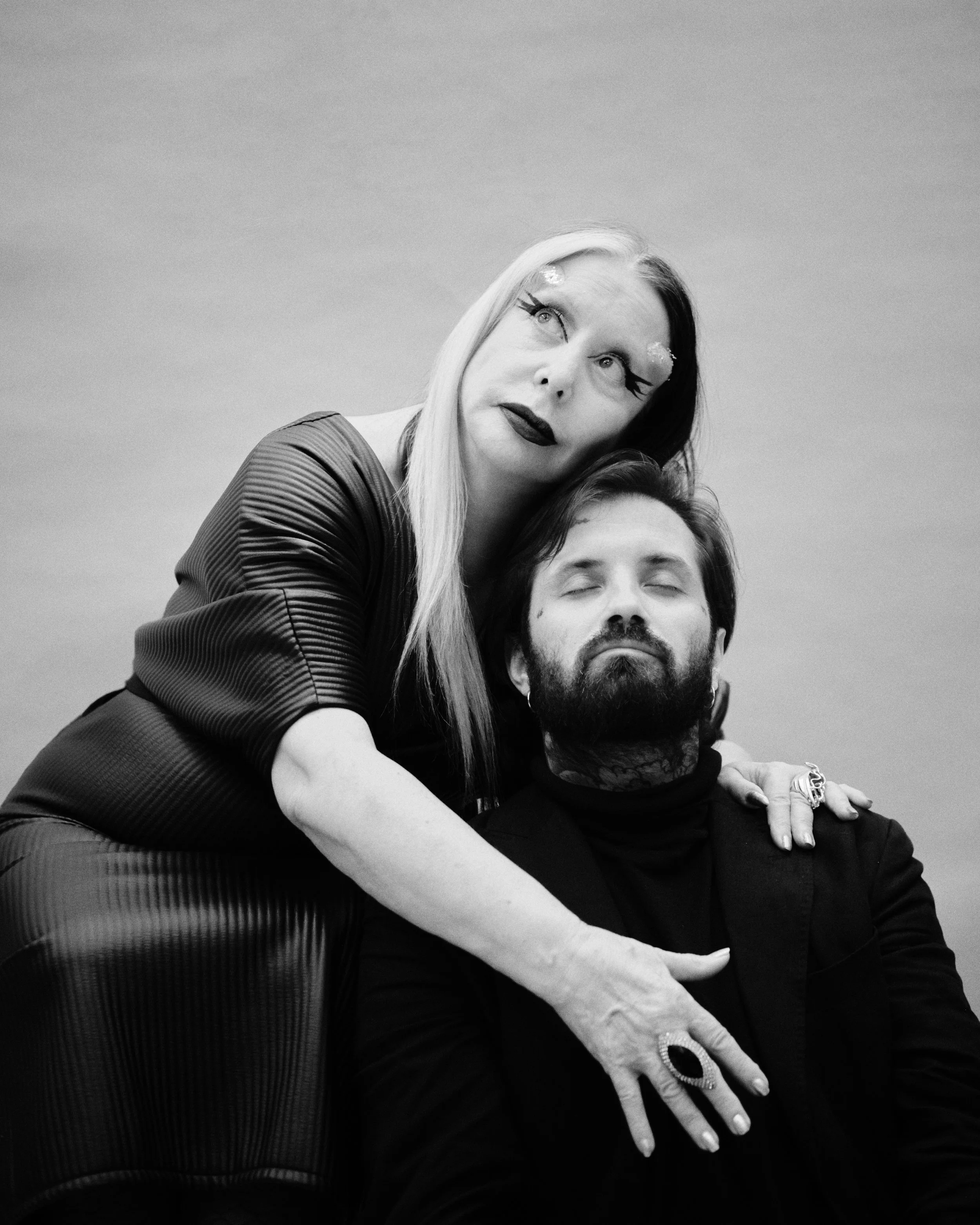
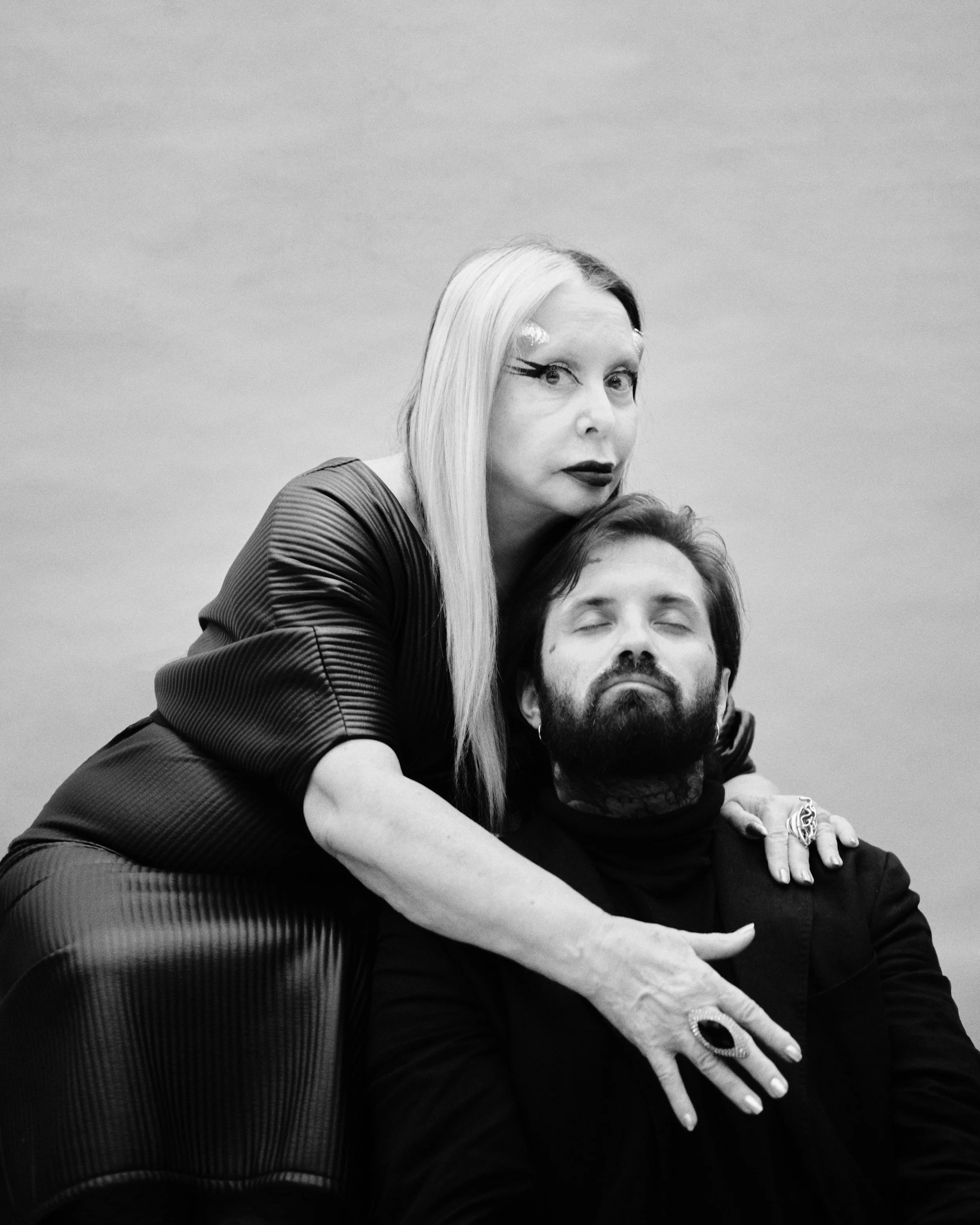

Dear Orlan,
You are chaos within the art of performance, but somehow because of that you have always been a mother and a reference point. Let’s move away from the preconceived or classical idea of a mother, and move closer to an idea of a more anarchic and radical mother. A mother who teaches the child to burn what is unjust, to bleed in place, or to expose their suffering and naked body in museums—suffering, screaming, and surviving.
I’m tired of merely subsisting or surviving, and among the few good moments I’ve had in my life have been the openness, affection, and constancy from you all: mothers, mentors, and chosen family. Thank you for opening the doors of your home in Paris to me with champagne, affection, and the occasional song. You have always told me that you feel very far from the idea of motherhood and that it holds no appeal or interest for you, yet you made the generous gesture of approaching my story and becoming a non-absent or chosen mother. Exactly the opposite of my prostituted mother who fled after giving birth. You laughed, amused, at playing this role so far from your reality, but somehow closer than you think, as you were always there for me—helping me, accompanying me, advising me—with anything I needed in Paris. Let us kill the stork and embrace the body of ORLAN, created or metamorphosed in operating rooms and museums, resembling no one, embodying what struggle, radicality, and contemporaneity should be. A mother—by reference, not by childbirth—of what art must be: putting the body on the line until the very end.
Thank you, ORLAN, for being patient and a surgeon, a mother and a companion, an artist and a radical force, and for expanding the skin, the soul, and the eyes of the one who looks.
AA
Querida Orlan,
Eres un caos en el arte de la performance pero de alguna manera pos eso has sido siempre has sido madre y referente. Alejémonos de la idea preconcebida o clásica de madre, y acerquémonos a una idea de madre más anárquica y radical. Madre que enseña al hijo a quemar lo injusto, a sangrar en el lugar o a exponer su cuerpo doliente y desnudo en museos, sufriendo, gritando y sobreviviendo.
Estoy cansado de subsistir o sobrevivir y de los escasos sucesos buenos que he tenido en mi existir ha sido la apertura, cariño y constancia de vosotras: madres, referentes y familia elegida. Gracias por abrirme las puertas de tu casa en Paris con champagne, cariño y alguna que otra canción. Siempre me has hablado de estar muy alejada de la idea de madre y no resultarte nada atractiva o interesante, pero hiciste el acto de generosidad de acércarte a mi relato y hacer de madre no-ausente o madre elegida. Exactamente lo contrario de mi madre prostituida que huyó tras el partoi. Te reias divertida de hacer este rol tan alejado de tu realidad, pero alguna manera más cercano de lo que crees al estar siempre ahí y ayudarme, acompañarme, aconsejarme, con cualquier aspecto o necesidad en París. Matemos a la cigüeña y abracemos el cuerpo de ORLAN, creado o metamorfoseado en quirófanos y museos a semejanza de nadie y en mimetización de lo que es o debe ser la lucha, lo radical y lo contemporáneo. Una madre, por referente no por parto, de lo que el arte debe ser: poner al cuerpo hasta el final.
Gracias ORLAN por ser paciente y cirujana, madre y compañera, artista y radical y por expandir la piel, el alma y los ojos del que mira.
AA