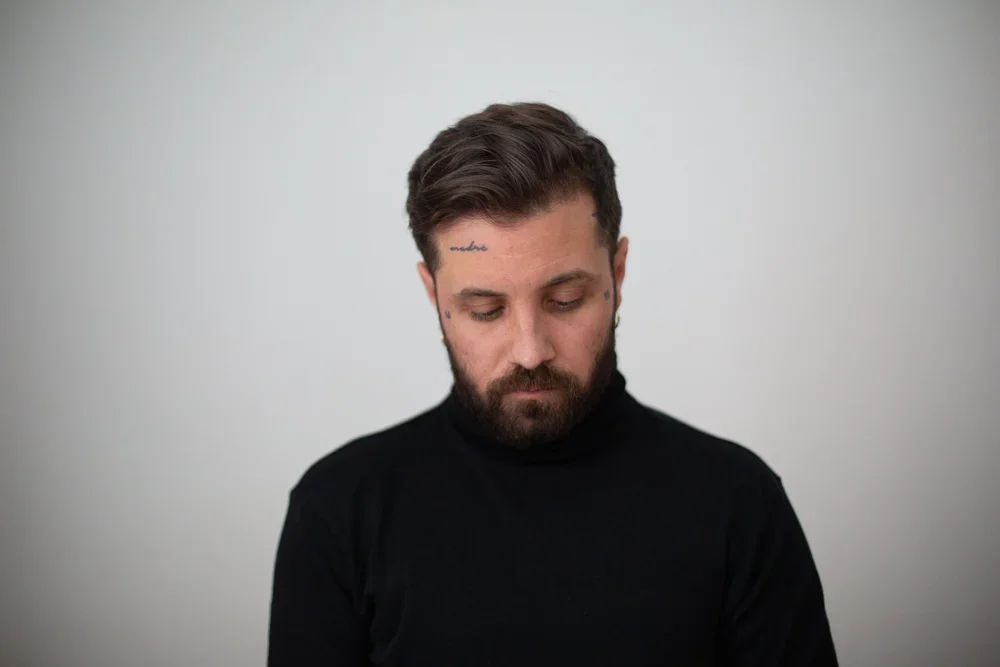
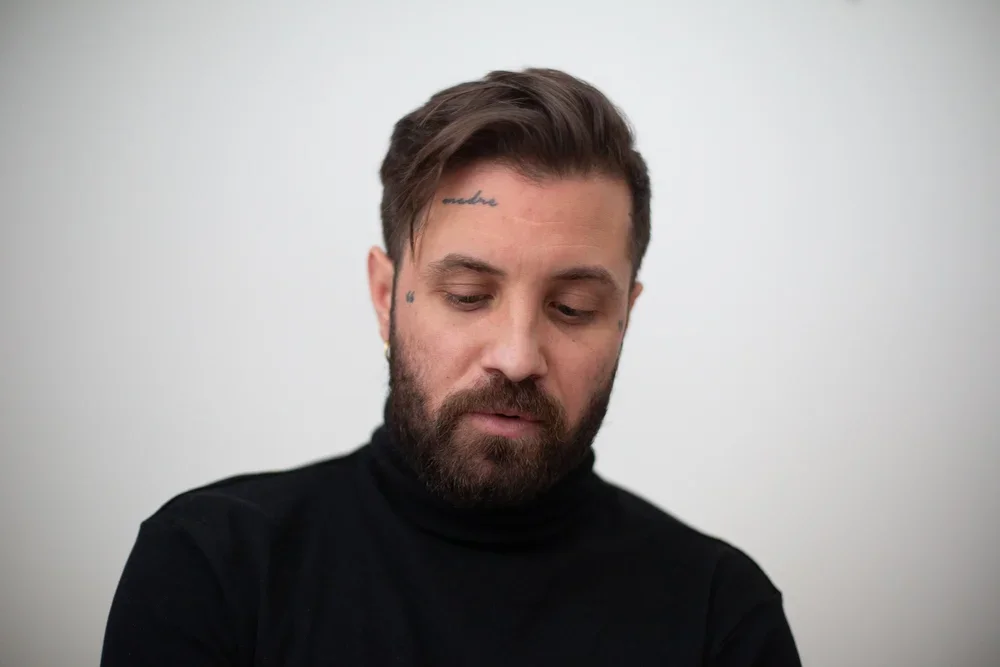
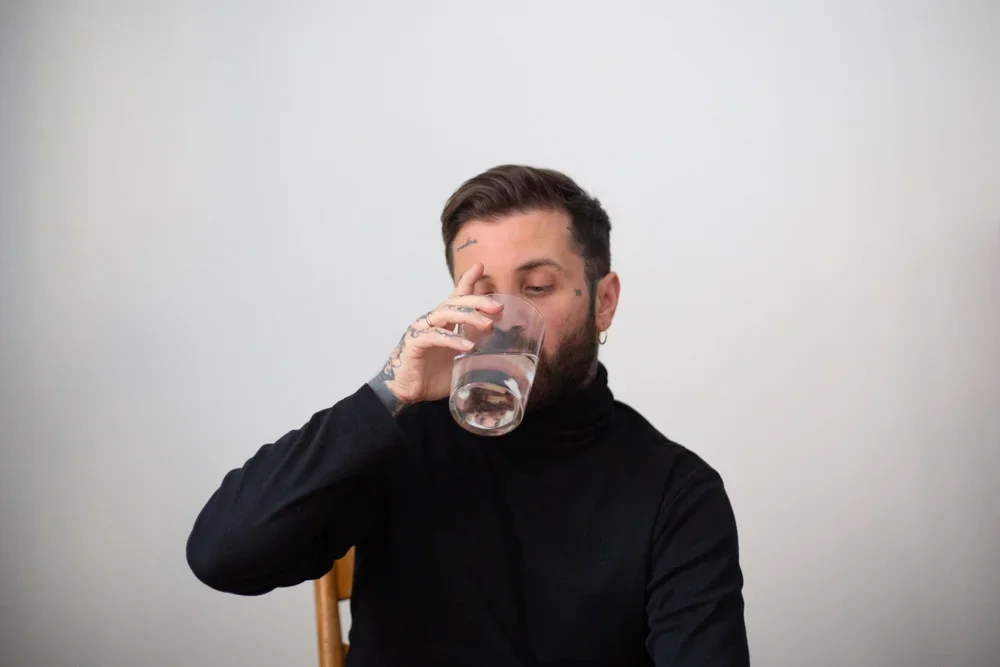
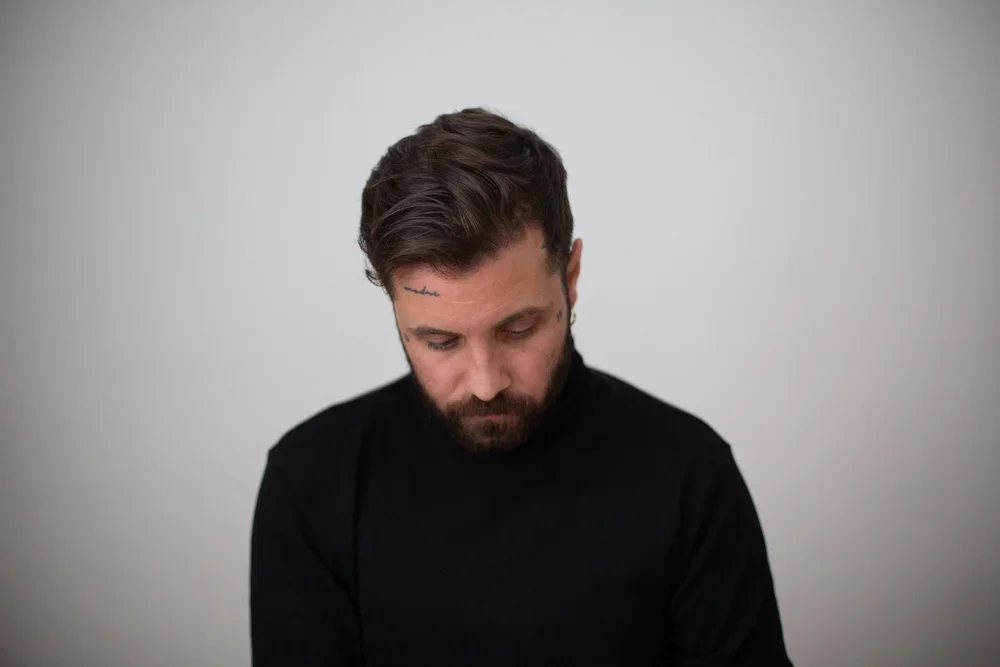
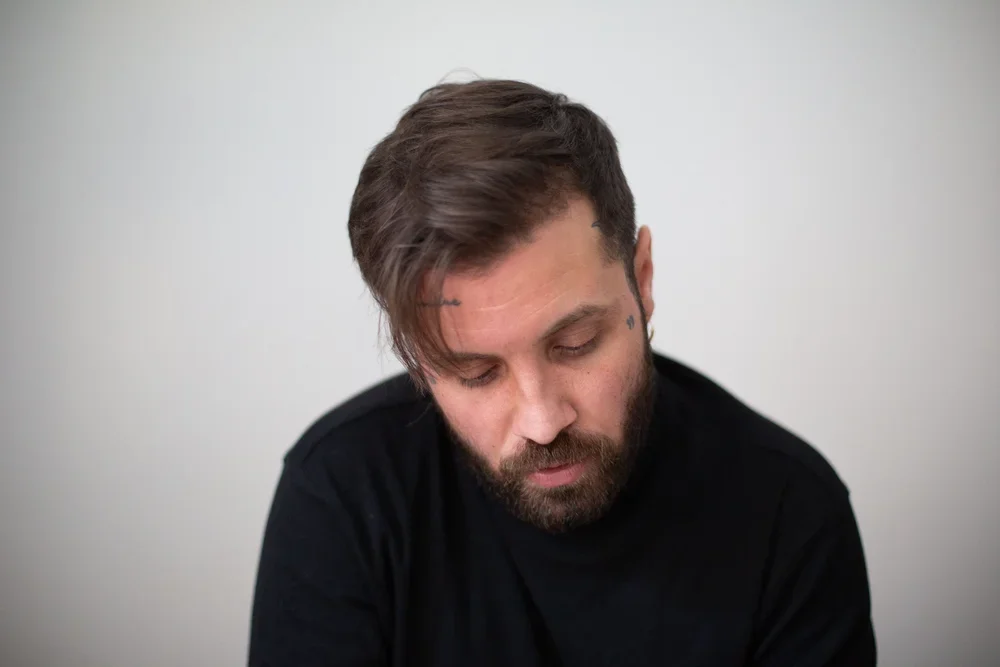
The narrative is a broad selection of forty performances and writings created by Azcona between 2010 and 2026. All of these actions represent the artist's struggle to establish a complete and consistent account of his birth, childhood, and adolescence. In 2026, this narrative construction culminates, in a way, with the publication of a biographical book in which Azcona compiles his nearly complete story. From obtaining his abandonment and adoption records to works such as Exegesis of the Mother and Sister's Word, both of which recount his entire experience, the artist is able to rewrite the blank spaces in his history that were, in some ways, poorly narrated.
El relato es una amplia de selección de cuarenta performances y escritos realizadas por Azcona entre los años 2010 y 2026, Todas estas acciones son una lucha del artista por establecer un relato completo y consistente de su nacimiento, infancia y adolescencia. En el año 2026 de alguna manera, esta construcción del relato concluye mediante la publicación de un libro biográfico donde Azcona recopila su relato casi-completo. Desde la obtención de su expediente de abandono y adopción, hasta obras como Exégesis de la madre o Palabra de hermana donde ambas relatan su experiencia completa posibilitando al artista el reescribir los trozos en blanco de su historia que de alguna manera se hallaban mal narrados.
Abel Azcona is a leading figure in European action art, and specifically in autobiographical performance, a discipline he teaches at the Marina Abramović Institute (Athens). His entire artistic practice is a cry of pain for the abuse, violence, and extreme loneliness that marked his childhood. From his early years of training, confessional performance became his path to salvation. His goal is not individual healing. His actions generate a collective catharsis in which emotions of liberation, healing, and revenge coexist. Azcona’s actions do not function as closed pieces. They extend over time, are affected by social events, and are reactivated as new autobiographical contributions emerge. Although the artist’s body is the initial spark of the work, in the exhibition space the documentation of the action is accompanied by testimonies, documents, letters, and symbolic objects that broaden the audience’s interpretations. In his imagination, writing plays an essential role. The word becomes the intermediary of the narrative. It should be noted that Abel Azcona has developed, parallel to his visual work, a valuable literary oeuvre (diaries, critical texts, poetry collections, narrative), with the epistolary genre serving as the seed for many works. Among these pieces where correspondence is key, the following stand out: Forgiveness (2022), a project centered on a letter written with irony and affection by Chusa García Camón, the artist’s art history teacher who introduced him to performance; the work-in-progress Care (2024), composed of letters written by artists and various individuals who have cared for the artist in previous performances; and the dazzling Exegesis of the Mother (2024), the complete testimony of his mother’s life experience in an epistolary format. The confessional nature of these pieces, in which Abel Azcona exposes his intimacy, is revolutionary, particularly coming from a male artist within a patriarchal social and artistic context that denies masculinity the possibility of expressing vulnerability. It is no coincidence that the artist considers the feminist performance artists of the 1970s—who coined the slogan “the personal is political”—as his primary references. The works presented do not merely recount Azcona’s personal life; they open debates about the idea of the traditional family and the possibilities of embracing other affective models. In the tradition of “ritual performance,” pioneered by feminist artists of the 1970s (Valie Export, Hannah Wilke, Orlan, Marina Abramović, among others), Azcona creates performances in which he delves into his identity concerns using his most instinctive self. In the powerful action Mama(2024), he repeats the word “mama” until he loses his voice. These are radical actions in which the artist relinquishes control over his body to touch the deep pain of trauma. The program includes fragments of two of his most emblematic actions in this vein: Empathy and Prostitution (2013–2014), performed in Bogotá, Madrid, and Houston, in which he exposes his body to be used by the public in any way they choose for a modest price; and The Sap (2022), performed in Madrid and Amsterdam, in which—empathizing with his mother’s life—he consumes heroin, exposing his body’s degradation to the public in an attempt to regress to his mother’s womb and the withdrawal syndrome with which he entered the world. Alongside these works involving physical risk, the artist also creates others of a social, “relational” tone that blend naturally into the flow of everyday life. These actions often require the help or accompaniment of participants. In this line, the program includes: The Family Lawyer (2024), an original performative meeting with a family lawyer to study the possible adoption of the artist by his biological mother; A Mandatory Microphone (2024), in which an open microphone captures the advice offered by attendees—also people with histories of abandonment—before he meets his biological mother; and the striking Mother or Not Mother (2024), involving the live reception and opening of the letter containing the DNA test results between the possible mother and the artist. In Abel Azcona’s actions, “the now” is an essential ally. The artist prepares the ingredients that will trigger the earthquake of his action but does not decide the exact course in advance. He creates the context for the spark of a revelation to be born, unknown to both the audience and himself until that very moment. This risky and unpredictable interplay with the present makes his actions unique and distinctive. On April 1, 1988, the day of his birth, Abel Azcona was abandoned in the hospital by his mother, a young prostitute and heroin addict living in extreme precarity. Thirty-seven years later, mother and son meet in person, in an action preceded by prior exchanges (letters, videos, and phone messages), with the aim of opening a new stage in their lives and attempting to heal together the shared history of violence. The action, curated with sensitivity and mastery by Semíramis González—who wove very fine threads to temper the emotions of the three parties: mother, son, and community—can be summarized in the curator’s words: “It goes beyond the personal, for it reveals how art can serve as a means to heal wounds, make pain visible, and offer resistance to patriarchal structures. The performance creates a space for reflection on the violence suffered by both: on the one hand, Azcona’s story, marked by childhood abandonment, and on the other, Isabel’s testimony, shaped by addiction, prostitution, and vulnerability to gender violence.” Mother and son hold hands thirty-seven years later. The active silence of those present is palpable. The cultural figures seated in the front rows may attract the most media attention, but they are not the most important. The room is filled with the artist’s loyal followers, with whom he has shared stories of abandonment and violence for years, many having traveled long distances to participate in this communion of bodies. Bodies stunned into silence by awe and emotion. Breath is held until the final embrace between mother and son—an embrace that breaks the silence into applause. If you'd like, I can also provide a shorter summary or adapt the tone for academic, journalistic, or curatorial writing.
Susana Blas
Abel Azcona es un referente del arte de acción europeo, y en concreto, de la performance autobiográfica, especialidad sobre la que ejerce la docencia en el Marina Abramović Institute (Atenas). Toda su práctica artística es un grito de dolor, por los abusos, la violencia y la soledad extrema que marcaron su infancia. Desde sus años de formación, la performance confesional se convierte en su vía de salvación. Su objetivo no es la sanación individual. Sus acciones generan una catarsis colectiva en la que conviven emociones de liberación, curación y venganza. Las acciones de Azcona no funcionan como piezas cerradas. Se prolongan en el tiempo, se ven afectadas por acontecimientos sociales y se reactivan según cambian las nuevas aportaciones biográficas. Aunque el cuerpo del artista es el primer detonante de la obra, en el espacio expositivo, el registro de la acción se acompaña con testimonios, documentación, cartas y objetos simbólicos, que amplían las interpretaciones de la audiencia. En su imaginario, la escritura tiene un papel esencial. La palabra se convierte en el intermediario del relato. Hay que saber que Abel Azcona ha desarrollado en paralelo a su obra visual una valiosa obra literaria (diarios, textos críticos, poemarios, narración), siendo el género epistolar el germen de muchos trabajos. Entre estas piezas donde la correspondencia es clave, destaca ‘El perdón’ (2022), proyecto en torno a la carta escrita desde la ironía y el afecto por Chusa García Camón, profesora de Historia del arte del artista, que le enseñó el camino de la performance; el proyecto en proceso, ‘Cuidados’ (2024), compuesto por cartas escritas por artistas y personas diversas que han cuidado al artista en performances previas; y la deslumbrante ‘Exégesis de la madre’ (2024),el testimonio completo de la experiencia vital de la madre en formato epistolar. El carácter confesional de las piezas, en las que Abel Azcona desnuda su intimidad, es revolucionario, viniendo de un artista masculino, en un contexto social y artístico patriarcal que niega a la masculinidad la posibilidad de expresar la vulnerabilidad. No es casualidad que el artista considere sus referentes a las artistas de la performance feminista de los años 70, que acuñaron el lema: ‘lo personal es político’. Los trabajos presentados no se limitan a narrar la vida personal de Azcona, abren debates sobre la idea de familia tradicional y sobre las posibilidades de abrirse a otros modelos afectivos. En la tradición de la ‘performance ritual’ de la que las artistas feministas de los años 70 son pioneras (Valie Export, Hannah Wilke, Orlan, Marina Abramović, entre otras), Azcona realiza performances en las que se adentra en sus preocupaciones identitarias usando su parte más instintiva. En la potentísima acción ‘Mamá’ (2024), repite la palabra ‘mamá’ hasta que pierde la voz. Son acciones radicales en las que el artista renuncia al control del cuerpo para tocar el dolor profundo del trauma. En el programa se podrán ver fragmentos de dos de sus acciones más emblemáticas de esta línea: ‘Empatía y prostitución’ (2013-2014), performance realizada en Bogotá, Madrid y Houston, en la que expone su cuerpo al uso que el público quiera hacer de él por un módico precio; y ‘La savia’ (2022), realizada en Madrid y Ámsterdam, en la que empatizando con la vida de su madre, consume heroína exponiendo la degradación de su cuerpo al público, en un intento de regresión al vientre materno y al síndrome de abstinencia con el que vino al mundo. Además de estas obras de riesgo físico, el artista realiza otras de tono social, ‘relacional’, que se integran con naturalidad en el flujo de la vida. Son acciones para las que habitualmente solicita la ayuda o el acompañamiento de los asistentes. En esta línea, se podrán ver en el programa: ‘La abogada de familia’ (2024), con un original formato de reunión performativa con una abogada de familia para estudiar la posible adopción del artista por parte de la madre biológica; ‘Un micrófono obligatorio’ (2024), en la que un micrófono abierto recoge los consejos que le proporcionan los asistentes, también personas con un legado de abandono, antes de conocer a su madre biológica; y la impactante ‘Madre o no madre’ (2024), recepción y apertura en directo de la carta con los resultados de las pruebas de ADN, entre la posible madre y el artista. En las acciones de Abel Acona ‘el ahora’ es un aliado esencial. El artista prepara los ingredientes con los que detonará el terremoto de su acción, pero no decide el proceder exacto de antemano. Crea el contexto para que nazca la chispa de una revelación, desconocida para la audiencia y para él mismo hasta ese momento. Este juego de riesgo y azar con el ‘presente’ hace a sus acciones únicas y diferenciales. El 1 de abril de 1988, día de su nacimiento, Abel Azcona fue abandonado en el hospital por su madre, una joven prostituta y heroinómana, en situación de absoluta precariedad. Treinta y siete años más tarde, madre e hijo se reencuentran en persona, en una acción precedida por acercamientos previos (cartas, vídeos y mensajes de teléfono), con el propósito de abrir una etapa nueva en sus vidas e intentar sanar juntos la historia compartida de violencias. La acción, comisariada con sensibilidad y maestría por Semíramis González, que supo tejer hilos muy finos para templar las emociones de las tres partes: madre, hijo y comunidad, se resume así en palabras de la comisaria: “va más allá de lo personal, pues pone de manifiesto cómo el arte puede servir como un medio para sanar heridas, visibilizar el dolor y ofrecer resistencia a las estructuras patriarcales. La performance propone un espacio de reflexión sobre las violencias sufridas por ambos: por un lado, la historia de Azcona, marcada por el abandono infantil, y por otro, el testimonio de Isabel, atravesado por la adicción, la prostitución y la vulnerabilidad frente a la violencia de género”. Madre e hijo se dan la mano treinta y siete años después. Se siente el silencio activo de los asistentes. Las personalidades de la cultura, sentadas en las primeras filas, quizá sean las que más llamen la atención de los medios, pero no son las más importantes. La sala está llena de las seguidoras fieles del artista, con las que lleva años compartiendo historias de abandono y violencia, que han viajado desde lejos para participar en esta comunión de cuerpos. Cuerpos que enmudecen de asombro y emoción. Se mantiene la respiración hasta el abrazo final de madre e hijo, un abrazo que rompe el silencio en aplausos.
Susana Blas
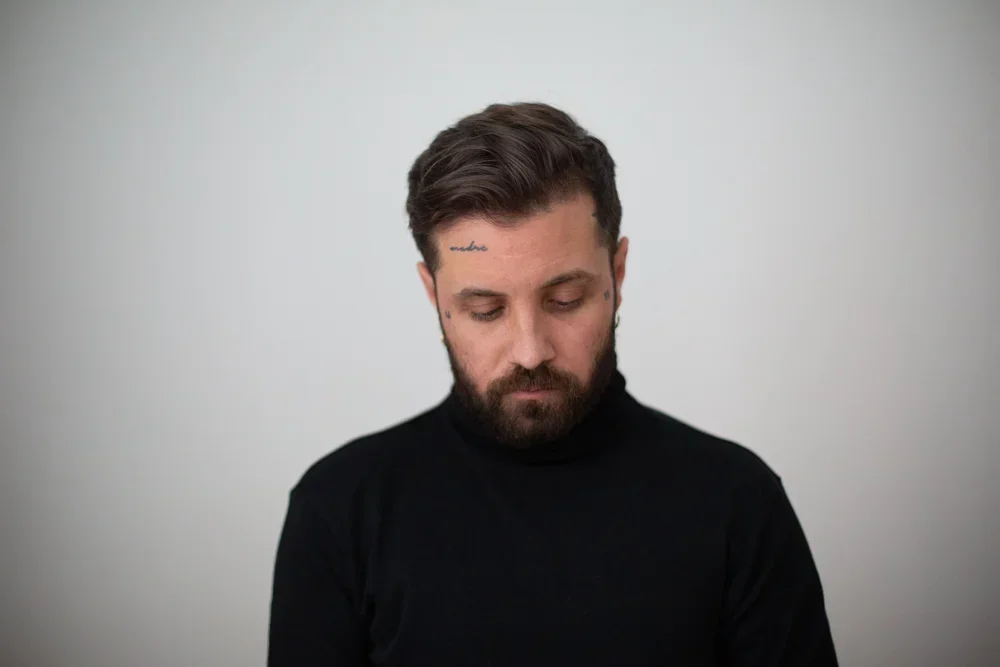
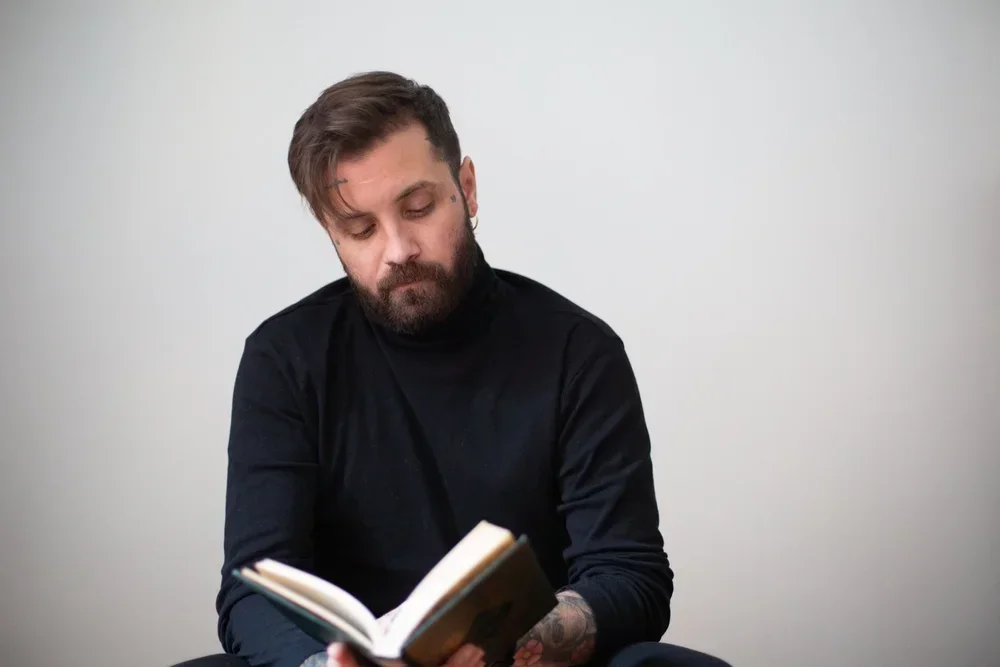
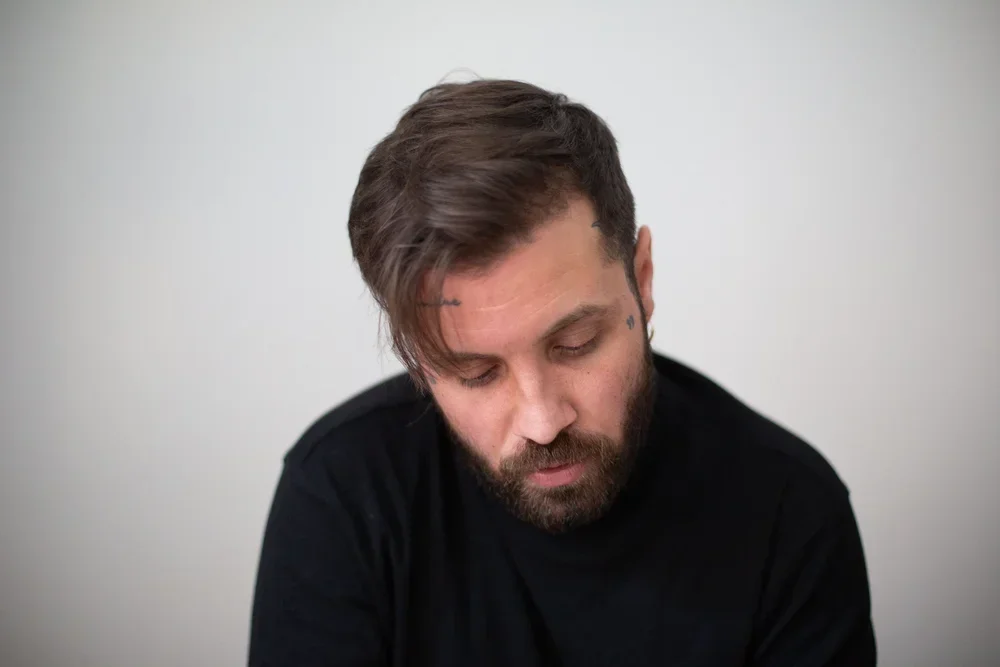
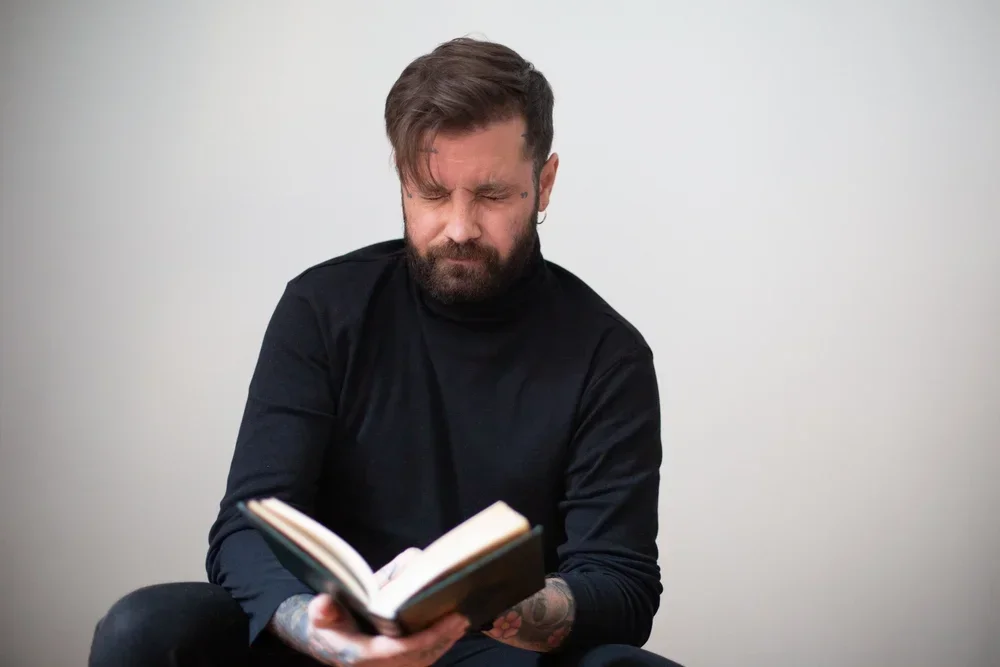
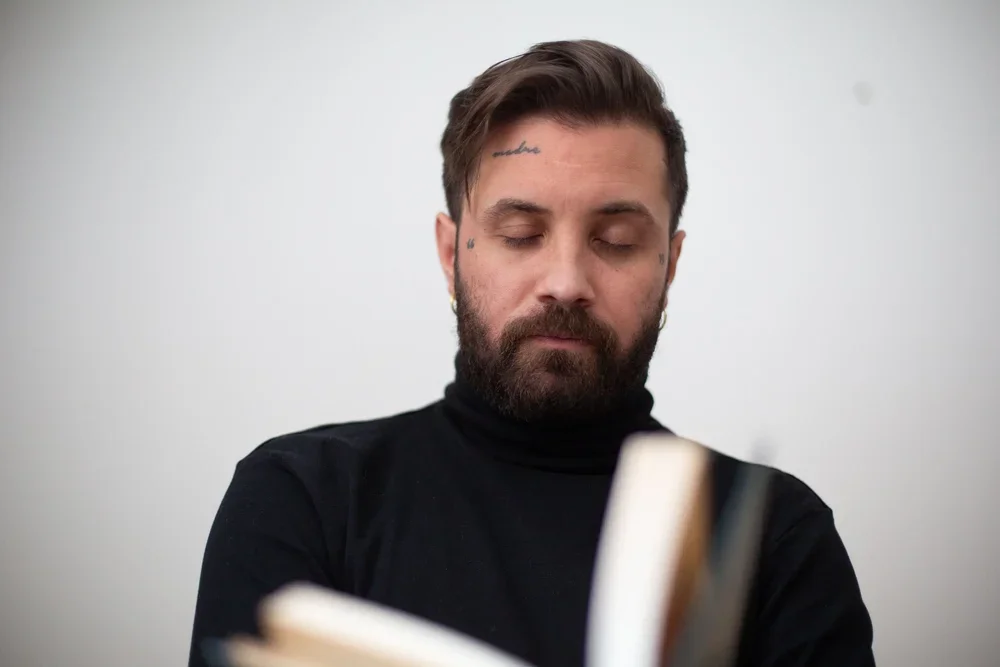
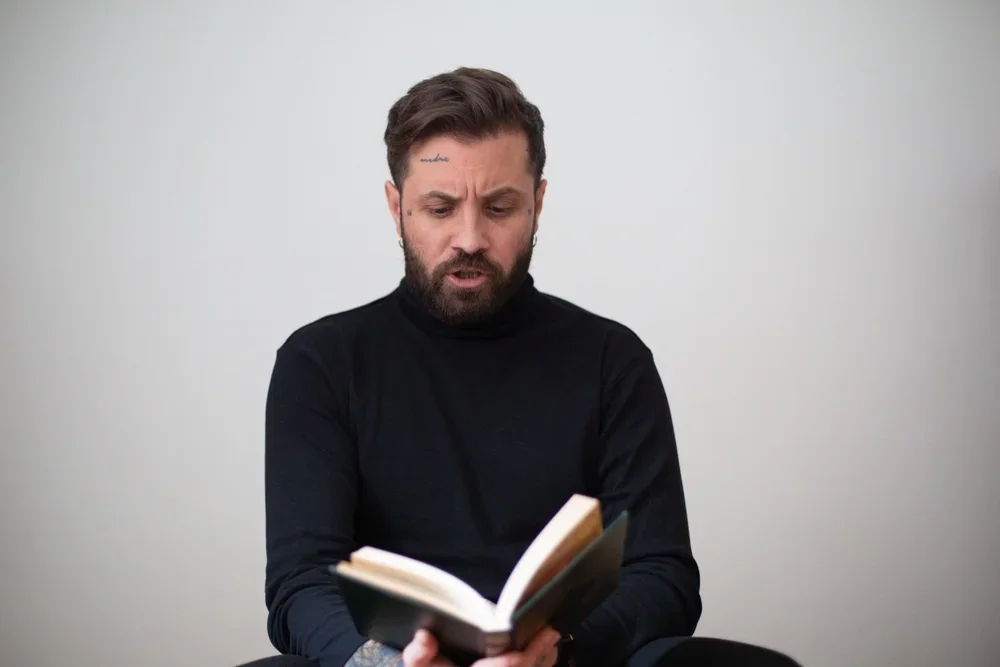
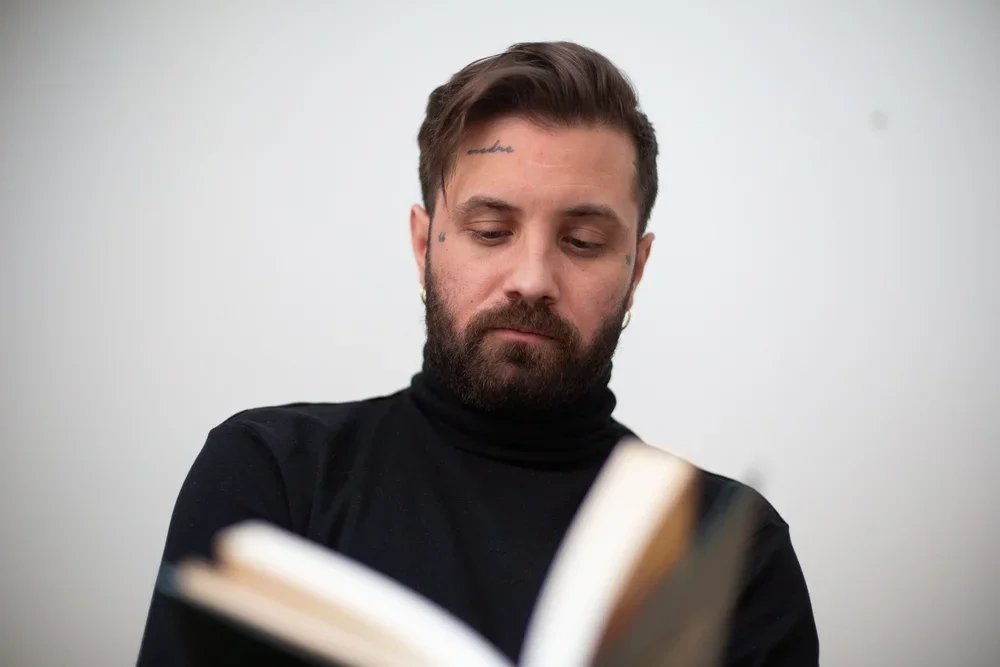
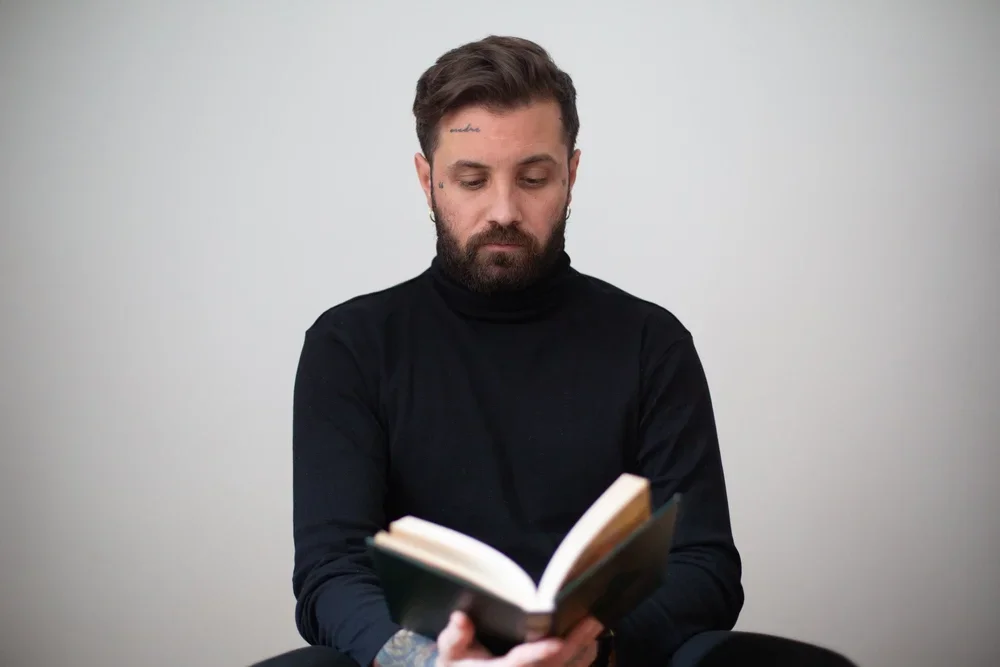
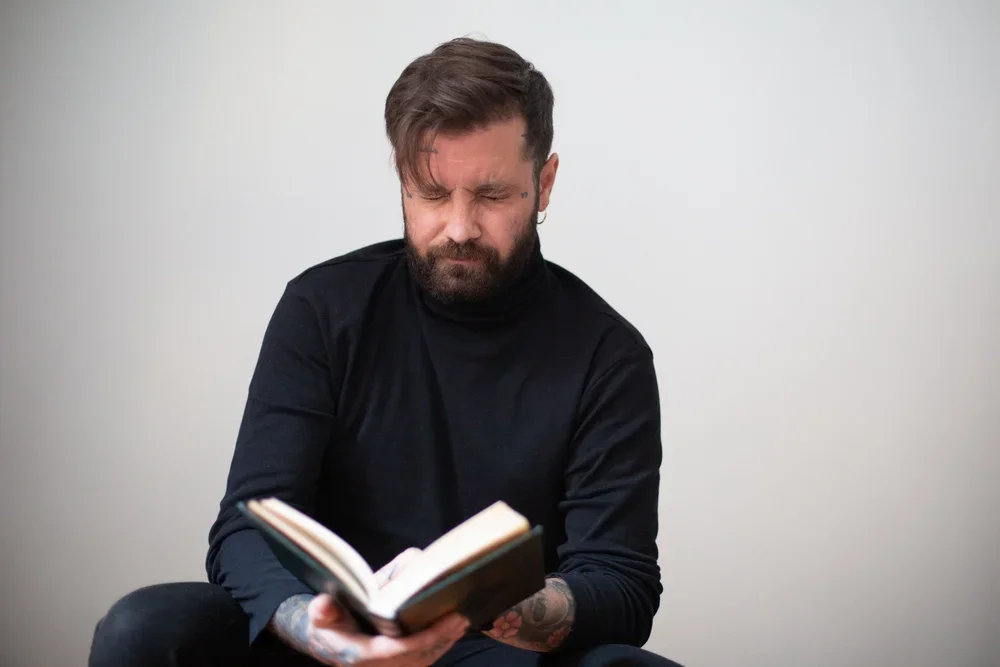
La Lectura es una obra videoperformativa creada a partir de la lectura en vivo de la propia autobiografía del artista. Azcona a finales de 2025 lee de manera consecutiva durante cinco horas y diez minutos su propias memorias bajo el título «El hijo de la puta». En la pieza de video original puede verse el agotamiento del propio artista al leer ante la cámara a modo de performance su propia historia hasta romperse la voz en varias ocasiones. La pieza de video completa podrá verse en la muestra de carácter retrospectivo dedicada al artista en Madrid en el año 2026.
The Reading is a video performance piece created from the live reading of the artist's own autobiography. At the end of 2025, Azcona read his memoirs, titled "The Son of a Bitch," continuously for five hours and ten minutes. In the original video, the artist's exhaustion is evident as he reads his own story to the camera in a performance-like manner, his voice breaking on several occasions. The complete video piece will be shown in the retrospective exhibition dedicated to the artist in Madrid in 2026.
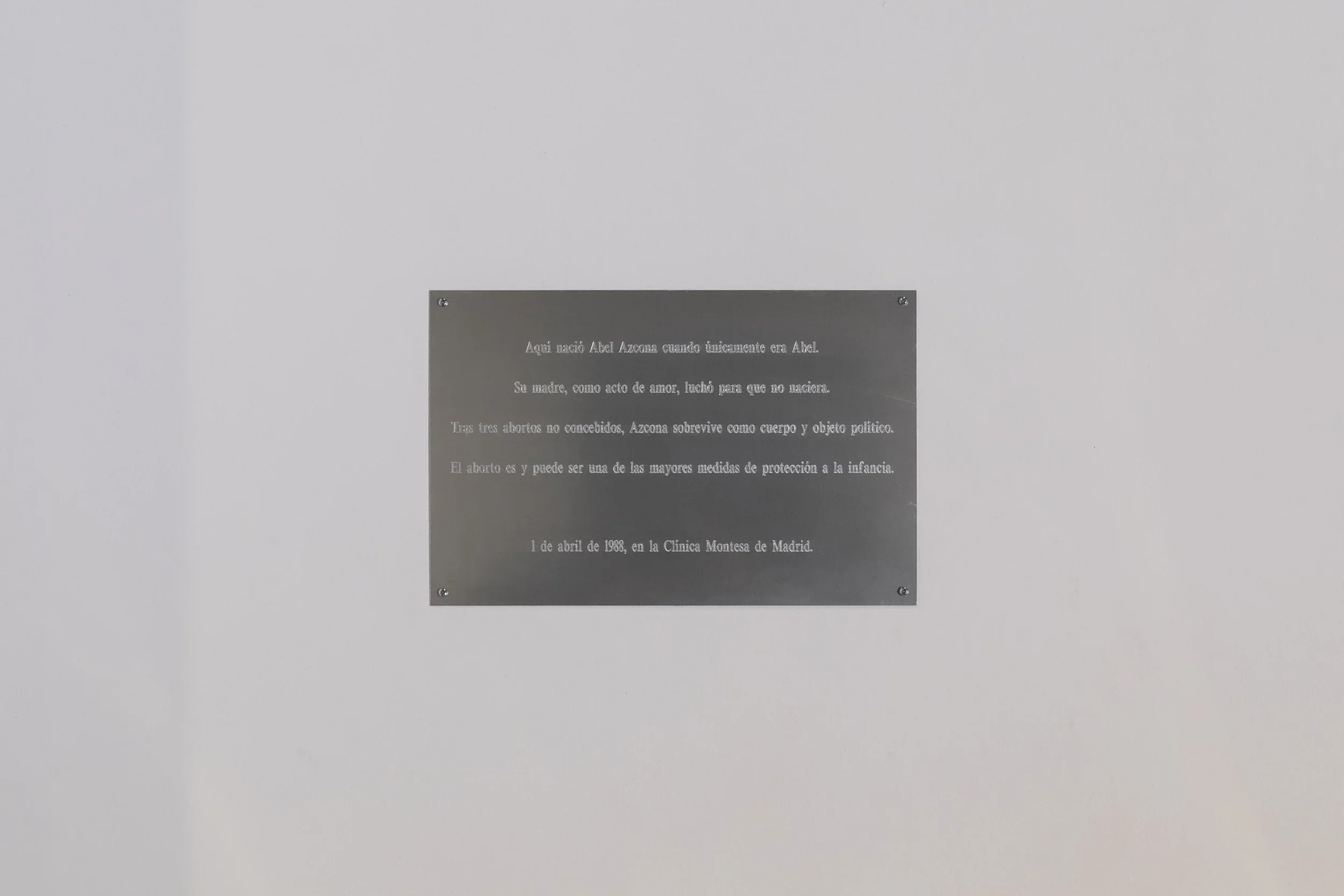
Plaque at the Montesa Clinic is a performative and objectual work activated in December 2020. The artist Abel Azcona installed at the Montesa Clinic in Madrid – the place where he was born – a plaque recalling the right not to have been born and supporting abortion “as one of the best ways of protecting childhood” as, in his case, he claims that he should not have been born, having been created in an environment of drug consumption, prostitution, and total precarity. This piece generated considerable controversy and was denounced, and the plaque was removed and damaged by pro-life and anti-abortion organizations such as Derecho a Vivir.
Placa en Maternidad de Montesa es una obra performativa y objetual activada en diciembre de 2020 el artista Abel Azcona instaló en la Clínica Montesa de Madrid, lugar donde nació, una placa rememorando el derecho a no haber nacido y reivindicando el aborto «Como una de las mayores medidas de protección a la infancia» que existen cuando, en su caso, afirma que no debería haber nacido, al haberlo hecho en un entorno de consumos, prostitución y precariedad absoluta. Esta pieza creó gran controversia y fue denunciada y la placa retirada y saboteada por organizaciones provida y anti-aborto como Derecho a Vivir.
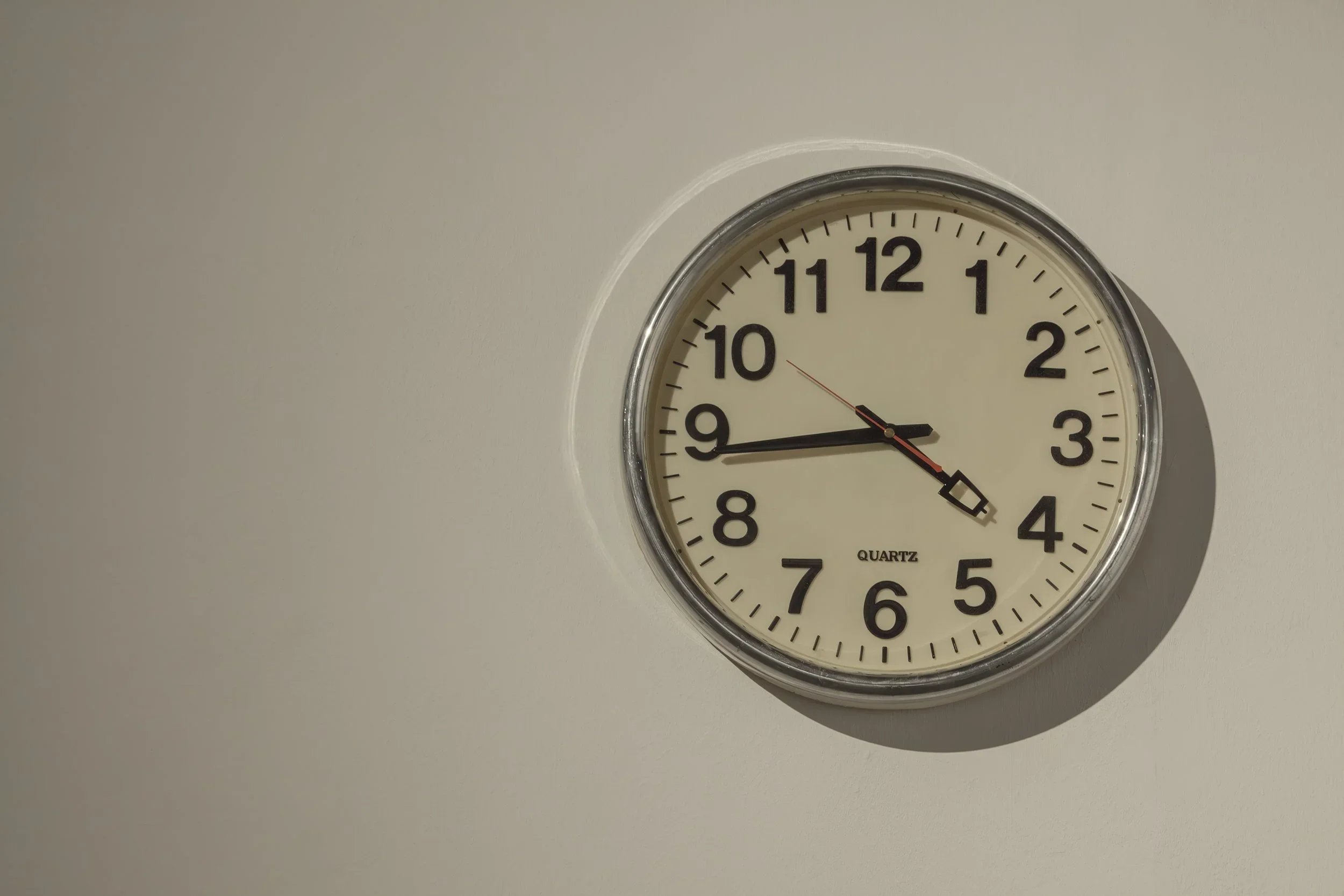
I was born on April 1, 1988, at 4:45 PM in the Maternidad de Montesa in Madrid, a clinic run by Carmelite Teresian nuns that primarily served women at risk of social exclusion and those involved in prostitution. This maternity clinic is also included in the list of clinics linked to the theft of children during and after the Franco regime. Today, I returned to that maternity clinic, and through an act of appropriation, I stole the clock that presided over the waiting room. In a later performance, this clock will be intervened with, and its mechanism will be stopped forever at the exact time of my birth.
This work speaks of the obligation to be born, the obligation to give birth, abandonment, the system, the Catholic heritage, the theft and trafficking of children, and that fateful day and hour when I was thrust into life.
Abel Azcona
Nací el 1 de abril de 1988 a las 16.45h en la Maternidad de Montesa de Madrid. Una clínica regentada por monjas Carmelitas Teresianas que atendían sobre todo a mujeres en riesgo de exclusión y prostituidas. Esta maternidad además está incluida en la lista de clínicas vinculadas al robo de niños durante el franquismo y el posfranquismo. Hoy he regresado a esa maternidad y mediante una pieza de apropiación he robado el reloj de la maternidad que presidía la sala de espera. Este reloj en una performance posterior será intervenido y su maquinaria será paralizada para siempre en la hora exacta de mi nacimiento.
Una obra que habla de la obligación de nacer, de la obligación de parir, de abandono, del sistema, de la herencia católica, del robo y tráfico de niños y de aquel fatídico día y aquella fatídica hora donde se me precipitó a la vida.
Abel Azcona
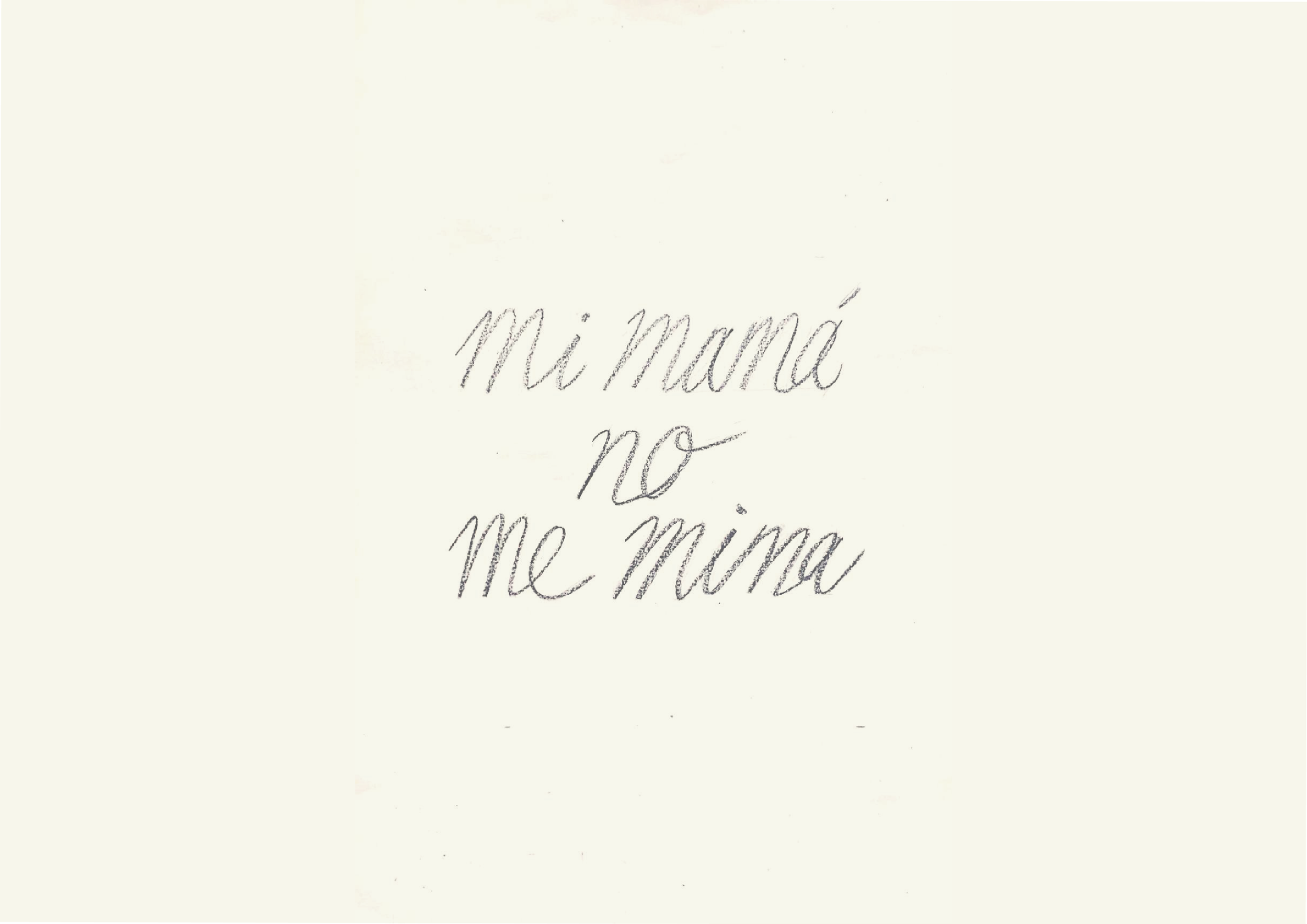
Mi mamá no me mima is a work created with paper and crayons by Abel Azcona in 2022. Being understood as a procedural piece centered around a specific event that occurred in 1993, Azcona dates the piece as an open process spanning from 1993 to its execution and completion in 2022. It consists of nine paper works created with crayon paint.
Mi mamá no me mima es una obra de papel y crayola creada por Abel Azcona en el año 2022. Al ser entendida como una pieza procesual en torno a un suceso concreto ocurrido en el año 1993 Azcona data la pieza como proceso abierto entre el año 1993 y la fecha de ejecución y cierre, el año 2022. Nueve obras en papel creadas con pintura crayola.
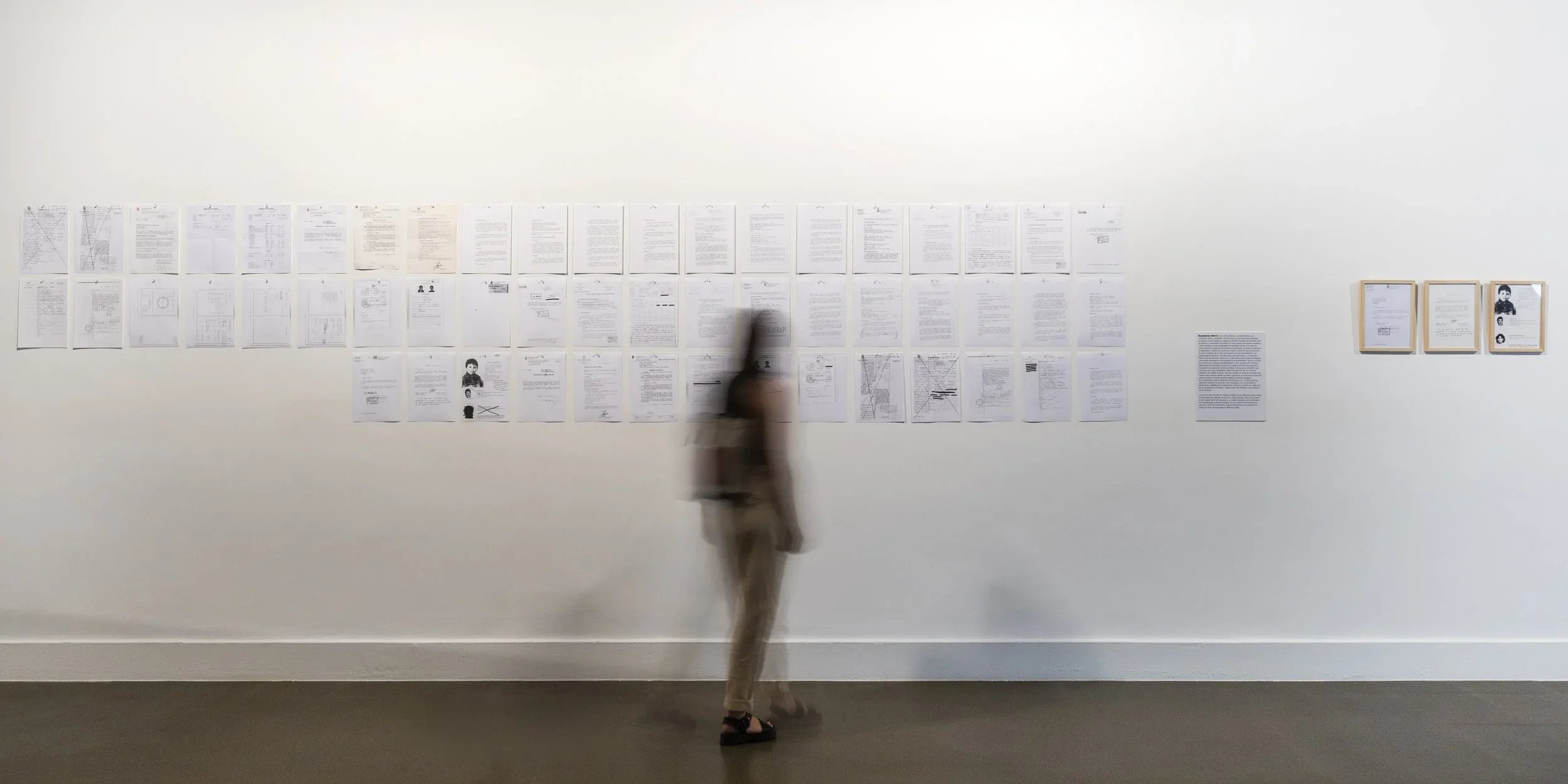
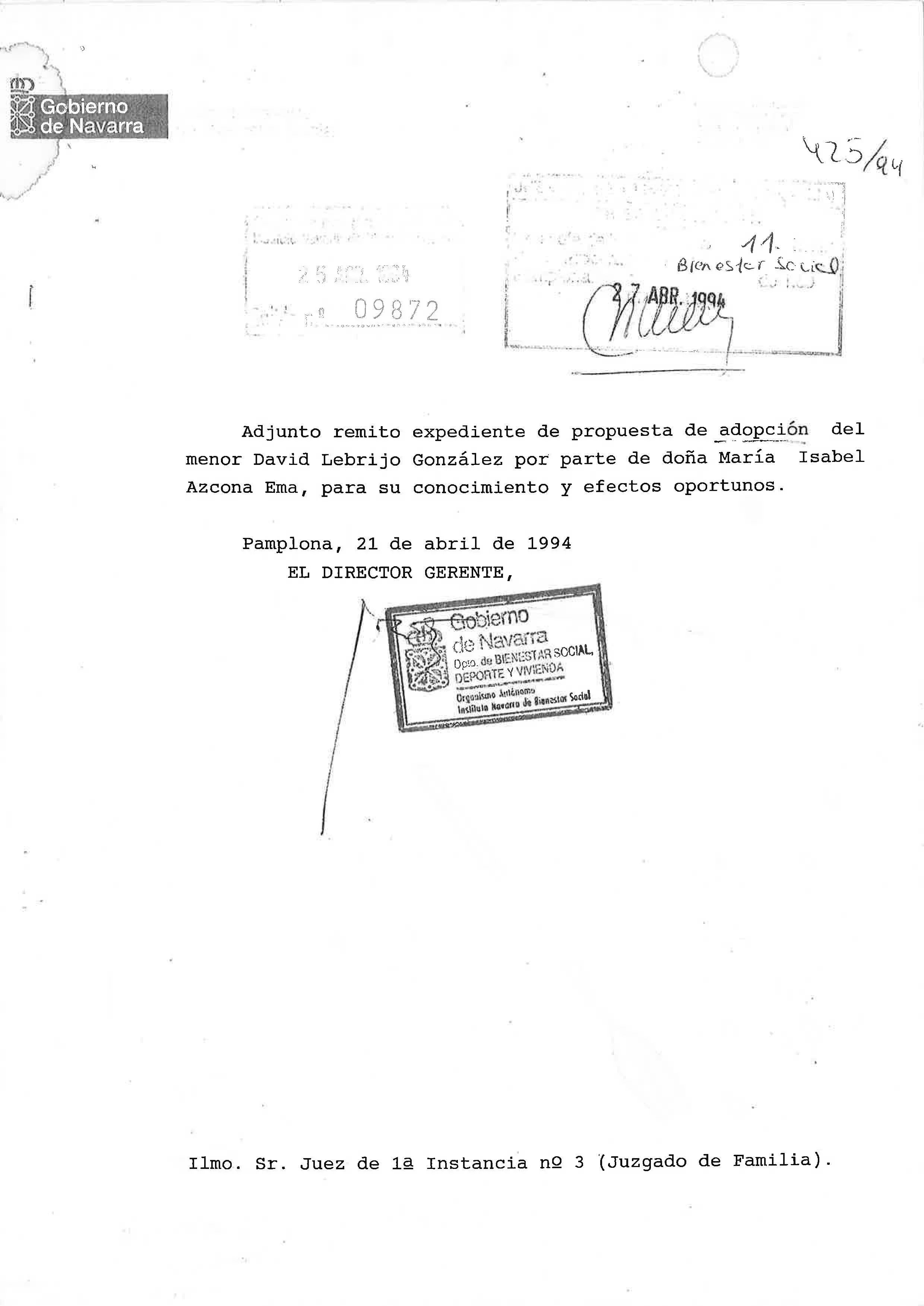
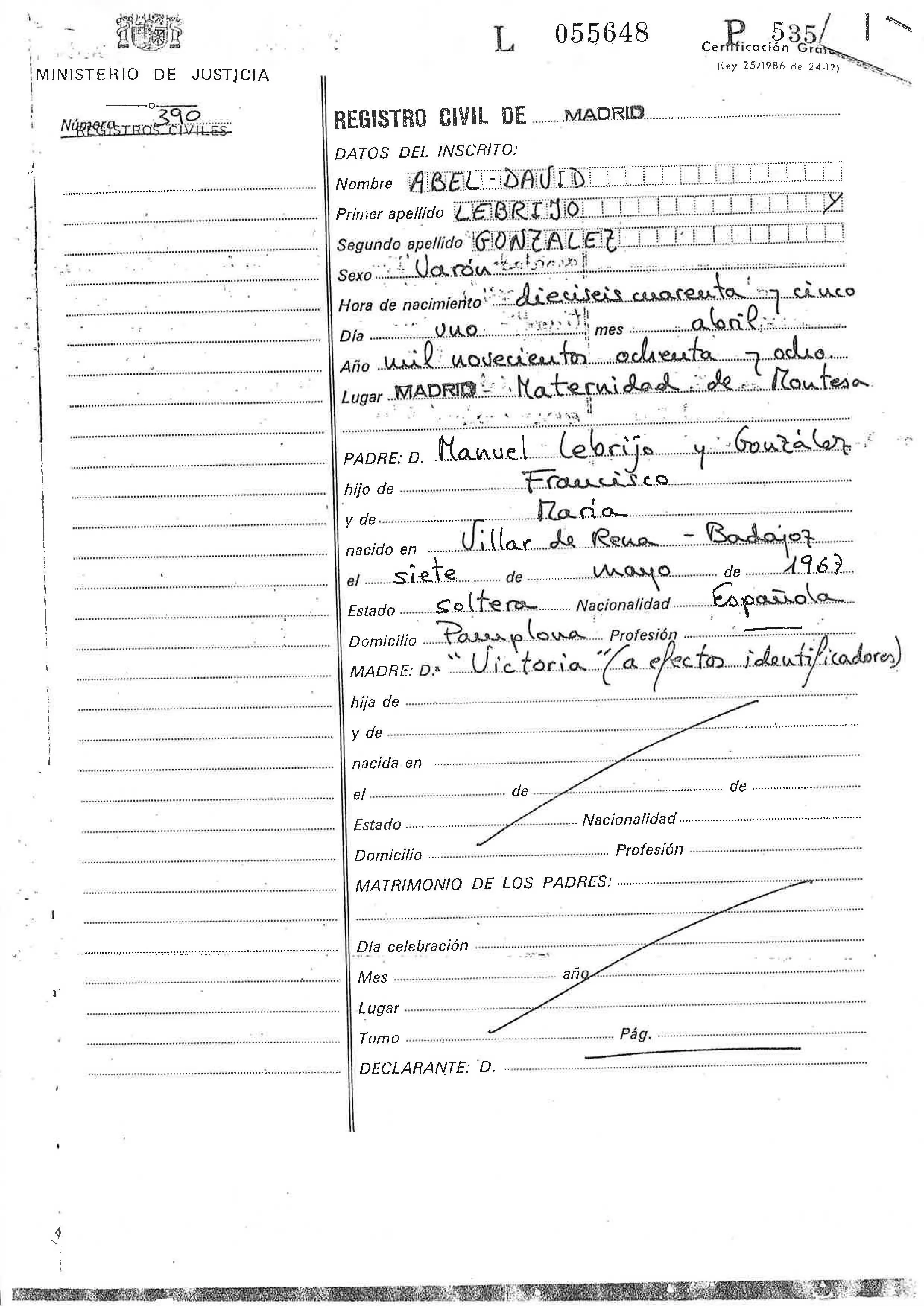
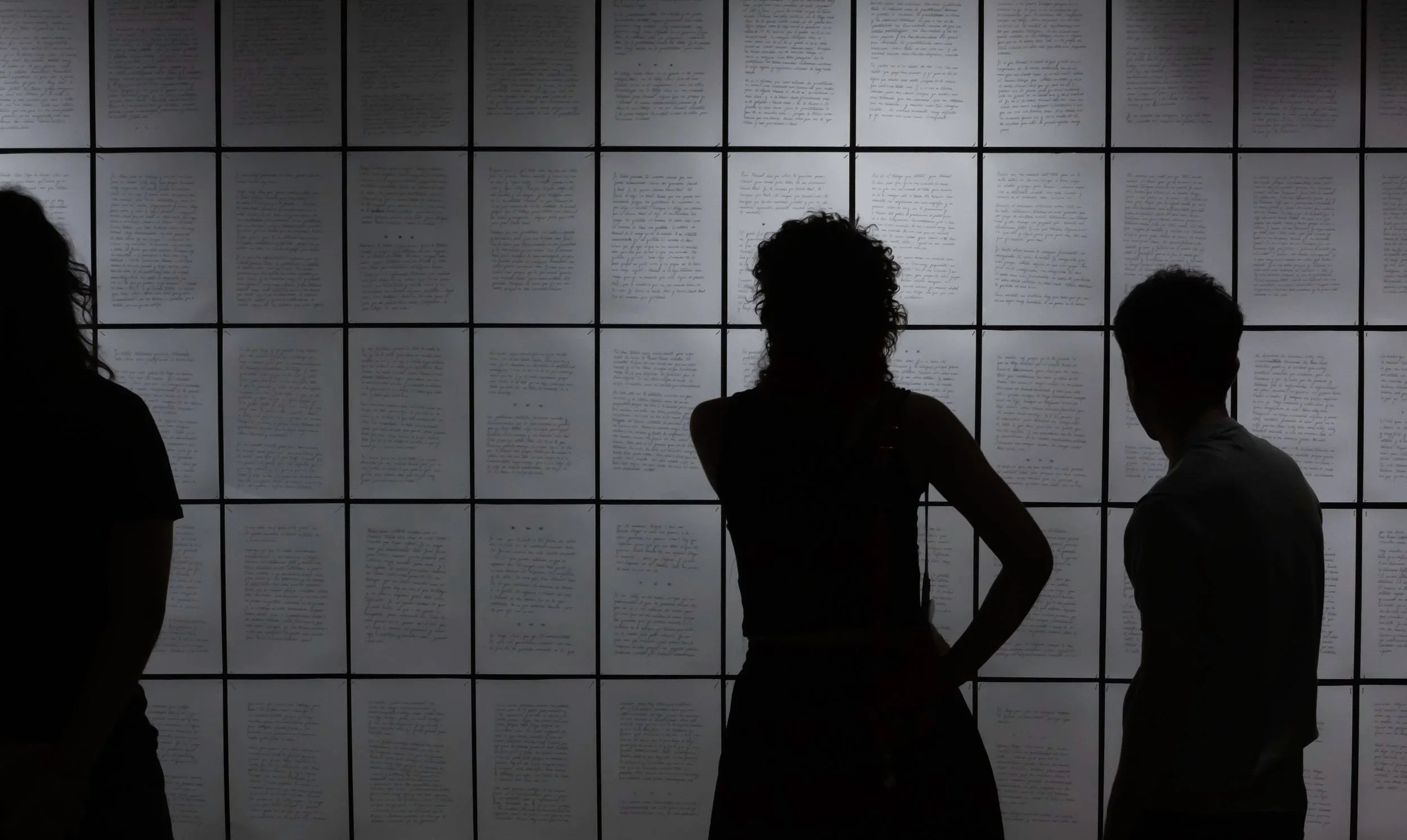
File 08972 is an artistical and performance work, of critical and biographical content. The piece has a procesual basis, created involuntartily during the first years of the artist's chilhood and grouth. In a documental installation his own Social Welfare file. Throughout a hundred and twenty eight pages we find specific situations that led to Azcona´s despair and abandonment when he was a minor. In the documents the child's situation of complete abandonment, with visible signs of abuse, of neglect and malnourishment, and neighbour's and acquaintance's testimonies that confirmed that the minor sometimes was left alonefor weeks in the apartment , which did not fulfill the minimum habitabiliy conditions. In his artistic construction, usually biographical, Azcona shows us once again openness and transparency when artistically exhibiting the full file the work.
Expediente 09872 es una obra artística y de performance, de contenido crítico y biográfico de Abel Azcona. La pieza tiene una base procesual, al ser creada de manera involuntaria durante los primeros años de infancia y crecimiento del artista. En ella muestra de manera instalativa y documental su propio expediente de Bienestar Social. A lo largo de ciento veintiocho páginas encontramos situaciones concretas que llevaron al desamparo y abandono de Azcona siendo menor. En los documentos se narra el estado de un niño en situación de total de abandono, con visibles signos de abuso, de descuido y de desnutrición, y se aportan testimonios de vecinos y el entorno confirmando que el menor se llegaba a encontrar semanas en total soledad en el apartamento, que no cumplía las condiciones mínimas de habitabilidad. En su construcción artística, habitualmente biográfica, Azcona nos muestra una vez más apertura y transparencia al exponer de forma artística toda la documentación que conforma esta obra.
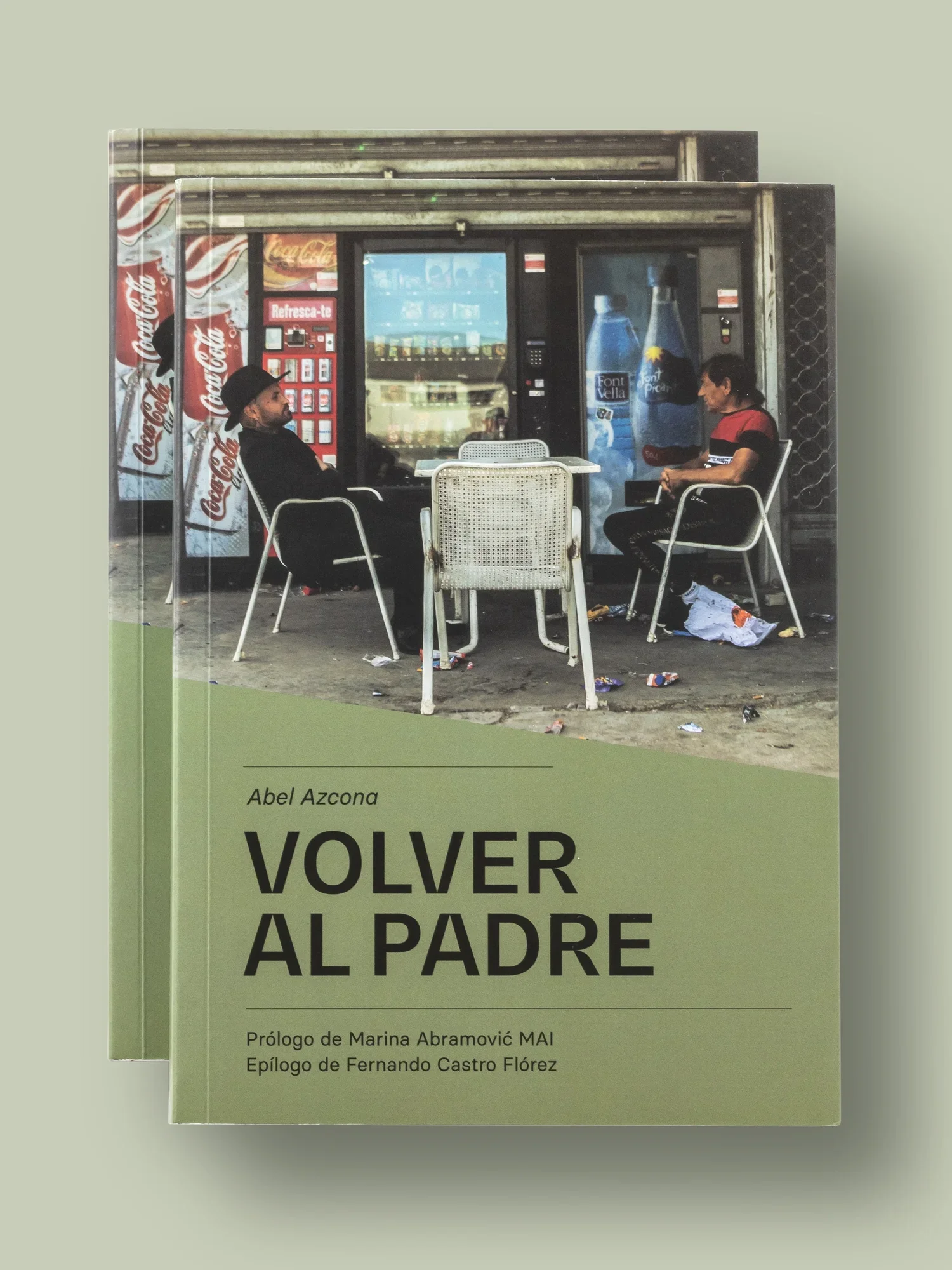
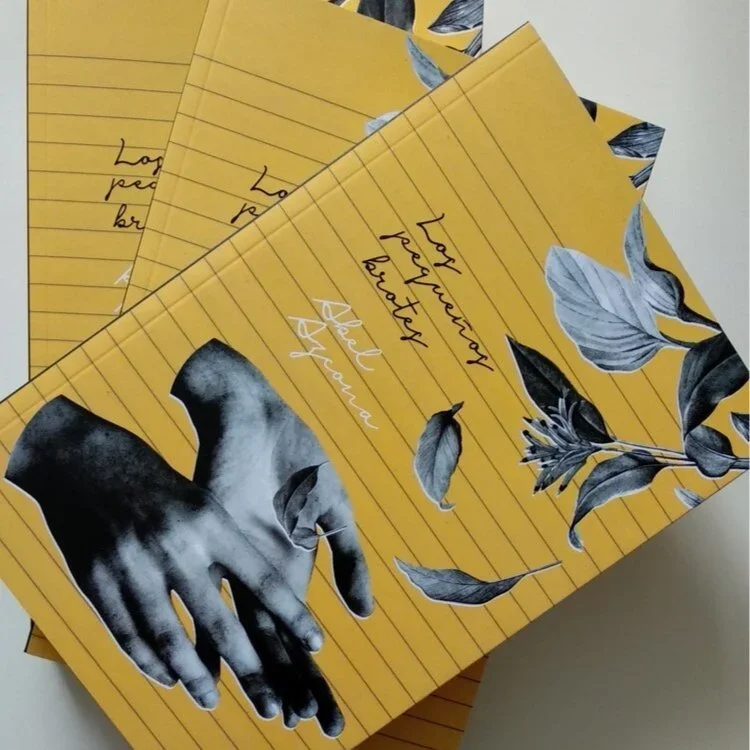
Some of the books in which Azcona develops the narrative over the years. /Algunos de los libros donde Azcona va evolucionando El relato al paso de los años.
When working with Abel Azcona on any type of project—exhibitional, performative, or editorial—the factor that demands the most meticulous attention is the narrative. In contrast to the deconstruction of narratives undertaken multilaterally since poststructuralism, Azcona’s entire body of work emerges in the contemporary art scene as a project of restoring the order of storytelling. This need for a "narrative order" may seem paradoxical at first, given the rebellious attitude that permeates his entire production. In his fervent defense of disobedience, Azcona claims freedom as the only possible modus vivendi for the artist. In his own words: "The creator cannot be subjugated by anything. The creator must not be subdued. The creator must be both a weapon and a trigger." A little further on, he emphasizes: "In every work, in every stance, I also question and disapprove of that entity to which I refuse to belong submissively." What "entity" is the author referring to? It is not difficult to deduce: what is commonly called the "system," a power structure whose effectiveness lies precisely in the infallibility of its alienating narrative. The question that then arises—lest we fall into an initial contradiction that would frustrate any hermeneutic attempt—is how to approach the act of disobedience toward the systemic narrative that Azcona proposes when, strictly speaking, his work also adopts a narrative configuration.
A Double Genesis: Excess and Deficit
From the perspective offered by the "productivity regime" that sustains systemic narrative, the story woven by Abel Azcona constitutes a failed narrative. This is due to the dual nature of its genesis: on one hand, its excessive condition, which is unassimilable by the system; and on the other, its deficient condition, which is insufficient for the proper functioning of that system. Regarding the first of these origins, it must be noted that the surplus injected into Azcona’s narrative stems from the artist’s own desire never to have been born. There is no doubt about this when he states: “From an external and distant perspective, I want to imagine that if I had not been born, if there had not been up to three refusals to grant me my right not to be born, my body would not have become the target of vengeance and others’ pain.” Even more so when he declares: "Abortion is one of the greatest measures of child protection that exist. If, in Azcona’s own view, his life should never have been, then the narrative that constructs it and seeks to give it meaning should not exist either. Birth is an event that, retrospectively, is superfluous; it does not articulate itself as a "cause of" but rather as an excessive effect that only generates redundant motives. Moreover, in a welfare society, the value of life—bringing it into existence, caring for it, saving it—determines the usefulness or redundancy of the system’s different mechanisms. Death is considered a failure. Only "life narratives" contribute productively to the benefit of society. That is why the antagonistic paradigm proposed by Azcona’s narrative—*"living is a failure"*—can only be institutionally regarded as an anomaly, a surplus categorized under the aesthetics and semantics of the monstrous.
Indeed, Diego Sileo points out that Azcona configures a new dimension of corporeality that incorporates the morphology of the monstrous: "His 'monsters,'" he specifies, "do not come from the outside. They are not products of magic. On the contrary, they are within us; they are our own bodies." The figure of the monster poses a challenge to the normative. Its body intervenes in the space of the civilized as a saturated alterity that carries disorder and, therefore, threatens the unmarked, balanced body of the normative. The freedom of the monstrous must be *"contained by strategies of normalization." This urgency displayed by the dominant normative narrative to repress Azcona’s monstrous account raises an intriguing issue that cannot be ignored: the paradox represented by the formula *"monstrous narrative."* While narrative organizes and shapes a heterogeneity of events, the monster, by contrast, deforms unity and renders it irreducible. Narrative belongs to syntax; the monster, to parataxis. The logical inference of this opposition is that by narrating it, Azcona flattens the monster, stripping it of all its conflicting heterogeneity. However, nothing could be further from the truth: in his case, the narrative matrix functions as the monster’s reason for existence. To *monstrate* is, in this sense, to *show. The disobedience of the monster no longer feeds on the unregulated invisibility to which the freak is expelled but rather on exposing and making visible what was always hidden—abandonment, abuse, kidnapping, in sum, violence in all its forms. In this way, the monster becomes fully integrated with the narrative, turning it into an obscene device of vision: the entire narrative operates as a panopticon of horror, where the absence of blind spots *monstrates* violence in its entirety, fully illuminated—too excessive a clarity for the eyes to bear. In Azcona’s narrative, there are no escape points for the gaze, no compassion, no relief of an off-screen space: inevitably, the monster appears head-on, as a presence that is born and exists when the gaze has crossed the threshold of the inadmissible.
The monster-narrative of Azcona delivers a body that shares all its characteristics with that of Dionysus: "It is the body marked by difference, by disorder, by the formless, by disintegration, by oblivion." However, the Dionysian ascription of Azcona's narrative generates a new point of tension: the compatibility between the narrative as a place of remembrance and as a support for its autobiographical performance, and the body materialized within it as an "erasing agent" and a source of oblivion. In this regard, it is worth recalling that the Latin root of "relato" (relatus) consists of two lexical components: the prefix "re" ("backward," "repetition") and "latus" ("carried"). In its original and literal sense, a relato (narrative) is something that carries backward with the intention of repeating something—in other words, etymologically, a narrative is an act of remembering. In contrast, the trance of the Dionysian body—expressed through ecstasy—entails an "experience of oblivion." To explain this apparent contradiction, it is necessary to find a point of convergence between autobiographical narrative and Dionysian trance. And the place where both realities meet is the loss of distance between fundamental binaries: the "I" and the "other," the "subject" and the "object."
In his analysis of "self-narratives," Mark Freeman writes: "When we attempt to interpret something outside ourselves—be it a text, a painting, or a person—there is something there in front of us: words, paint smudges, or actions. But what is really there when the object of our interpretative efforts is ourselves? (…) Our pasts, our stories are, in this sense, inseparable from the one performing the interpretation—that is, ourselves: subject and object are one." In the autobiographical narrative, the opposition between subject and object collapses, so that both ultimately become indistinguishable. In line with this, Allen S. Weiss highlights how, at the origin of Dionysian drama, there exists a sacrifice of the ego that ultimately implies its loss and subsequent transformation into otherness. The narrative of excess that emerges from Azcona's autobiographical performance takes shape as what could be called a refractory memory of the self: the imposing machinery of remembrance designed seeks to recover the artist's self through its rejection and subsequent transformation into otherness.
This last assertion points to the second aforementioned reason why Azcona's autobiographical narrative can be considered—according to prevailing productivity criteria—as "failed": its "deficient condition." In reality, a traumatic lack can be as excessive as the excessive origin examined thus far. The key to this "diminished origin" is offered by Julia Kristeva: "When psychoanalysis speaks of the object, it speaks of the object of desire as it is constructed within the Oedipal triangle. According to this figure, the father is the support of the law, and the mother is the prototype of the object. Towards the mother converge not only the needs for survival but, above all, the first mimetic aspirations. She is the other subject, an object that guarantees my being as a subject. The mother is my first desiring and signifiable object." If the mother is—as Kristeva asserts—the first and fundamental guarantee of being a subject, then Azcona's autobiographical narrative begins with a void: that of the mother who abandoned him at birth and, therefore, the absence of an object with which the child Abel could subjectively identify. Azcona's narration is thus driven by the need to identify a self, a subject for himself. The absence of the mother is the absence of subjectivity. Through his work, Azcona claims a subject from which to speak and with which to mend this original loss. Pieces such as *Las madres imaginarias* (2022-2024) or *Las madres elegidas* (2022-2025) seek to reestablish the referential imitable object; however—and this is a particularity worth highlighting—the way in which this "reintegration of the mother" is narrated is through substitution: Azcona assumes the role of otherness, of the maternal figure, and from that position constructs himself as a subjectivity. It is crucial to note this nuance: Azcona constructs himself first as otherness before constructing himself as selfhood. The function of his narrative is to ensure the other that enables the self. The "Azcona subject" is born as difference and traverses his entire autobiographical narrative in the form of an other-self. In the very configuration of his identity, there is no conformity, no adequacy to the same. His way of surviving in a world that has only given him violence is by transforming his self into an elusive, slippery reality that always refers elsewhere—to an otherness from which to confront and disobey.
The double failure on which Azcona's autobiographical narrative is founded—the excessive and the deficient—ultimately materializes in a displacement of the subject towards otherness, which evades any external attempt at subjugation. In fact, Azcona's narrative is structured as an immoderate challenge against authority. According to Alexandre Kojève, "Authority is the possibility that an agent has to act upon others (or upon another) without those others reacting against him." The great value of the narrative constructed by Azcona, in this sense, is that it disrupts the symmetry of this power relation through the failure of a subjectivity that is always displaced, oblique, and reacts from an incorruptible exteriority.
The political dimension of the "Other Self"
One of the most distinctive characteristics of Azcona's autobiographical narrative is the dynamic configuration of the past, of what has already been lived. To fully grasp the implications of this aspect, it is necessary to turn to what Mark Currie called "the structure of progression as regression, or of forwards and backwards narration." To break down the full meaning of this assertion, Currie emphasizes the need to focus on "the tensions between narrated time and the time of narration, between chronology and plot, objective time and subjective time, cosmological time and phenomenological time, time as a topic and time as a technique, and finally, between the constative and the performative." Indeed, in the case of Abel Azcona, the "already lived" does not constitute a separate reality from the narration, which merely reproduces it. Using the Austinian terminology employed by Currie, one could argue that, in a strict sense, the performative—the time of narration—mediates and constructs the constative—the narrated time. The past is created regressively as the narrative advances progressively.
Mark Freeman asserts that human action "is itself a kind of text; it is a constellation of meanings which, like literary texts or interviews, invites a process of interpretation (...) our primary point of interpretation will not be lives as such but the words used to speak about them." In a purely Derridean sense, Freeman insists on the idea that there are no lives, only texts, and that, consequently, we should abandon any pretense of locating something that exists outside of texts: "If something exists a priori to what has been said or written (...) it is entirely inaccessible." In terms that reaffirm the conclusions drawn above, it is urgent to recognize that the self, far from functioning as the primary origin of meaning, is already "enmeshed" in it, such that it is more a product or a destination than an origin. John McCarthy clarifies this idea by asserting that the self is neither a real thing nor an illusion, but rather a "culturally mediated narrative unity of action."
Azcona's autobiographical narrative stands as a paradigmatic example of this transition from understanding the self as "substance" to interpreting it as a "narrative unity." Azcona's entire life exists within the narrative that recounts it. Indeed, the meaning of the various events that mark Azcona's painful life—abandonment, kidnapping, abuse, harassment, the sale of his body—cannot be inferred from the specific study of each one, but rather through their relationship to the whole of a story unified by a plot or particular themes. This method of elucidating the author's self through the complete context of the narrative is what Donald Polkinghorne has termed "temporal Gestalt."
What is interesting about this configuration of Azcona’s identity as a "culturally mediated narrative unity of action" is that the resulting autobiographical narrative appears contextualized within a broader framework than that provided by the events of his own life. The author, in fact, reworks pre-existing discursive strategies—denouncing child abuse, pedophilia within the Church, gender politics, decolonialism, historical memory—in order to position that "other self" that defines him within a narrative of political consciousness. Azcona's autobiographical performance triggers a plot comparable to those narratives produced within the ethical framework of human rights, which confront readers/spectators with "emotional and overwhelming episodes of dehumanization, violent and brutal victimization, and exploitation. The reader is compelled to respond ethically to these through their powerful appeals for recognition."
Ultimately, the way Azcona defines himself as an "other self" within his narrative of pain is not as a specific case of a violated subject, but as a political paradigm with which to empathize. If, as we have seen, the origin of his narrative lies in a displacement of the subject toward otherness, as the story progresses, a transition from the "I" to the "we" becomes evident. The narrative, therefore, is tensioned by two "decenterings" that deconstruct the ideal of the self as a unit coinciding with its own identity. Given the different surnames the author had during his childhood, the name—as a stabilizer of individuality—does not suffice to identify the suffering subject of the narrative. Azcona's "other self" is, in truth, the "other us": only the dissolution of the individual into the collective guarantees the effectiveness of critique and disobedience. The name "Abel Azcona" only acquires meaning as a member of a "collectivity whose history can and must be told." In reality, the name "Abel Azcona" is articulated as the place of refuge for all names of suffering. Its primary function is to facilitate multiplicity and elevate denunciation to the level of the collective.
This weakening of his own name to give voice to others places Azcona under the umbrella of the kind of postcolonial autobiography that Spivak termed "withheld autobiography." According to the Indian philosopher, this narrative modality operates by inscribing various voices that do not have access to writing, thus transforming autobiographical discourse into a "genre of the subaltern" that grants usually silenced voices the opportunity to offer direct testimony of their experience. Azcona's entire body of work is marked by pieces whose fundamental purpose is to give a voice to those who, by themselves, cannot secure a narrative framework from which to tell their story. The examples in this regard are numerous: his "legal father," Manuel; his recently discovered biological mother; people who have suffered abuse in their childhood; abandoned children; prostitutes; victims of pedophilia within the Church; relatives of those murdered under Francoism… "Giving voice" is Azcona’s way of transforming his narrative into an act of insubordination against the silence imposed on victims.
THE ROLE OF THE NARRATIVE: THE VOICE OF THE "OTHER US" IN THE WORK OF ABEL AZCONA. Cintia G. Reyes and Pedro A. Cruz Sánchez
Cuando se trabaja con Abel Azcona en cualquier tipo de proyecto -expositivo, performativo o editorial-, el factor que, por encima de otros, exige cuidar hasta su más mínimo de detalle es el del relato. Frente a la deconstrucción de las narrativas acometida multilateralmente desde el posestructuralismo, la entera obra de Azcona asoma, en el horizonte del arte contemporáneo, como un proyecto de restablecimiento del orden del relato. Esta necesidad de un “orden narrativo” puede resultar a priori paradójica, habida cuenta de la actitud insumisa que permea toda su producción. En su ardoroso alegato a favor de la desobediencia, Azcona reclama la libertad como único modus vivendi posible del artista. En sus propias palabras: “El creador no puede estar supeditado a nada. El creador no debe ser sometido. El creador debe ser arma y detonante” . Un poco más adelante enfatiza: “En cada obra, cada posicionamiento, también cuestiono y desapruebo ese ente al que me resisto a pertenecer con docilidad” . ¿A qué “ente” se refiere el autor? No es difícil de colegir: aquello que comúnmente se denomina “sistema”; una estructura de poder cuya eficacia reside precisamente en la infalibilidad de su relato alienante. La cuestión, entonces, que urge abordar -so pena de caer en una contradicción de inicio que frustrara cualquier tentativa hermenéutica- es cómo encarar el acto de desobediencia de la narrativa sistémica que plantea Azcona cuando este, en rigor, adquiere una configuración igualmente narrativa.
Una doble génesis: exceso y déficit
Desde el prisma aportado por el “régimen de productividad” en el que se sustenta la narrativa sistémica, el relato urdido por Abel Azcona constituye una narración fallida. Y así sucede por la doble naturaleza de su génesis: de una parte, su condición excesiva, inasimilable por el sistema; y, de otra, su condición deficitaria, insuficiente para el buen funcionamiento de este. Cuando, a tal respecto, se aborda el primero de estos orígenes, hay que anotar que el surplus que inyecta en el relato de Azcona se explica por el deseo del artista de no haber nacido. De esto no cabe duda cuando afirma que “desde una mirada externa y lejana quiero imaginar que si no hubiera nacido, si no hubiera habido hasta tres negativas para otorgarme mi derecho a no nacer, mi cuerpo no se habría convertido en diana de venganzas y dolores ajenos” . Y menos todavía cuando sentencia: “El aborto es una de las mayores medidas de protección a la infancia que existen” . Si, en opinión del propio Azcona, su vida no debería haber sido, el relato que la construye y le intenta dar sentido, tampoco. Nacer es un acontecimiento que, retroactivamente, está de más; no se articula como “causa de”, sino como un efecto excedentario que solo sabe generar motivos sobrantes. En la sociedad del bienestar, además, el valor de la vida -traerla, cuidarla, salvarla- determina la utilidad o no de los diferentes engranajes del sistema. Morir es un fracaso. Solo los “relatos de vida” contribuyen productivamente en beneficio de la sociedad. De ahí que el paradigma antagónico que propone la narración de Azcona –“vivir es un fracaso”- no pueda ser contemplado institucionalmente sino como una anomalía, un excedente categorizado bajo la estética y la semántica del monstruo.
En efecto, señala Diego Sileo que Azcona configura una nueva dimensión de la corporeidad en la que se recoge la morfología de lo monstruoso: “Sus ‘monstruos’ -especifica- no vienen del exterior. No son productos de lo mágico. Por el contrario, están dentro de nosotros; son nuestros propios cuerpos” . La figura del monstruo constituye un desafío para lo normativo. Su cuerpo interviene en el espacio de lo civilizado como esa alteridad saturada que lleva consigo el desorden y que amenaza, por tanto, el cuerpo sin marcar y equilibrado de lo normativo. La libertad de lo monstruoso debe ser “recontenida por estrategias de normalización” . Y esta urgencia que muestra la narrativa maestra de lo normativo por reprimir el relato monstruoso de Azcona plantea una interesante problemática que no se puede obviar: la procurada por una aporía como la representada por la fórmula “relato monstruoso”. Mientras que el relato organiza y da forma a una heterogeneidad de acontecimientos, el monstruo, por el contrario, deforma la unidad y la convierte en irreductible. El relato cae del lado de la sintaxis; el monstruo, de la parataxis. La lógica inferencia a la que aboca esta contraposición es que, al relatarlo, Azcona aplana al monstruo para limarle toda su heterogenia conflictiva. Pero nada más lejos de la realidad: en su caso, la matriz narrativa funciona como la razón de vida del monstruo. Monstruar es, en este sentido, mostrar. La desobediencia del monstruo ya no se nutre de la invisibilidad no-reglada a la que es expulsada el freak, sino de mostrar y de hacer visible lo que siempre permaneció oculto -el abandono, los abusos, el secuestro, en suma, la violencia en todas sus variantes-. El monstruo se hipostasia, de esta manera, con el relato para tornarlo en un dispositivo obsceno de visión: todo él opera como un panóptico del horror, en el que la ausencia de puntos ciegos “monstrúa” la totalidad de la violencia a plena luz, en una claridad excesiva para los ojos. En la narrativa de Azcona, no hay puntos de fuga para la mirada, no existe la compasión ni el alivio del fuera de campo: infaliblemente, el monstruo se muestra de frente, como esa presencia que nace y existe cuando la mirada ha traspasado el umbral de lo inadmisible.
El relato-monstruo de Azcona entrega un cuerpo que comparte todas sus características con el de Dionisos: “Es el cuerpo marcado por la diferencia, por el desorden, por lo informe, por la desintegración, por el olvido” . Ahora bien, la adscripción dionisiaca de la narrativa elaborada por Azcona genera un nuevo nudo de tensión: la compatibilidad entre el relato como lugar del recuerdo y soporte de su performance autobiográfica y el cuerpo en él materializado como “agente de borrado” y de olvido. Recuérdese, en lo que a esto concierne, que la raíz latina de “relato” (relatus) posee dos componentes léxicos: el prefijo “re” (“hacia atrás”, “reiteración”) y “latus” (“llevado”). En su acepción primigenia y literal, un relato es lo que lleva hacia atrás con la intención de repetir algo -o lo que es igual: etimológicamente, un relato es un acto de recordar-. Por el contrario, el trance del cuerpo dionisiaco -expresado a través del éxtasis- conlleva una “experiencia de olvido”. Para explicar esta aparente contradicción, es menester encontrar un punto de convergencia entre el relato autobiográfico y el trance dionisiaco. Y el lugar en el que confluyen ambas realidades es la pérdida de distancia entre los binarios fundamentales: el “yo” y el “otro”, el “sujeto” y el “objeto”.
En su análisis sobre las “narrativas del yo”, escribe Mark Freeman: “Cuando probamos a interpretar algo situado fuera de nosotros -sea esto un texto, una pintura o una persona-, hay algo ahí delante nuestra: palabras, manchas de pintura o acciones. Pero ¿qué hay realmente ahí cuando el objeto de nuestros esfuerzos interpretativos somos nosotros mismos (…) Nuestros pasados, nuestras historias son en este sentido inseparables de quien realiza la interpretación -esto es: nosotros mismos-: sujeto y objeto son uno” . En el relato autobiográfico, la oposición entre sujeto y objeto colapsa, de manera que ambos terminan por confundirse. En consonancia con esto, subraya Allen S. Weiss cómo, en el origen del drama dionisiaco, existe un sacrificio del ego que, en última instancia, implica su pérdida y subsiguiente transformación en alteridad . El relato de exceso que surge de la performance autobiográfica de Azcona se conforma como lo que se podría denominar una memoria refractaria del yo: la imponente maquinaria de recuerdo diseñada persigue recuperar el yo del artista desde su rechazo y posterior transformación en alteridad.
Esta última afirmación envía a la segunda causa antedicha por la que el relato autobiográfico de Azcona se puede considerar -según los criterios de productividad imperantes- como fallido: su “condición deficitaria”. En realidad, una falta traumática puede resultar tan excesiva como el propio origen excedentario hasta ahora examinado. La clave de este “origen mermado” la ofrece Julia Kristeva: “Cuando el psicoanálisis habla del objeto, habla del objeto de deseo tal como se construye en el triángulo edípico. Según esta figura, el padre es el soporte de la ley y la madre el prototipo de objeto. Hacia la madre convergen no solo las necesidades para la supervivencia sino sobre todo las primeras aspiraciones miméticas. Ella es el otro sujeto, un objeto que garantiza mi ser de sujeto. La madre es mi primer objeto deseante y significable” . Si la madre es -como asegura Kristeva- la primera y fundamental garantía del ser sujeto, entonces, el relato autobiográfico de Azcona comienza con un vacío: el de la madre que lo abandonó al nacer y, por ende, el de la ausencia de un objeto con el que el niño Abel se pudiera mimetizar subjetivamente. La narración de Azcona es disparada, por consiguiente, por la necesidad de identificar un yo, un sujeto para sí mismo. La ausencia de la madre es la ausencia de la subjetividad. A través de su obra, Azcona reclama un sujeto desde el que hablar y con el que subsanar esta pérdida original. Piezas como Las madres imaginarias (2022-2024) o Las madres elegidas (2022-2025) persiguen reestablecer el objeto referencial imitable; aunque -y he aquí una particularidad a destacar- el modo en que se relata dicha “reintegración de la madre” es mediante una suplantación: Azcona asume el papel de la alteridad, de la figura materna, y desde ella se construye como subjetividad. Atiéndase a este matiz no menor: Azcona se construye antes como alteridad que como mismidad. La función de su relato es garantizar el otro que posibilite el yo. El “sujeto Azcona” nace como diferencia y atraviesa todo su relato autobiográfico en la forma de un otro yo. En la misma configuración de su identidad, no existe conformidad, adecuación a lo mismo. Su forma de sobrevivir en un mundo del que solo ha recibido violencia es transformando su yo en una realidad inasible, escurridiza, que reenvía siempre a otro lado, a una alteridad desde la que hacer frente y desobedecer.
El doble fallo sobre el que se funda el relato autobiográfico de Azcona -lo excedentario y lo deficitario- se materializa, en suma, en un desplazamiento del sujeto hacia la alteridad que dribla cualquier intento exterior de sometimiento. De hecho, la narrativa azconiana se articula como un desafío inmoderado contra la autoridad. Según Alexandre Kòjeve, “la Autoridad es la posibilidad que tiene un agente de actuar sobre los demás (o sobre otro), sin que esos otros reaccionen contra él” . El gran valor que, en este sentido, posee el relato construido por Azcona es que rompe la simetría de esta relación de dominio por medio del fallo de una subjetividad siempre desplazada, oblicua, que reacciona desde una exterioridad insobornable.
La dimensión política del “otro yo”
Una de las características más privativas del relato autobiográfico de Azcona es la configuración dinámica del pasado, de lo ya vivido. Para entender, en la totalidad de sus implicaciones, este extremo, es necesario recurrir a lo que Mark Currie denominó como “la estructura de la progresión como regresión, o de la narración hacia adelante y hacia atrás (“the structure of progression as regression, or of forwards and backwards narration”) . De cara a desmenuzar el entero sentido de esta afirmación, Currie enfatiza la necesidad de centrarse en “las tensiones entre el tiempo narrado y el tiempo de la narración, entre la cronología y la trama, el tiempo objetivo y el subjetivo, el tiempo cosmológico y el fenomenológico, el tiempo como tópico y el tiempo como técnica, y, finalmente, entre lo constatativo y lo performativo” . Efectivamente, en el caso de Abel Azcona, lo “ya vivido” no constituye una realidad aparte de la narración, que esta se limite a reproducir. Retomando la terminología austiniana empleada por Currie, se puede afirmar que, sensu stricto, lo performativo -el tiempo de la narración- mediatiza y construye lo constatativo -el tiempo narrado- . El pasado se crea regresivamente al tiempo que el relato avanza progresivamente. Asegura Mark Freeman que la acción humana “es en sí misma una especie de texto; se trata de una constelación de significados la cual, al igual que los textos literarios o las entrevistas, anima a un proceso de interpretación (…) nuestro punto de interpretación primario no serán las vidas como tales sino las palabras empleadas para hablar de ellas” . En una clave puramente derridiana, Freeman insiste en el hecho de que no hay vidas sino textos, y que, en consecuencia, deberíamos abandonar cualquier pretensión de localizar aquello que se encuentra fuera de los textos: “Si existe algo a priori de lo que se ha dicho o escrito (…) resulta por completo inaccesible” . En unos términos que ratifican lo concluido más arriba, urge reconocer que el yo, lejos de funcionar como el origen primero del significado, se encuentra ya “enredado” (“enmeshed”) en él, de suerte que es más producto o destino que origen . John McCarthy acota clarificadoramente esta idea cuando asevera que el yo no es ni una cosa real ni una ilusión, sino una “unidad narrativa de acción mediada culturalmente” (“culturally mediated narrative unity of action”) .
El relato autobiográfico de Azcona se establece como un ejemplo paradigmático de ese tránsito del yo desde su comprensión tradicional como “sustancia” a su interpretación contemporánea como “unidad narrativa” . La vida entera de Azcona es interior al relato que se encarga de narrarla. No en vano, el significado de los diferentes eventos que jalonan la dolorosa vida de Azcona -abandono, secuestro, abusos, acoso, venta de su cuerpo- no se puede inferir del estudio específico de cada uno de ellos, sino por medio de su relación con la totalidad de una historia unificada a través de una trama o temáticas particulares. Esta forma de elucidación del yo del autor mediante el contexto íntegro de la narración es lo que Donald Polkinghorne ha denominado “temporal Gestalt” .
Lo interesante de esta configuración de la identidad de Azcona como una “unidad narrativa de acción mediada culturalmente” es que el relato autobiográfico resultante aparece contextualizado en un marco mayor al proporcionado por los eventos de su sola vida. El autor, de hecho, reelabora estrategias discursivas preexistentes -denuncia del maltrato infantil, de la pederastia en el seno de la Iglesia, políticas de género, decolonialismo, memoria histórica- con el fin de situar ese “otro yo” que lo identifica dentro de una narrativa de conciencia política. La performance autobiográfica de Azcona desencadena una trama asimilable a todas aquellas narrativas producidas en el marco ético de los derechos humanos, las cuales confrontan a los lectores/espectadores con “episodios emotivos y apabullantes de deshumanización, de victimización violenta y brutal y de explotación. El lector es impelido a responder éticamente a estos mediante sus eficaces llamamientos al reconocimiento” . Porque, en definitiva, la manera en que Azcona se define como “otro yo” dentro de su relato de dolor no es como un caso específico de sujeto violentado, sino como un paradigma político con el que empatizar. Si, tal y como se ha comprobado, en el origen de su relato se encuentra un desplazamiento del sujeto hacia la alteridad, conforme este avanza se advierte un tránsito desde el “yo” al nosotros. La narración, por tanto, se halla tensada por dos “descentramientos” que deconstruyen el ideal del yo como unidad coincidente con su mismidad. Habida cuenta de los diferentes apellidos que tuvo el autor durante su infancia, el nombre -en tanto que estabilizador de una individualidad- no resulta válido para identificar al sujeto doliente del relato. El “otro yo” de Azcona es, en rigor, los “otros nosotros”: únicamente la disolución de lo individual en lo plural garantiza la eficacia de la crítica, de la desobediencia. El nombre “Abel Azcona” solo adquiere sentido como miembro de una “colectividad cuya historia puede y debe ser contada” . En realidad, el nombre “Abel Azcona” se articula como el lugar de acogida de todos los nombres del sufrimiento. Su principal función es propiciar la multitud y elevar la denuncia al nivel de lo colectivo.
Este debilitamiento del propio nombre con el fin dar voz a los demás sitúa a Azcona bajo el paraguas de este tipo de autobiografía poscolonial que Spivak denominó “withheld autobiography” (“autobiografía retenida”). Para la filósofa india, esta modalidad narrativa opera mediante la inscripción de diversas voces que no tienen acceso a la escritura, convirtiendo así el discurso autobiográfico en un “género del subalterno” que otorga a voces usualmente silenciadas la posibilidad de ofrecer el testimonio directo de su experiencia . Toda la producción de Azcona está jalonada por obras cuyo propósito fundamental es ceder la voz a los que por sí mismos no se pueden procurar un marco narrativo desde el que contar su historia. Los ejemplos, a este respecto, son múltiples: su “padre legal”, Manuel; su recién aparecida madre biológica; personas que han sufrido abusos en su infancia; niños abandonados; prostitutas; víctimas de la pederastia en el seno de la Iglesia; familiares de asesinados por el franquismo… “Ceder la voz” es la forma que tiene Azcona de transformar su relato en un acto de insumisión contra el silencio de las víctimas.
EL PAPEL DEL RELATO: LA VOZ DE LOS “OTROS NOSOTROS” EN LA OBRA DE ABEL AZCONA. Cintia G. Reyes y Pedro A. Cruz Sánchez
The Reading is a video performance piece created from the live reading of the artist's own autobiography. At the end of 2025, Azcona read his memoirs, titled "The Son of a Bitch," continuously for five hours and ten minutes. In the original video, the artist's exhaustion is evident as he reads his own story to the camera in a performance-like manner, his voice breaking on several occasions. The complete video piece will be shown in the retrospective exhibition dedicated to the artist in Madrid in 2026.
La Lectura es una obra videoperformativa creada a partir de la lectura en vivo de la propia autobiografía del artista. Azcona a finales de 2025 lee de manera consecutiva durante cinco horas y diez minutos su propias memorias bajo el título «El hijo de la puta». En la pieza de video original puede verse el agotamiento del propio artista al leer ante la cámara a modo de performance su propia historia hasta romperse la voz en varias ocasiones. La pieza de video completa podrá verse en la muestra de carácter retrospectivo dedicada al artista en Madrid en el año 2026.