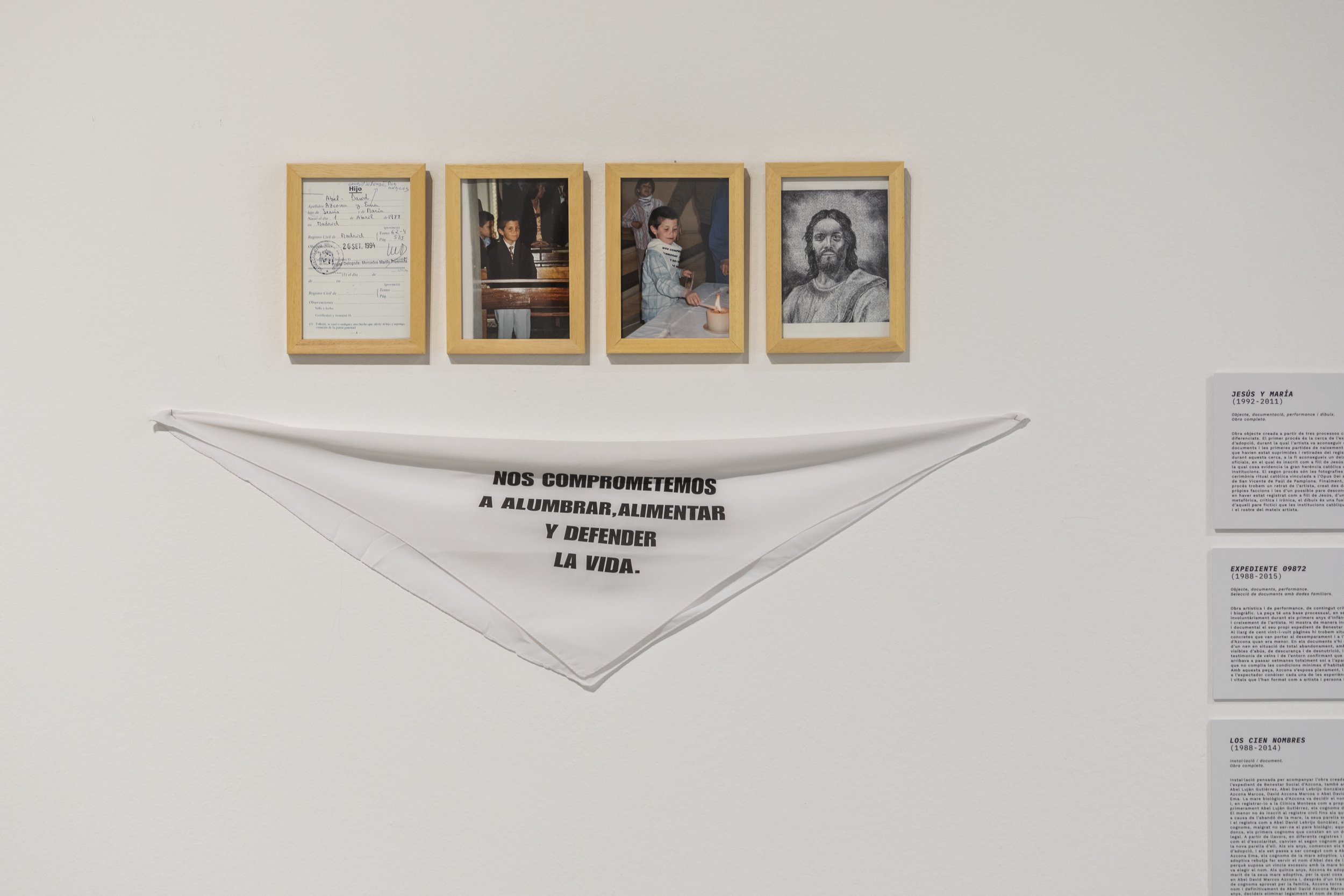
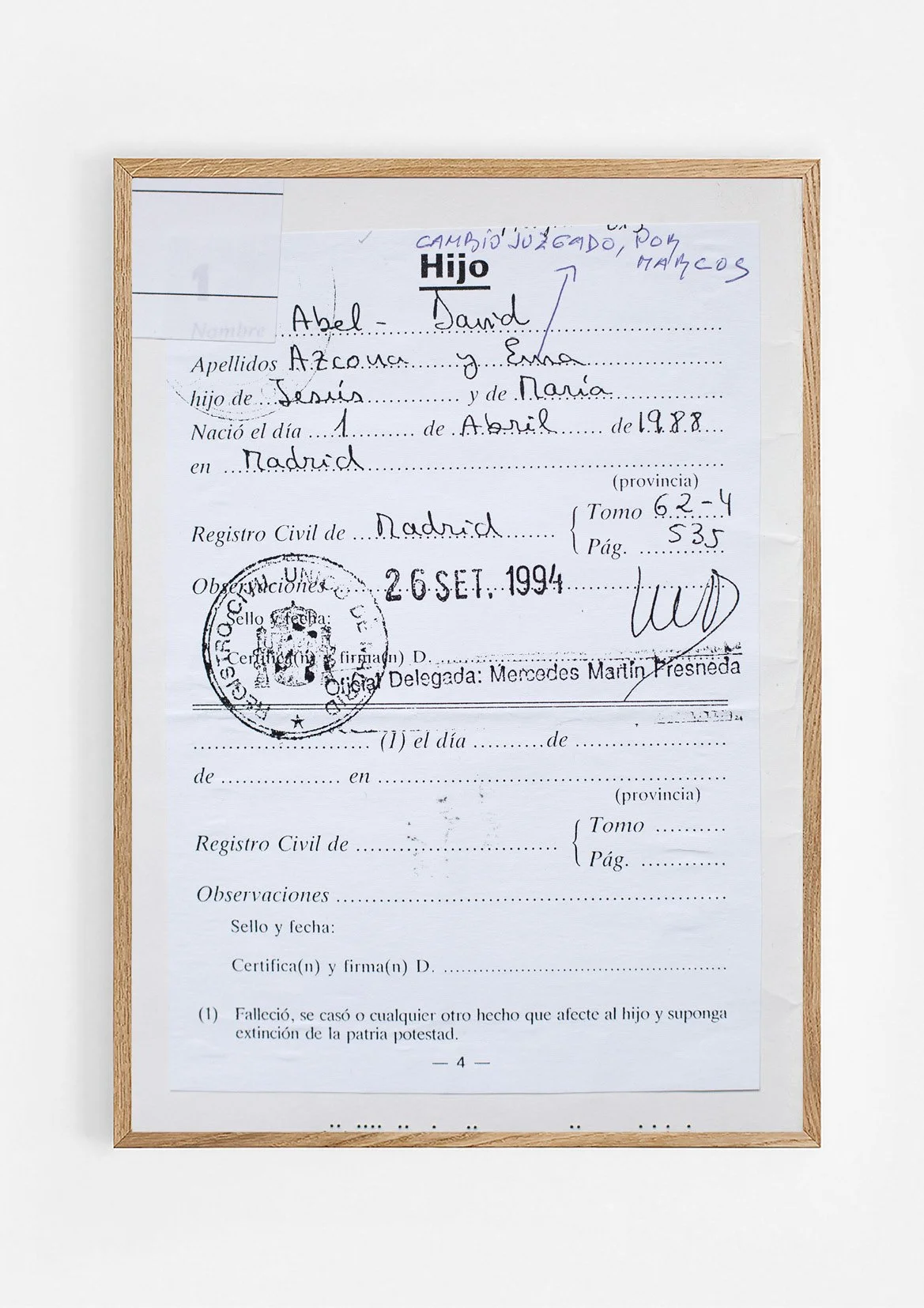
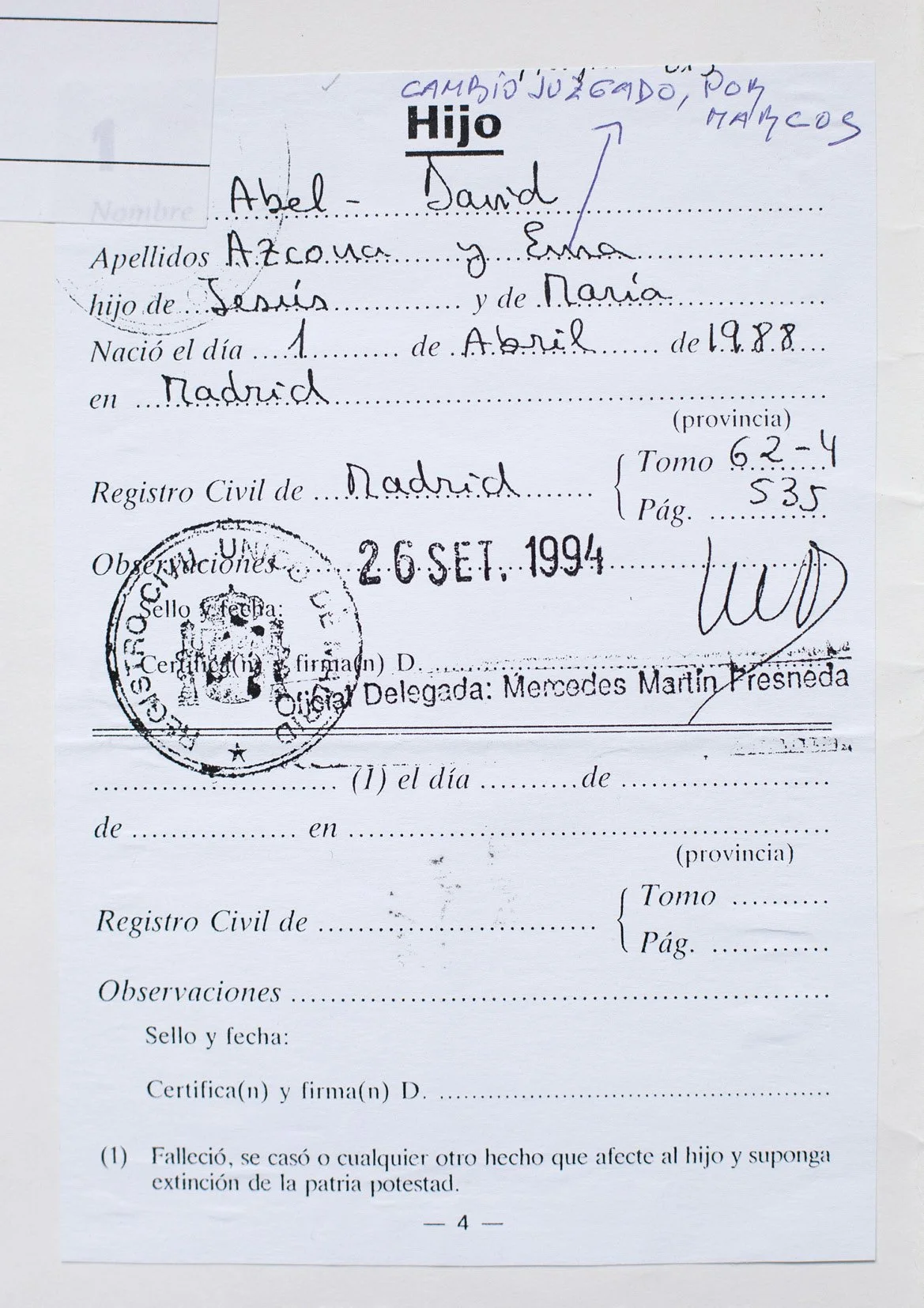
Jesus and Mary is a work-object by Abel Azcona, created through three clearly distinct processes:The first process involved searching for his adoption file, through which the artist obtained dozens of documents, including the first birth and registration certificates that had been suppressed and removed from the civil registry. Eventually, he obtained one of the official records in which he is registered as the child of Jesus and Mary, highlighting the deep Catholic heritage of these institutions. This serves as further evidence of the artist’s ongoing denunciation of his right not to have been born, reflecting on the three occasions in which his mother attempted to terminate the pregnancy, understanding abortion as one of the most significant forms of child protection.
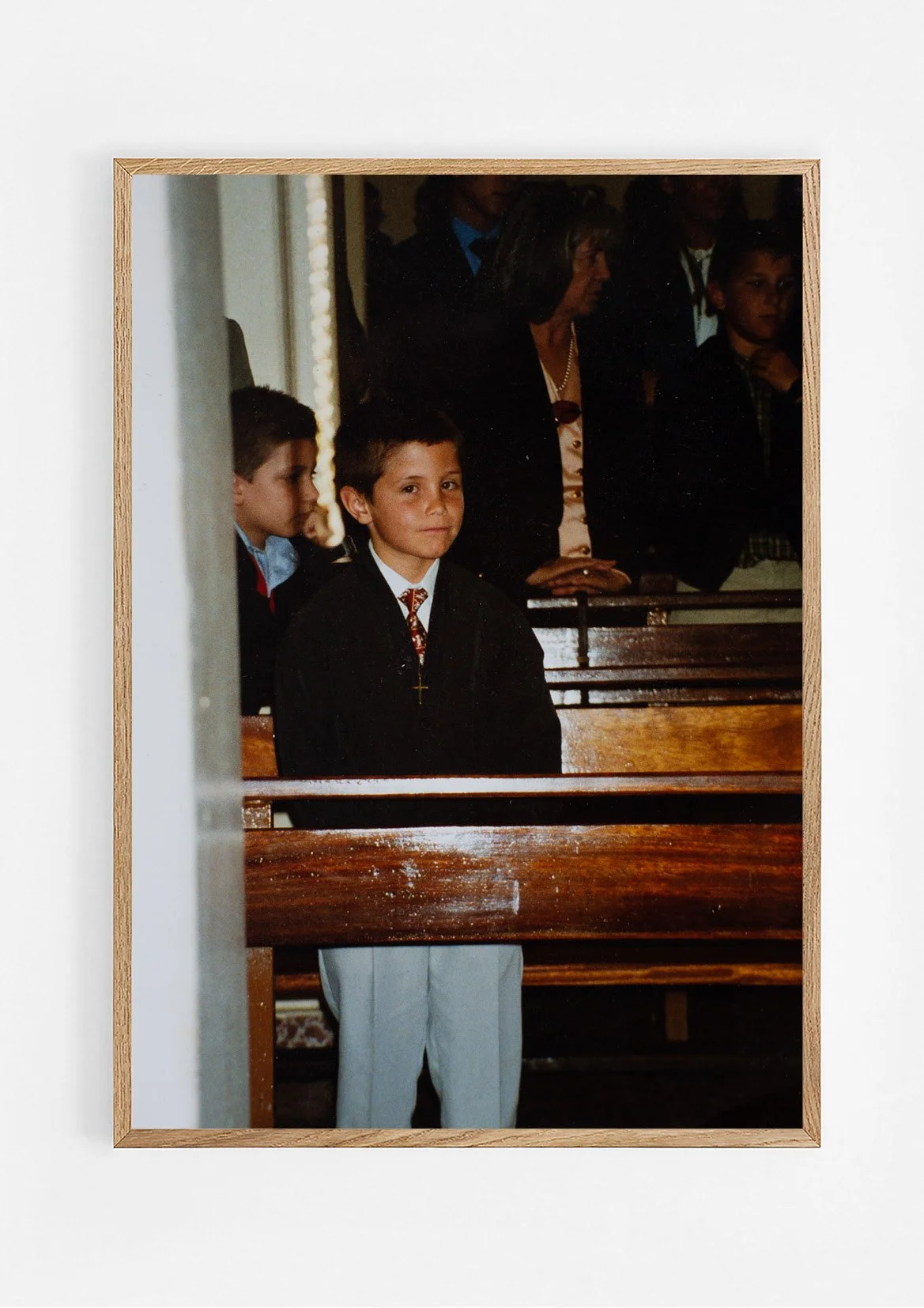
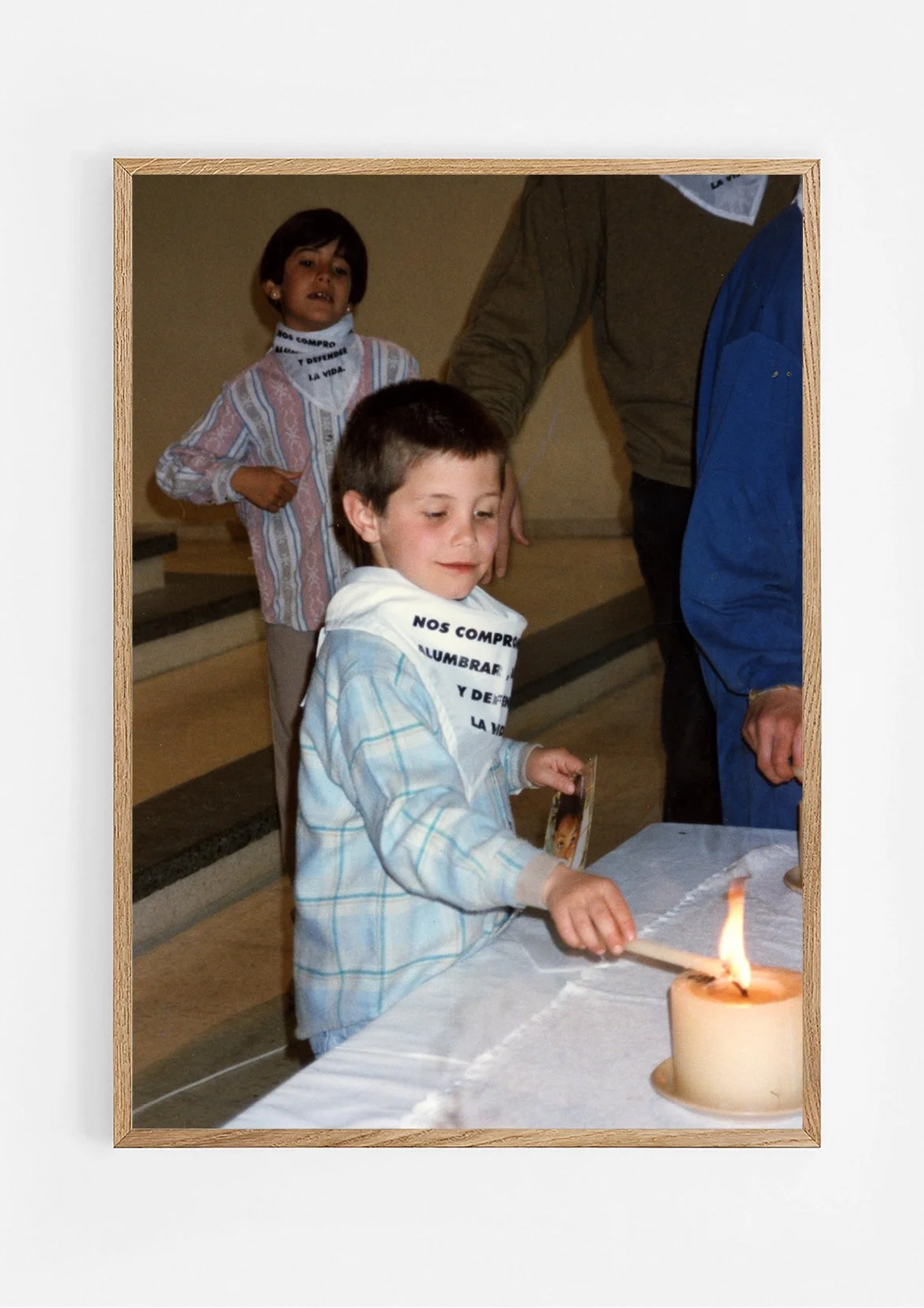
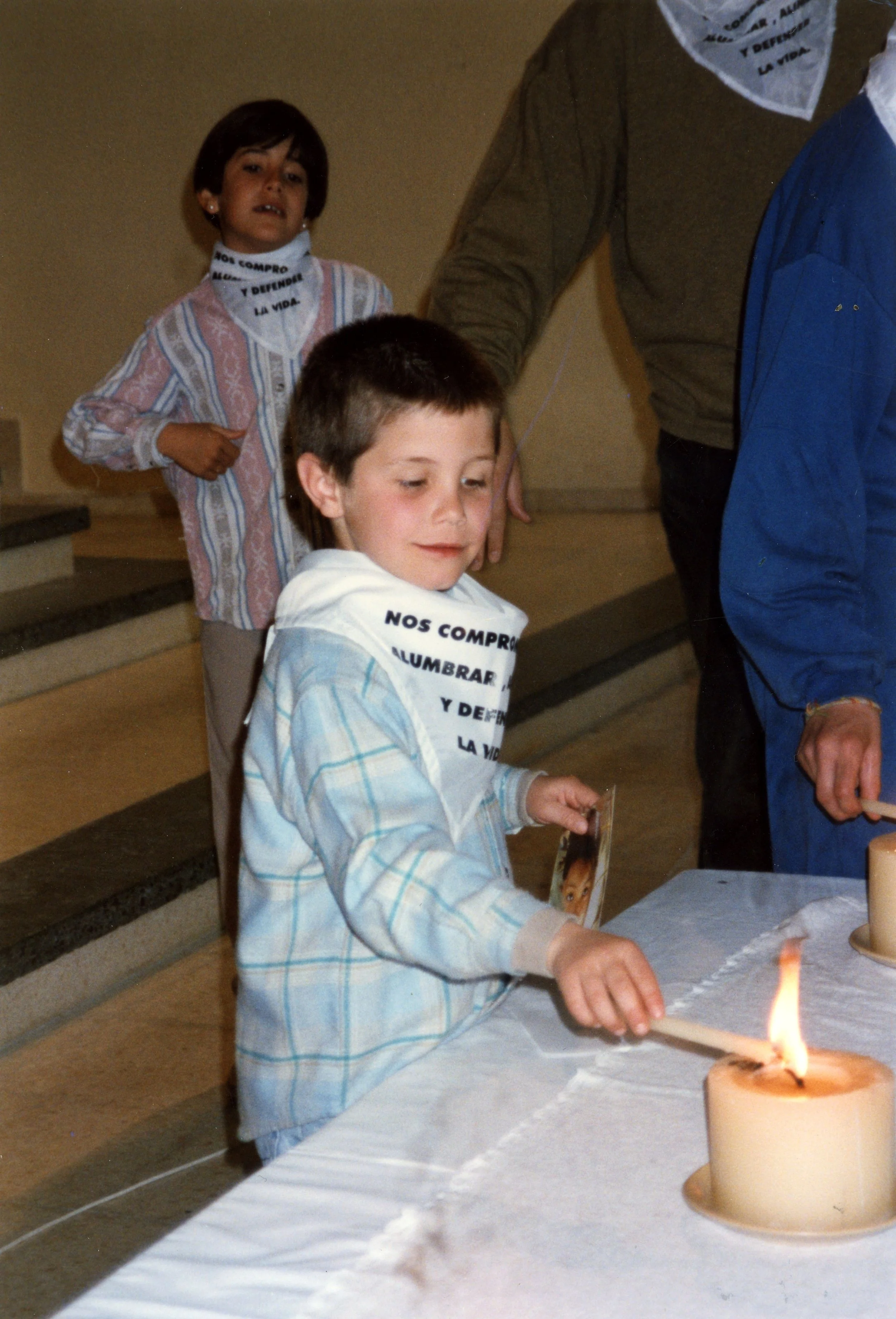
The second process was a brief encounter between Azcona and his adoptive mother on Avenida Bayona in Pamplona, in front of the former video store El Policarpo, where she silently handed him a large supermarket bag filled with loose, jumbled photographs taken from all the family albums. Azcona took the bag containing over two hundred photographs and selected one during a Catholic ritual ceremony linked to Opus Dei at the San Vicente de Paúl Parish in Pamplona. This photograph was linked to the original document from the first process. Paradoxically, since he had been forced to be born, his “assigned parents” were Jesus and Mary, carrying strong Catholic connotations, only to later be adopted at age seven by a Catholic family and made to participate in various extreme Catholic rituals.
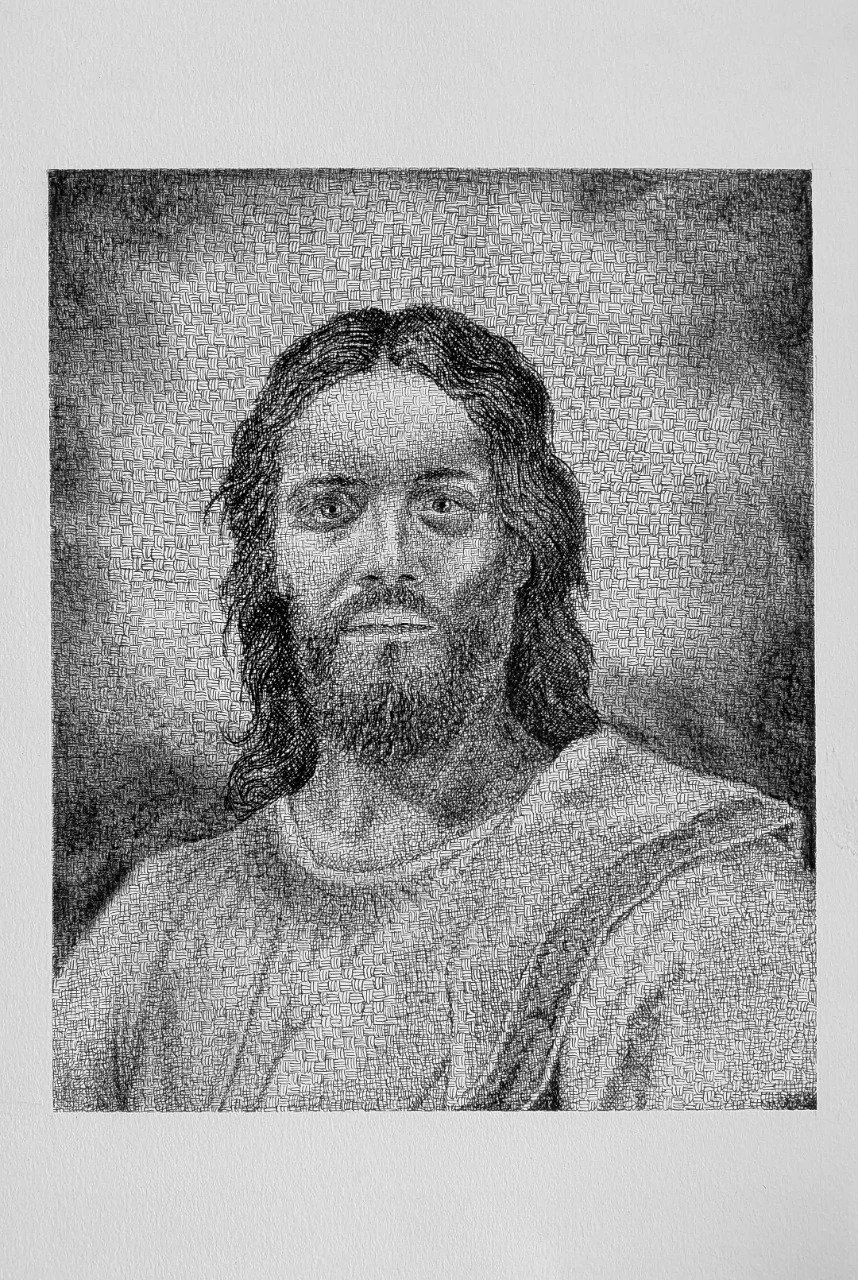
In the final process, we find a portrait of the artist created from his own facial features combined with those of a possible unknown father. In reality, he was the son of a man who had a transactional sexual relationship with his mother. However, because he had been registered as the child of Jesus, this drawing becomes, in a metaphorical, critical, and ironic way, a fusion of the fictitious father imposed by Catholic institutions and the face of the artist himself.
Jesús y María es una obra objeto de Abel Azcona creada a partir de tres procesos claramente diferenciados: La búsqueda del expediente de adopción donde el artista consiguió decenas de documentos y las primeras partidas de nacimiento y registro que habían sido suprimidas y retiradas del registro civil, donde finalmente consigue uno de los registros oficiales donde es registrado como hijo de Jesús y de María evidenciado la gran herencia católica de las instituciones. Una evidencia más de la denuncia permanentemente del creador de su derecho a no haber nacido, defendiendo las tres ocasiones en las que su madre intentó interrumpir el embarazo comprendiendo el aborto como una de las mayores medidas de protección a la infancia que existen.
El segundo proceso es un encuentro de escasos minutos entre Azcona su su madre adoptiva en la Avenida Bayona de Pamplona frente al antiguo videoclub de El Policarpo donde ella depositó casi sin mediar palabra una bolsa grande de supermercado llena de fotografías sueltas y amontonadas retiradas de todos los álbumes familiares. Azcona recogió la bolsa con más de doscientas fotografías y escogió una dentro de una ceremonia ritual católica vinculada al Opus Dei en la Parroquia San Vicente de Paúl de Pamplona. VInculandola al documento original del primer proceso, ya que paradójicamente había sido obligado a nacer, se le había otorgado como padres pactados Jesús y María, con gran connotación católica para finalmente ser adoptado a los siete años por una familia católica y hacerle participe de diferentes rituales vinculados al catolicismo extremo.
Así en el último proceso encontramos un retrato del artista creado desde sus propias facciones y las de un posible padre desconocido, al ser realmente hijo de un hombre que mantuvo una relación de prostitución con su madre, pero al haber sido registrado como hijo de Jesús, de una manera metafórica, crítica e irónica nos encontramos este dibujo en una fusión fisionómica de aquel padre ficticio que las instituciones católicas forzaron y el rostro del propio artista.