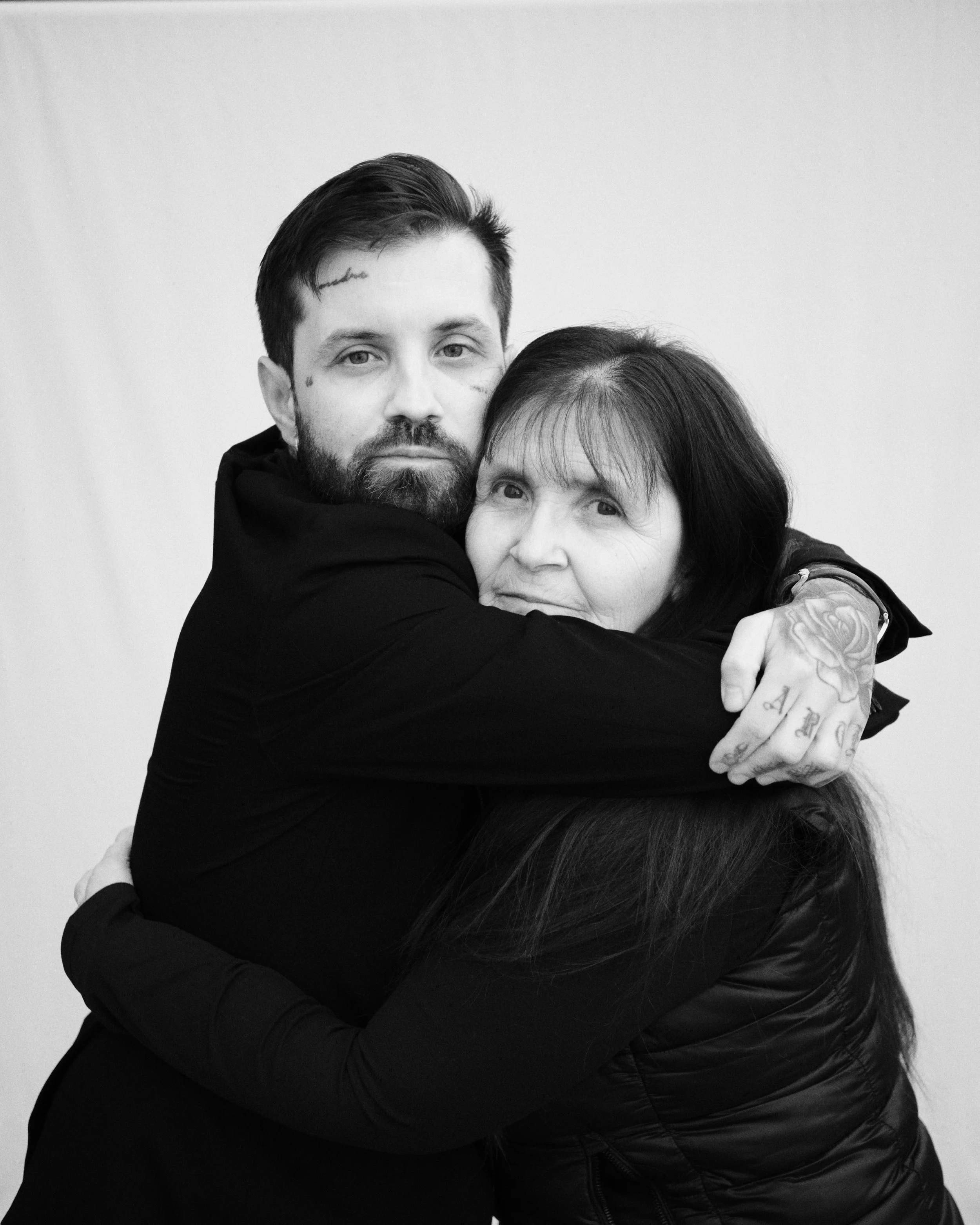
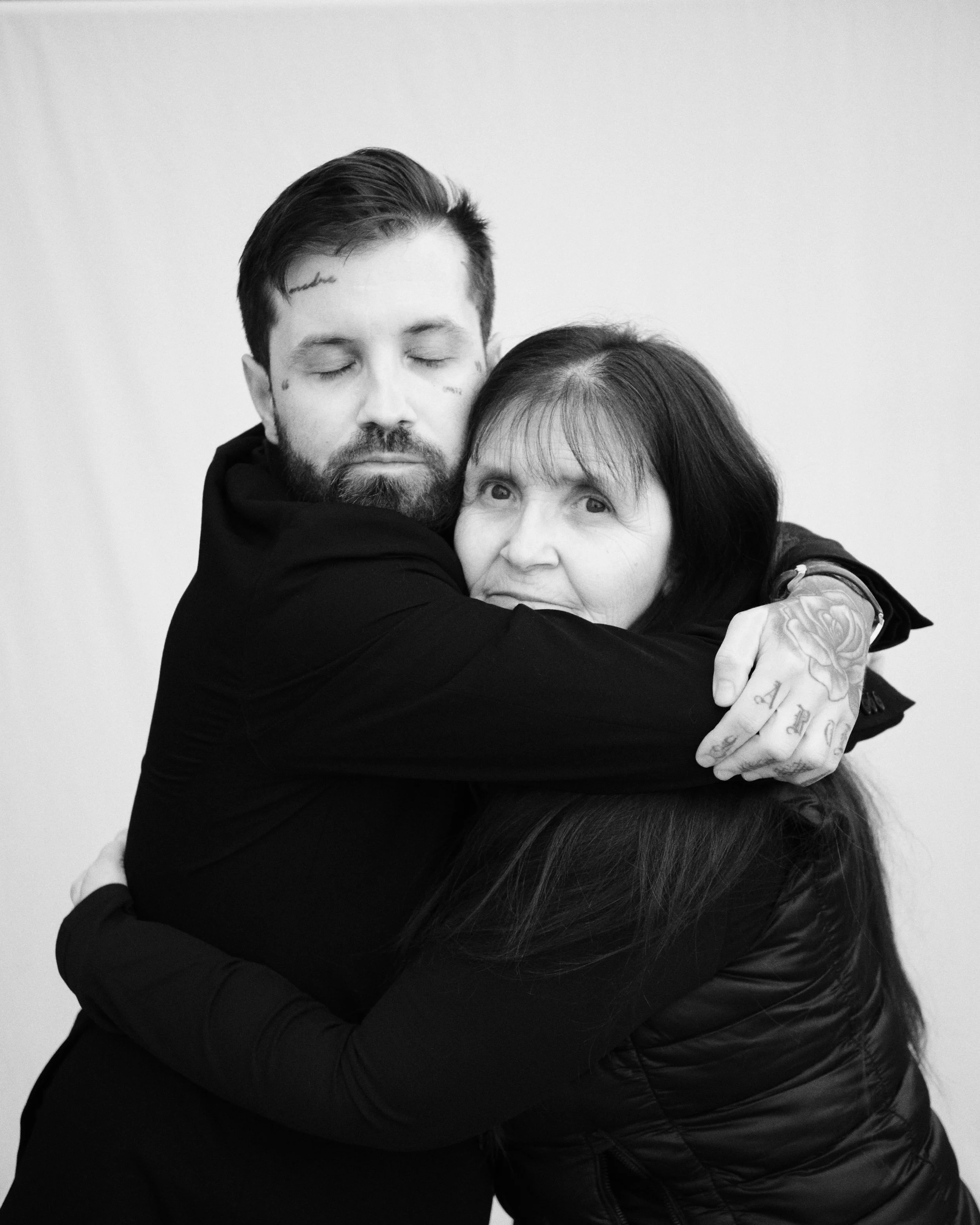
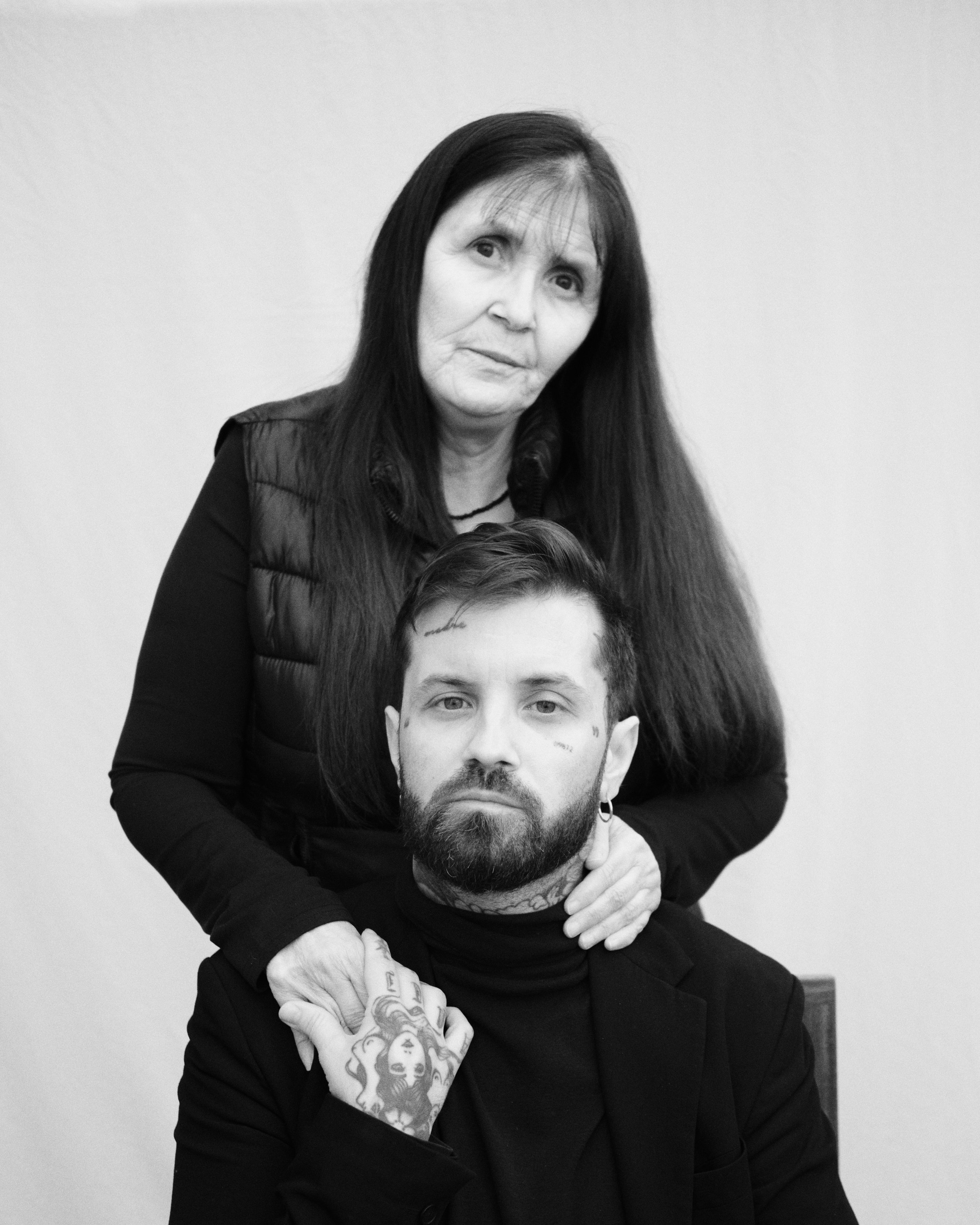
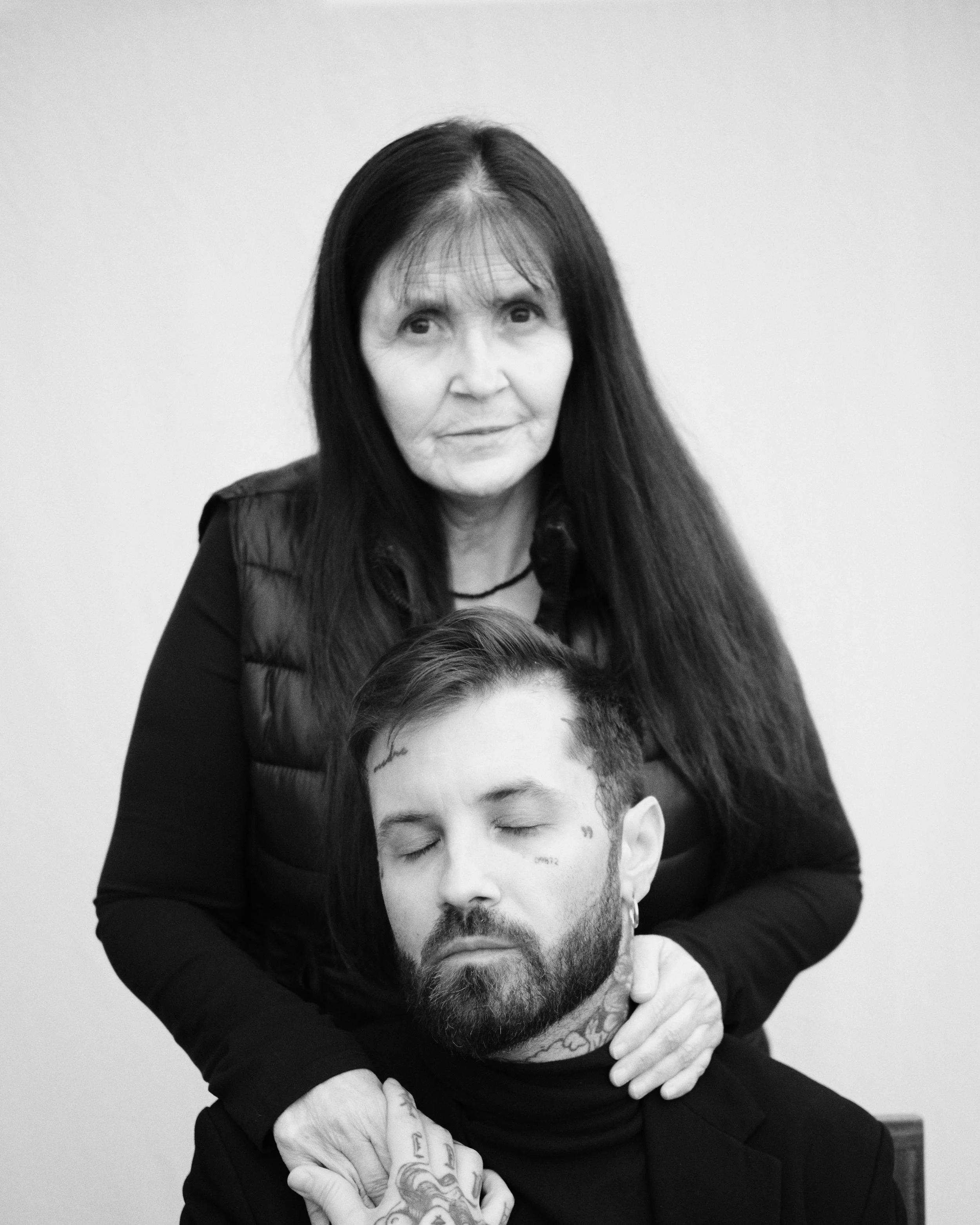
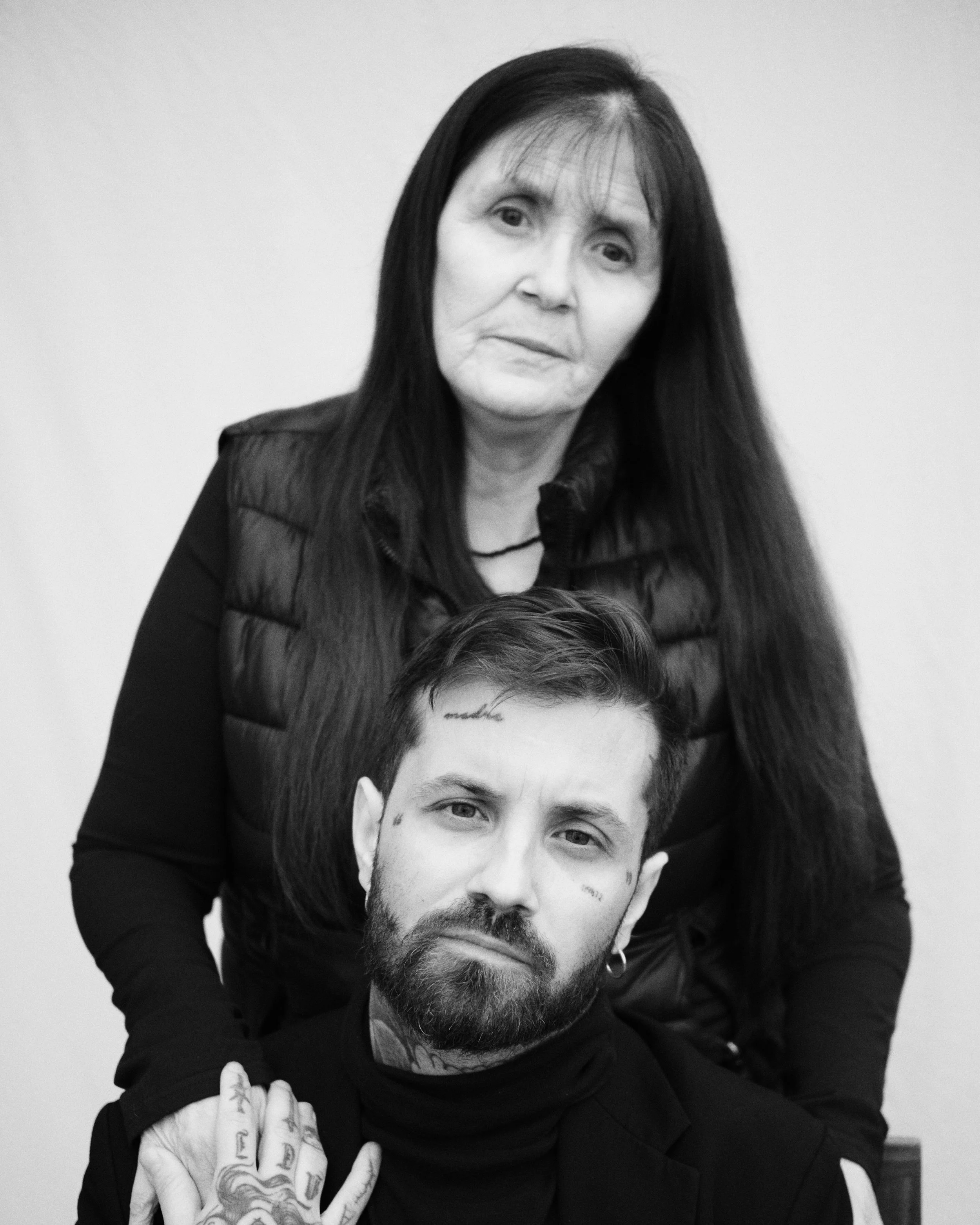
“Cada flor grabada en mi piel eres tú.
Madre lirio.
Madre azucena.
Madre amapola.
Madre rosa.
Madre jazmín.
Madre flor marchita,
¿por qué me abandonaste?”
The Steps Towards the Mother, and actually some more, can be understood as a complete process work or a compendium of numerous works that took place from October 2023 to April 2025. All of Abel Azcona's actions, documentary works and installations around the maternal figure during these dates are understood as such. The initial idea was a full year and to conceive the process in nine clear steps, however, after the curatorial and artist's decision to postpone the final meeting between mother and son to the exact date of April where the abandonment took place thirty-seven years ago, new pieces and creations on this theme emerged due to the artist's pure need to respond to questions prior to the final performance. The final meeting between mother and son will take place in a museum to be decided, during the first months of 2025. «The hardest, most intimate, and generous work by Abel Azcona to date. After more than twenty years of works in continuous search of his own mother and for healing and acceptance of his own orphanhood, the appearance of his biological maternal figure transforms the meaning and potential of his work.»
Los pasos hacia la madre puede ser entendida como una obra procesual completa o con un compendio de numerosas obras acontecidas desde el 19 de octubre del 2023 al 1 de abril del 2025. Todas las acciones, obras documentales e instalaciones de Abel Azcona en torno a la figura materna durante estas fechas son entendidas como tal. La idea inicial era un año completo y concebir el proceso en nueve pasos claros, no obstante, tras la decisión curatorial y del artista de retrasar el encuentro final entre madre e hijo a la fecha exacta de abril donde treinta y siete años atrás aconteció el abandono, surgieron nuevas piezas y creaciones de esta temática por la pura necesidad del artista de responder a cuestiones previas a la performance final. El encuentro final entre madre e hijo acontecerá en un museo por decidir, durante los primeros meses de 2025. «La obra más dura, intima y generosa de Abel Azcona hasta la fecha. Tras más de veinte años de obras en continua búsqueda de su propia madre y de sanación y aceptación de su propia orfandad, la aparición de su figura materna biológica transforma el significado y potencial de su obra.»
Abel Azcona's constant search for his own identity, marked by violence such as child abuse, abandonment, or alienation, has positioned him as a male figure advocating for abortion rights, women's rights, and against violence, precisely based on his own history. On the other hand, the mother's story is marked by the vulnerability of drug addiction, being forced into prostitution, subsequently abandoning her son, or experiencing sexual assaults. Her story embodies the vulnerability of women who suffer violence simply because of their gender, here epitomized in a specific body, that of the mother who reunites with her son through an artistic action.
Semíramis González
La búsqueda constante de Abel Azcona de su propia identidad, atravesada por violencias como el abuso infantil, el abandono o la alienación, a la par que le han posicionado como una figura masculina defensora del aborto, de los derechos de las mujeres y contra la violencia, precisamente a partir de su propia historia. Por otro lado, la de la madre, cuyo relato es atravesado por la vulnerabilidad de la adicción a las drogas, el verse obligada a prostituirse, posteriormente abandonar a su hijo, o las agresiones sexuales. Su relato es el de la vulnerabilidad de las mujeres que sufren violencia sólo por el hecho de serlo, aquí concretado en un cuerpo concreto, el de la madre que se reencuentra con su hijo a través de una acción artística.
Semiramis Gonzalez
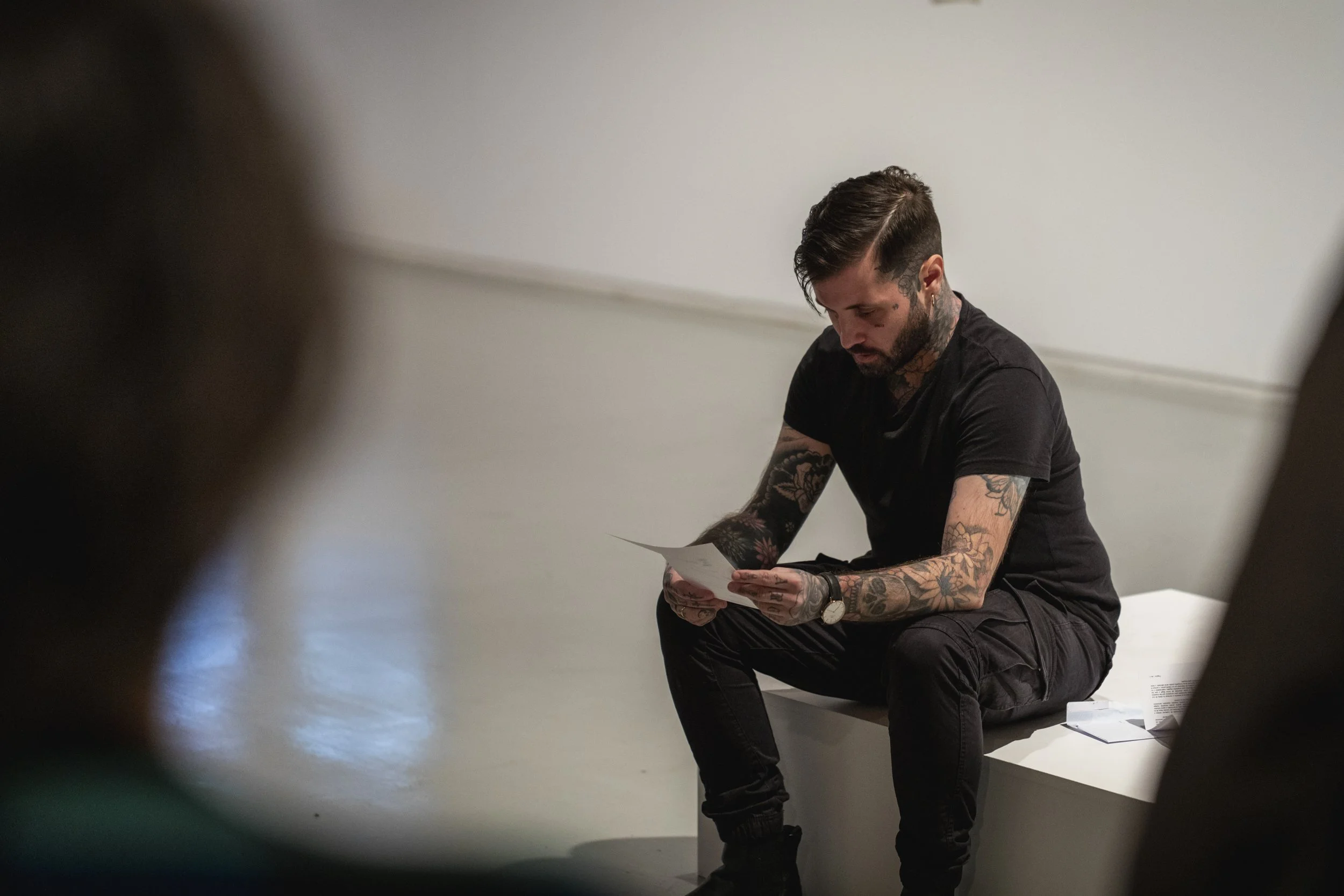
The first step. The mother's first contact with the artist. It takes place on October 19, 2023, through an instant message from Isabel Gómez Aranda to the artist Abel Azcona. / El primer paso. Contacto por primera vez de la madre con el artista. El 19 de octubre de 2023 con un mensaje instantáneo de Isabel Gómez Aranda al artista Abel Azcona.
The second step. Abel Azcona during the performance of reading the DNA test result at the La Panera Art Center and Final DNA Test. Document resolved during the performance at the La Panera Art Center. / El segundo paso. Abel Azcona durante la performance de la lectura del resultado de la prueba de ADN en el Centro de Arte La Panera y Prueba de Adn final. Documento resuelto durante la performance en el Centro de Arte La Panera.
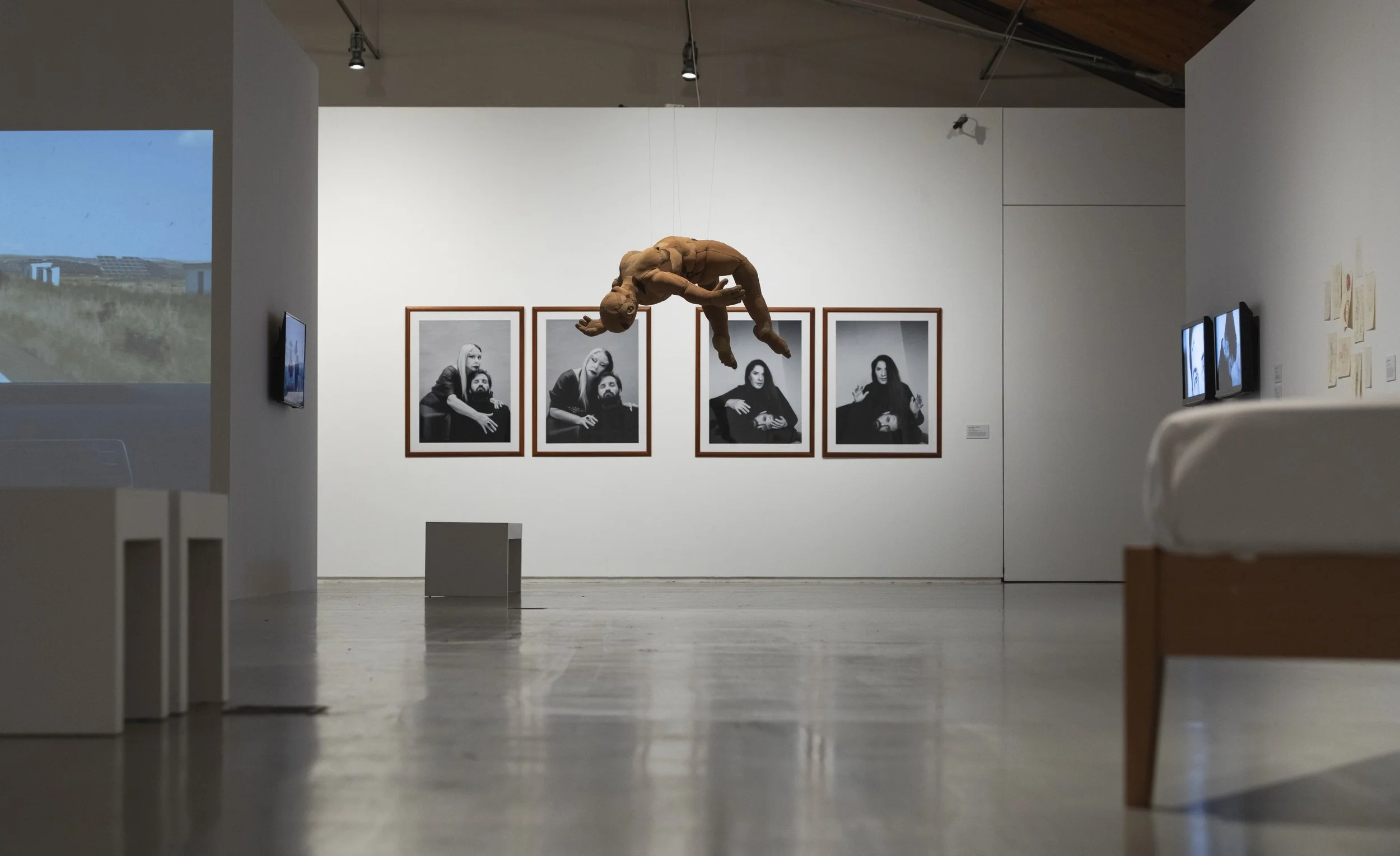
The third step. After the first contact with the mother and the DNA test, the exhibition “Mis familias 1988-2024” became both a statement and an approach to the new maternal figure. Thus, the exhibition itself, although initially conceived as a closure of the families, ultimately became an involuntary third step toward the mother. / El tercer paso. Tras el primer contacto de la madre y la prueba de ADN la muestra Mis familias 1988-2024 se convirtió en una reivindicación y acercamiento a la nueva figura materna. Por lo que la muestra en si, aun naciendo como un cierre de las familias, se acabó convirtiendo en un tercer paso involuntario hacia la madre.
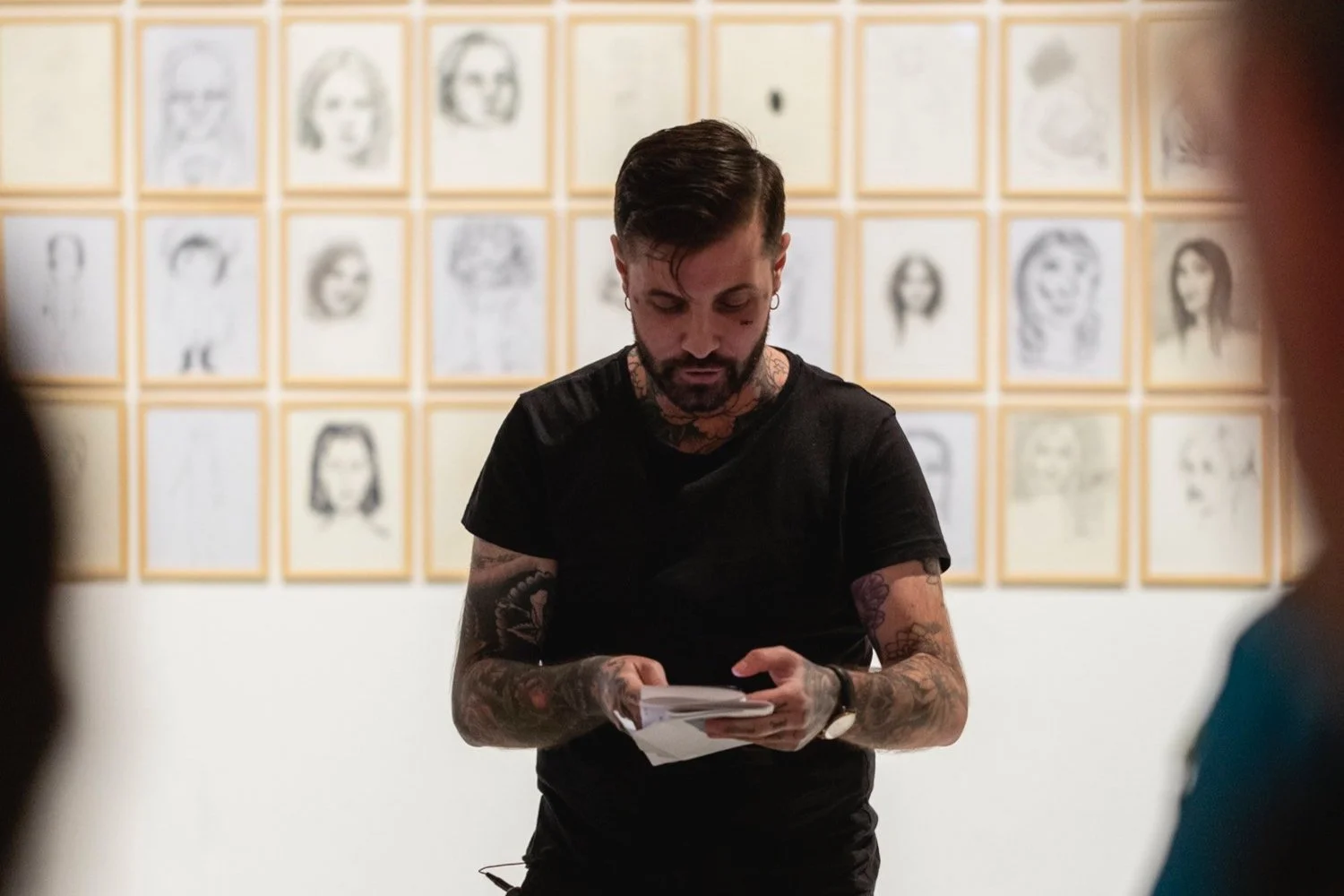
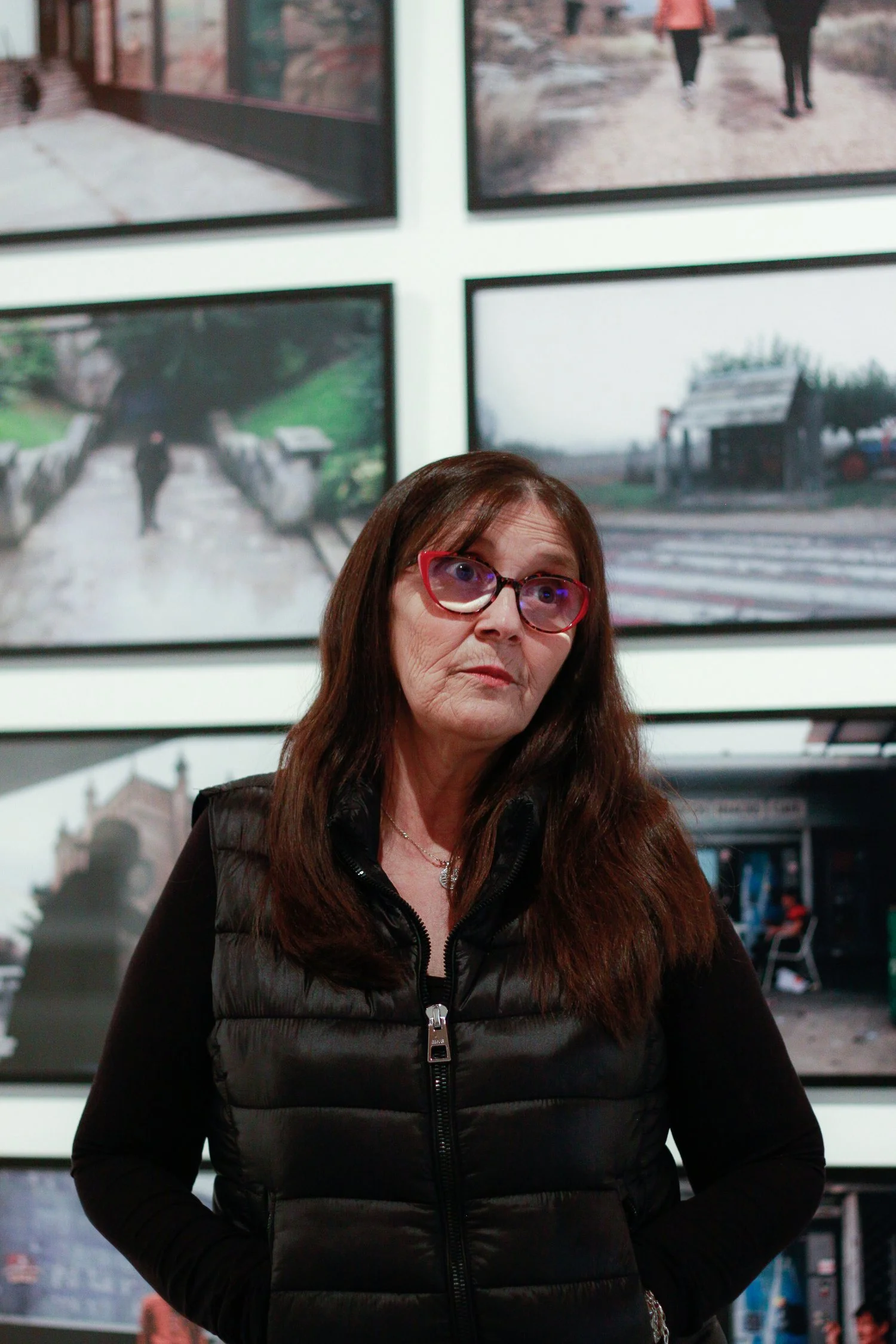
The fourth step. After four months, the exhibition presented the first six *short actions*: a series of brief performances aimed at resolving conflicts, in this case, family-related ones. During the months of approaching the mother, dozens of short actions were carried out toward the figure of the new mother. / El cuarto paso. La exposición tras cuatro meses de duración presentó las primeras seis acciones breves. Una serie de performances de corta duración para resolver conflictos, en este caso familiares. Durante los meses de acercamiento hacia la madre se realizaron decenas de acciones breves hacia la figura de la nueva madre.
The fifth action. Visit of the mother, Isabel Gómez Aranda, to the closing of the exhibition "My Families 1988-2024" at the La Panera Art Center. Azcona invites the mother to be the last visitor of the exhibition, accompanied by the museum team. / La quinta acción. Visita de la madre Isabel Gómez Aranda a la clausura de la exposición Mis familias 1988-2024 en el Centro de Arte La Panera. Azcona invita a la madre a ser la última visitante de la muestra acompañada por el equipo del museo.
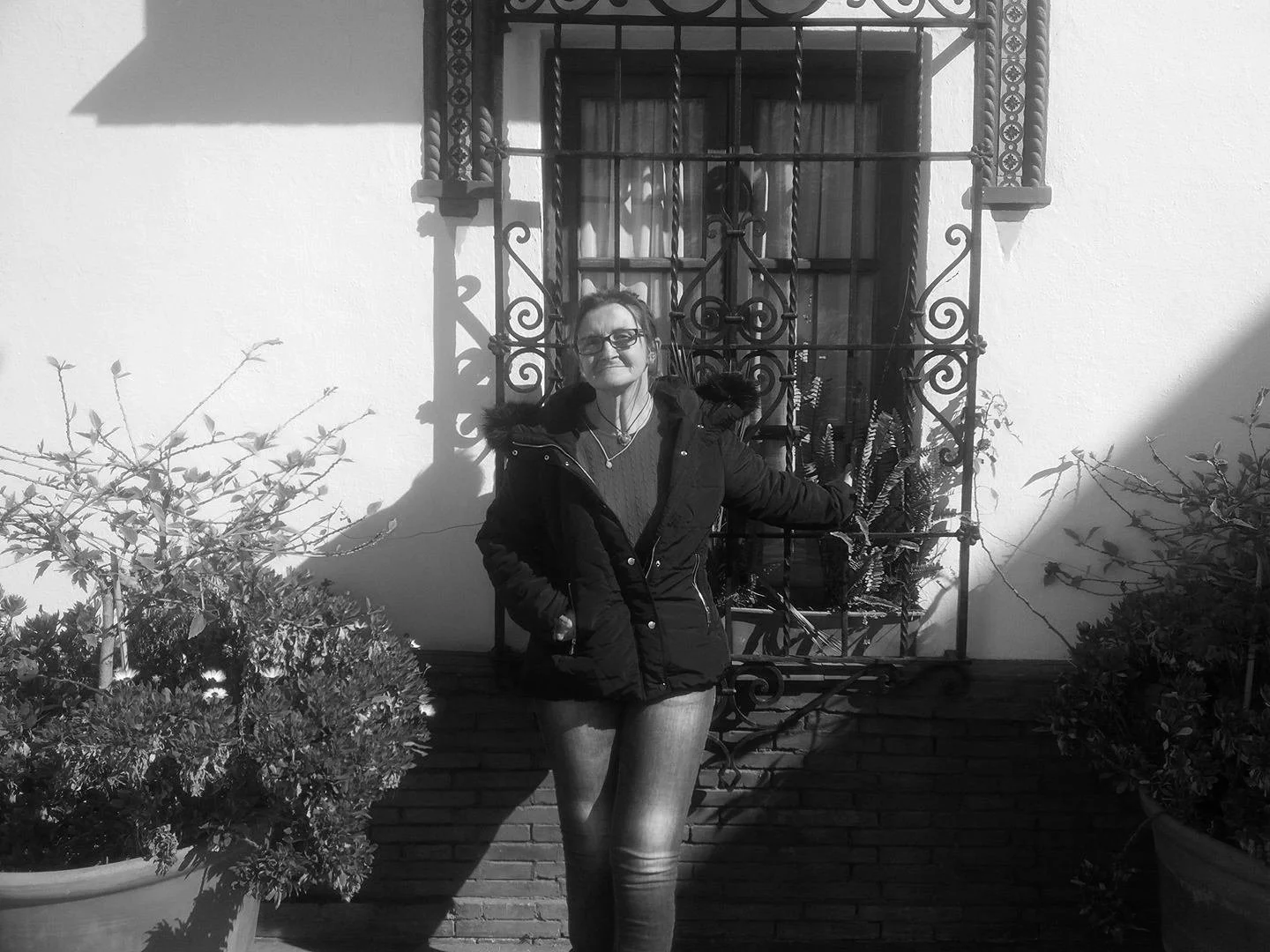
The sixth action. After the positive result, during the *Axcona* performance, this installation and photographic work were created using all the photographs shared by Isabel Gómez Aranda in the years prior to contacting Azcona. / La sexta acción. Tras el positivo durante la performance Axcona creo esta instalación y obra fotográfica con todas las fotografías compartidas por Isabel Gómez Aranda los años anteriores a contactar con Azcona.
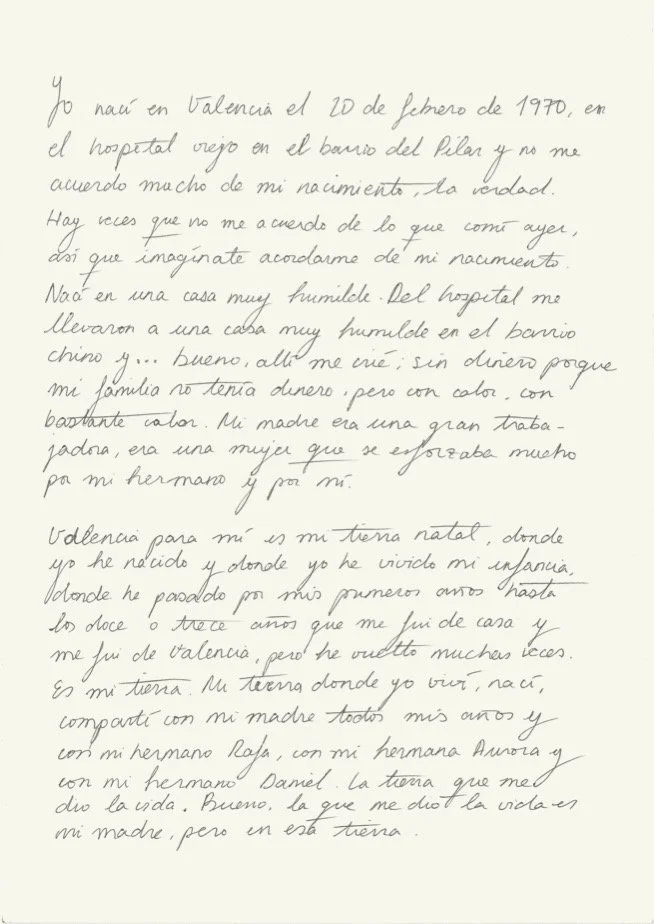
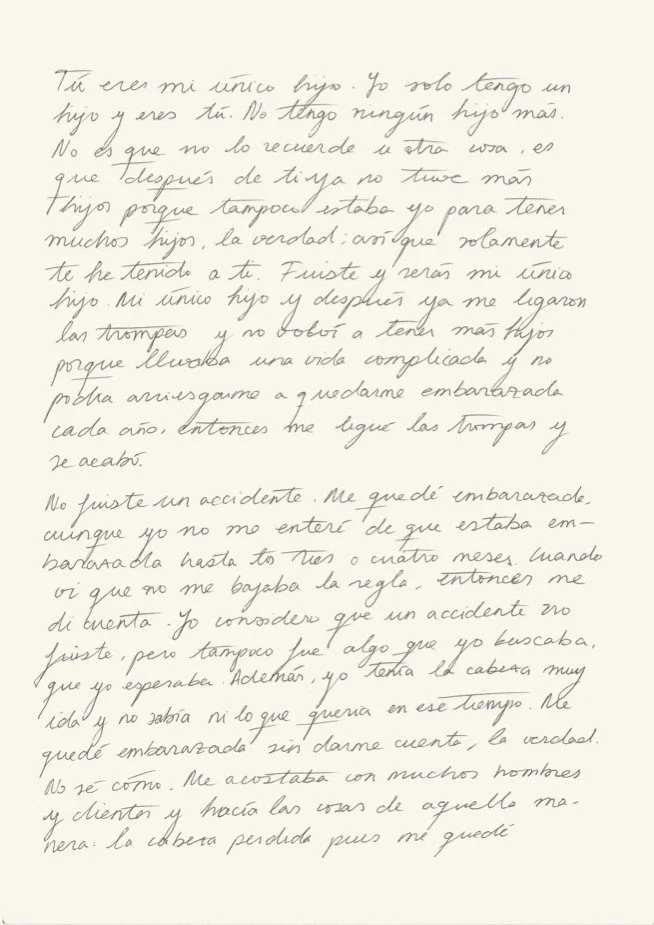
The eventh Step. For the first time, Isabel Gómez Aranda puts her story into words. A handwritten account by the biological mother, sharing her life experience and her version of the events. / El séptimo Paso. Por primera vez Isabel Gómez Aranda pone palabras a su historia. Relato manuscrito de la madre biológica con su experiencia vital y su versión de los hechos.
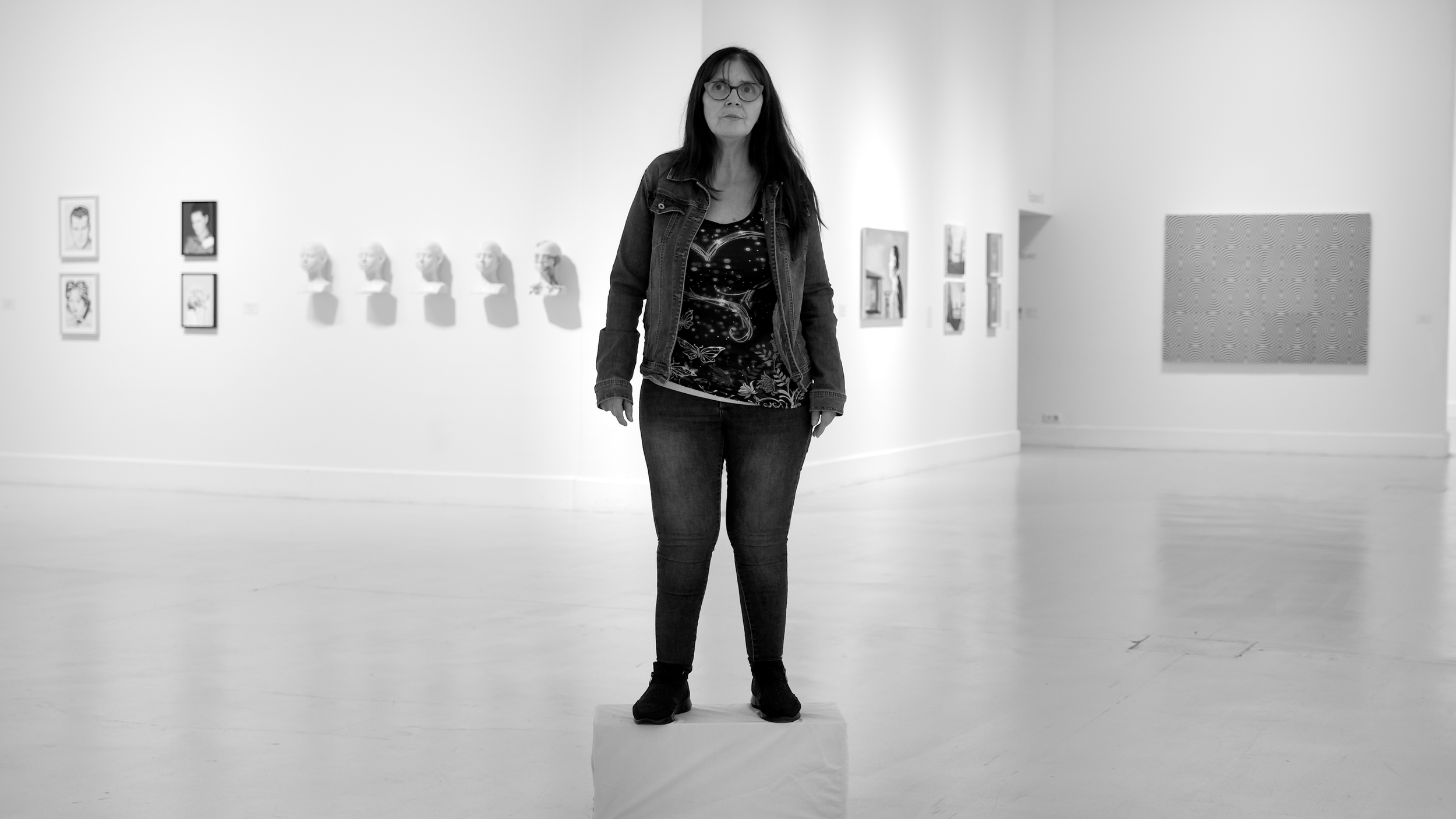
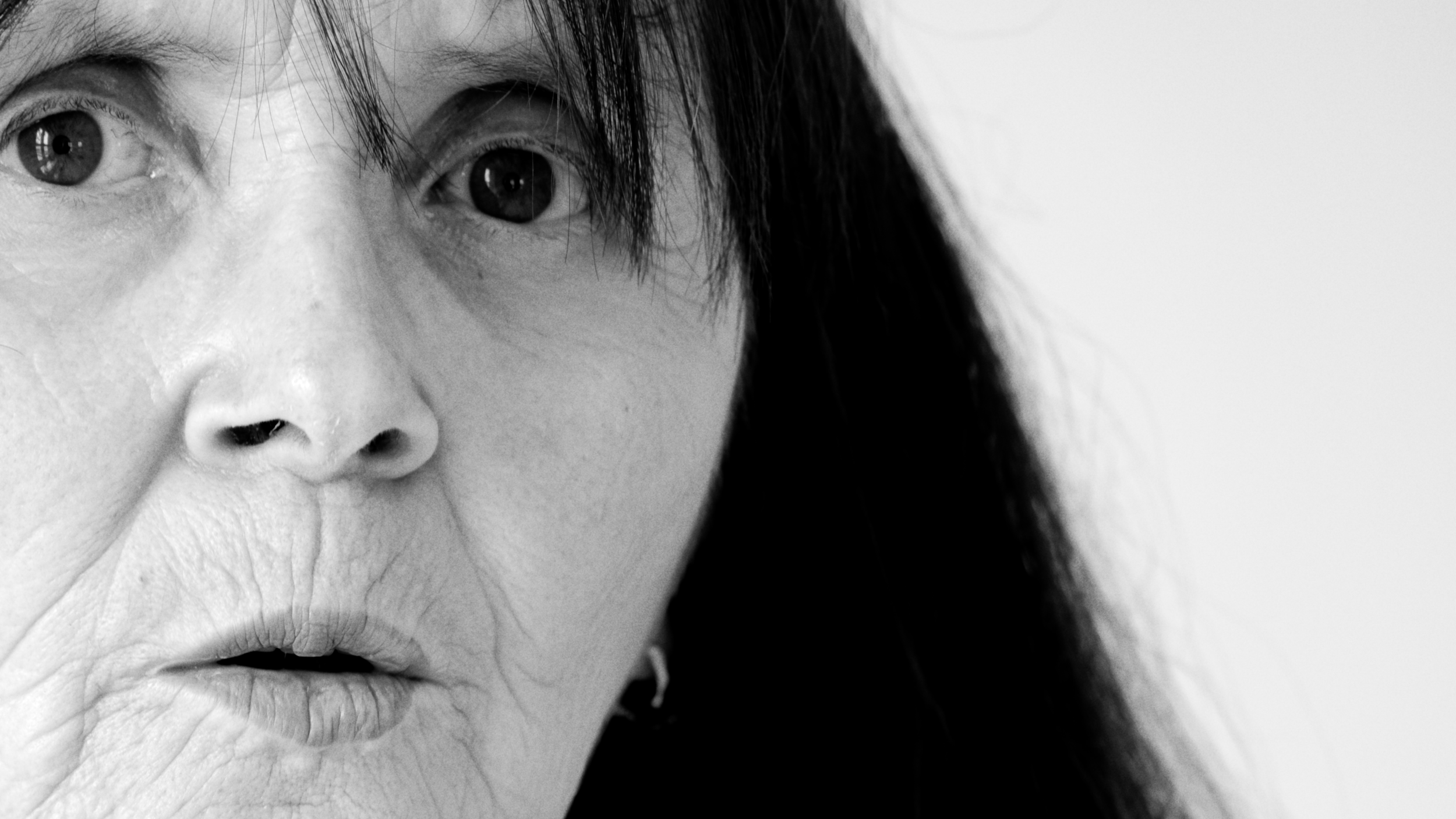
The eight Step. The Mother Exposed. After thirty-six years of being missing, for the first time, the mother exposes herself and performs in a museum on the same pedestal where she will meet the artist in the final step.. / El octavo paso. La madre expuesta. Tas treinta y seis años desaparecida, por primera vez la madre se expone y performatiza en un museo en la misma peana donde conocerá al artista en el último paso.
The ninth step. A collection of eight video works featuring the testimony of Isabel Gómez. The mother tells her story in the first person through a collection of documentary video art pieces. / El noveno paso. Colección de ocho obras de video con el testimonio de Isabel Gómez. La madre cuenta su relato en primera persona mediante una colección de piezas de videoarte documental.
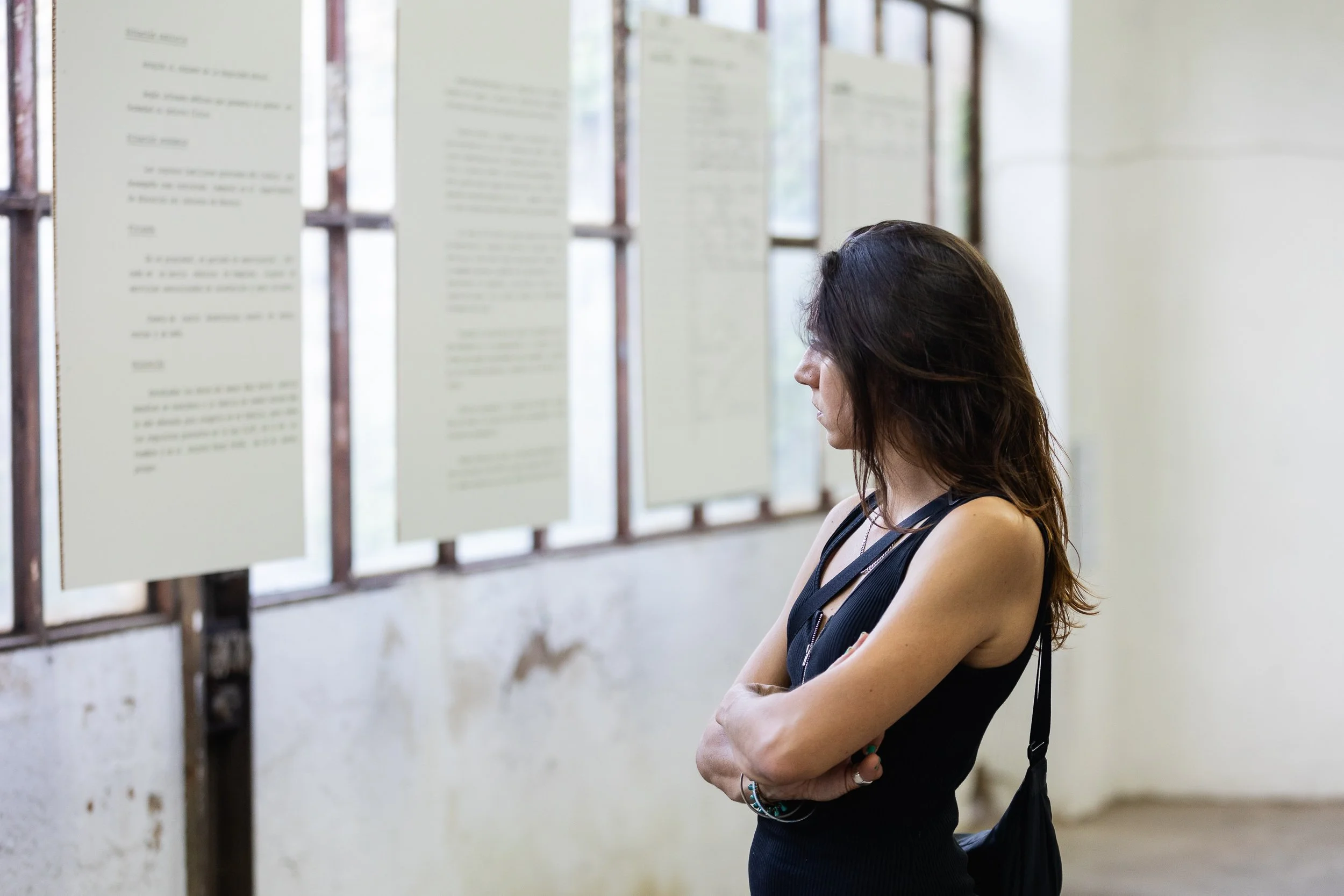
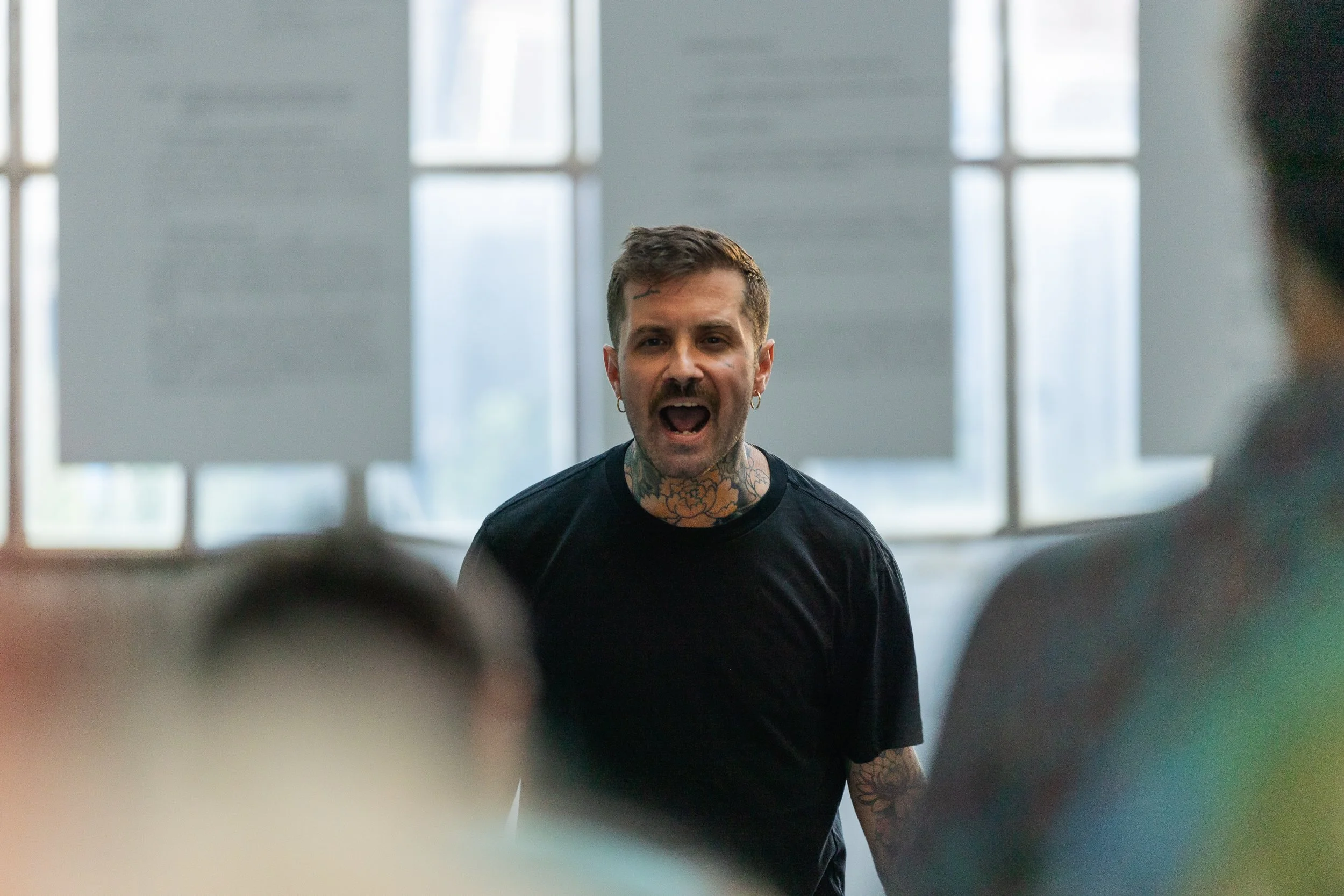
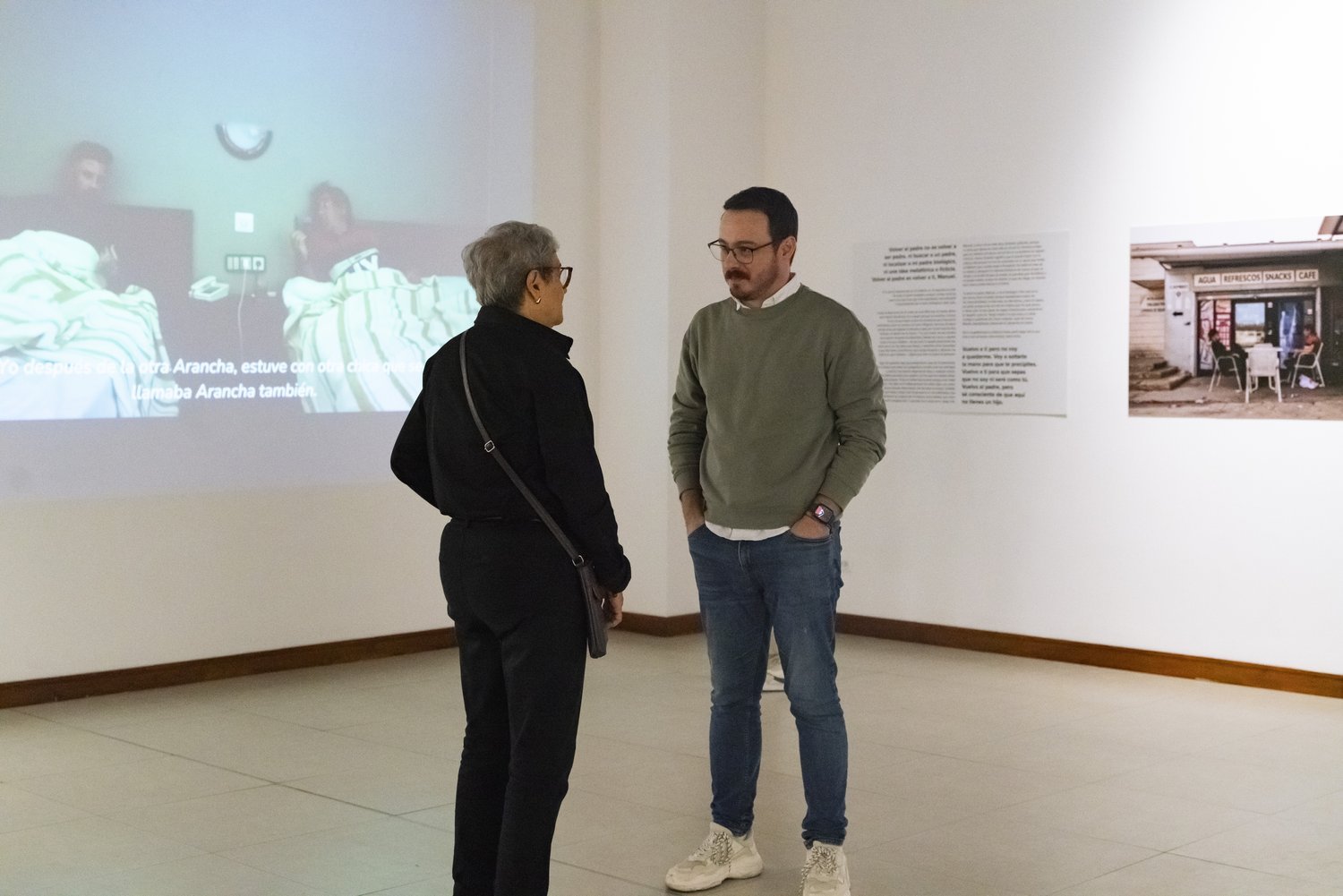
The tenth step. Exhibition titled "Born Without a Mother," serving as a recap of all the steps taken so far, along with the activation of the nine brief performances directed towards the mother. / El décimo paso. Muestra expositiva titulada “Nacer sin madre” a modo de recapitulación de todos los pasos dados hasta el momento y activación de las nueve performances breves hacia la madre.
The eleventh step. Within the framework of the exhibition, just as in the La Panera Art Center, different short actions were presented. A series of short-duration performances aimed at resolving conflicts—family ones, in this case. During the months of approaching the mother, dozens of brief actions were carried out toward the figure of the new mother. / El undécimo paso. En el marco de la exposición al igual que en el Centro de Arte de La Panera se presentaron difrenctes acciones breves. Una serie de performances de corta duración para resolver conflictos, en este caso familiares. Durante los meses de acercamiento hacia la madre se realizaron decenas de acciones breves hacia la figura de la nueva madre.
The twelfth step. After several exhibitions centered on the maternal figure and their closure, both in Amsterdam and in different parts of Spain, Abel Azcona opens an exhibition at the National Gallery of Costa Rica titled Killing the Father. This exhibition compiles all of Azcona’s works related to the paternal figure and, through performance—together with the discourse of the new mother in video and in the handwritten piece—he brings each of them to a close. / El duodécimo paso. Tras varias exposiciones en torno la figura materna y el cierre, tanto en Amsterdam como en diferentes puntos de España, Abel Azcona inaugura en la ía Galería Nacional de Costa Rica una muestra bajo el título Matar al padre. En esta exposición se recopilan todas las obras de Azcona en torno la figura paterna y mediante performance y con el discurso de la nueva madre en video y en la pieza manuscrita, cierra cada una de ellas.
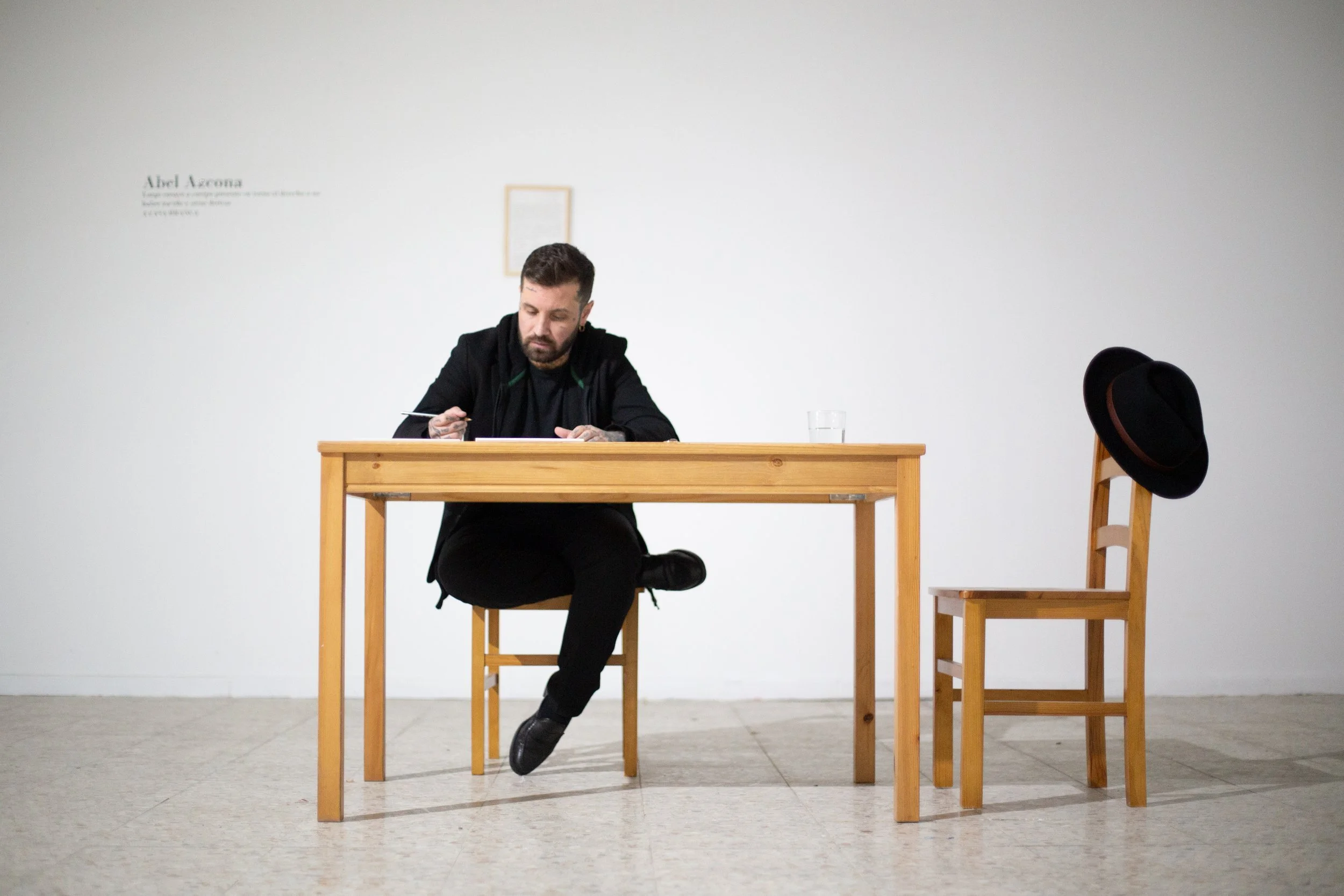
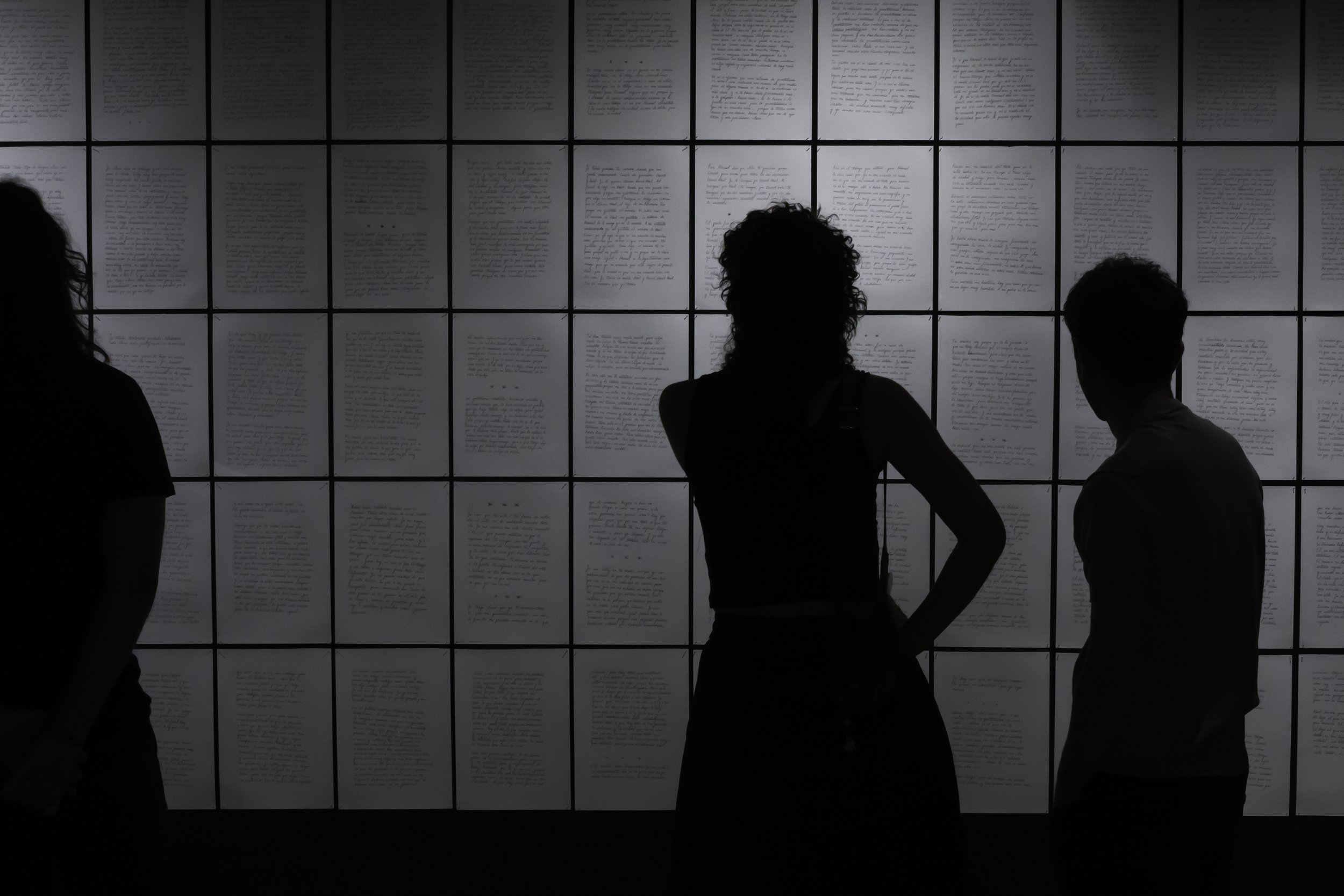
The thirteenth step is a long-duration performance that took place in Santiago de Compostela. Having received the complete piece Exegesis from the mother, Azcona decided to create a similar piece in the first person. But this time, it is a reflection on all the pain, traumas, and violence suffered after mandatory birth. It is an argument for the right not to have been born, written in more than fifty consecutive handwritten pages without pause, in the center of the museum. Since then, the handwritten piece has belonged to the permanent collection of the CGAC, the Galicia Contemporary Art Center. / El decimotercer paso es una performance de larga duración acontecida en Santiago de Compostela. Al haber recibido Azcona la pieza completa Exegesis de la madre, decide crear en primera persona una pieza similar. Pero esta vez una reflexión sobre todos los dolores, traumas y violencias sufridas tras el nacimiento obligatorio. Un alegato a ese derecho a no haber nacido en más de cincuenta hojas manuscritas de manera consecutiva y sin descanso en el centro del museo. Desde entonces la pieza manuscrita pertenece a la coleccion permanente del CGAC, Centro de Arte Contemporáneo de Galicia.
The fourteenth step was the final exhibition compiling all the works related to the mother and the family. Following the approach of the exhibition opened at the La Panera Art Center, Azcona inaugurated a closing exhibition focused on documentation at the Artillery Barracks in Murcia, under the title The Role of the Family. This would be the last major exhibition before meeting the mother, although after meeting her, two major exhibitions with the complete family narrative would follow. / El decimocuarto paso fue la ultima exposición recopiladora de todos los trabajos de la madre y de la familia. En la línea de la muestra inaugurada en el Centro de la Panera, Azcona inauguró en el Cuartel de Artillería de Murcia una muestra de cierre centrada en documentación bajo el título : El papel de la familia. Esta sería la ultima gran exposición antes de conocer a la madre, aunque tras conocerla vendrían dos grandes exposiciones con el relato familiar completo.
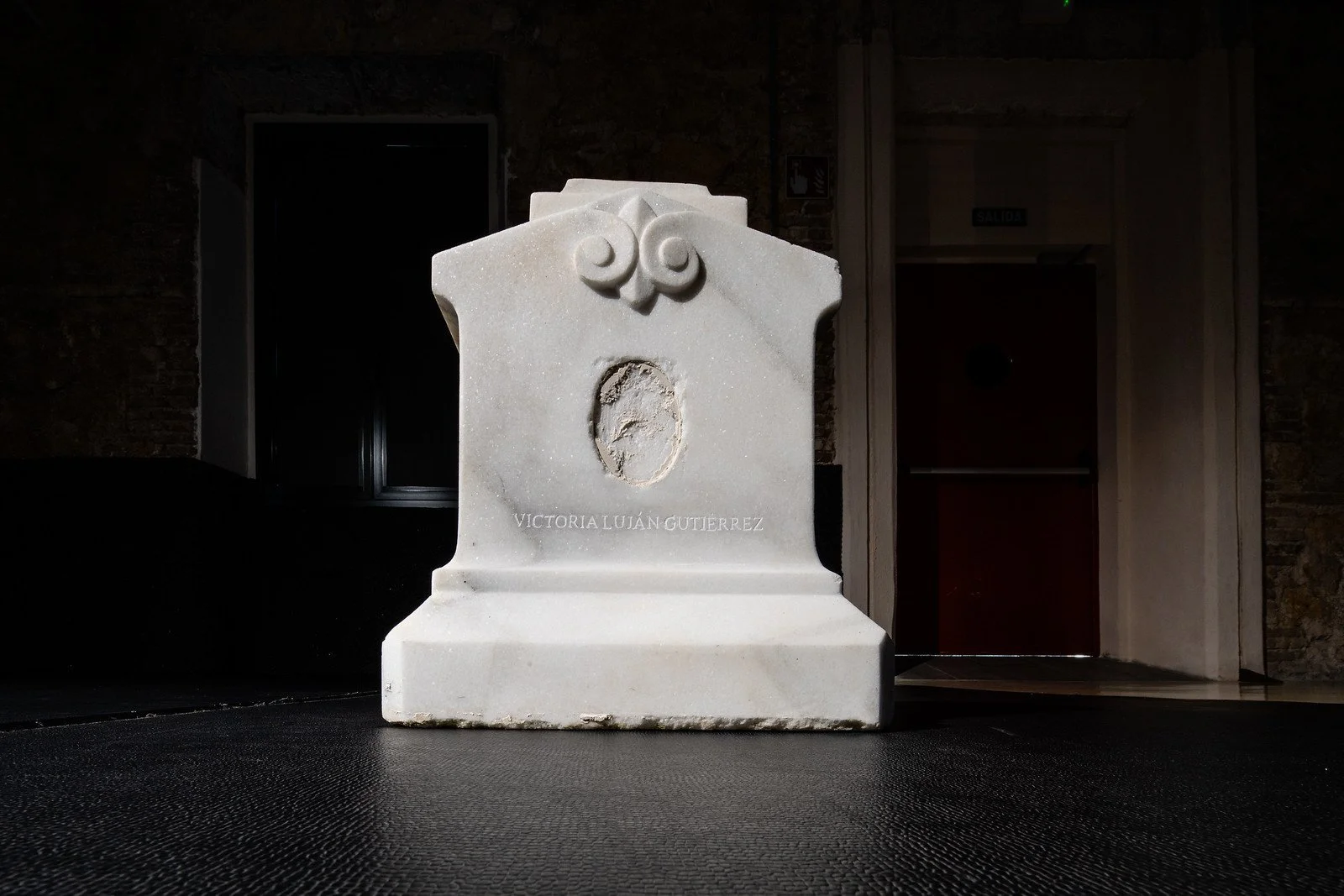
The fifteenth step was a performance carried out within the framework of the exhibition *The Role of the Family*, in which Azcona collectively recorded the name used by his mother for years: Victoria Luján Gutierrez. After a positive DNA test, it was revealed that this name was false and that her real name is Isabel Gómez Aranda. Thus, in this performance, where Azcona records the ‘dead’ name on an old 19th-century tomb, it serves as a closure to a previous stage and narrative, which now shifts and evolves with the new presence of the mother. / El decimoquinto paso fue una performance realizada en el marco de la muestra El Papel de la Familia donde Azcona graba de manera colectiva el nombre utilizado por su madre durante años: Victoria Luján Gutierrez. Este nombre tras la prueba de ADN positiva se demuestra que fue falso y que el nombre real es Isabel Gómez Aranda. Así en esta performance donde Azcona graba el nombre muerto en una antigua tumba del sigo XIX es un cierre a una etapa y un relato anterior que ahora torna y evoluciona con la nueva presencia de la madre.
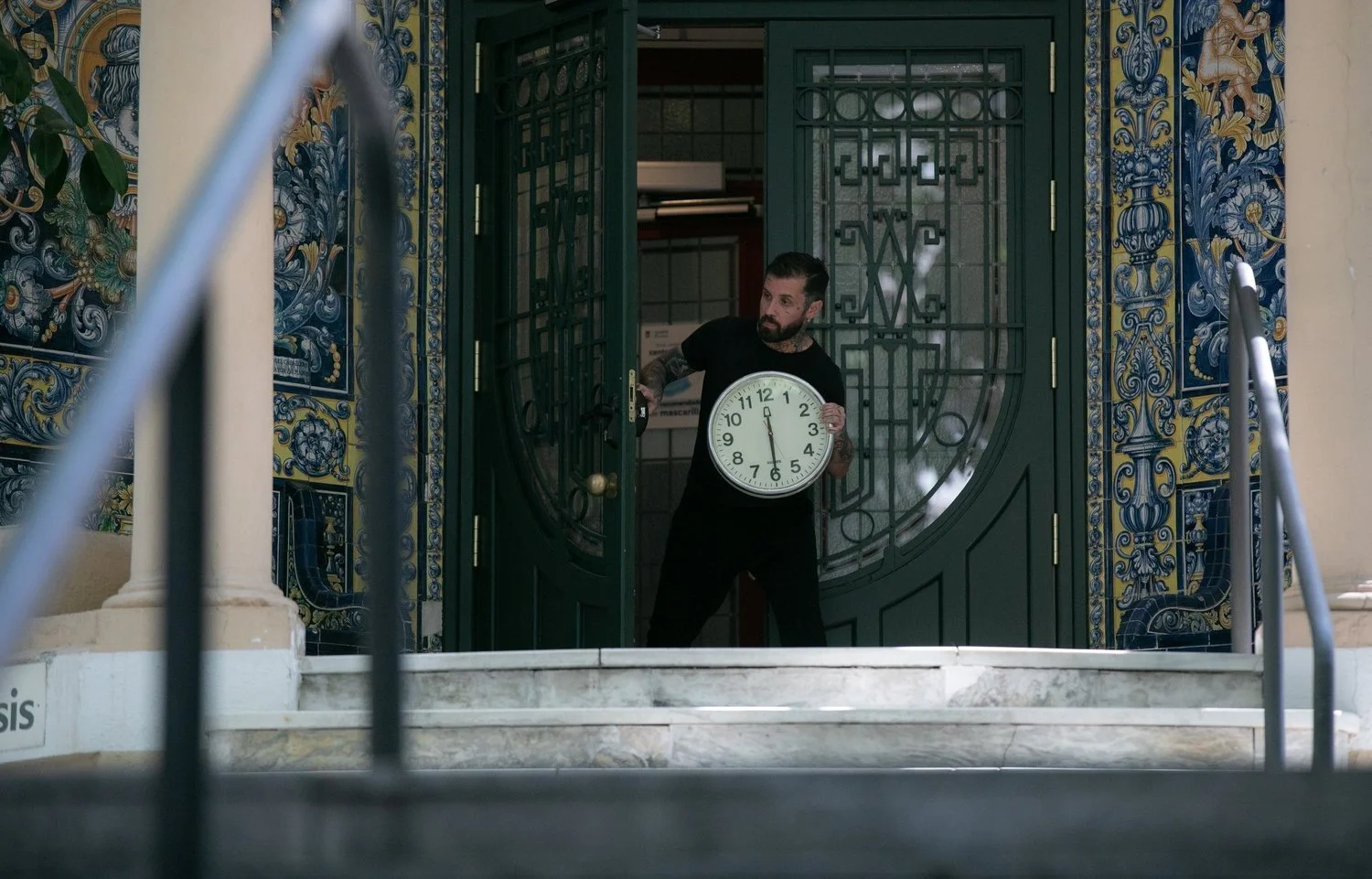
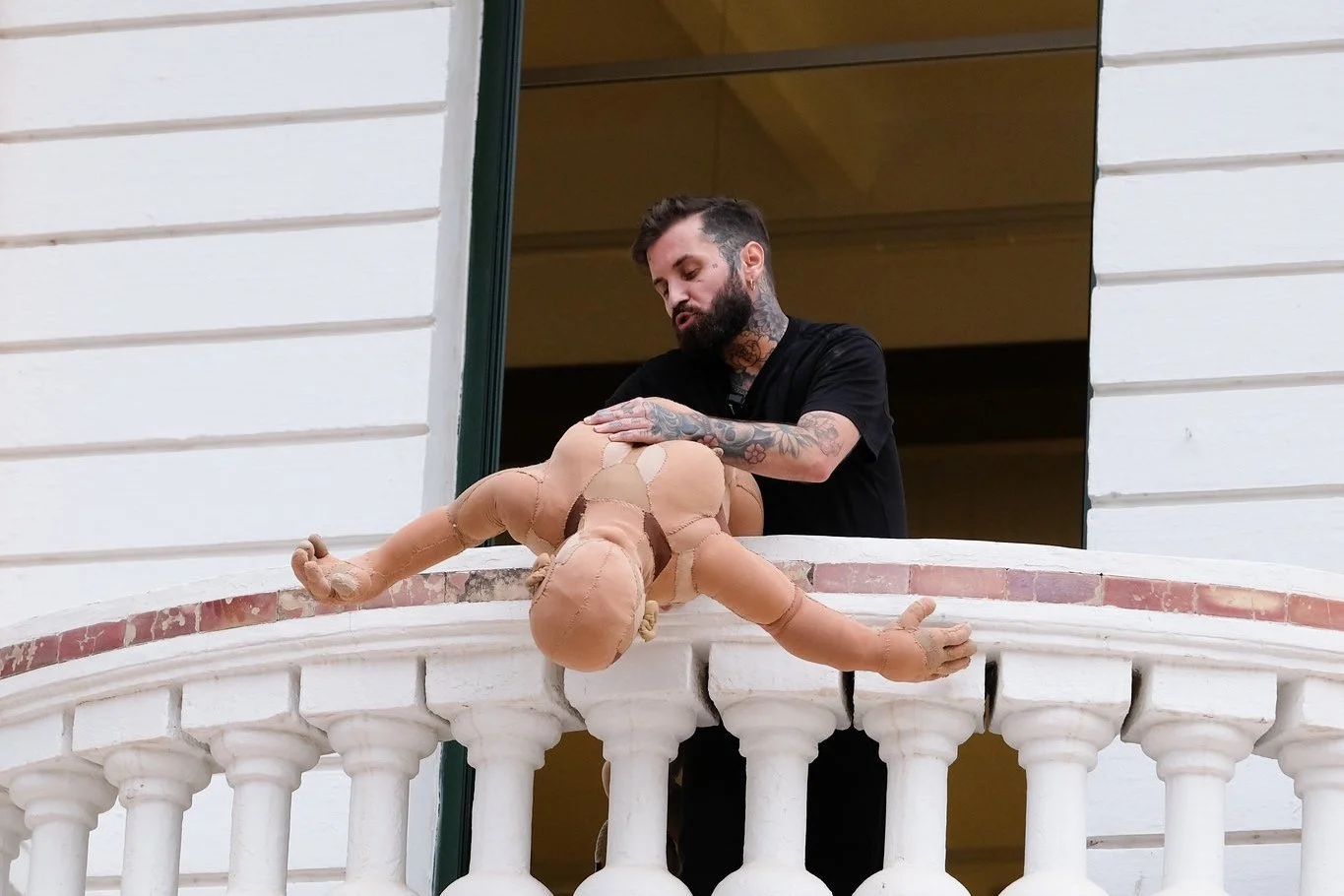
The sixteenth step, carried out by Azcona at the Montesa Maternity Hospital, represents a closure regarding the performances the artist himself has carried out in the place where he was born. The maternity hospital, frequented by Carmelite Teresian nuns and linked to the theft of children, remains open, with a different use but without any major changes. Azcona takes the hospital’s clock, which he later uses in other performances, addressing the inevitability of birth and bringing his works at the maternity hospital to a close, prior to finally meeting the mother who gave birth to him. / El decimosexto paso llevado a cabo por Azcona en la Maternidad de Montesa, supone un cierre en cuanto las performances que el propio artista ha llevado en el lugar donde nació. La maternidad frecuentada por monjas carmelitas teresianas y vinculada al robo de niños sigue abierta, con otro uso, pero sin ningún gran cambio. Azcona sustrae el reloj de la maternidad que más tarde utilizará en otras performances, hablando de la obligatoriedad del nacimiento y cerrando las obras en la maternidad, previo a conocer por fin a la madre que le parió.
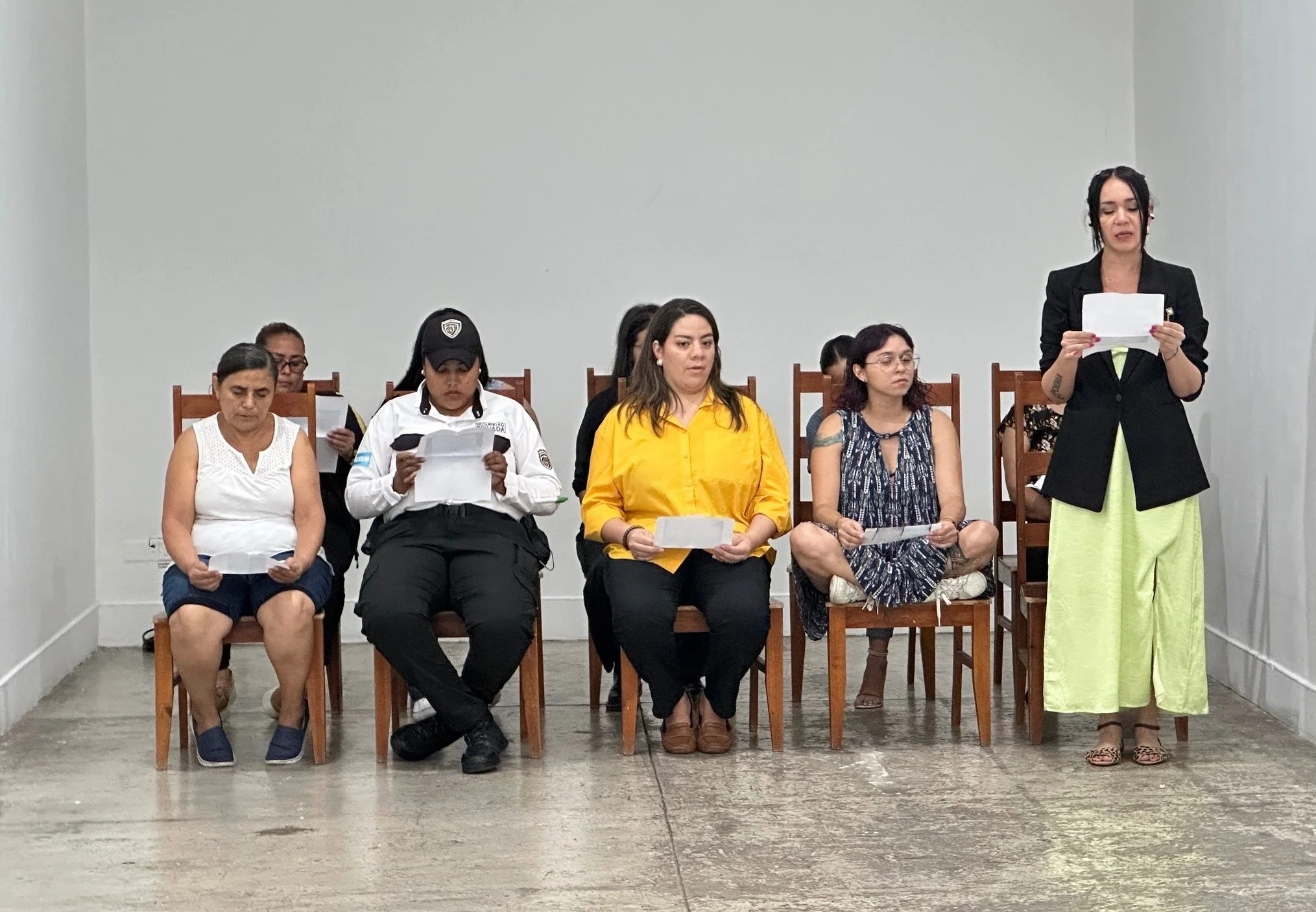
The seventeenth step, or The Abandoners, is an important performance according to Azcona, aimed at recovering and healing part of the feeling of abandonment that remained inside him regarding his biological mother. In this action, dozens of mothers in Murcia and Tegucigalpa participated, activating, through letters and handwritten notes of abandonment by mothers of their own newborn children, interventions in the streets. / El decimoséptimo paso o Las Abandonadoras. Performance importante según Azcona para recuperar y sanar parte del sentimiento de abandono que permanecía en su interior respecto a su madre biológica. En esta acción decenas de Madres en Murcia y en Tegucigalpa activaron desde cartas y manuscritos de abandono de madres de sus propios hijos recién nacido en calles.
The eighteenth step, or nine brief performances, was aimed at preparing to meet a mother. A few days before the closing of *The Role of the Family* at the Artillery Barracks, Azcona carried out nine new actions as a conclusion to all projects related to the mother, some of them key for being ready to meet his mother a few months later. / El decimoctavo paso o nueve performances breves para prepararse para conocer a una madre. Pocos días antes de la clausura de El papel de la Familia en el Cuartel de Artillería Azcona activa nueve nuevas acciones como cierre de todos los proyectos en torno a la madre, algunas de ellas claves para estar listo para conocer a su madre unos pocos meses después.


The nineteenth step is understood as a compilation of diaries, documents, and writings containing reflections, sensations, and fears by Azcona himself over the year and a half of rapprochement between them. More than one hundred pages of various types, handwritten by the artist, with a final reflection on the day of the definitive encounter with his mother. / El decimonoveno paso se entiende como una recopilación de diarios, documentos y escritos con reflexiones, sensaciones y miedos por el propio Azcona a lo largo del año y medio de acercamiento entre ambos. Más de cien hojas de diferentes tipos manuscritas por el artista con una reflexión final el día del encuentro definitivo con su madre.
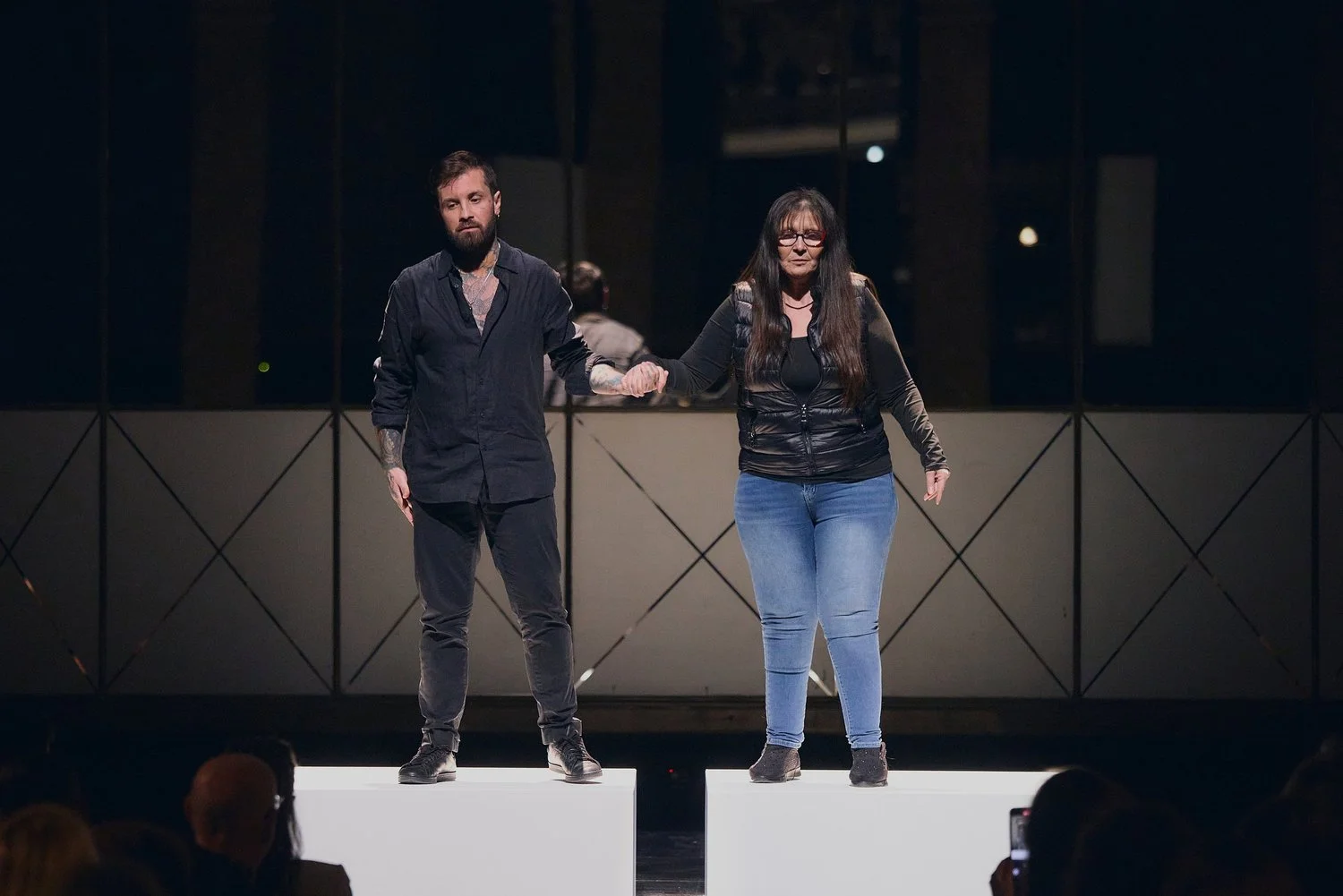
The twentieth step, or final encounter, between the mother (Isabel Gomez Aranda) and the son (Abel Azcona) took place after they had never seen each other since April 1, 1988—the date on which the mother abandoned the future artist while he was in the incubator, having been born with fetal alcohol syndrome. The encounter, held at the Círculo de Bellas Artes in Madrid as a performance with pedestals, involved hundreds of people supporting both of them and can be considered the closure of The Steps Toward the Mother. / El vigésimo paso o encuentro final entre la madre (Isabel Gomez Aranda) y el hijo (Abel Azcona) tras no haberse visto nunca desde el 1 de abril de 1988. Fecha en el que la madre abandonó al futuro artista en mientras se encontraba en la incubadora al haber nacido con alcoholismo fetal. El encuentro acontecido en el Círculo de Bellas Artes de Madrid mediante performance con peanas incluyo a cientos de personas sosteniendo a ambos y puede considerarse el cierre de Los pasos hacia la madre.
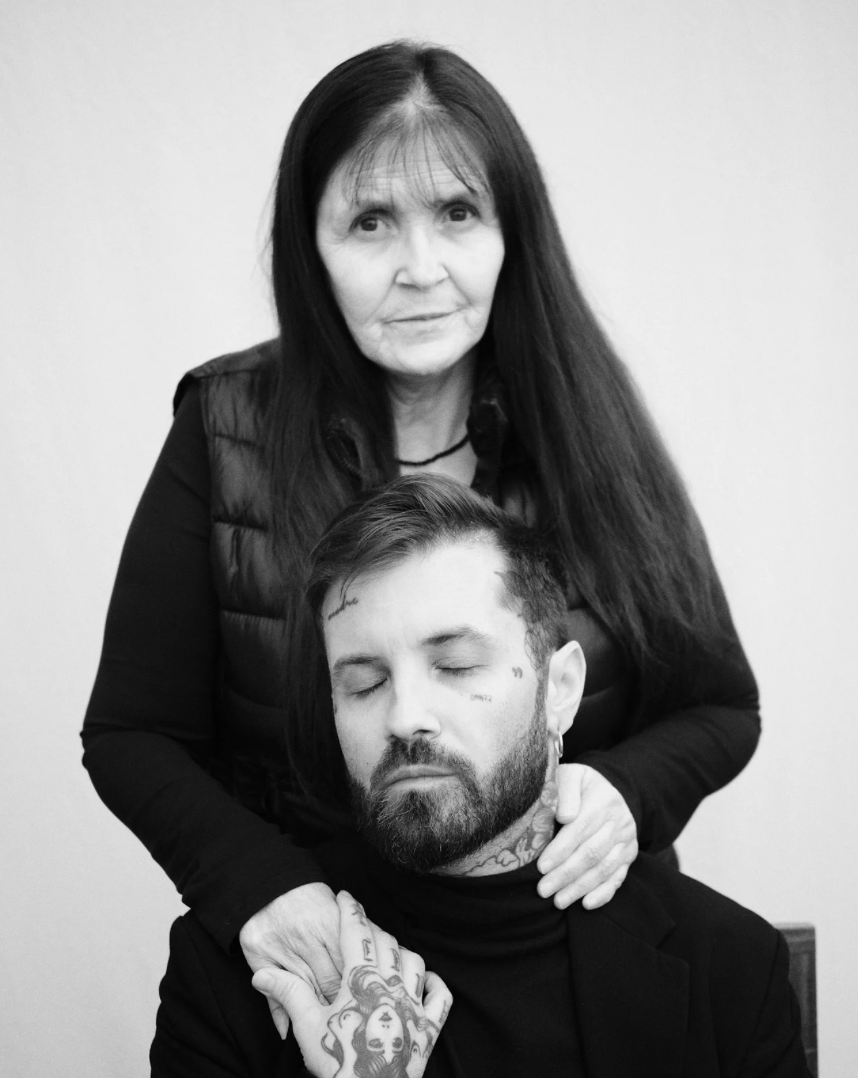
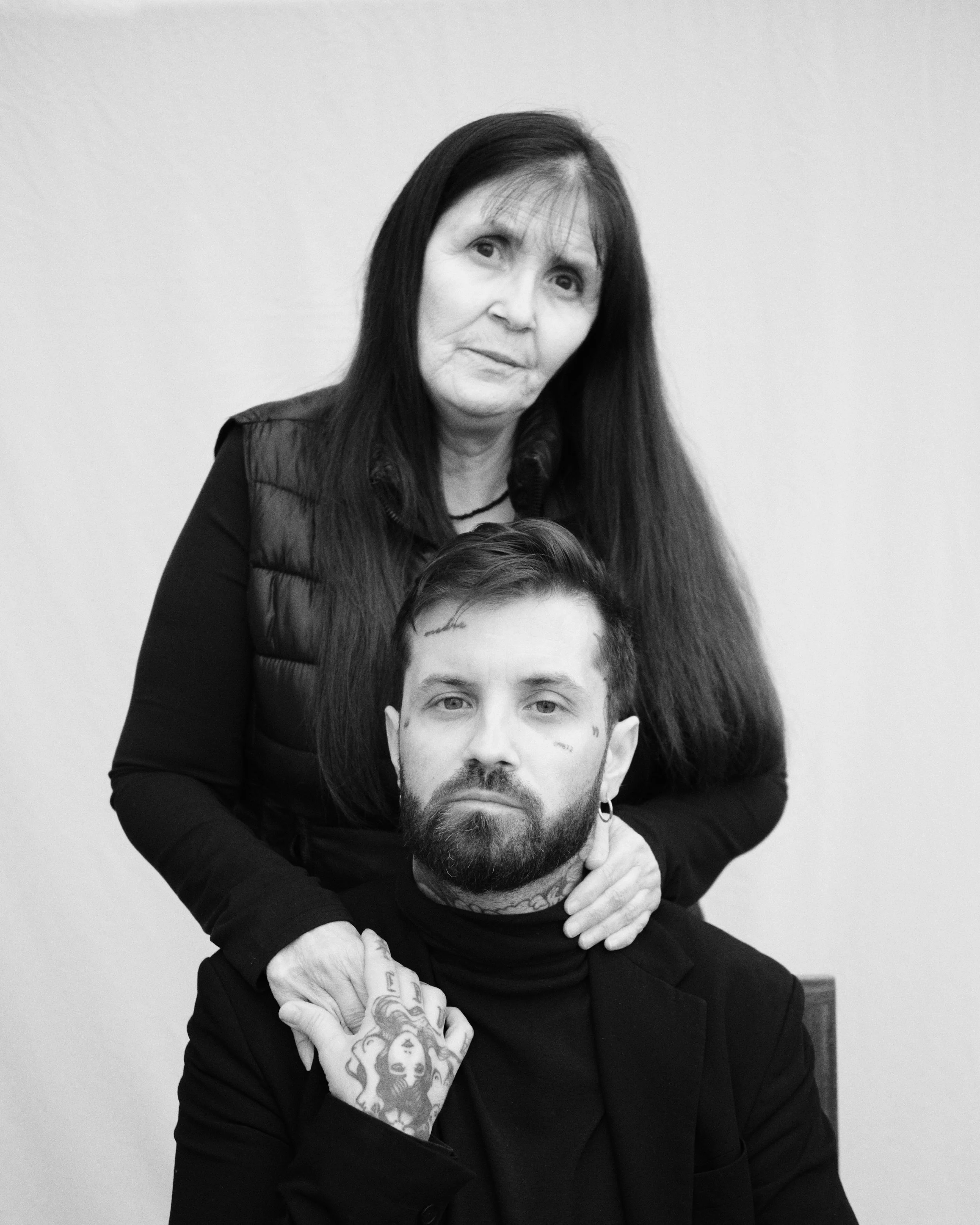
As a final step, on April 1, 2025, at the Círculo de Bellas Artes in Madrid, mother and son decided to take their first photograph together. In the same vein as all the previous photographs with the chosen mothers, such as ORLAN, Abramović, or Yoko Ono, Isabel and Abel photographed themselves at the conclusion of the performance. / A modo de último paso el 1 de abril de 2025 en el Círculo de Bellas Artes de Madrid, Madre e hijo deciden hacerse la primera fotografía juntos. Y en la misma línea de todas las fotografias realizadas anteriormente con Las madres elegidas como ORLAN, Abramović o Yoko Ono, Isabel y Abel se fotografían al final la performance.
The need to search for the maternal figure, through painting, sculpture, and performance, permeates the entire work of Abel Azcona in an overwhelming and profound way. It represents one of the most raw and realistic processes in his entire body of work, while also serving as one of the triggers for his performative base.
Many of his works have revolved around searching for a mother who abandoned him. From imagining what his mother might be like in "Imaginary Mothers" (Ecuador, Chile, and Spain, 2022-2023), where the artist collectively reflects with people who are motherless, orphaned, or have complex maternal relationships, creating imaginary mothers through portraits, to creating his own mother in "The Soft Mother," 2022-23, where he creates a soft mother to embrace and accompany him, or even choosing his own mother from among Marina Abramović, ORLAN, Tracey Emin, or Yoko Ono in "The Chosen Mothers" (Amsterdam, Paris, 2022-2023), where through photographs, the protagonists assume the roles of mother and child.
This search for the maternal figure concluded in an unexpected way. On November 19th, Abel called me late at night. I didn't answer. The next day, I found out he had located his possible biological mother. Just a few days before the opening of the exhibition "Abel Azcona. My Families 1988-2024" at La Panera, the search had ended.
An exhibition that brought together pieces that traced a complex journey through his family tree, a tree marked by the absence of a mother, but now what? A woman had appeared, claiming to be his mother. Through Manuel Lebrijo, she had found him. She had started following him on social media a few days earlier and had contacted him.
We didn't discuss it any further. We opened the exhibition, and two days later, we resumed the conversation through messages. He told me stories, sent me photos, audio clips... It seemed like everything was falling into place. The only thing missing was a DNA test.
Azcona ultimately decided to embrace this reality and approach it as another performative process, framing it within the six brief actions presented at La Panera. An intimate act in which, through six actions, we transformed the space into a zone for resolving family conflicts. From tattooing the case number on his skin, meeting his sister, reading letters of care, shouting "mama, mama," hugging the soft mother, to finally reaching the mother. This last brief action was intended to be a call to the family mediator from the work "The Search," where Azcona was looking for his biological mother to see if she was still alive, given her severe homelessness and drug addiction, but we eventually replaced it with the reading of the DNA test results that we had requested from a Barcelona laboratory a few days earlier. After sending several couriers to collect the samples, we had the results at La Panera. He held the sealed envelope in his hand. We handed it to Abel, and in front of the attendees, he read them, nervous and broken. It was positive; she was his biological mother.
Azcona closes the chapter on the search for the maternal figure but opens new projects now seeking a connection with his mother—these nine steps toward her.
Azcona's work has a markedly processual nature, often lasting for years. His works don't end in themselves; in fact, many have a trigger that extends them over time.
These triggers sometimes activate collective pieces of catharsis that open a broader discourse, but other times they activate more intimate and individual pieces. This is the case with the closing of the exhibition "My Families 1988-2024" at La Panera, where the last person to visit the exhibition behind closed doors was Isabel Gómez, the mother.
"Meet my mother before you meet me," Abel told me. A round-trip journey to meet Azcona's work before meeting the artist himself. On Sunday, January 28th, we arranged a private visit to the exhibition just for her. For two hours, the mother could walk among the pieces, watch the videos, read all the documents, flip through the albums. Most of the pieces in the exhibition revolved around the maternal figure, and Isabel was able to learn about the story firsthand, confront it and its way of working, and ultimately connect with her son.
ANNA ROIGÉ. Curator and Head of the Documentation Center at the Center for Contemporary Art Creation and Research, La Panera.
La necesidad de la búsqueda de la figura materna, desde lo pictórico, lo escultórico, pasando por lo performativo atraviesa toda la obra de Abel Azcona de una manera abrumadora y profunda. Supone uno de los procesos más crudos y realistas de toda su obra y a la vez ha sido uno de los detonantes de su base performativa.
Muchos de sus trabajos han consistido en buscar a una madre que le abandonó. Desde imaginar cómo sería su madre en Las madres imaginarias (Ecuador, Chile y España, 2022-2023) donde el artista reflexiona de forma colectiva con personas sin madre, huérfanos o con maternidades complejas, como seria su madre imaginaria y lo materializan mediante retratos, hasta construirse su propia madre en La madre blanda, 2022-23, donde se construye una madre blanda a la que poder abrazar y que le pueda acompañar, o incluso elegir a su propia madre entre Marina Abramović, ORLAN, Tracey Emin o Yoko Ono en Las madres elegidas (Amsterdam, Paris, 2022-2023) donde mediante fotografías los protagonistas asumen los roles de madre hijo.
Esta búsqueda de la figura materna concluyó de manera inesperada. El 19 de noviembre Abel me llamó a altas horas de la noche. No respondí. El día siguiente supe que había encontrado a su posible madre biológica. A pocos días de la inauguración de la exposición Abel Azcona. Mis familias 1988-2024. en La Panera, la búsqueda había terminado.
Una muestra que reunía piezas que nos marcaban un recorrido complejo a través de su árbol genealógico, un árbol marcado por la ausencia de la madre, pero ¿y ahora qué? Ha aparecido una mujer que dice ser su madre. A través de Manuel Lebrijo ella lo había localizado. Ya hacía unos días que había empezado a seguirle en redes sociales y a contactar con él.
No hablamos más del tema. Inauguramos la exposición y pasados dos días, retomamos el tema por mensajes. Me contó historias, me mandó fotos, audios… parecía que todo iba encajando. Solo faltaba la prueba de ADN.
Azcona finalmente decidió asumir este hecho, esta realidad y afrontarla como un proceso performativo más y enmarcarlo dentro de las 6 acciones breves presentadas en La Panera. Un acto íntimo en el que mediante 6 acciones convertimos el espacio en una zona de resolución de conflictos familiares. Des de tatuarse el número de su expediente, conocer a su hermana, leer las cartas de los cuidados, gritar mama mama, abrazar a la madre blanda, hasta llegar a la madre. Esta última acción breve tenía que ser una llamada al mediador familiar protagonista de la obra la “La búsqueda” donde Azcona buscaba a su madre biológica para comprobar si ella ya había fallecido o no, debido a su situación grave de calle y drogodependencia, pero finalmente la sustituimos por la lectura de los resultados de las pruebas de ADN que unos días antes habíamos solicitado en un laboratorio de Barcelona. Después de mandar varios mensajeros para hacer las muestras, teníamos los resultados en La Panera. Los tenía en un sobre cerrado en la mano. Lo entregamos a Abel y frente a los asistentes los leyó, nervioso y roto. Era positivo, es su madre biológica.
Azcona cierra la etapa de la búsqueda de la figura materna, pero abre nuevos proyectos buscando ahora un acercamiento hacia la madre, estos nueve pasos hacia ella.
El trabajo de Azcona tiene un marcado carácter procesual, muchas veces con años de duración. Sus obras no se detienen en sí mismas, de hecho, muchas de ellas tienen un detonante que hace que se prolonguen en el tiempo.
Estos detonantes sirven para activar en ocasiones, piezas colectivas de catarsis que abren un discurso en torno a una temática completa, pero en otras ocasiones activan piezas más íntimas y de carácter individual. Es el caso del cierre de la exposición Mis familias 1988-2024 en La Panera, donde la última persona que visitó la exposición a puerta cerrada fue Isabel Gómez, la madre.
«Conocerás mi madre antes que yo me dijo Abel.» Un viaje de ida y vuelta para conocer en persona la obra de Azcona, antes que al propio artista. El domingo 28 de enero le pudimos hacer una visita a la muestra solo para ella. Durante dos horas la madre pudo pasear entre las piezas, ver los videos, leer todos los documentos, hojear los álbumes. La mayoría de las piezas en la exposición giraban en torno a la figura materna e Isabel pudo conocer la historia en primera persona, enfrentarse a ella y a su forma de trabajar y en definitiva acercarse a su hijo.
ANNA ROIGÉ. Comisaria y Responsable del Centro de Documentación del Centro de Creación e Investigación en Artes Contemporáneas La Panera.
In Azcona's narrative, there are no vanishing points for the gaze, no compassion, nor the relief of off-screen space: infallibly, the monster is shown head-on, as that presence that is born and exists when the gaze has crossed the threshold of the inadmissible. In his analysis of "self-narratives," Mark Freeman writes: "When we attempt to interpret something external to ourselves—be it a text, a painting, or a person—there is something there in front of us: words, paint stains, or actions. But what is really there when the object of our interpretive efforts is ourselves (…) Our pasts, our stories are in this sense inseparable from the one performing the interpretation—that is: ourselves—subject and object are one." In autobiographical storytelling, the opposition between subject and object collapses, so that both end up merging. In line with this, Allen S. Weiss highlights how, at the origin of Dionysian drama, there is a sacrifice of the ego that ultimately implies its loss and subsequent transformation into otherness. The narrative of excess that emerges from Azcona's autobiographical performance takes the form of what could be called a refractory memory of the self: the imposing machinery of remembrance designed to recover the artist's self from its rejection and subsequent transformation into otherness.
This last assertion leads to the second aforementioned reason why Azcona's autobiographical narrative can be considered—according to prevailing productivity criteria—as a failure: its "deficient condition." In reality, a traumatic lack can be as excessive as the surplus origin previously examined. The key to this "diminished origin" is provided by Julia Kristeva: "When psychoanalysis speaks of the object, it refers to the object of desire as constructed in the Oedipal triangle. According to this figure, the father supports the law and the mother is the prototype of the object. Towards the mother converge not only the needs for survival but above all the first mimetic aspirations. She is the other subject, an object that guarantees my being as a subject. The mother is my first desiring and signifiable object." If the mother is—as Kristeva asserts—the first and fundamental guarantee of being a subject, then Azcona's autobiographical narrative begins with a void: that of the mother who abandoned him at birth and, consequently, the absence of an object with which little Abel could subjectively identify. Azcona's narrative is therefore driven by the need to identify an "I," a subject for himself. The absence of the mother is the absence of subjectivity. Through his work, Azcona demands a subject from which to speak and with which to heal this original loss. Pieces such as Las madres imaginarias (2022–2024) or Las madres elegidas(2022–2025) seek to re-establish the imitable referential object; although—and here lies a noteworthy particularity—the way this "reintegration of the mother" is narrated is through a substitution: Azcona assumes the role of otherness, of the maternal figure, and from her constructs himself as a subjectivity. Pay attention to this significant nuance: Azcona constructs himself first as otherness rather than as selfhood. The function of his narrative is to guarantee the other that makes the self possible. The "Azcona subject" is born as difference and traverses his entire autobiographical narrative in the form of an other-self. In the very configuration of his identity, there is no conformity, no adherence to sameness. His way of surviving in a world from which he has received only violence is by transforming his self into an ungraspable, elusive reality that always redirects elsewhere, to an otherness from which to confront and disobey.
The dual flaw on which Azcona's autobiographical narrative is founded—the excessive and the deficient—ultimately materializes in a displacement of the subject towards otherness that evades any external attempt at subjugation. In fact, Azcona's narrative is articulated as an immoderate challenge against authority. According to Alexandre Kojève, "Authority is the possibility an agent has to act upon others (or another) without those others reacting against him." The great value that Azcona's constructed narrative possesses in this sense is that it breaks the symmetry of this relationship of dominance through the flaw of a subjectivity that is always displaced, oblique, reacting from an incorruptible exteriority.
Pedro A. Cruz Sánchez and Cintia G. Reyes
En la narrativa de Azcona, no hay puntos de fuga para la mirada, no existe la compasión ni el alivio del fuera de campo: infaliblemente, el monstruo se muestra de frente, como esa presencia que nace y existe cuando la mirada ha traspasado el umbral de lo inadmisible. En su análisis sobre las “narrativas del yo”, escribe Mark Freeman: “Cuando probamos a interpretar algo situado fuera de nosotros -sea esto un texto, una pintura o una persona-, hay algo ahí delante nuestra: palabras, manchas de pintura o acciones. Pero ¿qué hay realmente ahí cuando el objeto de nuestros esfuerzos interpretativos somos nosotros mismos (…) Nuestros pasados, nuestras historias son en este sentido inseparables de quien realiza la interpretación -esto es: nosotros mismos-: sujeto y objeto son uno” . En el relato autobiográfico, la oposición entre sujeto y objeto colapsa, de manera que ambos terminan por confundirse. En consonancia con esto, subraya Allen S. Weiss cómo, en el origen del drama dionisiaco, existe un sacrificio del ego que, en última instancia, implica su pérdida y subsiguiente transformación en alteridad. El relato de exceso que surge de la performance autobiográfica de Azcona se conforma como lo que se podría denominar una memoria refractaria del yo: la imponente maquinaria de recuerdo diseñada persigue recuperar el yo del artista desde su rechazo y posterior transformación en alteridad.
Esta última afirmación envía a la segunda causa antedicha por la que el relato autobiográfico de Azcona se puede considerar -según los criterios de productividad imperantes- como fallido: su “condición deficitaria”. En realidad, una falta traumática puede resultar tan excesiva como el propio origen excedentario hasta ahora examinado. La clave de este “origen mermado” la ofrece Julia Kristeva: “Cuando el psicoanálisis habla del objeto, habla del objeto de deseo tal como se construye en el triángulo edípico. Según esta figura, el padre es el soporte de la ley y la madre el prototipo de objeto. Hacia la madre convergen no solo las necesidades para la supervivencia sino sobre todo las primeras aspiraciones miméticas. Ella es el otro sujeto, un objeto que garantiza mi ser de sujeto. La madre es mi primer objeto deseante y significable” . Si la madre es -como asegura Kristeva- la primera y fundamental garantía del ser sujeto, entonces, el relato autobiográfico de Azcona comienza con un vacío: el de la madre que lo abandonó al nacer y, por ende, el de la ausencia de un objeto con el que el niño Abel se pudiera mimetizar subjetivamente. La narración de Azcona es disparada, por consiguiente, por la necesidad de identificar un yo, un sujeto para sí mismo. La ausencia de la madre es la ausencia de la subjetividad. A través de su obra, Azcona reclama un sujeto desde el que hablar y con el que subsanar esta pérdida original. Piezas como Las madres imaginarias (2022-2024) o Las madres elegidas (2022-2025) persiguen reestablecer el objeto referencial imitable; aunque -y he aquí una particularidad a destacar- el modo en que se relata dicha “reintegración de la madre” es mediante una suplantación: Azcona asume el papel de la alteridad, de la figura materna, y desde ella se construye como subjetividad. Atiéndase a este matiz no menor: Azcona se construye antes como alteridad que como mismidad. La función de su relato es garantizar el otro que posibilite el yo. El “sujeto Azcona” nace como diferencia y atraviesa todo su relato autobiográfico en la forma de un otro yo. En la misma configuración de su identidad, no existe conformidad, adecuación a lo mismo. Su forma de sobrevivir en un mundo del que solo ha recibido violencia es transformando su yo en una realidad inasible, escurridiza, que reenvía siempre a otro lado, a una alteridad desde la que hacer frente y desobedecer.
El doble fallo sobre el que se funda el relato autobiográfico de Azcona -lo excedentario y lo deficitario- se materializa, en suma, en un desplazamiento del sujeto hacia la alteridad que dribla cualquier intento exterior de sometimiento. De hecho, la narrativa azconiana se articula como un desafío inmoderado contra la autoridad. Según Alexandre Kòjeve, “la Autoridad es la posibilidad que tiene un agente de actuar sobre los demás (o sobre otro), sin que esos otros reaccionen contra él” . El gran valor que, en este sentido, posee el relato construido por Azcona es que rompe la simetría de esta relación de dominio por medio del fallo de una subjetividad siempre desplazada, oblicua, que reacciona desde una exterioridad insobornable.
Pedro A. Cruz Sánchez y Cintia G. Reyes
Abel Azcona confronts the world—or, more precisely, puts his body forward, fully aware that his fragility is also a sign of extreme resistance. A body is, as Jean-Luc Nancy warned, a tension and a tone, a bearing, and above all, something heavy. When we see photographs of Abel Azcona crawling through the streets of Pamplona surrounded by police, we realize that his corporeality is “legally unbearable,” dragged toward the place where it must bear “the weight of the Law.” Abel Azcona exemplarily demonstrates that performance is an art of presence, without negating the aesthetic and critical potential of documentation. For him, bodily materialization is fundamental, without precluding the creation of traces and testimonies that extend the performative experience. The question of origin is, in every sense, the critical point of all his actions, provided we understand that what we have is not a “full presence” but différance and supplementarity—writing that delays the encounter with the Real.
Undoubtedly, Abel Azcona is an artist consistent with his origins. Before final acceptance, and after denial, anger, and attempts at negotiation in response to loss or trauma, comes, according to psychiatrist Elisabeth Kübler-Ross, depression or anguish. “The body,” notes Lea Vergine on body art performance, “is stripped in an extreme attempt to acquire the right to be reborn in the world.”
Abel Azcona works repeatedly on what causes him pain. He assumes his abandonment and reactivates the experience of orphanhood. The enormous family traumas of this artist are nothing “romantic,” although they could be related to the impressive text by Jean Paul Richter titled Discourse on the Dead Christ, Who, from the Height of the World-Building, Proclaims That God Does Not Exist, in which Jesus Christ admits, after resurrection, that God does not exist, that on the other side there is nothing—a void message that also conveys the tragic certainty that we are all orphans. We lack a father or, as in Abel Azcona’s case, the figure of a father is nothing more than an abuser. Darkness takes hold of everything.
It may seem as if Abel Azcona’s works arise from a performative-masochistic impulse. It is important to remember that masochism reverses the master-slave dynamic. If possession is the madness of the sadist, the pact is that of the masochist: a radical commitment in which one risks one’s own life. Masochism necessarily has a legal dimension, to which the performative-aesthetic is added. In Abel Azcona’s case, “punishment” is conditioned by the abandonment and violence that are his original marks; maternal and paternal figures carry no authority other than an abject law. In all his works—or better, in his artistic behavior—there is an extraordinary and even tragic will to know; he has declared that he wants the fire of knowledge, the wound, and the burning of the possibility of the impossible: “My desire is to pursue questions that disorient; I want the initial blindness of abandoning the shadows of the safe, the accepted, and the established that prevent me from seeing in other lights; I want the rough, the obtuse, to destroy my slave binding and stand up, to leave minority behind and ask in my own voice, to doubt, to defer.”
As when Vito Acconci in Trademarks (1970) bit and marked his body, Abel Azcona punishes his body without accepting any “discipline.” He has every reason in the world to identify with Jean Genet, and he can also transform his resistance through disruption into a modulation of the attitude of Bartleby the Scrivener. In the face of the dynamics of a scatological capitalism, he crosses as an idiot or adopts the attitude, in relation to “justice,” of inhabiting silence.
Abel Azcona’s actions confront us with extreme experiences, blocking traffic with a body that, even in silence, screams in pain. His dramatic example reveals that art can provoke not only fear and compassion (pathetic engines of a purge that may be the very plot itself) but also delay the final moment. It is something more intense than a “writing” game to point out, in Derridean fashion, that we need to linger in the anticipation of dying itself. “Thus,” writes Abel Azcona, “to renounce this becoming is to abandon the possibility of what sustains me in life. From the womb I disobeyed by not extinguishing myself in maternal deleterious routines; as an infant to the violence of the environment, as a youth to my own impulse toward death.” Abel Azcona puts his life at risk, perhaps in order to “live more.” If all his discourse and behavior contains something of a reformulation of Segismundo’s first monologue in Calderón de la Barca’s Life is a Dream (a reformulation of Silenus’ wisdom that Nietzsche recovered: if you are born, the best thing you can do is to end your life as soon as possible), we must underline that Abel Azcona’s existence has often been a nightmare. “The crime of being born” is reformulated as the right not to have been born, when in reality, he is someone condemned to survive.
“I was born,” writes Abel Azcona, “to suffer; I lament. In my origin there is abandonment, knot, and resolution. Birth would be circumstantial if not for its obligation. She, violated, agreed, born, and hurled into filthy life. Born dead as a consequence of fervor.” Nevertheless, this unwanted child sometimes manifests an anomalous “motherly tenderness,” especially in his poetic writing, where, as he himself states, he pays homage to Leopoldo María Panero. Abandonment is the source of obsession, with the mother appearing poetically through flowers. However, no concessions can be made to romantic camouflage. On the contrary, Abel Azcona obsessively repeats the word “neither,” aware of the lack inscribed in his origin, conscious that it is “only foam.”
Abel Azcona does not return to the father as the “prodigal son” but, on the contrary, as someone demanding answers. He had the courage to summon Manuel, the man registered as his biological father (without being so), to the Parque de los Patos in La Taconera, Pamplona, where decades earlier he had been abducted and taken to Manuel’s village (Villar de Rena in Badajoz). This return journey is a recollection of trauma, a return to stories of violence. The barred subject seeks to conjure forgetfulness, accepting that no destiny resolves what happened. Here, all fantasy of a “happy family” is dismantled, when what was suffered were abuses and systematic mistreatment. Finally, confronted with all the documentation from the adoption case that Abel fortuitously obtained, the “father” assumes the violence he perpetrated, although he positions himself as the “victim,” attributing all blame to “women.” This subject, exposed in Sala Amós by “his son,” embodies heteropatriarchal brutality. Abel Azcona does not want, in any way, to become a man, and when he “settles” next to his father, he is aporetically marking distance.
Excerpt from the curatorial text by Fernando Castro titled “Something Perverse. Paroxysmic-Family Situations of Abel Azcona for the Exhibition ‘Returning to the Father’” and as a prologue to the homonymous book.
Abel Azcona planta cara o, para ser más preciso, pone el cuerpo consciente de que su fragilidad es también el signo de una extrema resistencia. Un cuerpo es, como advirtiera Jean-Luc Nancy, una tensión y un tono, un porte y, sobre todo, algo pesado. Cuando vemos las fotografías de Abel Azcona reptando por las calles de Pamplona rodeado por la policía comprobamos que su corporalidad es «legalmente insoportable», arrastrada hacia el lugar donde tendrá que soportar «el peso de la Ley». Abel Azcona demuestra ejemplarmente que la performance es un arte de la presencia sin que eso suponga que niegue el potencial estético y crítico de la documentación. Para él es fundamental la materialización corporal sin que eso suponga que no puedan generarse huellas y testimonios que prolongan la experiencia performativa. La cuestión del origen es, en todos los sentidos, el punto crítico de todas las acciones que desarrolla, siempre y cuando entendamos que lo que tenemos no es una «presencia plena» sino différance y suplementariedad, escritura que demora el encuentro con lo Real.
Sin duda, Abel Azcona es un artista consecuente con sus orígenes. Antes de la aceptación final y después de la negación, la explosión de ira y los intentos de negociación frente a una pérdida o una experiencia traumática, llega, según apunta la psiquiatra Elisabeth Kübler-Ross, la depresión o la angustia. «El cuerpo —apunta Lea Vergine sobre la body art performance— es desnudado en un intento extremo por adquirir el derecho a renacer en el mundo.
Abel Azcona trabaja, una y otra vez, sobre aquello que le duele. Asume su abandono, reactualiza la experiencia de orfandad. Los enormes traumas familiares de este artista no tienen nada de «romántico» aunque podrían ponerse en relación en el impresionante texto de Jean Paul Richter titulado «Discurso de Cristo muerto, el cual, desde lo alto del edificio el mundo, proclama que Dios no existe» en el que Jesucristo admite, tras resucitar, que Dios no existe, que al otro lado no hay nada: un mensaje vacío que también supone la certeza trágica de que todos somos huérfanos. Carecemos de padre o, como en el caso de Abel Azcona, quien «figura» como tal no es otra cosa que un maltratador. La oscuridad se adueña de todo.
Pareciera como si las obras de Abel Azcona surgieran de una pulsión perfomativo-masoquista. Conviene tener presente que el masoquismo invierte la operativa del amo y el esclavo. Si la posesión es la locura propia del sádico, el pacto es la del masoquista: un compromiso radical en el que se llega a poner en juego la propia vida. El masoquismo tiene necesariamente una dimensión jurídica a la que se añade lo performativo-estético. En el caso de Abel Azcona, el «castigo» está condicionado por el abandono y la violencia que son sus marcas originarias, las figuras materna y paterna no tienen por rango más que una ley abyecta. En todas sus obras o, mejor, en su comportamiento artístico, hay una extraordinaria y hasta trágica voluntad de saber; así ha declarado que quiere el fuego del saber, la llaga y el ardor de la posibilidad de lo imposible: «Mi deseo es apostar por las cuestiones que desorienten, quiero la ceguera inicial de abandonar las sombras de lo seguro, lo aceptado y establecido que me impide mirar con otras luces, quiero lo rugoso, lo obtuso, destrozar mi atadura de esclavo y erguirme, abandonar la minoría de edad y preguntar con voz propia, dudar, diferir».
Como cuando Vito Acconci en Trademarks (1970) se mordía y marcaba el cuerpo, Abel Azcona castiga su cuerpo sin aceptar ninguna «disciplina». Tiene todas las razones del mundo para identificarse con Jean Genet, así como también puede convertir su resistencia por disrupción en una modulación de la actitud de Bartleby el escribiente. Frente a las dinámicas de un capitalismo escatológico, se atraviesa como un idiota o adopta la actitud, ante la «justicia», de habitar el silencio.
Las acciones de Abel Azcona hacen que nos confrontemos con experiencias límites, bloquean el tráfico con un cuerpo que, incluso en silencio, grita de dolor. Su dramático ejemplo revela que el arte puede suscitar no sólo el temor y la compasión (motores patéticos de una purga que puede ser la de la trama misma) sino también demorar el momento final. Es algo más intenso que un juego de «escritura» señalar, a la manera derridiana, que necesitamos demorarnos en la anticipación del morir mismo. «Así —escribe Abel Azcona— que renunciar a este devenir es abandonar la posibilidad de lo que me sostiene en la vida, desde el vientre desobedecí al no extinguirme en las deletéreas rutinas maternas, como infante a la violencia del entorno, siendo joven a mi propio impulso de muerte». Abel Azcona pone en riesgo su vida y acaso trata así de «vivir más». Si todo su discurso y comportamiento tiene algo de reformulación del primer monólogo de Segismundo en La vida es sueño de Calderón de la Barca (una reformulación de aquella sabiduría de Sileno que Nietzsche recuperara: si has nacido, lo mejor que se puede hacer es darse muerte cuanto antes), tendremos que subrayar que la existencia de Abel Azcona ha sido, en muchos momentos, una pesadilla. «El delito de nacer» se reformula como derecho a no haber nacido cuando, en realidad, es alguien condenado a sobrevivir.
«Nací —escribe Abel Azcona—, para sufrir, yo me lamento. En mi origen hay abandono, nudo y desenlace. El hecho del nacimiento sería circunstancial de no ser por la obligatoriedad del mismo. Violada ella, pactado, nacido y precipitado a la inmunda vida. Nacer acontecido como consecuencia del fervor. Nacido muerto». Con todo, este hijo no deseado manifiesta, en ocasiones, una anómala «ternura de la madre», especialmente en su escritura poética en la que, como él mismo declara, rinde homenaje a Leopoldo María Panero. El abandono es la fuente de la obsesión, apareciendo poéticamente la madre evocada a través de las flores. Sin embargo, no es posible hacer concesiones al camuflaje romántico. Al contrario, lo que repite obsesivamente Abel Azcona es la palabra «ni», sabedor de la falta inscrita en su origen, consciente de que eso es «solo espuma».
Abel Azcona no regresa al padre como el «hijo pródigo» sino, al contrario, como alguien que demanda respuestas. Tuvo el coraje de citar a Manuel, el hombre que está inscrito como su padre biológico (sin serlo), en el Parque de los Patos de la Taconera de Pamplona donde hace décadas le raptó para llevarle con él a su pueblo (Villar de Rena en la provincia de Badajoz). Ese viaje de regreso supone una rememoración del trauma, un retorno a las historias de violencia. El sujeto barrado quiere conjurar los olvidos, asumiendo que no hay un destino que resuelva lo acontecido. Aquí está desmantelada toda fantasía de «familia feliz» cuando lo que se ha sufrido son abusos y maltratos sistemáticos. Finalmente, confrontado con toda la documentación del expediente de adopción que Abel consiguió fortuitamente, el «padre» asume toda la violencia que desplegó, aunque se coloca en el papel de la «víctima»: reconoce el dolor causado culpando «a las mujeres» de todo lo sucedido. Este sujeto, expuesto en la Sala Amós de la mano de «su hijo», encarna la brutalidad heteropatriarcal. Abel Azcona no quiere, de ningún modo, convertirse en un hombre y, cuando se «instala» junto al padre, está aporéticamente marcando distancia.
Fragmento del texto curatorial de Fernando Castro titulado «Algo perverso. Situaciones paroxístico-familiares de Abel Azcona para la exposición “Volver al padre» y como prólogo del libro homónimo.
Azcona’s art closely resembles the explorations of realism characteristic of the French nouvelle vague. On one hand, the artist tends to create a form of art in which realism and fiction blend together, while in the narrative he avoids the forced concatenation of events and allows the subjective element to enter, fostering an openness that appeals to the viewer. The image asserts itself as it does in reality, and the outcome of the operation depends solely on the evolving relationship that arises between the parts. In his performances, Azcona develops a cinematic-type narrative structure that appears to use ideological systems and frameworks in order to subvert their modes of representation. The physical saturation of the image, for example, speaks more to intensity than to the psychological state of a conflict; hence the emotional asepsis of his close-ups. Something similar happens with the wider framing, which does not aim to contextualize a specific situation or chronotope, but instead works better as an atmospheric unfolding that opens areas of emotion. There is no opposition between subjectivity and objectivity, nor between intention and context, but rather a dialectical interaction between the body and the diagram of its function. In the manner of Francis Bacon, the apparent contrast between body and space implies a continuous flow between representation and the organic impulse of matter—a flowing analogy in which the difference between background and figure no longer exists. It is a continuity between interior and exterior, and the inability to distinguish between them.
Diego Sileo, PAC Padiglione d’Arte Contemporanea di Milano
El arte de Azcona se asemeja mucho a las investigaciónes del realismo de la nouvelle vague francesa. Por un lado, el artista tiende a crear un arte en el que el realismo y la ficción se mezclan, mientras en el relato escapa la concatenación forzada de eventos y deja entrar el elemento subjetivo, estimulando una abertura que apela al espectador. La imagen se hace valer como en la realidad y el rendimiento de la operación está sujeto a la pura evolución de la relación que nace entre las partes. En sus performance Azcona elabora una construcción narrativa de tipo cinematogràfico, que al parecer utiliza sistemas ideológicos y esquemas para subvertir sus modos de representación. La saturación física de la imagen, por ejemplo, habla más de intensidad que del estado psicológico de un conflicto; desde aquí la asepsis emocional de sus primeros planes. Algo que sucede tambièn con el enfoque más amplio, que no quiere contextualizar una situación o un cronotopo específico, pero funciona mejor como un desdoblamiento atmòsferico que abre áreas de emoción. No hay oposición entre la subjetividad y la objetividad, ni entre la intención y el contexto, sino una interacción dialéctica entre el cuerpo y el diagrama de su función. A la manera de Francis Bacon, el aparente contraste entre el cuerpo y el espacio implica un flujo de continuidad entre la representación y el impulso orgánico de la materia, una analogía de flujo donde ya no existe la diferencia entre fondo y figura; es una continuidad entre el interior y el exterior y la incapacidad de diferenciarlos.
Diego Sileo, PAC Padiglione d’Arte Contemporanea di Milano
THE FIRST STEP was activated on October 20, 2023, with an instant message from Isabel Gómez Aranda to the artist Abel Azcona. She obtained the artist's contact through Manuel Lebrijo, who is listed as Azcona's biological father without actually being so. Lebrijo had not been in contact with Azcona since the performance "Volver al Padre" (Return to the Father).
EL PRIMER PASO se activó el 20 de octubre de 2023 con un mensaje instantáneo de Isabel Gómez Aranda al artista Abel Azcona. Ella consiguió el contacto de el artista a través de Manuel Lebrijo, que consta como padre biológico de Azcona sin serlo. Lebrijo no mantenía contacto con Azcona desde la performance Volver al Padre.
It's very hard for me to speak too, because right now I'm devastated. It's very hard for me to speak, it's extremely hard for me to speak. I don't even know what to say to you. I'm completely overwhelmed.
For me, I'll be completely honest with you, that in some way, both my work and life have been based on your absence, and so it happens that I'm a bit in disbelief. Also, I had you with a completely different name and surname, so right now I don't know what to do.
It's normal that you're in disbelief; and about the name and surname, I never gave my name or surname because at that time, before giving birth to you, I was a minor and never gave my real name or surname. My life has always been a lie; now is when my life is true, but my life has always been a lie, really, and you don't know how badly I've had it because of the lie I've always lived. Now, for a few years now, my life is stable and I'm a new person, but my life has always been a mess, a lie; I've ruined lives and I've even ruined my own life.
You can start telling me things, but little by little without getting overwhelmed. I'm totally open, I've worked a lot in therapies and everything, and I'm not going to be scared by anything at all. So, you can tell me everything you want to tell me. You can tell me calmly and without getting overwhelmed because I'm not going to judge you. And if later you think I should judge, we'll come to an agreement.
Okay, I've always looked for you with those names and surnames. In fact, on my birth certificate and all my childhood papers, you appear as Vicky or Victoria Lujan Gutiérrez and so on. And once I searched and found someone who was in Santander with a thing about a fine and thought, seven or eight years ago, I thought it was you. But of course, I don't know if there’s another person with that name. Okay, tell me a bit. If you don't want to tell me about the past, tell me about the present. Do you work? Do you live in Valencia? No, you live in Málaga, you told me, right? Or are you from Valencia?
No, I don't work. I live in Málaga, I have a non-contributory pension and I live off that. I live in a little apartment here, in Málaga capital, and I don't work. I don't work because I'm a bit disabled; the life I've led gave me a stroke on the right side of my body and I was in a center for many years. Now it's been two years that I'm fine, that I recovered from the stroke and now I'm fine. I live alone in an apartment that they found for me there, at Caritas center, and I live here. I pay for electricity, I pay for water and with the 400 euros I earn, I live and that's it. I do crafts, I do things, I'm a volunteer, I go to Caritas here from time to time to lend a hand where they call me. And I go to the center every fifteen days to see my former companions and the people who helped me get ahead because I arrived devastated, I arrived with a stroke and I arrived... well, in bad shape and there I recovered. I spent about 6 years in the center. After the hospital, they took me by ambulance to the center. I was bedridden for a long time, they fed me, washed me, dressed me, and did everything for me. I spent a time in bed, then in a wheelchair, then with a walker, finally with a cane. Now it's been two years that I'm independent, that I take care of myself and do everything myself. But I was very bad. I don't know, I can say I've paid, I've paid and I'm paying, right? For all the damage I caused myself, because I caused it, of course, I can't blame anyone for that. The blame is mine, I took the bad path and I have to face the consequences, right? And that's what I've paid and I'm paying for, but well, now I feel good because I'm active, I do things, I like crafts. Now I'm studying because when I was a child I could never get my ESO and now I'm getting it. I go to classes on Mondays and Wednesdays and I'm studying everything I didn't do as a kid, I'm doing it now. But well, it's never too late if happiness is good, right? And well, I don't know, it's just that suddenly I don't know the truth, it's very hard for me to tell you. Ask me things and I can answer them.
Here at the center, I also had a psychologist and I still have her, I see her every fifteen days because she still works at the center. She is an educator and psychologist, and while I lived there, she was always my psychologist and she still is. Everything I live and everything I've done, I usually tell her, I usually tell her my day-to-day life and my things and everything. And well, she is always there to listen to me. I haven't told her about you because I didn't want to tell her, but well, one day I will tell her, but for now, I haven't told her anything. She knows I had a son and that I don't know anything about him and that's it, but she doesn't know anything more.
And tell me, how did you find me? Did you write to Manolo a week ago? How long ago? Did you ask him for my contact? Did he tell you my name? Because of course, the name Abel was told to me that it was the name you had given me at the clinic, because they told you to give me a name, and you named me Abel. And David was given to me later, by grandma María and the Lebrijo, but when you gave birth to me, I was called Abel first and for that reason, I later removed David because I didn't like it because it was given to me by the Lebrijo. Sorry, I'm slow to answer you, but I'm digesting everything and this is complex, eh?
Me too, me too, it's killing me to talk to you. I have a lump in my throat that's making it very hard for me, but don't worry, you don't have to... I understand, I understand. When things are done wrong, you have these consequences, that I've done everything wrong from the beginning. So, I know, I know that everything that happens to me is little, and everything bad I've lived through is little compared to what I really deserved. And I don't know the truth, I'm devastated right now.
I contacted Manuel to see if he knew anything about you because I really tried to find you but didn't know with what surname or what to look for. But well, that, and I was able to get in touch with him and asked him about you. So, yesterday we had a pretty long conversation of messages until he told me who you were, where I could find you, and gave me the name to look for you and I searched for you and read everything you have on your wall and so on.
You were very handsome and you are! You are very handsome, not were, are. The last time I saw you, you were four years old because I went to Pamplona, I went and found out where Manuel and Arantza lived. I went to their house and saw you when you were four years old, that was the last time I saw you. I never saw you again, that was the last time I saw you, when you were four and you were very handsome, you had long hair.
With what you tell me, the truth is that everything fits because I had this story, but I had three, but you did go to the apartment and tried to see me, and I was playing with Arantza and Manolo, and I knew that. So yes, it fits, the truth. The only thing that has really thrown me off is the name, because we always called you Vicky. Vicky, Manolo always called you Vicky, Vicky. Everyone always Vicky and on my birth certificate you appear as Vicky Luján Gutiérrez. And not long ago, I found a Vicky Luján Gutiérrez who had been in Santander, so I didn't understand the name very well, what threw me off the most. Everything else fits. I also tell you that I did a search for origins and found a woman named Victoria Luján who was in a precarious situation on the street many years ago, ten or twelve years ago. And we had a meeting, but she didn't want to know me, but I assumed that woman was my mother. But I never searched again and assumed she was even dead because she was a woman in a situation of drug addiction, heroin, but apparently, it wasn't you, it must have been another Victoria Luján because your name wasn't correct.
I invented that name as a minor, I invented it because I escaped from the reformatory as a minor and invented that name. And then, after years, once the police caught me and since I used that name in complaints so they wouldn't take me back to the reformatory, once they stopped me and detained me believing I was Victoria Luján Gutiérrez because apparently, that woman had problems too, and they detained me and kept me for seventy-two hours. Then they released me, but I invented that name, thinking it didn't exist, and then it did exist. There was a person because I remember being detained with that name because she was wanted, and after seventy-two hours, they released me. But I invented the name and then it coincidentally existed, that person existed.
A mi me cuesta mucho hablar también, porque yo ahora mismo estoy destrozada. A mi me cuesta mucho hablar, a mi me cuesta muchísimo hablar. No sé ni que decirte. Estoy totalmente pillada.
A mi me pasa, te voy a ser totalmente sincero, que de alguna manera, tanto mi trabajo como vida la he fundamentado en tu ausencia y entonces me pasa que estoy un poco entre incrédulo, además yo te tenía con un nombre y unos apellidos, un nombre y unos apellidos totalmente diferentes, entonces ahora mismo yo no sé que hacer.
Es normal que estés incrédulo; y lo del nombre y los apellidos, yo nunca di mi nombre ni mis apellidos porque cuando yo estaba en ese tiempo, antes de darte a luz, era menor de edad y nunca di mi nombre verdadero ni mis apellidos. Es que mi vida ha sido siempre una mentira; ahora es cuando mi vida es una verdad, pero mi vida ha sido siempre una mentira, de verdad, y tú no sabes lo mal que yo lo he pasado por la mentira que he vivido siempre. Ahora, de unos pocos años para acá, es cuando de verdad mi vida está estable y soy una nueva persona, pero mi vida ha sido siempre un asco, una mentira; he destrozado vidas y me he destrozado hasta mi propia vida.
Me puedes ir contando cosas, pero poco a poco sin que te agobies. Yo estoy totalmente abierto, he trabajado muchísimo en terapias y de todo, y no me voy a asustar absolutamente por nada. Entonces, me puedes contar todo lo que quieras contarme. Me lo puedes contar con tranquilidad y eso, sin agobiarte porque yo no te voy a juzgar. Y si luego dices que crees que tengo que juzgar, pues ya llegaremos a un acuerdo.
Vale, yo siempre te he buscado con esos nombres y esos apellidos. De hecho, en mi partida de nacimiento y en todos los papeles de mi infancia sales como Vicky o como Victoria Lujan Gutiérrez y eso. Y una vez busqué y encontré una que estaba como en Santander con una cosa de una multa y pensaba, hace siete u ocho años, pensaba que eras tú. Pero claro, no sé si habrá otra persona que se llame así. Vale, cuéntame un poco. Si no me quieres contar del pasado, cuéntame del presente. ¿Trabajas? ¿Vives en Valencia? No, vives en Málaga, me has dicho ¿No? o que eres de Valencia.
No, no trabajo. Vivo en Málaga, tengo una pensión no contributiva y vivo de eso. Vivo en un pisito aquí, en Málaga capital, y no trabajo. No trabajo porque estoy un poco discapacitada; la vida que he llevado me dio un ictus en la parte derecha del cuerpo y estuve en un centro muchos años. Ahora llevo dos años que ya estoy bien, que ya me recuperé del ictus y ya estoy bien. Vivo sola en un piso que me buscaron ahí, en el centro de Cáritas, y aquí vivo. Pago la luz, pago el agua y con los 400 euros que cobro, pues vivo y aquí estoy. Hago manualidades, hago cosas, soy voluntaria, voy aquí a Cáritas de vez en cuando a echar una mano donde me llaman. Y aquí al centro solo voy cada quince días a ver a mis antiguos compañeros y compañeras y a la gente que me ayudó a salir adelante, porque yo llegué destrozada, llegué con un ictus y llegué... pues hecha polvo y ahí me recuperé. Estuve cerca de 6 años en el centro. Después del hospital me llevaron en ambulancia al centro. Estuve en cama mucho tiempo, me daban de comer, me lavaban, me vestían y me hacían todo. Estuve un tiempo en la cama, luego en silla de ruedas, después en andador, por último un bastón. Ahora llevo dos años aquí, que llevo independiente, que ya me valgo por mí misma y ya hago todo yo. Pero yo estaba muy mal. Yo no sé, puedo decir que he pagado, he pagado y estoy pagando, ¿no? Todo el daño que me busqué, porque me lo busqué claro, de eso no puedo culpar a nadie. La culpa es de una, la mala vida la cogió una y una tiene que asumir las consecuencias, ¿no? Y eso es lo que he pagado y estoy pagando, pero bueno, ahora me siento bien porque estoy activa, hago cosas, me gustan las manualidades. Ahora estoy estudiando porque cuando era niña no me pude sacar nunca la ESO y ahora me la estoy sacando. Voy los lunes y los miércoles a clases y estoy estudiando todo lo que no hice de chica, lo estoy haciendo ahora. Pero bueno, nunca es tarde si la dicha es buena, ¿no? Y bueno, no sé, es que así de golpe no sé la verdad, es que me cuesta mucho contarte. Pregúntame cosas y yo te las puedo responder.
Aquí en el centro he tenido también una psicóloga y la sigo teniendo, que la veo cada quince días, porque ella trabaja ahí en el centro todavía. Ella es educadora y psicóloga, y mientras yo vivía ahí, pues ha sido siempre mi psicóloga y sigue siendo mi psicóloga. Todo lo que vivo y todo lo que he hecho, pues se lo suelo contar, le suelo contar mi día a día y mis cosas y todo. Y bueno, ella está ahí siempre para escucharme. De ti, no le he hablado, porque tampoco... tampoco quería contarle, pero bueno, un día ya le contaré, pero de momento no le he contado nada. Ella sabe que tuve un hijo y que no sé nada de él y ya está, pero no sabe nada más.
Y cuéntame, ¿Cómo has llegado a mí? Has escrito a Manolo ¿Hace una semana? ¿Hace cuánto? ¿Le has pedido mi contacto? ¿Te ha dicho mi nombre? Porque claro, el nombre de Abel a mí me dijeron que es el nombre que me has puesto vosotros en la clínica, porque os dijeron que me has de poner un nombre, y el de Abel me pusisteis. Y David me lo pusieron después, la abuela María y los Lebrijo, pero yo, cuando tú me diste a luz, me llamaba primero Abel y por ese motivo luego me quité el David, porque el David no me gustaba, porque me lo habían puesto los Lebrijo. Perdona que tarde en contestarte, pero estoy digiriendo todo y esto es complejo, ¿eh?
Yo también, yo también, esto me está costando la vida el hablar contigo. Tengo un nudo en la garganta que me está costando una vida, pero tranquilo, tampoco me tienes... yo te entiendo, te entiendo. Cuando las cosas se hacen mal, uno tiene estas consecuencias, que yo que he hecho todo mal desde un principio. Entonces, yo sé, yo sé que todo lo que me pasa es poco y todo lo que he vivido, malo, es poco a lo que realmente yo me merecía. Y yo no sé la verdad, estoy hecha polvo ahora mismo.
Yo me puse en contacto con Manuel por si sabía algo de ti, porque realmente yo te he intentado buscar, pero no sabía con qué apellido ni con qué buscarte. Pero bueno, eso, y me pude poner en contacto con él y le pregunté por ti. Entonces, ayer tuvimos una conversación bastante larga de mensajes hasta que me dijo quién eras, dónde te podía encontrar y me dio el nombre para buscarte y yo te busqué y leí todo lo que tienes en tu muro y eso.
Eras muy guapo y eres ¡Eres! muy guapo, no eras, eres. La última vez que te vi tenías cuatro años, porque fui a Pamplona, fui y me enteré dónde vivía Manuel y Arantza. Fui a su casa y te vi con cuatro años, fue la última vez que te vi. Ya no te vi nunca más, esa fue la última vez que te vi, con cuatro años y estabas guapísimo, tenías melenita.
Con esto que me cuentas, la verdad que me encaja todo, porque esta historia yo tenía tres, pero sí que fuiste al piso y me intentaste ver y yo estaba jugando con Arantza y con Manolo, y esto lo sabía yo. Así que sí que me encaja, la verdad. Lo único que sí me ha descolocado muchísimo es lo del nombre, porque a ti siempre te hemos llamado Vicky. Vicky, Manolo siempre te llamaba Vicky, Vicky. Todo el mundo siempre Vicky y en mi partida de nacimiento sales Vicky Luján Gutiérrez. Y yo encontré hace no mucho a una Vicky Luján Gutiérrez que había estado en Santander, entonces no entendía muy bien lo del nombre, lo que más me descuadra a mí. Todo lo demás me encaja. También te digo que yo hice una búsqueda de orígenes y encontré a una mujer que se llamaba Victoria Luján que estaba en situación de precariedad en la calle hace muchos años, hace diez o doce años. Y tuvimos un encuentro, pero ella no me quiso conocer, pero yo di por hecho que esa mujer era mi madre. Pero ya nunca más busqué y ya daba por hecho que ya hasta estaba muerta, porque era una mujer en situación de drogadicción, heroína pero, por lo visto no eras tú, será otra Victoria Luján porque tu nombre no era el correcto.
Yo me inventé ese nombre siendo menor, me lo inventé porque yo me escapé del reformatorio siendo menor y me inventé ese nombre. Y después, al cabo de los años, una vez me cogió la policía y como yo ponía ese nombre en denuncia para que no me llevaran al reformatorio, pues una vez me pararon y me detuvieron creyendo que era Victoria Luján Gutiérrez, que por lo visto esa mujer había tenido problemas también, y me detuvieron y me tuvieron setenta y dos horas detenida. Después me soltaron, pero ese nombre me lo inventé yo, creyendo que no existía y después sí existía. Existía una persona porque recuerdo que me detuvieron con ese nombre, porque estaba en busca y captura y a las setenta y dos horas, pues me soltaron. Pero yo me inventé el nombre y luego dio la coincidencia de que existía, de que esa persona existía.
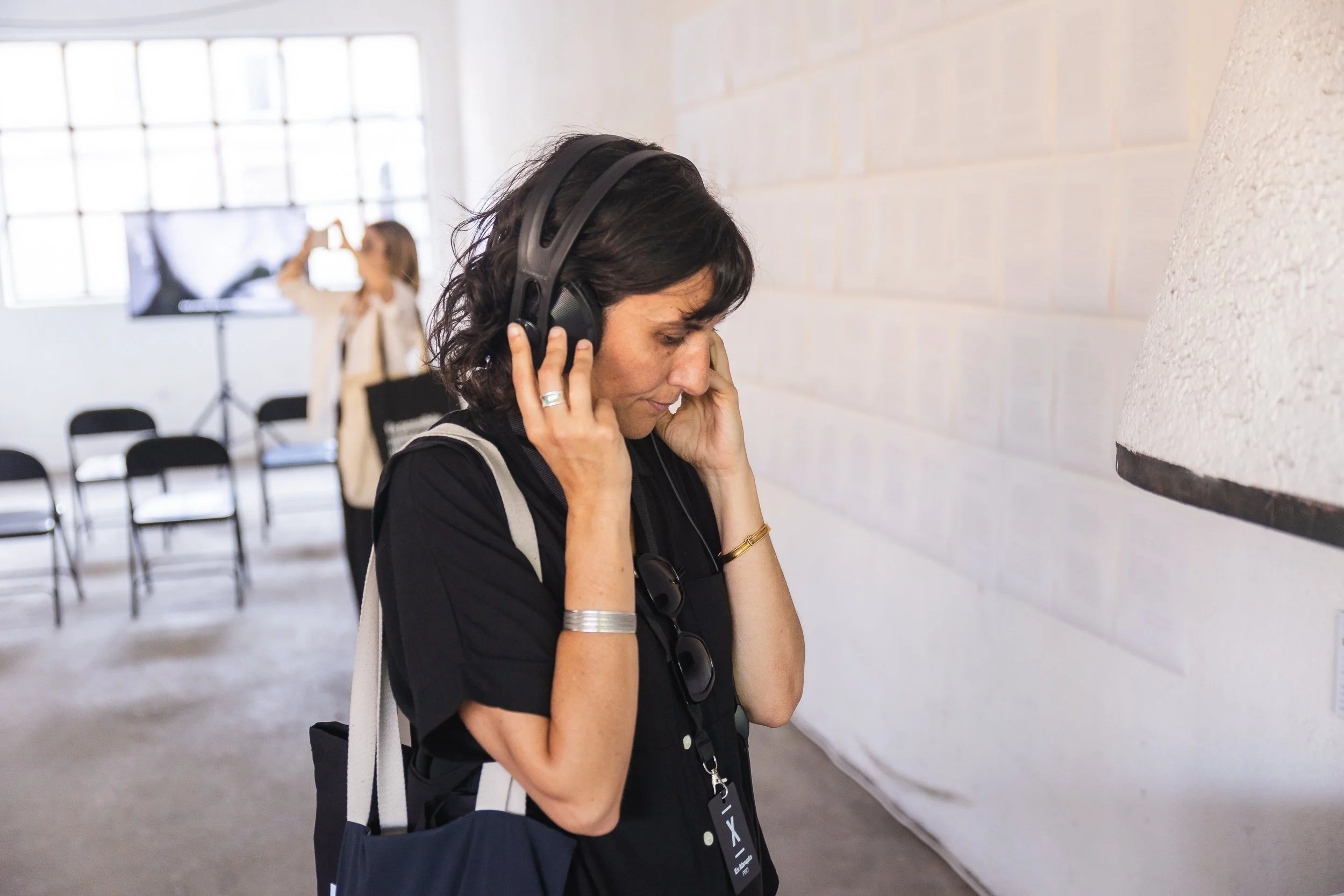
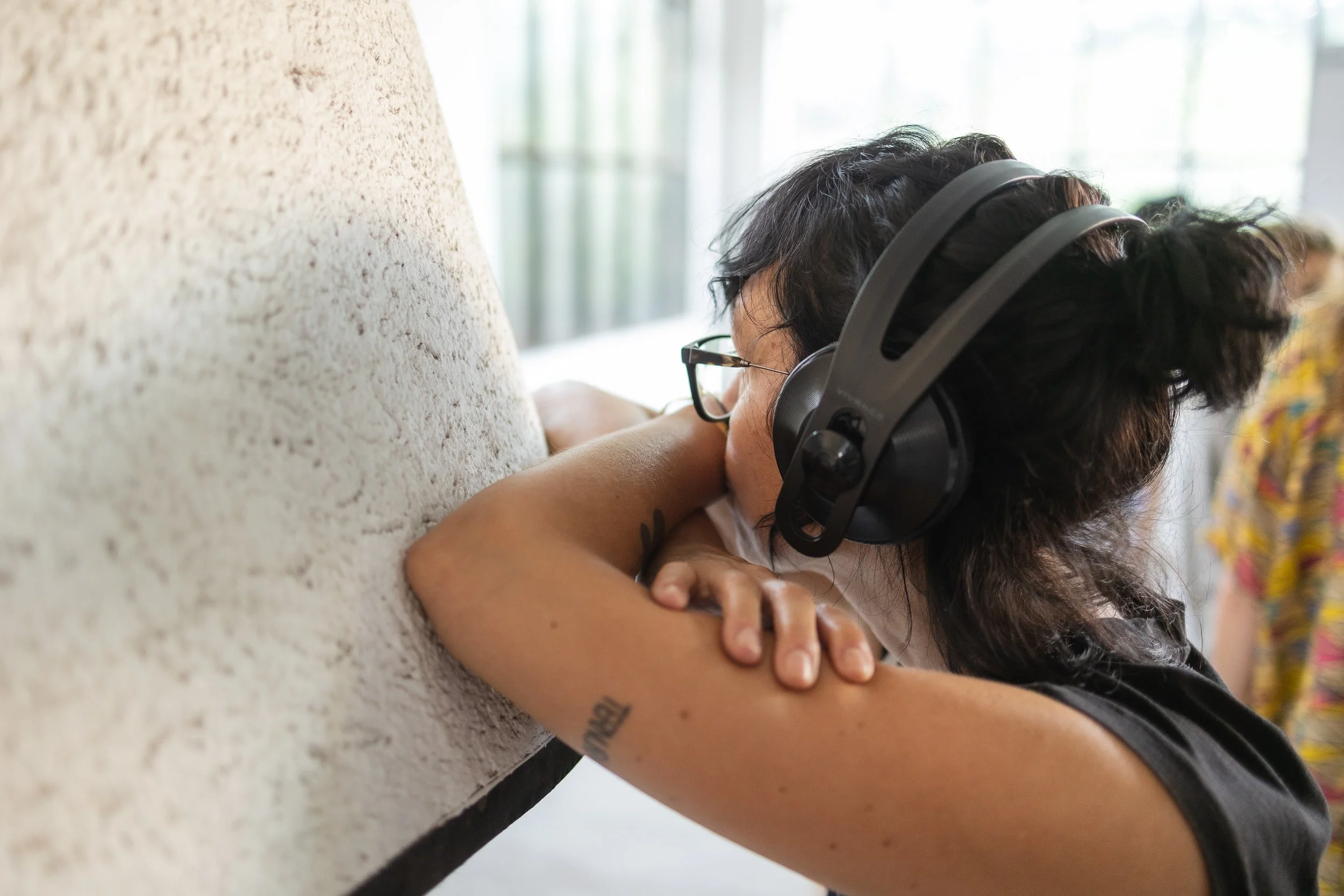
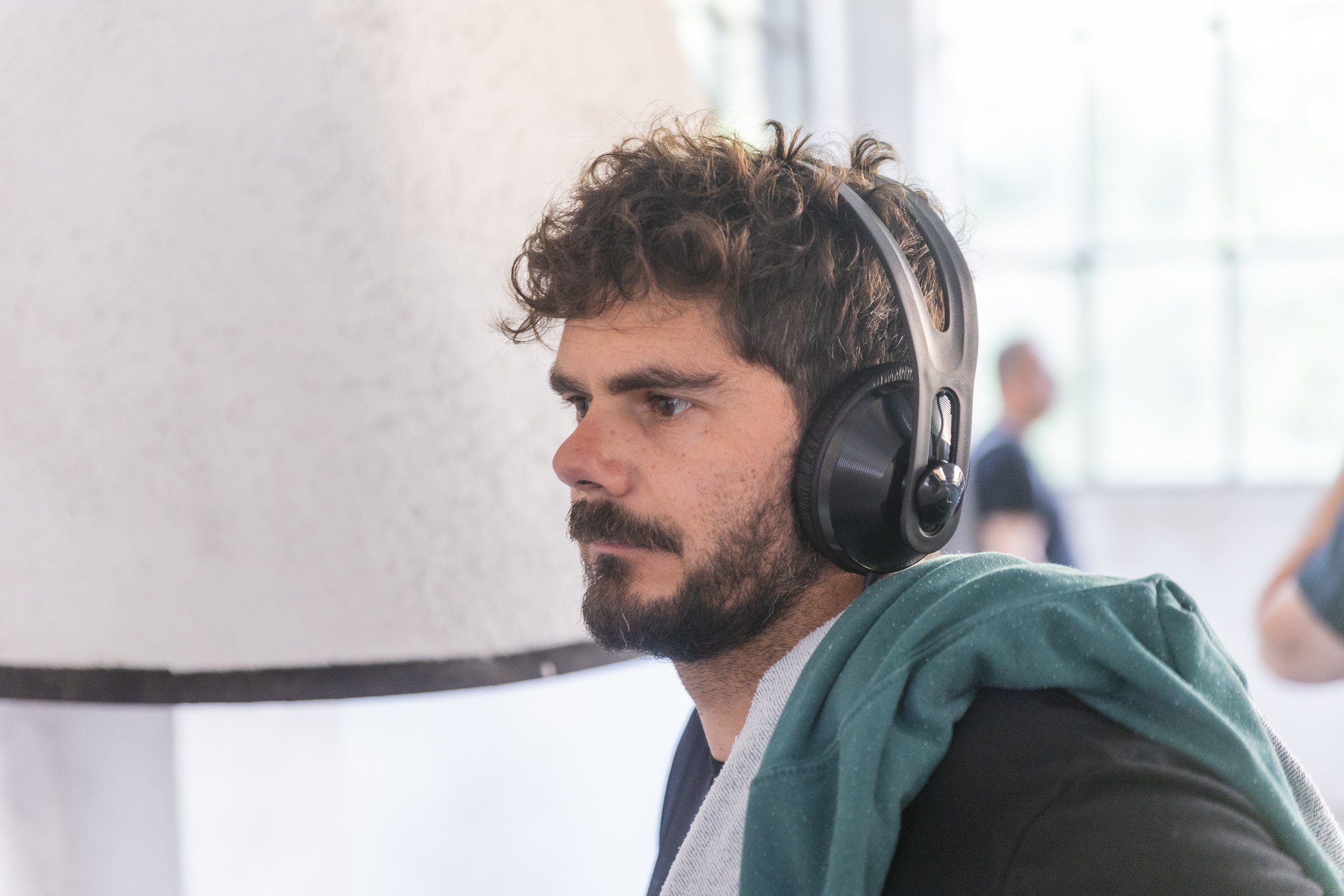
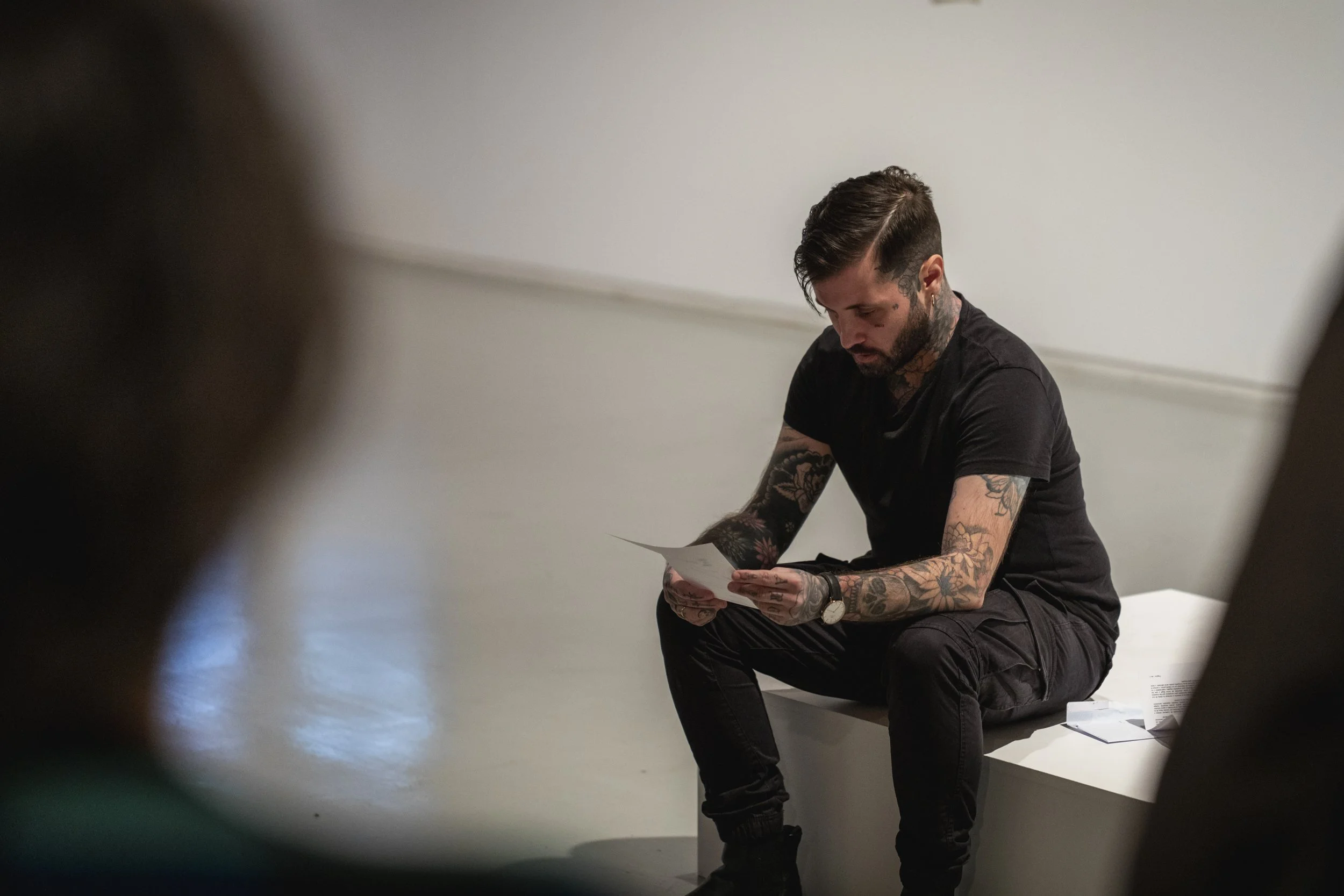
THE SECOND STEP involved commissioning a DNA test at a laboratory in Barcelona in November 2023. The result was received at the La Panera Art Center to carry out a live performance. The reading took place in front of a hundred people for the first time.
EL SEGUNDO PASO consistió en encargar en noviembre de 2023 una prueba de Adn en un laboratorio de Barcelona. El resultado fue recibido en el Centro de Arte La Panera para realizar una performance en vivo. La lectura se realizó frente a cien personas por primera vez.
Twelve days before inaugurating the exhibition "ABEL AZCONA. MIS FAMILIAS 1988-2024," a potential biological mother contacted the artist, expressing a desire to effectively return to his life. After setting aside the matter for over a month, Azcona decides to address it within the framework of the exhibition, making the sixth action the reading of the DNA test requested days earlier at a laboratory in Barcelona, mutually agreed upon. After breaking into tears and reading the result, the artist himself called the person who, according to the positive outcome, is his biological mother. He would have called her even if the result had been negative.
"For over a month, I refused to think about the situation that, after thirty-five years of searching, suddenly my possible biological mother would come knocking. I had to force myself to confront the situation in front of the visitors to read the document and accept that all of it was reality."
The action showed us a nervous and shattered Azcona until the positive resolution of the test, where he called live and sent several voice messages to the person who, according to the laboratories with a 99.94% certainty, is his biological mother.
Doce días antes de inaugurar la muestra ABEL AZCONA. MIS FAMILIAS 1988-2024 una posible madre biológica contactó con el artista queriendo volver de manera efectiva a su vida. Tras dejar arrinconar el asunto durante más de un mes, Azcona decide asumirlo en el marco de la muestra y que la sexta acción sea la lectura de la prueba de ADN solicitada días antes en un laboratorio de Barcelona de manera mutua. Tras romper a llorar y la lectura del resultado, el propio artista llamó a la que según el resultado positivo es su madre biológica. También le hubiera llamado si el resultado hubiera resultado negativo.
«Durante más de un mes rehuse a pensar sobre la situación de que tras treinta y cinco años de búsqueda de repente mi posible madre biológica llamara a la puerta. Tuve que obligarme a enfrentar la situación frente a los visitantes para leer el documento y asumir que todo aquello era realidad.»
La acción nos mostró un Azcona nervioso y roto hasta la resolución positiva de la prueba donde llamó en directo y envió varios audios a la que, según los laboratorios al 99,94 %, es su madre biológica.


"Azcona calling his biological mother to announce to her that the result was positive. / Azcona llamando a su madre biológica para anunciarle que el resultado era positivo.

Azcona with the envelope of the laboratory results. / Azcona con el sobre de los resultados del laboratorio.
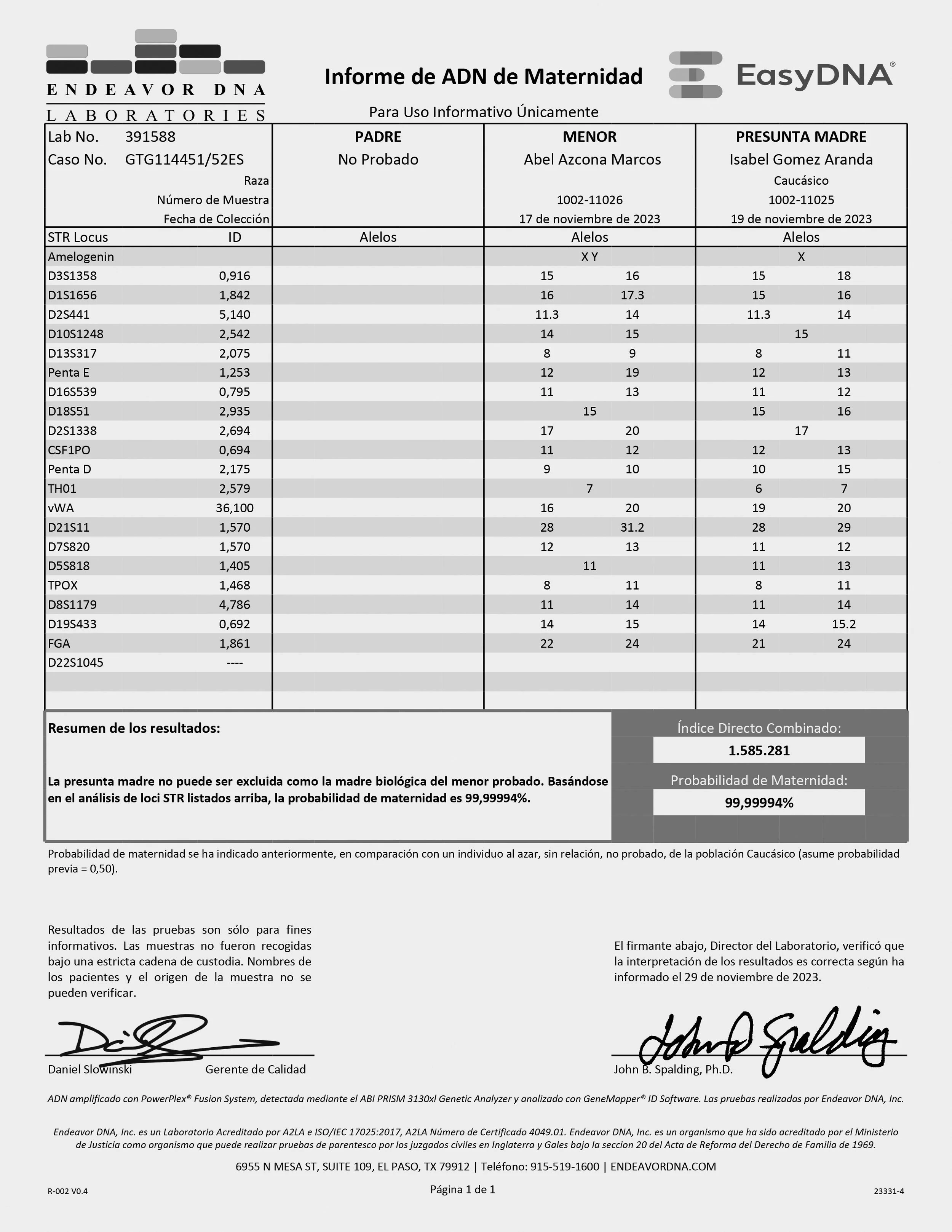
Prueba de Adn final. Documento resuelto durante la performance en el Centro de Arte La Panera.
In collaboration with the Marina Abramovic Institute, Abel Azcona, alongside Marina Abramović and other artists, held a culminating event at Amsterdam's Carré Theater. This farewell gathering was pivotal, marking the closure of a series of performances centered on Azcona's reconciliation with his mother's death. She had endured a life marred by homelessness, substance abuse, and prostitution. The pieces showcased pushed Azcona to the brink as he mirrored his mother’s struggles through acts of self-prostitution, drug use, and ultimately, acceptance and farewell in a poignant third video.
The final presentation left the audience in a profound state of shock. During this event, Azcona revealed his next step would involve seeking out a family mediator to ascertain his mother’s fate, her precarious existence having left her whereabouts and condition unknown.
After returning from this intense series in Amsterdam, Azcona chose to delay his next exhibition at the La Panera Art Center, which would delve into themes surrounding his family. He deemed it the ideal venue for a live performance that would involve making the pivotal call to confirm his mother’s status.
However, just days before the exhibition's opening, an unexpected turn of events unfolded as Azcona's biological mother appeared in person, rendering the planned performance unnecessary. Instead, the event evolved into a live DNA test performed with his newly reconnected mother. This unexpected reunion not only nullified the need for the original performance but also forged a powerful and symbolic link between the farewell actions in Amsterdam and the revelatory encounter at the exhibit.
Paula Garcia, Marina Abramović Institute
En colaboración con el Instituto Marina Abramovic, Abel Azcona, junto con Marina Abramović y otros artistas, llevaron a cabo un evento culminante en el Teatro Carré de Ámsterdam. Esta reunión de despedida fue fundamental, marcando el cierre de una serie de actuaciones centradas en la reconciliación de Azcona con la muerte de su madre. Ella había soportado una vida plagada de indigencia, abuso de sustancias y prostitución. Las piezas presentadas llevaron a Azcona al límite mientras reflejaba las luchas de su madre a través de actos de autoprost*tución, uso de drogas y, finalmente, aceptación y despedida en un tercer video conmovedor.
La presentación final dejó a la audiencia en un estado de conmoción profunda. Durante este evento, Azcona reveló que su siguiente paso sería buscar a un mediador familiar para averiguar el destino de su madre, cuya existencia precaria había dejado su paradero y condición desconocidos.
Después de regresar de esta intensa serie en Ámsterdam, Azcona decidió retrasar su próxima exposición en el Centro de Arte La Panera, que exploraría temas relacionados con su familia. Consideró que sería el lugar ideal para una performance en vivo que involucraría realizar la llamada crucial para confirmar el estado de su madre o su posible muerte.
Sin embargo, solo unos días antes de la inauguración de la exposición, ocurrió un giro inesperado cuando la madre biológica de Azcona apareció en persona, haciendo innecesaria la actuación planeada. En cambio, el evento evolucionó hacia una prueba de ADN en vivo realizada con su recién reconectada madre. Este reencuentro inesperado no solo anuló la necesidad de la performance original, sino que también forjó un vínculo poderoso y simbólico entre las acciones de despedida en Ámsterdam y el encuentro revelador en la exposición.
Paula Garcia, Marina Abramović Institute


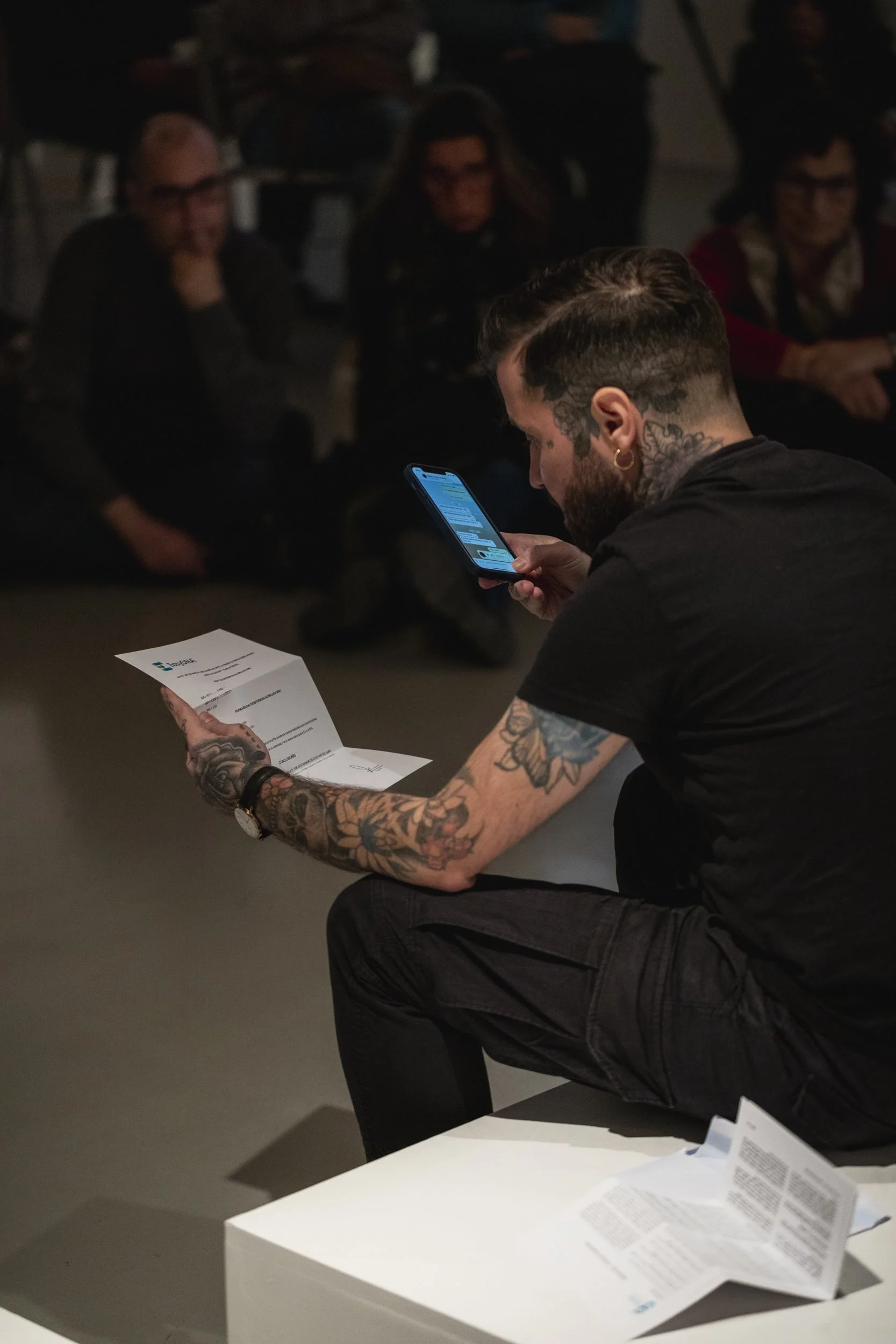


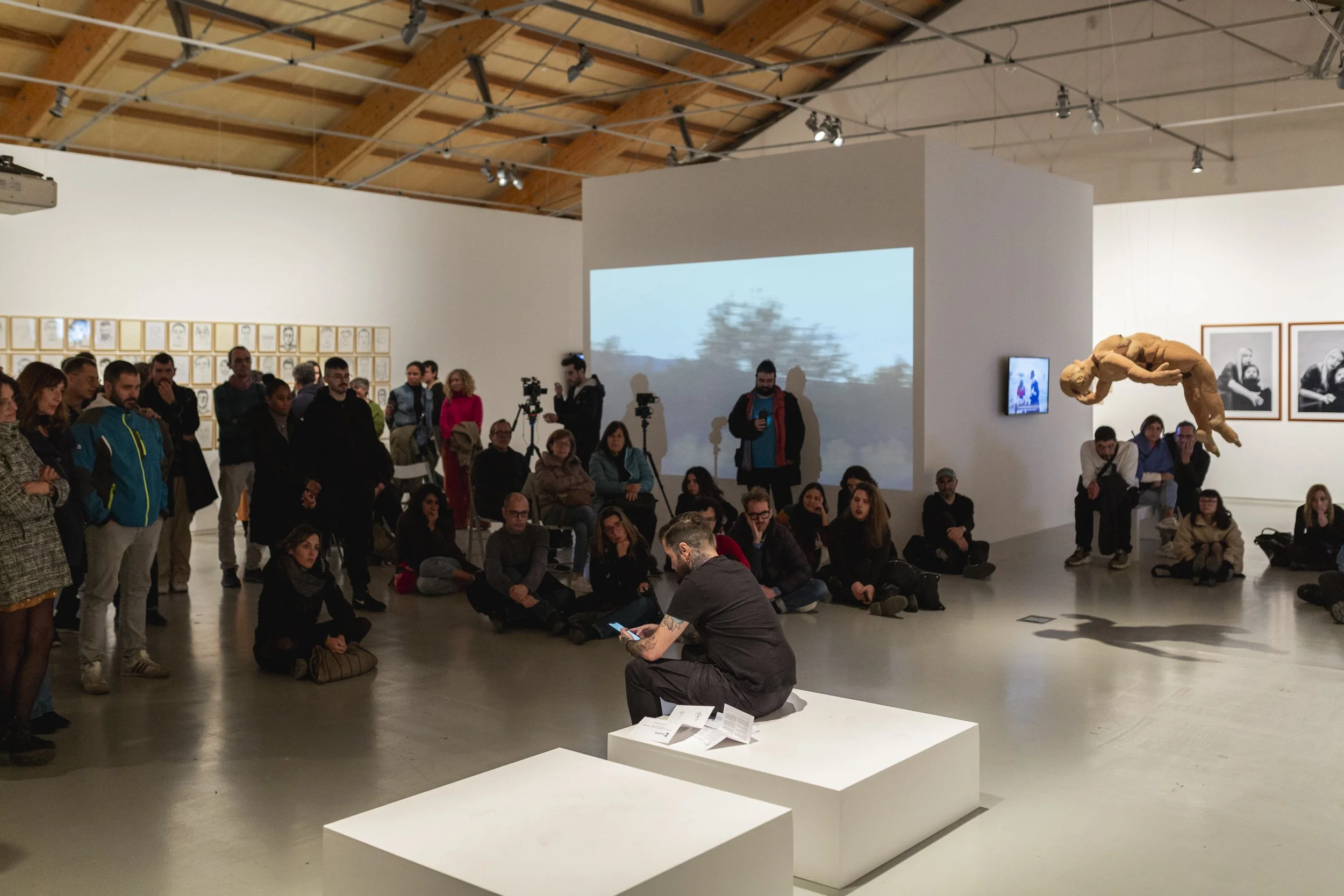
On October 28, 2023, a retrospective exhibition featuring all of Azcona's works centered around family was inaugurated at the La Panera Art Center, serving as both a conclusion and closure to this body of work. However, when the mother who had abandoned him as a newborn reappeared thirty-six years later, just days before the exhibition's opening, the intended closure of the family-focused performance works lost its meaning.
El 28 de octubre de 2023 se inauguraba en el Centro de Arte La Panera una muestra retrospectiva con todas las obras en torno a la familia de Azcona, como cierre y clausura de las misma. No obstante, al aparecer treinta y seis años después la madre que le abandonó recién nacido pocos días antes de inaugurar la muestra, el cierre de las obras de performance con enfoque familiar se quedó sin sentido.
THE THIRS STEP. After the first contact with the mother and the DNA test, the exhibition “Mis familias 1988-2024” became both a statement and an approach to the new maternal figure. Thus, the exhibition itself, although initially conceived as a closure of the families, ultimately became an involuntary third step toward the mother.
EL TERCER PASO. Tras el primer contacto de la madre y la prueba de ADN la muestra Mis familias 1988-2024 se convirtió en una reivindicación y acercamiento a la nueva figura materna. Por lo que la muestra en si, aun naciendo como un cierre de las familias, se acabó convirtiendo en un tercer paso involuntario hacia la madre.
When we visualize the image of a family tree, we tend to picture it mentally as a solid, leafy mass that unfolds as far as our information reaches. Abel Azcona. My Families 1988–2024 allows us, for the first time, to obtain a global image of the family tree of one of the most significant artistic trajectories in contemporary art founded on biographical violence. The exhibition brings together works that trace a history of systemic cruelty from moments even prior to birth, but above all, it stands out by confronting, for the first time, the actions centered on maternal empathy with recent works dealing with paternal negligence. My Families thus becomes one of the harshest family trees seen to date in an exhibition space. The tree stands on roots splattered with pesticides; it cracks, it twists, it embraces only to break apart, it imagines nonexistent branches, it draws leaves with dark-colored markers, and it incorporates scaffolding in order to stay upright.
The idea of family appears in the plural for personal reasons and, of course, political ones. In times of victories for the far right, it is urgent to make visible that where a concrete and rigid idea of family and the right to life is most defended, the cruel apathy and lack of responsibility are most hidden. All of the works presented at La Panera incorporate questions that challenge the idea of family shaped by conservative, patriarchal, and religious powers. From the body of Abel Azcona, the notion of family bursts into a thousand pieces, generating a cartography of indifferent pressures against abortion, of abandonments, of non-biological fathers who kidnap their children, of adoptive, imaginary, and chosen families. The idea of family—like any idea—proves here to be unstable and partial.
The accumulation of works produced over nearly two decades has allowed us to discern two possible narratives for confronting the creative mechanisms of biographical reconstruction in this utterly unsentimental family album. On the one hand, it is possible to identify a set of persistent gestures or actions that constitute the “Abel Azcona somatheque”—that is, a dermal archive of blows, abuses, falls, and collapses. Thinking of the idea of a museum of gesture as proposed by authors like Boris Charmatz or Sabel Gabaldón, the exhibition confirms that Abel Azcona’s body is a portable museum of violated muscle memory. In the routes designed for La Panera, we have identified four clear bodily routines that will also guide this text: waiting to receive the blow, waiting to be used, letting go of the hand, and, finally, being held.
On the other hand, the complete view of this unstable family tree has led us to observe the parallels between his trajectory and one of the most significant myths in culture: that of Oedipus. Azcona’s trajectory intertwines with astonishing ease with the Oedipal narrative—not in the Freudian sense, but in that of a biography that functions as a universal archetype of foundational violence, of tragic destinies that could have been avoided, of painful processes of self-understanding, of the killing of the father and sexual relations with the mother. Understanding Abel Azcona’s families through their relationship to Oedipus helps us recognize the systemic, universal, and historical nature of the violence men exercise. As the myth of Oedipus or the work of Abel Azcona reminds us, the harshest violence we can imagine is not, to the comfort of the privileged, an isolated case, but a repetitive, insistent, historical routine. Like Oedipus, Abel is a container of undeserved suffering, a criminal without guilt; like Sophocles’ tragedy, the performer’s work embodies the horror of discovering one’s belonging to a tainted social order.
There are foundational violences and tragic inheritances. Oedipus should not have been born. Neither should Abel Azcona. The father of the former was warned by the oracle that if his son were born, he would eventually kill him. The latter was not promised a bright future either, and thus his mother, a sex worker and drug-dependent woman, decided to terminate the pregnancy on three different occasions. According to the artist, his mother’s three abortion attempts have been the greatest act of love he has received to date. Nevertheless—or we might even say, unfortunately—Oedipus and Abel are born; the negligence of not respecting the prediction of violence on the horizon affects both figures. In Sophocles’ Oedipus Rex, the mother explains that, trying to outwit the oracle, Oedipus is handed over to others and abandoned on an inaccessible mountainside three days after being born, unaware that shepherds would find and raise him. In Azcona’s case, the insistence of the Catholic forces of Navarre, who, in the name of a supposed right to life, obstructed the mother’s three abortion attempts in various public hospitals, resulted in his birth becoming, likewise, an abandonment. Abel is born in dire conditions in a Madrid clinic; two days later, his mother flees the hospital, abandoning him; Manuel Labrijo, a client and the mother’s “partner” at the time, is located by social services and assumes paternal duties. After relocating to Iruña, Abel lives in several relatives’ homes and in Manuel’s, suffering, at just a few months old, not only precarious circumstances but also abuse, beatings, forced ingestion of drugs, neglect, and lack of affection. Each and every one of these violences accumulated in a body condemned to pain, to madness, and to the internalization of a routine: waiting to receive the blow.
Víctor Ramírez Tur
Cuando visualizamos la imagen de un árbol genealógico tendemos a dibujarlo mentalmente como un macizo sólido y frondoso que se despliega hasta donde alcanza nuestra información. Abel Azcona. Mis familias 1988-2024 nos permite, por primera vez, obtener una imagen global del árbol genealógico de una de las trayectorias artísticas fundadas en la violencia biográfica más relevantes del arte contemporáneo. La muestra reúne aquellos trabajos que rastrean una historia de crueldad sistémica desde momentos incluso anteriores al nacimiento, pero, sobre todo, destaca al confrontar por primera vez, aquellas acciones en torno a la empatía materna, con los trabajos recientes sobre la negligencia de los padres. Mis familias se configura así como uno de los árboles genealógicos más duros vistos hasta la fecha en un espacio expositivo. El árbol se sostiene sobre unas raíces salpicadas de pesticidas, se quiebra, se retuerce, acoge para romperse, se imagina ramas inexistentes, se pinta hojas con rotuladores de colores oscuros y se incorpora andamiajes para poder sostenerse.
La idea de familia se presenta en plural por motivos personales y, por supuesto, políticos. En tiempo de triunfos de la ultraderecha urge visibilizar que allí donde más se defiende una idea concreta y rígida de familia y de derecho a la vida, más se esconde la cruel desidia y la falta de responsabilidad. Todos los trabajos presentados en La Panera incorporan interrogantes a la idea de familia configurada desde los poderes conservadores, patriarcales y religiosos. Desde el cuerpo de Abel Azcona la noción de familia revienta en mil pedazos, generando una cartografía de presiones indolentes para la no interrupción del embarazo, de abandonos, de padres no biológicos que secuestran a sus hijos, de familias adoptivas, imaginarias y escogidas. La idea de familia, como cualquier otra idea, resulta aquí inestable y parcial.
La acumulación de propuestas realizadas desde hace casi dos décadas nos ha permitido vislumbrar dos posibles narrativas para confrontar los dispositivos creativos de reconstrucción biográfica de este nada complaciente álbum familiar. Por un lado, es posible identificar un conjunto de gestos o de acciones insistentes, que configuran la “somateca Abel Azcona”, esto es, un archivo dérmico de golpes, de abusos, de caídas y abatimientos. Pensando en la idea de museo del gesto planteada por autores como Boris Charmatz o Sabel Gabaldón, la exposición confirma que el cuerpo de Abel Azcona es un museo portátil de memoria muscular violentada. En los recorridos planteados para La Panera hemos identificado cuatro rutinas corporales claras que también centrarán este texto: esperar para recibir el golpe, esperar para ser usado, soltar la mano y, finalmente, ser sostenido.
Por el otro lado, la visión completa de ese inestable árbol genealógico nos ha conducido a observar los paralelismos que se establecen entre su trayectoria y la de uno de los mitos más relevantes de la cultura como es el de Edipo. La trayectoria de Azcona se trenza con una facilidad asombrosa con la narrativa edípica, no en el sentido freudiano, sino en el de una biografía que funciona como arquetipo universal de violencias fundacionales, de destinos trágicos que podrían haberse evitado, de procesos dolorosos de autocomprensión, de asesinatos del padre y relaciones sexuales con la madre. Pensar las familias de Abel Azcona desde su relación con Edipo nos sirve para identificar el carácter sistémico, universal e histórico de las violencias que los hombres ejercen. Tal y como nos recuerda el mito de Edipo o la obra de Abel Azcona, las violencias más duras que podamos imaginar no son, para nuestro consuelo de privilegiados, un caso aislado, sino una rutina repetitiva, insistente e histórica. Como Edipo, Abel es un contenedor de sufrimientos no merecidos, un criminal sin culpa; como la tragedia de Sófocles, la obra del performer encarna el horror de descubrir la pertenencia a un orden social apestado.
Existen violencias fundacionales y herencias trágicas. Edipo no debería haber nacido. Abel Azcona tampoco. Al padre del primero el oráculo le advirtió de que si su hijo nacía, acabaría asesinándole. Al segundo tampoco le esperaba un futuro prometedor y por ello, su madre, trabajadora sexual y drogodependiente, decidió interrumpir el embarazo hasta en tres ocasiones diferentes. Según el artista, los tres intentos de aborto de su madre han sido el mayor acto de amor recibido hasta la fecha. Sin embargo, o incluso podríamos decir, desgraciadamente, Edipo y Abel nacen; la negligencia de no respetar la predicción de violencia en el horizonte afecta a ambas figuras. En el Edipo Rey de Sófocles la madre explica que, intentando sortear el oráculo, Edipo es arrojado a manos de terceros al fondo de un monte inaccesible a los tres días de nacer, sin poder saber que unos pastores encontrarán el cuerpo y lo criarán. En el caso de Azcona, la insistencia de las fuerzas católicas navarras que, en nombre de un supuesto derecho a la vida, obstaculizaron en varios hospitales públicos los tres intentos de aborto de su madre, propiciaron que ese nacimiento se convirtiera, también, en un arrojo. Abel nace en condiciones nefastas en una clínica de Madrid; a los dos días su madre se fuga del hospital, abandonándole; Manuel Labrijo, cliente y “pareja” de la madre en ese momento, es localizado por los servicios sociales, pasando a asumir los deberes paternos. Trasladándose a Iruña, Abel vivirá en varias casas de familiares y del propio Manuel, sufriendo, con tan solos unos meses de vida, no solo circunstancias precarias sino abusos, golpes, ingesta forzada de drogas, dejadez y desafecto. Todas y cada una de estas violencias se fueron acumulando en un cuerpo condenado al dolor, a la locura, y a la interiorización de una rutina: esperar para recibir el golpe.
VIctor Ramirez Tur

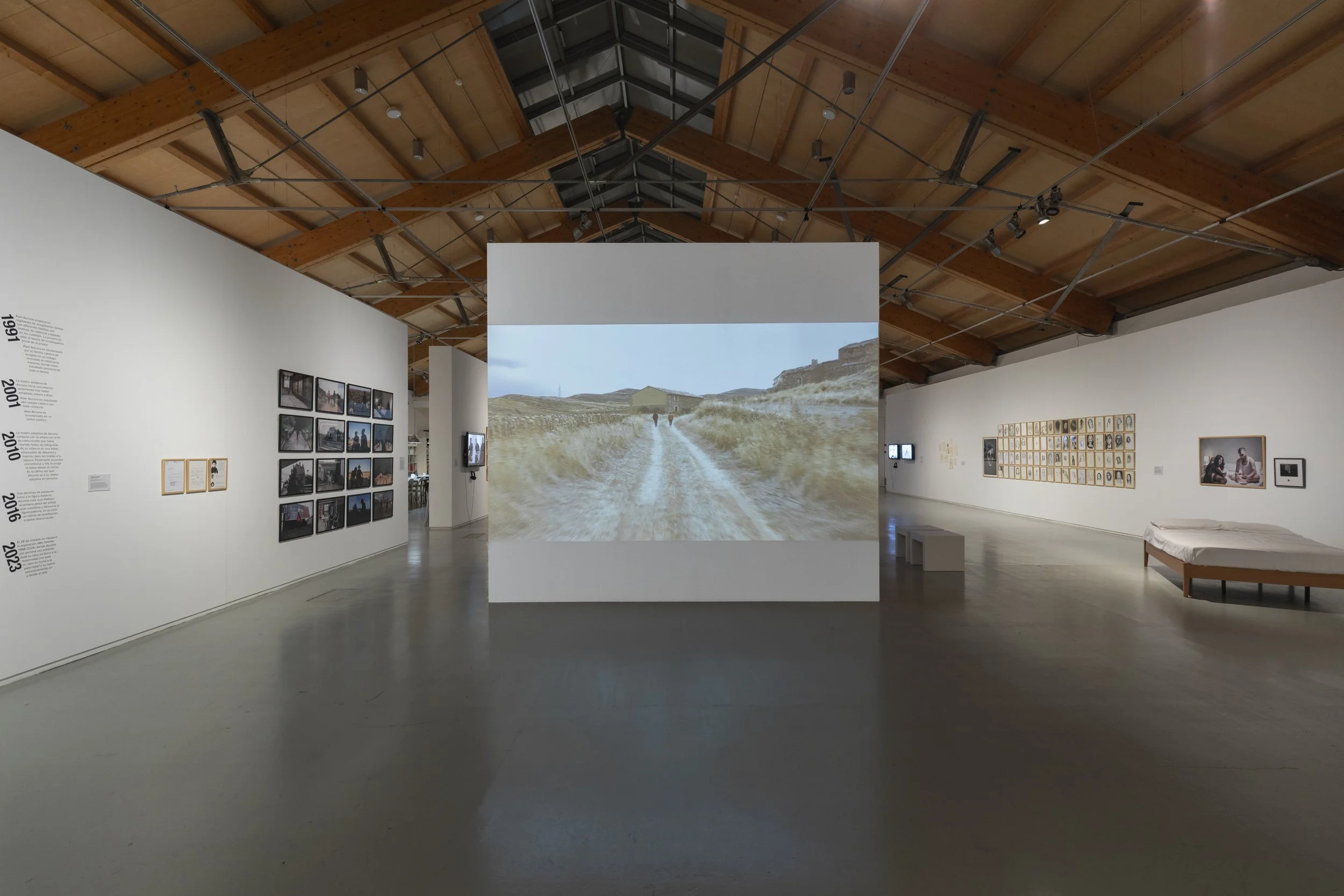


THE FOURTH STEP. After four months, the exhibition presented the first six *short actions*: a series of brief performances aimed at resolving conflicts, in this case, family-related ones. During the months of approaching the mother, dozens of short actions were carried out toward the figure of the new mother.
EL CUARTO PASO. La exposición tras cuatro meses de duración presentó las primeras seis acciones breves. Una serie de performances de corta duración para resolver conflictos, en este caso familiares. Durante los meses de acercamiento hacia la madre se realizaron decenas de acciones breves hacia la figura de la nueva madre.
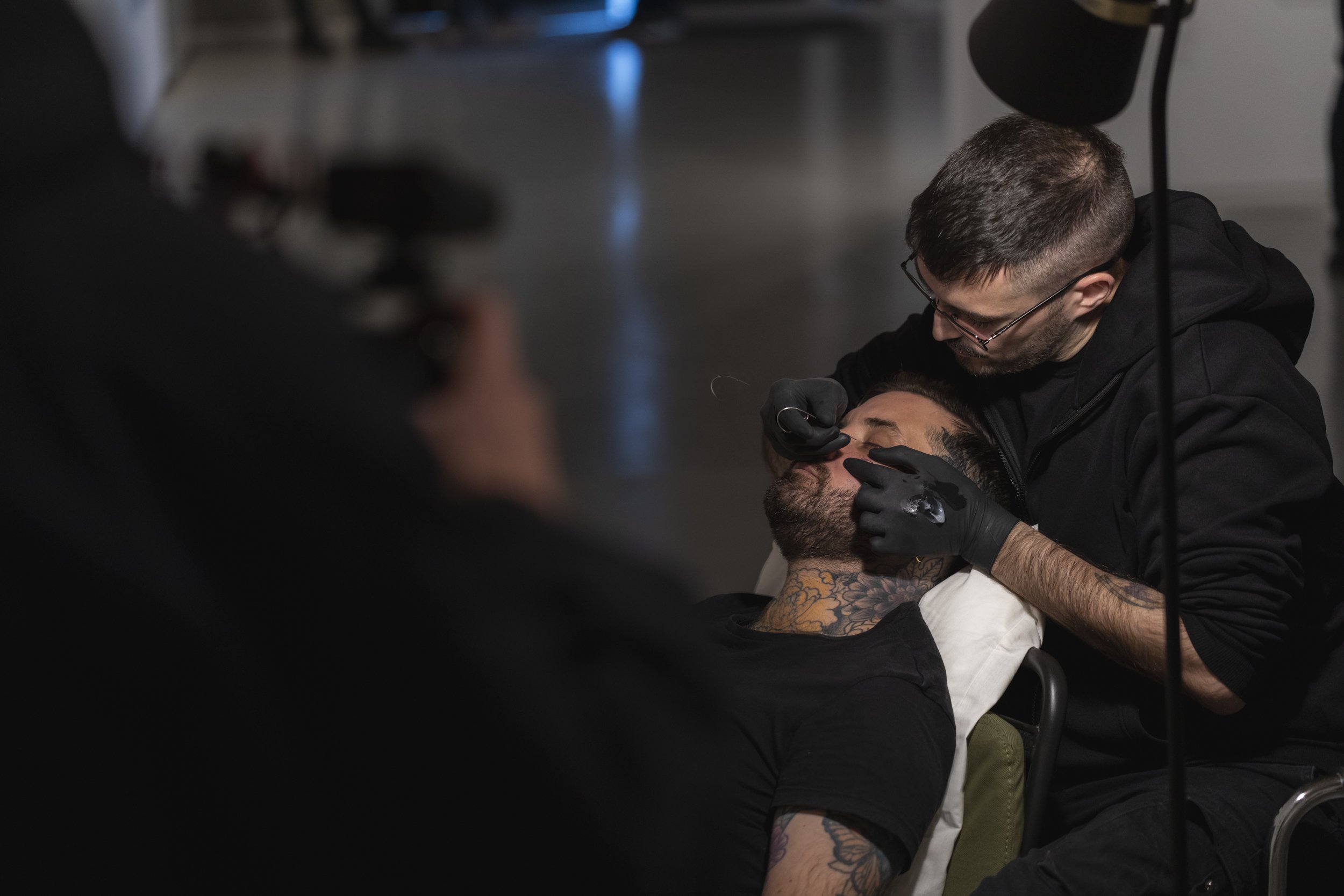


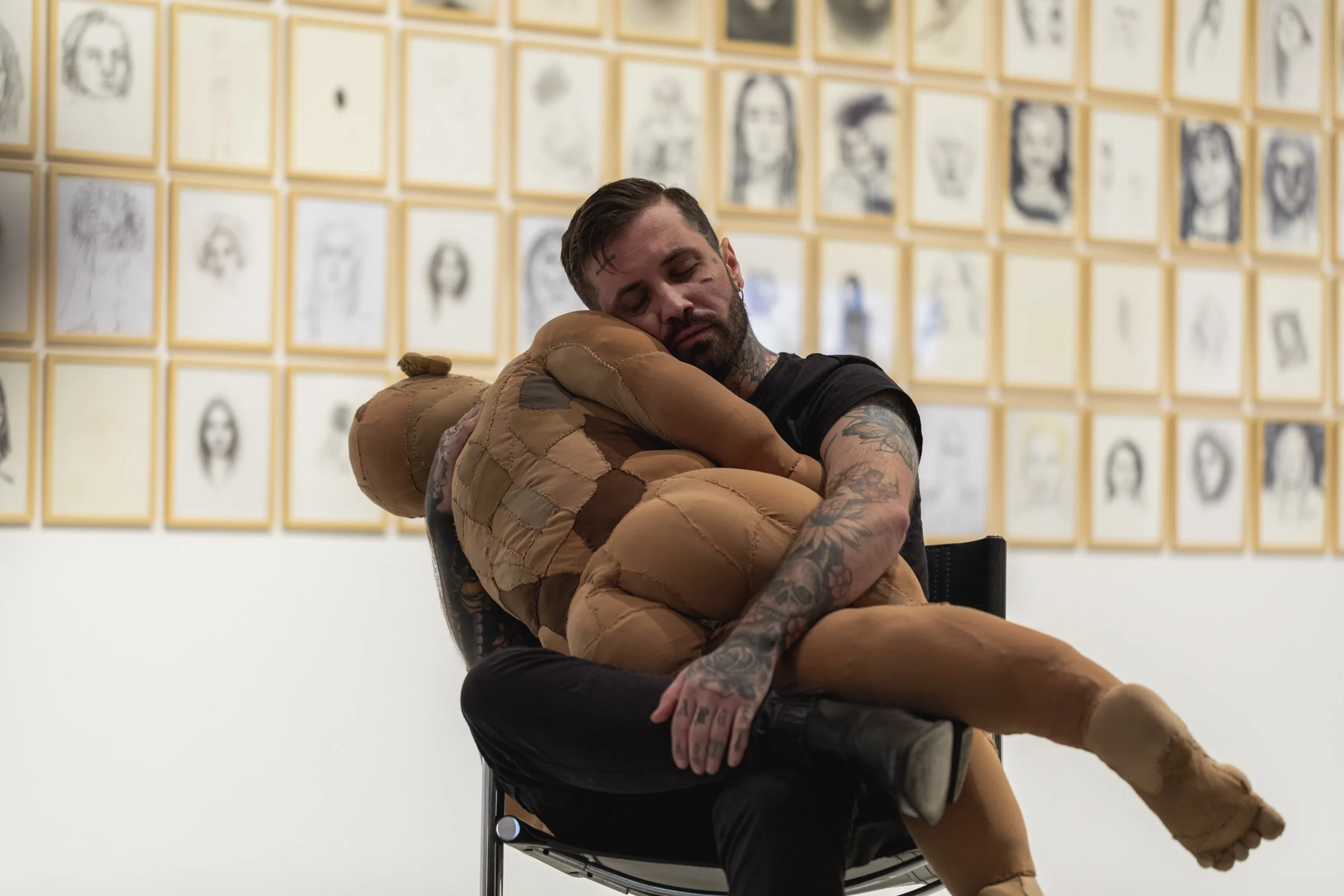
THE FIFTH STEP unfolded through a travel performance on January 28, 2024. The performance served as the closing event for the Abel Azcona exhibition "My Families 1988-2024" at the La Panera Art Center in Lleida. It also marked the first encounter of Abel Azcona's biological mother with the artist's work, as she had not met Azcona in person before. Earlier in the exhibition, Azcona had conducted a performance where the results of a DNA test were revealed. Given the positive outcome of the clinical sample, it made sense to invite his mother to the closing performance. On a round-trip journey throughout the day, Isabel Gómez Aranda traveled from Málaga to Lleida. She participated in a guided tour and attended the closing of the exhibition by the museum team. For over an hour, the mother interacted performatively with the exhibition installations, read about all the processes, viewed video pieces, and approached Azcona's work related to family. Most of the exhibited pieces had a direct connection to the maternal figure, specifically her. Thus, in this third step, Isabel Gómez Aranda firsthand learned about Azcona's narrative concerning his own mother or the search for her.
EL PASO QUINTO se desarrolló mediante una performance de viaje el 28 de enero de 2024. La performance sirvió como cierre de la exposición Abel Azcona. Mis familias 1988-2024 en el Centro de Arte La Panera de Lleida y como primer contacto de la madre biológica de Abel Azcona con la obra del artista, no conociendo a Azcona todavía en persona. En el marco de la exposición meses atrás Abel Azcona había realizado la performance donde se realizó la lectura del resultado de la prueba de ADN, dando sentido invitar a la madre, según el resultado positivo de la muestra clínica, al cierre de la misma. En un viaje de ida y vuelta durante todo el día Isabel Gómez Aranda viajo desde Málaga hasta Lleida y asistió a una visita guiada, al cierre de la muestra, por el equipo del museo. Durante más de una hora la madre pudo interacciones performativamente con las instalaciones de la exposición, leer todos los procesos, visionar las piezas de video y acercarse a la obra de Azcona en torno a la familia. La mayoría de piezas expuestas tenían una relación directa con la figura materna y en concreto con ella misma. Así en este tercer paso Isabel Gómez Aranda conoció de primera mano el relato y la narración de Azcona en torno su propia madre o la búsqueda de la misma.
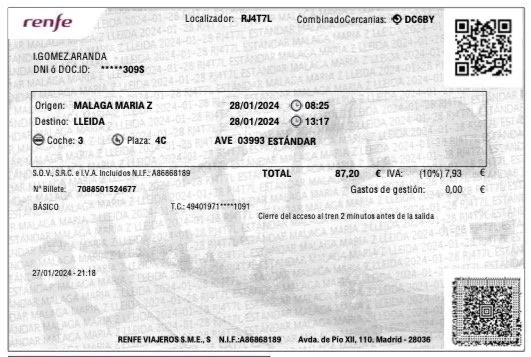
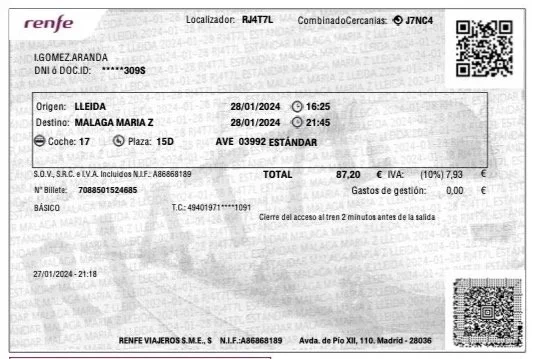
Ticket for the trip from Malaga to Lleida purchased from Isabel Gómez Aranda. / Billete del viaje de Málaga a Lleida comprado a Isabel Gómez Aranda.
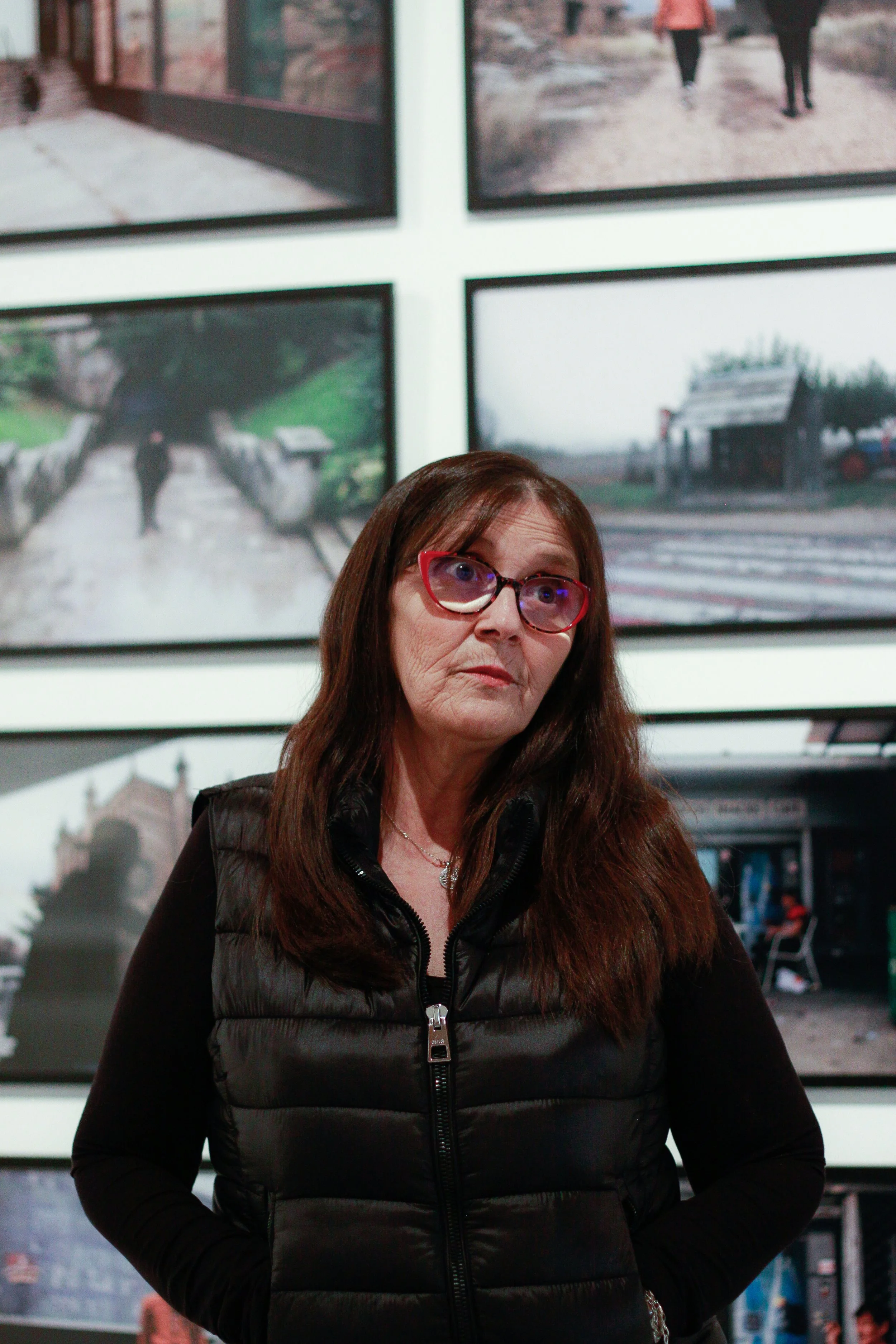
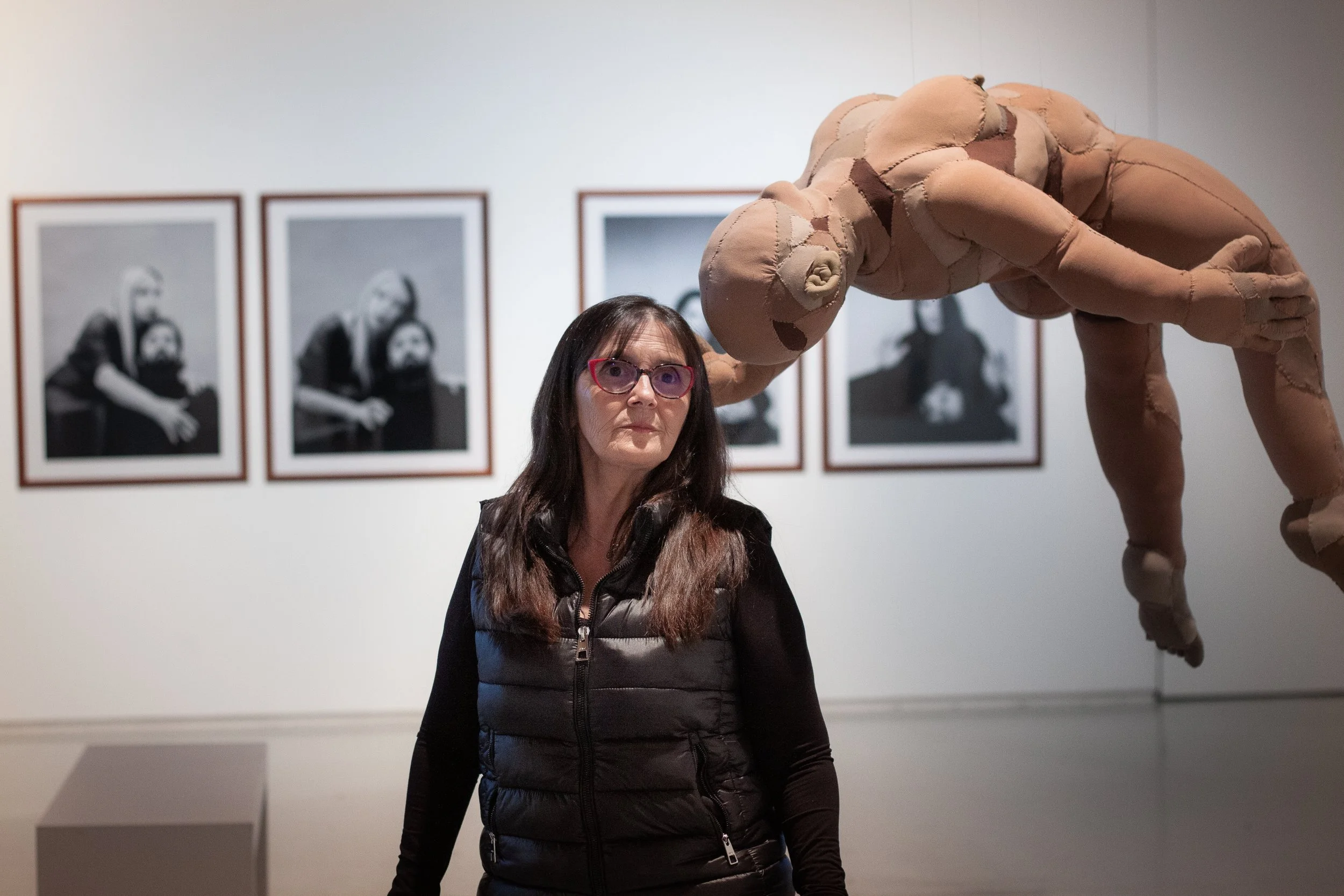
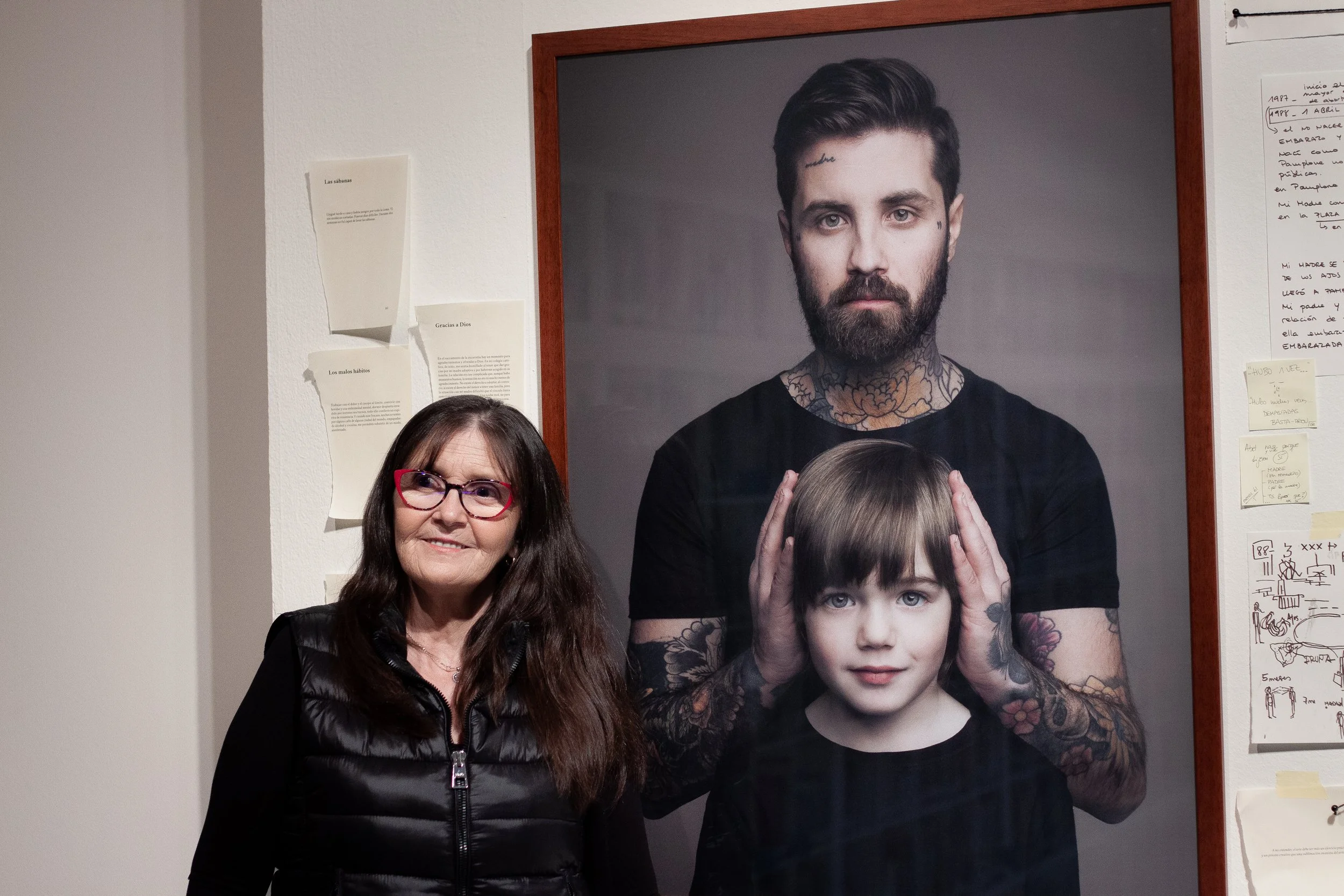
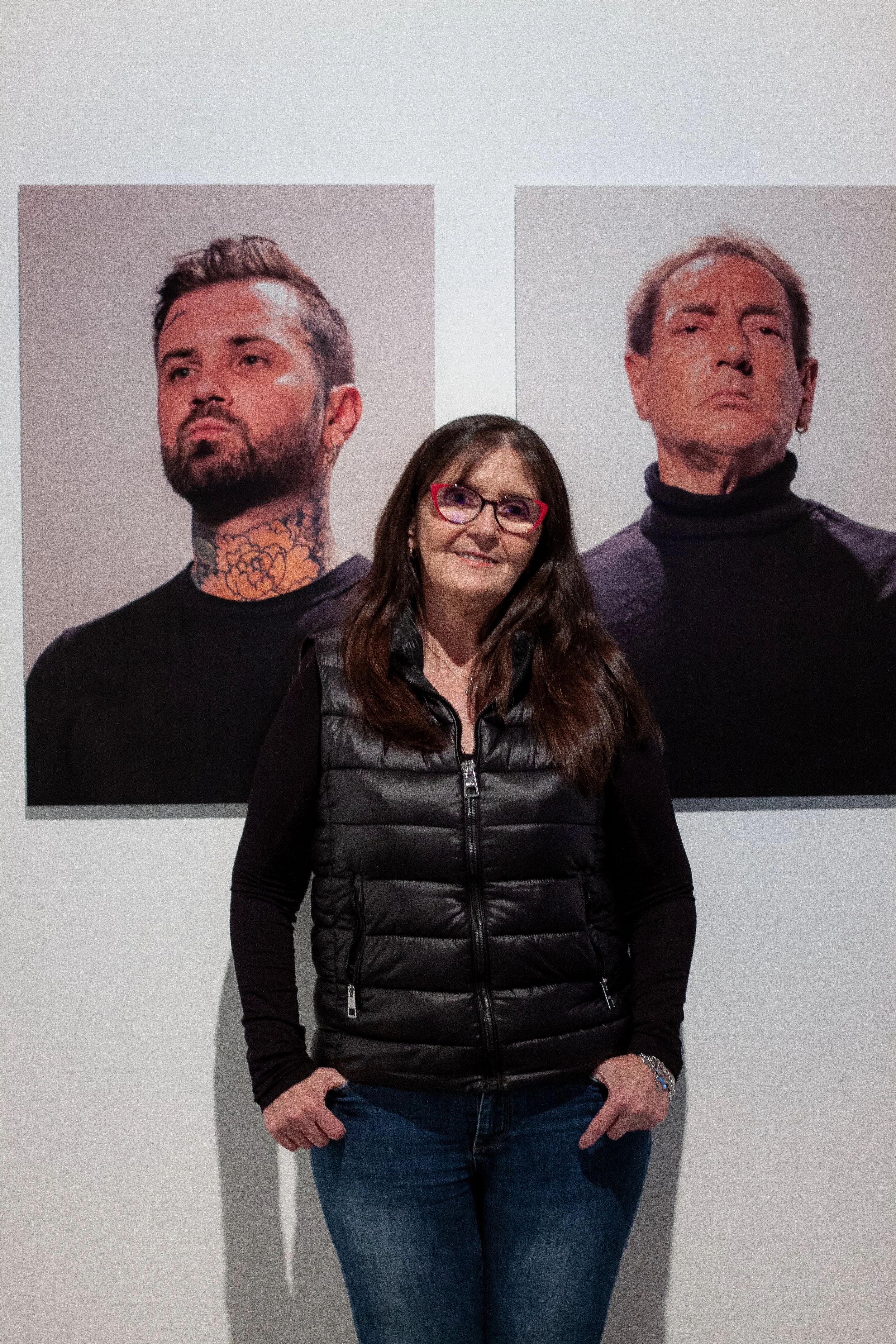
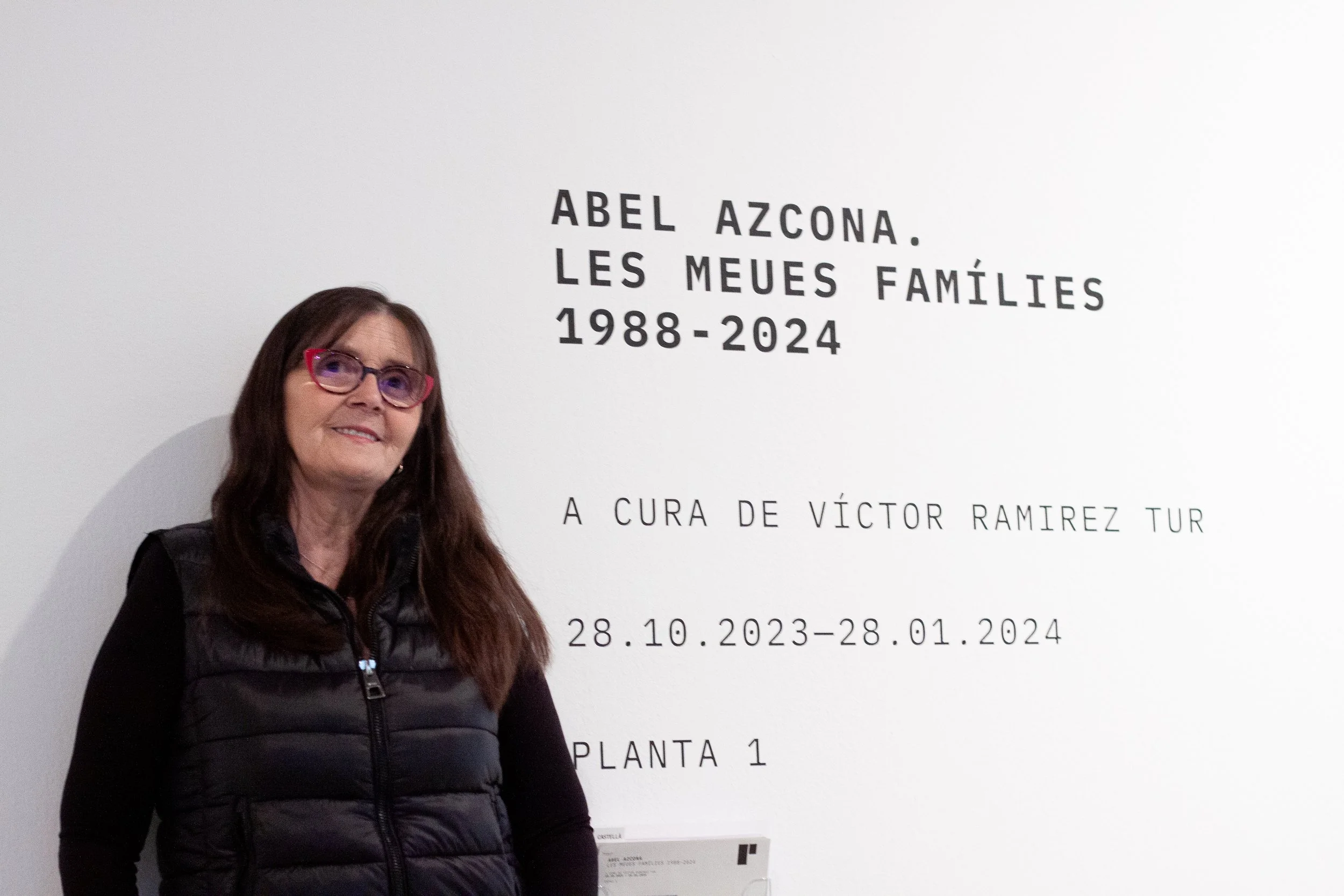
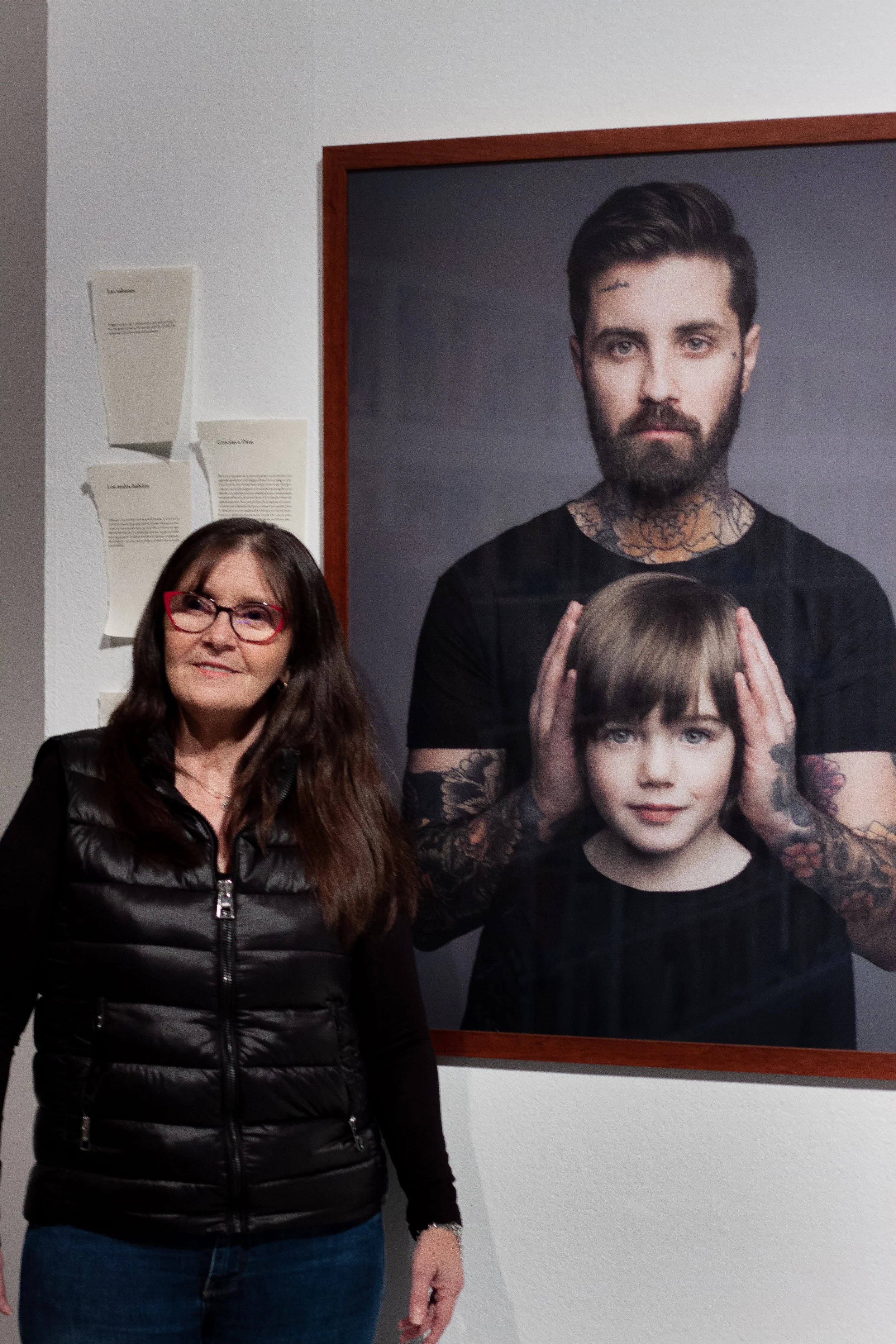
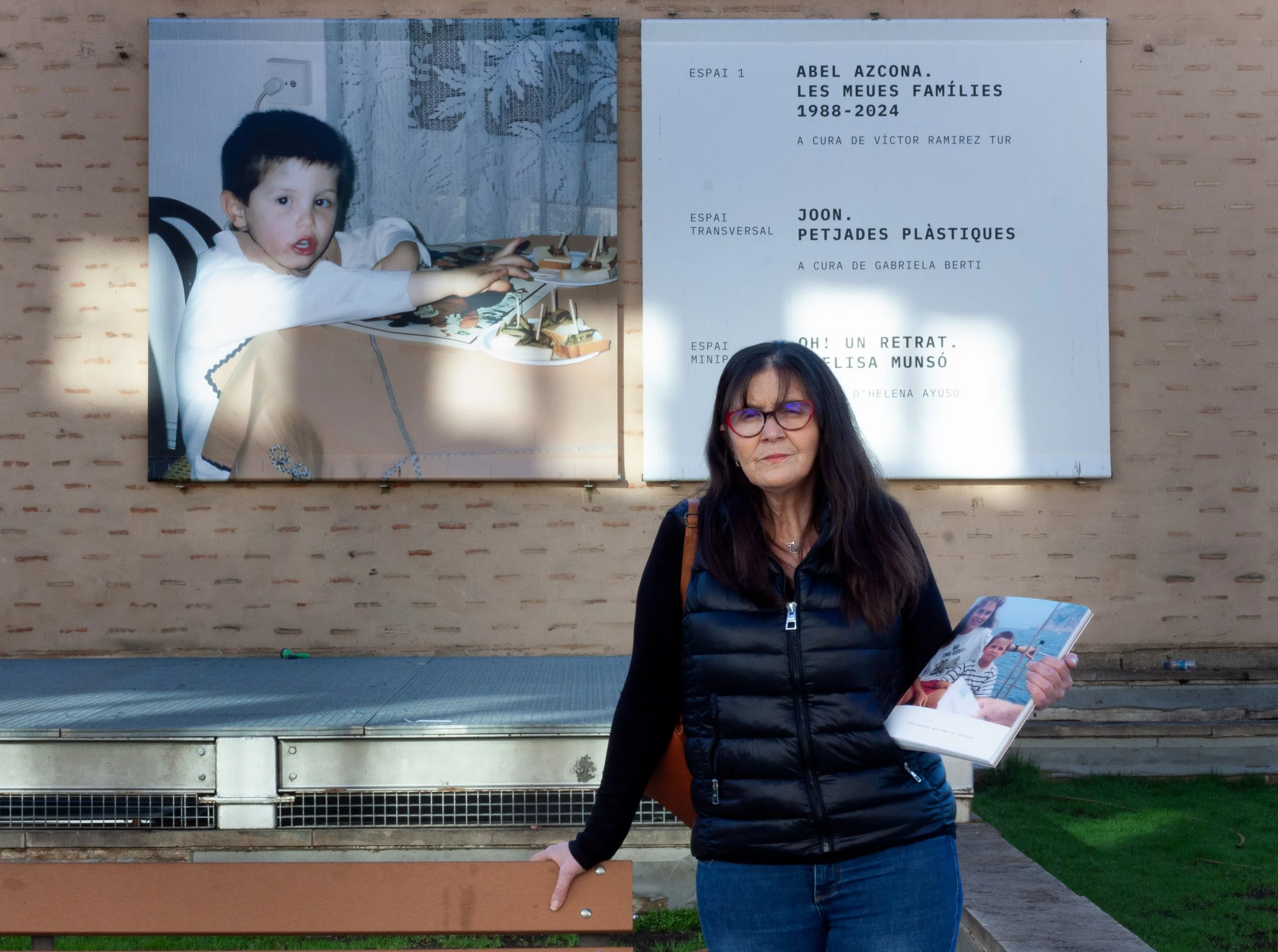
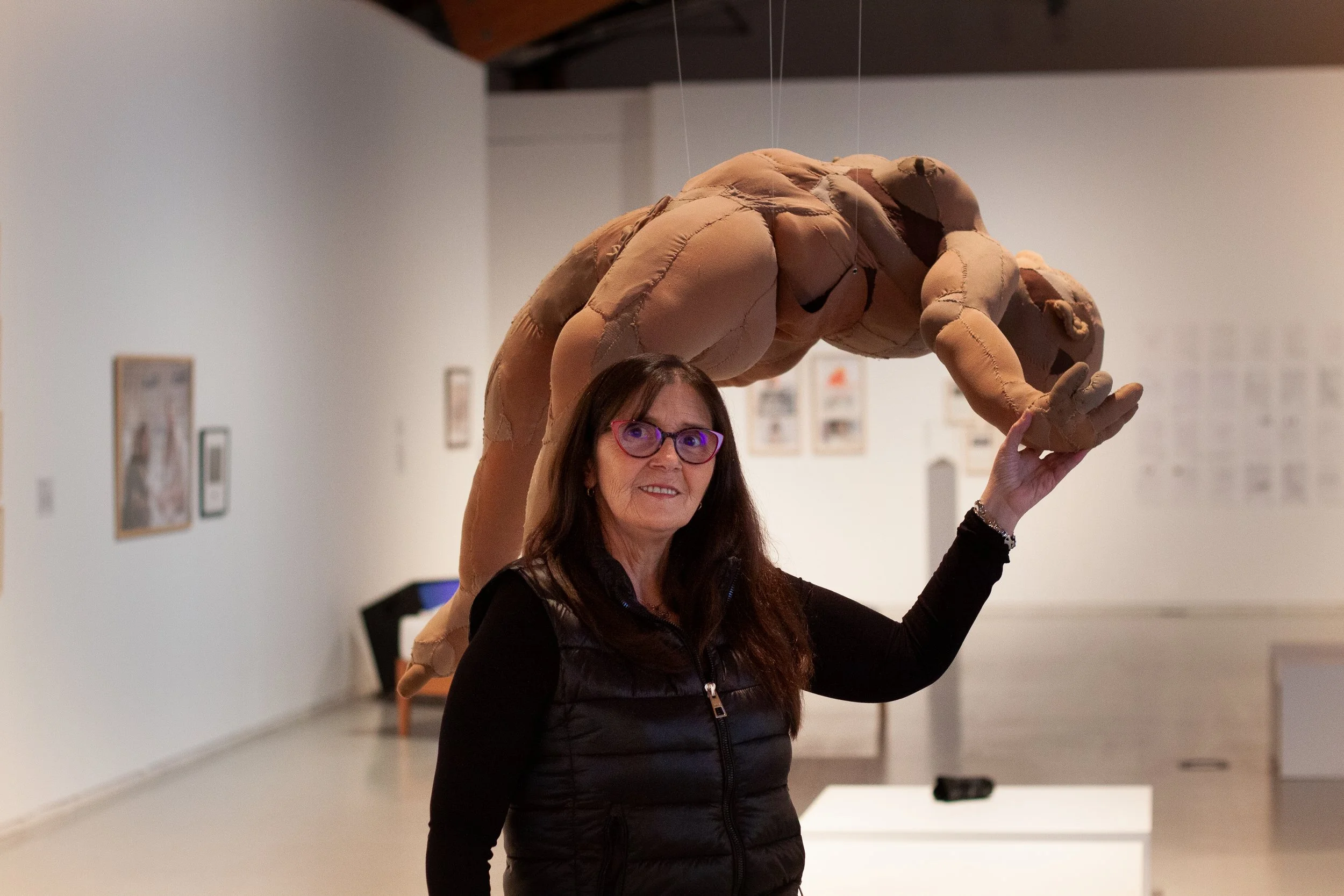
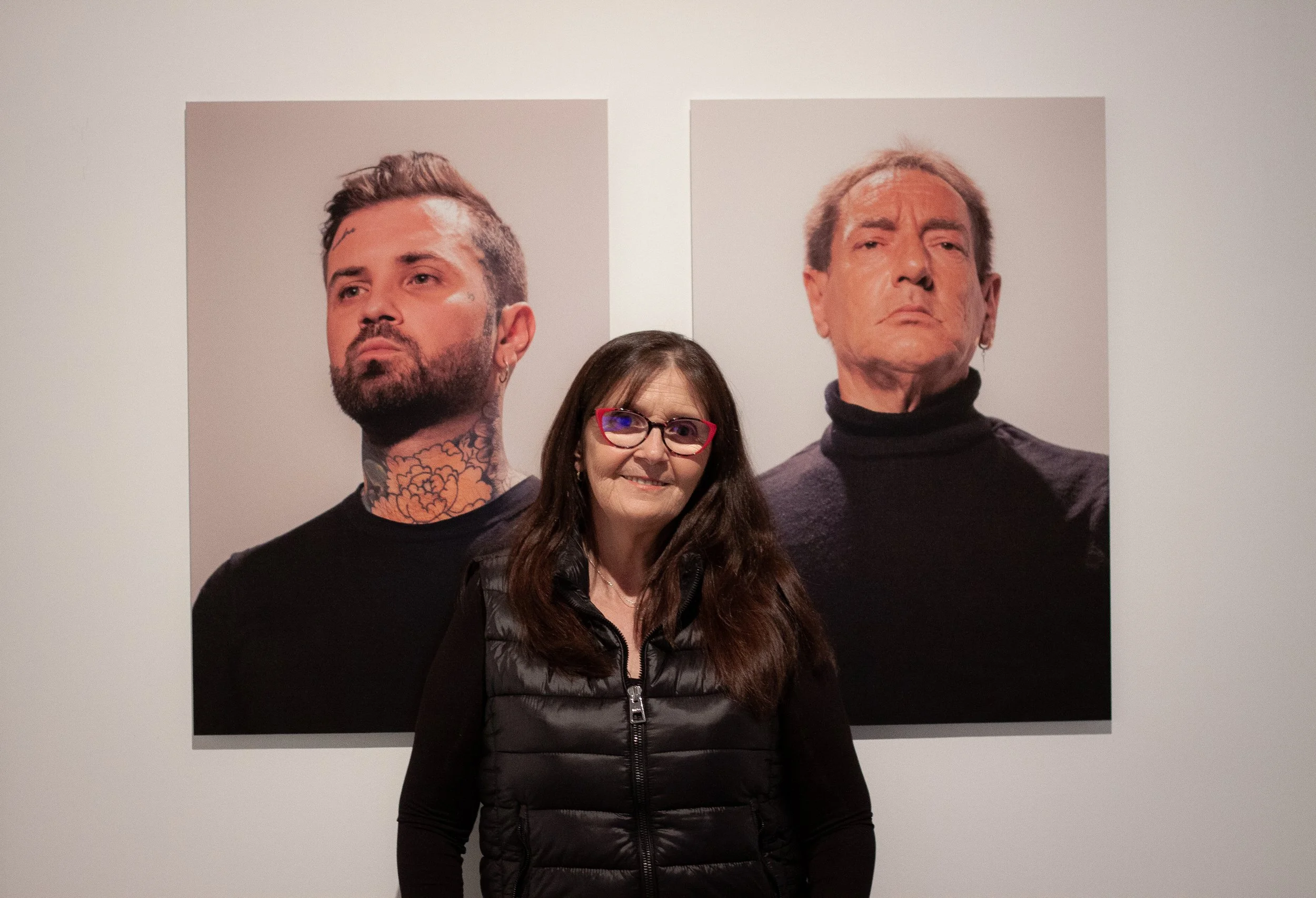
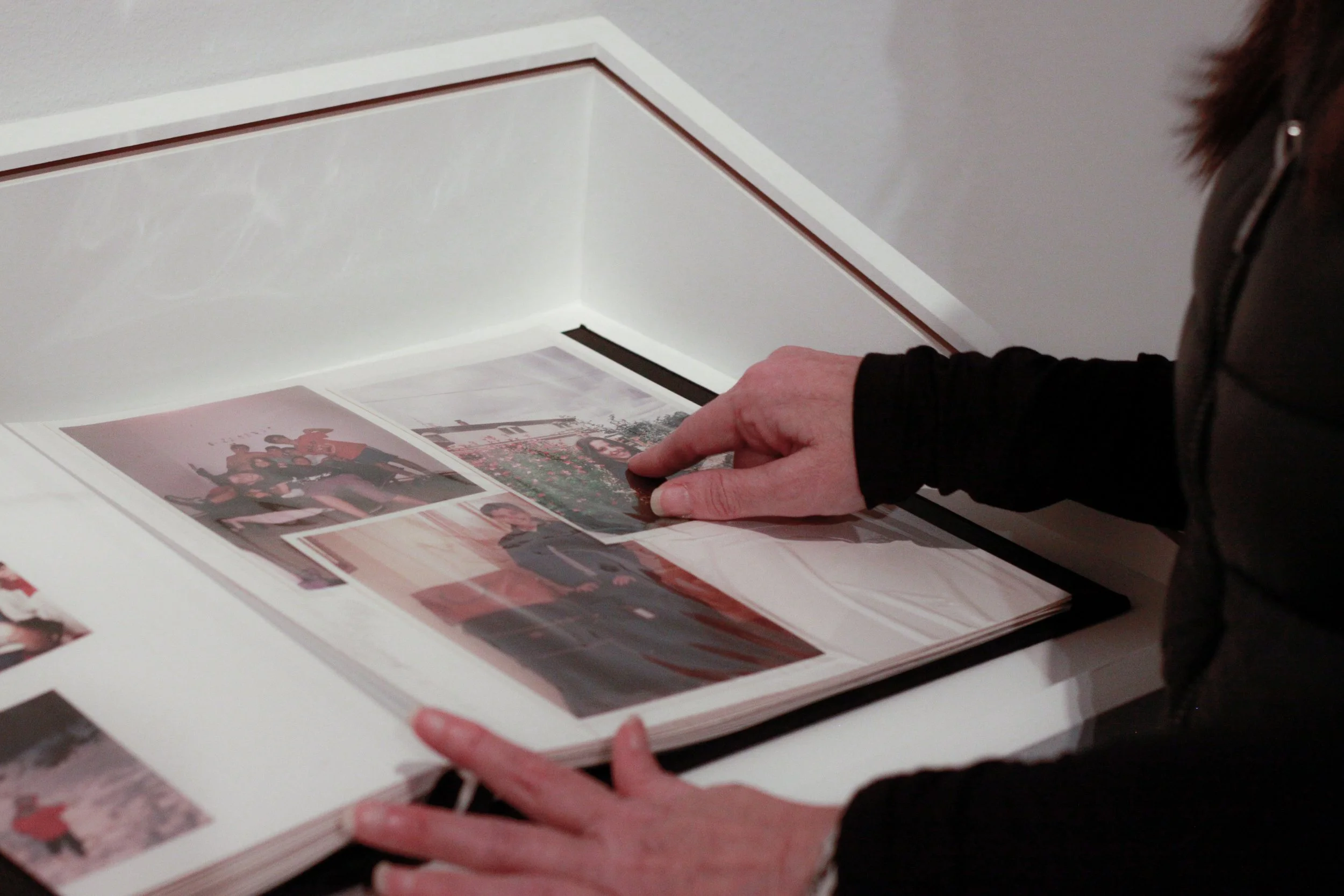
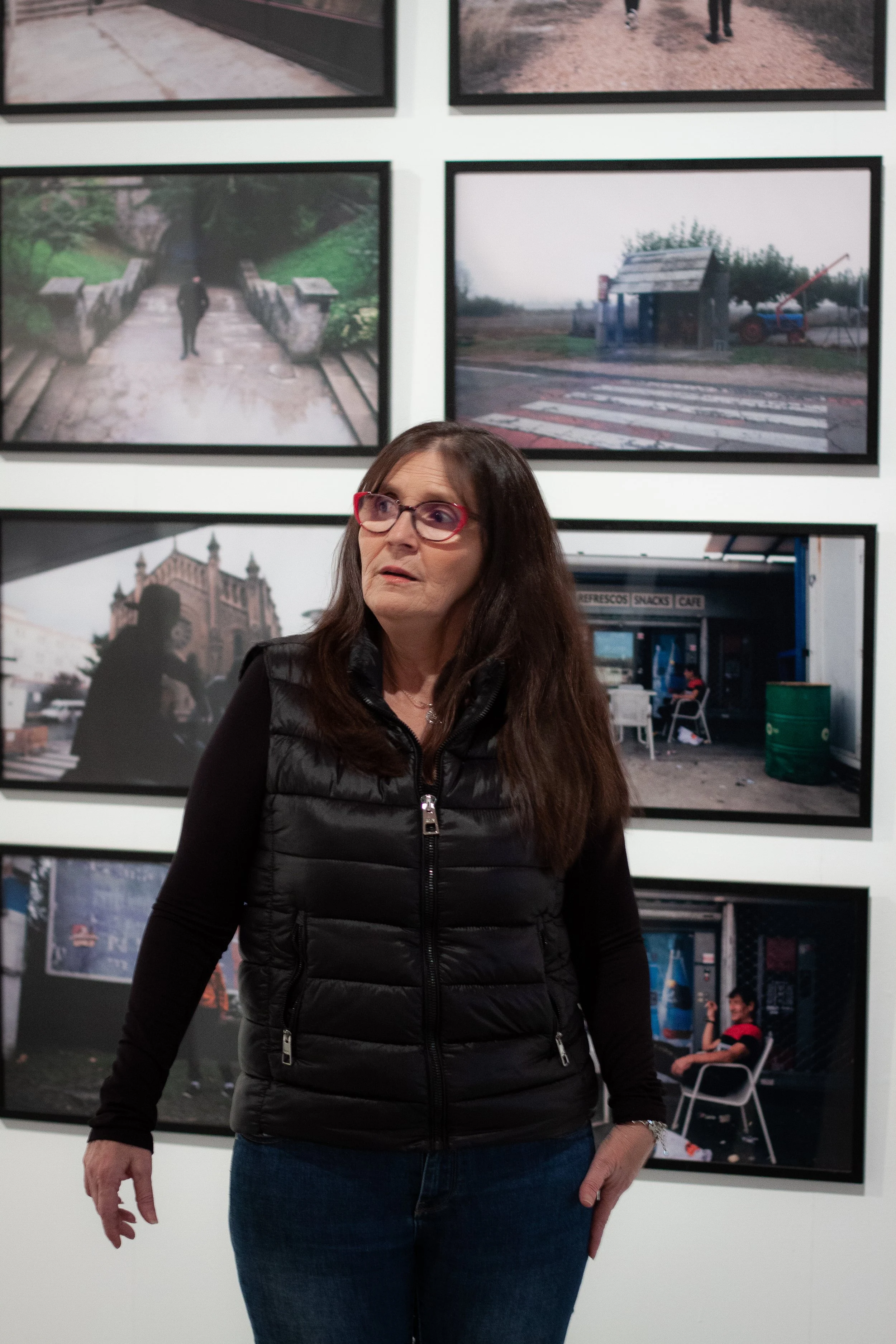
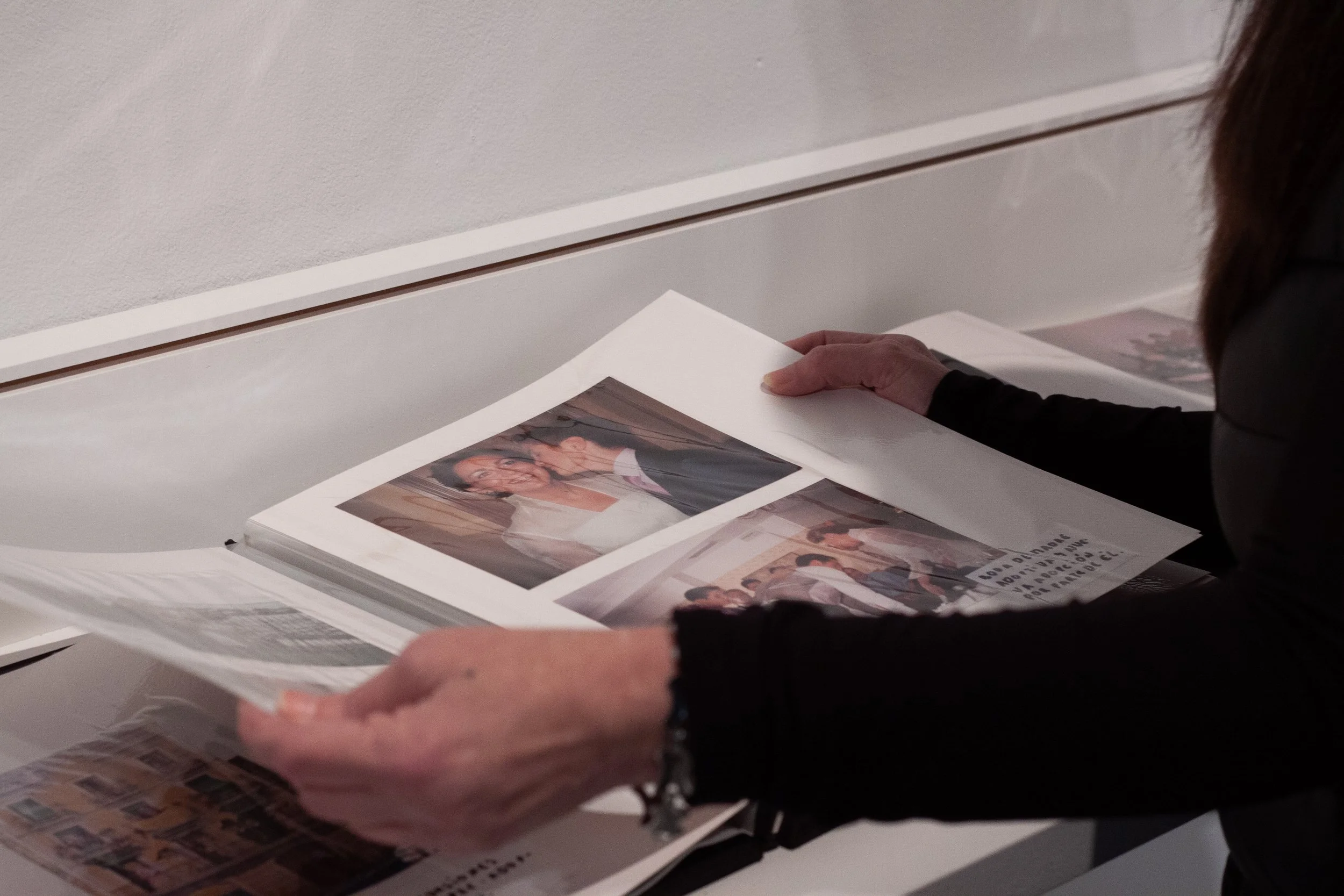
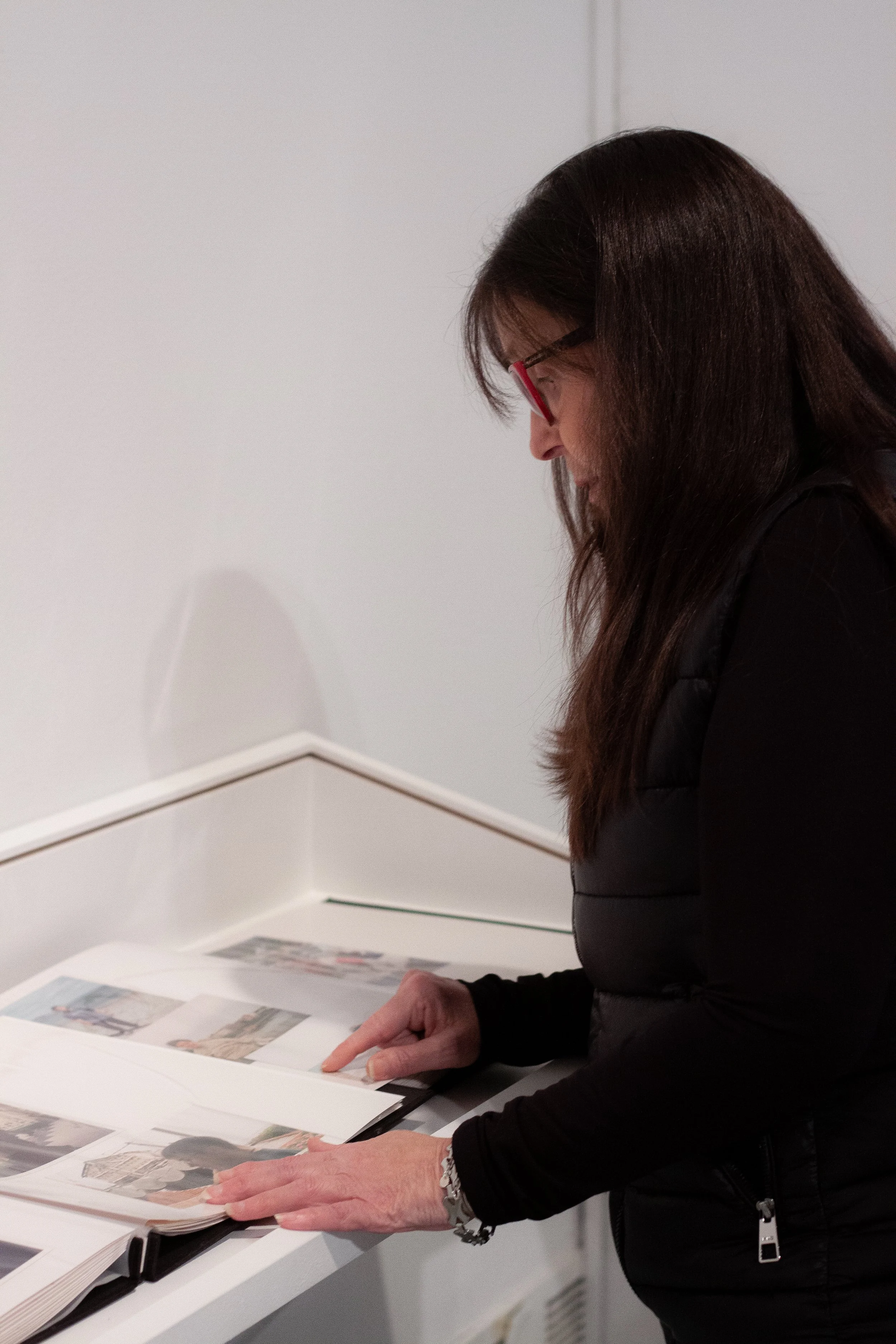
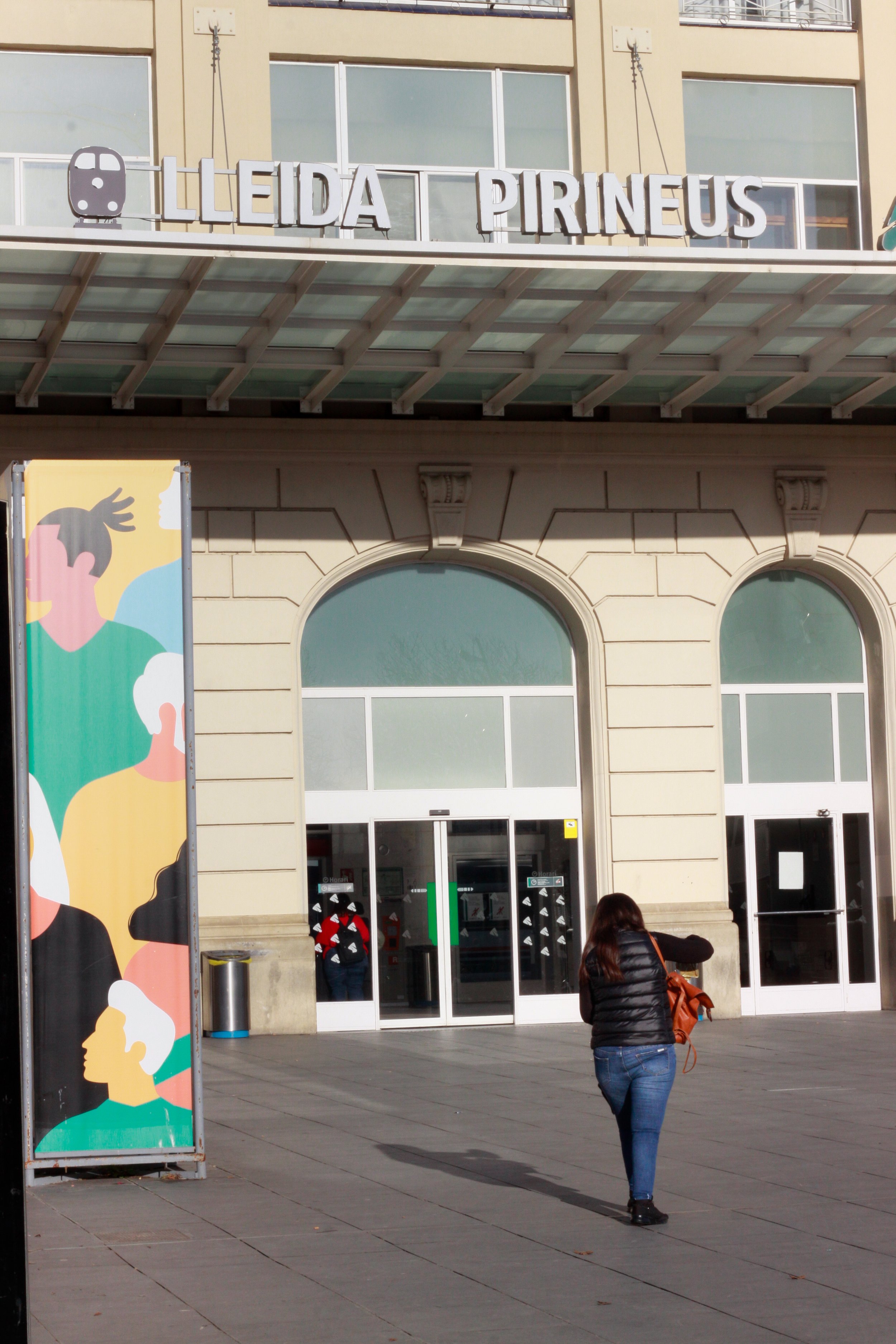
In the fifth step, for the first time, Isabel Gomez Aranda participated in person and traveled to Lleida to see the exhibition dedicated to her son. As a closing performance of the exhibition, Isabel toured the art center and was the last visitor of the show. / En el quinto paso paso por primera vez Isabel Gomez Aranda participo de forma presencial y viajó a Lleida a ver la muestra dedicada a su hijo. A modo de performance de clausura de la muestra Isabel recorrió el centro de arte y fue la última visitante de la exposición.
THE SIXTH ACTION. After the positive result, during the Azcona performance, this installation and photographic work were created using all the photographs shared by Isabel Gómez Aranda in the years prior to contacting Azcona.
LA SEXTA ACCIÓN. Tras el positivo durante la performance Azcona creo esta instalación y obra fotográfica con todas las fotografías compartidas por Isabel Gómez Aranda los años anteriores a contactar con Azcona.
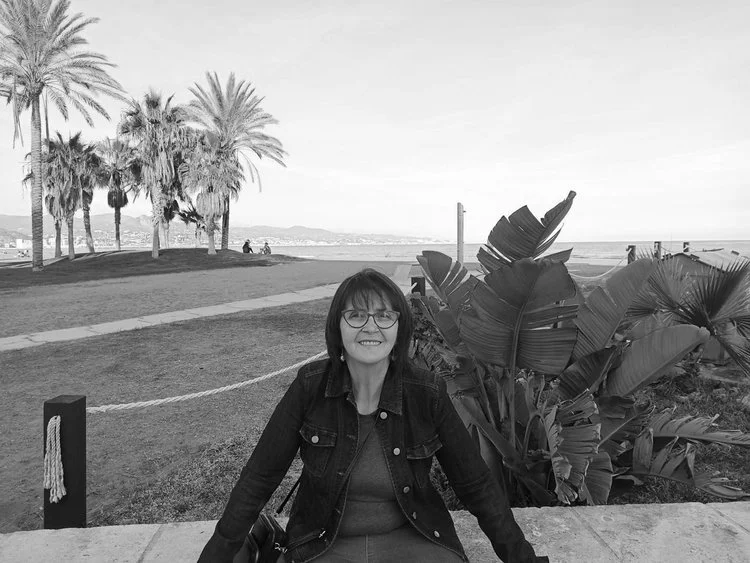
THE STEP was activated through ninety handwritten sheets created in collaboration with the first-person testimony as the life story of Isabel Gómez Aranda. For several weeks, Isabel was invited to handwrite her entire life experience, but after several failed attempts, the artist's studio itself assisted her by sending ninety questions formulated by Azcona and the transcription and construction of the narrative transcribed with Isabel Gómez Aranda's answers.
EL SÉPTIMO PASO se activó mediante noventa hojas manuscritas creadas en colaboración con el testimonio en primera persona como relato de vida de Isabel Gómez Aranda. Durante varias semanas se invitó a Isabel a escribir manuscritamente toda su experiencia vital, pero tras varios intentos fallidos el propio estudio del artista la ayudó con el envío de noventa preguntas formuladas por Azcona y la transcripción y construcción del relato transcrito con las respuestas de Isabel Gómez Aranda.


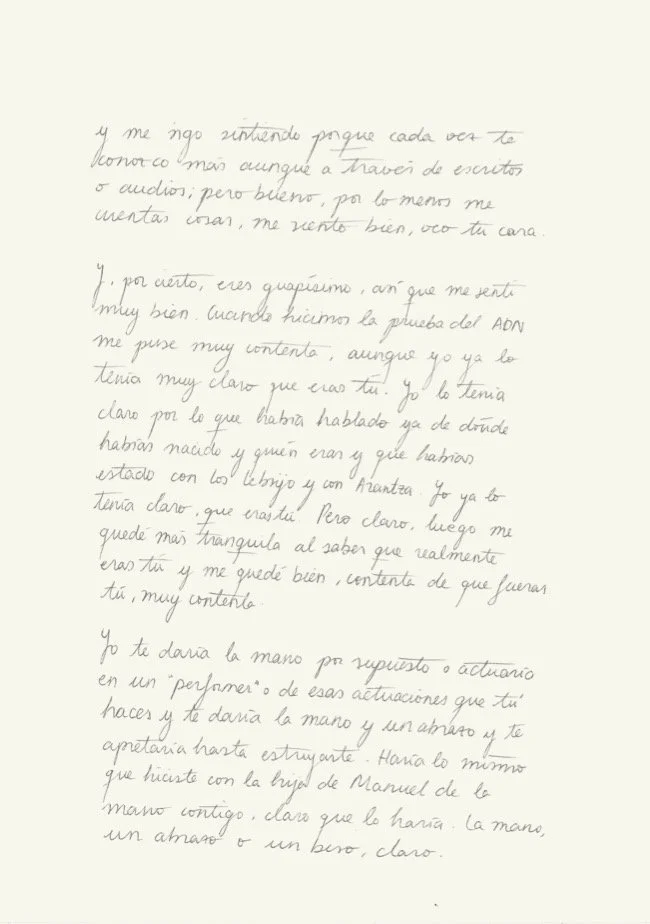


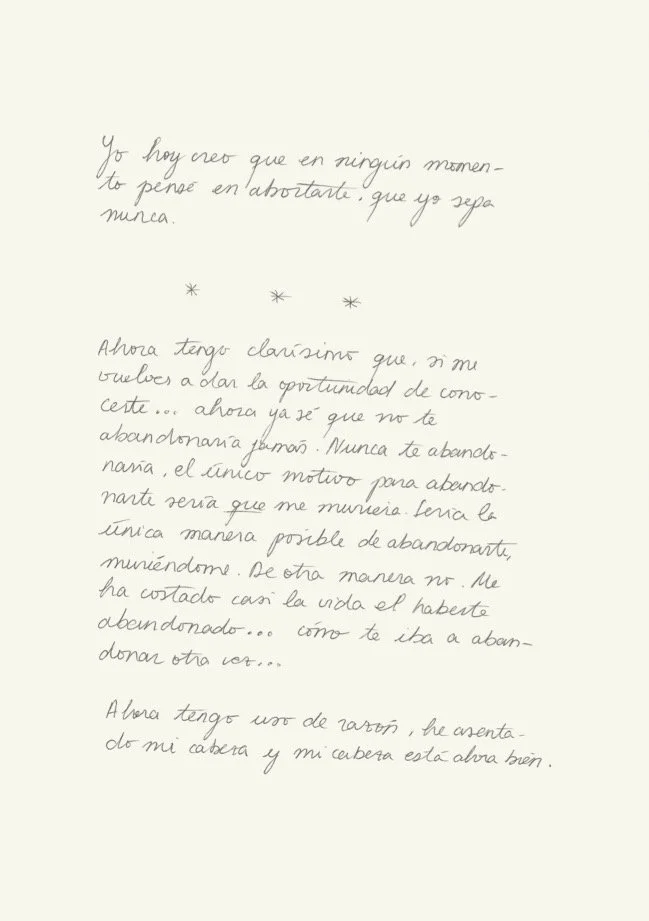


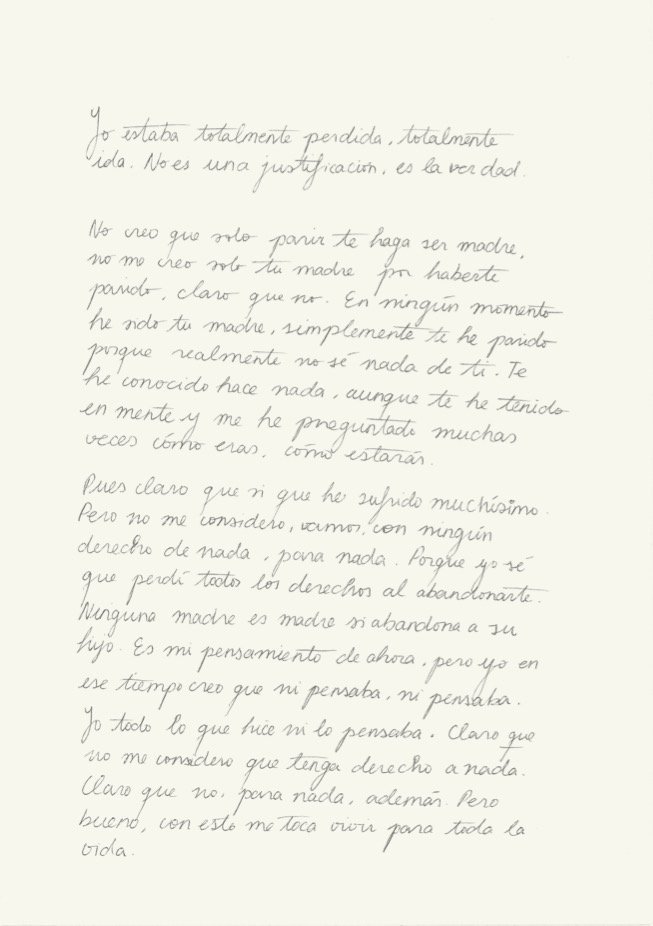
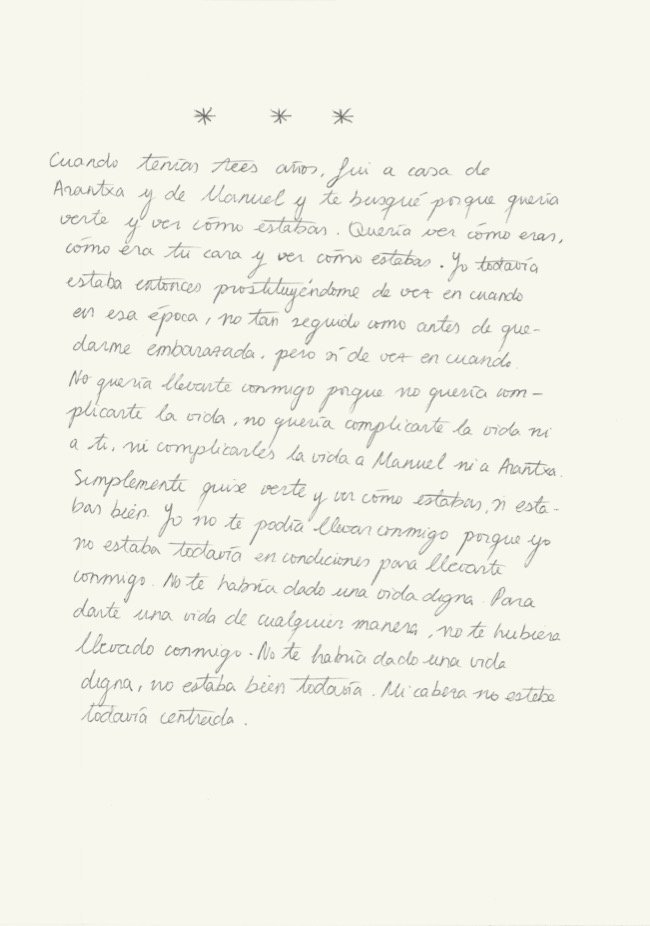


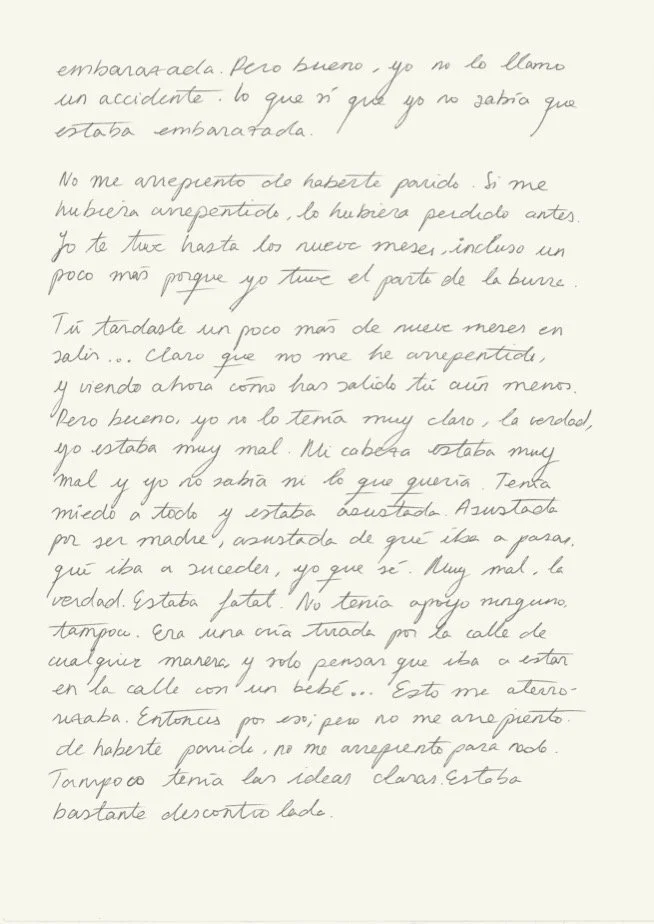


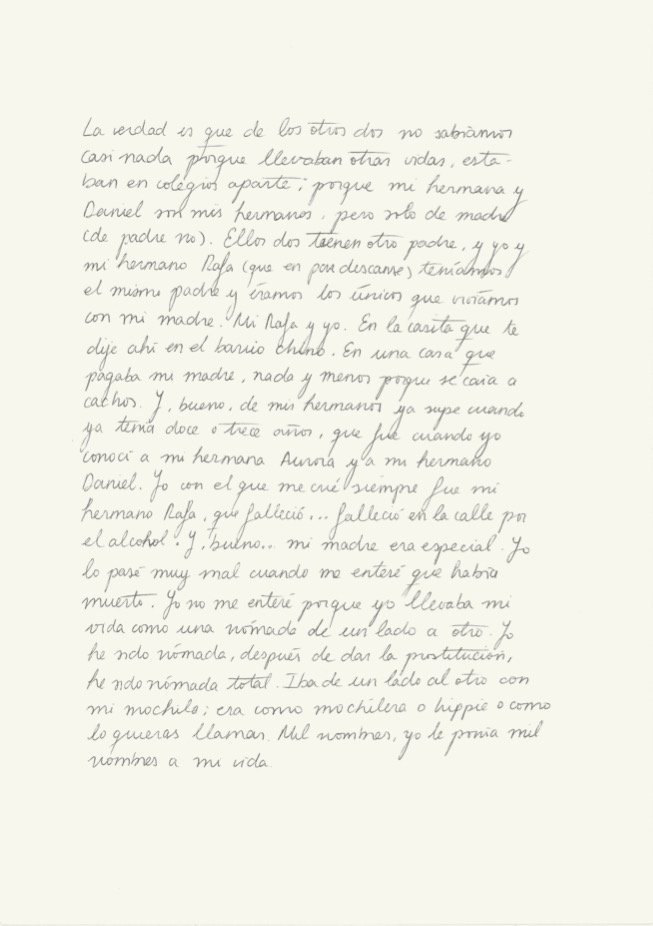


Here are the questions I wrote to Isabel, my biological mother, to then transcribe them as a plastic piece.
1. Where were you born, date, and tell us something about your birth. 2. What does Valencia mean to you? 3. How many children do you have or consider you have? 4. Was I an accident? 5. Do you regret giving birth to me? 6. How many births have you attended, either giving birth yourself or assisting someone else? 7. Do you remember how and when you found out you were pregnant with me? How was the pregnancy? Did I kick? Did you touch your belly? 8. In what year approximately did you meet Manuel Lebrijo and in what city? 9. In your first contact, what was the relationship between the two of you? Was he a waiter and you a customer? Did he sell something you wanted to buy? Were both of you in a complicated street situation? Explain in as much detail as possible, if you remember, that first hour when you met. 10. What does the word prostitution mean to you? Is it foreign to you, is it close to you? 11. What do you think in general of prostitution clients? Are they good, are they bad? Do you remember them? Do you remember any particularly difficult anecdotes? 12. Who is my biological father? Is it Manuel? 13. If it's not Manuel, tell me everything you know about him and if you don't know, think who it could be or imagine how you think he might be. 14. Do you consider prostitution to be similar to rape but with money involved? Could it be said in any way that my father abused you, since he had relations with you for money? 15. Do you think there would be any way to meet my biological father? 16. Manuel told me that you went out with a businessman from Valencia's nightlife and he could be my biological father. Tell me more about that. Who was he? Is he alive? What do you know about him? 17. Describe Manuel Lebrijo physically in as much detail as possible. Short or tall? Fat or thin? Blonde or brunette? Green, brown, or blue eyes? What city did he tell you he was from? Did he tell you at any time if he had other children, sisters, father, mother...? 18. What day did you leave the hospital to never return? The same day as the birth or days later? 19. Why did you abandon me? 20. Will you ever forgive yourself for abandoning me? 21. Why did you want to reclaim me from wood thirty-five years later? 22. When did you stop drinking alcohol and using drugs? Tell me in detail about the illness, the stroke, the five years in bed, the recovery, and your current situation. 23. Where do you live now? What is your life like now? 24. Would you go back? 25. Now that you know I suffered all my childhood, would you have avoided my birth? 26. Manuel told me that you both led a very bad life, alcohol, drugs. Tell me more about alcohol and drugs and what they meant to you in your life. 27. Didn't you feel guilty about prostituting with me in your belly? 28. Why did you put the name Abel on the hospital and the record? Do you remember this? 29. I was born in a clinic in Madrid called the Montesa clinic, why was I born there? Why were you in Madrid? Were you with Manuel when you entered the clinic pregnant? Did you walk? Did you arrive by ambulance? By car? Were you taken? The clinic was frequented by nuns, as Manuel told me. How many days do you remember being or you being in the clinic? 30. According to several reports, I was born with fetal alcohol syndrome. Was I smaller than normal at birth? Was I born before nine months? Was I put in an incubator at birth? Do you remember anything about how I was? Small? Pink? Red? Bald? Ugly? Handsome? Fat? 31. Very important to me these data, please total sincerity: Did you consume alcohol during the months you were pregnant? Alcohol? Heroin? Cocaine? Did you both use drugs together despite the pregnancy? How did you spend the pregnancy? On the street? In a homeless shelter? Do you think you went through it in a healthy and positive way? Why do you think I was born with fetal alcohol syndrome? 32. Manuel told me that the first name, Abel, was given to me because it was the first on a list of Catholic names that a nun at the Montesa clinic had, Isabel, my adoptive mother told me that the Lebrijos did not like the name and they wanted to name me Babil and that in the end you negotiated and it stayed as David. A few months before contacting me, what name did you think I had? 33. How did you think I looked physically? Did you imagine my face? 34. Let's go to your origins. Tell me everything. What was your mother and father like, describe them physically and what their lives were like. Are they alive or dead? How did they die? What were your four siblings like, describe their lives in detail? Describe what they were like. How many living relatives do you have? Please list them. How many nieces and nephews do you have, that is, my cousins? 35. What day did you leave the hospital to never return? The same day as the birth or days later? 36. Why did you abandon me? 37. Will you ever forgive yourself for abandoning me? 38. Why did you want to reclaim me from wood thirty-five years later? 39. When did you stop drinking alcohol and using drugs? Tell me in detail about the illness, the stroke, the five years in bed, the recovery, and your current situation. 40. Where do you live now? What is your life like now? 41. Would you go back? 42. Now that you know I suffered all my childhood, would you have avoided my birth? 43. Manuel told me that you both led a very bad life, alcohol, drugs. Tell me more about alcohol and drugs and what they meant to you in your life. 44. Didn't you feel guilty about prostituting with me in your belly? 45. Why did you put the name Abel on the hospital and the record? Do you remember this? 46. I was born in a clinic in Madrid called the Montesa clinic, why was I born there? Why were you in Madrid? Were you with Manuel when you entered the clinic pregnant? Did you walk? Did you arrive by ambulance? By car? Were you taken? The clinic was frequented by nuns, as Manuel told me. How many days do you remember being or you being in the clinic? 47. According to several reports, I was born with fetal alcohol syndrome. Was I smaller than normal at birth? Was I born before nine months? Was I put in an incubator at birth? Do you remember anything about how I was? Small? Pink? Red? Bald? Ugly? Handsome? Fat? 48. Very important to me these data, please total sincerity: Did you consume alcohol during the months you were pregnant? Alcohol? Heroin? Cocaine? Did you both use drugs together despite the pregnancy? How did you spend the pregnancy? On the street? In a homeless shelter? Do you think you went through it in a healthy and positive way? Why do you think I was born with fetal alcohol syndrome? 49. Manuel told me that the first name, Abel, was given to me because it was the first on a list of Catholic names that a nun at the Montesa clinic had, Isabel, my adoptive mother told me that the Lebrijos did not like the name and they wanted to name me Babil and that in the end you negotiated and it stayed as David. A few months before contacting me, what name did you think I had? 50. How did you think I looked physically? Did you imagine my face? 51. Let's go to your origins. Tell me everything. What was your mother and father like, describe them physically and what their lives were like. Are they alive or dead? How did they die? What were your four siblings like, describe their lives in detail? Describe what they were like. How many living relatives do you have? Please list them. How many nieces and nephews do you have, that is, my cousins? 52. What day did you leave the hospital to never return? The same day as the birth or days later? 53. Why did you abandon me? 54. Will you ever forgive yourself for abandoning me? 55. Why did you want to reclaim me from wood thirty-five years later? 56. When did you stop drinking alcohol and using drugs? Tell me in detail about the illness, the stroke, the five years in bed, the recovery, and your current situation. 57. Where do you live now? What is your life like now? 58. Would you go back? 59. Now that you know I suffered all my childhood, would you have avoided my birth? 60. Manuel told me that you both led a very bad life, alcohol, drugs. Tell me more about alcohol and drugs and what they meant to you in your life. 61. Didn't you feel guilty about prostituting with me in your belly? 62. Why did you put the name Abel on the hospital and the record? Do you remember this? 63. I was born in a clinic in Madrid called the Montesa clinic, why was I born there? Why were you in Madrid? Were you with Manuel when you entered the clinic pregnant? Did you walk? Did you arrive by ambulance? By car? Were you taken? The clinic was frequented by nuns, as Manuel told me. How many days do you remember being or you being in the clinic? 64. According to several reports, I was born with fetal alcohol syndrome. Was I smaller than normal at birth? Was I born before nine months? Was I put in an incubator at birth? Do you remember anything about how I was? Small? Pink? Red? Bald? Ugly? Handsome? Fat? 65. Very important to me these data, please total sincerity: Did you consume alcohol during the months you were pregnant? Alcohol? Heroin? Cocaine? Did you both use drugs together despite the pregnancy? How did you spend the pregnancy? On the street? In a homeless shelter? Do you think you went through it in a healthy and positive way? Why do you think I was born with fetal alcohol syndrome? 66. Manuel told me that the first name, Abel, was given to me because it was the first on a list of Catholic names that a nun at the Montesa clinic had, Isabel, my adoptive mother told me that the Lebrijos did not like the name and they wanted to name me Babil and that in the end you negotiated and it stayed as David. A few months before contacting me, what name did you think I had? 67. How did you think I looked physically? Did you imagine my face? 68. Let's go to your origins. Tell me everything. What was your mother and father like, describe them physically and what their lives were like. Are they alive or dead? How did they die? What were your four siblings like, describe their lives in detail? Describe what they were like. How many living relatives do you have? Please list them. How many nieces and nephews do you have, that is, my cousins? 69. What day did you leave the hospital to never return? The same day as the birth or days later? 70. Why did you abandon me? 71. Will you ever forgive yourself for abandoning me? 72. Why did you want to reclaim me from wood thirty-five years later? 73. When did you stop drinking alcohol and using drugs? Tell me in detail about the illness, the stroke, the five years in bed, the recovery, and your current situation. 74. Where do you live now? What is your life like now? 75. Would you go back? 76. Now that you know I suffered all my childhood, would you have avoided my birth? 77. Manuel told me that you both led a very bad life, alcohol, drugs. Tell me more about alcohol and drugs and what they meant to you in your life. 78. Didn't you feel guilty about prostituting with me in your belly? 79. Why did you put the name Abel on the hospital and the record? Do you remember this? 80. I was born in a clinic in Madrid called the Montesa clinic, why was I born there? Why were you in Madrid? Were you with Manuel when you entered the clinic pregnant? Did you walk? Did you arrive by ambulance? By car? Were you taken? The clinic was frequented by nuns, as Manuel told me. How many days do you remember being or you being in the clinic? 81. According to several reports, I was born with fetal alcohol syndrome. Was I smaller than normal at birth? Was I born before nine months? Was I put in an incubator at birth? Do you remember anything about how I was? Small? Pink? Red? Bald? Ugly? Handsome? Fat? 82. Very important to me these data, please total sincerity: Did you consume alcohol during the months you were pregnant? Alcohol? Heroin? Cocaine? Did you both use drugs together despite the pregnancy? How did you spend the pregnancy? On the street? In a homeless shelter? Do you think you went through it in a healthy and positive way? Why do you think I was born with fetal alcohol syndrome? 83. Manuel told me that the first name, Abel, was given to me because it was the first on a list of Catholic names that a nun at the Montesa clinic had, Isabel, my adoptive mother told me that the Lebrijos did not like the name and they wanted to name me Babil and that in the end you negotiated and it stayed as David. A few months before contacting me, what name did you think I had? 84. How did you think I looked physically? Did you imagine my face? 85. Let's go to your origins. Tell me everything. What was your mother and father like, describe them physically and what their lives were like. Are they alive or dead? How did they die? What were your four siblings like, describe their lives in detail? Describe what they were like. How many living relatives do you have? Please list them. How many nieces and nephews do you have, that is, my cousins? 86. What day did you leave the hospital to never return? The same day as the birth or days later? 87. Why did you abandon me? 88. Will you ever forgive yourself for abandoning me? 89. Why did you want to reclaim me from wood thirty-five years later? 90. When did you stop drinking alcohol and using drugs? Tell me in detail about the illness, the stroke, the five years in bed, the recovery, and your current situation.
A continuación pueden leerse la preguntas que yo escribí a Isabel, mi madre biológica para luego transcribirlas como pieza plástica.
1 - Dónde naciste, fecha y cuéntanos algo sobre tu nacimiento. 2 - ¿Qué significa Valencia para ti? 3 - ¿Cuántos hijos tienes o consideras que tienes? 4 - ¿Fui un accidente? 5 - ¿Te arrepientes de haberme parido? 6 - ¿A cuántos partos has asistido, pariendo tú o pariendo otra persona? 7 - ¿Recuerdas cómo y cuando supiste que estabas embarazada de mi? ¿Cómo fue el embarazo? ¿Daba patadas? ¿Te tocabas la tripa? 8 - ¿En qué año aproximadamente conociste a Manuel Lebrijo y en qué ciudad? 9 - ¿En vuestro primer contacto, que relación había entre los dos? ¿Él era camarero y tú clienta? ¿ÉL vendía algo que tú querías comprar? ¿Los dos estabais en una situación complicada y de calle? Explica con el mayor detalle posible, si te acuerdas, esa primera hora en la que os conocisteis. 10 - ¿Qué significa la palabra prostitución para ti? ¿Te es ajena, te es cercana? 11 - ¿Y que piensas en general de los clientes de prostitución? ¿Son buenos, son malos? ¿Te acuerdas de ellos? ¿Te acuerdas de alguna anécdota difícil en concreto? 12 - ¿Quién es mi padre biológico? ¿Es Manuel? 13 - Sino es Manuel cuéntame de él todo lo que sepas y sino sabes piensa quién podría ser o imagina como crees que puede ser. 14 - ¿Consideras que la prostitución es parecido a la violación pero con dinero de por medio? ¿Podría decirse de alguna manera que mi padre abuso de ti, ya que tuvo relaciones contigo por dinero? 15 ¿Crees que habría alguna forma de conocer a mi padre biológico? 16 - Manuel me habló de que saliste con un empresario de la noche valenciana y él podría ser mi padre biológico. Cuéntame más de eso. ¿Quién era? ¿Vive? ¿Qué sabes de él 17- Describe físicamente con el máximo detalle posible a Manuel Lebrijo. ¿Bajo o alto? ¿Gorda o delgada? ¿Rubia o morena? ¿Ojos verdes, marrones o azules? ¿De qué ciudad te dijo que provenía? Te contó en algún momento si tenía otros hijos, hermanas, padre madre…? 19 - ¿Qué día te fuiste del hospital para no volver? ¿El mismo día del parto o días después? 20 - ¿Porque me abandonaste? 21 - ¿Te vas a perdonar alguna vez el haberme abandonado? 22 - ¿Porque has querido ahora treinta y cinco años después recuperarme de alguna madera? 23 - ¿Cuando dejaste el alcohol y las drogas? ¿Cuéntame con detalle la enfermedad, el ictus, los cinco años en la cama, la recuperación y tu situación actual 24 - ¿Donde vides ahora? ¿Cómo es tu vida ahora? 25 - ¿Volverías atrás? 26 - Ahora que sabes que he sufrido toda mi infancia, ¿evitarias que yo hubiera nacido? 27- Manuel me contó que llevabais muy mala vida, alcohol, drogas. Cuéntame mas sobre el alcohol y las drogas y que suponían para ti en tu vida. 28 - ¿No te sentias cumplable al prostituirte conmigo en tu tripa? 29 - Porque en el hospital y en la ficha me pusisteis el nombre de Abel. Te acuerdas de esto? 30 - Nací en una clínica de Madrid llamada la clínica Montesa, ¿Por qué me dieron a luz en esa clínica? ¿Por qué estabais en Madrid? ¿Estuviste tú con Manuel en el momento en el que entraste en la clínica embarazada? ¿Fuisteis caminando? ¿Llegasteis en ambulancia? ¿En coche? ¿Os llevaron? La clínica estaba frecuentada por monjas, según me contó Manuel. ¿Cuántos días recuerdas que estuve o estuvisteis en la clínica? 31- Según varios informes nací con alcoholismo fetal. ¿Nací más pequeño de lo normal? ¿Nací antes de los nueve meses? ¿Me metieron en una incubadora al nacer? ¿Recuerdas algo de cómo era? ¿Pequeño? ¿Rosa? ¿Rojo? ¿Sin pelo? ¿Feo? ¿Guapo? ¿Gordo? 32- Muy importante para mi estos datos, por favor total sinceridad: ¿Los meses que estuviste embarazada consumiste? ¿Alcohol? ¿Heroína? ¿Cocaína? ¿Consumíais los dos juntos a pesar del embarazo? ¿Cómo pasaste el embarazo? ¿ En la calle? ¿En una residencia de ayuda a gente de la calle? ¿Crees que lo pasaste de forma sana y positiva? ¿Por qué crees que nací con alcoholismo fetal? 33- Manuel me contó que el primer nombre, Abel se me puso porque era el primero de una lista de nombres católicos que tenía una monja de la clínica Montesa, Isabel, mi madre adoptiva me contó que a los Lebrijo no les gustaba el nombre y me querían poner Babil y que al final negociasteis y se quedó en David. ¿Tú hace unos meses antes de contactarme que nombre creias que tenia? 34 - ¿Cómo pensabas que yo era fisicamente? ¿Te imaginabas mi cara? 35 - Vamos a tu orígenes. Cuéntamelo todo. Como era tu madre y tu padres, descríbeles fisicamente y como eran sus vidas. Esta vivos o muertos. Como fallecieron. Como eran tus cuatro hermanos, cuentan con detalles su vida. 36 - Tu infancia como fue, a que colegio fuiste, que hiciste de niña. Te violaron o abusaron de niña? 37 - ¿Cuando cambió tu infancia? ¿Fuiste a un reformatorio? ¿?Porque ? Cuéntame todo con detalles de esos años. 38 - ¿Cuál es tu nombre? Cuéntame la historia de tu nombre, quien te lo puso, cual es tu nombre completo y tus apellidos. Cuéntame de donde vienen tus apellidos. 39 - ¿Porque empezaste a usar un nombre falso? Cuéntame bien de principio a fin el tema de la denuncia y el nombre falso y como usaste ese nombre de mentira durante mucho tiempo. 40 - Como elegiste ese nombre y porque: Victoria Luján Gutierrez. Necesito muchos detalles de esto. 41 - En todos mis documentos figura tu nombre falso, te parece bien que yo construya mi identidad desde tus mentiras. Crees que estaba justificado que mintieras? 42 - ¿Crees que eres mi madre para siempre por haberme parido o que ya has perdido ese derecho en el momento que me abandonaste? 43 - ¿Qué es una madre para ti? Define la palabra madre. 44 - ¿Cómo era tu madre contigo? ¿Porque yo no he tenido eso? 45 - Los problemas mentales que yo he tenido y tengo, los abusos sexuales que yo he sufrido o las adicciones crees que tienes algo de responsabilidad o que solo es cosa mía? 46 - ¿Alguna vez has tenido algún intento grave de suicidio? ¿Te gusta vivir? 47 - Has hablado de tu enfermedad al prostituirte. ¿Hablas de sida? Si es sida, hubo riesgo al dar a la luz? Te medicaron o tuvieran alguna garantía de no contagio hacia mi. No nací por cesárea no? Tienes cicatrices? 48 - Nunca te has inyectado nada como pone en los papeles? Siempre todo por la nariz y fumado? 49 - Cuando tenia yo tres años me buscaste de nuevo en Pamplona. ¿Para que? ¿Me querías llevar contigo? O solo ver que estaba bien… 50 - Has dicho que ahora no eres mi madre y no tienes derechos. Pero si pudieras quisieras que cambiaran las cosas y ser mi madre y convertirte en tal. 51 - Como te sientes con todo esto, narrando tu historia, formando parte de mi obra como artista, lo haces porque quieres conocerme, por contar tu historia o porque lo haces? 52 - Tras haber sido violada en tantas ocasiones y haberte prostituido en muchísimas ocasiones, como vives la sexualidad. ¿Te da miedo? ¿Podias vivir tu sexualdiad libremente? O estas siempre marcada por ese abuso? 53 - ¿Cómo te imaginas que sería nuestra vida si no me hubieras abandonado? 54 - ¿El día que me contraste y me contactaste por primera vez que sentiste? 55 - ¿Cómo fue hacerte la prueba de ADN hace unos meses? 56 - Ya queda poco para conocernos en persona, me darías la mano como Manuel o como la hija de Manuel. 57 - ¿Sueles llorar? ¿Lloraras el dia que me veas en persona? 58 - ¿Me tienes algún tipo de miedo? 59 - Sabes que tanto Manuel como Arantza me prostituyeron o quisieron vender pro droga al igual que a su hija. ¿Qué les dirías ahora que lo sabes? 60 - A mi padre biológico, abusador o tu cliente que le dirías si lo tuvieras enfrente. 60 - A mi padre biológico, abusador o tu cliente que le dirías si lo tuvieras enfrente. 61 - ¿Crees que que me sienta abandonado continuamente, yo ser una persona adicta, tenga herencias del alcoholismo fetal y muchas más taras heredadas de estas situaciones se podía haber evitado? ¿Crees que los consumos y la mala vida que llevabas me debería haber matado para no sufrir? ¿Piensas en mi a diario? ¿No piensas nunca? 62 - ¿Entiendes mi arte? ¿Entiendes lo que hago? 63 - ¿Por ti cuando me conocerías? 64 - ¿Qué piensas que yo pienso de ti? ¿Qué te echaba de menos? ¿Qué te quería? ¿Qué te odiaba por el abandono y las herencias malas? 65 - Mis únicos referentes de ti era prostituta y drogadicta. ¿Qué te parece que un niño tenga que crecer teniendo solo esos referentes de su madre? 66 - En mi trabajo artistico yo he repetido estos dos aspectos en conexión hacia ti: Prostitución y drogas. ¿Qué piensas de que yo me haya prostituido? ¿Te duele? ¿Si ves un video de mi inconsciente en el centro de un teatro debido a las drogas? ¿Qué te parece? 67 - Si te digo que yo hacia esas acciones porque así me sentía conectado a ti ¿Qué te parece? 69 - He hablado siempre de la muerte en mi obra, si cuando yo muera tu sigues viva que crees que sentirás? 70 - ¿Quién es Abel Azcona para ti? 71 - En mi cabeza me imagino conociéndote dentro de pocos meses y dándote la mano en una performance como ya he hecho antes. ¿Me darías la mano? ¿Me la soltarías? ¿Crees que cuando me abandonaste fue una metáfora de soltarme la mano? 72 - ¿La herida de abandono se cura? ¿Tú tienes alguna herida de abandono? Cuéntame cuales y con detalle. 73 - Hablame a fondo de tus tres hermanos. Cuéntame todo sobre tu hermano de sangre de padre y madre que falleció alcoholizado en Valencia y cuéntame sobre los otros solo de madre. ¿Qué relación tienes ahora con ellos? Cuánta familia viva tienes? Enumerala por favor. ¿Cuantos son los sobrinos, es decir mis primos? 74 - ¿Crees que todos estos familiares quieren conocerme? ¿Saben ahora mismo que existo? 75 - ¿Porque has vivido huyendo toda la vida? ¿De que huyes Isabel? 76 - Entiendes que yo tenga sentimientos encontrados hacia a ti. ¿Que algunos días quiera conocerte y que otros no? 77 - Si no te quisiera conocer en persona, ¿Qué sentirías? 78 - Cuando nos conozcamos, ¿que quieres que pase después? ¿Tienes objetivos, ideas, sueños? 79 - Te ves teniendo una relación diaria conmigo, conviviendo, viviendo cerca… ¿Cómo te ves? 80 - En mi obra muchas veces he hablado de ti, cuando fuiste a la exposición de Lleida y viste tantas piezas de mi infancia tan dura ¿Qué es lo que sentiste? 81 - ¿Todo este ejercicio de palabra, escritura y pensamiento lo estas haciendo solo por mi o a ti te está sirviendo de algo. 82 - ¿Cual consideras que ha sido el suceso mas traumático de tu vida? 83 - Hubo un encuentro conmigo, pero yo estaba lejos y un mediador hace más de diez años. Que recuerdas de eso? Eras tu o era otra mujer? 84 - Si me hubieras abortado no me hubieras abandonado y hubiera sido mejor que abandonarme y vivir siempre con la herida del abandono y todo lo que vino después: abusos, maltratos… ¿Porque no me abortaste? ¿Lo intentaste? En el encuentro de antes esa mujer dijo que lo había intentando hasta tres veces. Y me pareció bonito, el aborto es bueno si es para proteger de la mala vida. 85 - Si te digo si a conocernos, ¿me volverás a abandonar? 86 - Define la palabra abandono. 87 - ¿Qué piensas de mi ahora mismo? 88 - ¿Tienes ganas de vivir? 89 - ¿Tienes ganas de mirarme a los ojos? 90 - Ahora te digo ya seguro que si nos vamos a conocer en pocos meses y nos daremos la mano. ¿Quieres? ¿Estas nerviosa?
THE EIGTH STEP was activated through a live performance at the Contemporary Art Center of Málaga starring Isabel Gómez Aranda and without the presence of the artist. The action was titled 'The Exposed Mother'.
EL OCTAVO PASO se activó mediante una performance en vivo en el Centro de Arte Contemporáneo de Málaga protagonizada por Isabel Gómez Aranda y sin la presencia del artista. La acción se tituló “La madre expuesta”.
Work produced inside the Center for Contemporary Art of Málaga with the collaboration of the Exabrupto festival where the piece was inaugurated for the first time. / Obra producida en el interior del Centro de Arte Contemporáneo de Málaga con la colaboración del festival Exabrupto donde se inauguró la pieza por vez primera.
On May 13, 2024, Isabel Gómez Aranda, the biological mother of artist Abel Azcona, makes her first public appearance at the center of a museum. Since she resides in a Caritas apartment in Málaga, the chosen location is the Contemporary Art Center of Málaga. There, standing on a pedestal in the center of the artistic space, the artist's mother becomes the focal point of one of the processes created as a step towards the definitive meeting between the two. For more than twenty years, Azcona and his work have spoken about the figure and absence of his mother, and now, for the first time, she is present.
El 13 de mayo de 2024 Isabel Gómez Aranda, la madre biológica del artista Abel Azcona se expone públicamente por primera vez en el centro de un museo. Al residir ella en un piso de Cáritas en Málaga el espacio elegido es el Centro de Arte Contemporáneo de Málaga, donde subida a una peana en el centro del espacio artístico la madre del artista protagoniza uno de los procesos creados como paso hasta el encuentro definitivo entre ambos. Durante más de veinte años Azcona y su obra hablaban de la figura y la ausencia de la madre y ahora por primera vez la madre está presente.
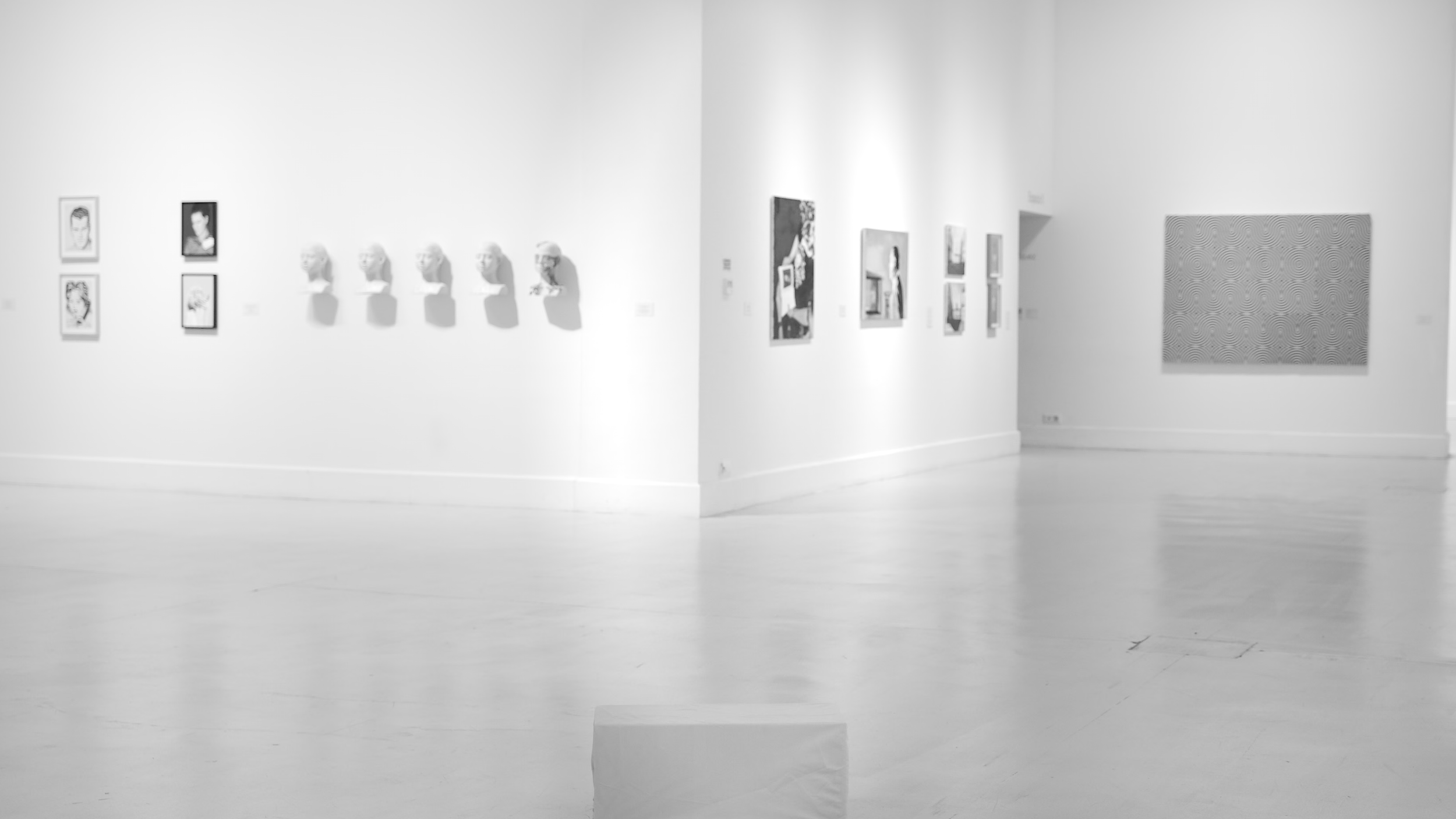
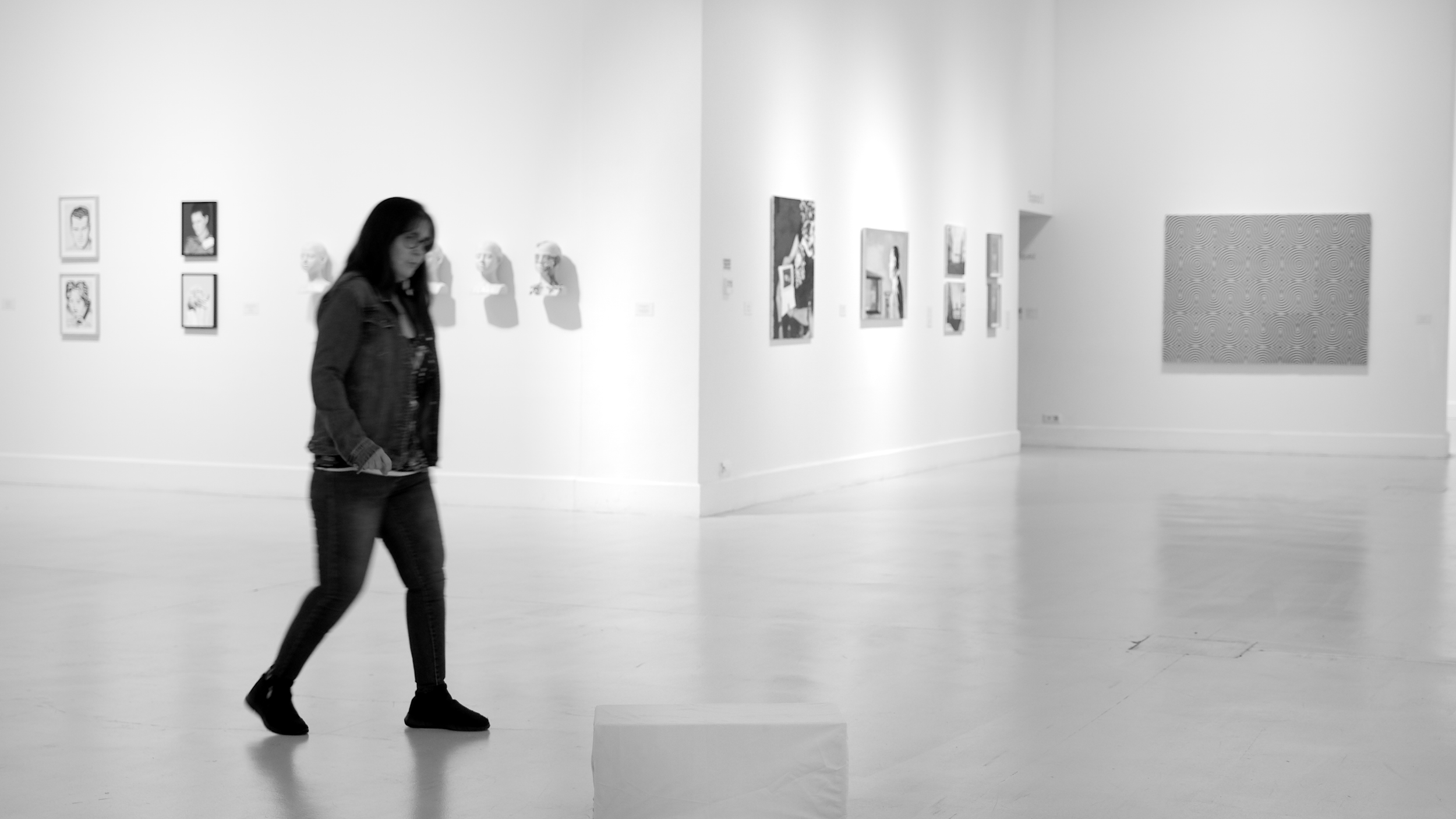
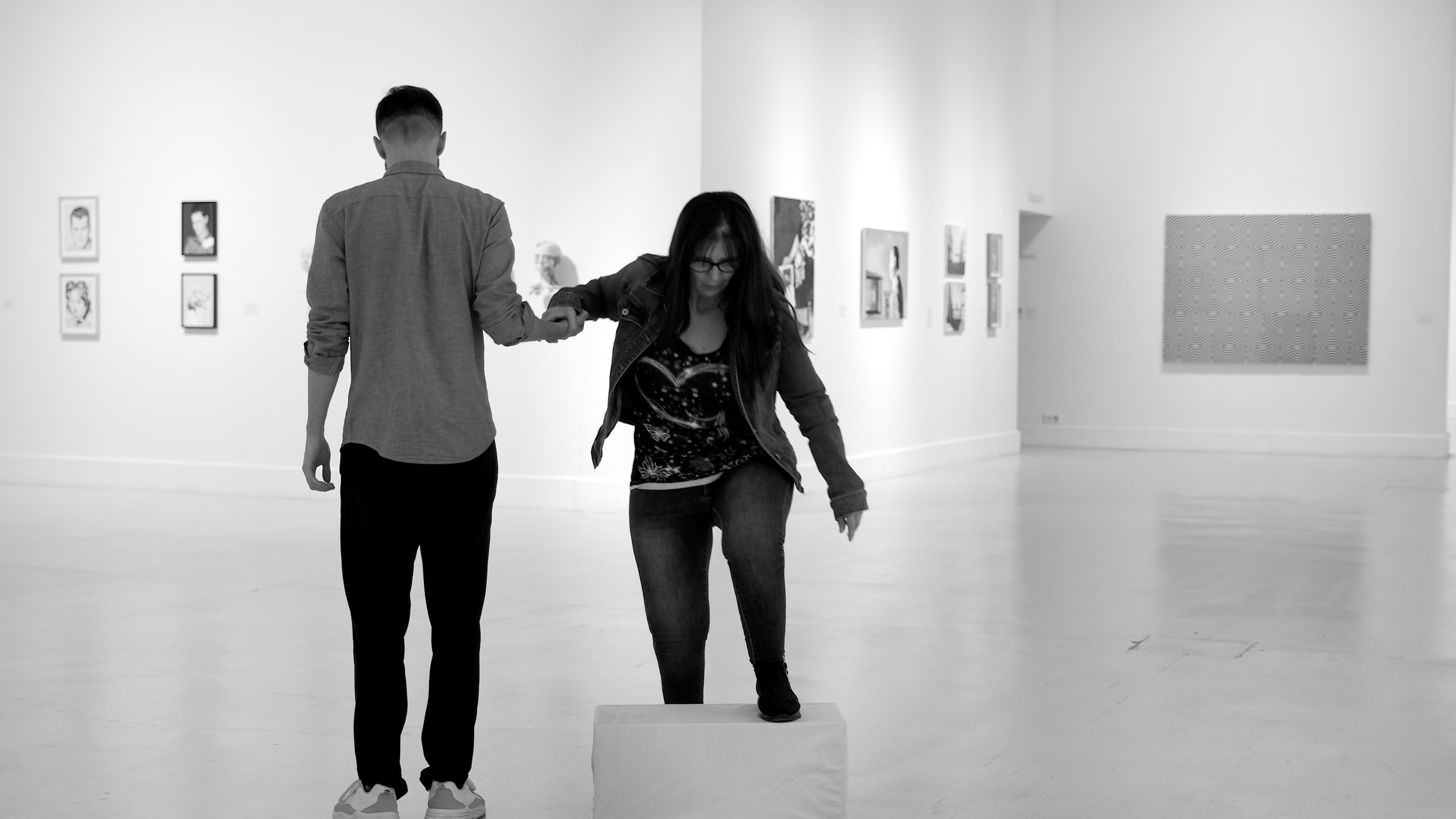
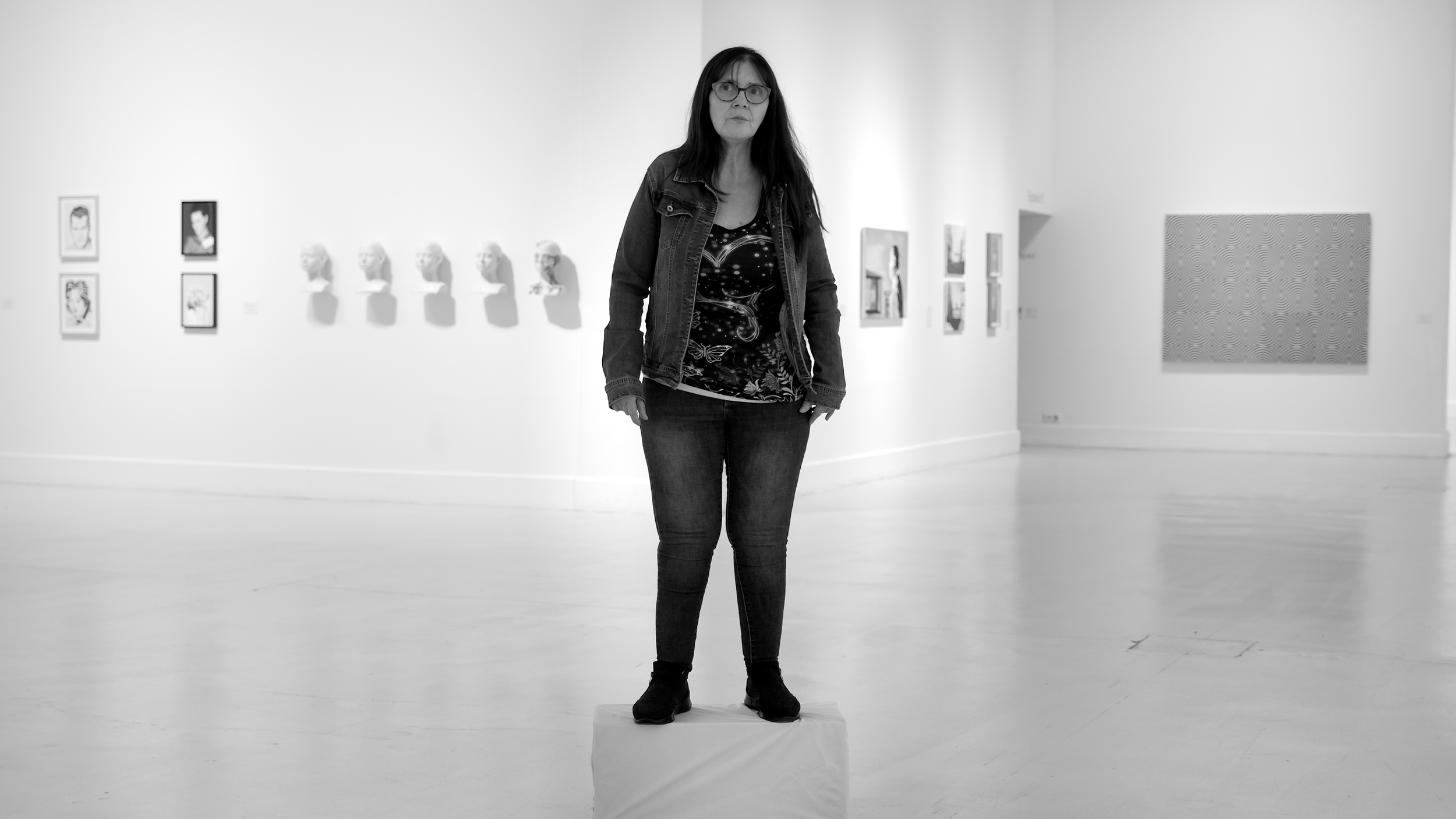
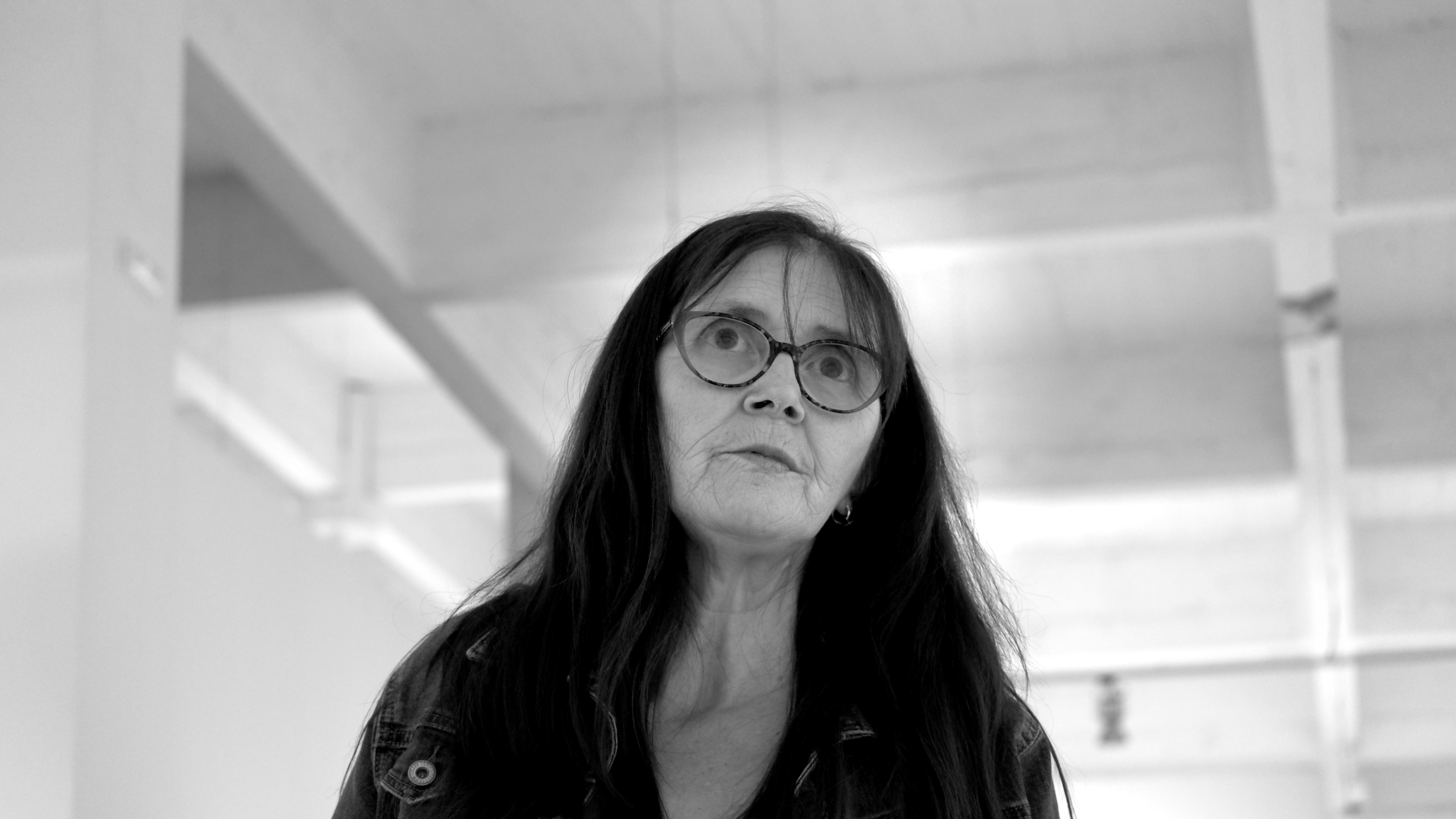
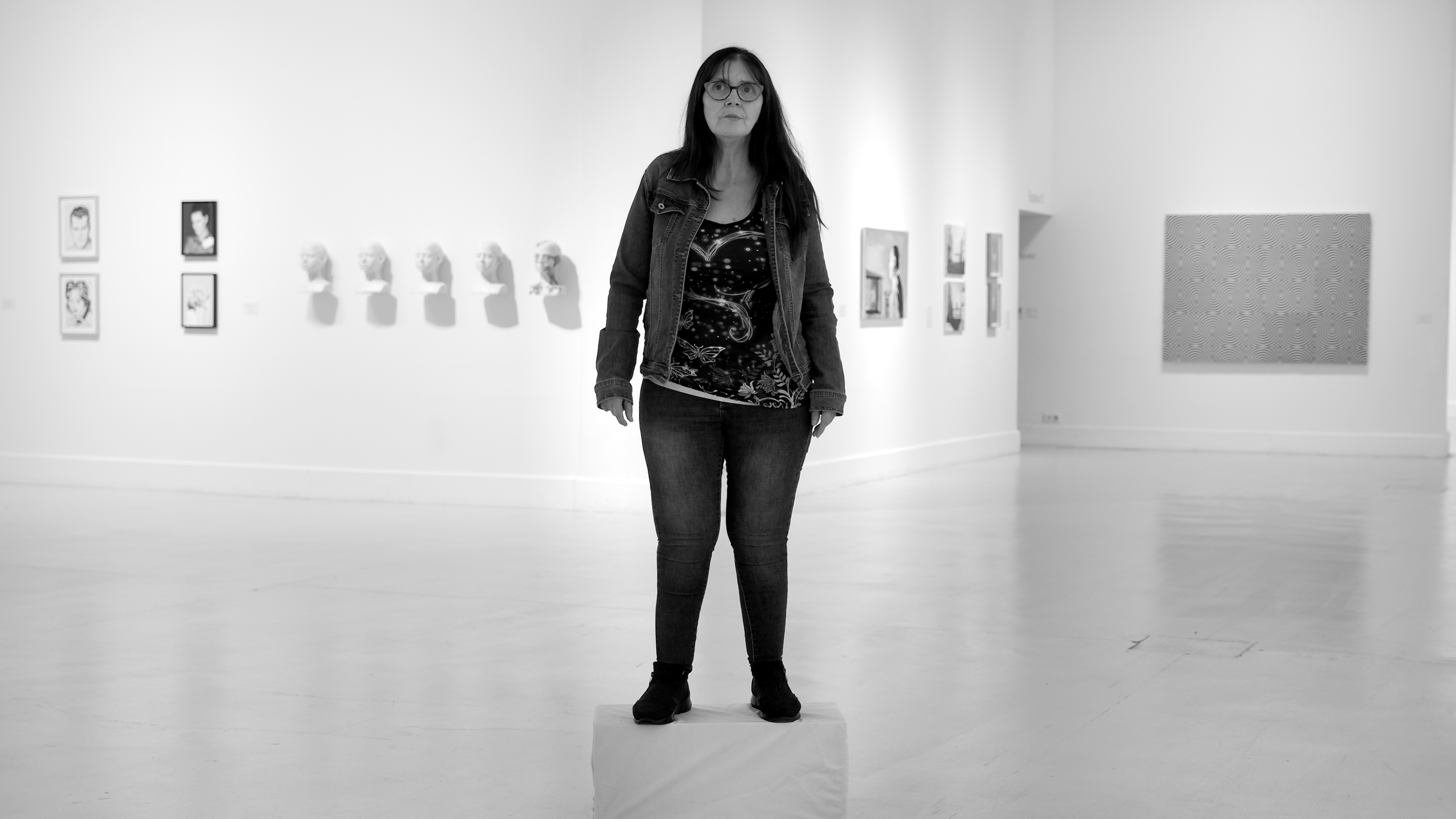
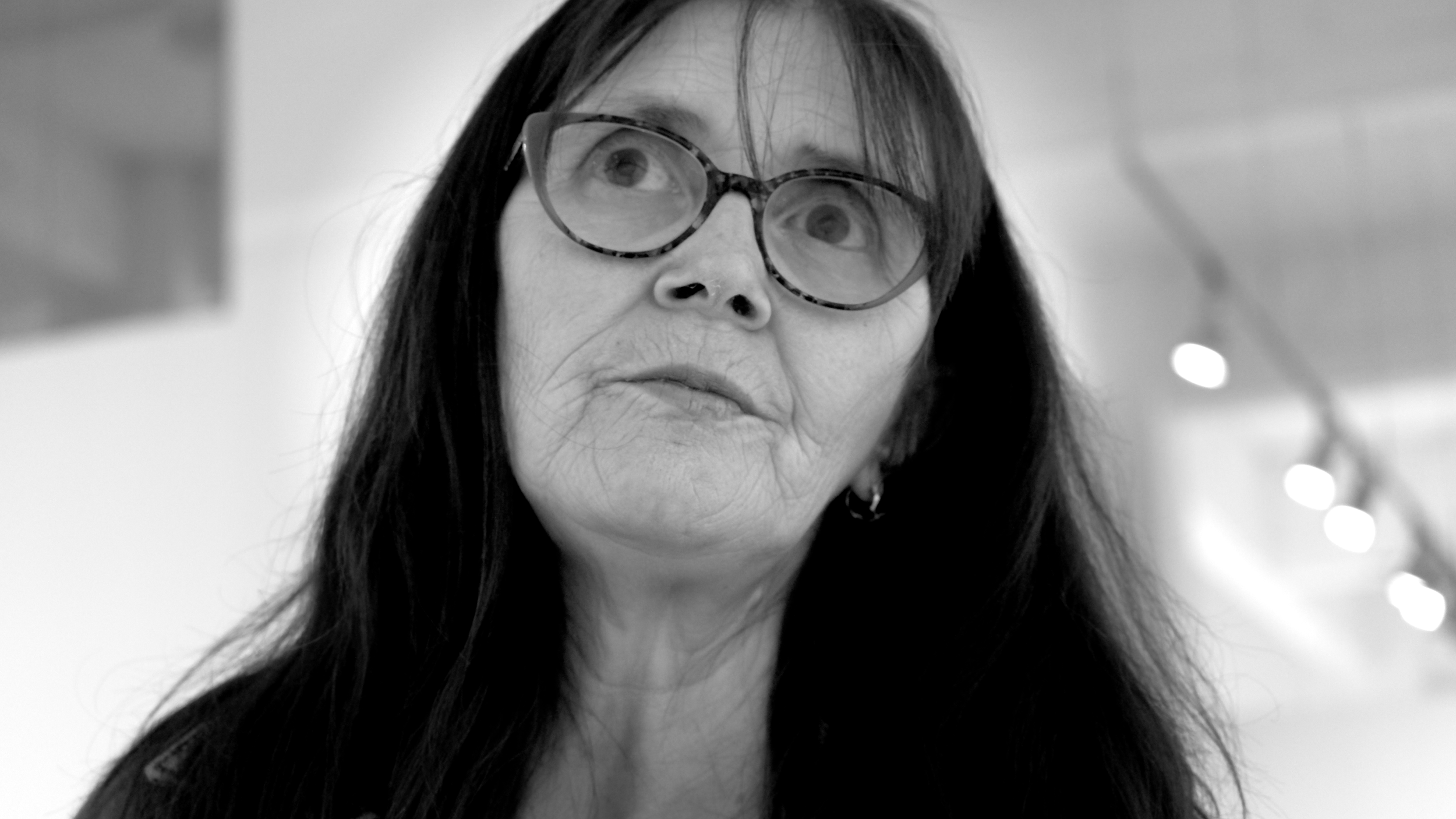
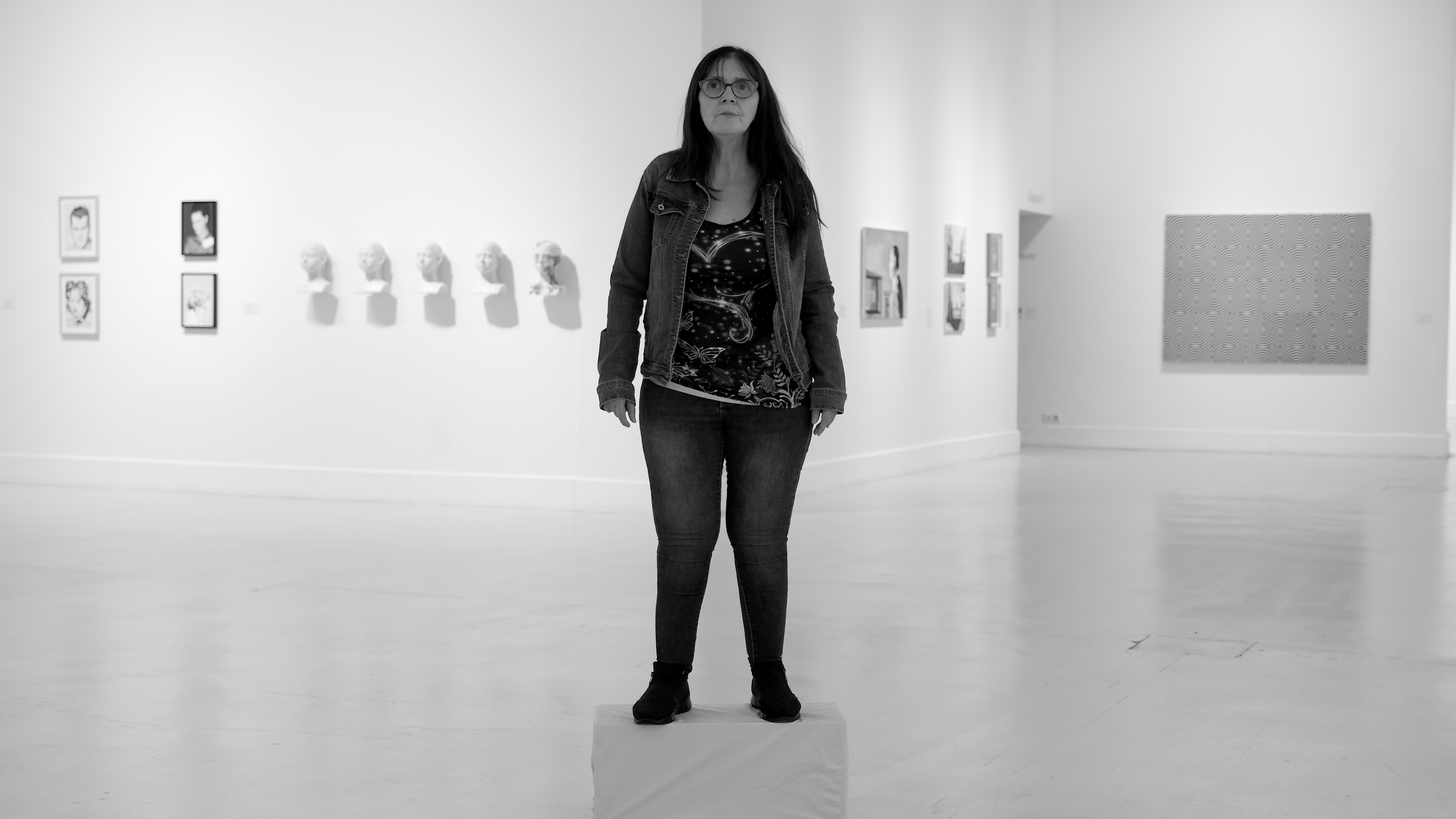
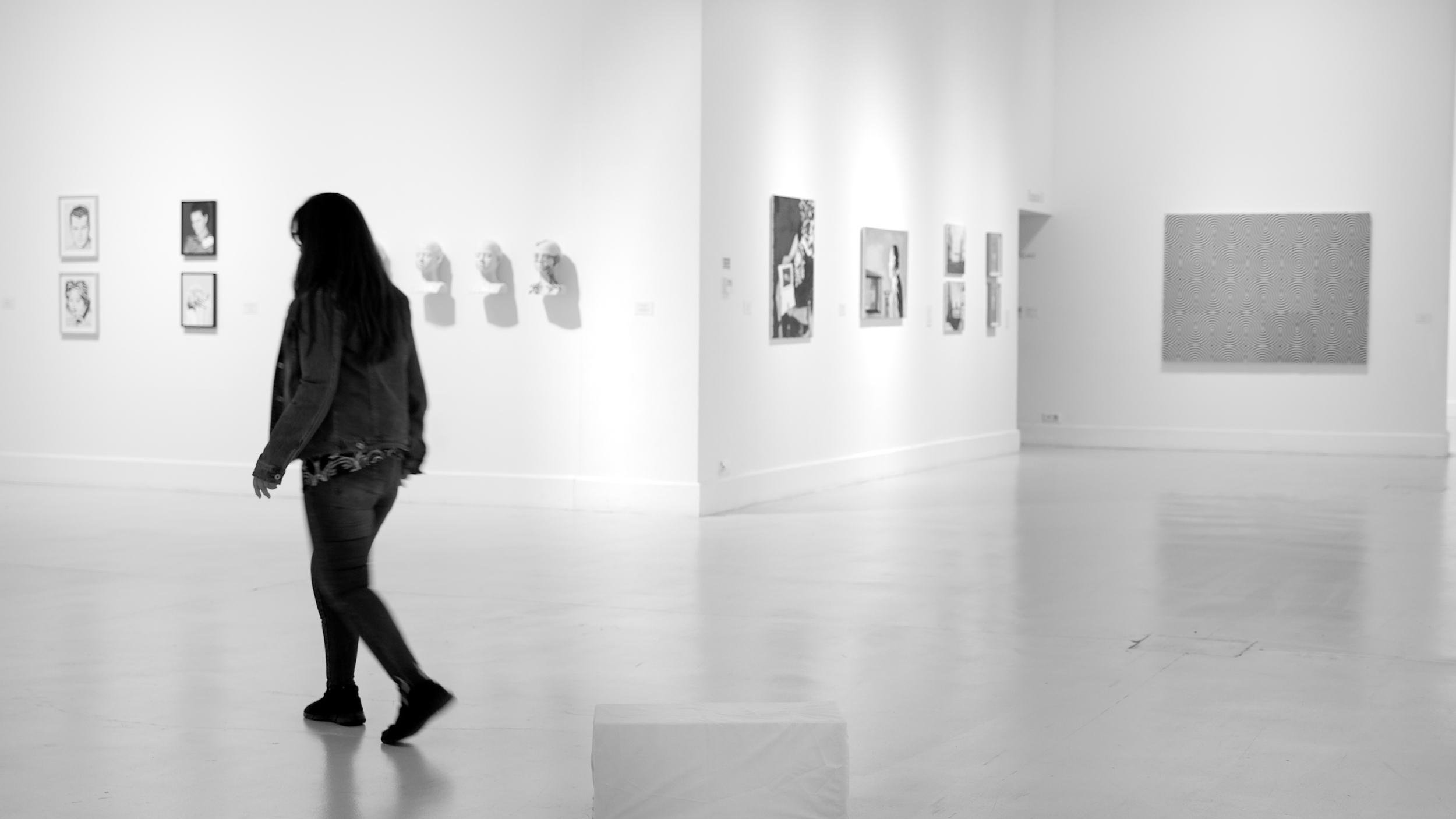
THE NEINTH STEP consists of six complete video pieces of the mother's testimony and version, as well as her activation of several short performances in a museum. In the context of the museum, Isabel Gómez Aranda narrates her entire experience in first person through her body and words.
EL NOVENO PASO lo forman seis piezas completas de video del testimonio y la versión de la madre y la activación por su parte de varias performances breves en un museo. En el contexto del museo Isabel Gómez Aranda narra mediante cuerpo y palabras toda su experiencia en primera persona.
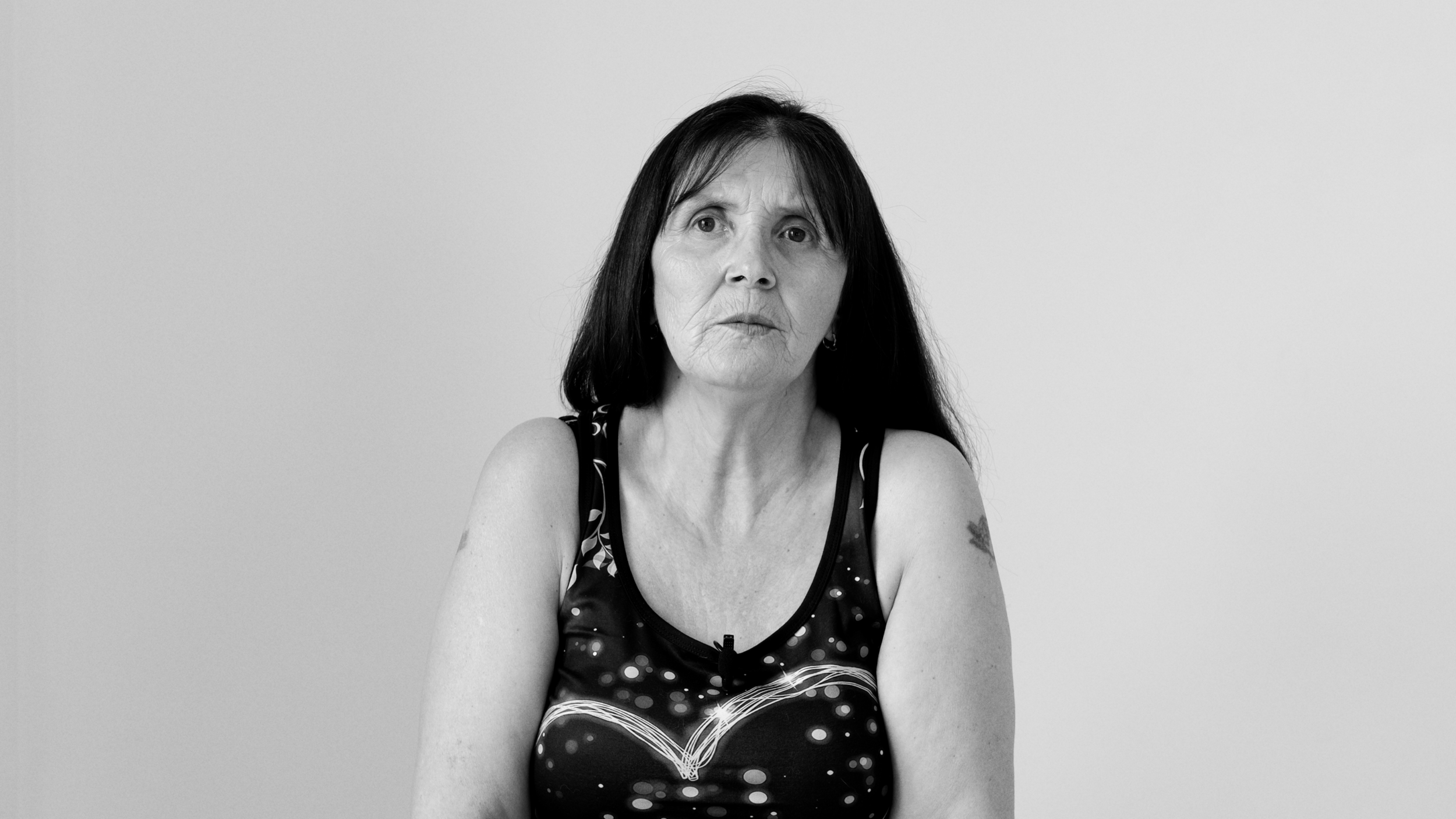

In May 2024, Isabel Gómez Aranda, the biological mother of artist Abel Azcona, is invited to the Contemporary Art Center of Málaga to exhibit her body for the first time. Since October 2023, Azcona and his mother have been taking several steps towards the final moment where they will meet and shake hands in a performance and conclusion. In this new step, Isabel speaks and delves into her origins, her hometown, and the beginning of her story for the first time.
El mes de mayo de 2024 Isabel Gómez Aranda, la madre biológica del artista Abel Azcona es invitada al Centro de Arte Contemporáneo de Málaga a exponer su cuerpo por primera vez. Desde octubre de 2023 Azcona y su madre realizan varias pasos hasta el paso final donde ambos se conocerán y darán la mano en una performance y desenlace. En este nuevo paso Isabel por primera vez habla y profundiza en sus orígenes, su ciudad natal y el principio de su historia.
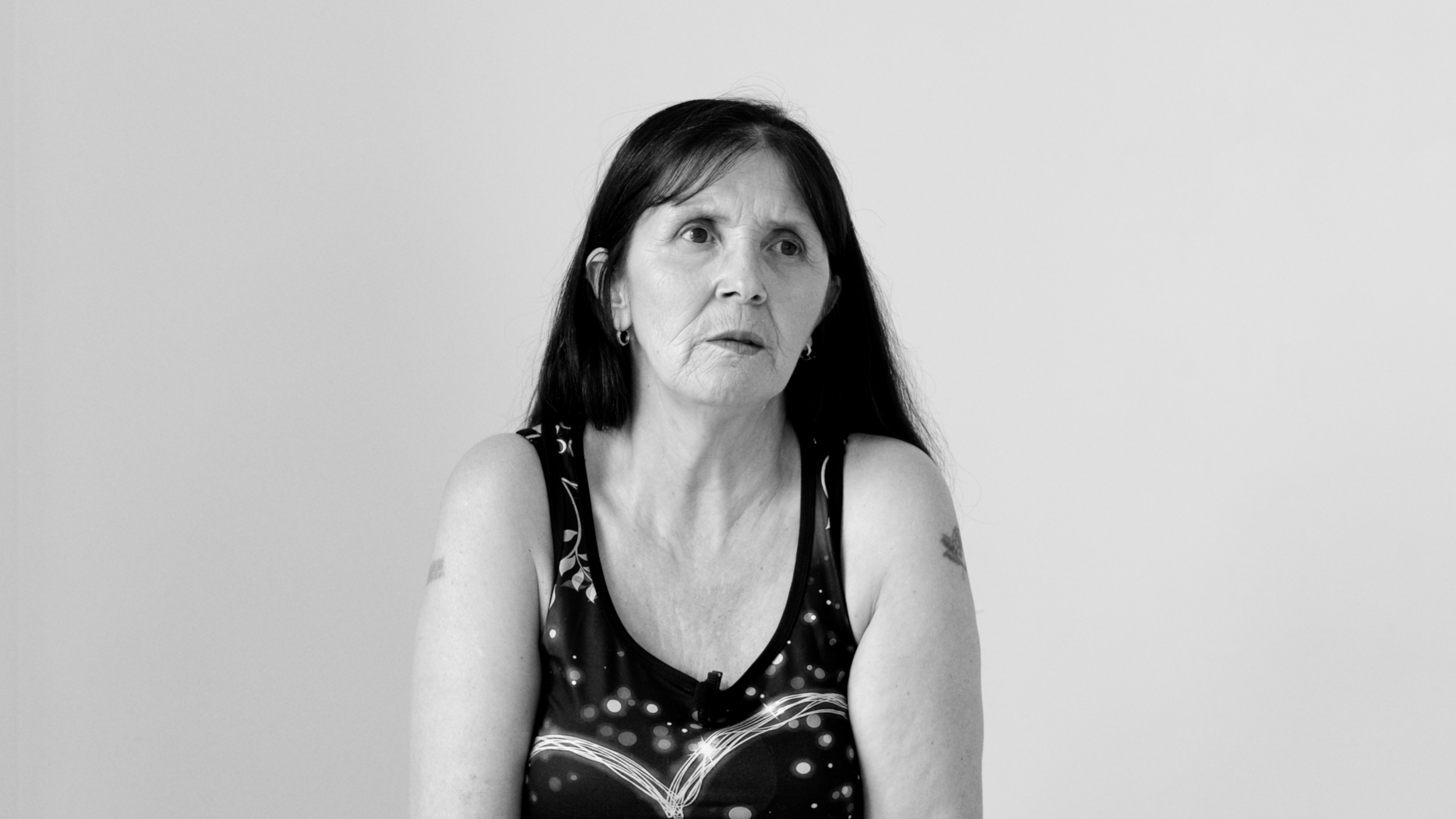

In May 2024, Isabel Gómez Aranda, the biological mother of artist Abel Azcona, is invited to the Contemporary Art Center of Málaga to exhibit her body for the first time. Since October 2023, Azcona and his mother have been taking several steps towards the final moment where they will meet and shake hands in a performance and conclusion. In this new step, Isabel speaks and delves into Azcona's pregnancy, gestation, and birth for the first time.
El mes de mayo de 2024 Isabel Gómez Aranda, la madre biológica del artista Abel Azcona es invitada al Centro de Arte Contemporáneo de Málaga a exponer su cuerpo por primera vez. Desde octubre de 2023 Azcona y su madre realizan varias pasos hasta el paso final donde ambos se conocerán y darán la mano en una performance y desenlace. En este nuevo paso Isabel por primera vez habla y profundiza en el embarazo de Azcona, la gestación y el parto del artista.

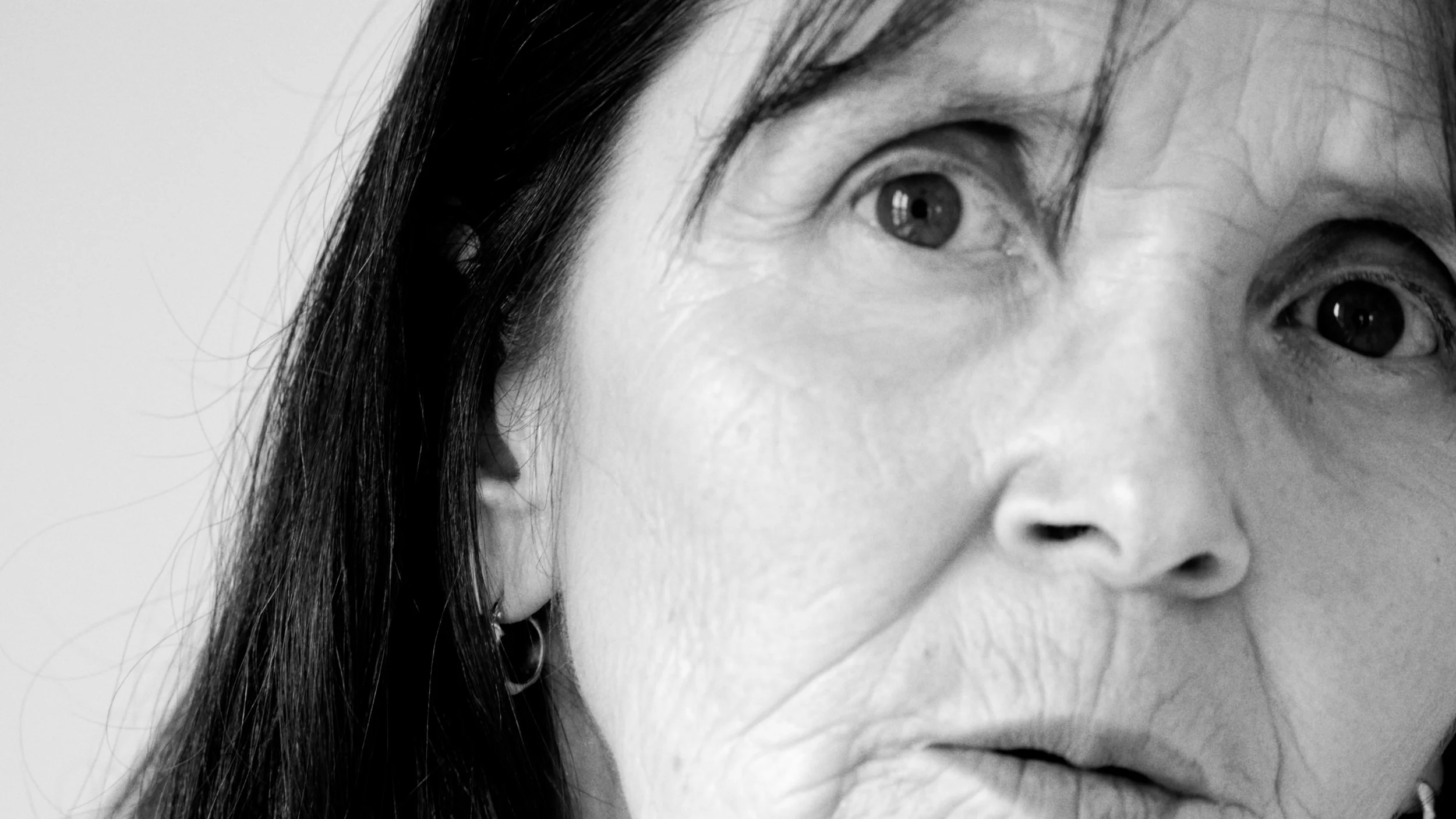
In May 2024, Isabel Gómez Aranda, the biological mother of artist Abel Azcona, is invited to the Contemporary Art Center of Málaga to exhibit her body for the first time. Since October 2023, Azcona and his mother have been taking several steps towards the final moment where they will meet and shake hands in a performance and conclusion. In this new step, Isabel speaks for the first time and delves into the abandonment of the artist and the wound it represents for both of them.
El mes de mayo de 2024 Isabel Gómez Aranda, la madre biológica del artista Abel Azcona es invitada al Centro de Arte Contemporáneo de Málaga a exponer su cuerpo por primera vez. Desde octubre de 2023 Azcona y su madre realizan varias pasos hasta el paso final donde ambos se conocerán y darán la mano en una performance y desenlace. En este nuevo paso Isabel por primera vez habla y profundiza en el abandono del artista y en la herida que supone para ambos.
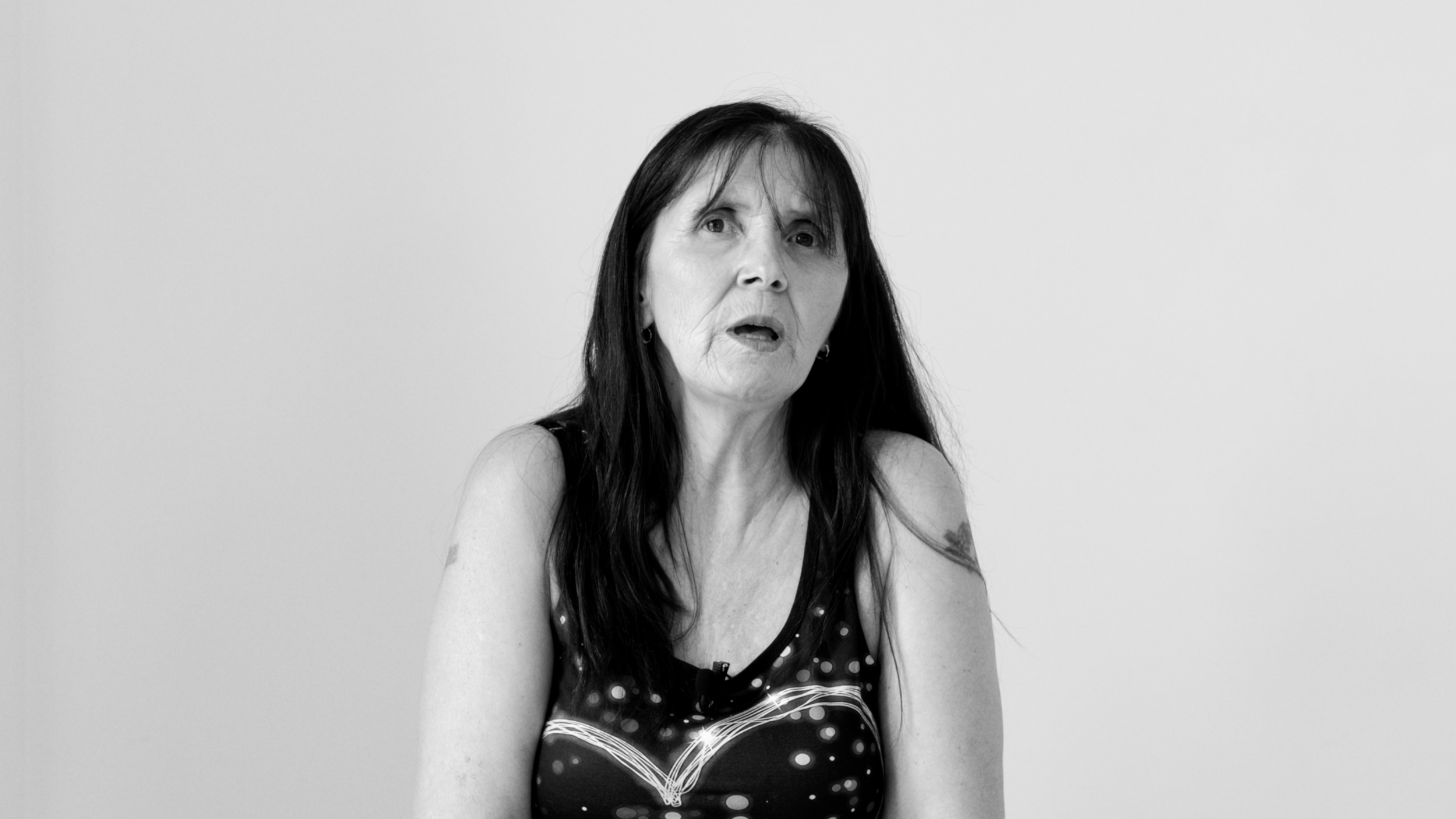
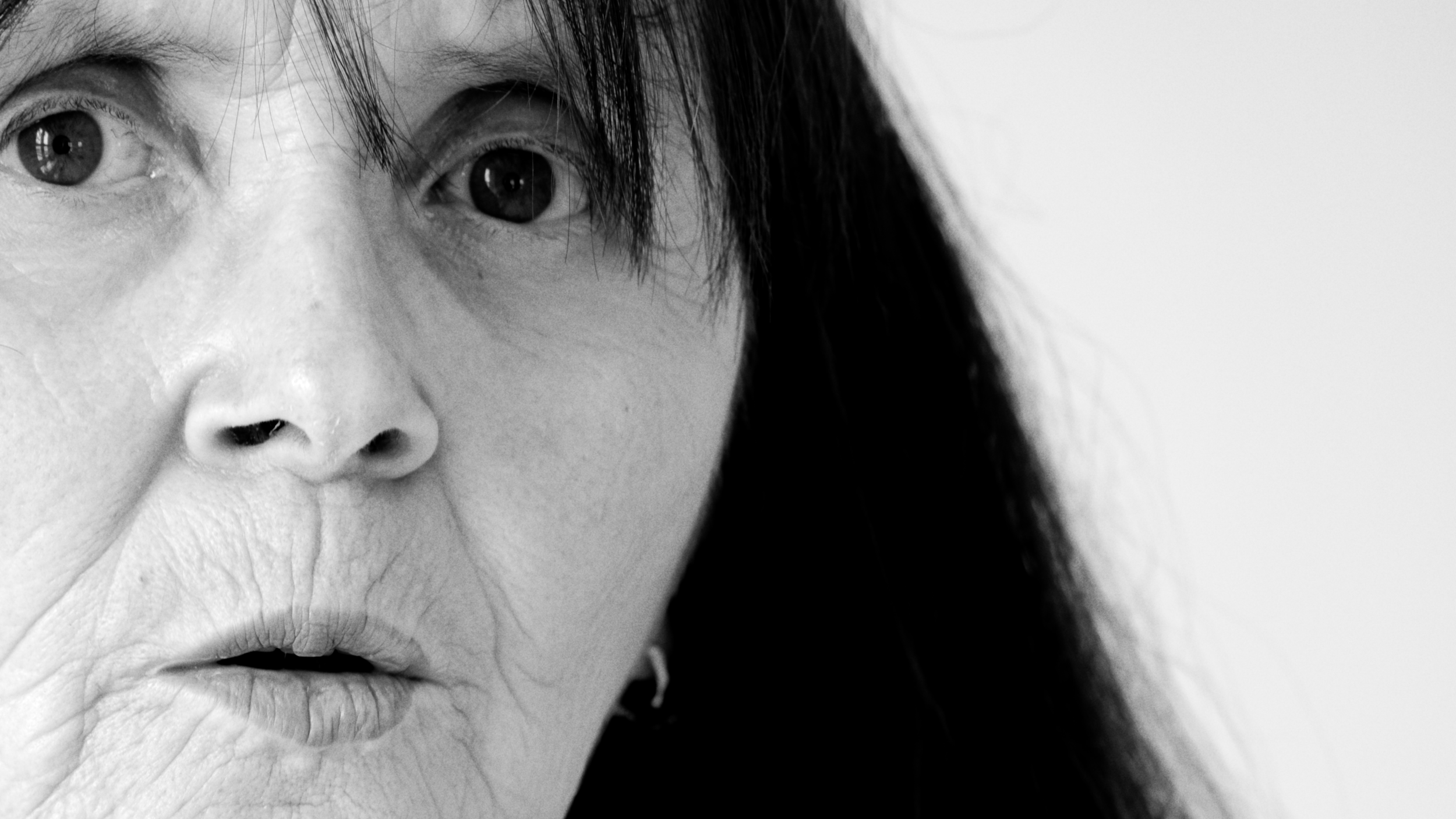
In May 2024, Isabel Gómez Aranda, the biological mother of artist Abel Azcona, is invited to the Contemporary Art Center of Málaga to exhibit her body for the first time. Since October 2023, Azcona and his mother have been taking several steps towards the final moment where they will meet and shake hands in a performance and conclusion. In this new step, Isabel speaks for the first time and delves into death, injurious moments, and suicide attempts.
El mes de mayo de 2024 Isabel Gómez Aranda, la madre biológica del artista Abel Azcona es invitada al Centro de Arte Contemporáneo de Málaga a exponer su cuerpo por primera vez. Desde octubre de 2023 Azcona y su madre realizan varias pasos hasta el paso final donde ambos se conocerán y darán la mano en una performance y desenlace. En este nuevo paso Isabel por primera vez habla y profundiza en la muerte, momentos lesivos e intentos de suicidio.


In May 2024, Isabel Gómez Aranda, the biological mother of artist Abel Azcona, is invited to the Contemporary Art Center of Málaga to exhibit her body for the first time. Since October 2023, Azcona and his mother have been taking several steps towards the final moment where they will meet and shake hands in a performance and conclusion. In this new step, Isabel speaks for the first time and delves into her illness, substance use, and the stroke that changed her life until she first contacted her son, Abel Azcona.
El mes de mayo de 2024 Isabel Gómez Aranda, la madre biológica del artista Abel Azcona es invitada al Centro de Arte Contemporáneo de Málaga a exponer su cuerpo por primera vez. Desde octubre de 2023 Azcona y su madre realizan varias pasos hasta el paso final donde ambos se conocerán y darán la mano en una performance y desenlace. En este nuevo paso Isabel por primera vez habla y profundiza en su enfermedad, consumos y en el ictus que le cambió la vida hasta contactar por primera vez con su hijo, Abel Azcona.
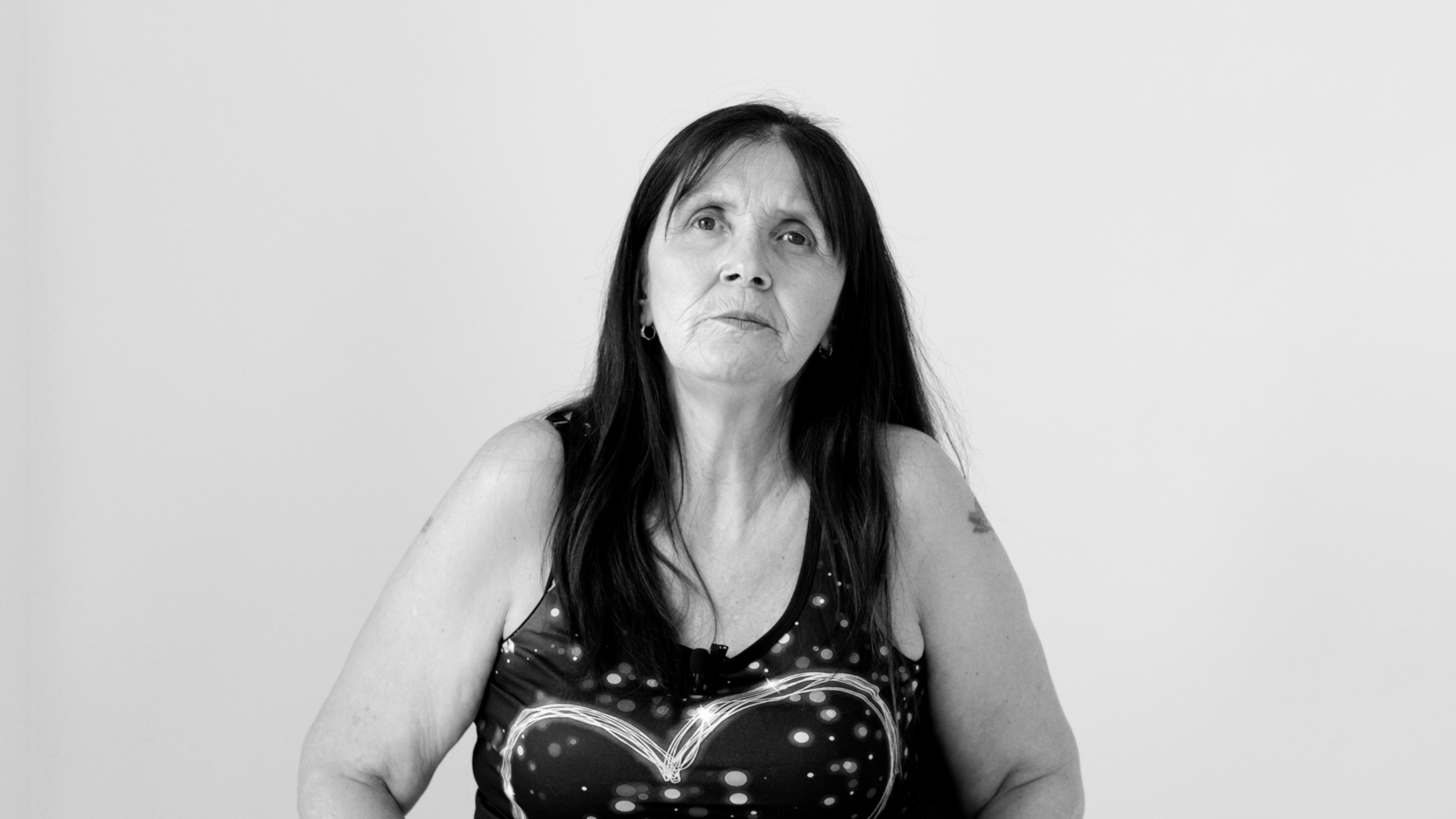
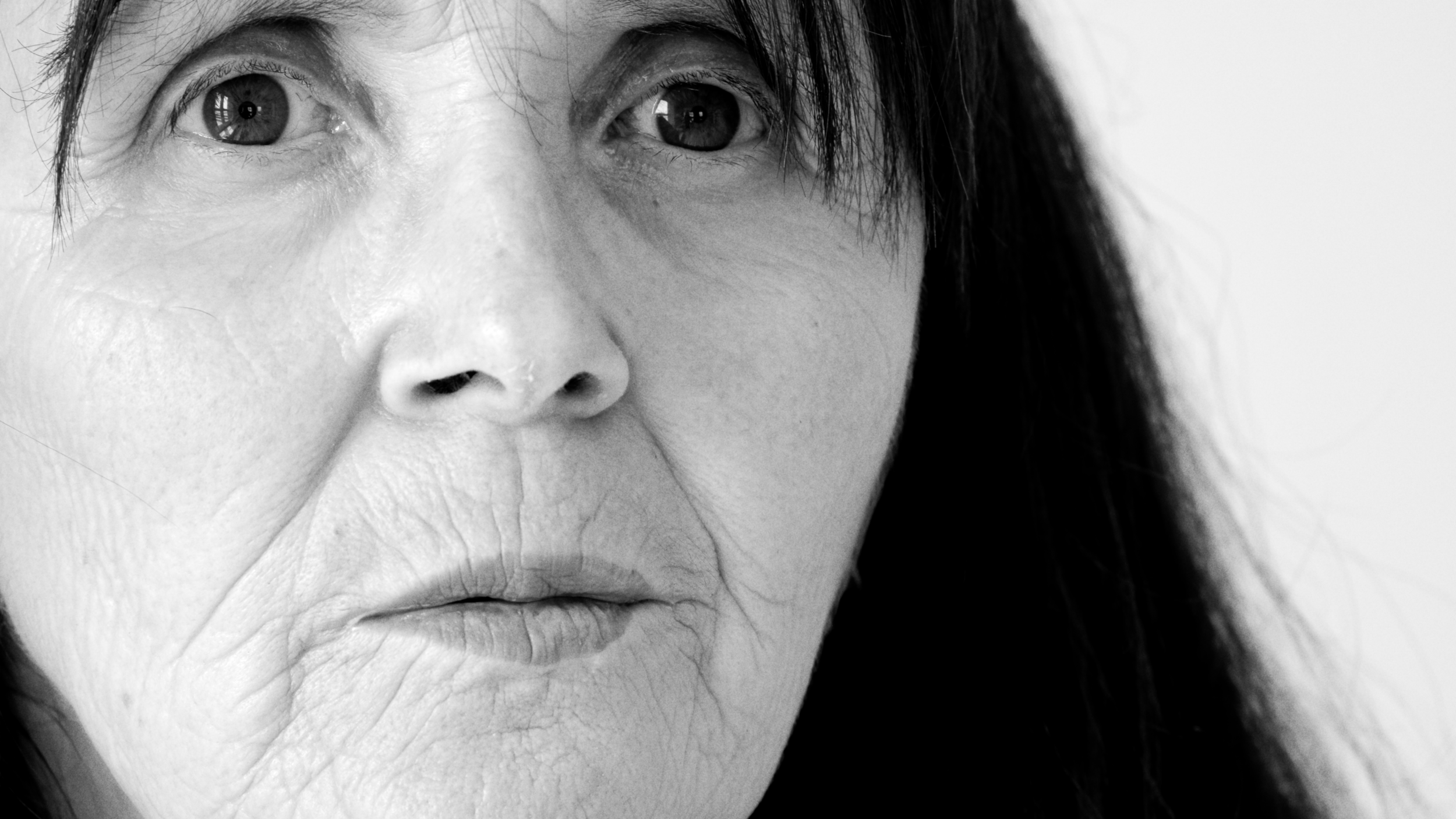
El mes de mayo de 2024 Isabel Gómez Aranda, la madre biológica del artista Abel Azcona es invitada al Centro de Arte Contemporáneo de Málaga a exponer su cuerpo por primera vez. Desde octubre de 2023 Azcona y su madre realizan varias pasos hasta el paso final donde ambos se conocerán y darán la mano en una performance y desenlace. En este nuevo paso Isabel por primera vez habla y profundiza en sus expectativas a la hora de conocer a su hijo Azcona y en el reencuentro.
El mes de mayo de 2024 Isabel Gómez Aranda, la madre biológica del artista Abel Azcona es invitada al Centro de Arte Contemporáneo de Málaga a exponer su cuerpo por primera vez. Desde octubre de 2023 Azcona y su madre realizan varias pasos hasta el paso final donde ambos se conocerán y darán la mano en una performance y desenlace. En este nuevo paso Isabel por primera vez habla y profundiza en sus expectativas a la hora de conocer a su hijo Azcona y en el reencuentro.

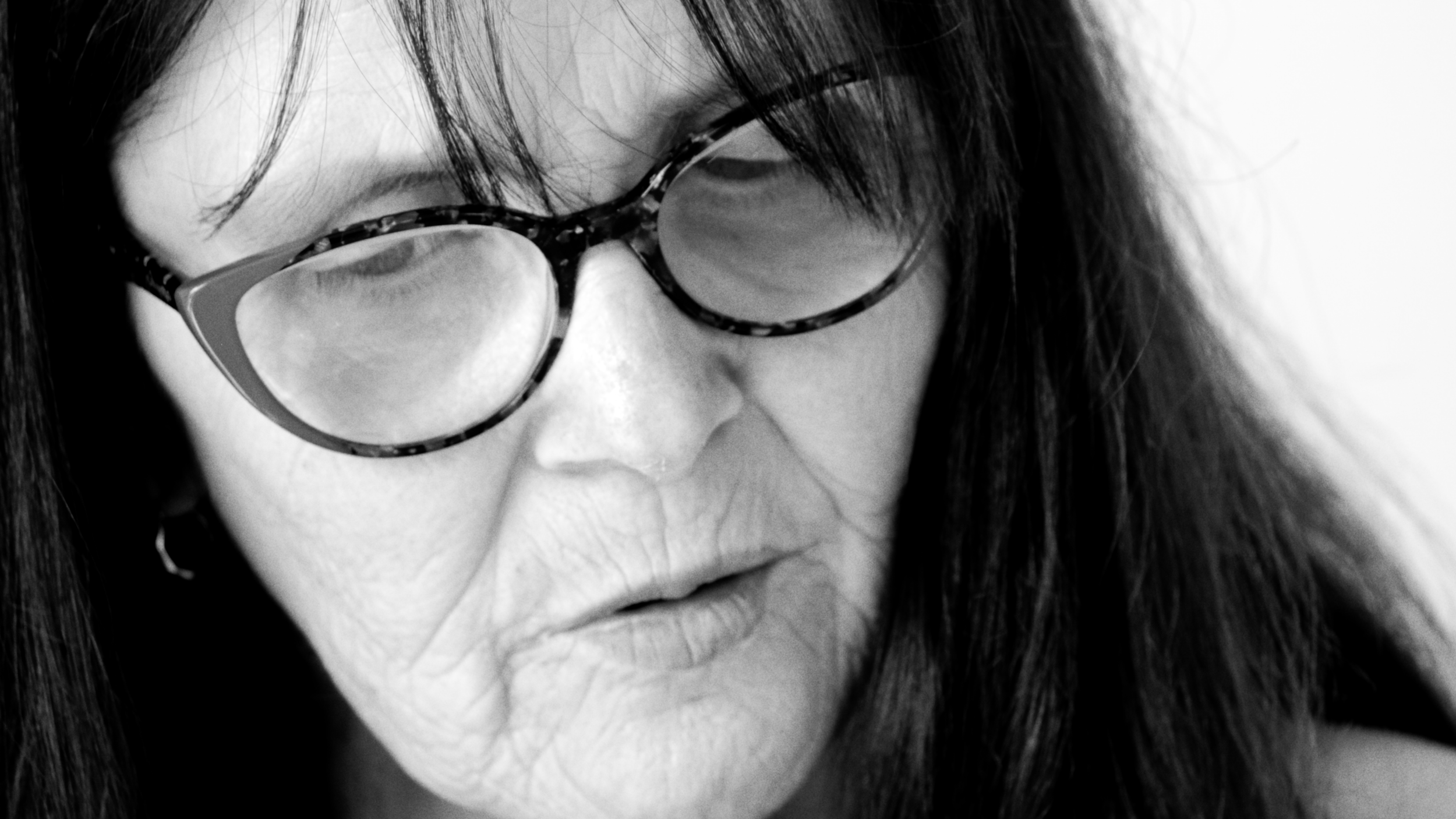
El mes de mayo de 2024 Isabel Gómez Aranda, la madre biológica del artista Abel Azcona es invitada al Centro de Arte Contemporáneo de Málaga a exponer su cuerpo por primera vez. Desde octubre de 2023 Azcona y su madre realizan varias pasos hasta el paso final donde ambos se conocerán y darán la mano en una performance y desenlace. En este nuevo paso Isabel por primera vez habla, profundiza y lee una carta en vivo escrita por su hijo, el artista.
El mes de mayo de 2024 Isabel Gómez Aranda, la madre biológica del artista Abel Azcona es invitada al Centro de Arte Contemporáneo de Málaga a exponer su cuerpo por primera vez. Desde octubre de 2023 Azcona y su madre realizan varias pasos hasta el paso final donde ambos se conocerán y darán la mano en una performance y desenlace. En este nuevo paso Isabel por primera vez habla, profundiza y lee una carta en vivo escrita por su hijo, el artista.
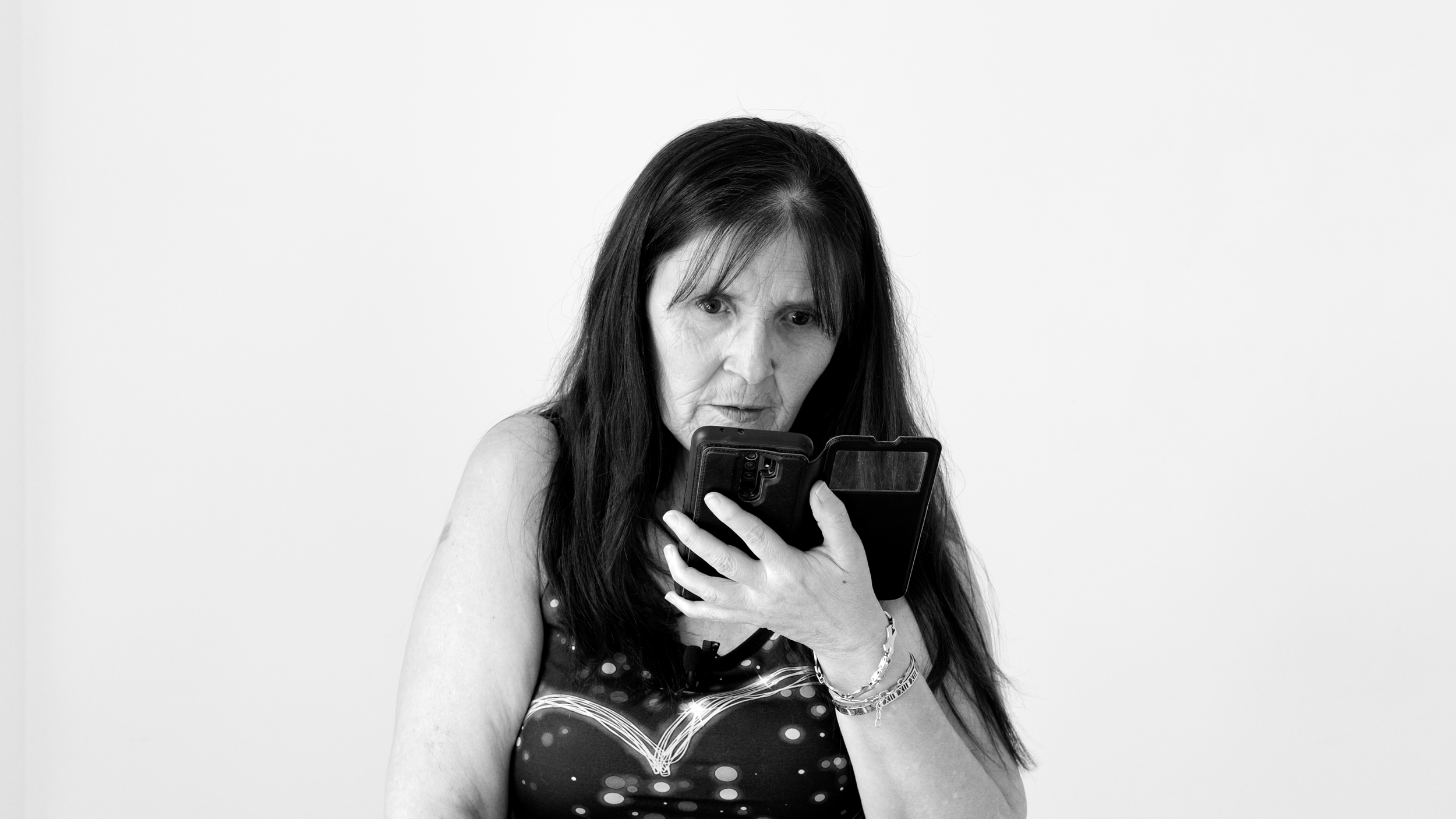
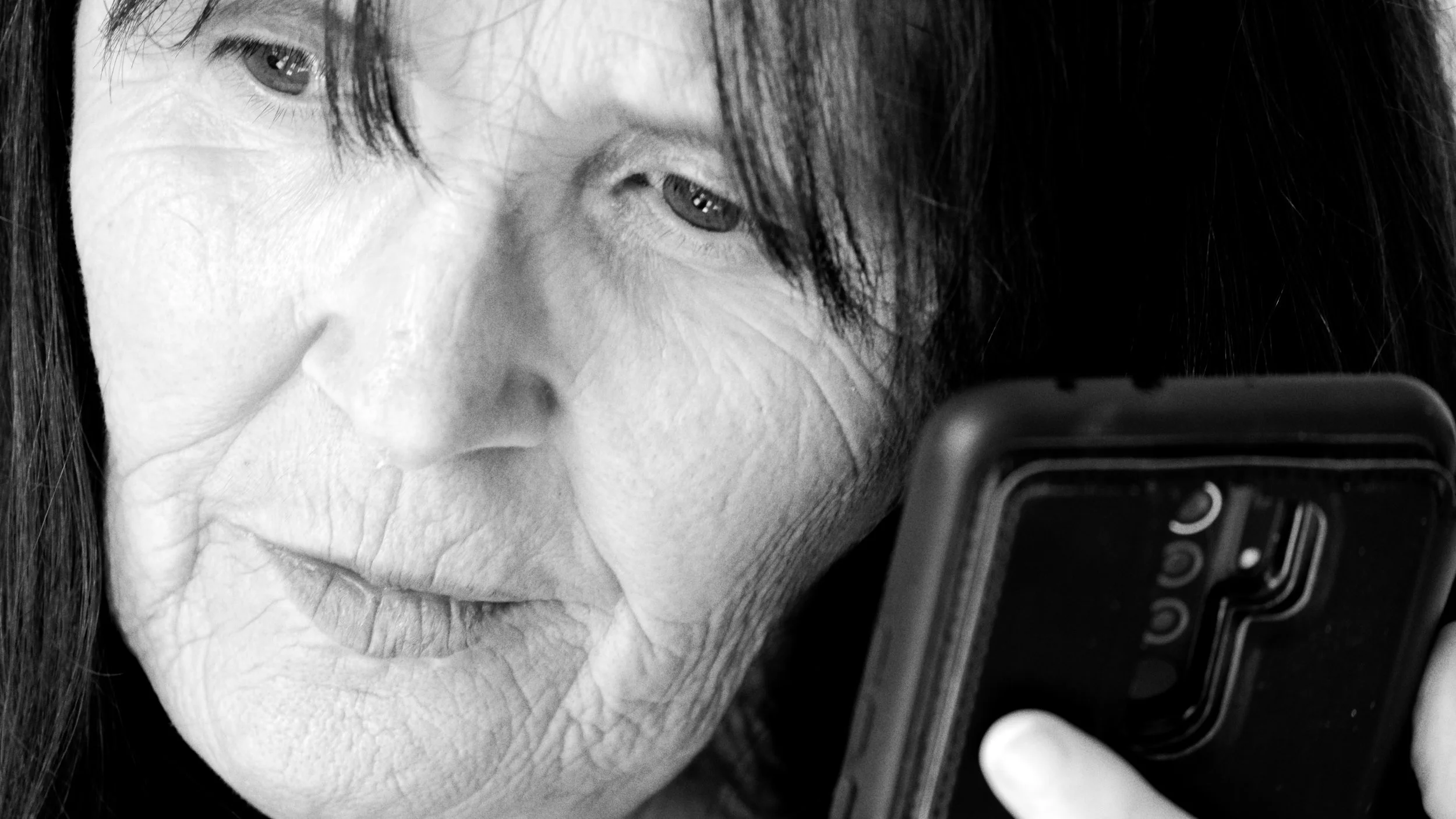
In May 2024, Isabel Gómez Aranda, the biological mother of artist Abel Azcona, is invited to the Contemporary Art Center of Málaga to exhibit her body for the first time. Since October 2023, Azcona and his mother have been taking several steps towards the final moment where they will meet and shake hands in a performance and conclusion. In this new step, Isabel speaks, delves deeper, and responds to a live call from her son in the museum for the first time.
El mes de mayo de 2024 Isabel Gómez Aranda, la madre biológica del artista Abel Azcona es invitada al Centro de Arte Contemporáneo de Málaga a exponer su cuerpo por primera vez. Desde octubre de 2023 Azcona y su madre realizan varias pasos hasta el paso final donde ambos se conocerán y darán la mano en una performance y desenlace. En este nuevo paso Isabel por primera vez habla, profundiza y responde a una llamada de su hijo en vivo en el museo.
Work produced inside the Center for Contemporary Art of Málaga with the collaboration of the Exabrupto festival where the piece was inaugurated for the first time. / Obra producida en el interior del Centro de Arte Contemporáneo de Málaga con la colaboración del festival Exabrupto donde se inauguró la pieza por vez primera.
PRESENTATION BLOCK Isabel must tell her story in as much detail as possible. Where she was born, her family, her entire childhood history, the reformatory, sexual abuse and prostitution in detail. The age at which she left (thirteen years old) and her entire personal history as detailed as possible. Where were you born? We talk about your brothers, your brother on both sides and the other two on both sides. We talk about Valencia. About when you left and never came back. About your mother's death. Tell the story in detail from top to bottom. PROSTITUTION BLOCK Did you prostitute yourself for the first time when you were thirteen? That is sexual abuse because you were a girl. Does prostitution seem like sexual abuse to you? Tell us the details of the encounters? How many times? Why? Develop the entire prostitution story for several minutes. Is Abel the son of a client? Which client? What would you say to his father? Say something to him while looking at the camera. If he says an interesting sentence about his father, repeat it over and over again, shout it. ABEL BLOCK What would you say to Abel? Look at the camera and talk to him. Would you ask for forgiveness? Look at the camera and ask for it, develop forgiveness… why? Let’s talk about Abel as much as you can. When he was born, where he was born, what do you remember about the birth. Why did you abandon him? Talk for a while about abandonment, what abandonment is for you. Repeat the word abandonment, abandonment, abandonment… for a minute. - Sing the lullaby that you would have sung to yourself as a child, or that you would have sung to Abel to put him to sleep - You can read Abel’s letter - At the end of Abel’s block, call Abel when you are already quite broken FUTURE BLOCK What do you want in the future? Do you want to meet Abel? If he invites you to a performance, would you go? Would you shake his hand? Let’s talk about the now. Are you in a Caritas flat? Tell us the whole story. About the stroke, how you got clean from alcoholism and how you started a new life.
BLOQUE PRESENTACIÓN Isabel debe contar su historia con todos los detalles posibles. Donde nació, su familia, toda su historia de infancia, el reformatorio, los abusos sexuales y prostitución con detalles. La edad en la que se fue (trece años) y toda su historia personal lo más desarrollada posible. ¿Dónde naciste? Hablamos de tus hermanos, tu hermano de padre y madre y los otros dos solo de padre. Hablamos de Valencia. De cuando te marchaste para no volver. De la muerte de tu madre. Cuenta historia con detalle de arriba a abajo. BLOQUE PROSTITUCIÓN ¿Te prostituiste por primera vez con trece años? Eso es abuso sexual porque eras una niña. ¿La prostitución te parece abuso sexual? ¿Cuéntanos los detalles de los encuentro? ¿Cuantas veces? ¿Porque? Desarrolla durante varios minutos la historia completa de prostitución. ¿Abel es hijo de un cliente? ¿Que cliente? ¿Que le dirías a su padre? Dile algo mirando a cámara. SI dice una frase interesante sobre el padre que la repita hasta la saciedad, que la grite. BLOQUE ABEL ¿Qué le dirias a Abel? Mira a cámara y habla con el. ¿Le pedirías perdón? Mira a cámara y pídeselo, desarrolla el perdón… porque? Hablamos de Abel todo lo que puedas. Cuando nació, donde nació, que te acuerdas del parto. ¿Porque le abandonaste? Habla un rato sobre abandono, que es el abandono para ti. Repite durante un minuto la palabra abandono, abandono, abandono…. - Canta la nana que te hubiera cantado de niña, o que le hubieras cantado a Abel para dormirlo - Puede leer la carta de Abel - Al final del bloque de Abel llamada a Abel cuando ya esté bastante rota BLOQUE FUTURO Que quieres en el futuro, quieres conocer a Abel? Si te invita a una performance irias? Le darias la mano? Hablamos del ahora, Estas en un piso de Caritas? Cuéntanos la historia completa. Del ictus, de como te te limpiaste del alcoholismo y y como empezaste una nueva vida.
12 de mayo de 2024
Dear Victoria or Isabel,
I am writing this letter to you in the midst of all the steps we are taking until we meet. Last week I had to listen to almost a hundred audios telling your version of the story, your life and your processes of consumption, prostitution and my own abandonment. In my performances I have always tried to keep my head active with feelings and thoughts, escaping from lethargy or a possible mental disconnection from the space and context of the work. I wrote this letter yesterday for you to read today before putting your body into action. Placing my body is something I have been doing for more than thirty years, since I was forced to be born or since you abandoned me. For many years I have blamed you for abandoning me and I have felt that you were to blame for everything. After listening to you, I understand the circumstances and I believe that you are part and result of them exactly the same as me. Listening to you talk about abuse, prostitution, sexual violence and survival has brought me closer to you. For years I assumed that was your speech, but I had not heard it from you directly. You have always been a ghost built in my head to survive until now. I have so many questions right now that I think I'll wait to ask many of them until the day we shake hands for the first time. The first question that comes to mind is the issue of the name, you have always been for Victoria but now you are Isabel. I would like you to one day explain to me the whole history of the name and those complaints with the false name for rape or sexual abuse. I would really like you to explain so many things to me. Although I have felt a lot of anger throughout my life due to abandonment, I consider that at this moment in my life the anger has been reduced to the lowest possible levels. And I believe that I will be able to look into your eyes with understanding and reason. In my life I have had many mothers and I have always considered none of them to be good. You conceived me in violence and hostile territory. You can't imagine the pain and tears I have shed when reading and listening to you in these steps how they abused you and you prostituted yourself with me inside. Then came Arancha, who abused me on all kinds of levels, such as trying to sell me, using my body as merchandise, and getting me into the world of abuse and mistreatment. And finally Isabel, imagine my surprise when I found out that your real name was the same as my adoptive mother. I also consider that she was not a good mother, she was not prepared at all and I consider that she experienced an adoption also marked by pain and abuse. Three bad mothers or three bad mothers. And now you come back to me. Explaining everything to me, why you abandoned me. I would ask you again every day of my life. Why did you abandon me? Why did you abandon me? Why did you abandon me? I want to thank you for having decided to expose yourself like this. Having been brave and answering everything. Facing all my doubts and my needs. Telling your story and bravely exposing your body and your story. I consider that both of us, in some way, are healing thanks to this. I'm not going to lie to you, I'm still very hurt and I'm very afraid but right now I know more than ever that we are going to meet in person. I am crying as I write this letter. Since I've been over it for months. I don't know if I have created these slow steps until we meet as a defense mechanism, out of the need to go slowly or because I am terrified of meeting in person. After more than thirty years of creating works talking about your abandonment, my wounds and your person, you are here. In the center of a museum willing to give everything to know myself, to repair and to walk backwards or rather forwards. I too am going to take a step forward and offer you my hand.
See you soon,
Your son Abel.
12 de mayo de 2024
Querida Victoria o Isabel,
Te escribo esta carta en medio de todos los pasos que estamos dando hasta conocernos. La semana pasada tuve que escuchar casi cien audios contando tu versión de la historia, tu vida y tus procesos de consumos, prostitución y mi propio abandono. En mi performances siempre he intentado mantener la cabeza activa con sentimientos y pensamientos escapando de un aletargamiento o una posible desconexión mental del espacio y del contexto de la obra. Esta carta la escribí ayer para que tú la leas hoy antes de poner tu cuerpo en acción. Poner el cuerpo es algo que llevo haciendo más de treinta años, desde que nací obligado o desde que tú me abandonaste. Durante muchos años te he culpado por abandonarme y he sentido que tú tenías la culpa de todo. Tras escucharte entiendo las circunstancias y creo que tú eres parte y resultado de las mismas exactamente igual que yo. Escucharte hablar de abuso, de prostitución, de violencia sexual y de supervivencia me ha unido más a ti. Durante años daba por hecho que ese era tu discurso, pero no te lo había escuchado a ti directamente. Has sido siempre un fantasma construido en mi cabeza para sobrevivir hasta ahora. Ahora mismo tengo tantas preguntas, que creo que voy a esperar a formular muchas de ellas al día que nos demos la mano por primera vez. La primera pregunta que me viene a la cabeza es el tema del nombre, siempre has sido para Victoria pero ahora eres Isabel. Me gustaría que un día me explicaras bien toda la historia del nombre y esas denuncias con el nombre falso por violación o abuso sexual. Me gustaría en realidad que me explicaras tantas cosas. Aunque he sentido mucha rabia a lo largo de mi vida por el abandono, considero que en este momento de mi vida la rabia se ha rebajado a los menores niveles posibles. Y creo que podré mirarte a los ojos desde la comprensión y la razón. En mi vida he tenido muchas madres y siempre he considerado que ninguna buena. Tú me gestaste en violencia y territorio hostil. No te imaginas el dolor y las lágrimas que he derramado al leer y escucharte en estos pasos como te abusaban y te prostituías conmigo dentro. Luego vino Arancha, que abusó de mi a todo tipo de niveles como intentar venderme, usar mi cuerpo como mercancía y meterme en el mundo de los abusos y maltratos. Y por último Isabel, imagina mi sorpresa al enterarme que tu verdadero nombre era el mismo de mi madre adoptiva. La cual también considero que no fue una buena madre, no estaba preparada en absoluto y considero que vivi una adopción también marcada por el dolor y el maltrato. Tres madres malas o tres malas madres. Y ahora vuelves a mí. Explicándome todo, porque me abandonaste. Te lo volvería a preguntar todos los días de mi vida. ¿Porque me abandonaste? ¿Porque me abandonaste? ¿Porque me abandonaste? Te quiero agradecer el haber decidido exponerte así. El haber sido valiente y contestar a todo. El afrontar todas mis dudas y mis necesidades. El contar tu historia y el exponer de manera valiente tu cuerpo y tu historia. Considero que los dos, de alguna manera, gracias a esto estamos curando. No te voy a engañar, yo sigo muy herido y tengo mucho miedo pero ahora mismo sé más que nunca que nos vamos a conocer en persona. Estoy llorando mientras escribo esta carta. Ya que llevo meses superado. Yo no sé si estos pasos lentos hasta conocernos los he creado como mecanismo de defensa, por necesidad de ir despacio o porque tengo terror a conocernos en persona. Tras más de treinta años de crear obras hablando de tu abandono, de mi heridas y de tu persona estás aquí. En el centro de un museo dispuesta a darlo todo por conocerme, por reparar y por caminar hacia atrás o mejor dicho hacia delante. Yo también voy a dar un paso hacia delante y te ofrezco mi mano.
Nos vemos pronto,
Tu hijo Abel.
THE TETH STEP is an expository recapitulation of all the previous steps through an exhibition of each of the steps and other documentary and instigative works directly related to the processes. Additionally, within the framework of the exhibition, Azcona will activate nine brief performances around the search for the mother. July 5th and 6th in Moià, Catalonia.
EL DÉCIMO PASO es una recapitulación expositiva de todos los pasos hasta el momento mediante una exposición de cada uno de los pasos y otras obras documentales e instalativas relacionadas directamente con los procesos. Además en el marco de la muestra Azcona activará nueve performances breves en torno a la búsqueda de la madre. 5 y 6 de julio en Moiá, Catalunya.
Born Without a Mother is a denunciation of the omission of the right not to be born, defended on three occasions when the mother tries to terminate the pregnancy; it is also a defense of abortion as one of the most important measures for child protection. Born Without a Mother is a journey through autobiographical violence and, at the same time, through the systemic violence that conditions and triggers these events; it is a search for the original violence. Born Without a Mother is a political artifact.
Nacer sin madre es una denuncia a la omisión del derecho a no nacer, defendido en tres ocasiones en las que la madre intenta interrumpir el embarazo; también es una defensa del aborto como una de las medidas más importantes de protección a la infancia. Nacer sin madre es un recorrido por la violencia autobiográfica y al mismo tiempo por la violencia sistémica que condiciona y desencadena estos eventos, es una búsqueda de la violencia original. Nacer sin madre es un artefacto político.
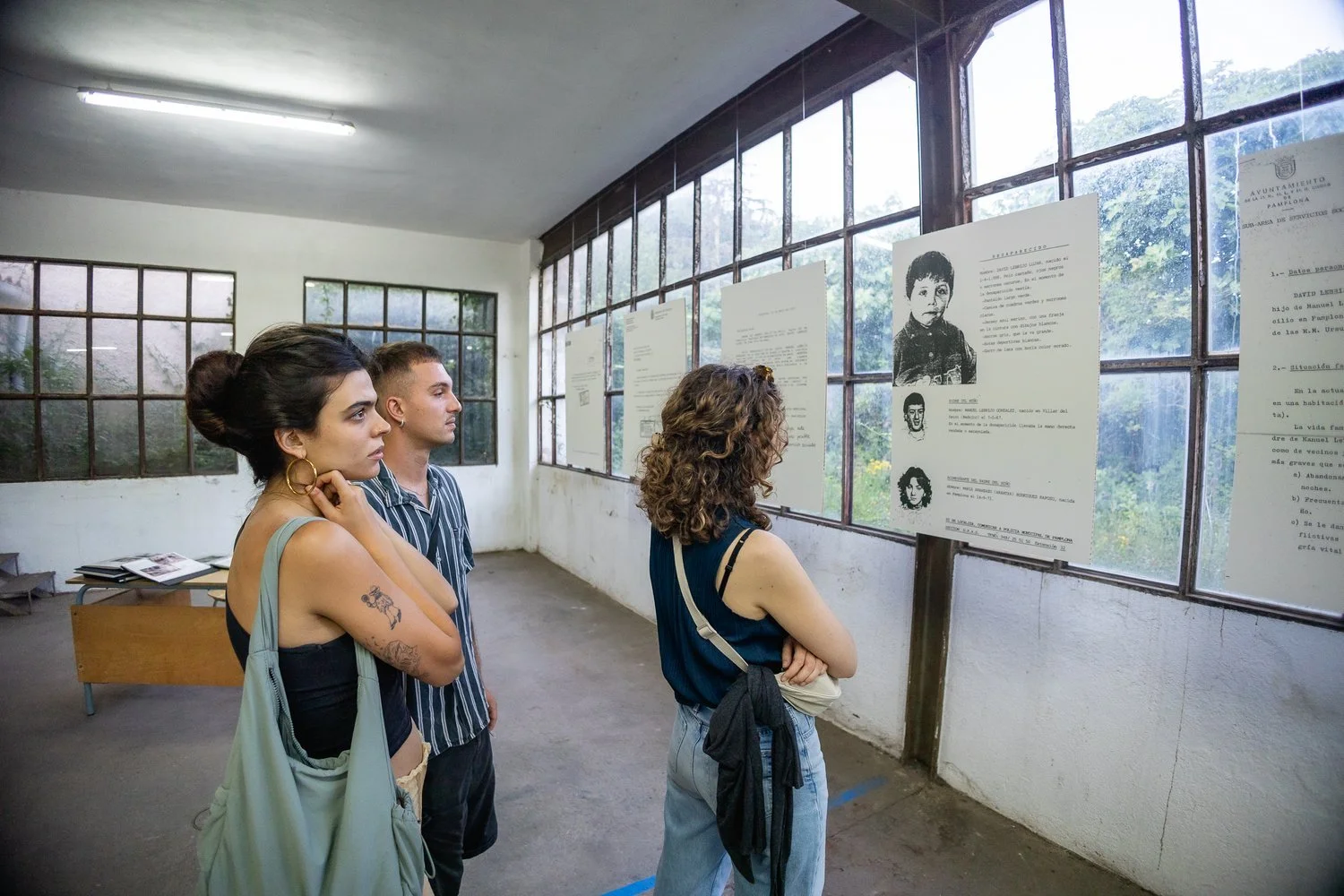
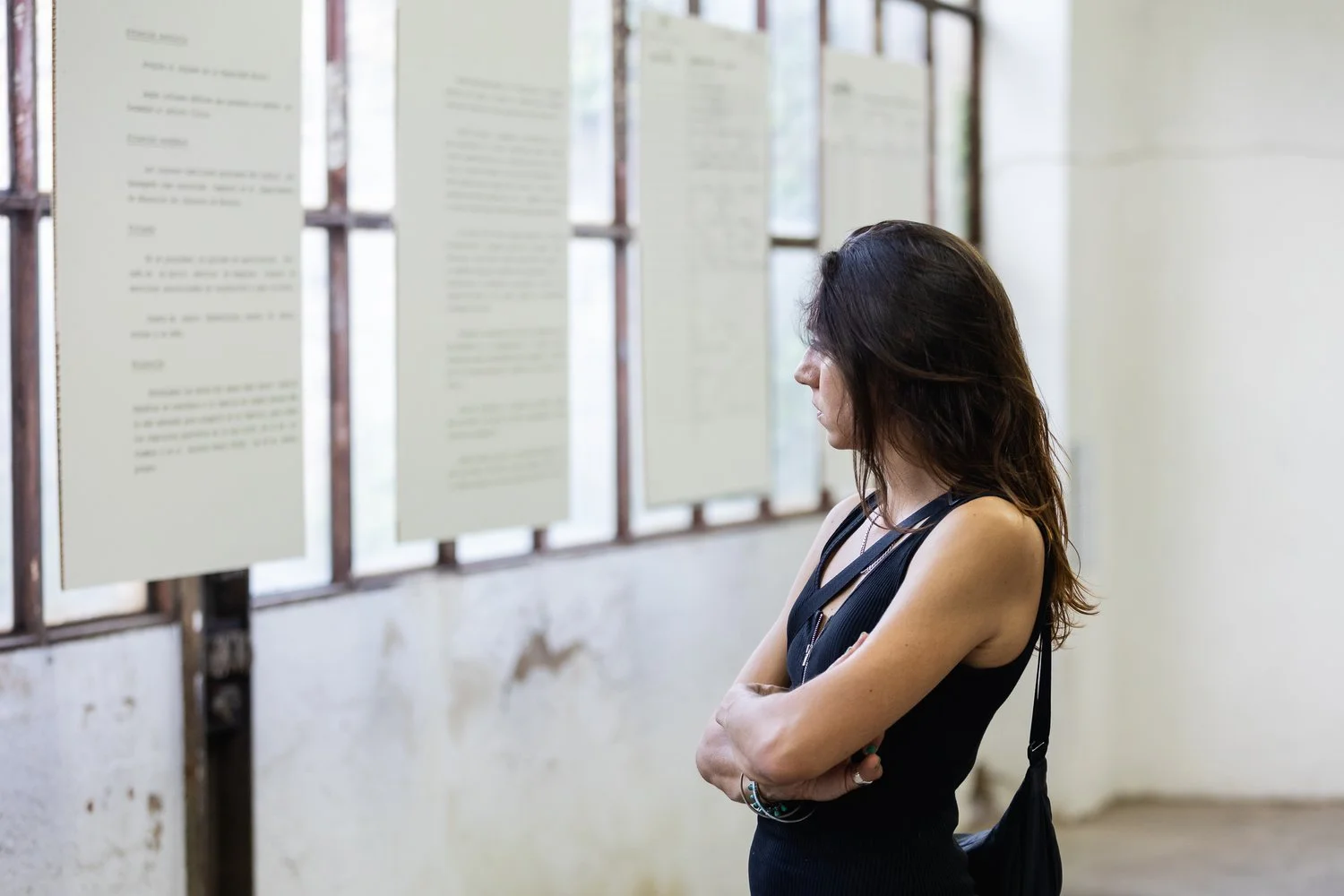
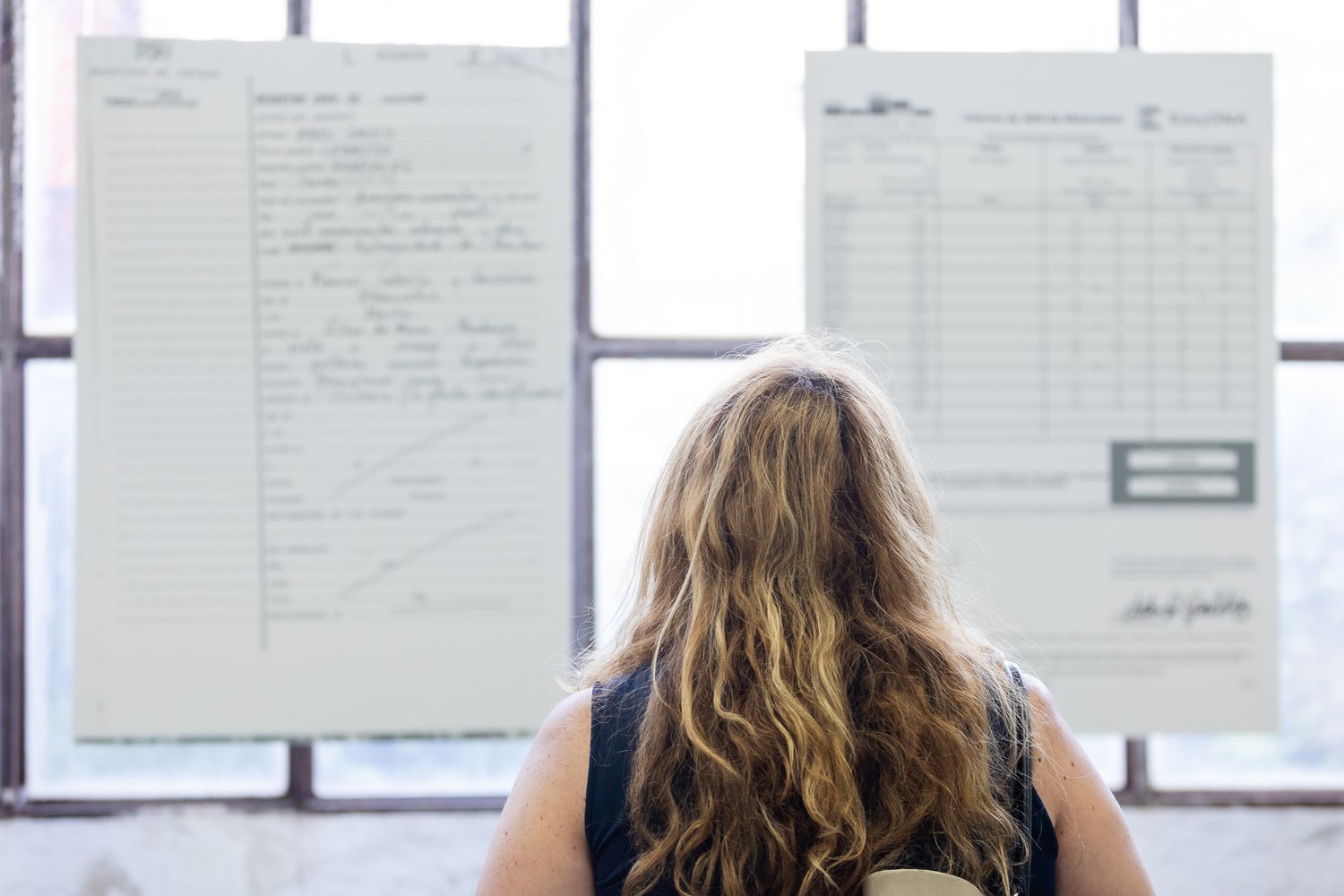
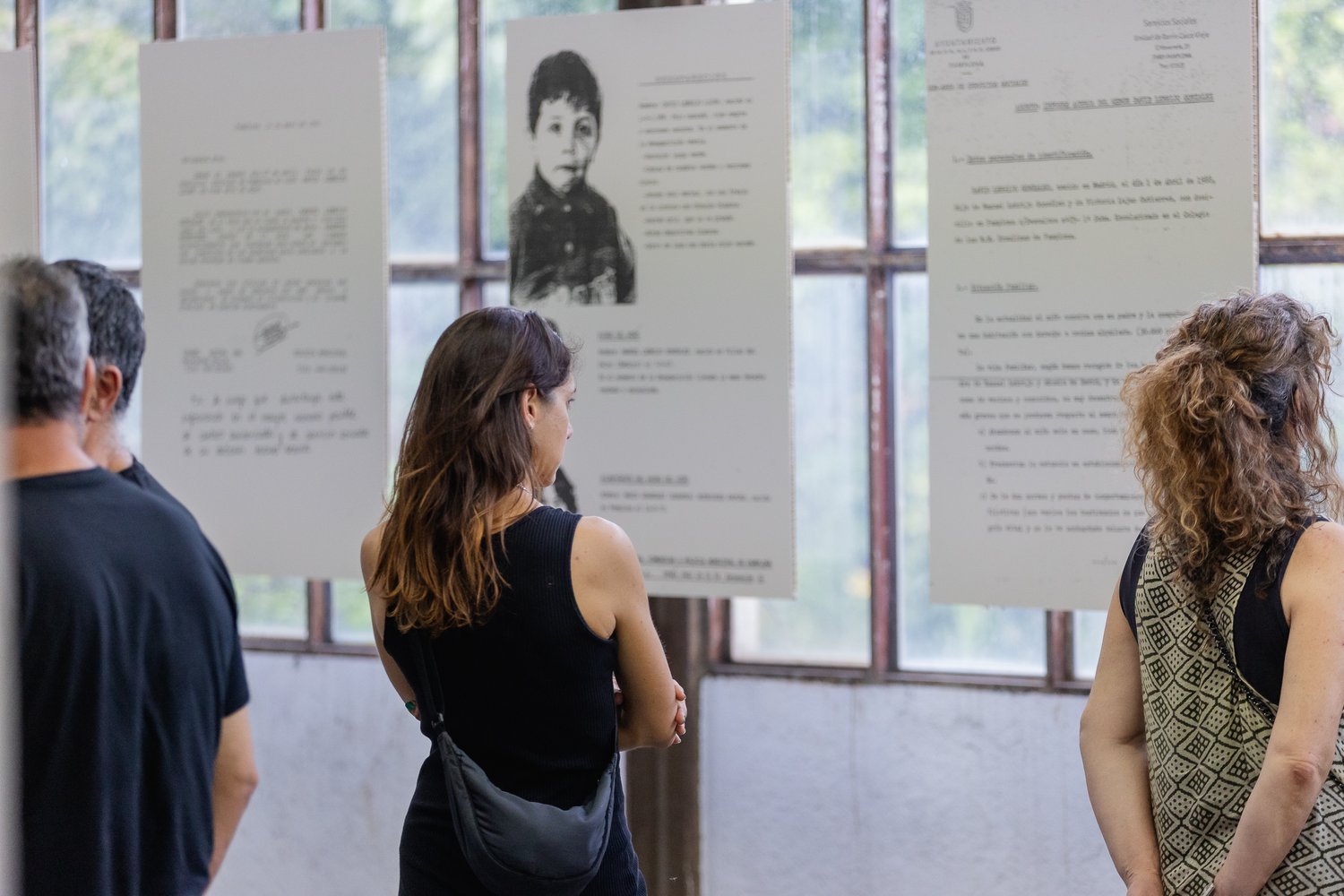
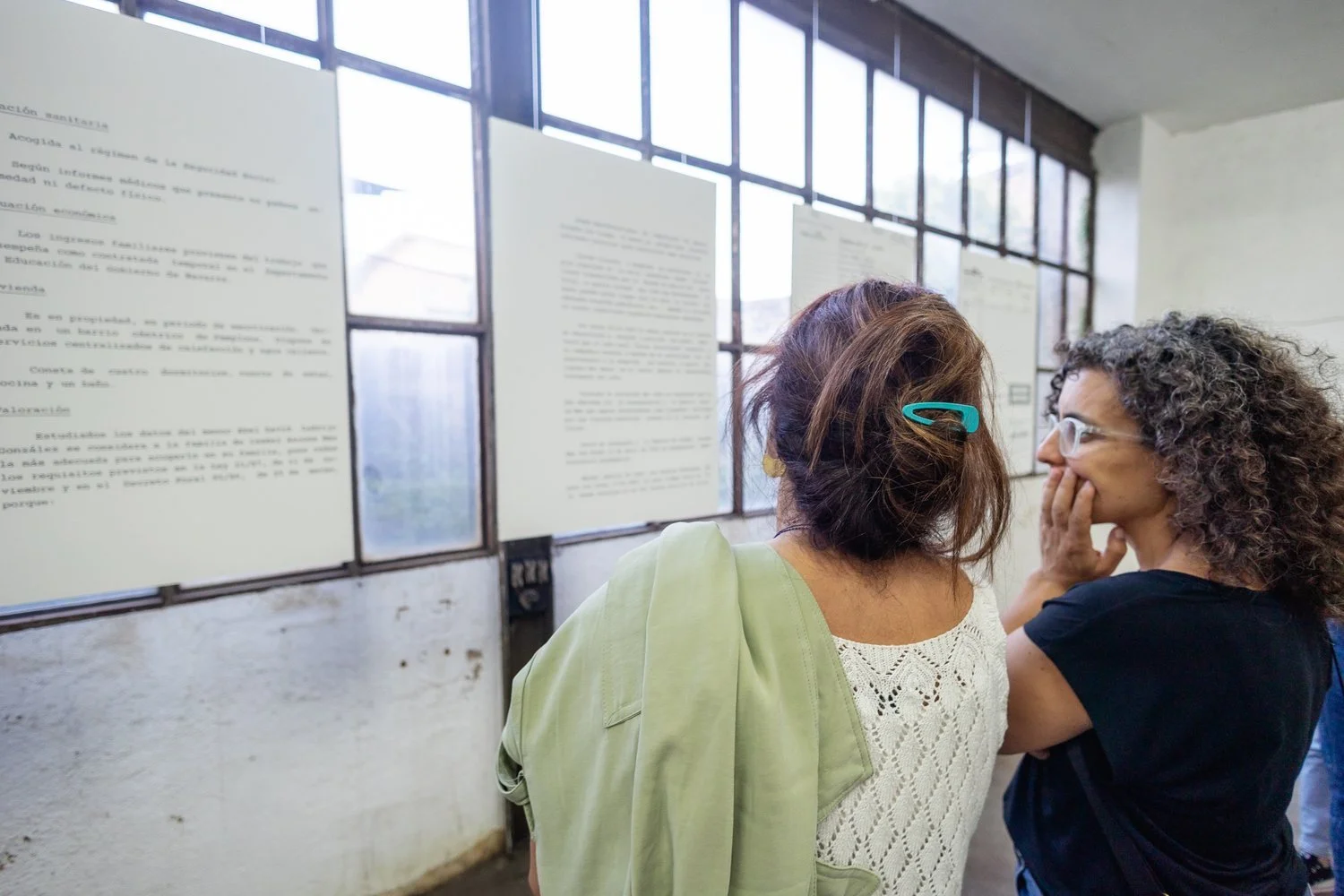
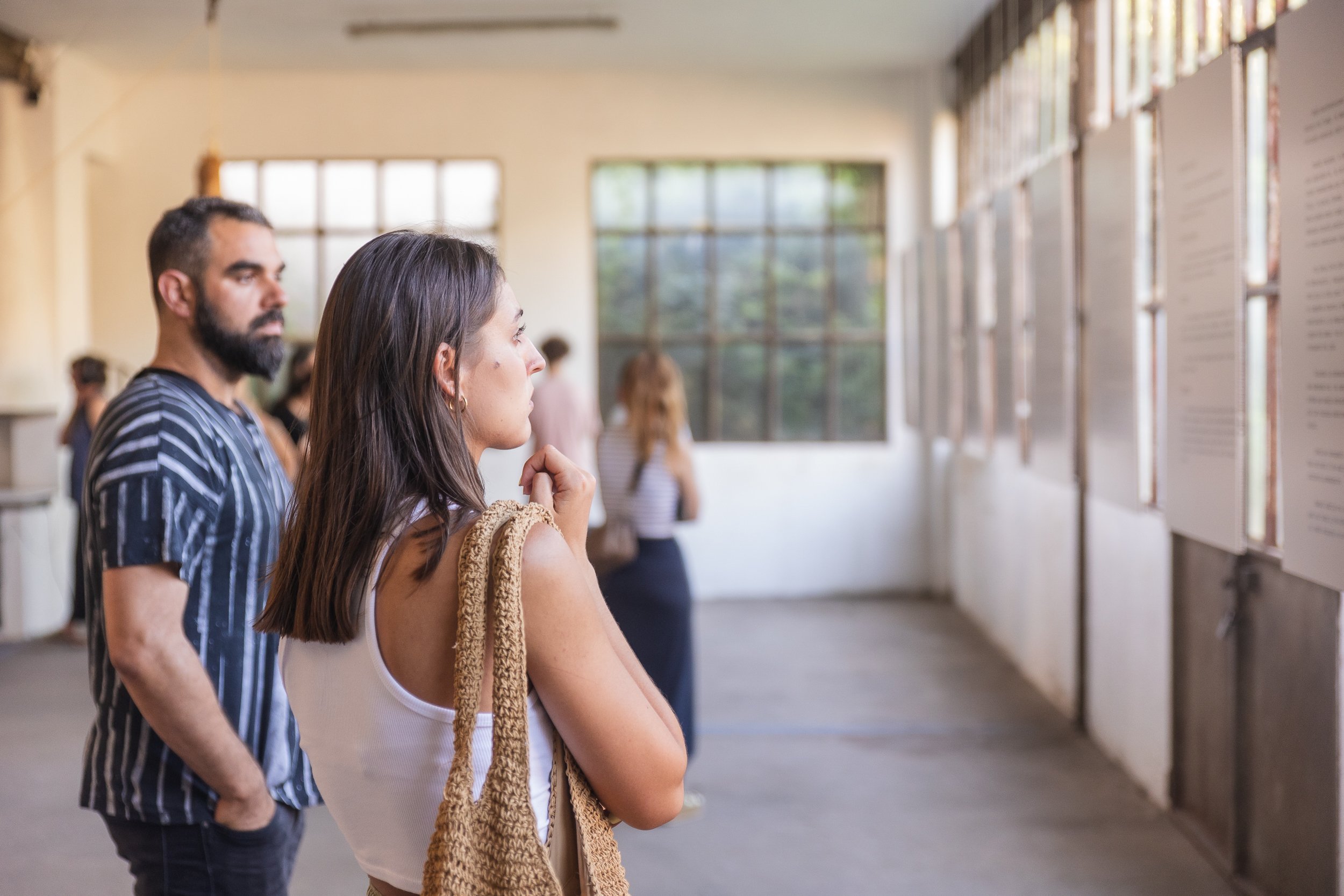
Photography Edu Morató Vila / Càrdali. Curated by Nerea Campo and Eudald Pla. Fotografía Edu Morató Vila / Càrdali. Curaduría Nerea Campo y Eudald Pla.
A través de la curaduría de Nerea Campo y Eudald Pla, "Nacer sin madre" es una exploración de la experiencia traumática del abandono y la búsqueda de la madre, una inmersión en la violencia original, fundacional y radical. A partir de un recorrido familiar afectado por el abandono, la drogodependencia, el secuestro o la adopción, en "Nacer sin madre" se ponen de manifiesto las violencias ejercidas por la moralidad religiosa, la estructura familiar conservadora y la violencia contra las mujeres y los niños ejercida por el poder.
Después de treinta y cinco años de búsqueda de la madre, de intentos de hacer inteligible su propia historia, el artista Abel Azcona recibe hace unos meses la llamada de una mujer que dice ser su madre biológica. Desde entonces, una prueba de ADN, mensajes, llamadas, preguntas y respuestas han tenido lugar. En "Nacer sin madre", Abel Azcona podrá ver y escuchar algunas de estas respuestas de Isabel, su madre biológica, acompañado de los asistentes, así como dar un paso más de acercamiento hacia la madre mientras ensaya el reencuentro final que tendrá lugar a finales de año.
"Nacer sin madre" es una denuncia a la omisión del derecho a no nacer, defendido en tres ocasiones en las que la madre intenta interrumpir el embarazo; también es una defensa del aborto como una de las medidas más importantes de protección a la infancia.
"Nacer sin madre" es un recorrido por la violencia autobiográfica y al mismo tiempo por la violencia sistémica que condiciona y desencadena estos eventos, es una búsqueda de la violencia original.
"Nacer sin madre" es un artefacto político.
Abel Azcona (Pamplona, 1 de abril de 1988) es un artista vasco especializado en arte de performance, conocido por su práctica artística fuertemente marcada por la experiencia y el tratamiento de la autobiografía. A partir de la narrativa personal, Azcona explora temas universales como la naturaleza del amor, la intimidad, la violencia y la muerte.
Ha expuesto su obra de manera individual en instituciones como el Arsenal de Venecia, el Museo de Arte Moderno de Bogotá, el Centro de Arte Contemporáneo de Málaga, el Palacio de Tokio, Fabra i Coats de Barcelona, el Palacio Nacional de Bellas Artes de Bangladés, el Art League de Houston o la Sala Amós Salvador en Logroño (2022). También ha participado en eventos internacionales como la Bienal de Barcelona (2023), la Bienal de Lyon, la Bienal de Arte Asiático en Dhaka y Taipei, el Festival Internacional de Arte de Performance de Miami, Tama-Tupada Action Media Art de Manila en Filipinas, y la Bienal de Arte de Performance de Santo Domingo en República Dominicana, así como en la Bienal de Arte en Vivo de Bangladés y la Bienal Internacional de Arte de Performance de Houston en los Estados Unidos.
Su ciudad natal, Pamplona (2015), el Palacio de las Artes de Nápoles (2021), el Museo de Arte Contemporáneo de Bogotá (2014) y el Museo Arqueológico y de Arte Contemporáneo de Ecuador han albergado diversas muestras retrospectivas con toda su obra.
En 2023, el Centro de Arte La Panera (Lleida) le dedicó una muestra retrospectiva y actualmente la obra censurada de Azcona forma parte de la colección permanente del Museo del Arte Prohibido en la ciudad de Barcelona.
Azcona es considerado un artista radical, pero tal como afirma él mismo, es radicalmente autobiográfico. Abel Azcona es uno de los máximos exponentes de la performance a escala internacional y en la actualidad colabora con artistas como Marina Abramović, Yoko Ono o Tracey Emin.
Through the curation of Nerea Campo and Eudald Pla, "Born Without a Mother" is an exploration of the traumatic experience of abandonment and the search for the mother, an immersion into original, foundational, and radical violence. Based on a family journey affected by abandonment, drug addiction, kidnapping, or adoption, "Born Without a Mother" brings to light the violence exerted by religious morality, conservative family structure, and violence against women and children exercised by power.
After thirty-five years of searching for his mother, attempting to make his own story intelligible, artist Abel Azcona received a call a few months ago from a woman claiming to be his biological mother. Since then, a DNA test, messages, calls, questions, and answers have taken place. In "Born Without a Mother," Abel Azcona will be able to see and hear some of these responses from Isabel, his biological mother, accompanied by the attendees, as well as take a further step towards approaching his mother while rehearsing the final reunion that will take place at the end of the year.
"Born Without a Mother" denounces the omission of the right not to be born, defended on three occasions when the mother attempts to terminate the pregnancy; it is also a defense of abortion as one of the most important measures of protection for childhood.
"Born Without a Mother" is a journey through autobiographical violence and at the same time through the systemic violence that conditions and triggers these events, it is a search for original violence.
"Born Without a Mother" is a political artifact.
Abel Azcona (Pamplona, April 1, 1988) is a Basque artist specializing in performance art, known for his artistic practice strongly marked by experience and the treatment of autobiography. From personal narrative, Azcona explores universal themes such as the nature of love, intimacy, violence, and death.
He has exhibited his work individually in institutions such as the Arsenal in Venice, the Museum of Modern Art in Bogotá, the Contemporary Art Center in Malaga, the Palais de Tokyo, Fabra i Coats in Barcelona, the National Palace of Fine Arts in Bangladesh, the Art League in Houston, or the Sala Amós Salvador in Logroño (2022). He has also participated in international events such as the Barcelona Biennial (2023), the Lyon Biennial, the Asian Art Biennial in Dhaka and Taipei, the Miami International Performance Art Festival, Tama-Tupada Action Media Art in Manila, Philippines, and the Santo Domingo Performance Art Biennial in the Dominican Republic, as well as in the Bangladesh Live Art Biennial and the International Performance Art Biennial in Houston in the United States.
His hometown, Pamplona (2015), the Palais des Arts in Naples (2021), the Museum of Contemporary Art in Bogotá (2014), and the Archaeological and Contemporary Art Museum of Ecuador have hosted various retrospective exhibitions of his work.
In 2023, the La Panera Art Center (Lleida) dedicated a retrospective exhibition to him, and currently Azcona's censored work is part of the permanent collection of the Museum of Forbidden Art in Barcelona.
Azcona is considered a radical artist, but as he himself asserts, he is radically autobiographical. Abel Azcona is one of the foremost exponents of performance art on an international scale, and currently collaborates with artists such as Marina Abramović, Yoko Ono, or Tracey Emin.
Nerea Campo
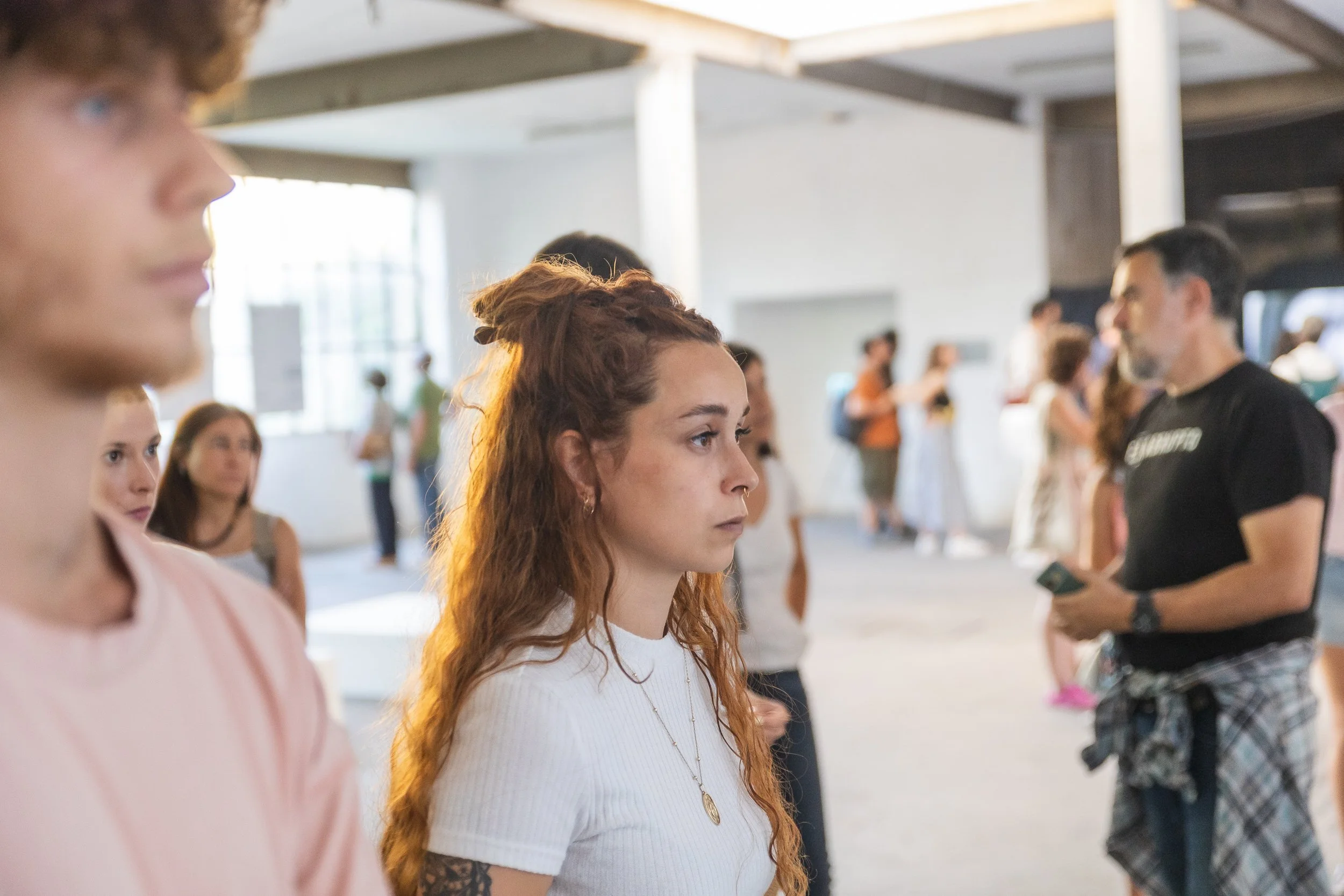
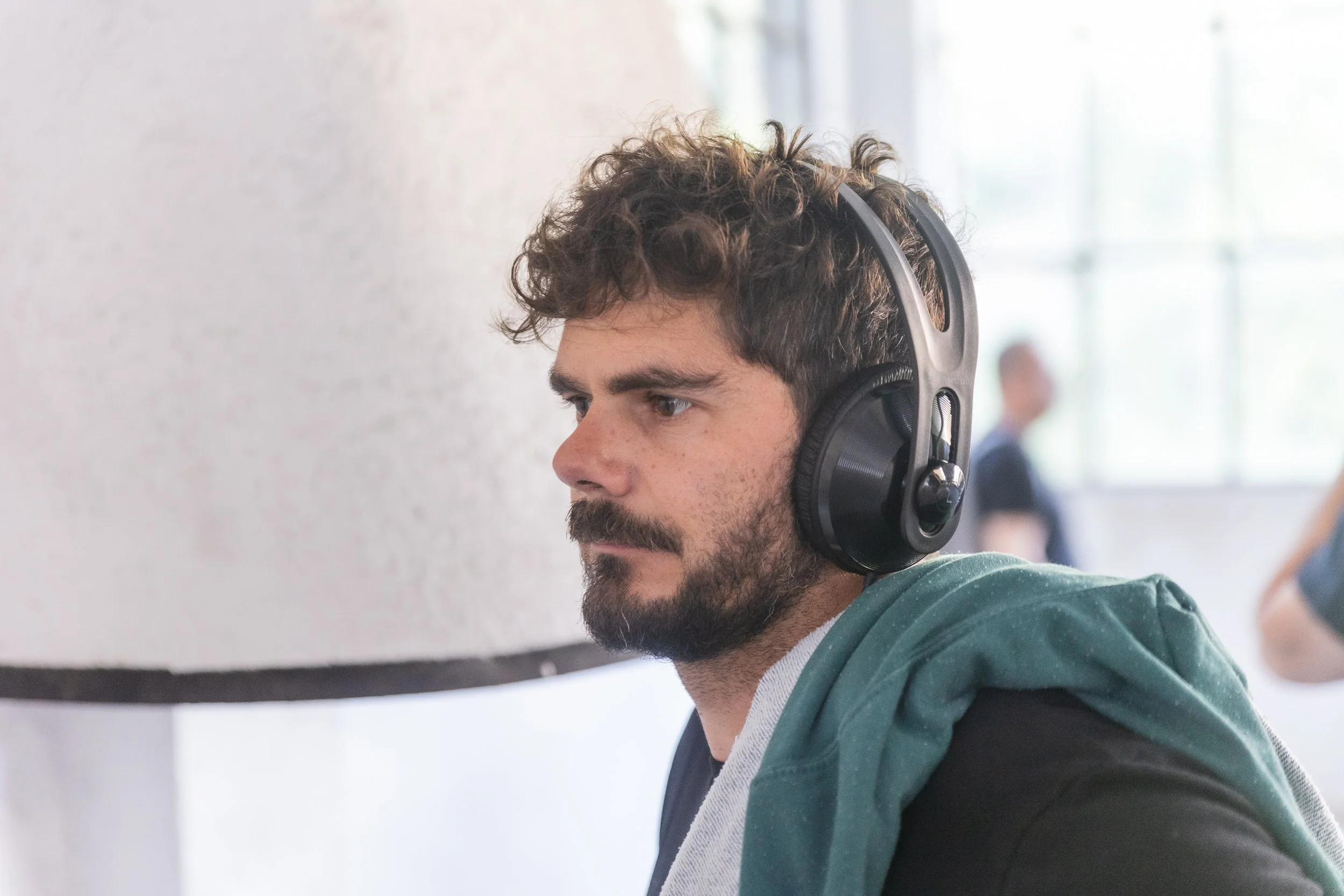
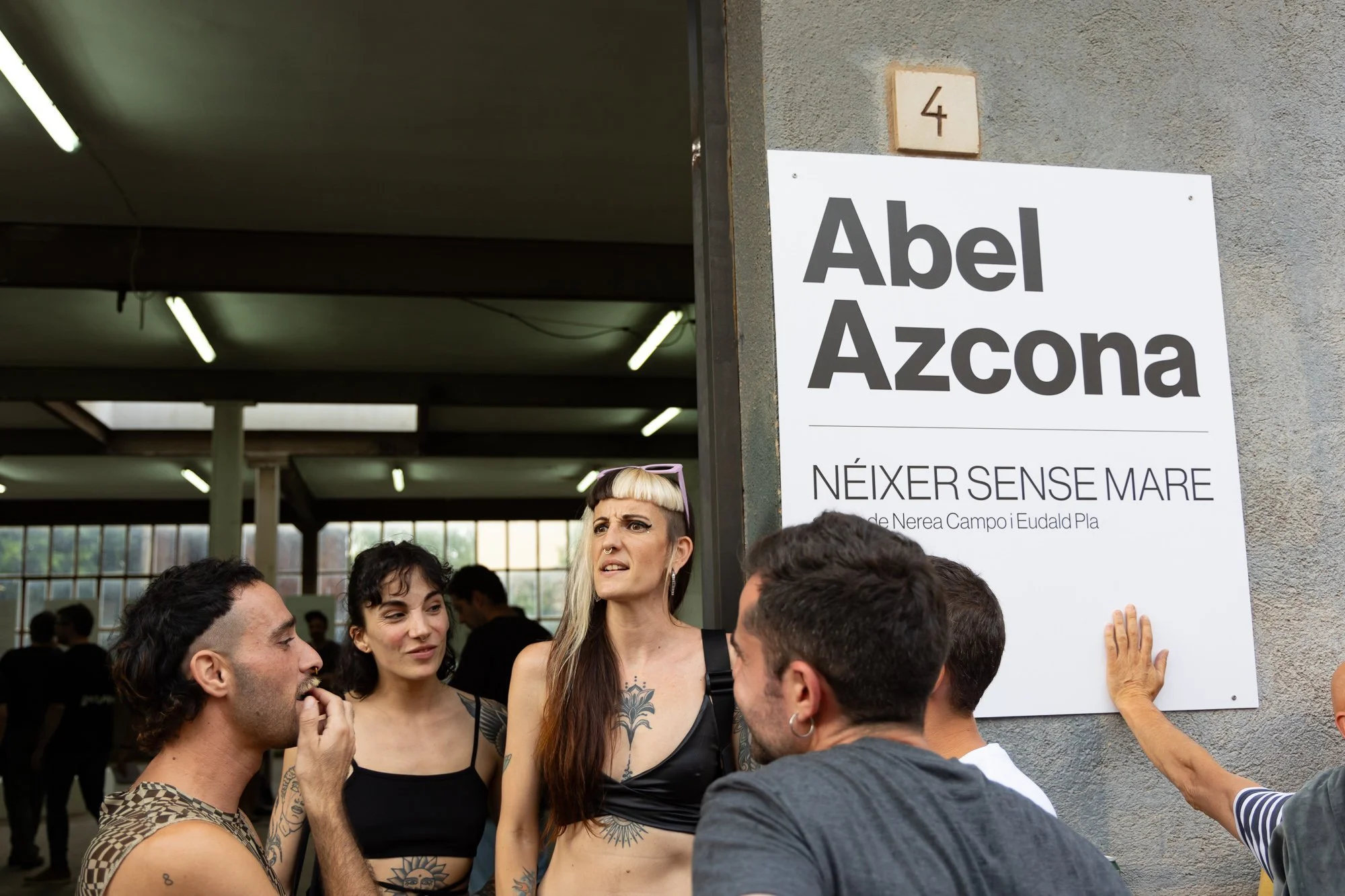
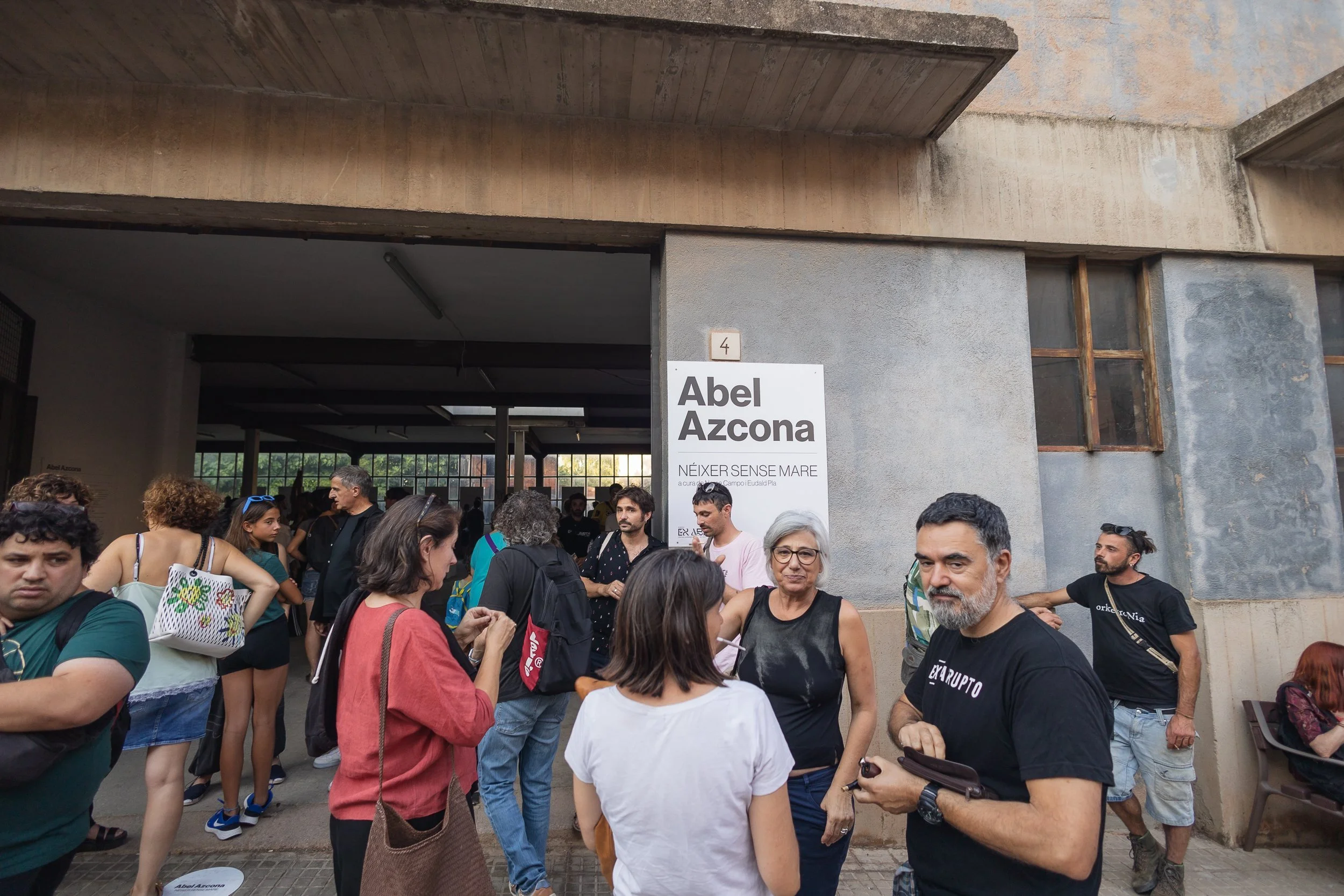
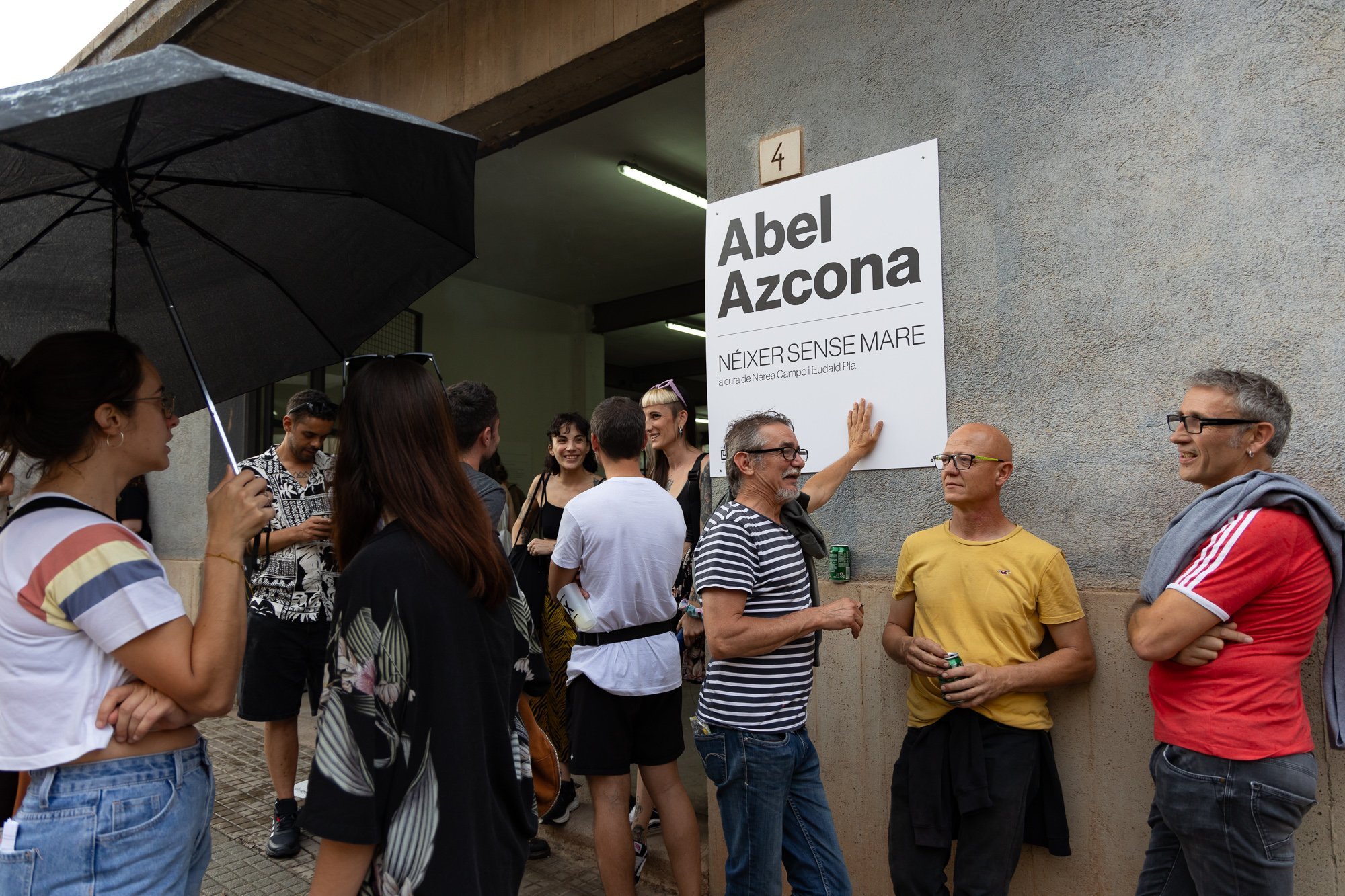
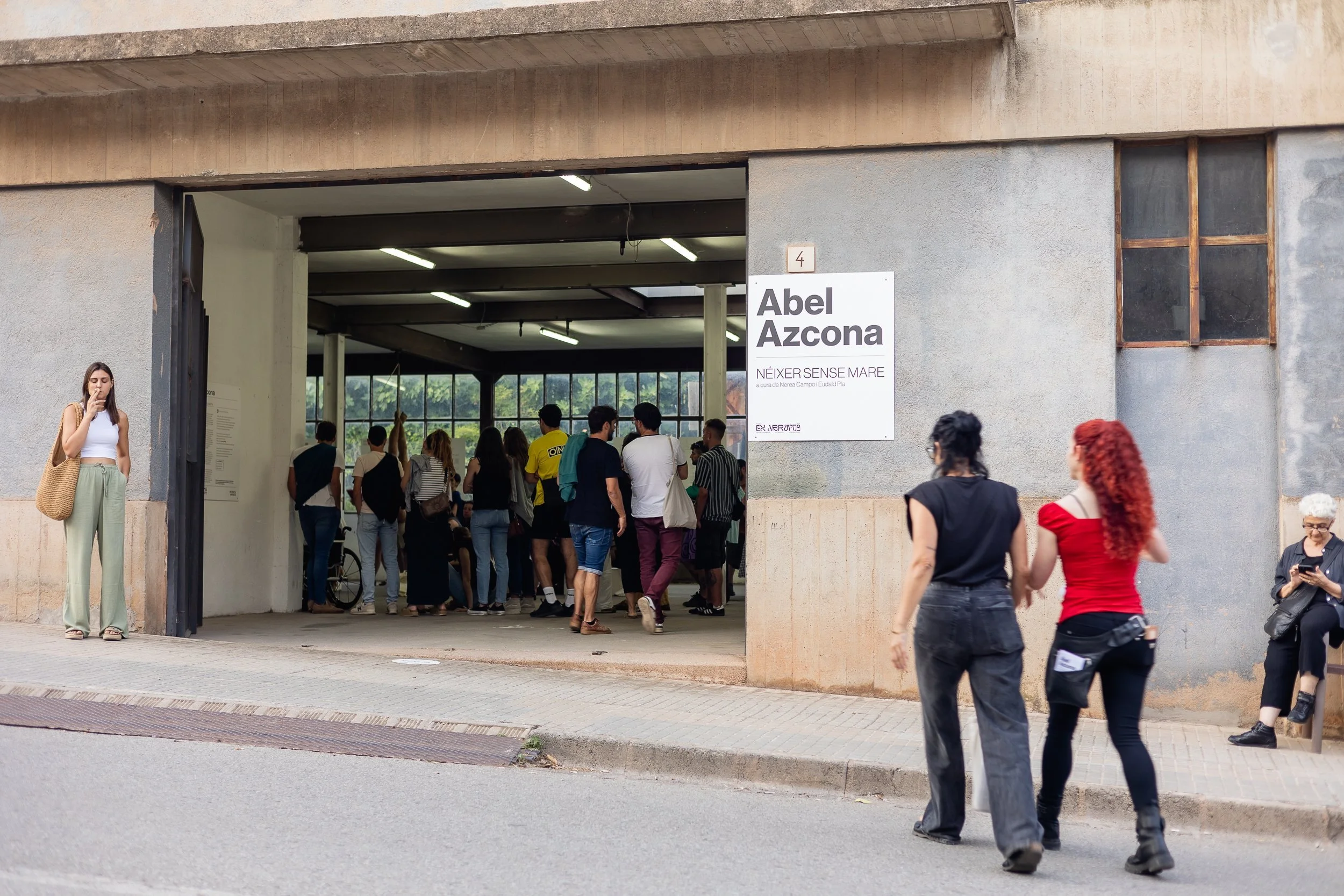
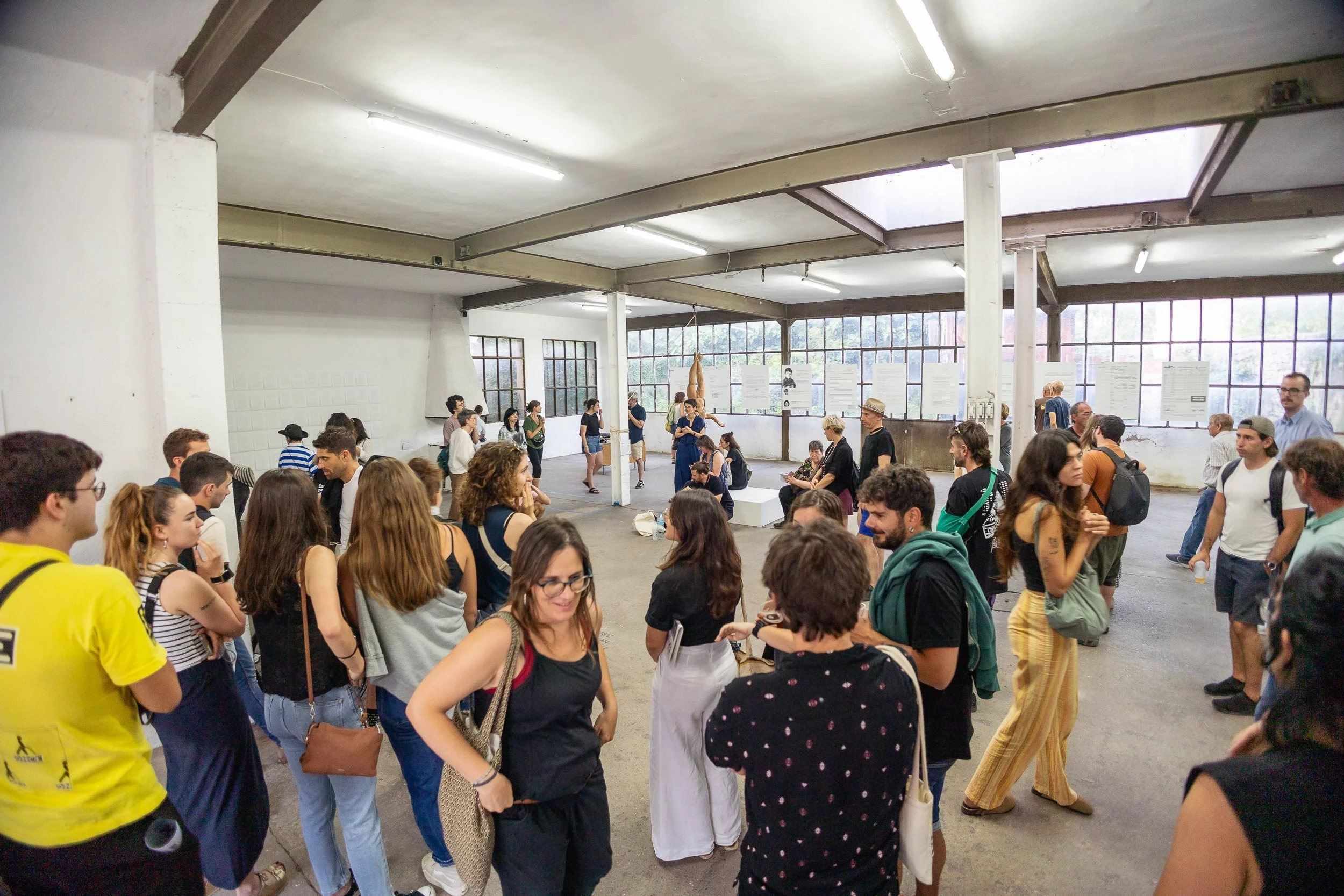
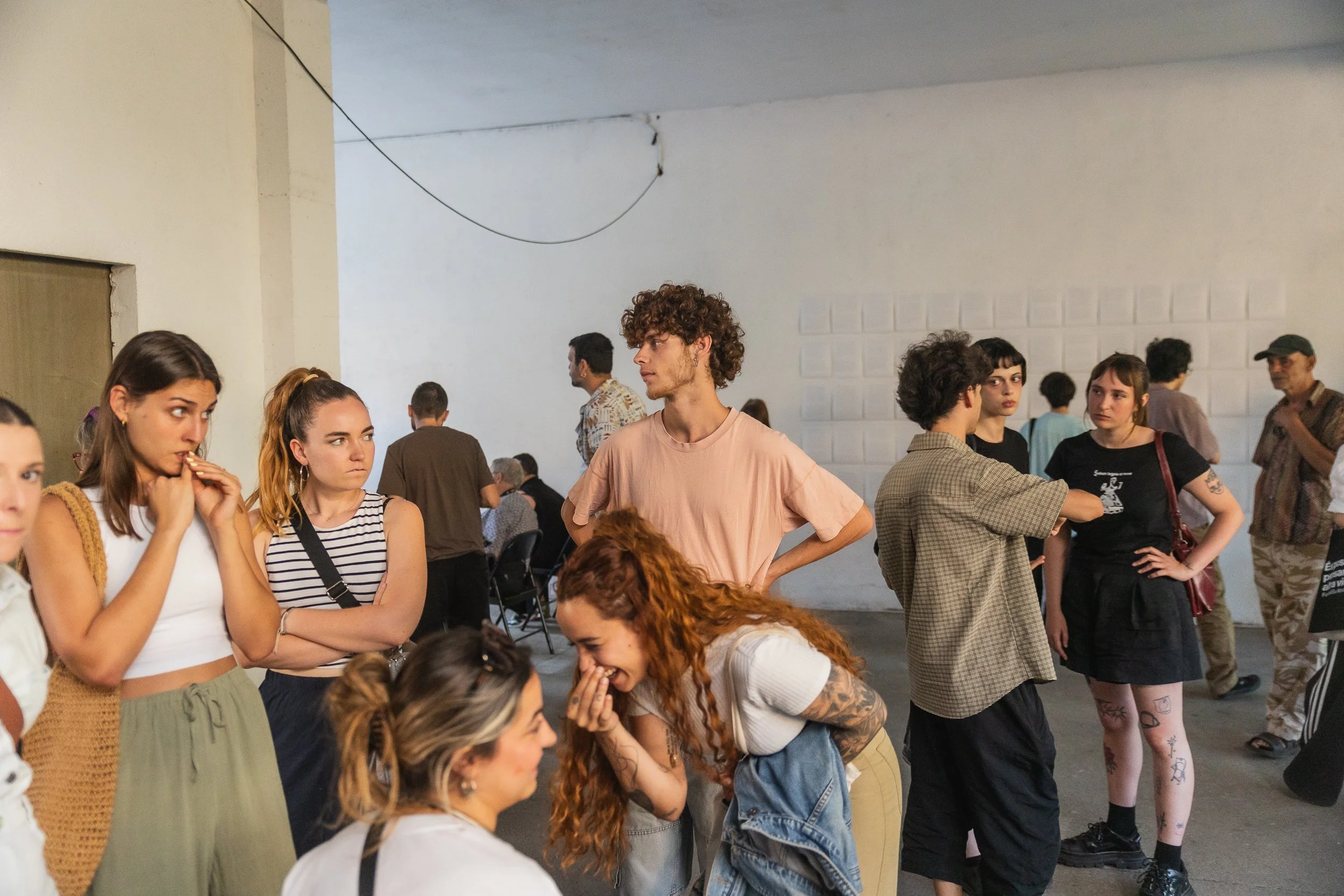
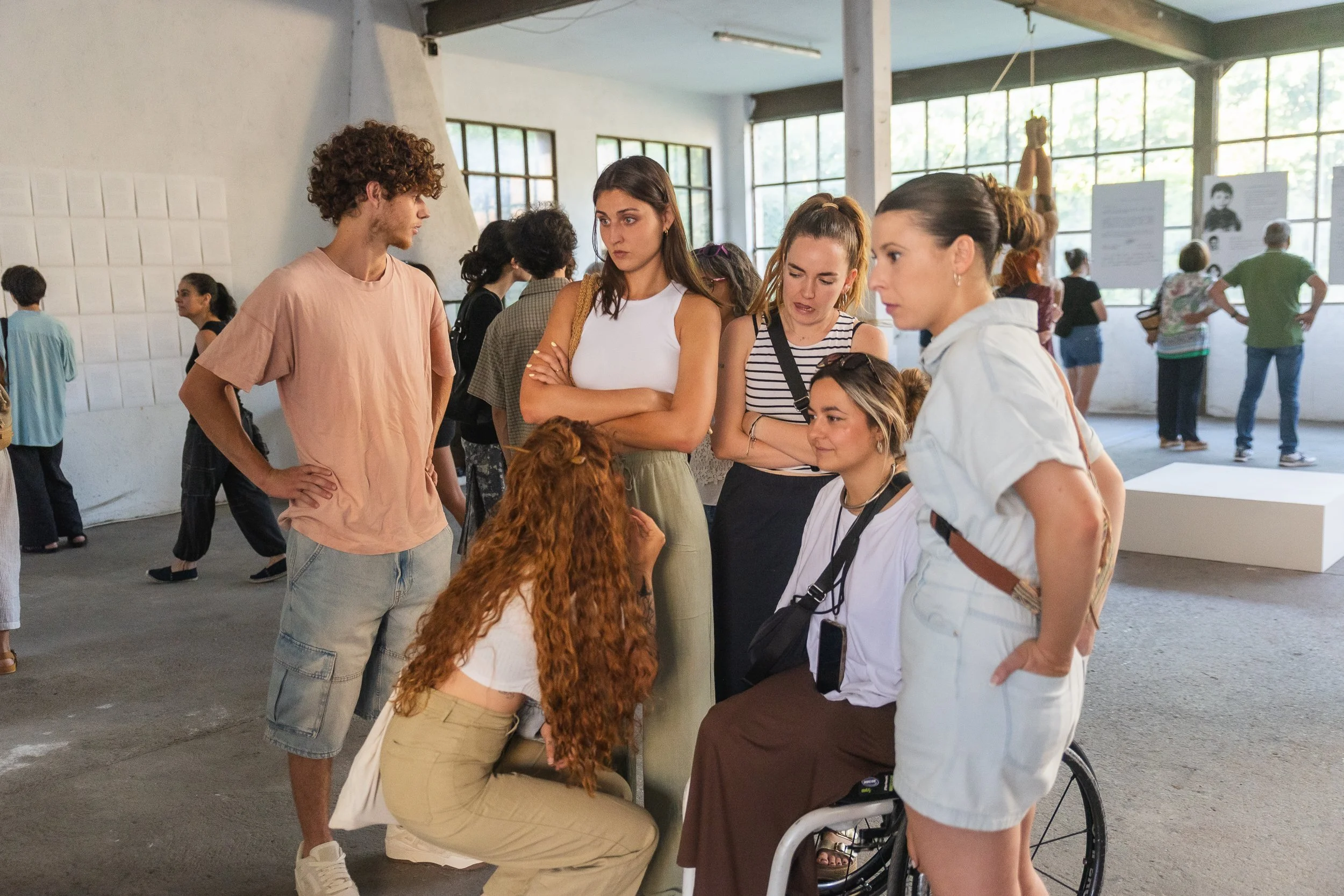
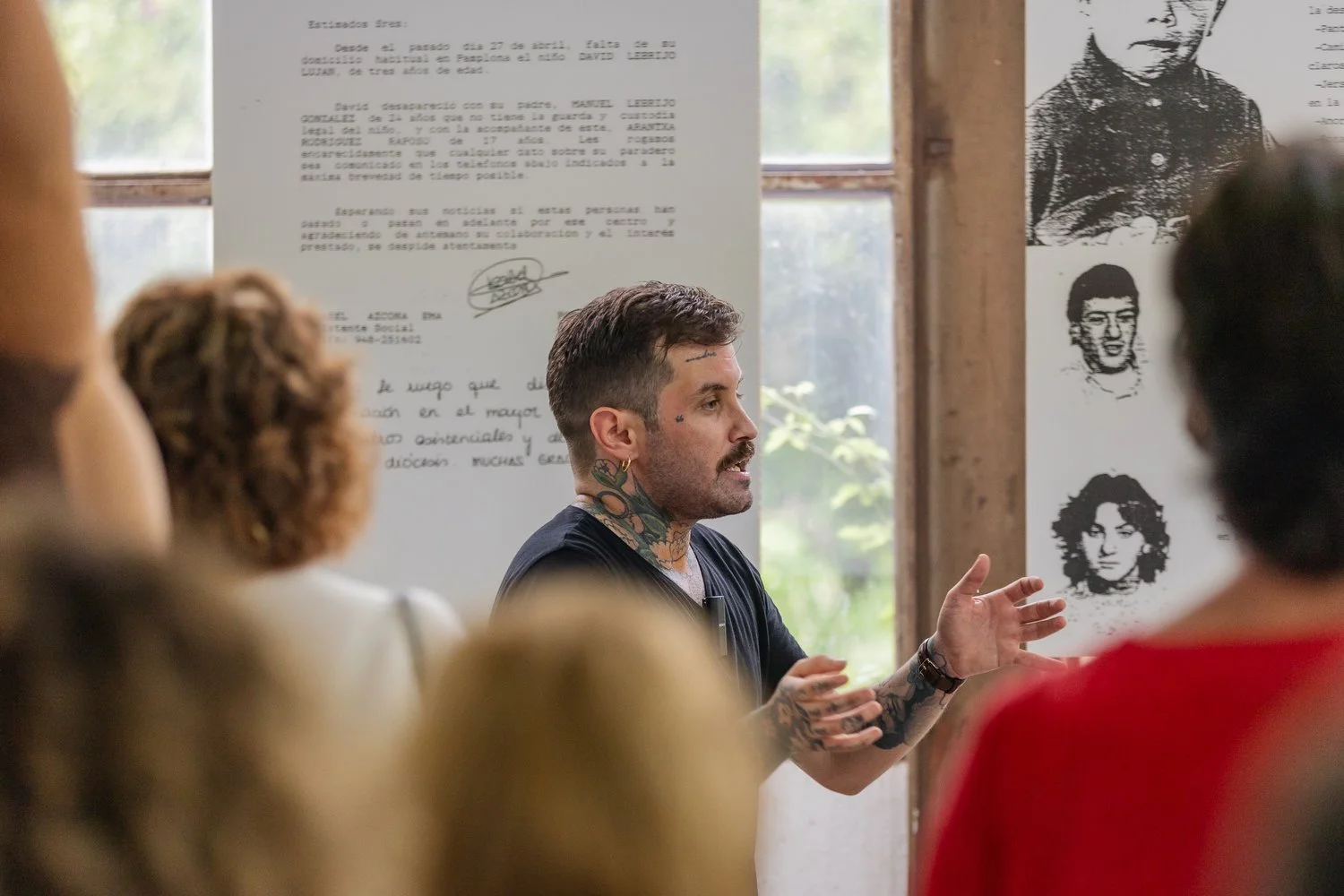
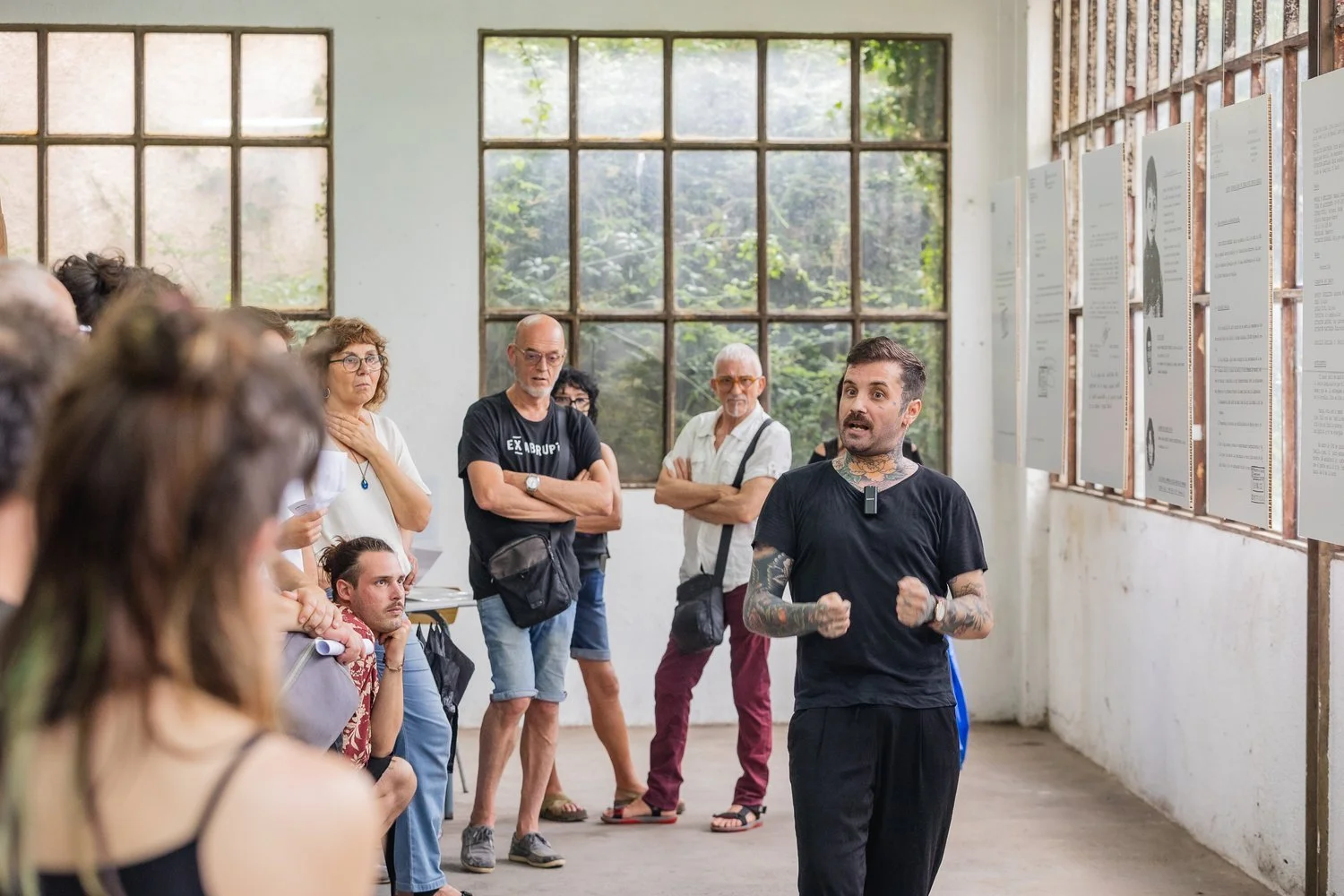
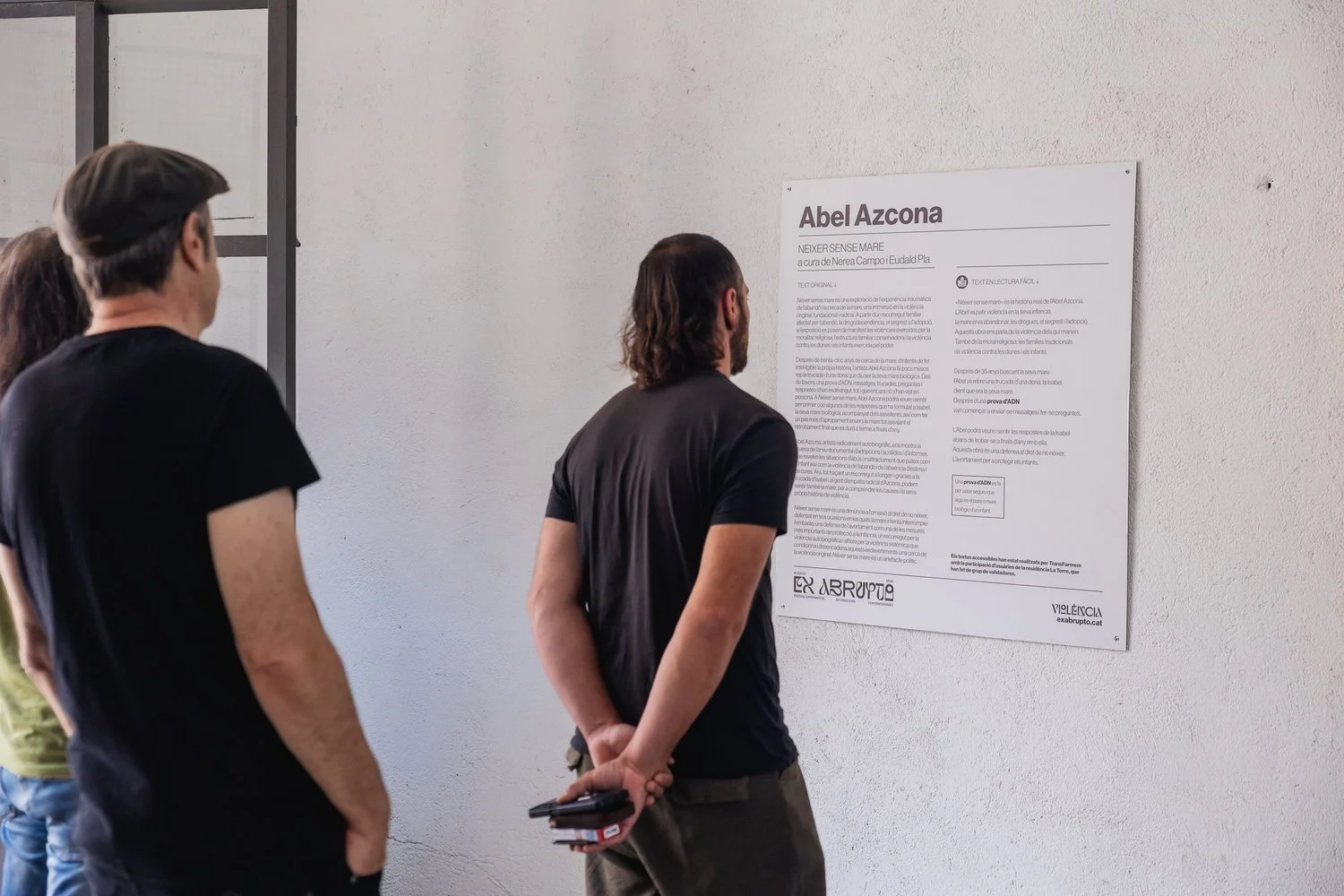
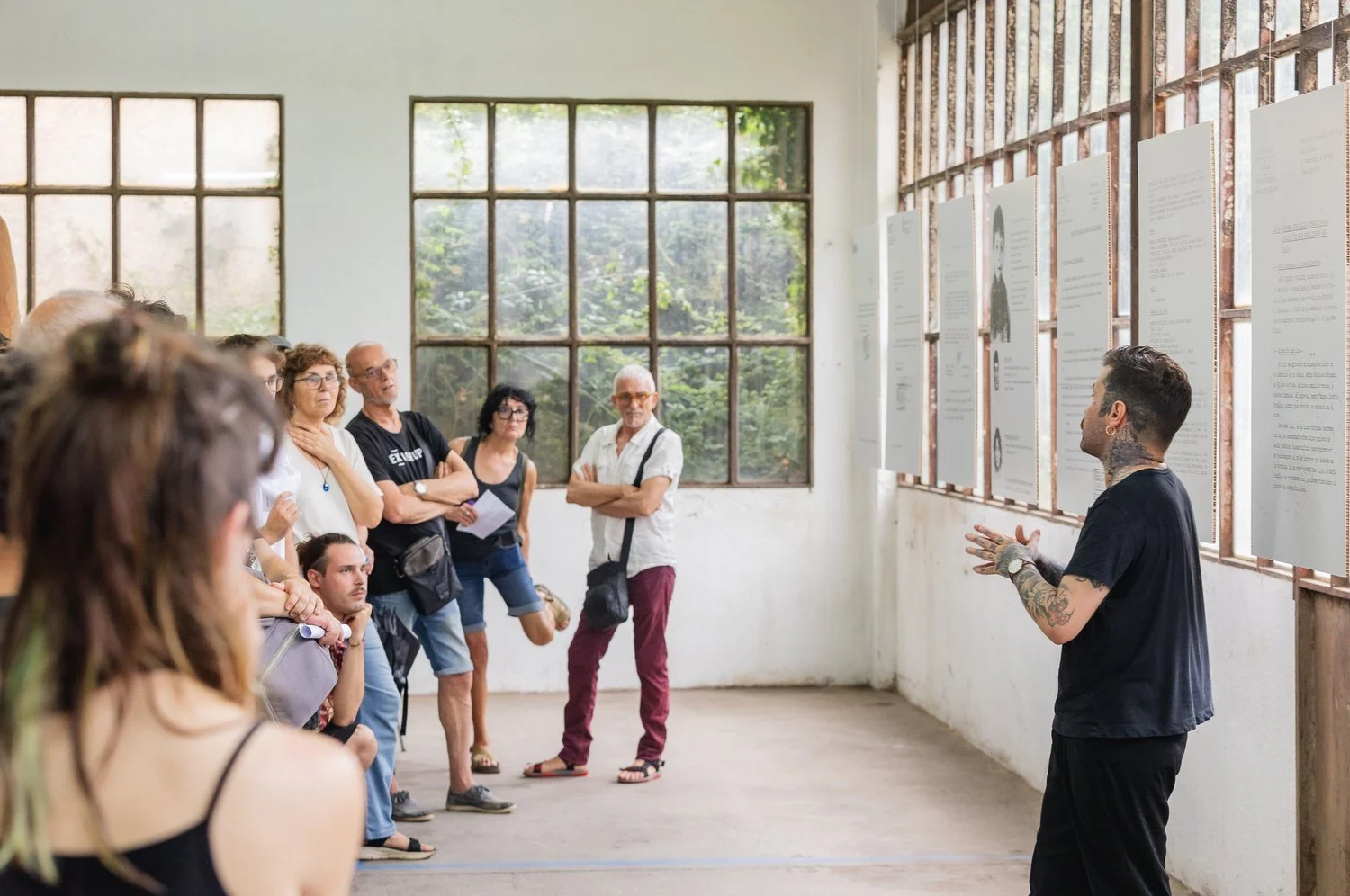
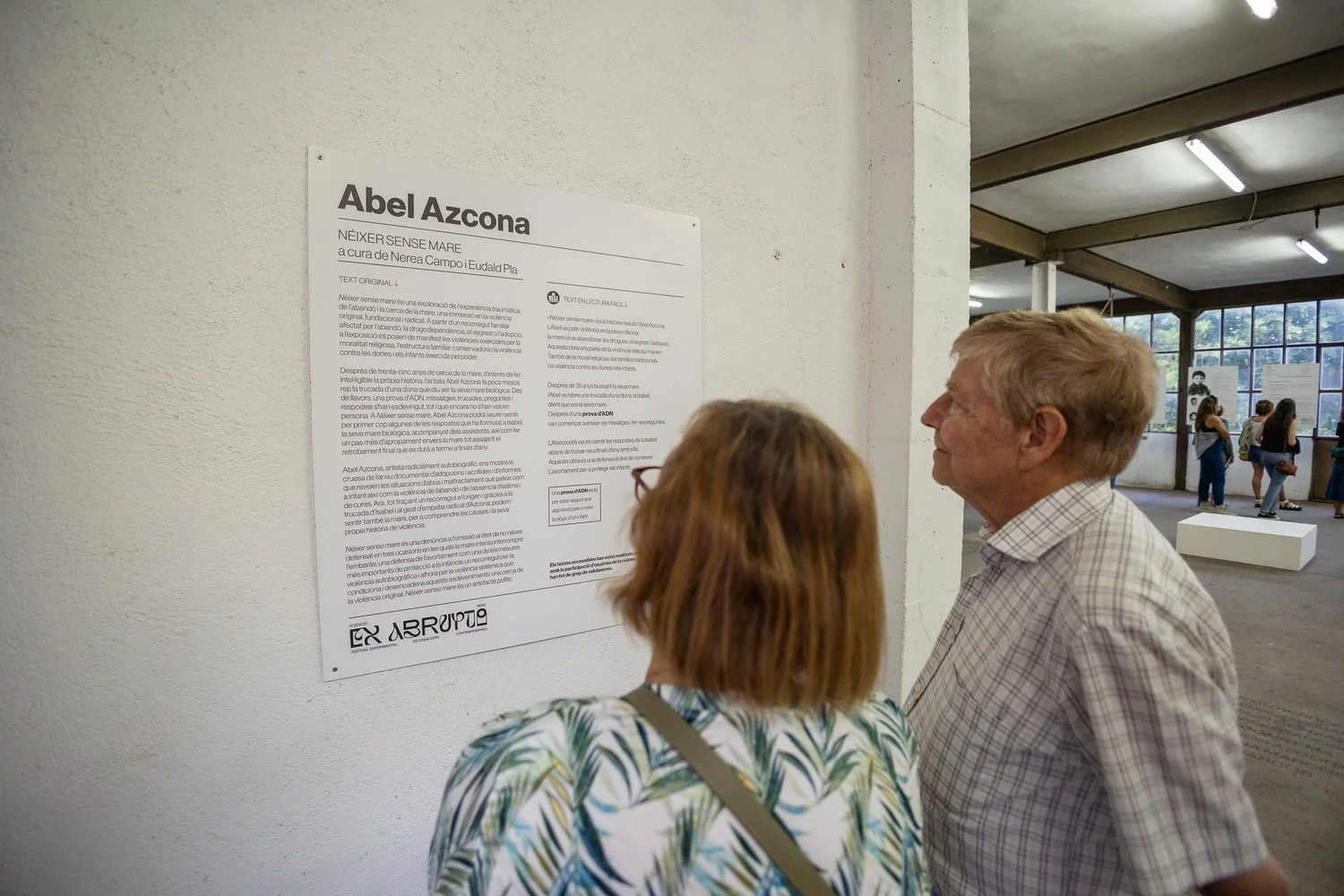
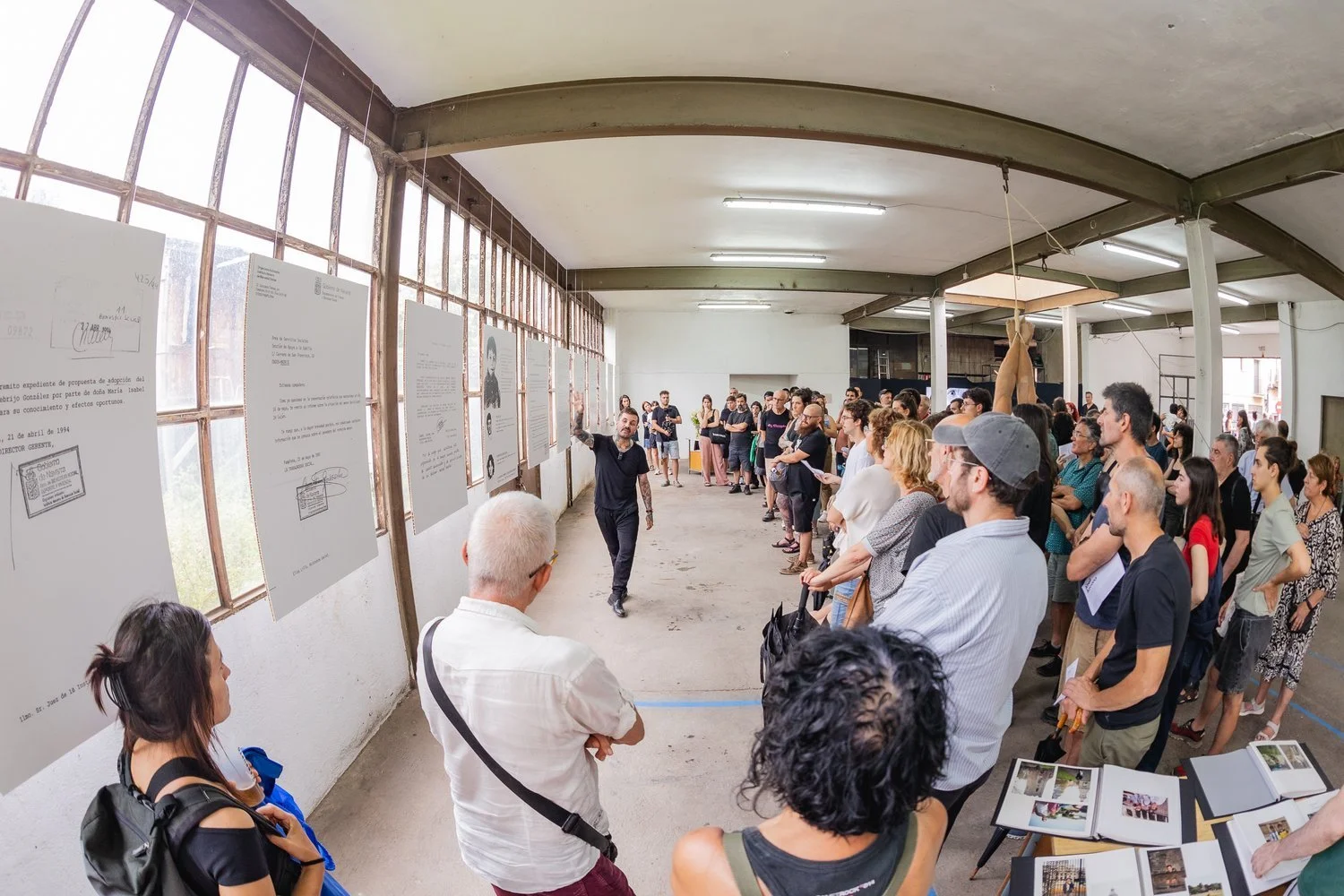
THE ELEVENTH STEP. Within the framework of the exhibition, just as in the La Panera Art Center, different short actions were presented. A series of short-duration performances aimed at resolving conflicts—family ones, in this case. During the months of approaching the mother, dozens of brief actions were carried out toward the figure of the new mother.
NINE BRIEF ACTIONS from the involuntary act of BEING BORN WITHOUT A MOTHE to the forced act of A MOTHER KNOCKING ON THE DOOR.
Within the framework of BORN WITHOUT MOTHER by Abel Azcona, we find an intimate, radical, and performative process in nine acts, transforming the exhibition space into a place for resolving family conflicts. All of Azcona's works are activated as performative processes in different stages. Thus, the artist, through documents, objects, words, the body, and installations, calls out to his mother or to the imagined figure of her, embraces the soft cloth mother he commissioned as a substitute for his own in the face of abandonment, or includes and adopts for the first time the new name and new surnames of his recently appeared biological mother.
EL UNDÉCIMO PASO. En el marco de la exposición al igual que en el Centro de Arte de La Panera se presentaron difrenctes acciones breves. Una serie de performances de corta duración para resolver conflictos, en este caso familiares. Durante los meses de acercamiento hacia la madre se realizaron decenas de acciones breves hacia la figura de la nueva madre.
NUEVE ACCIONES BREVES desde el hecho involuntario de NACER SIN MADRE hasta el acto forzoso que supone UNA MADRE LLAMANDO A LA PUERTA.
En el marco de la muestra NACER SIN MADRE de Abel Azcona encontramos un proceso íntimo, radical y performativo, en nueve actos, mediante la conversión del espacio expositivo en un lugar de resolución de conflictos familiares. La totalidad de obras de Azcona se activan como procesos performativos en diferentes etapas. De esta manera, el artista, mediante el documento, el objeto, la palabra, el cuerpo y la instalación, llama a su madre o a la figura imaginada de esta, abraza a la madre de tela blanda que encargó como sustitución de la suya frente al sentimiento de abandono, o incluye y adopta por primera vez el nuevo nombre y los nuevos apellidos de su madre biológica, recientemente aparecida.
FIRST BRIEF ACTION - MAMA. A sound action where the artist, through repetition, seeks a process of participation and empathy with the visitor. Abel Azcona was born on April 1, 1988, the result of an unwanted pregnancy. His mother, a young poly-drug addict who was a prostitute, abandoned him a few days after birth.
PRIMERA ACCIÓN BREVE - MAMÁ. Acción sonora donde el artista, mediante la repetición, busca un proceso de participación y empatía con el visitante. Abel Azcona nació el 1 de abril de 1988, fruto de un embarazo no deseado. Su madre, una joven politoxicómana que ejercía la prostitución, lo abandonó pocos días después de nacer.


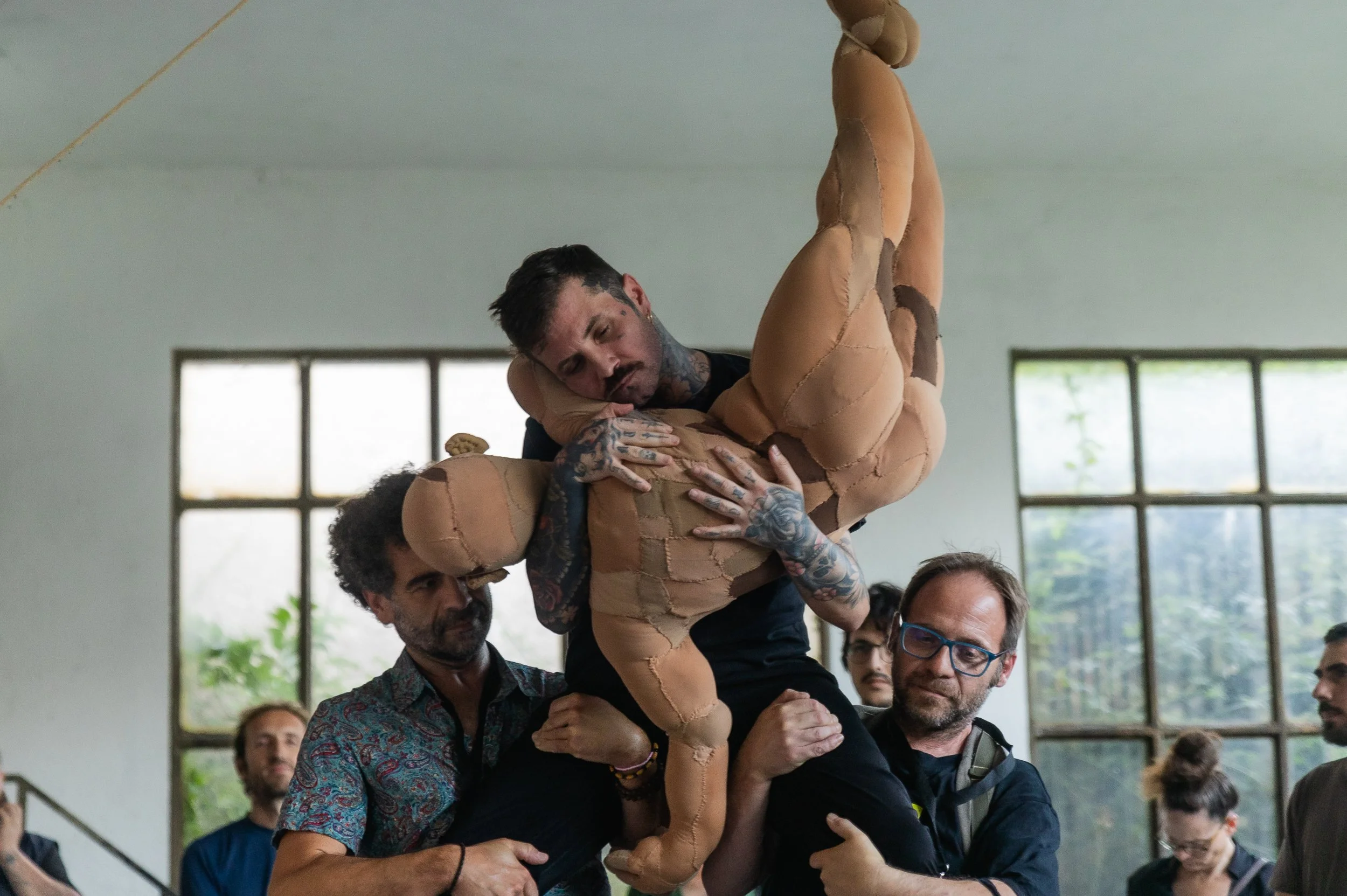
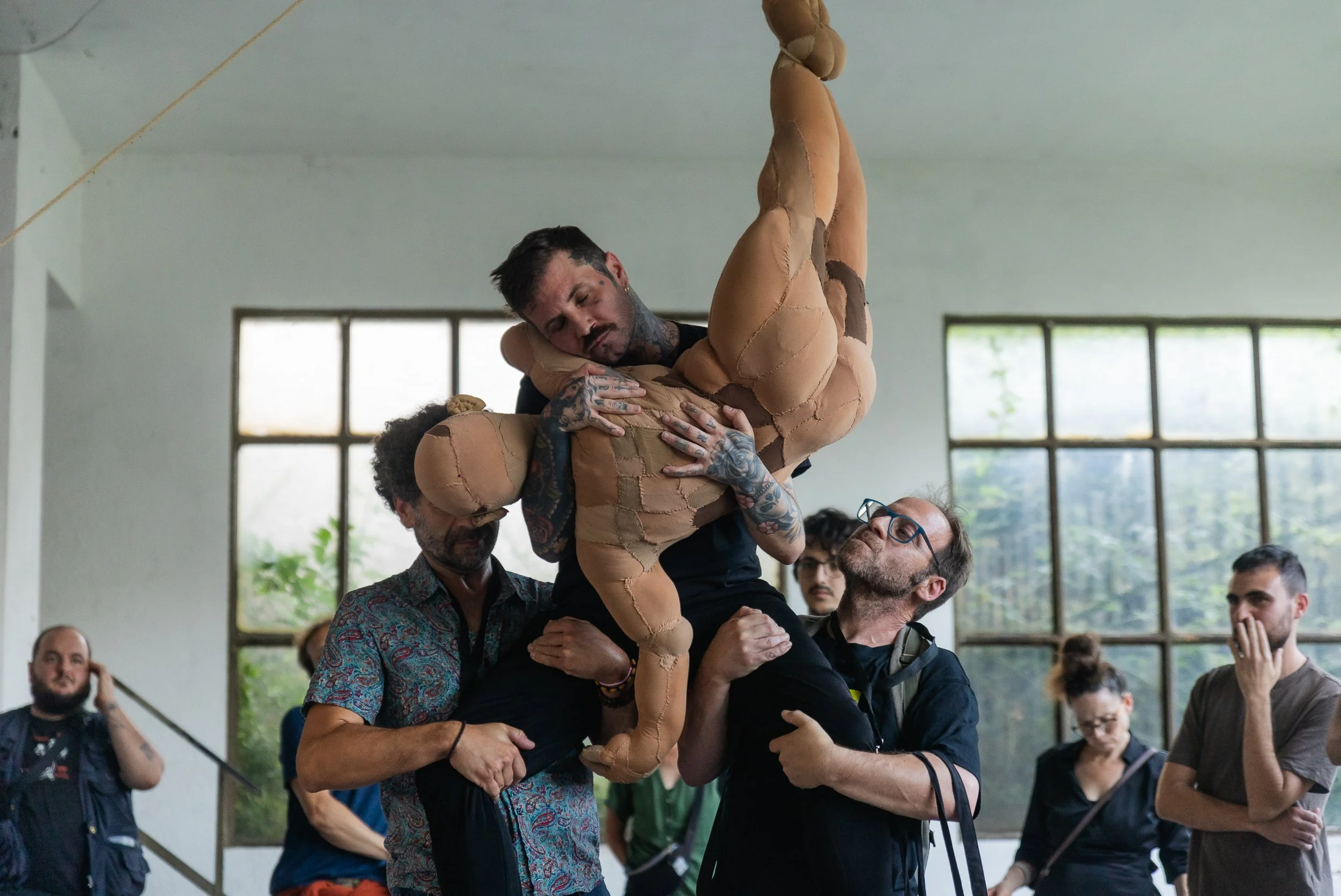
SECOND BRIEF ACTION - THE EMBRACE OR THE SOFT MOTHER. The final stage of the artistic process surrounding **The Soft Mother** contemplates the artist's interaction with her. Since he received her at his home, Azcona sleeps or interacts with her in his daily life. The soft mother was commissioned from another artist and sculptor who, through sketches, ended up designing and creating this substitute mother for Azcona.
"My imaginary mother would be by my side on gray days. My imaginary mother would be a place of refuge and embrace. My imaginary mother would be soft, gentle, and comfortable. My imaginary mother would never abandon me."
SEGUNDA ACCIÓN BREVE - EL ABRAZO O LA MADRE BLANDA. La etapa final del proceso artístico surgido en torno a **La madre blanda** contempla la interacción del artista con esta. Desde que la recibió en su domicilio, Azcona duerme o interactúa con ella en su día a día. La madre blanda fue encargada a otro artista y escultor que mediante bocetos terminó diseñando y creando esta madre sustituta para Azcona.
«Mi madre imaginaria estaría a mi lado en los días grises. Mi madre imaginaria sería un lugar de refugio y abrazo. Mi madre imaginaria sería blanda, suave y confortable. Mi madre imaginaria no me abandonaría nunca.»
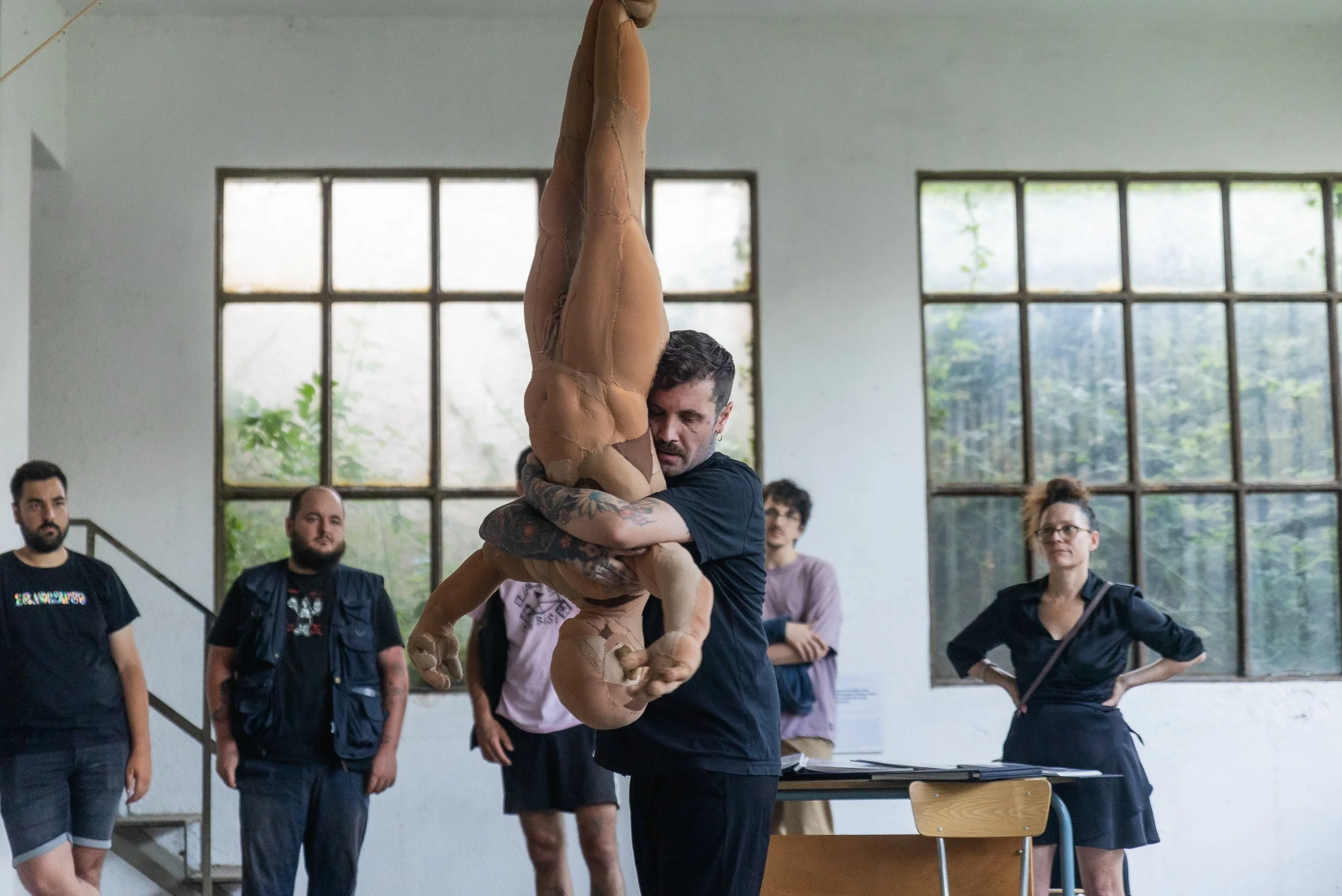
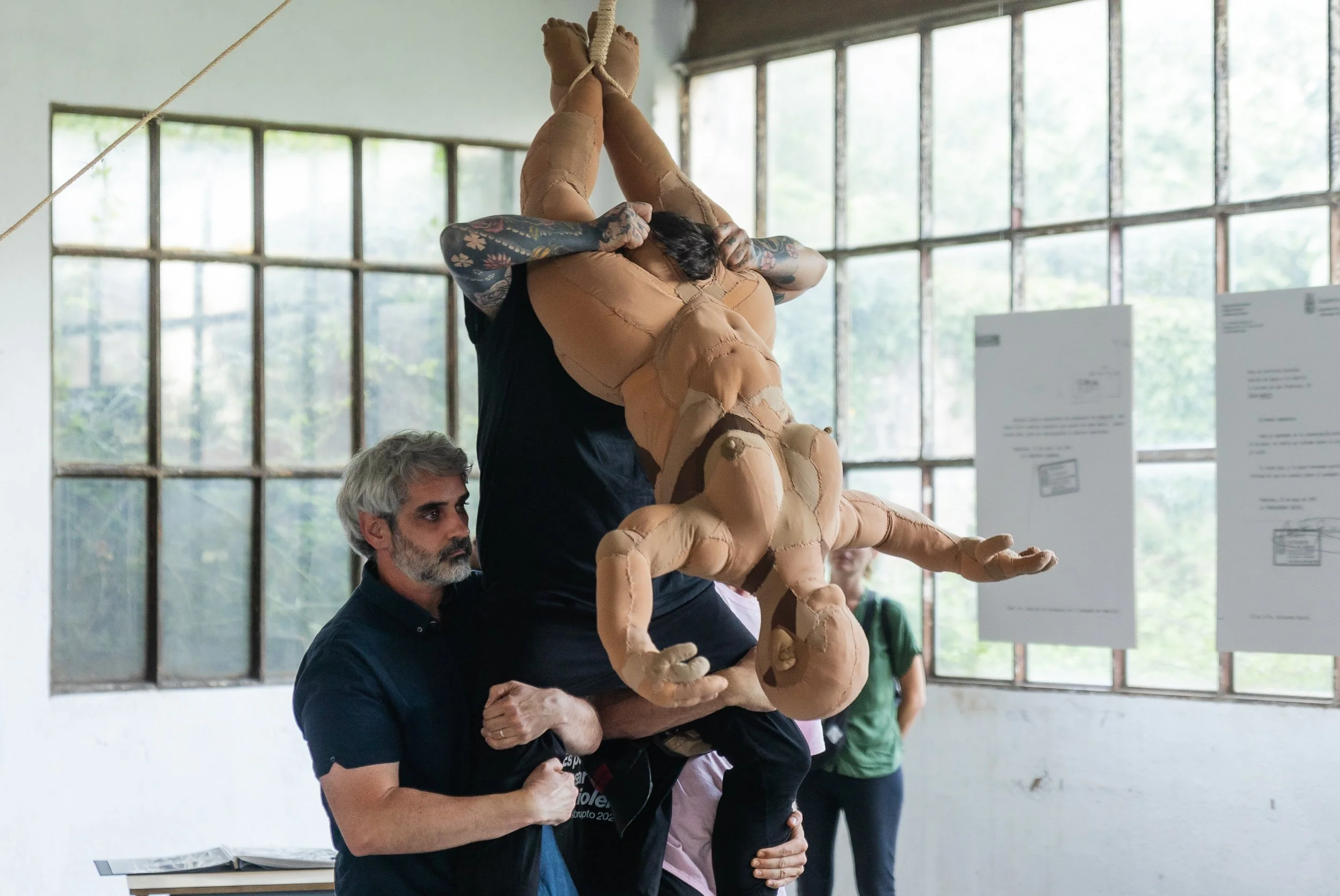
THIRD BRIEF ACTION - PUBLIC AND COLLECTIVE READING OF EXEGESIS OF THE MOTHER. Seventy handwritten pages with the testimony, life, and experience of Azcona's biological mother are one of the steps taken by the artist and his mother before meeting at the end of this year in a performance. In this brief action, there will be a first performative reading of the manuscript, through word and body, with the collaboration of the audience.
TERCERA ACCIÓN BREVE - LECTURA PÚBLICA Y COLECTIVA DE EXÉGESIS DE LA MADRE. Setenta páginas manuscritas con el testimonio, vida y experiencia de la madre biológica de Azcona son uno de los pasos dados por el artista y su madre antes de conocerse a finales de este año en una performance. En esta acción breve se hará una primera lectura performativa del manuscrito, mediante palabra y cuerpo, con la colaboración del espectador.
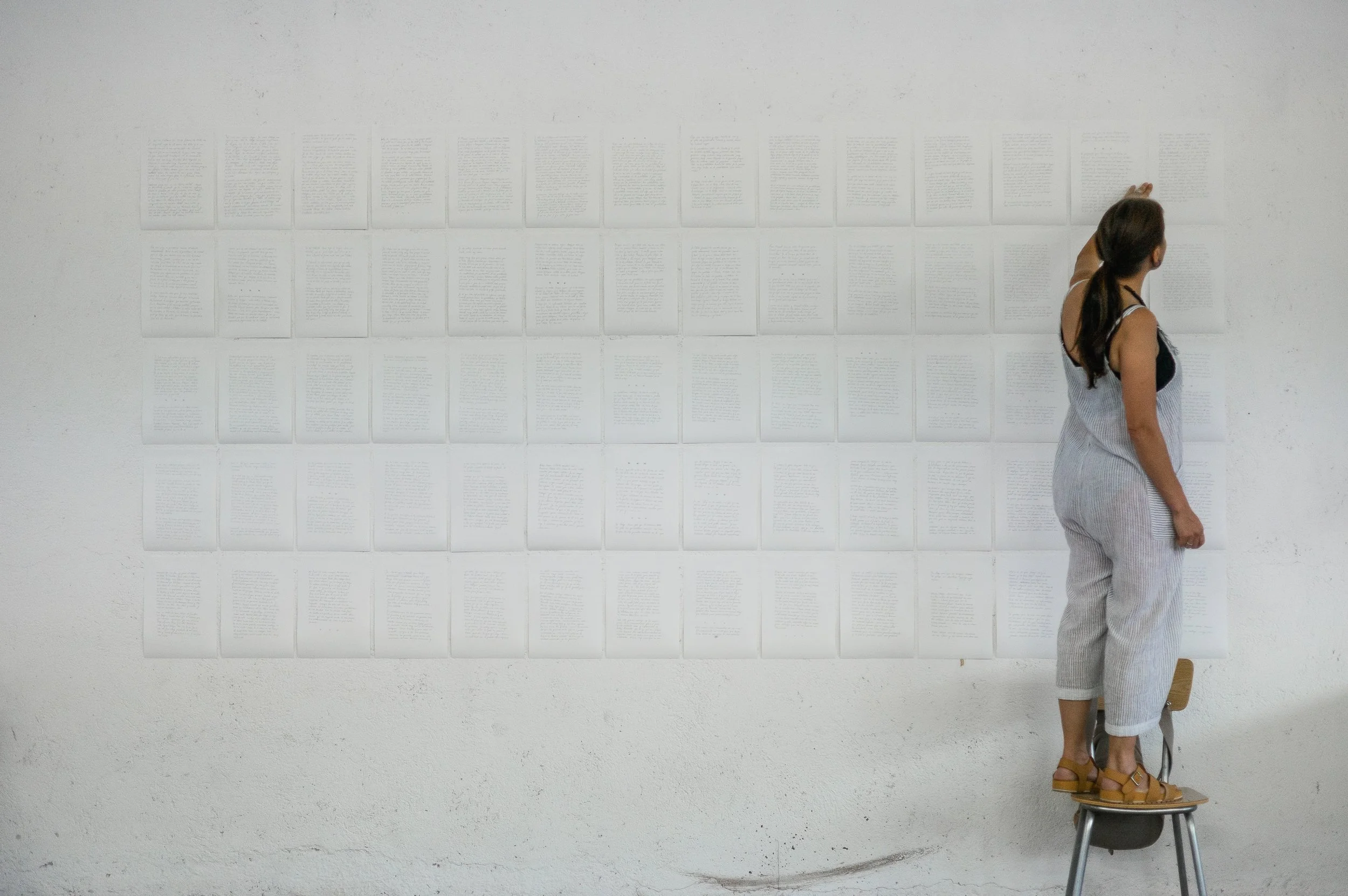
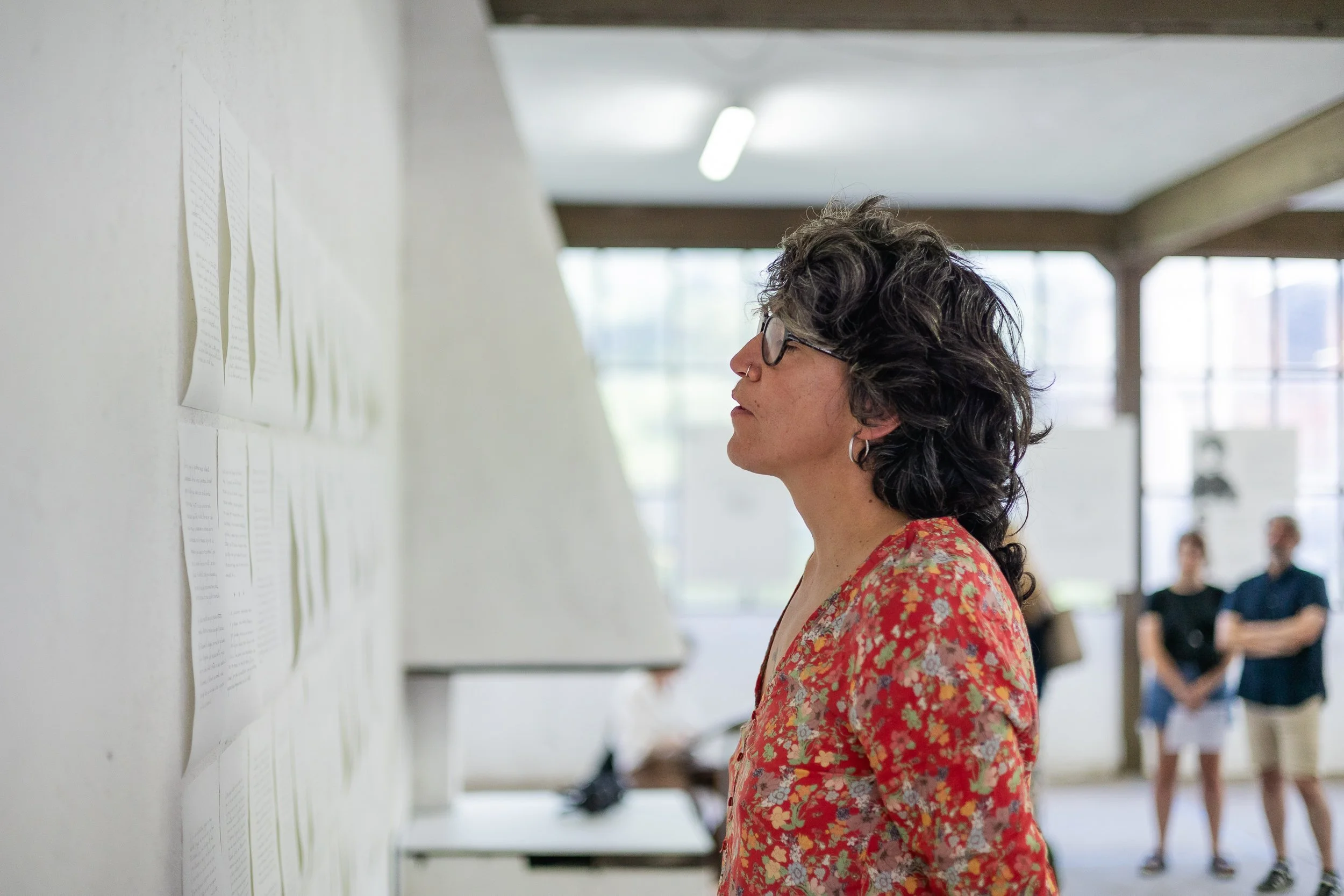
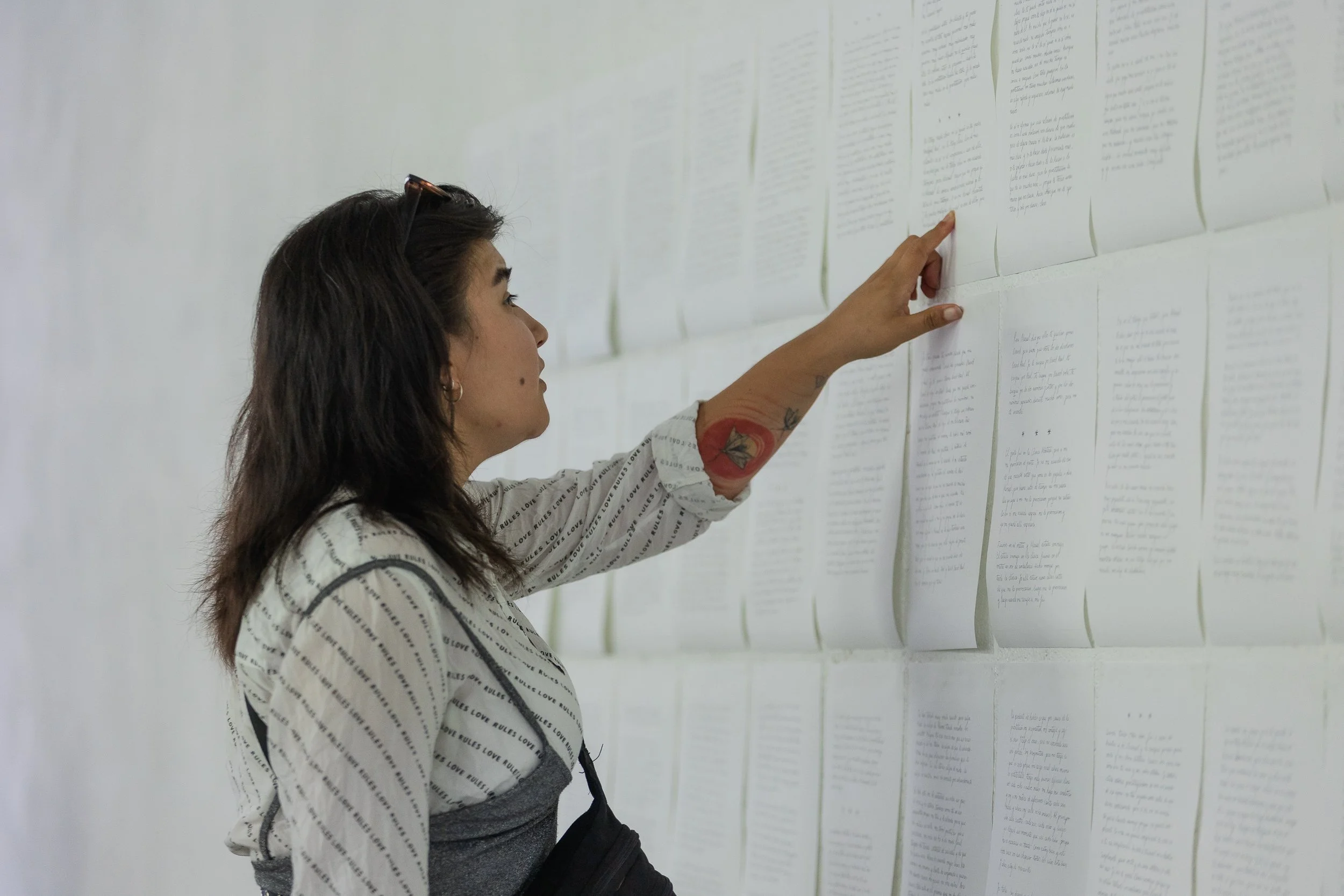
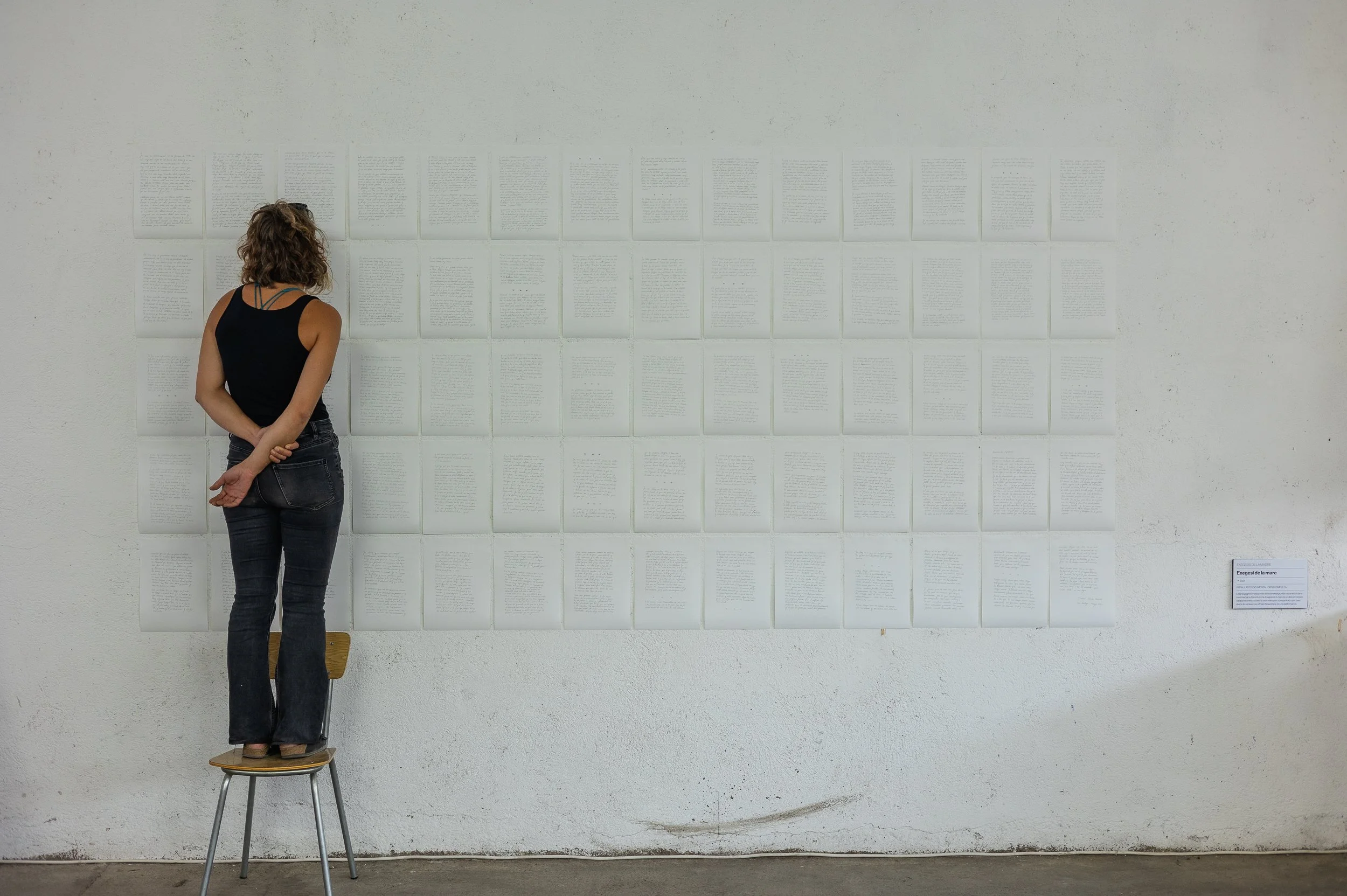
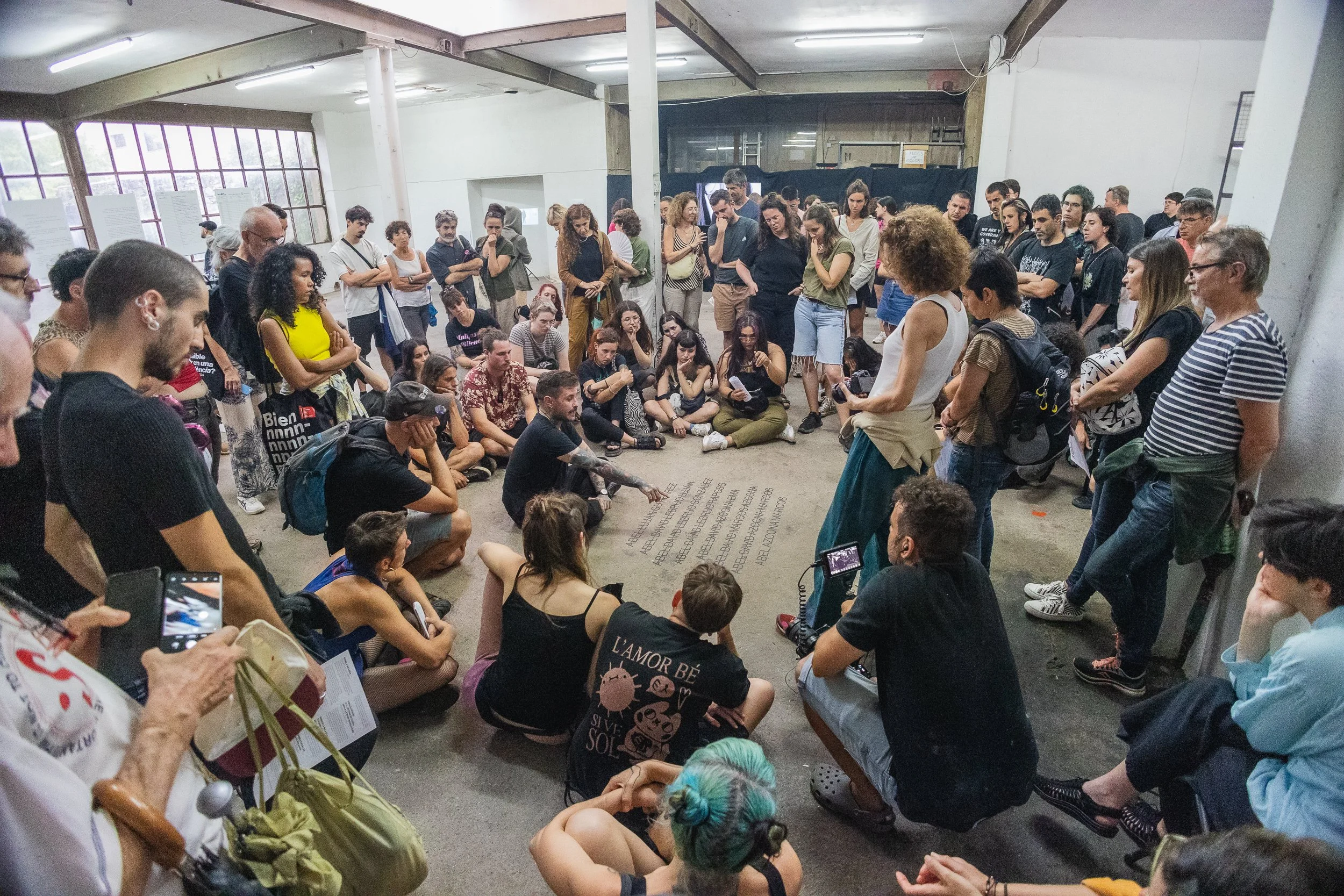
FOURTH BRIEF ACTION - GÓMEZ ARANDA. An action through word and installation where the artist accepts and adopts the surname of the biological mother after testing positive in the DNA test. Azcona incorporates the original surnames of the mother with the false surnames she used to protect herself.
Azcona's biological mother decided on the name Abel, and when registering him at the Montesa Clinic as her own, he was initially named Abel Luján Gutiérrez, her surnames.
The child was not registered in the Civil Registry until four years old, and, due to the mother's abandonment, her partner took charge of the boy and registered him as Abel David Lebrijo González, using his surnames, despite not being his biological father. These were the first surnames to appear in a legal document. From then on, in various records and documents such as school enrollment, the second surname was changed to Raposo, the surname of Lebrijo's new partner. At the age of six, adoption procedures began, and at seven, he became known as Abel David Azcona Ema, the surnames of the adoptive mother. The adoptive family refused to use the name Abel since the adoption because it was an excessive link to the biological mother, who chose the name. At fifteen, Azcona was adopted by his adoptive mother's new husband, thus becoming Abel David Marcos Azcona, and after a surname inversion process approved by the family, he returned to the first name and finally became Abel David Azcona Marcos. At the age of twenty, he decided to legally remove the name David, due to the lack of relationship with the adoptive family, and to use only Abel again as a tribute to his biological mother and as a response to the prohibition and imposition of the other name
CUARTA ACCIÓN BREVE - GÓMEZ ARANDA. Acción mediante palabra e instalación donde el artista acepta y adopta el apellido de la madre biológica tras dar positivo en la prueba de ADN. Azcona incorpora los apellidos originales de la madre a los apellidos falsos que ella utilizó para protegerse.
La madre biológica de Azcona decidió el nombre de Abel y al registrarlo en la Clínica Montesa como propio fue primeramente Abel Luján Gutiérrez, los apellidos de ella. El menor no es registrado en el Registro Civil hasta los cuatro años y, ante el abandono de la madre, la pareja de esta se hace cargo del niño y lo registra como Abel David Lebrijo González, sus apellidos, a pesar de no ser su padre biológico. Siendo estos los primeros apellidos que constan en documento legal. A partir de entonces, en diferentes registros y documentos como la escolaridad, cambian el segundo apellido por Raposo, el de la nueva pareja de Lebrijo. A la edad de seis años comienzan los trámites de adopción y a los siete años pasa a ser conocido como Abel David Azcona Ema, los apellidos de la madre adoptiva. La familia adoptiva rehúsa utilizar el nombre de Abel desde la adopción porque supone un enlace excesivo a la madre biológica, que eligió el nombre. A los quince años, Azcona es adoptado por el nuevo marido de su madre adoptiva, por lo que se convierte en Abel David Marcos Azcona y, tras un trámite de inversión de apellidos aprobado por la familia, Azcona vuelve al primer nombre y definitivamente es Abel David Azcona Marcos. A la edad de veinte años decide eliminar legalmente el nombre de David, debido a la ausencia de relación con la familia adoptiva y utilizar nuevamente y únicamente Abel como homenaje a su madre biológica y como respuesta a la prohibición y la imposición del otro nombre.
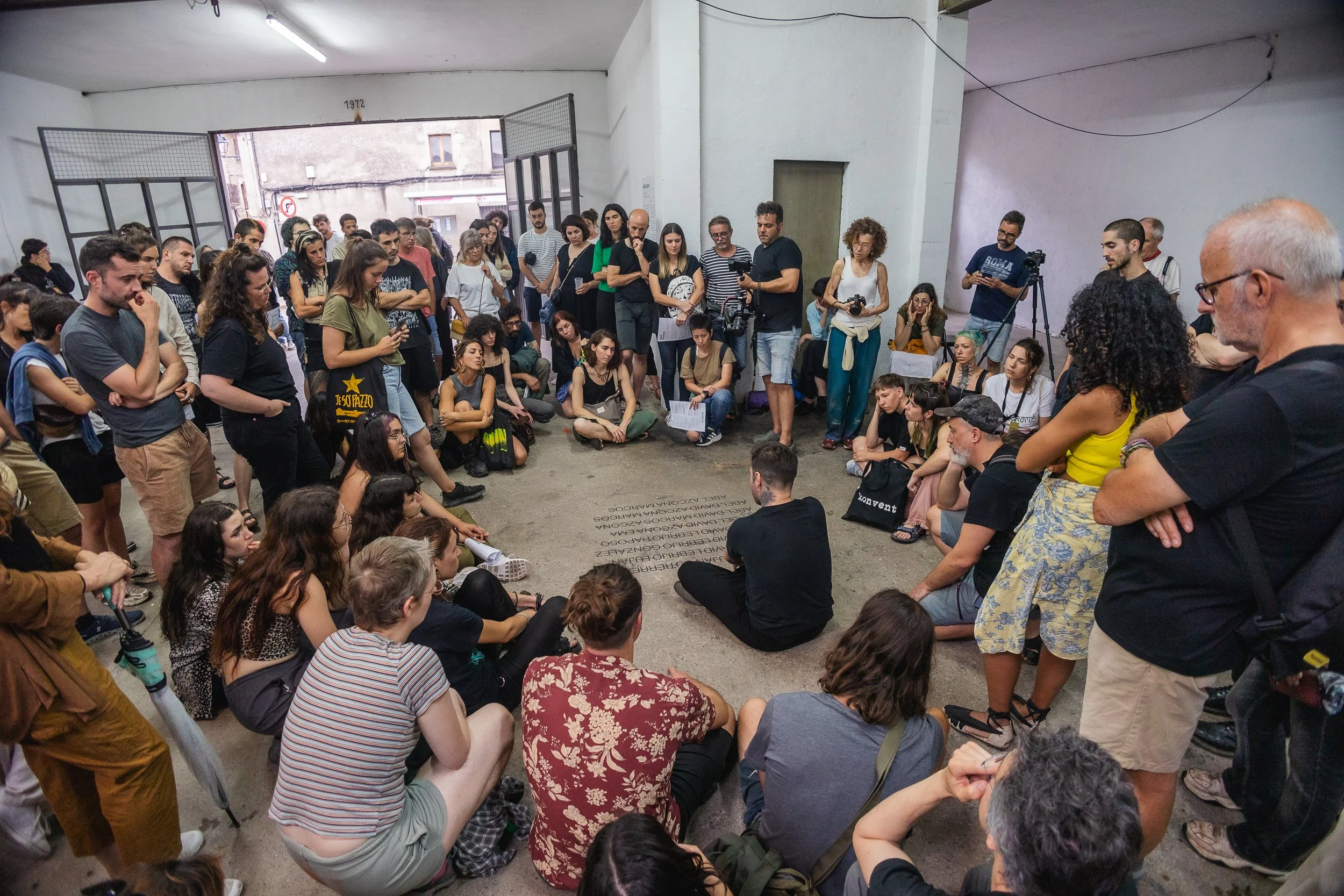
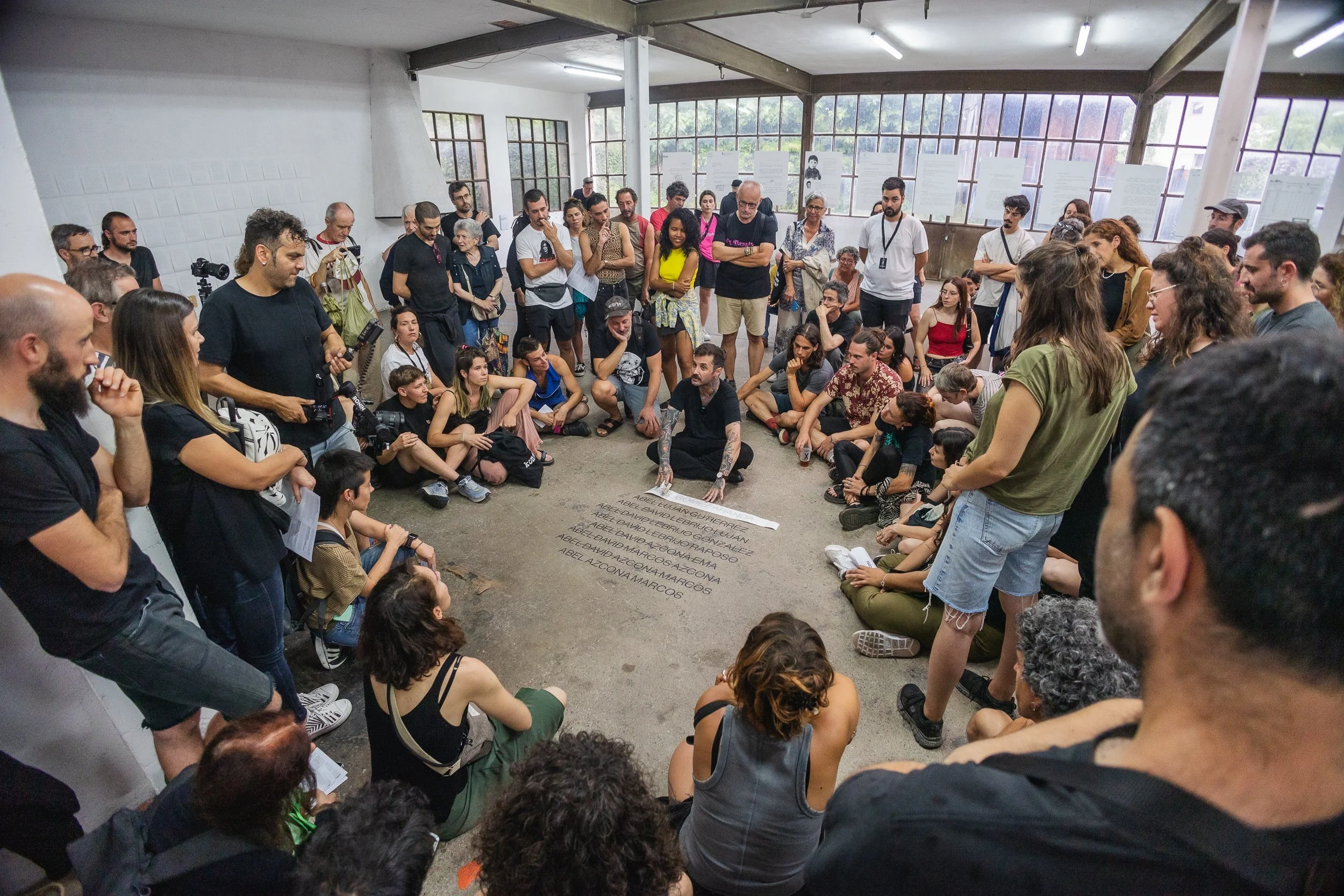
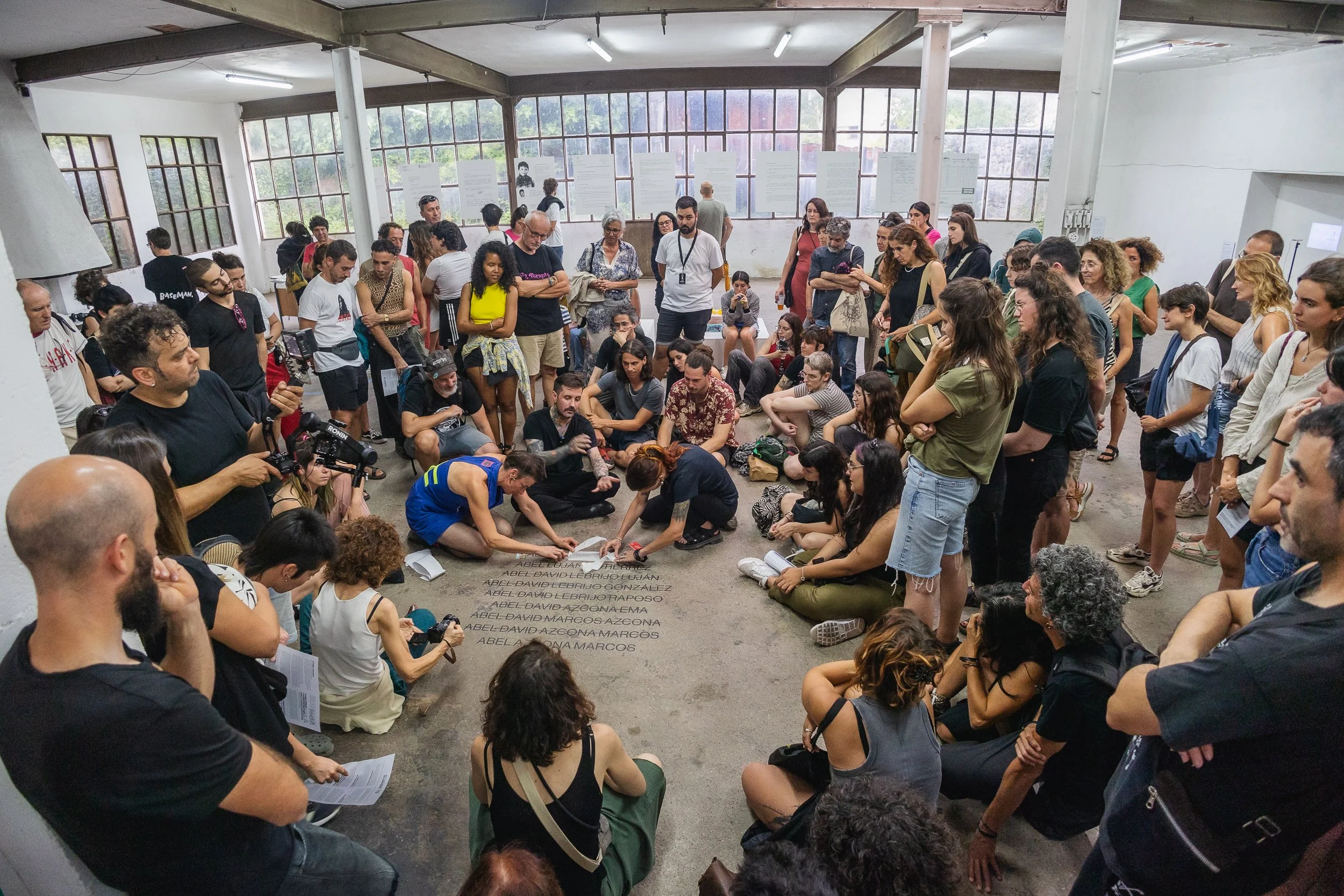
FIFTH BRIEF ACTION - FROM IMAGINARY MOTHER TO REAL MOTHER. Performance with the collaboration of a draftsman. During the opening of the show, the draftsman will select nine imaginary mothers from Azcona's work. At a table in the center of the room, he will repaint the mothers based on the previously drawn result with the participants' testimonies. A considerable number of portraits resulting from a process of reflection, in which a large number of people, orphans, motherless, or with complex maternities, described what their imaginary mother would be like. A piece that invites the viewer to think about the person performing motherhood, in Azcona's case, a mother practicing prostitution resulting in a son-object politic. With the help of videos where you can see the biological mother and Azcona's own descriptive testimony, who no longer has to imagine a mother but can describe her thanks to her recent appearance, the draftsman will evolve the drawings of the imaginary mothers until they become Azcona's real mother.
QUINTA ACCIÓN BREVE - DE MADRE IMAGINARIA A MADRE REAL. Performance con la colaboración de un dibujante. Durante la apertura de la muestra, el dibujante seleccionará nueve madres imaginarias de la obra de Azcona. En una mesa en el centro de la sala pintará las madres de nuevo basándose en el resultado dibujado anteriormente con el testimonio de los participantes. Una considerable cantidad de retratos como resultado de un proceso de reflexión, en el que un gran número de personas, huérfanas, sin madre, o con maternidades complejas, describieron cómo sería su madre imaginaria. Una pieza que invita al espectador a pensar sobre la persona que ejecuta la maternidad, en el caso de Azcona, una madre en ejercicio de la prostitución y que tiene como resultado ser un hijo-objeto político. Con la ayuda de los vídeos donde se puede ver a la madre biológica y el propio testimonio descriptivo de Azcona, que ya no tiene que imaginar una madre sino que la puede describir gracias a su reciente aparición, el dibujante hará evolucionar los dibujos de las madres imaginarias hasta convertirse en la madre real de Azcona.
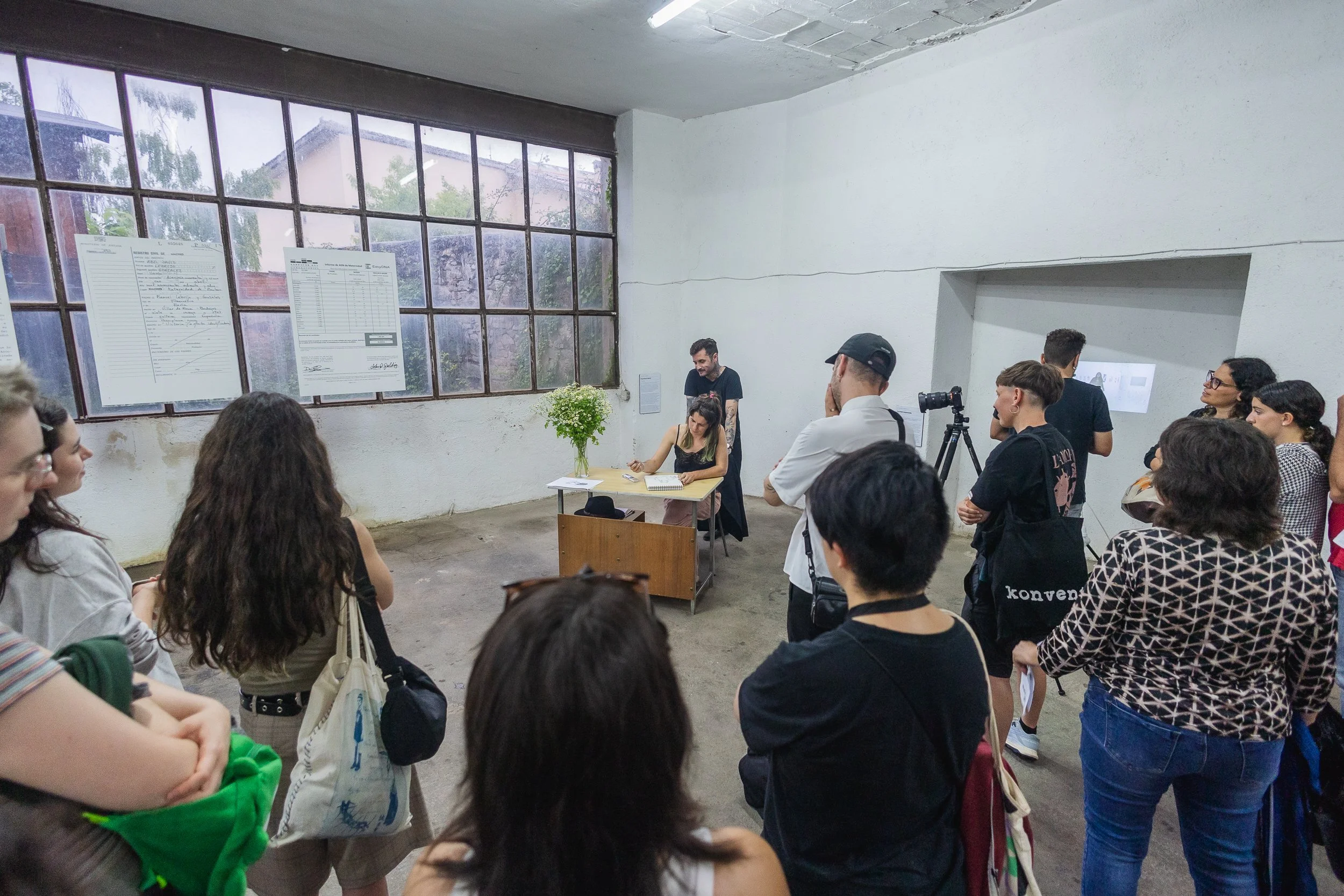
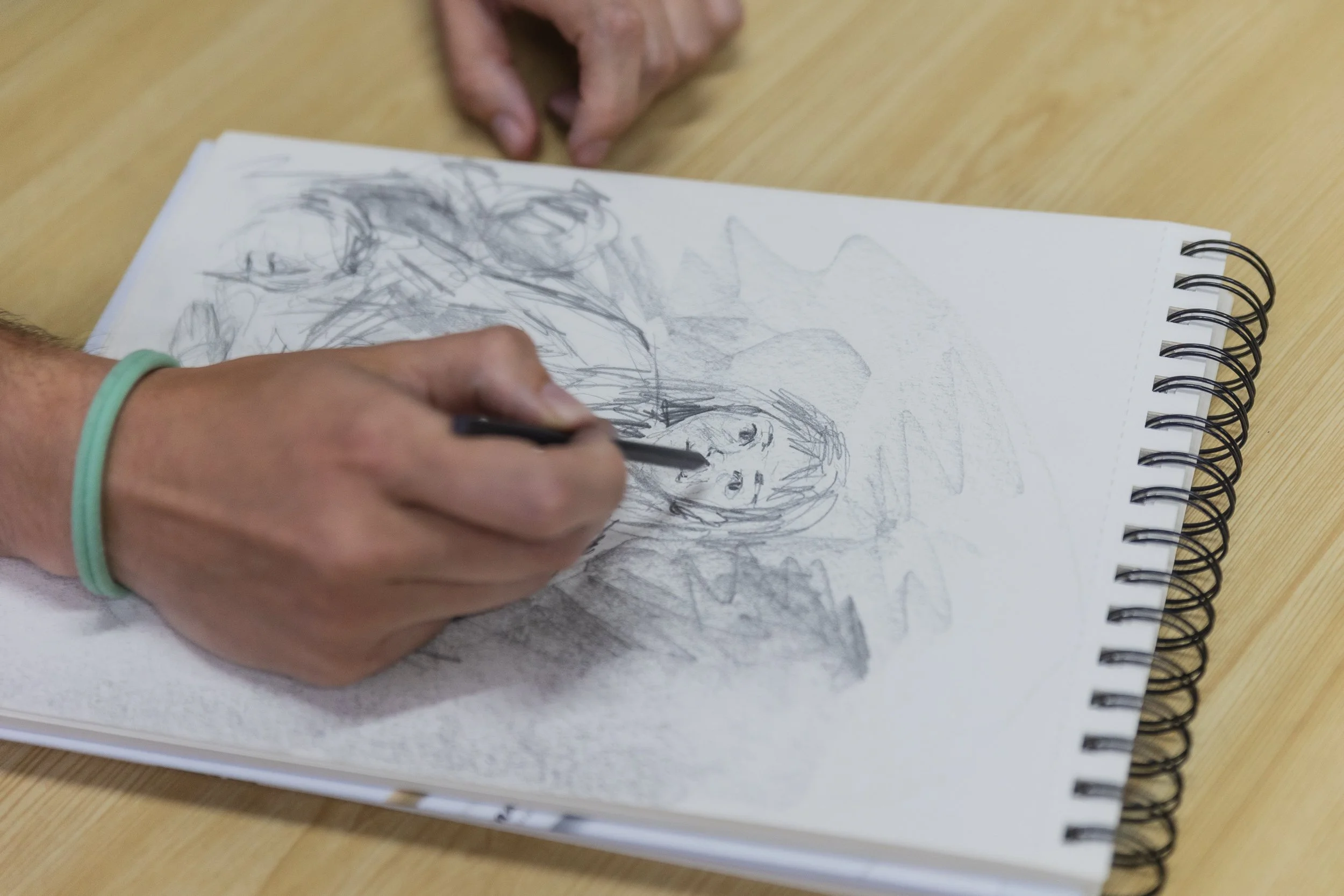
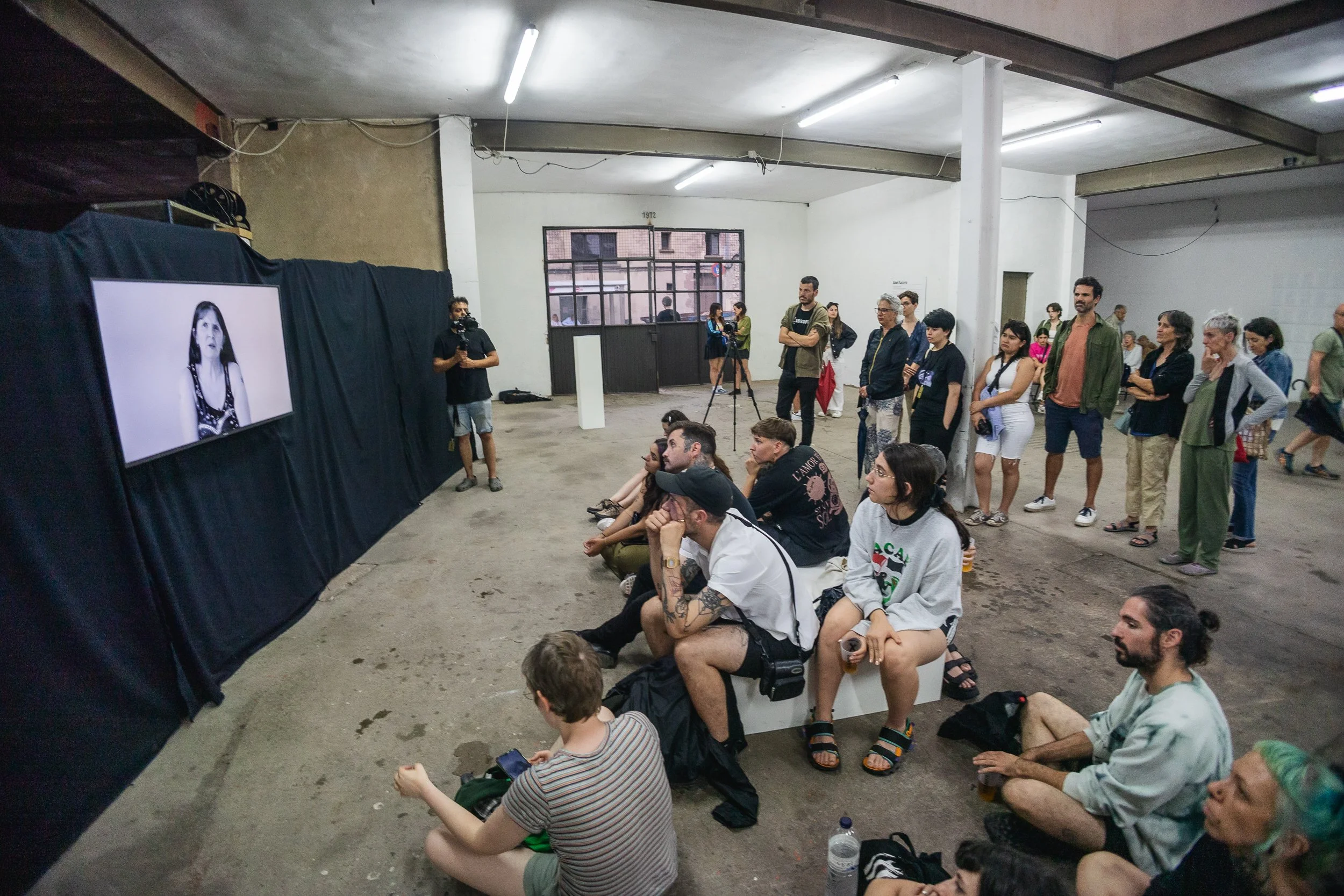
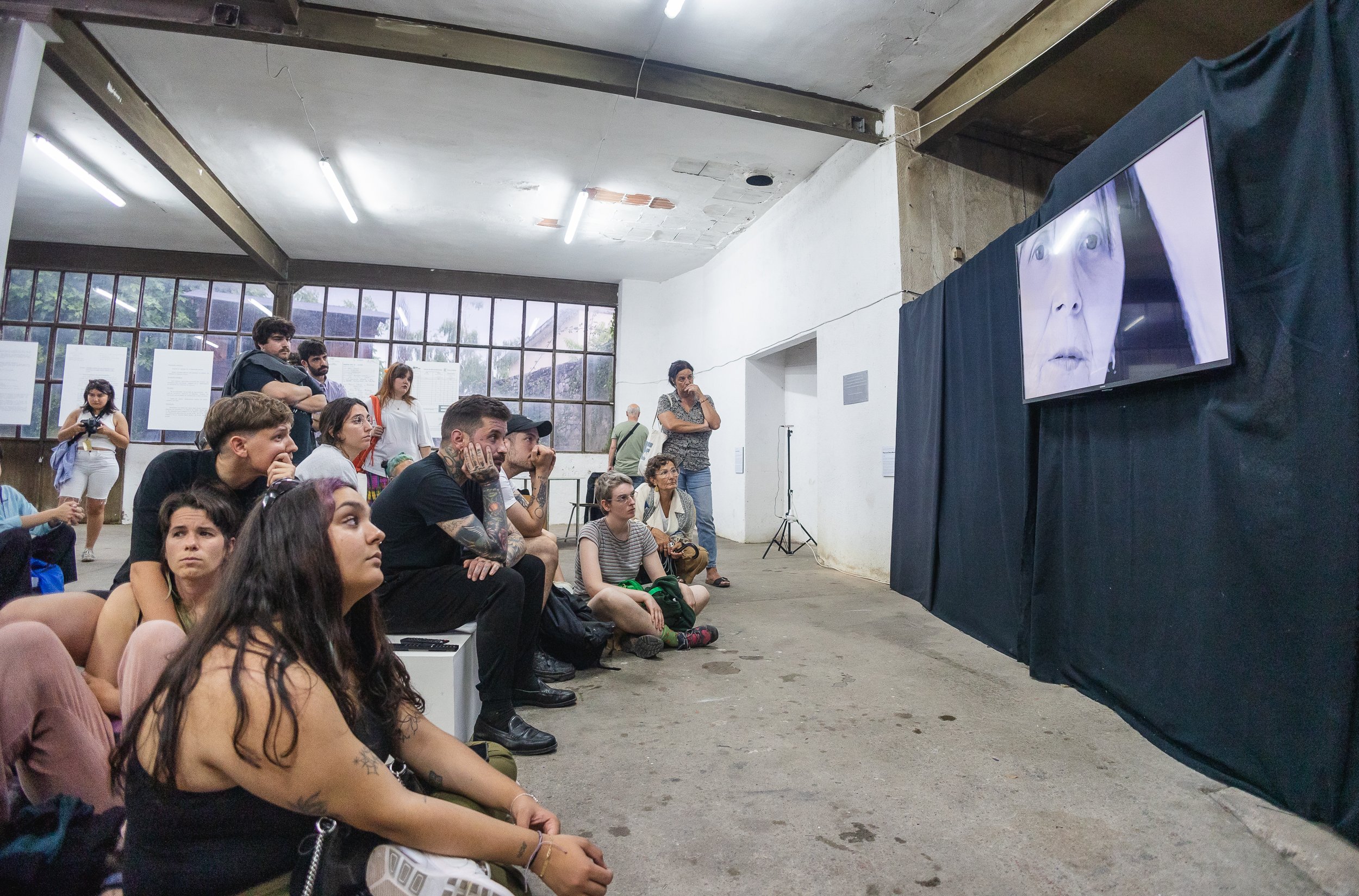
SIXTH BRIEF ACTION - COLLECTIVE VIEWING OF THE WORK SPEAKS THE MOTHER AND SENSATIONS. In this action, Abel Azcona hears for the first time a story that until now he had reconstructed and imagined, the true story of his mother. Now, the mother speaks, and we listen to her memories and the life context traveled from Azcona's abandonment to the present. Azcona invites the audience to share the intimacy and emotions generated by hearing his mother's story for the first time, Isabel Gómez Aranda.
SEXTA ACCIÓN BREVE - VISUALIZACIÓN COLECTIVA DE LA OBRA PARLA LA MARE I SENSACIONS. En esta acción Abel Azcona escucha por primera vez una historia que hasta ahora había reconstruido e imaginado, la verdadera historia de su madre. Ahora, habla la madre y escuchamos sus recuerdos y el contexto vital recorrido desde el abandono de Azcona hasta la actualidad. Azcona invita al público a compartir la intimidad y las emociones generadas al escuchar por primera vez la historia de su madre, Isabel Gómez Aranda.
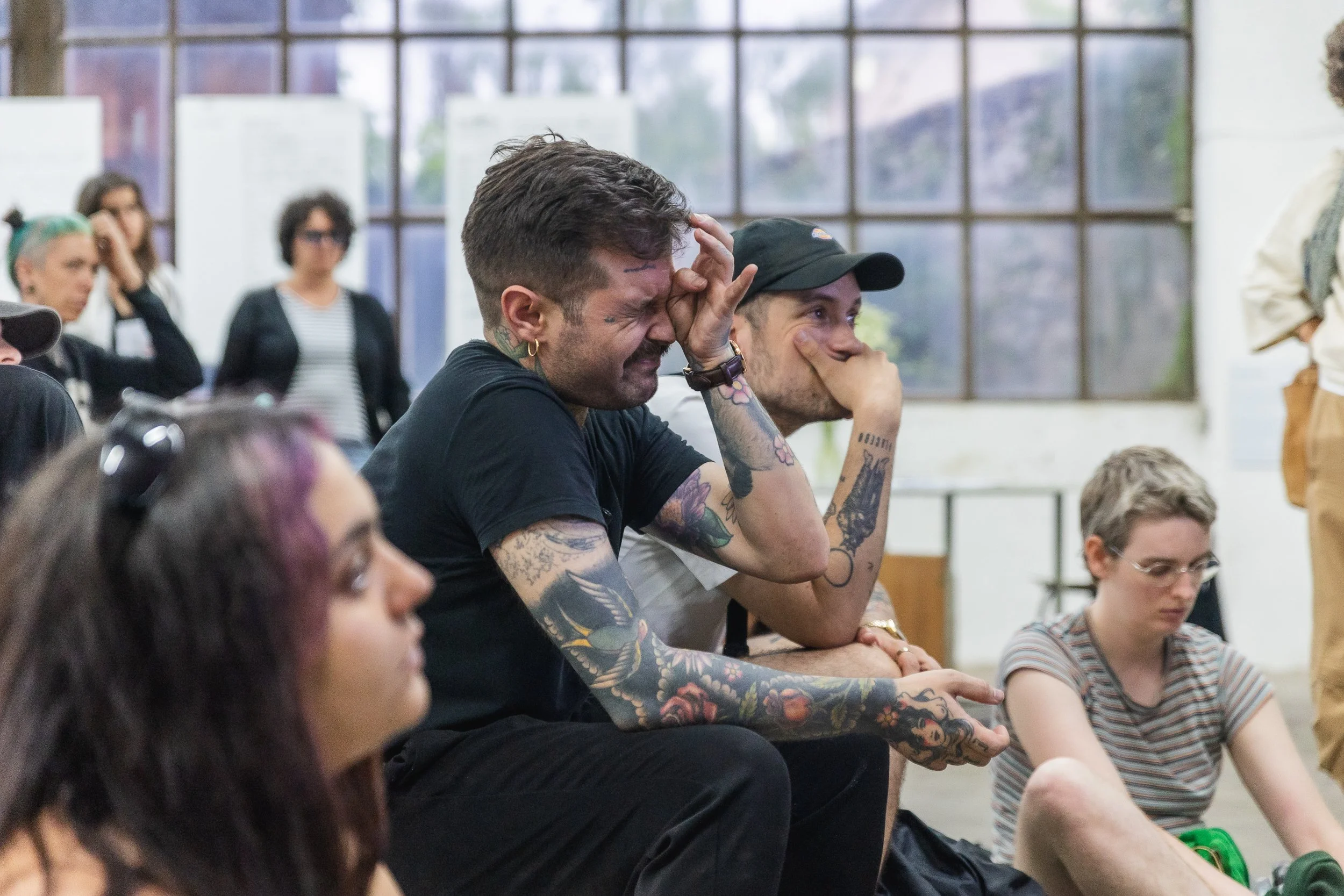
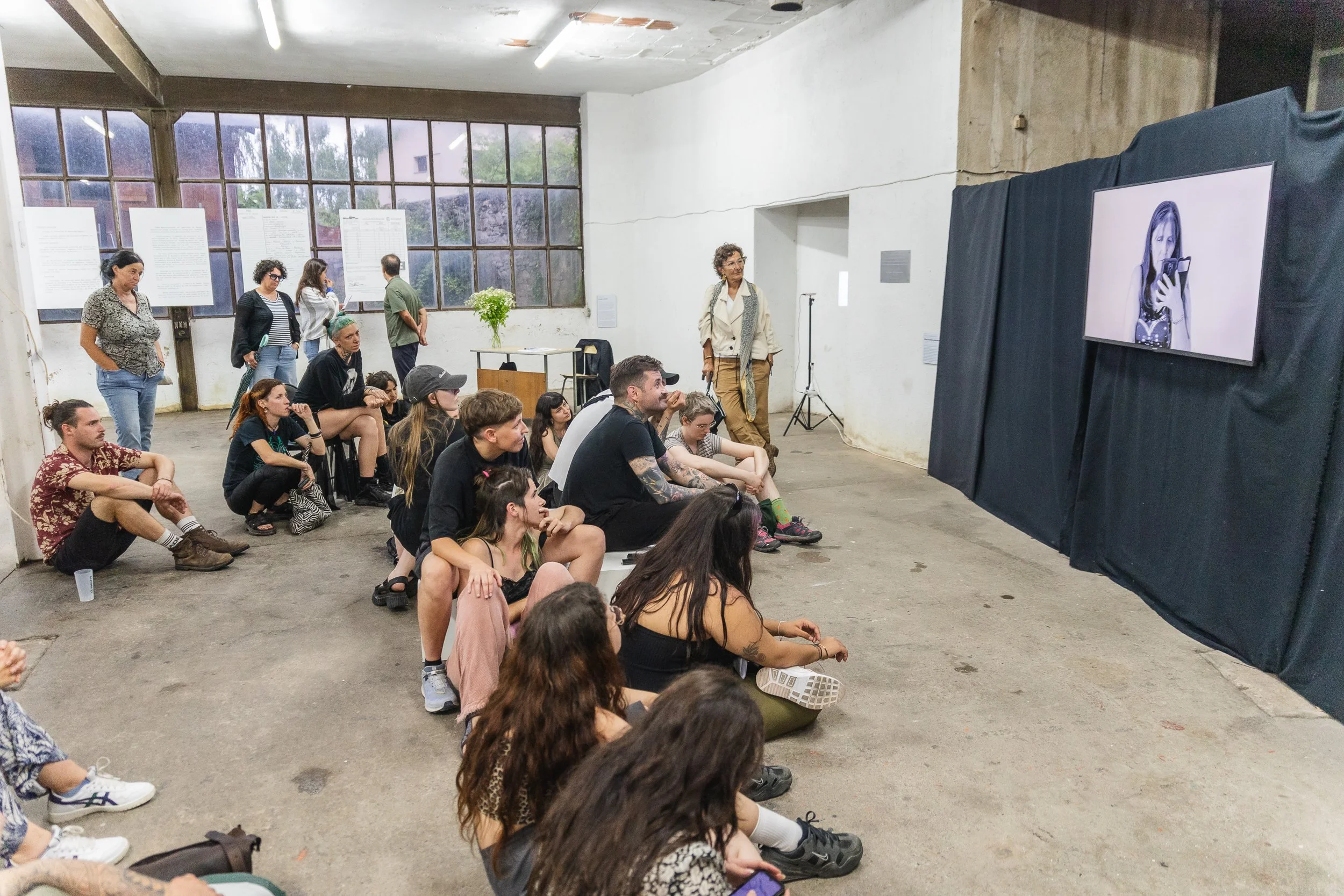
SEVENTH BRIEF ACTION - SHAKING HANDS WITH STRANGERS, AS STRANGE AS MY OWN MOTHER. A body performance in which Azcona offers his hand to strangers. The proximity and affection inherent in a gesture of affection here become a collective, political, and subversive act. Shaking hands with strangers is a preliminary step to shaking hands with his mother, as unknown to him as any of the attendees.
SÉPTIMA ACCIÓN BREVE - DAR LA MANO A DESCONOCIDOS, TAN DESCONOCIDOS COMO MI PROPIA MADRE. Acción de performance corporal en la que Azcona ofrece su mano a desconocidos. La proximidad y la afectividad propia de un gesto de cariño aquí es un acto colectivo, político y subversivo. Dar la mano a desconocidos es un paso previo al momento de dar la mano a su madre, tan desconocida para él como cualquiera de los asistentes.
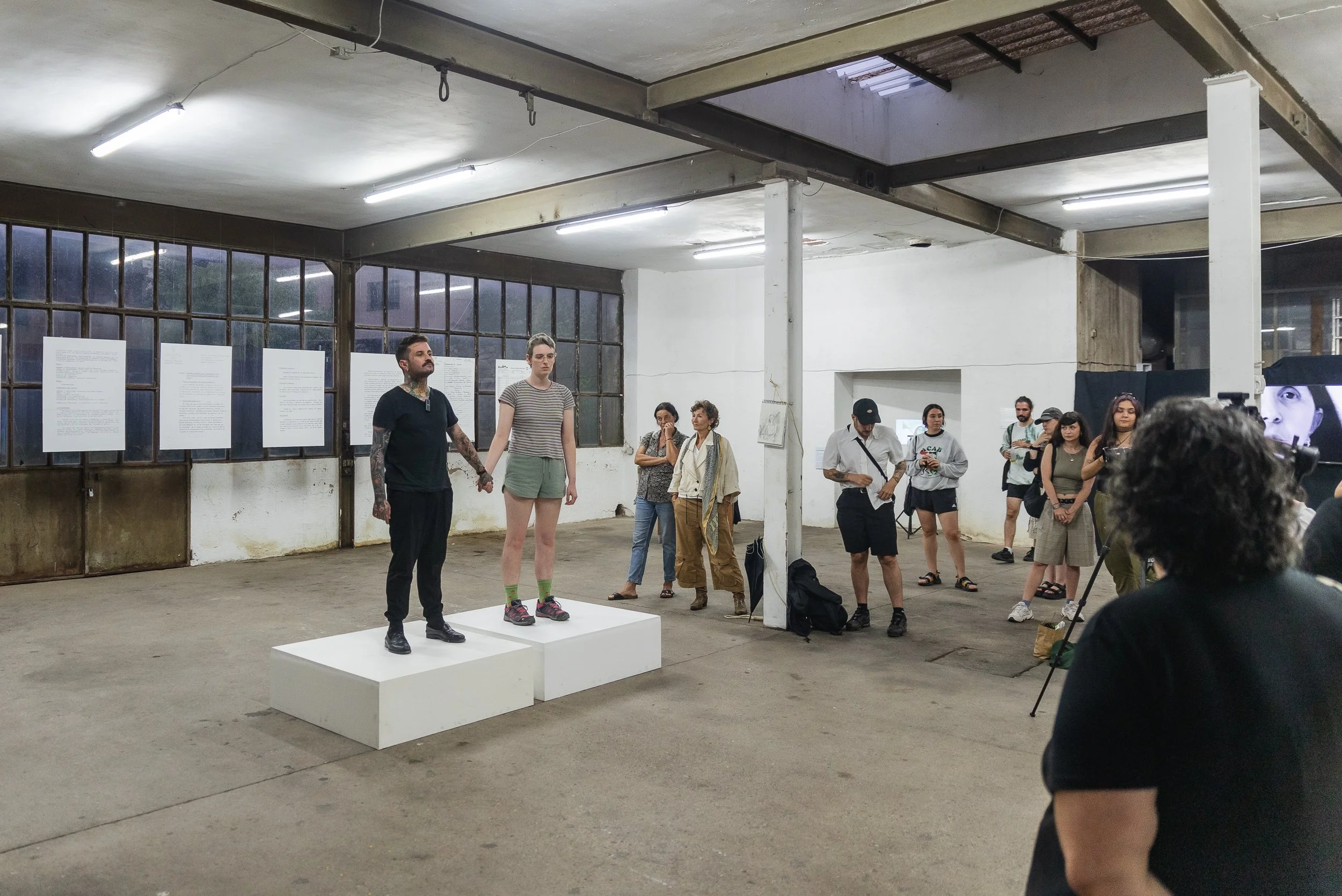
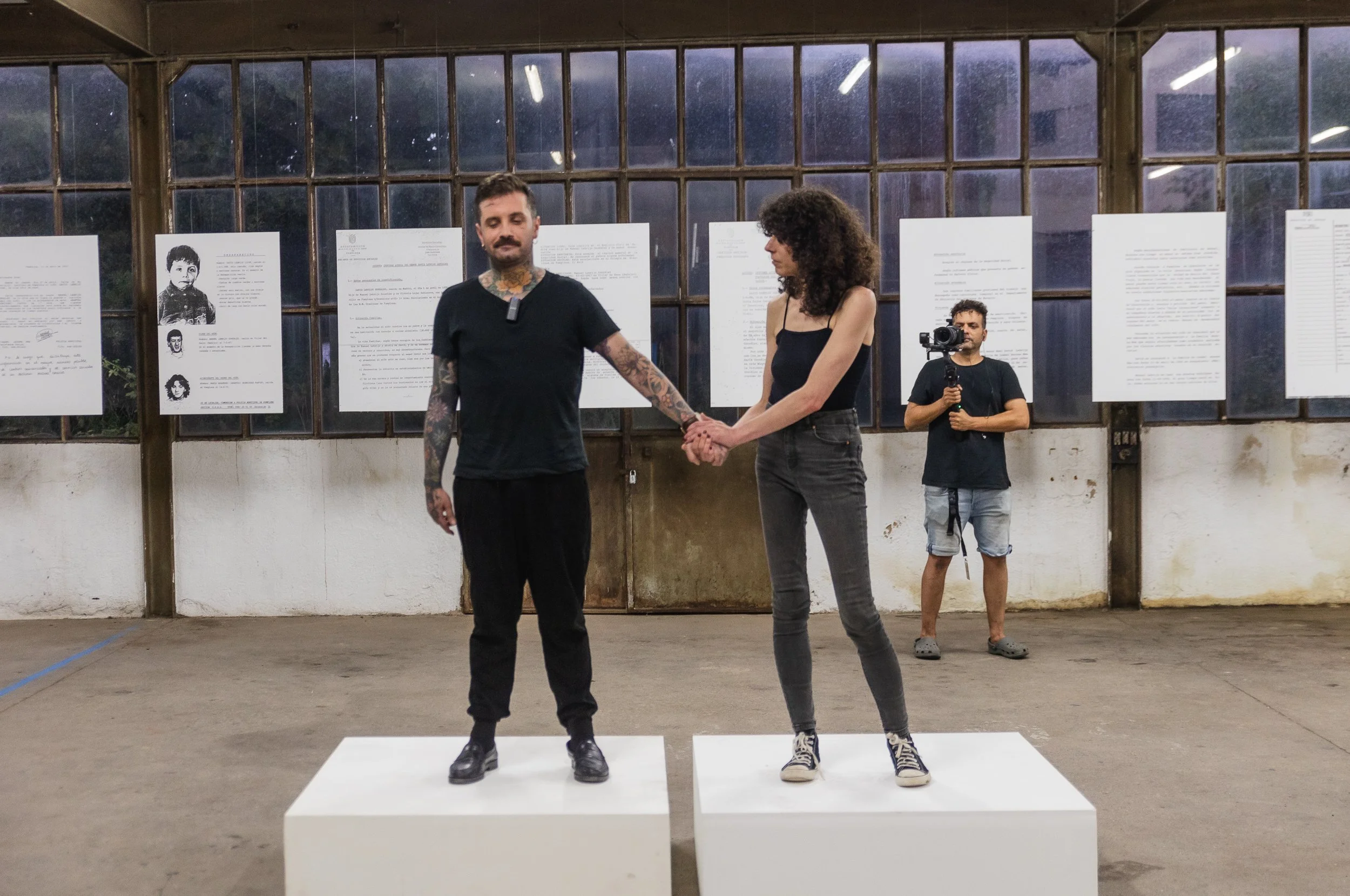
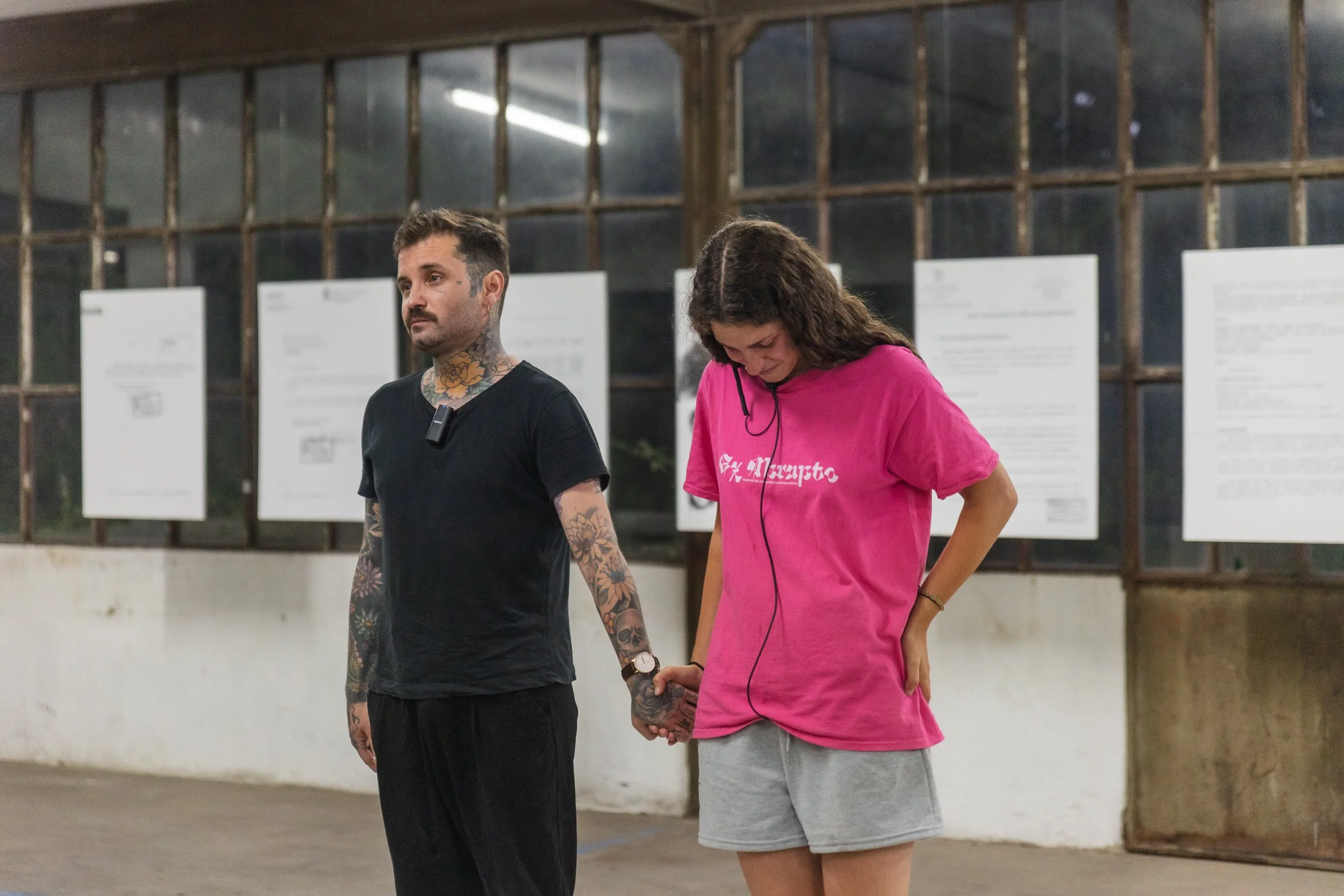
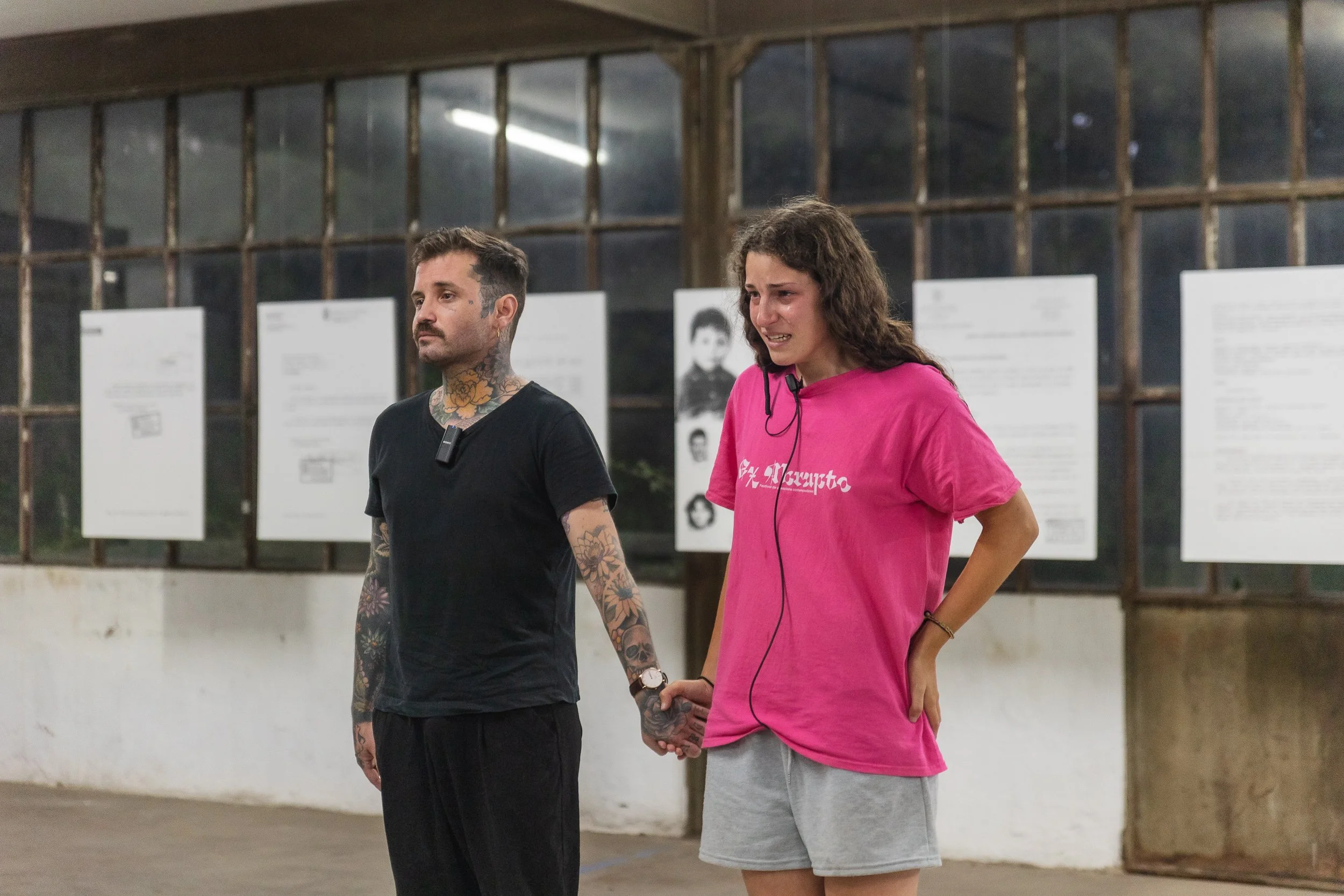
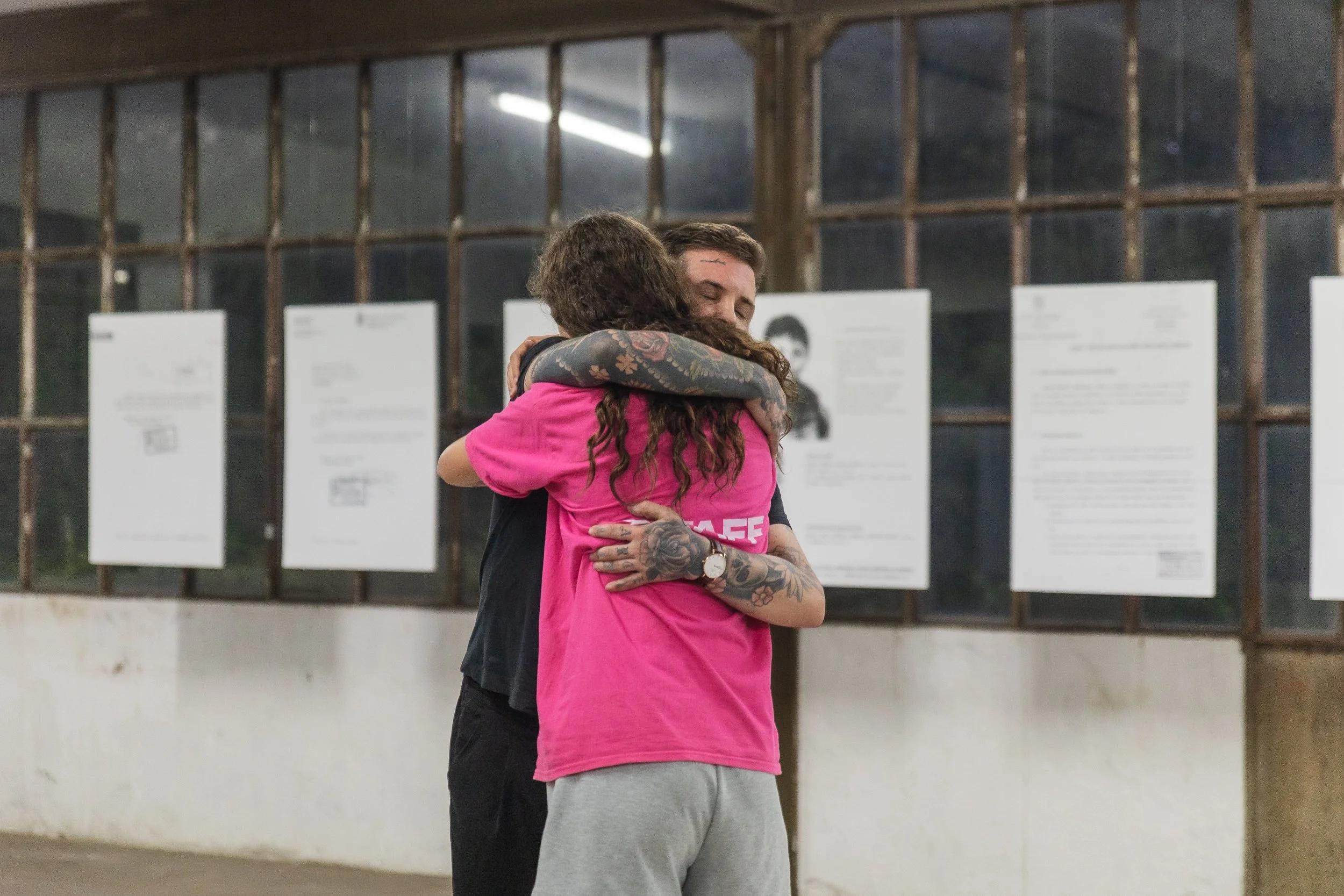
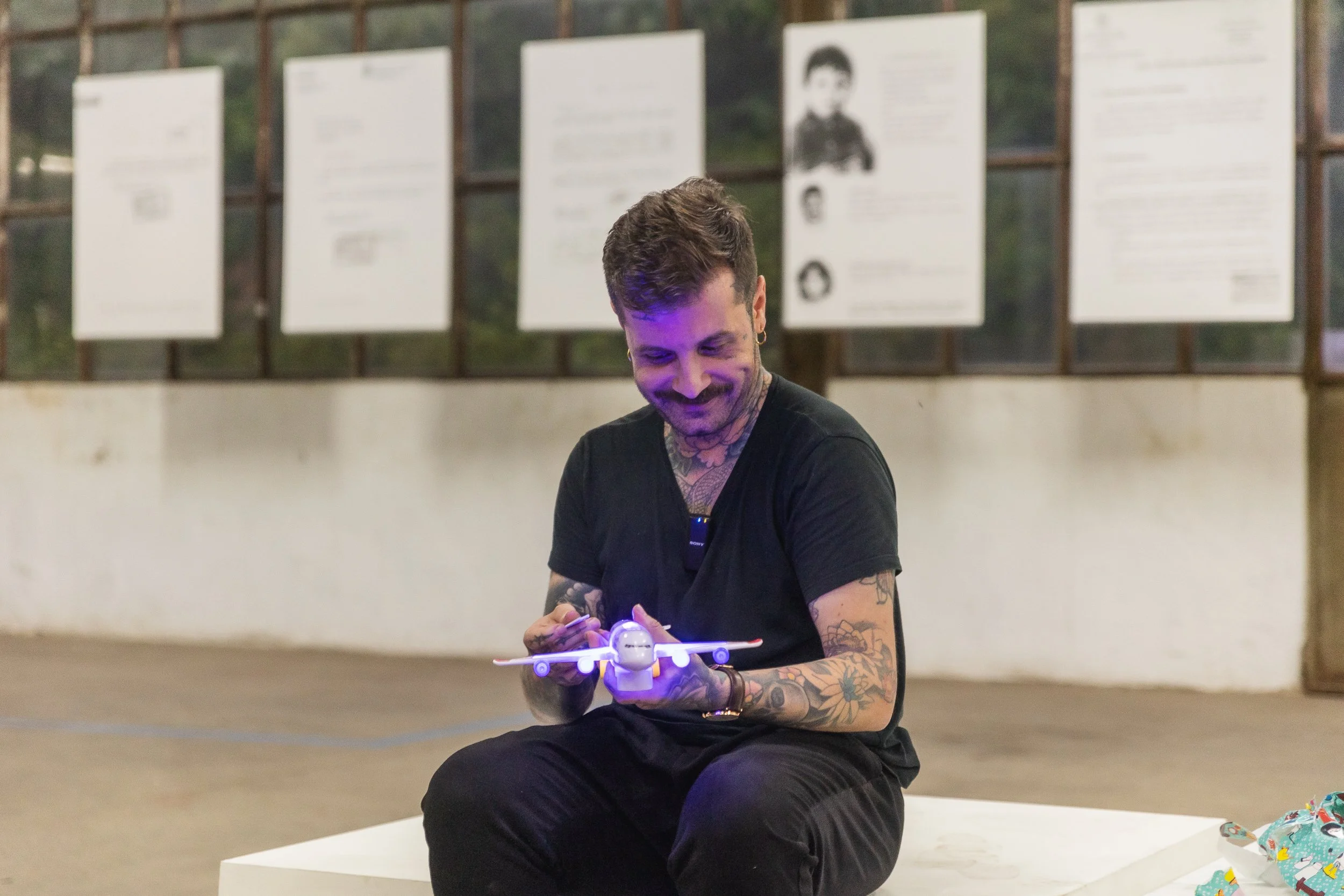
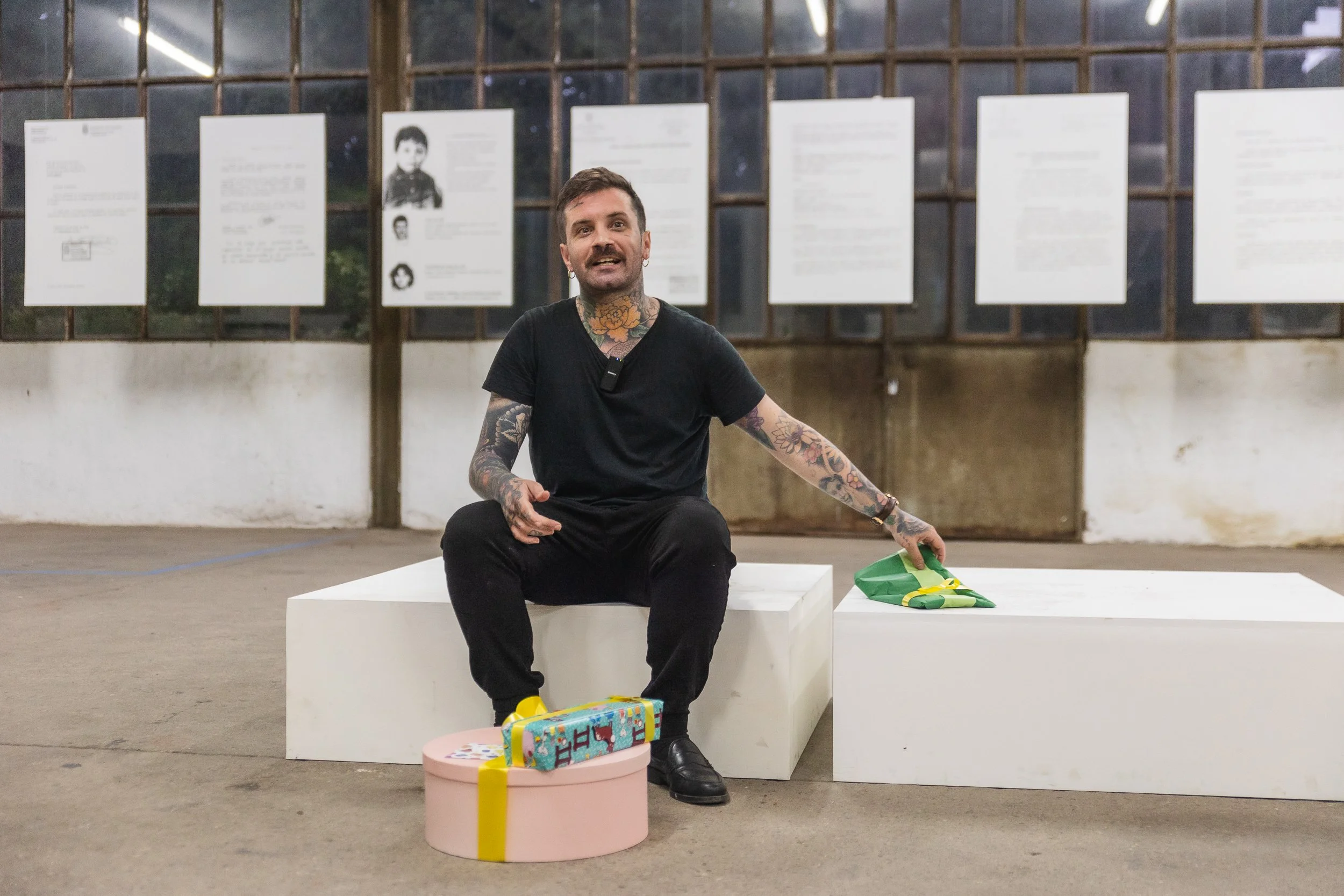
EIGHTH BRIEF ACTION - THE FIRST GIFT IN THIRTY-SIX YEARS. A common event, receiving a birthday gift from a mother, is an experience that Abel Azcona does not know. The performative action will consist of receiving for the first time a gift chosen by Isabel, his biological mother, whom he has not yet met. Imagining the absences and feelings of all his previous birthdays, Azcona will receive his first gift in thirty-six years.
OCTAVA ACCIÓN BREVE - EL PRIMER REGALO EN TREINTA Y SEIS AÑOS. Un hecho común, recibir el regalo de cumpleaños de una madre, es una experiencia que Abel Azcona desconoce. La acción performativa consistirá en recibir por primera vez un regalo escogido por Isabel, su madre biológica, a quien todavía no conoce. Imaginando las ausencias y sentimientos de todos sus anteriores cumpleaños, Azcona recibirá su primer regalo en treinta y seis años.
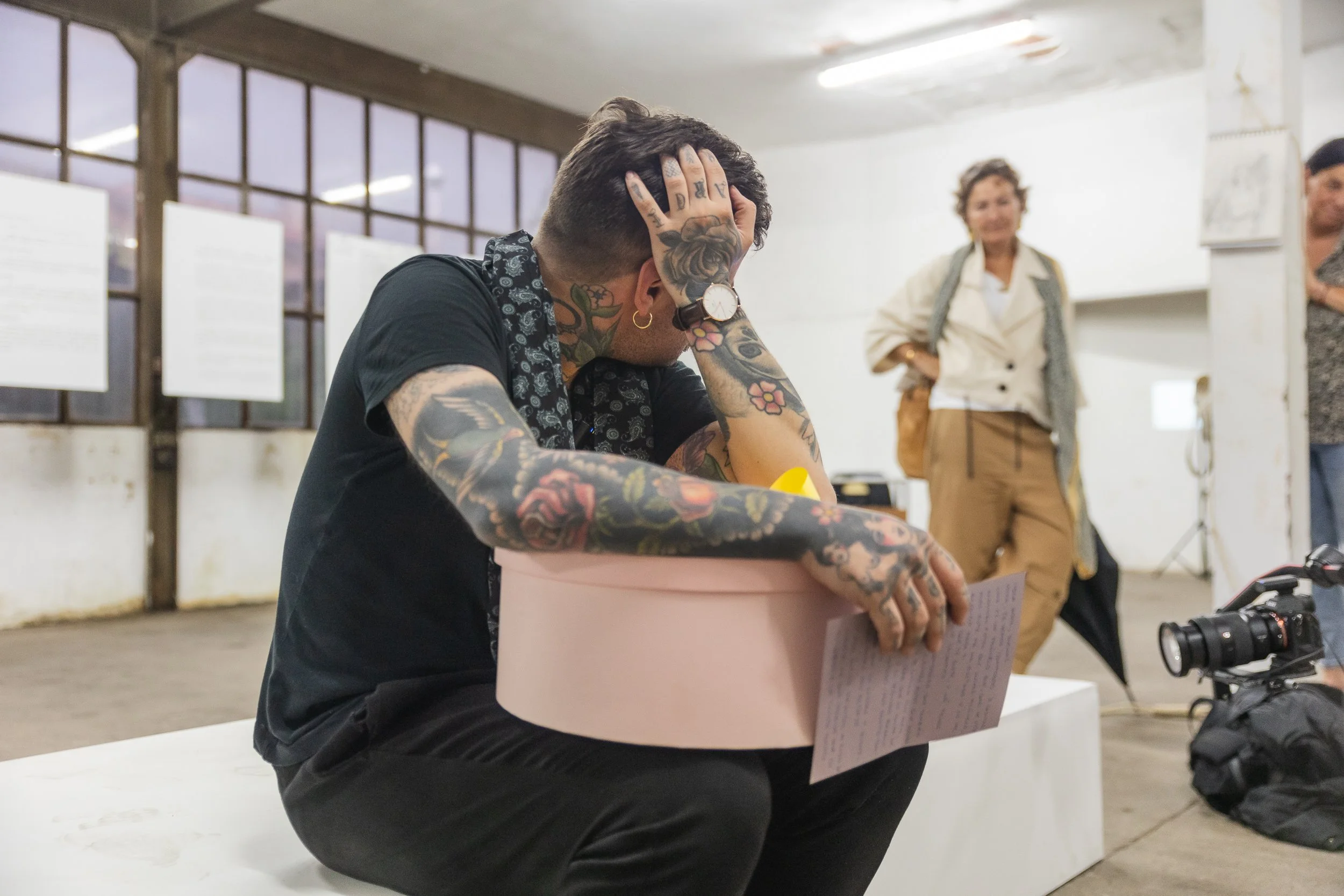
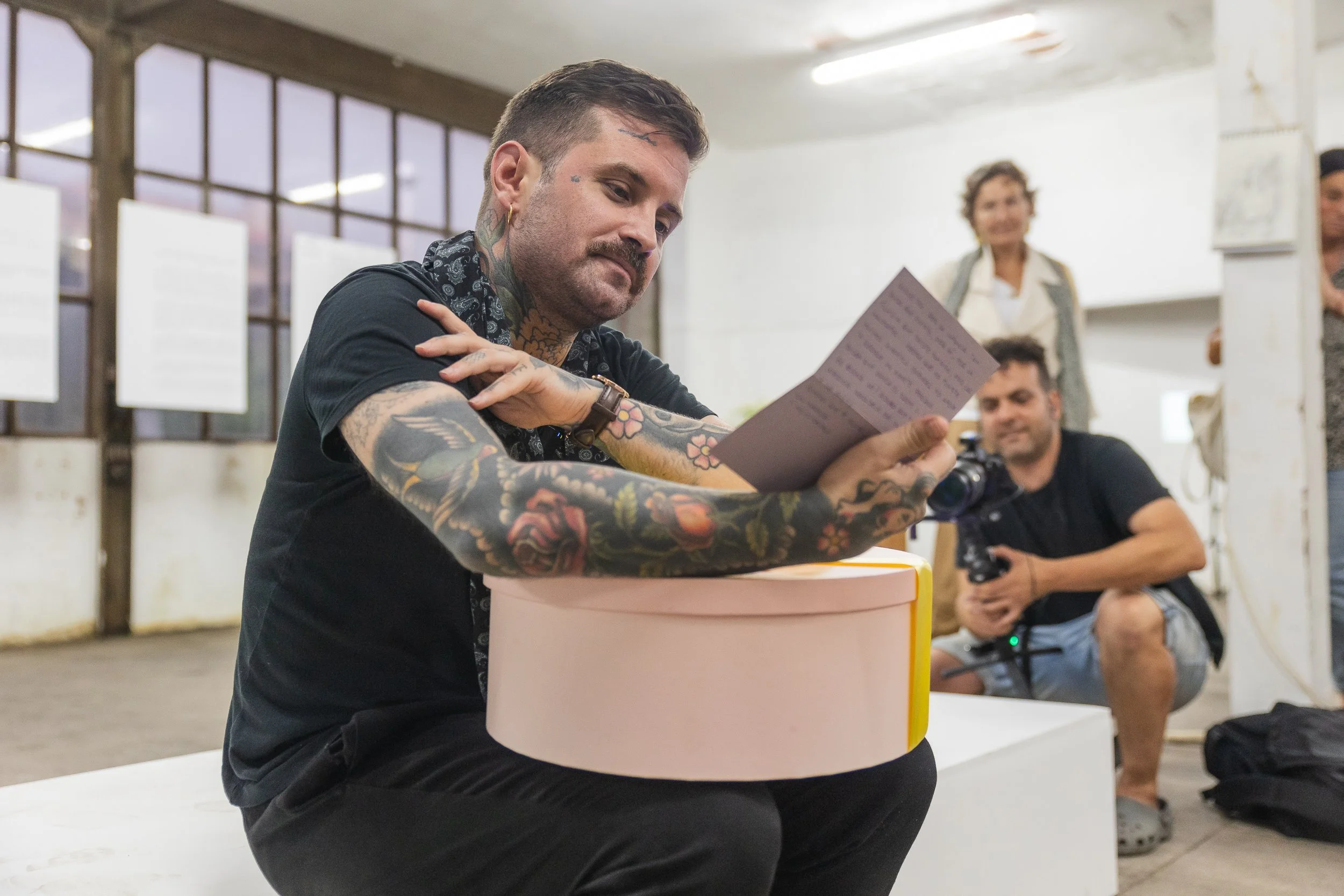
NOVENA ACCIÓN BREVE - LA CARTA DE INVITACIÓN. Última acción donde el artista mediante palabra y voz escribirá una carta de invitación a su madre, Isabel Gómez Aranda, invitándola a la última acción performativa donde ambos se conocerán, finalmente, en persona.
NINTH BRIEF ACTION - THE INVITATION LETTER. The final action where the artist, through words and voice, will write an invitation letter to his mother, Isabel Gómez Aranda, inviting her to the last performative action where the two will finally meet in person.
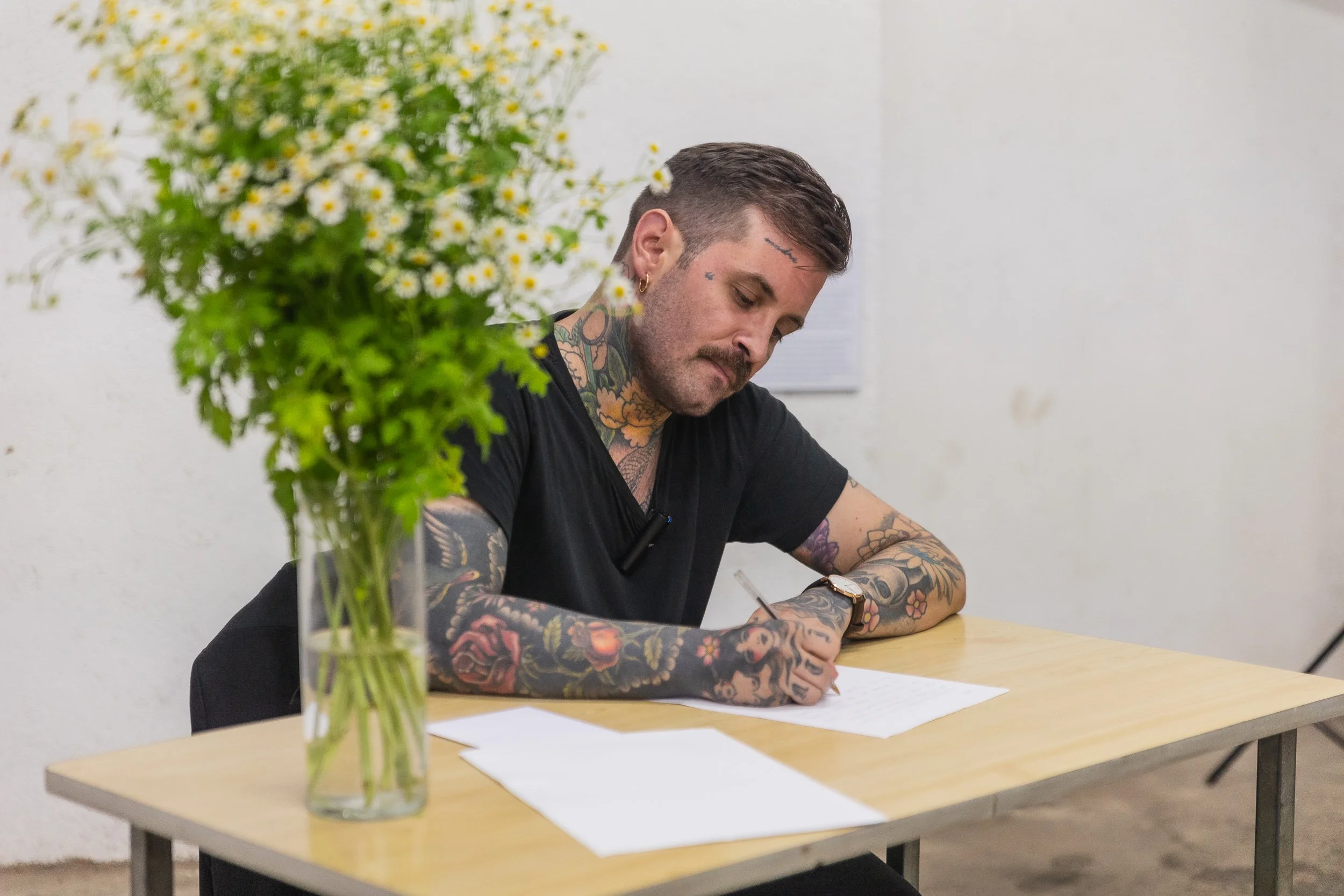
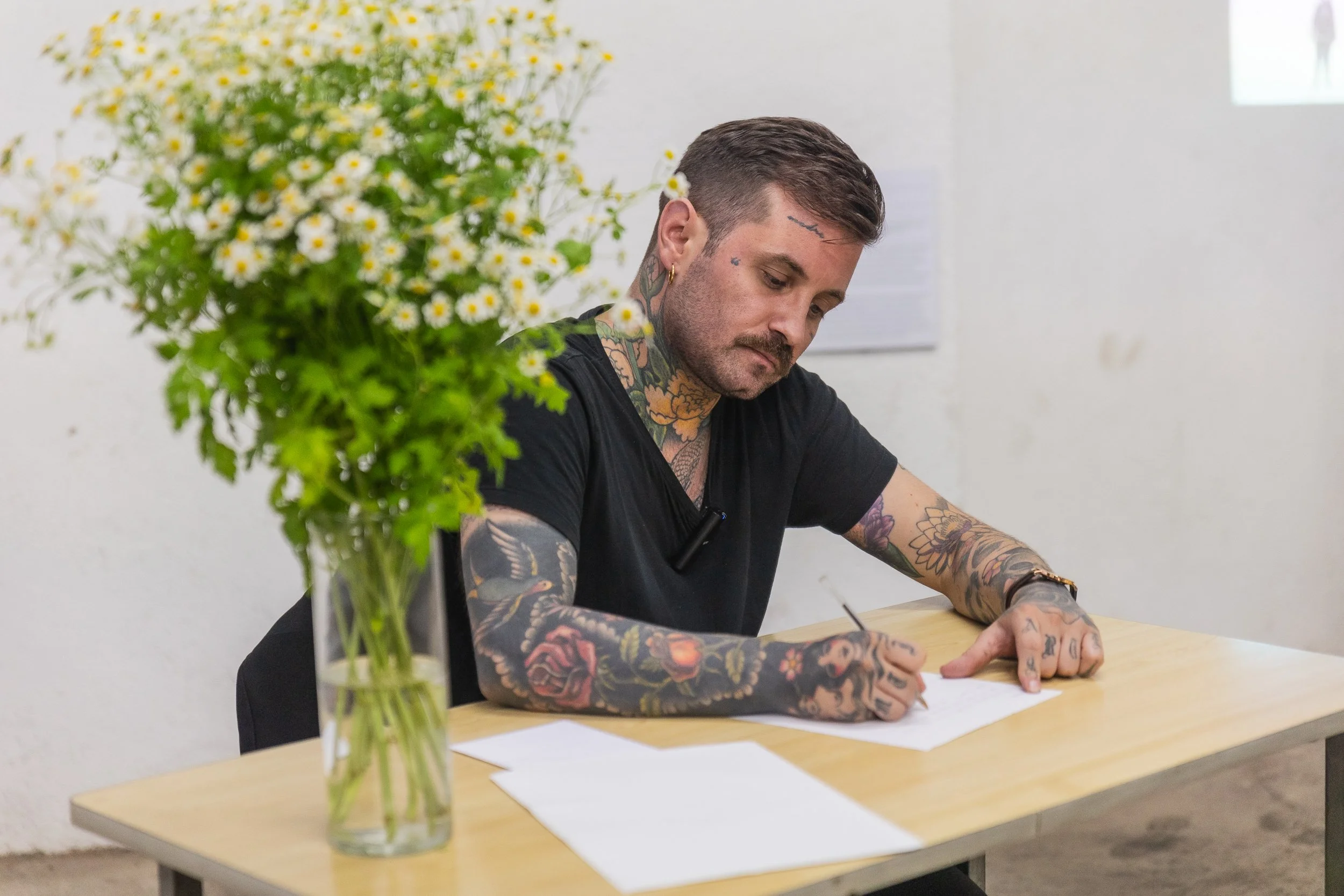
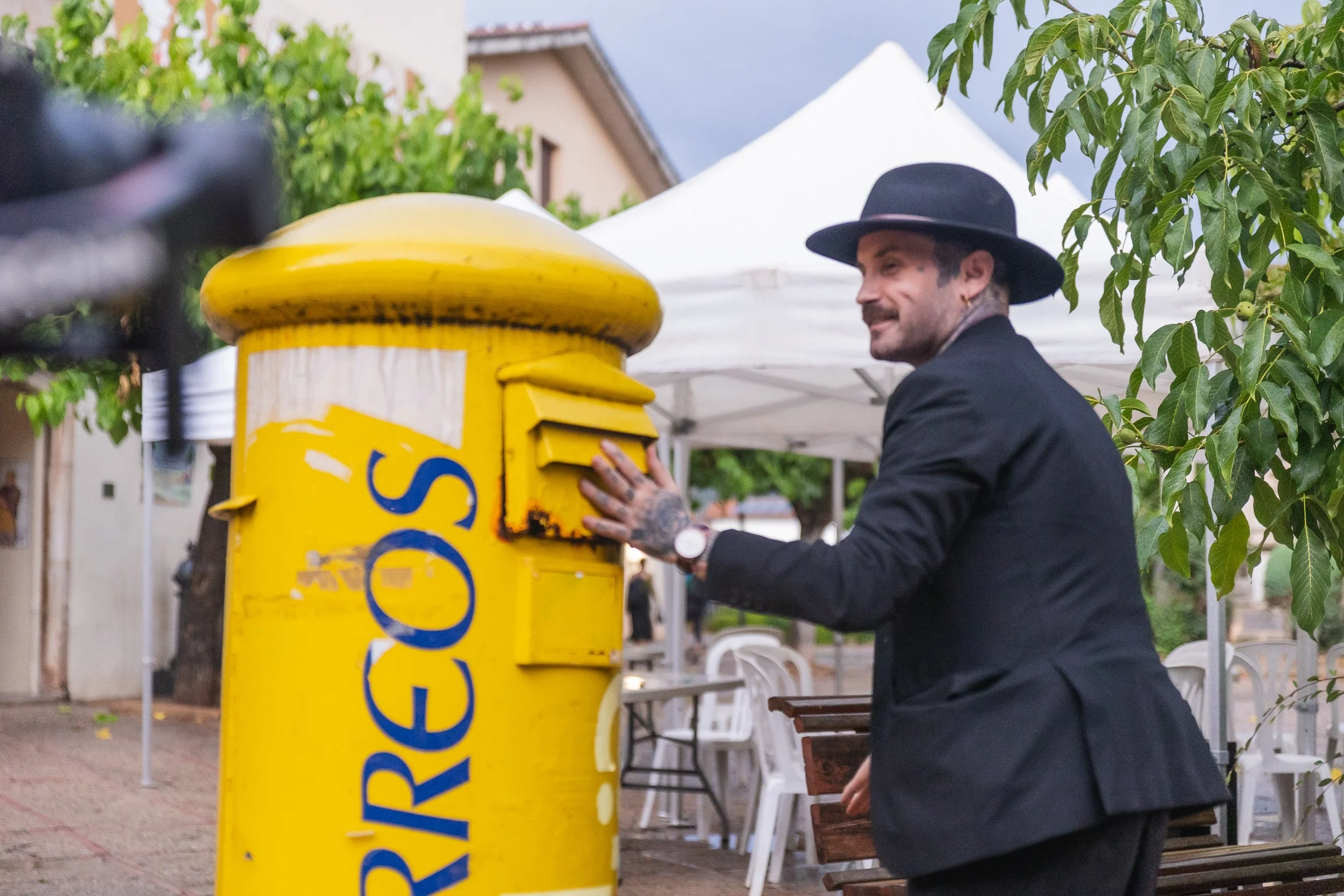
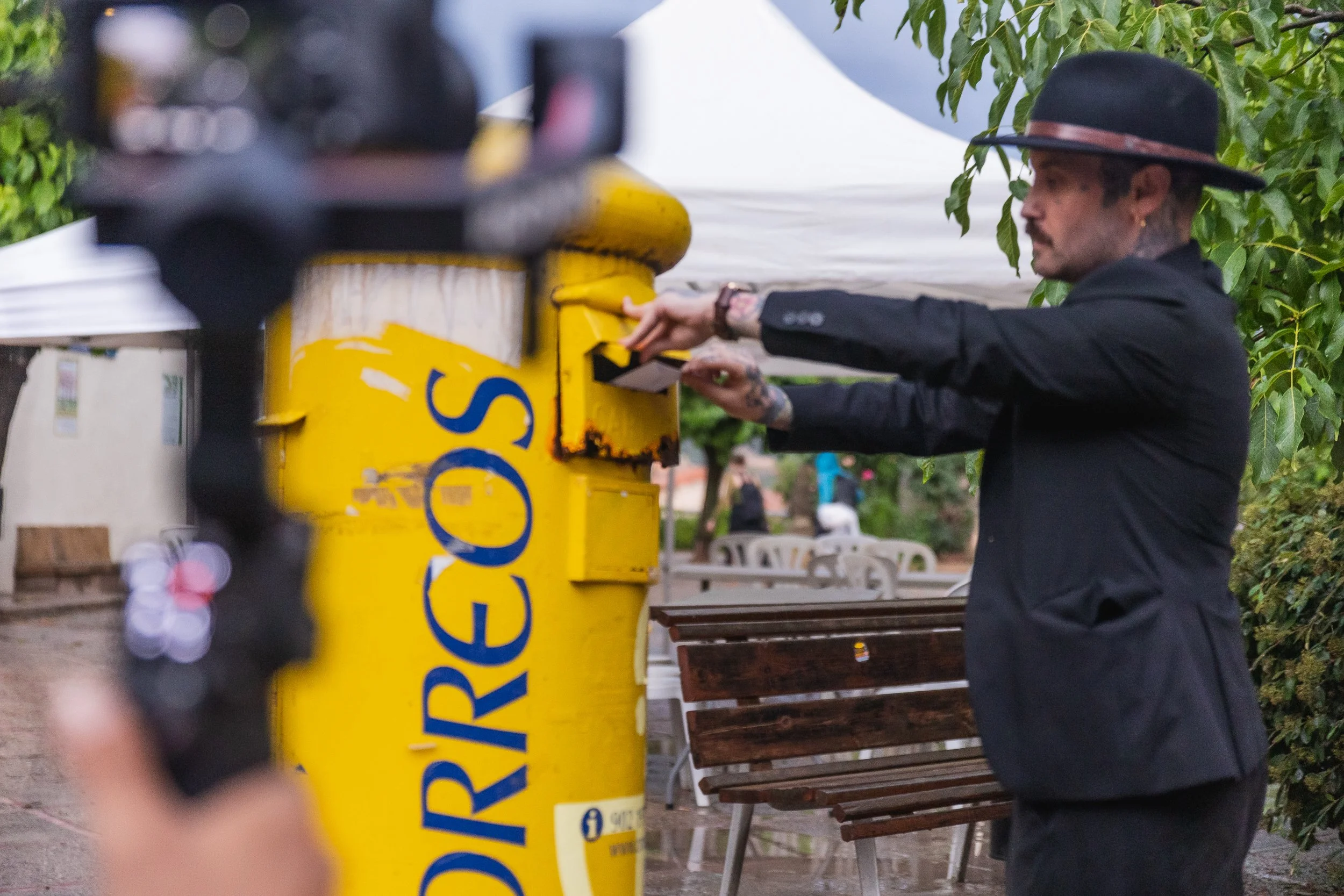
THE TWELFTH STEP. After several exhibitions centered on the maternal figure and their closure, both in Amsterdam and in different parts of Spain, Abel Azcona opens an exhibition at the National Gallery of Costa Rica titled Killing the Father. This exhibition compiles all of Azcona’s works related to the paternal figure and, through performance—together with the discourse of the new mother in video and in the handwritten piece—he brings each of them to a close.
EL DUODÉCIMO PASO. Tras varias exposiciones en torno la figura materna y el cierre, tanto en Amsterdam como en diferentes puntos de España, Abel Azcona inaugura en la ía Galería Nacional de Costa Rica una muestra bajo el título Matar al padre. En esta exposición se recopilan todas las obras de Azcona en torno la figura paterna y mediante performance y con el discurso de la nueva madre en video y en la pieza manuscrita, cierra cada una de ellas.
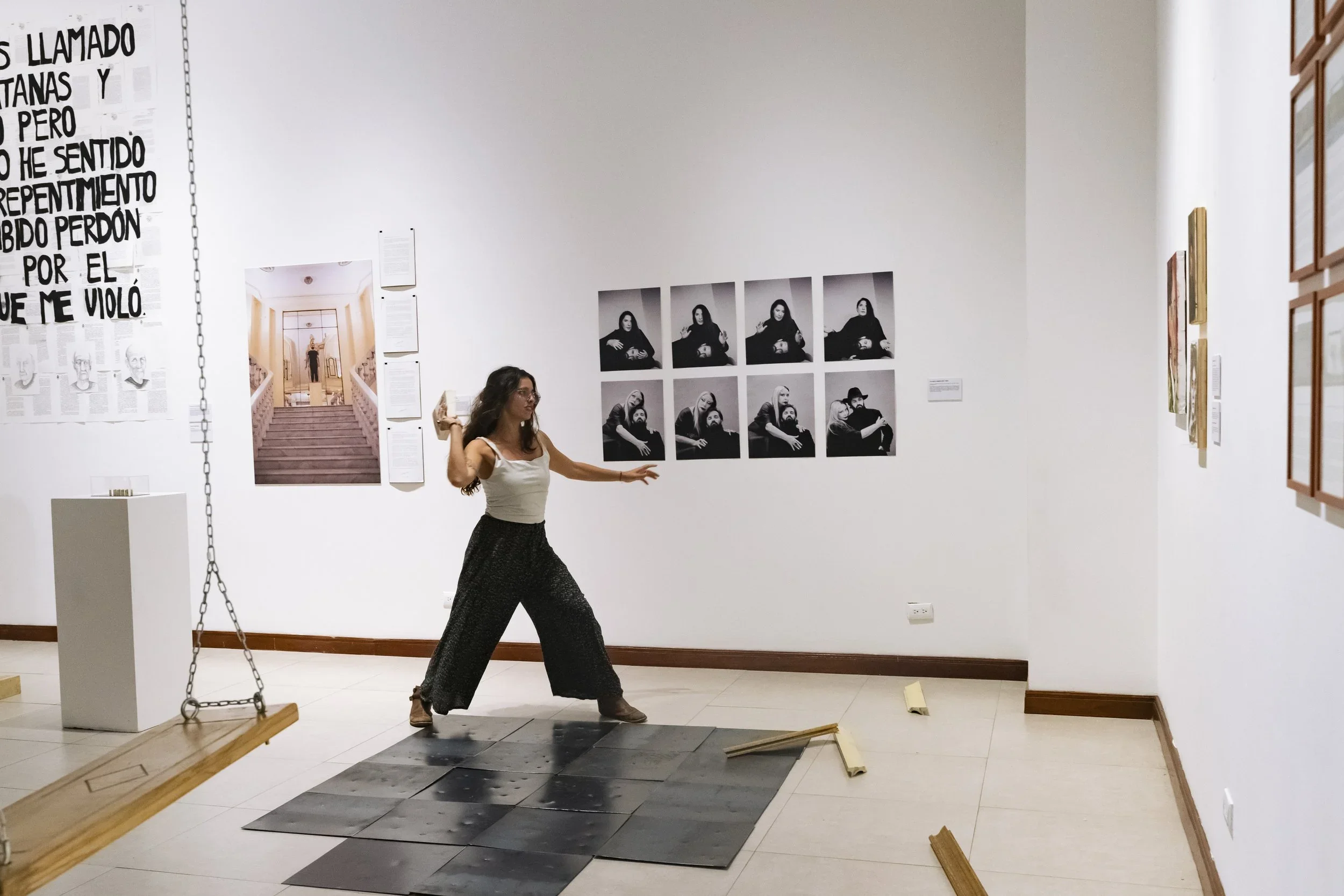
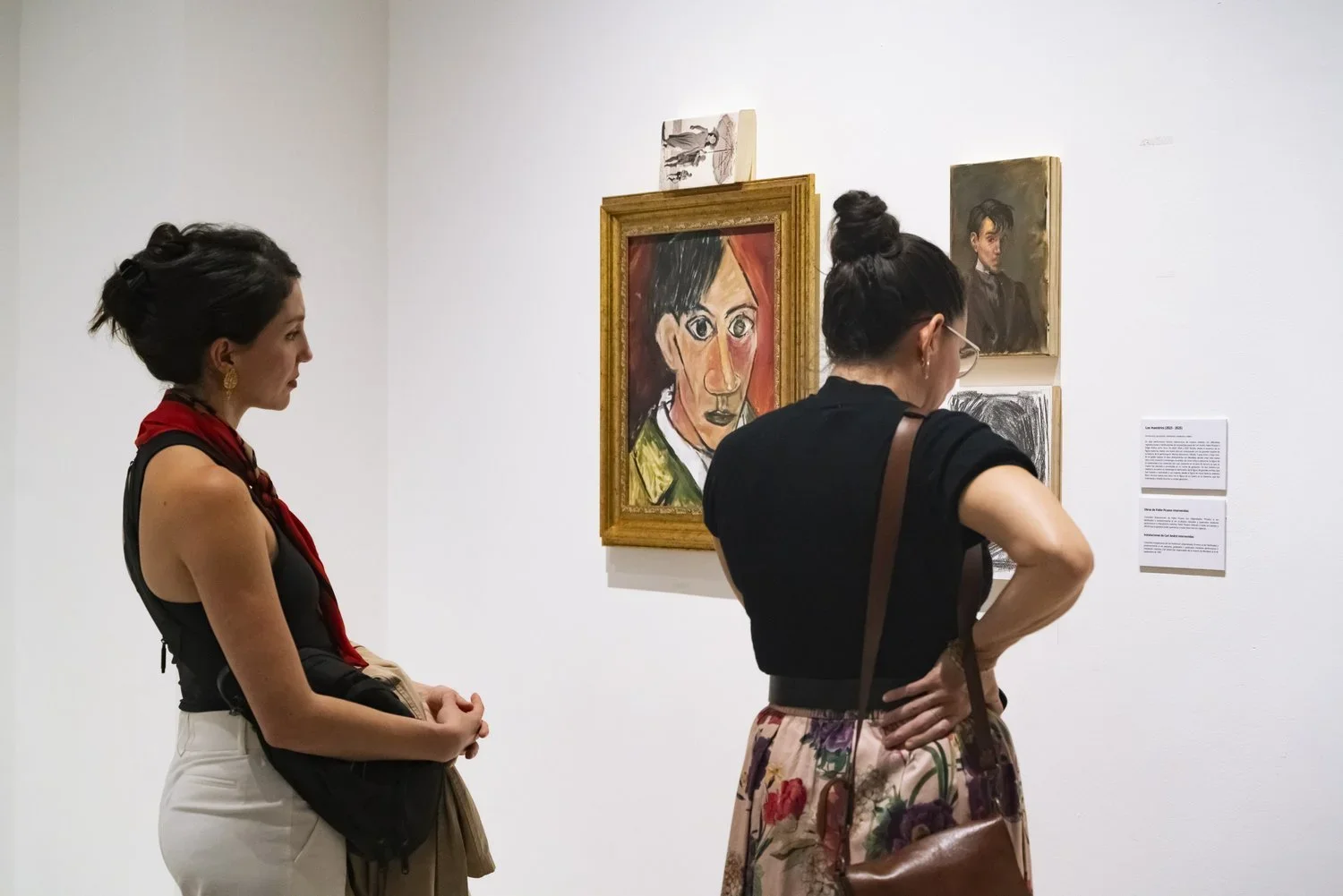
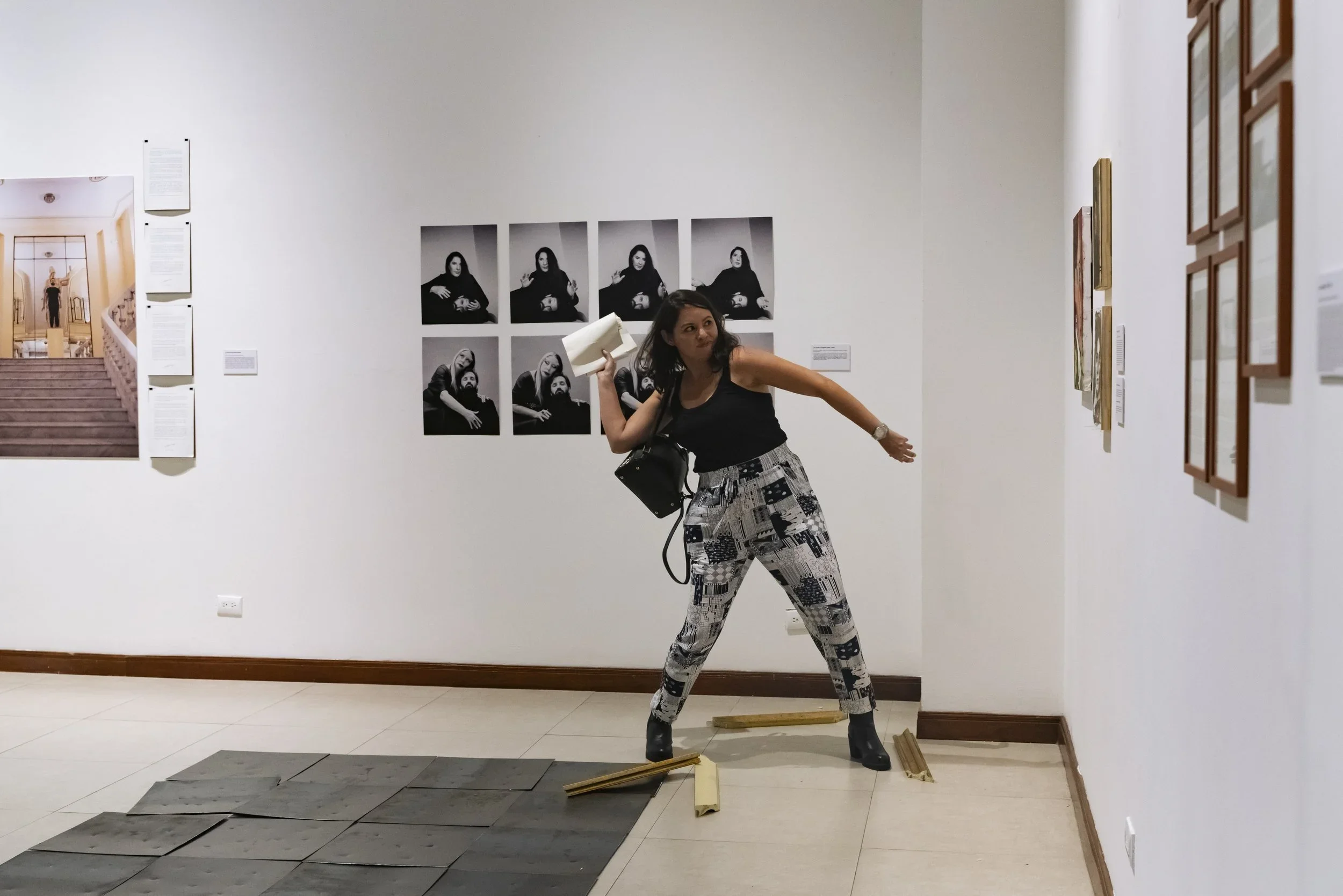
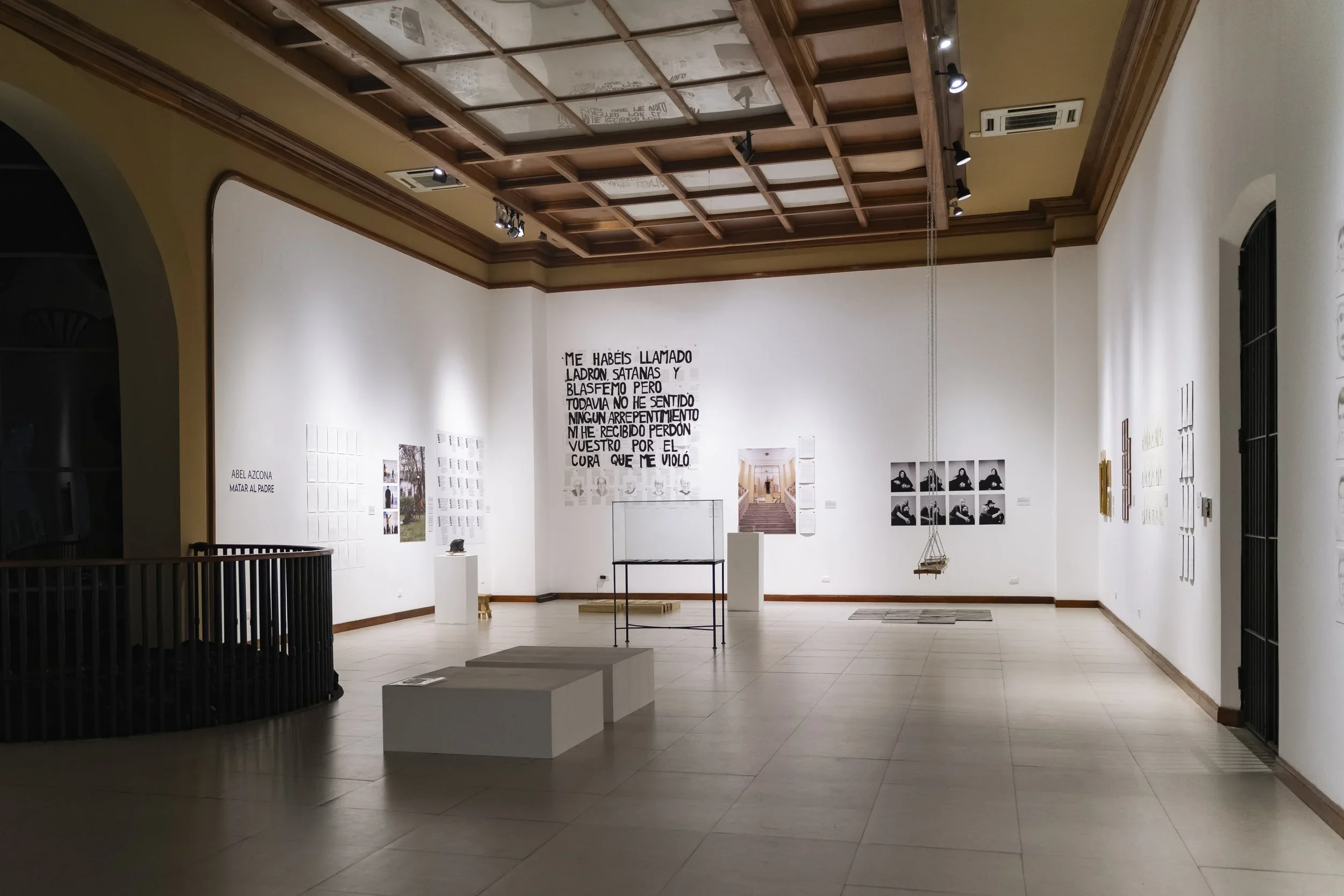
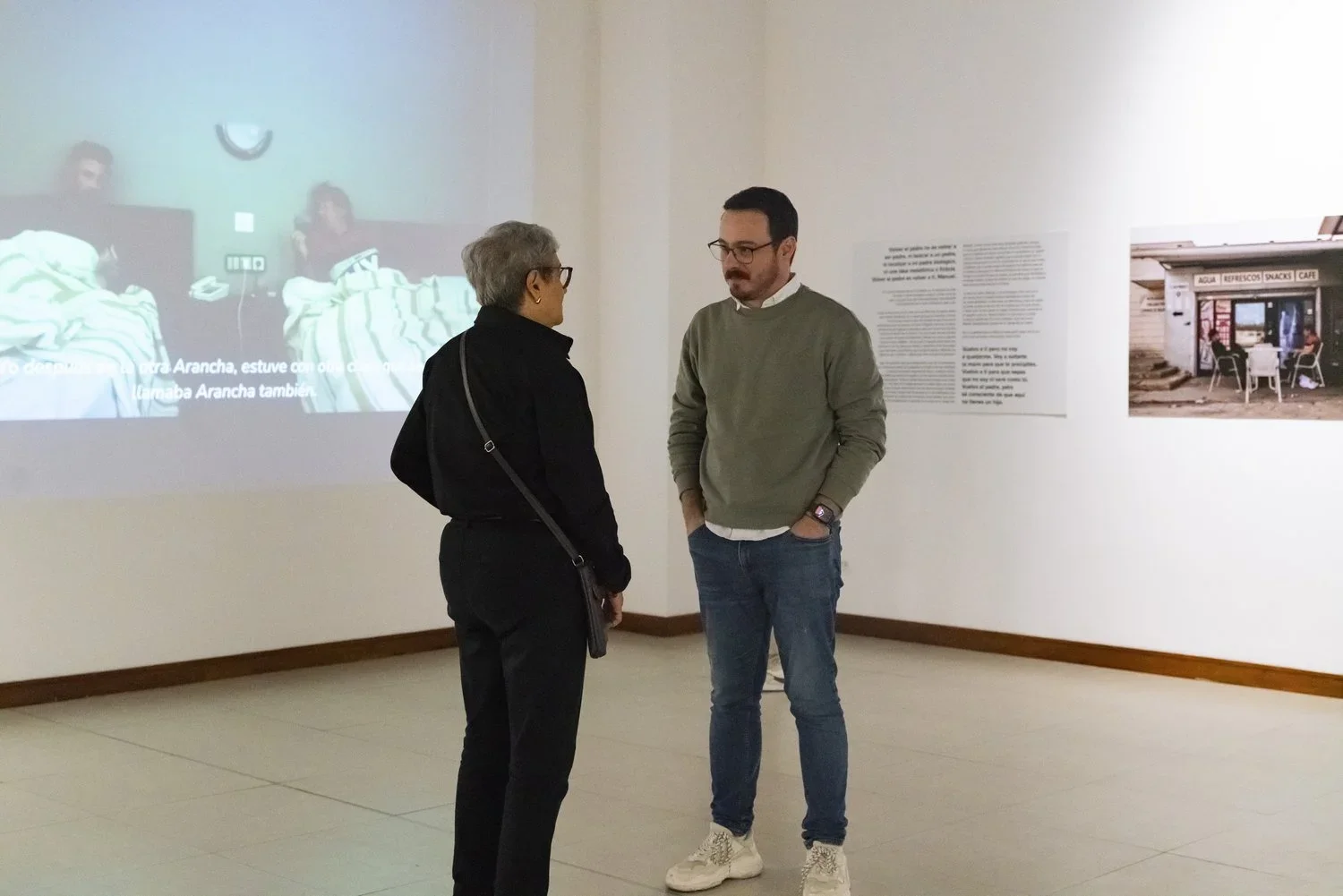
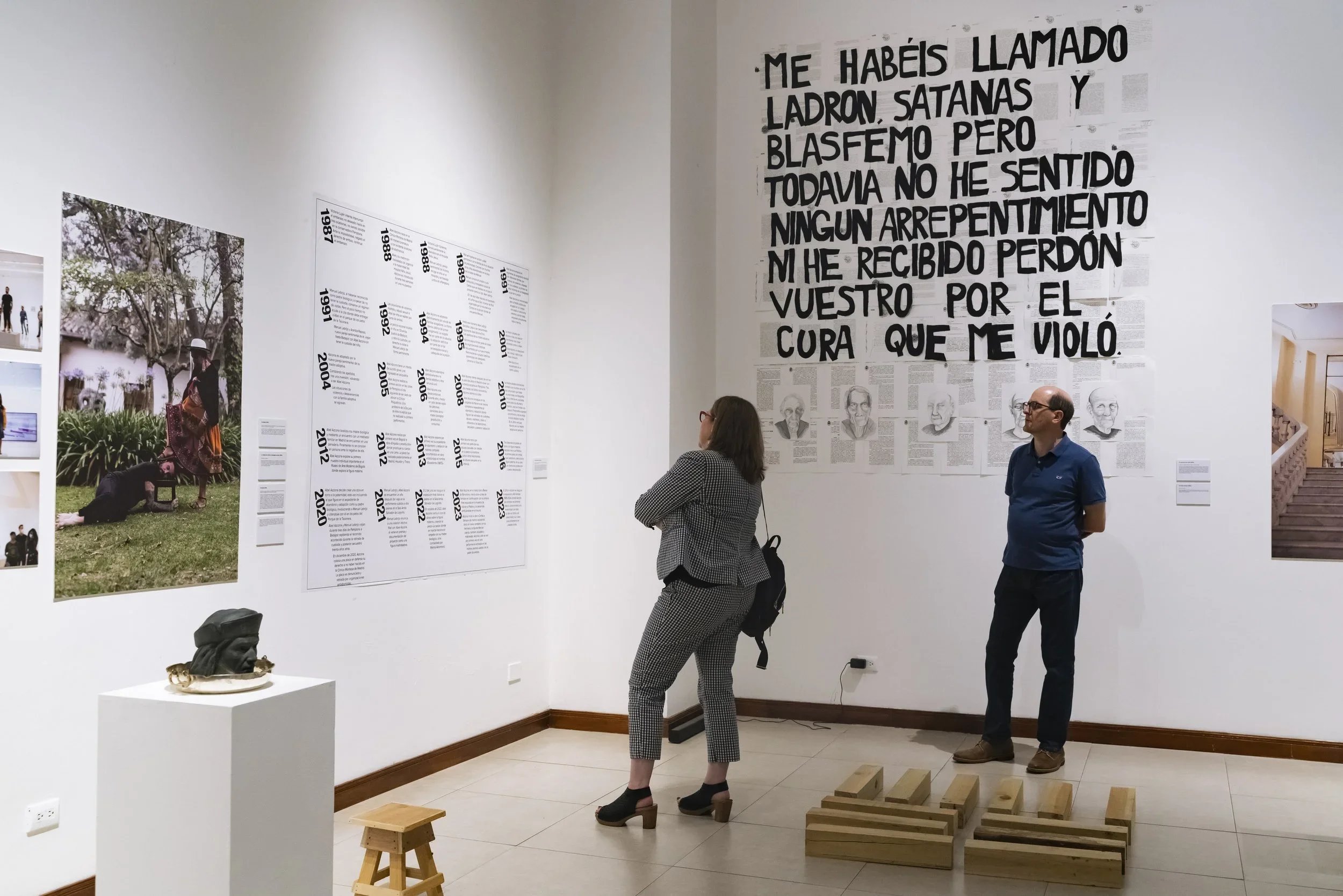
THE THIRTEENTH STEP is a long-duration performance that took place in Santiago de Compostela. Having received the complete piece Exegesis from the mother, Azcona decided to create a similar piece in the first person. But this time, it is a reflection on all the pain, traumas, and violence suffered after mandatory birth. It is an argument for the right not to have been born, written in more than fifty consecutive handwritten pages without pause, in the center of the museum. Since then, the handwritten piece has belonged to the permanent collection of the CGAC, the Galicia Contemporary Art Center.
EL DECIMOTERCER PASO es una performance de larga duración acontecida en Santiago de Compostela. Al haber recibido Azcona la pieza completa Exegesis de la madre, decide crear en primera persona una pieza similar. Pero esta vez una reflexión sobre todos los dolores, traumas y violencias sufridas tras el nacimiento obligatorio. Un alegato a ese derecho a no haber nacido en más de cincuenta hojas manuscritas de manera consecutiva y sin descanso en el centro del museo. Desde entonces la pieza manuscrita pertenece a la coleccion permanente del CGAC, Centro de Arte Contemporáneo de Galicia.
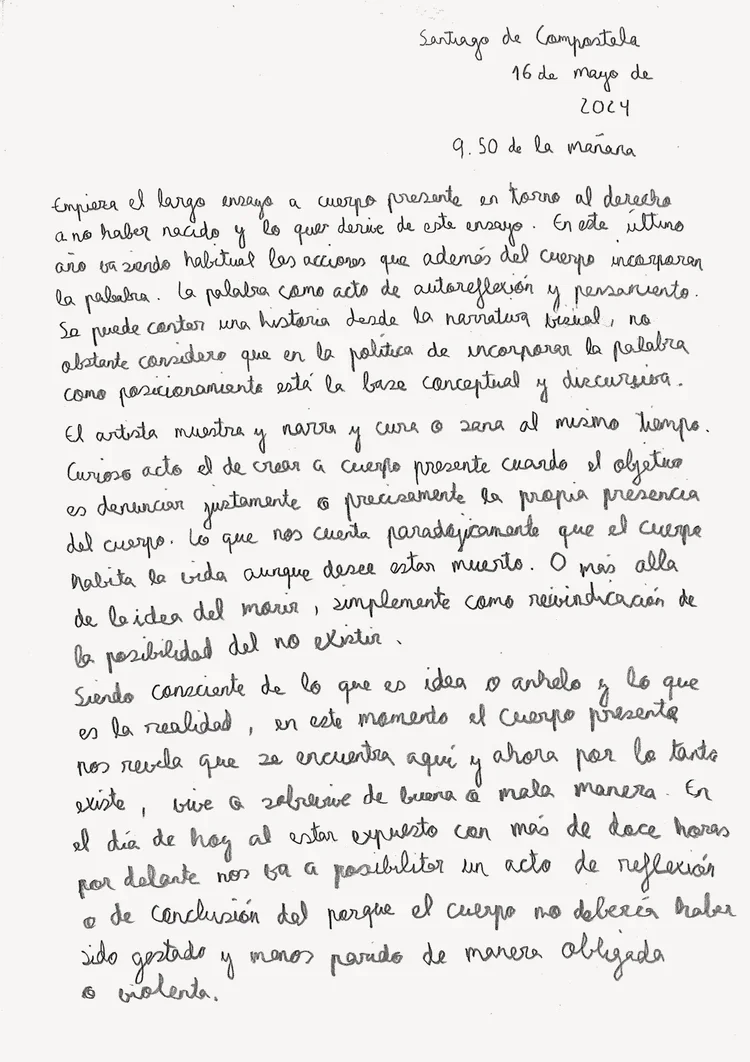
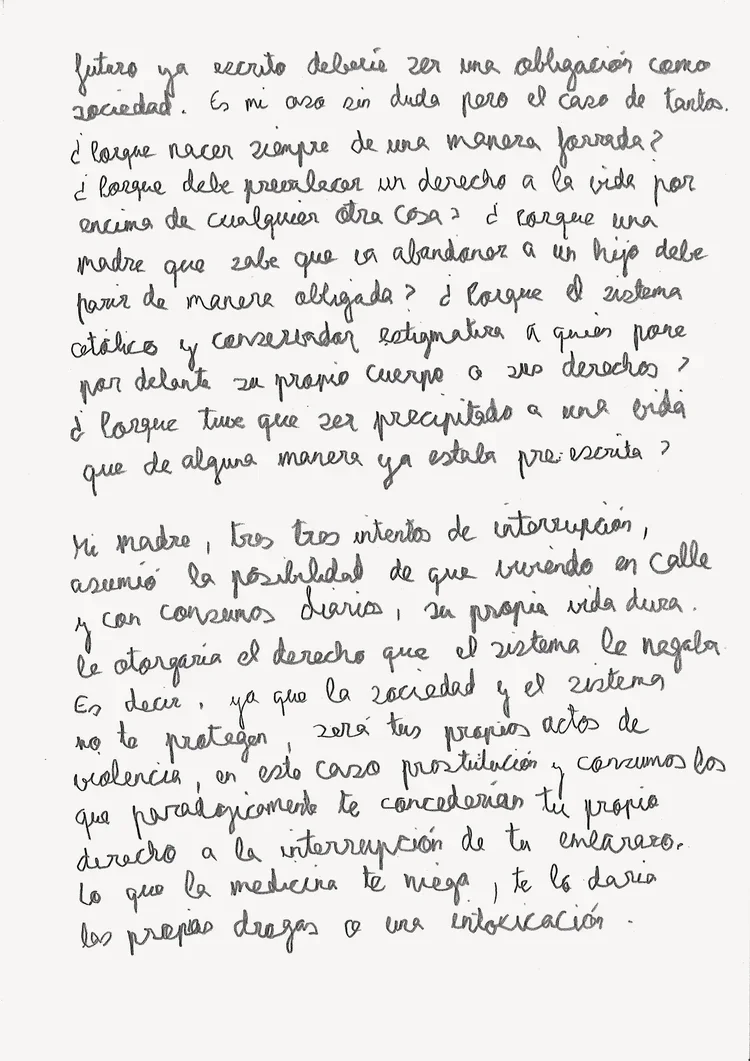
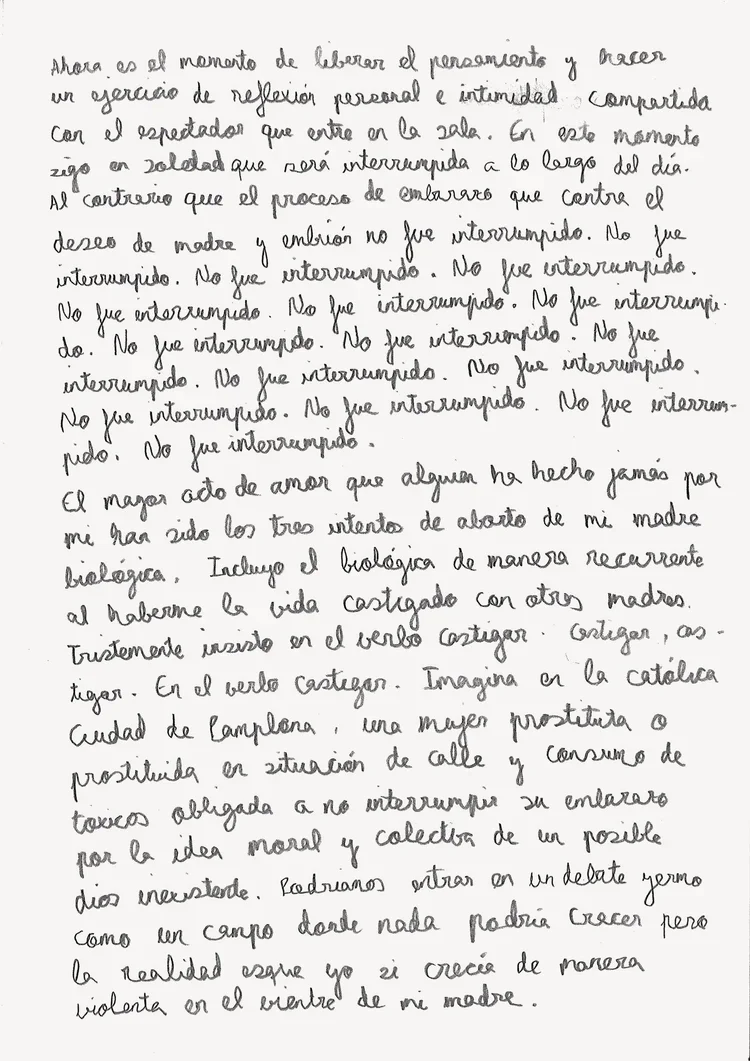
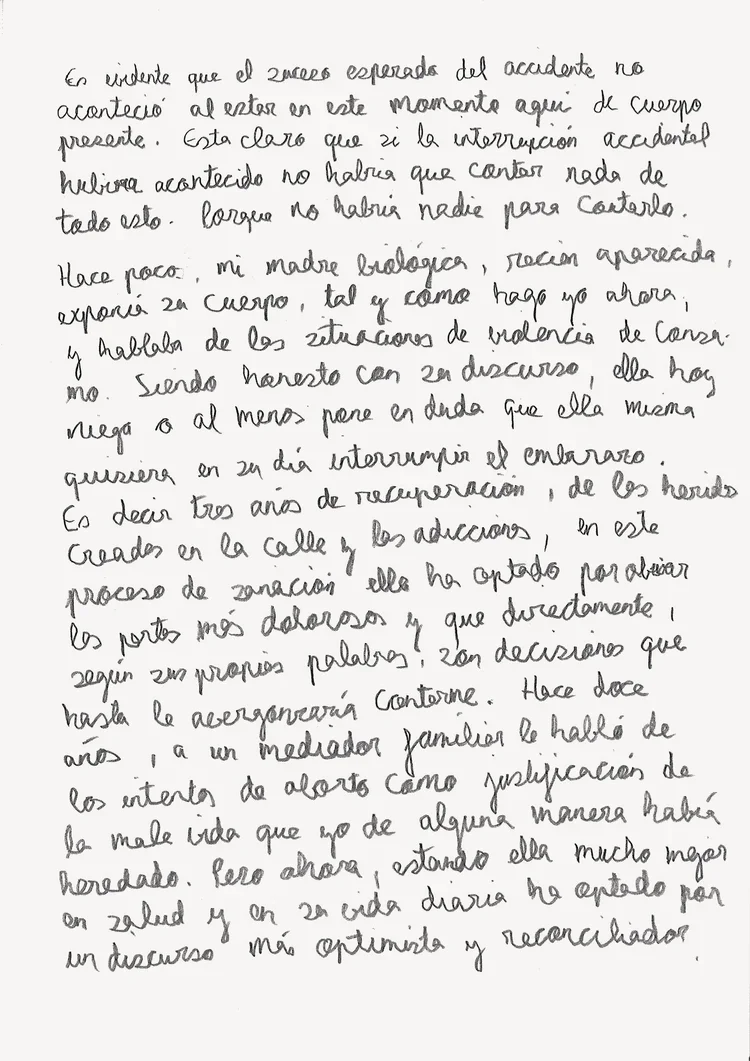
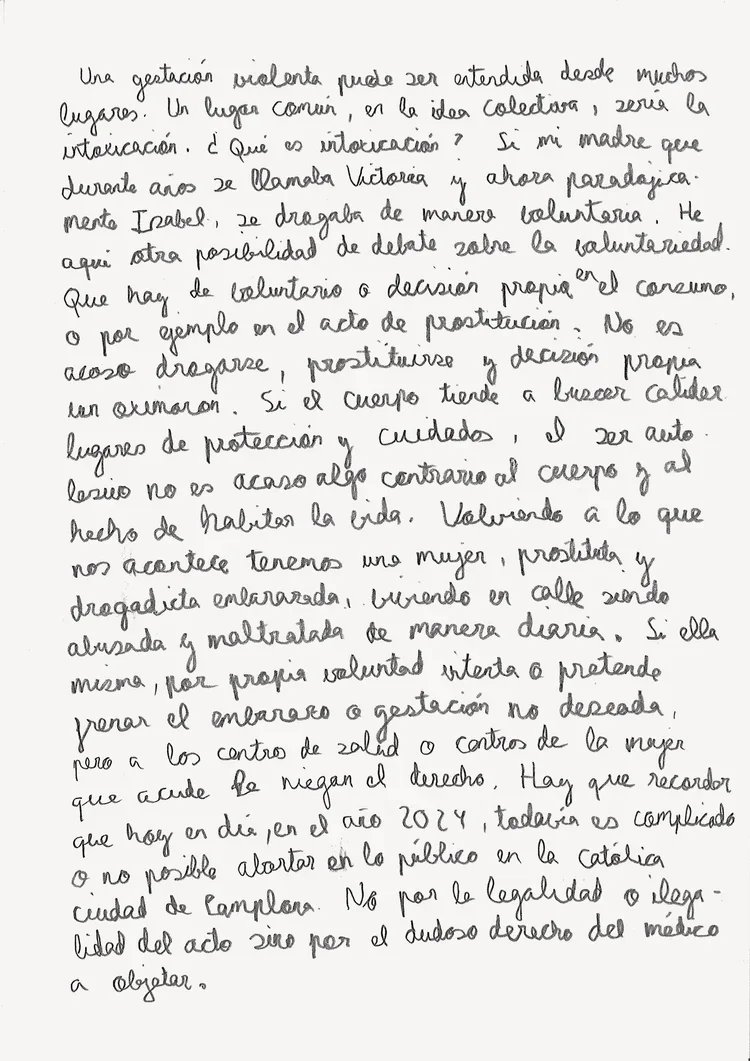
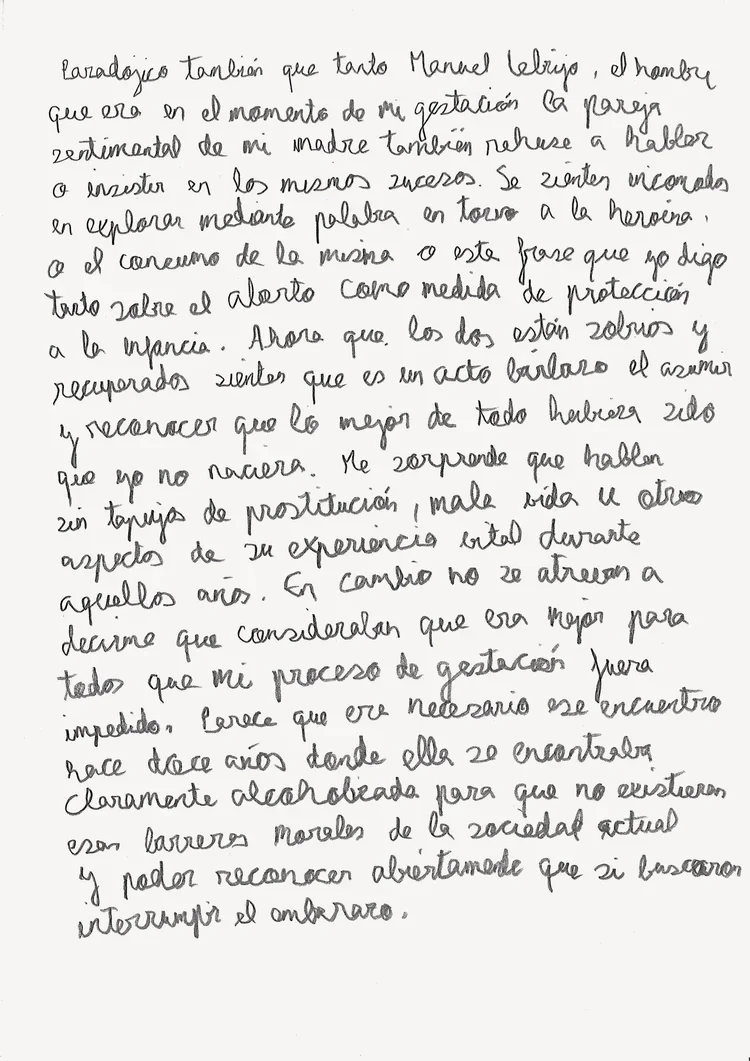
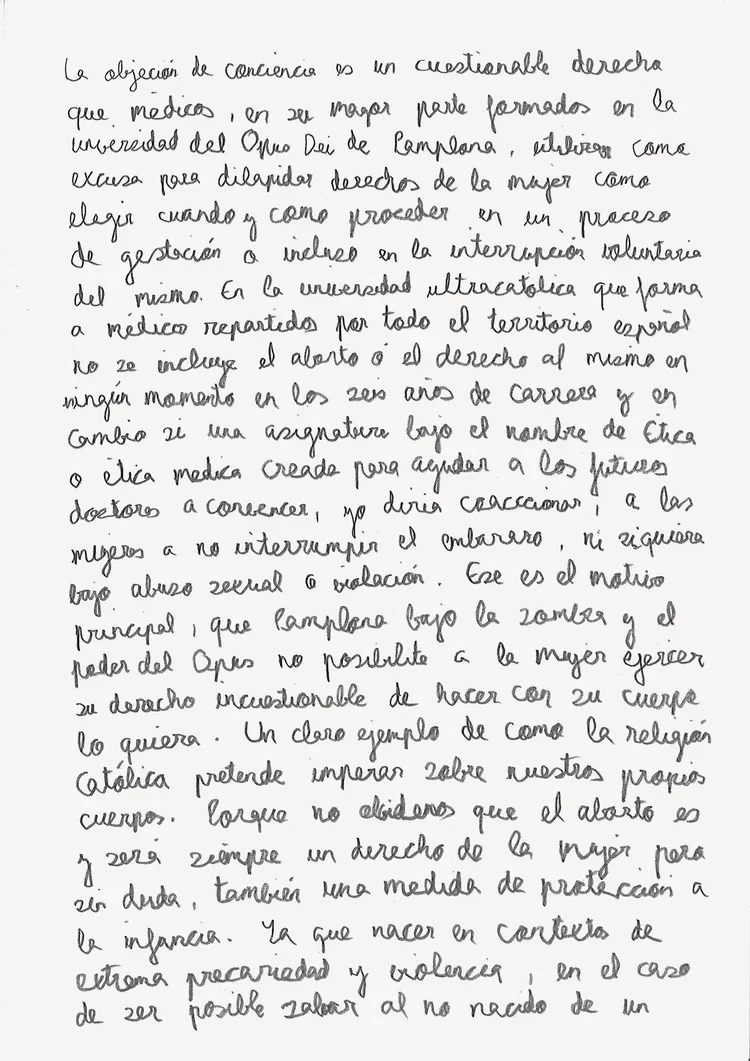
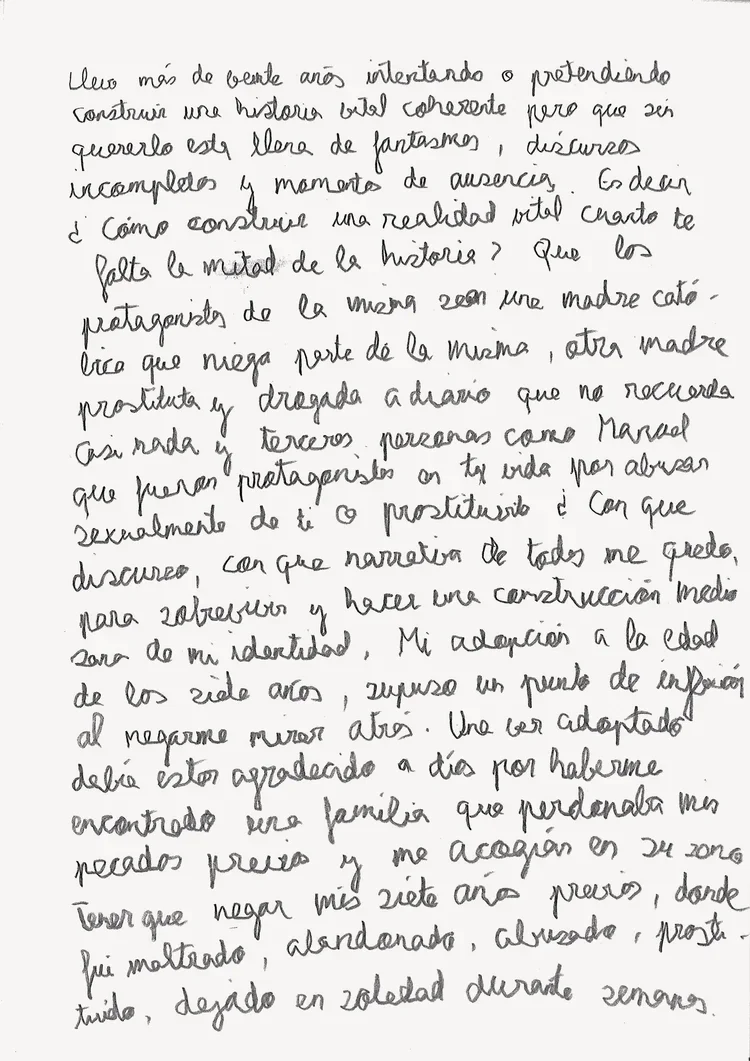
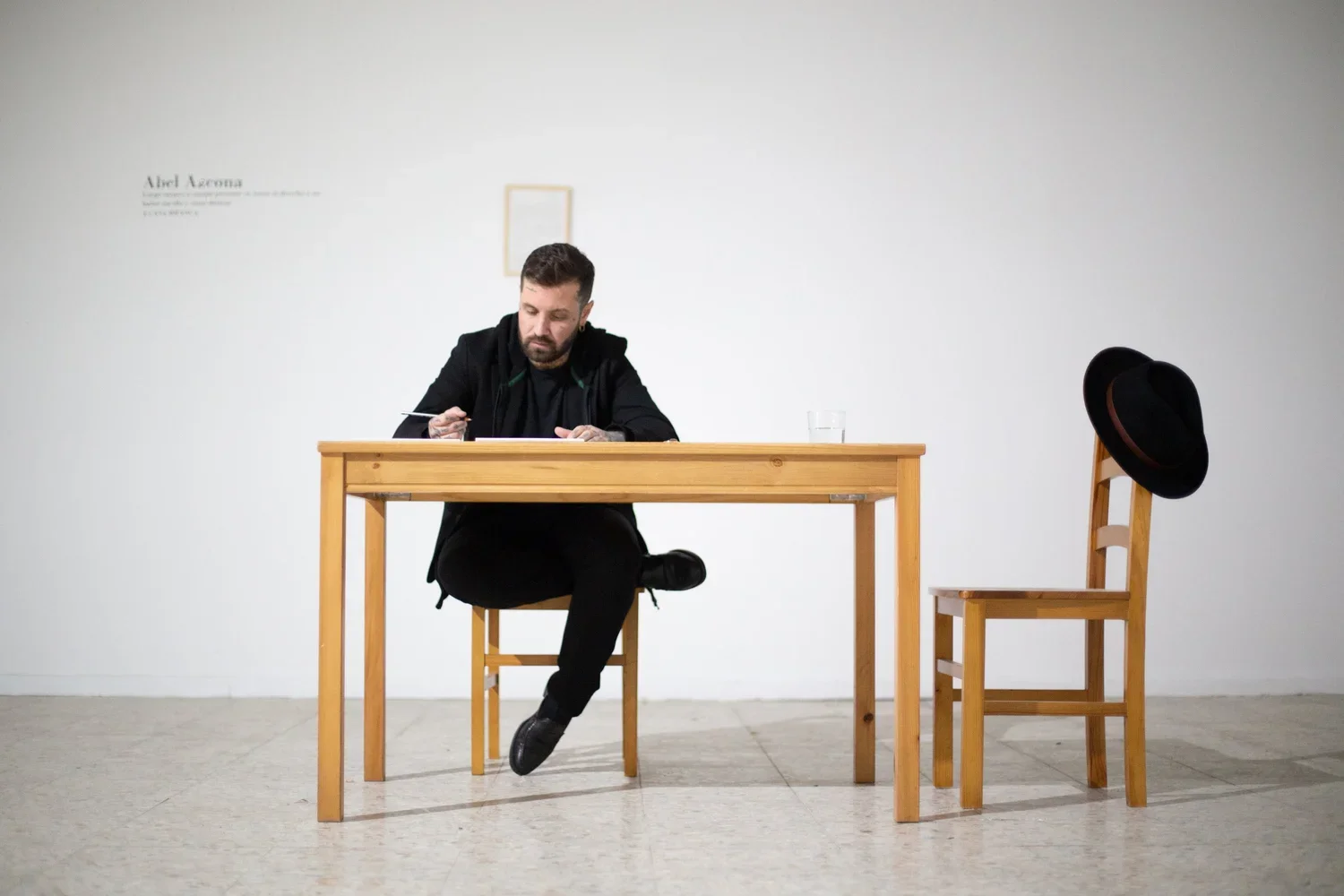
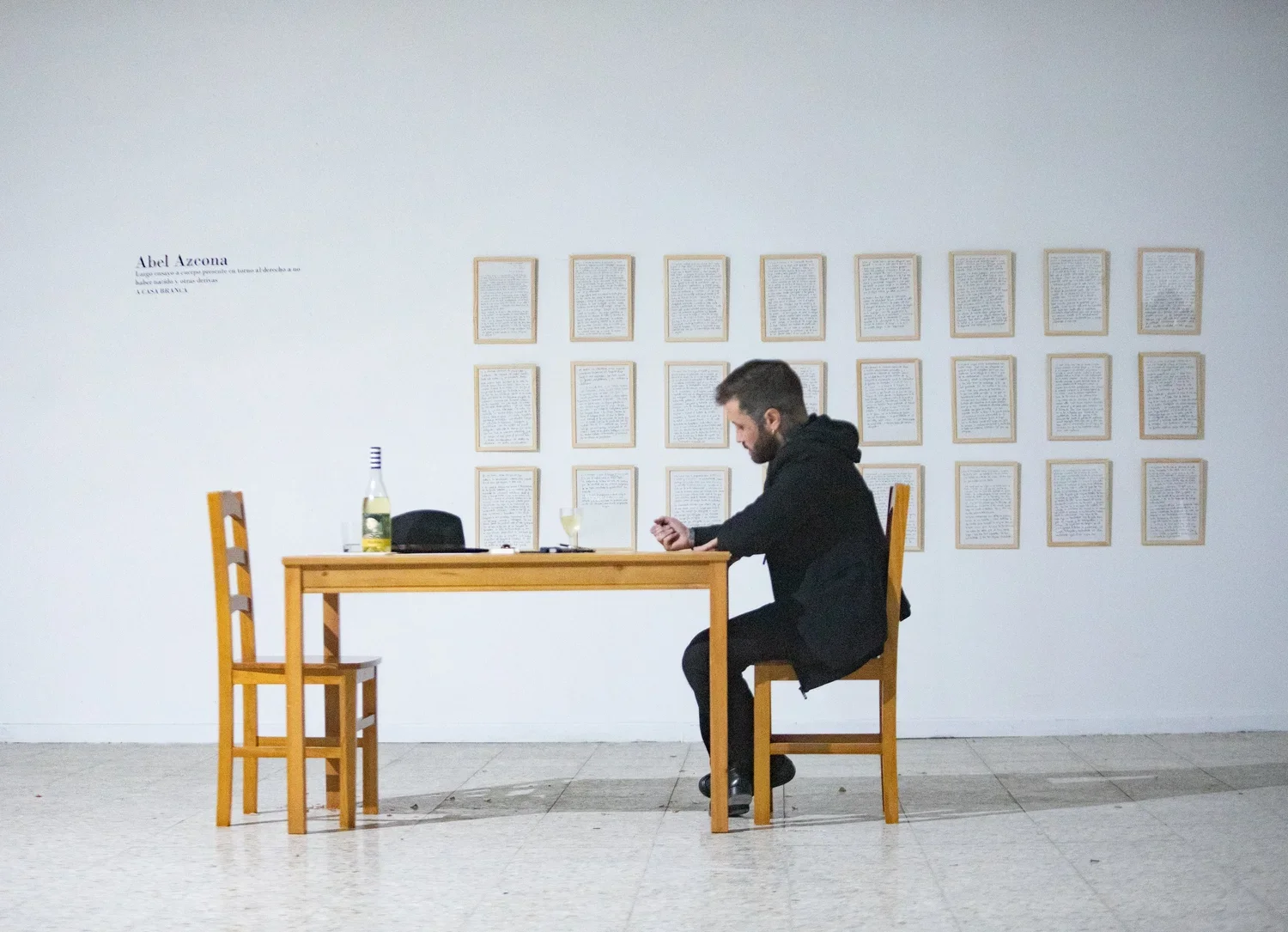
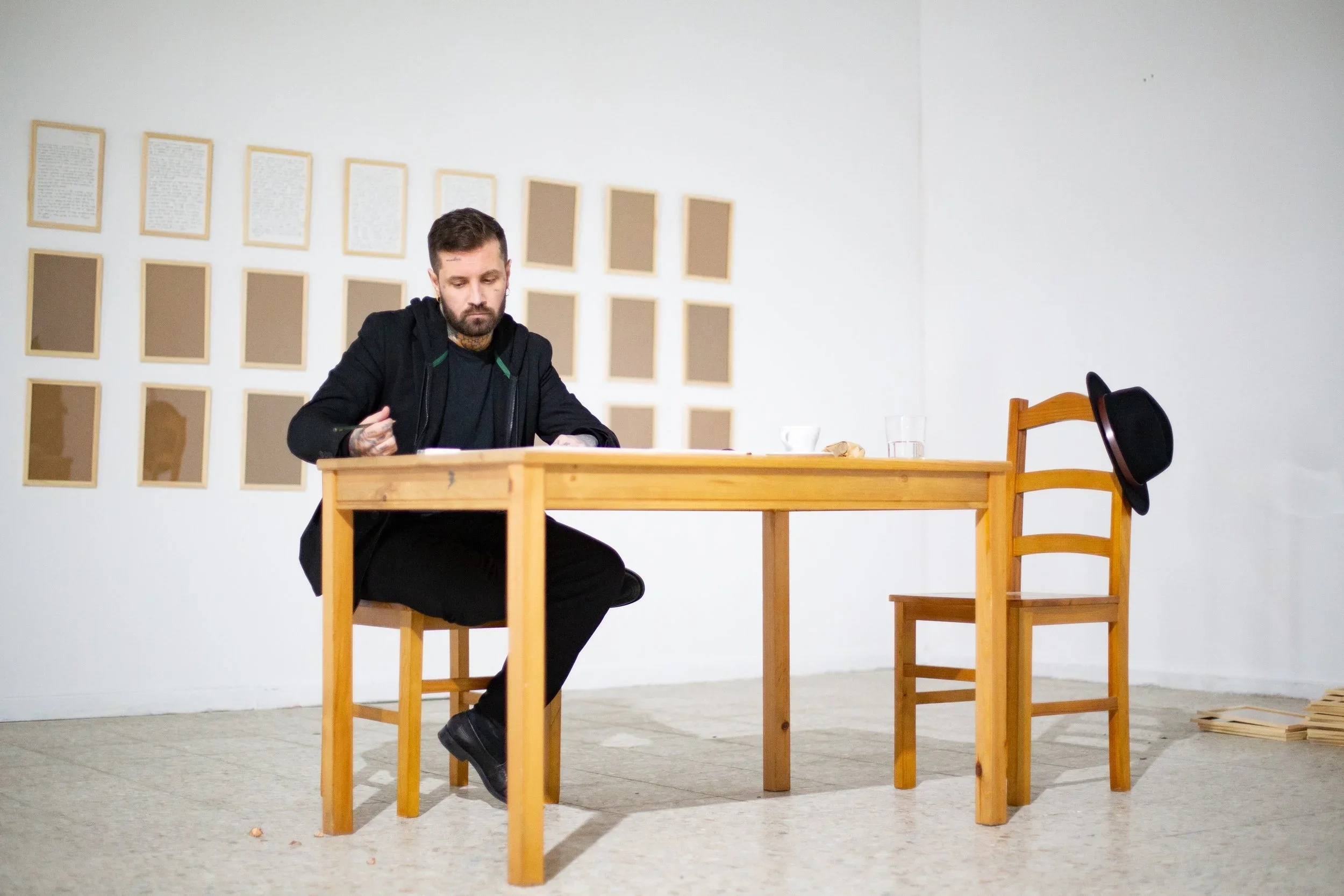
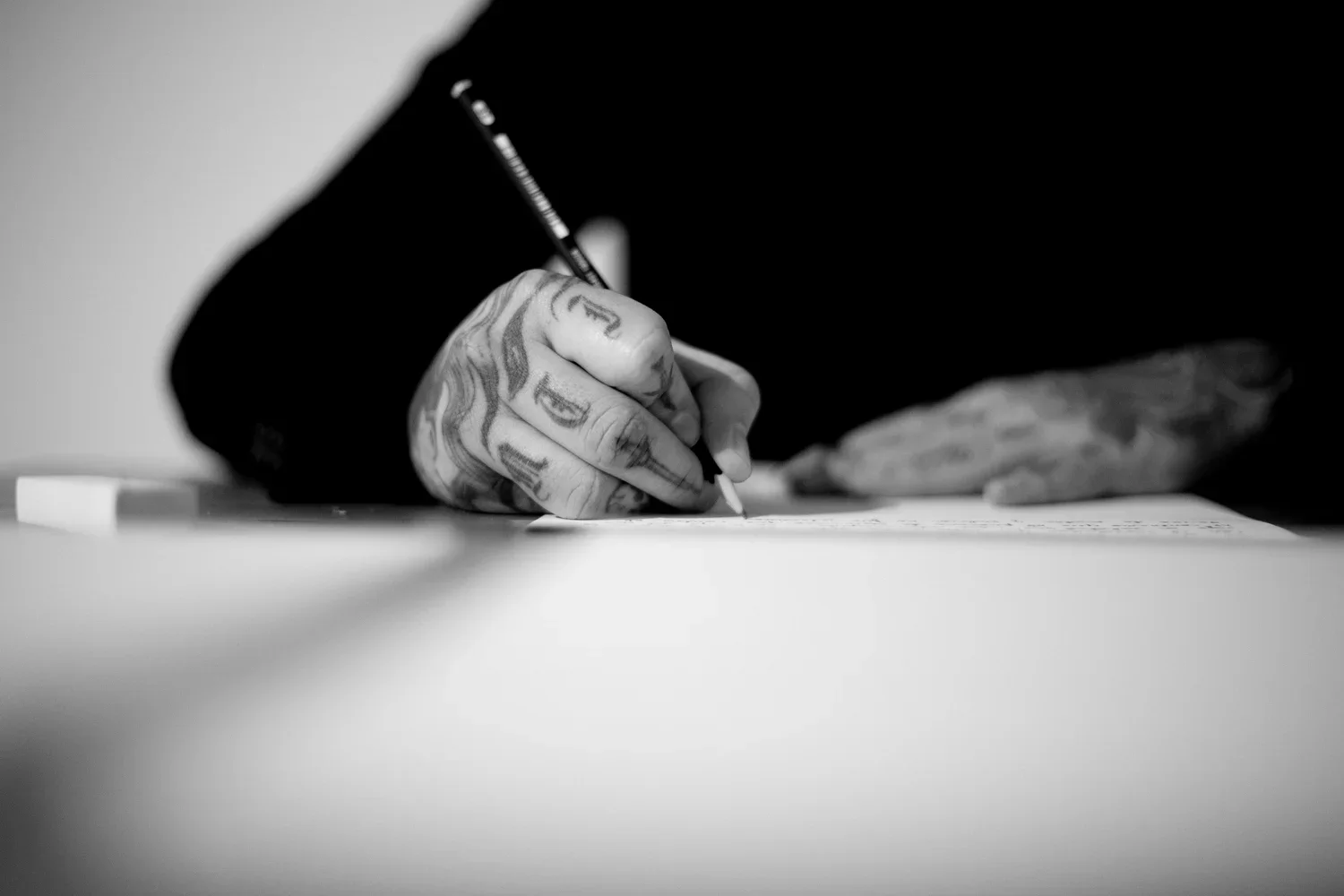
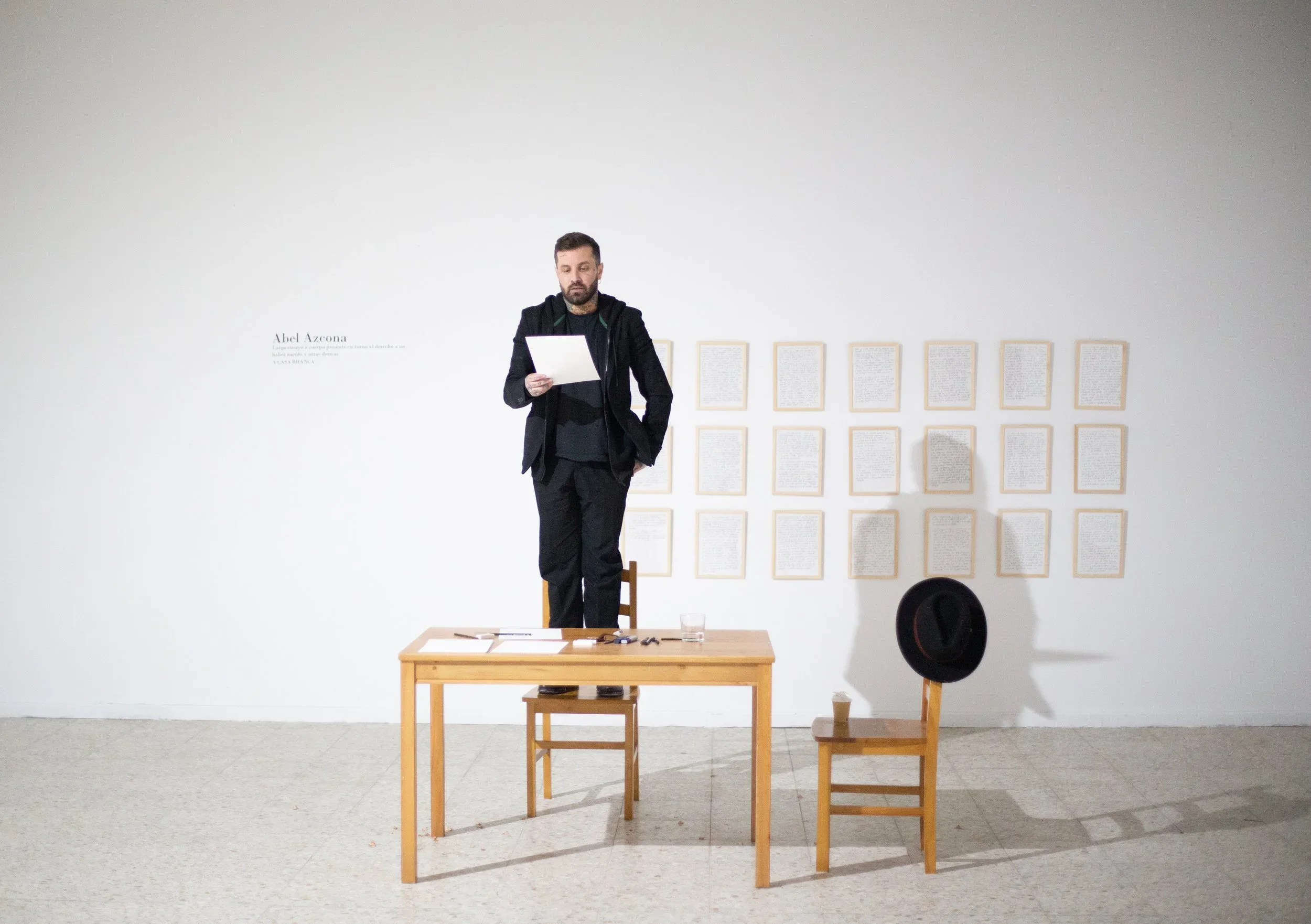
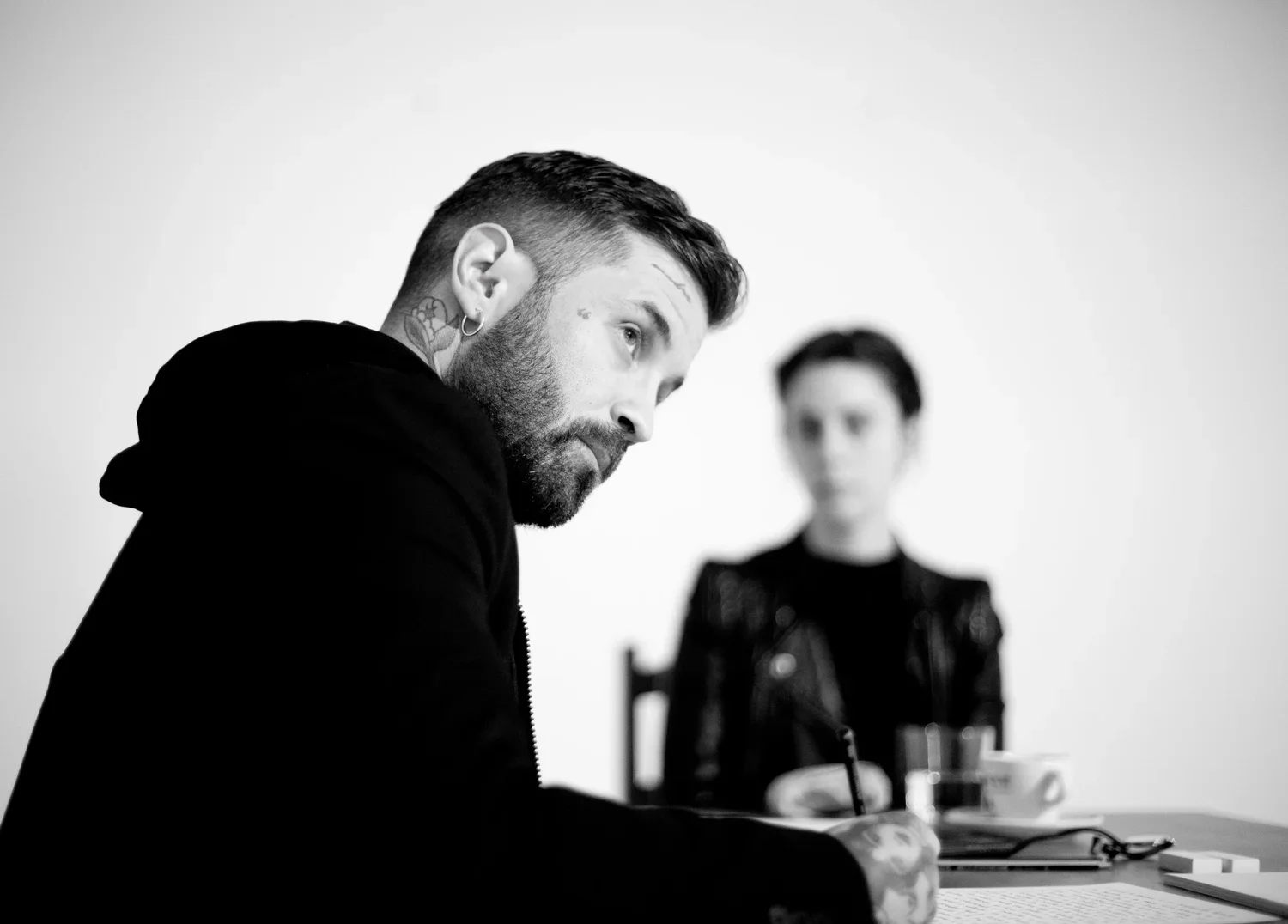
THE FOURTEENTH STEP was the final exhibition compiling all the works related to the mother and the family. Following the approach of the exhibition opened at the La Panera Art Center, Azconainaugurated a closing exhibition focused on documentation at the Artillery Barracks in Murcia, under the title The Role of the Family. This would be the last major exhibition before meeting the mother, although after meeting her, two major exhibitions with the complete family narrative would follow.
EL DECIMOCUARTO PASO fue la ultima exposición recopiladora de todos los trabajos de la madre y de la familia. En la línea de la muestra inaugurada en el Centro de la Panera, Azcona inauguró en el Cuartel de Artillería de Murcia una muestra de cierre centrada en documentación bajo el título : El papel de la familia. Esta sería la ultima gran exposición antes de conocer a la madre, aunque tras conocerla vendrían dos grandes exposiciones con el relato familiar completo.
“The role of the family”, by Abel Azcona, at the Cuartel de Artillería Art Center in Murcia curated by Pedro A. Cruz and Cintia G. Reyes.
Abel Azcona (Pamplona, 1988) is a Basque artist specialized in performance art, known for his autobiographical and confessional works, and for bringing his biography and his intimacy to the public territory of art, sharing traumas, obsessions, abandonments and family disenchantments with through his works.
Son of a polydrug-addicted prostitute who abandoned him as soon as he was born, Azcona's work has been built in a “vacuum of identity” that has pushed him towards an urgency for knowledge. His life/work has been structured around two parallel lines that are tense with each other: on the one hand, the recognition of the violence of the known; and, on the other, the anguishing exercise of imagination of the unknown. The first axis confirmed hell; the second, he imagined multiple possible hells. In both cases, it is about managing an imposed, not chosen, life in which the family left no room for the subject's voluntary action.
The role of the family is articulated around four thematic groups from which it aims to correct this identity deficit: that of the non-biological father; that of the biological mother; that of the imagined mother and father; and that of the chosen mothers. For Azcona, imagining the real is not a way to redeem it, but rather, to enhance its violent dimension. The imagination does not evade; drowns Hence, the only remnant of will that remains for the experiential is that of art. The chosen mothers - Marina Abramovic, Orlan, Ana Mendieta - constitute the only possible form of control over a life that has found in art the home that until now no one had provided the artist.
“El papel de la familia”, de Abel Azcona, en el Centro de Arte Cuartel de Artillería en Murcia comisariada por Pedro A. Cruz y Cintia G. Reyes.
Abel Azcona (Pamplona, 1988) es un artista vasco especializado en arte de performance, conocido por sus obras autobiográficas y confesionales, y por llevar su biografía y su intimidad al territorio público del arte, compartiendo traumas, obsesiones, abandonos y los desencantos familiares a través de sus obras.
Hijo de una prostituta politoxicómana que lo abandonó nada más nacer, la obra de Azcona se ha construido en un “vacío de identidad” que le ha empujado a una urgencia del conocimiento. Su vida/obra se ha vertebrado en torno a dos líneas paralelas que se tensan entre sí: de un lado, el reconocimiento de la violencia de lo conocido; y, de otro, el angustioso ejercicio de imaginación de lo desconocido. El primer eje constataba un infierno; el segundo, imaginaba múltiples infiernos posibles. En ambos casos, se trata de gestionar una vida impuesta, no elegida, en la que la familia no dejaba margen para la acción voluntaria del sujeto.
El papel de la familia se articula en torno a cuatro grupos temáticos desde los que pretende subsanar este déficit identitario: el del padre no-biológico; el de la madre biológica; el de la madre y el padre imaginados; y el de las madres elegidas. Para Azcona, imaginar lo real no supone una forma de redirmirlo, sino, antes bien, de potenciar su dimensión violenta. La imaginación no evade; ahoga. De ahí que el único resquicio de voluntad que le queda a lo experiencial sea el del arte. Las madres elegidas -Marina Abramovic, Orlan, Ana Mendieta- constituyen la única forma de control posible sobre una vida que ha encontrado en el arte el hogar que hasta ahora nadie había proporcionado al artista.
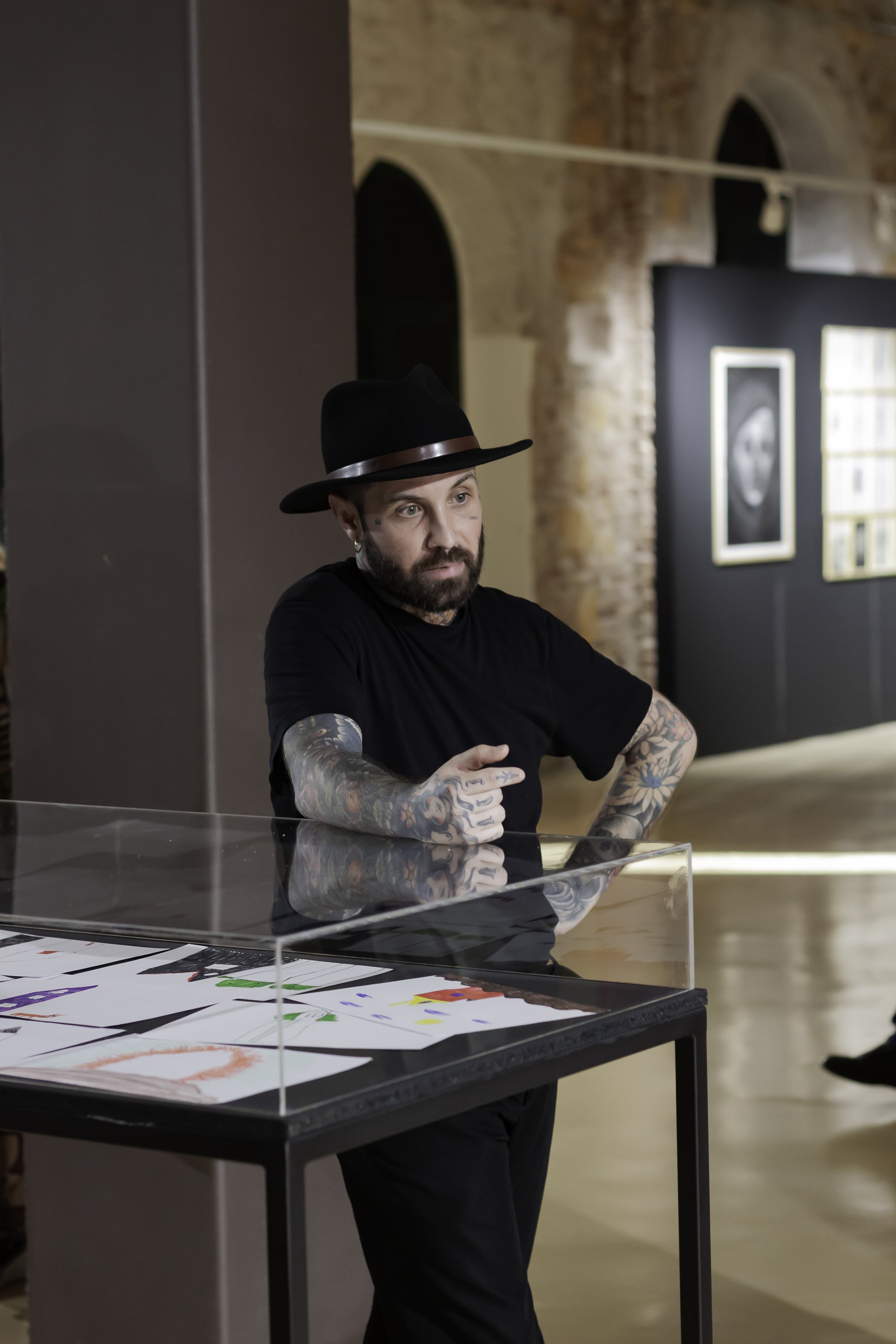
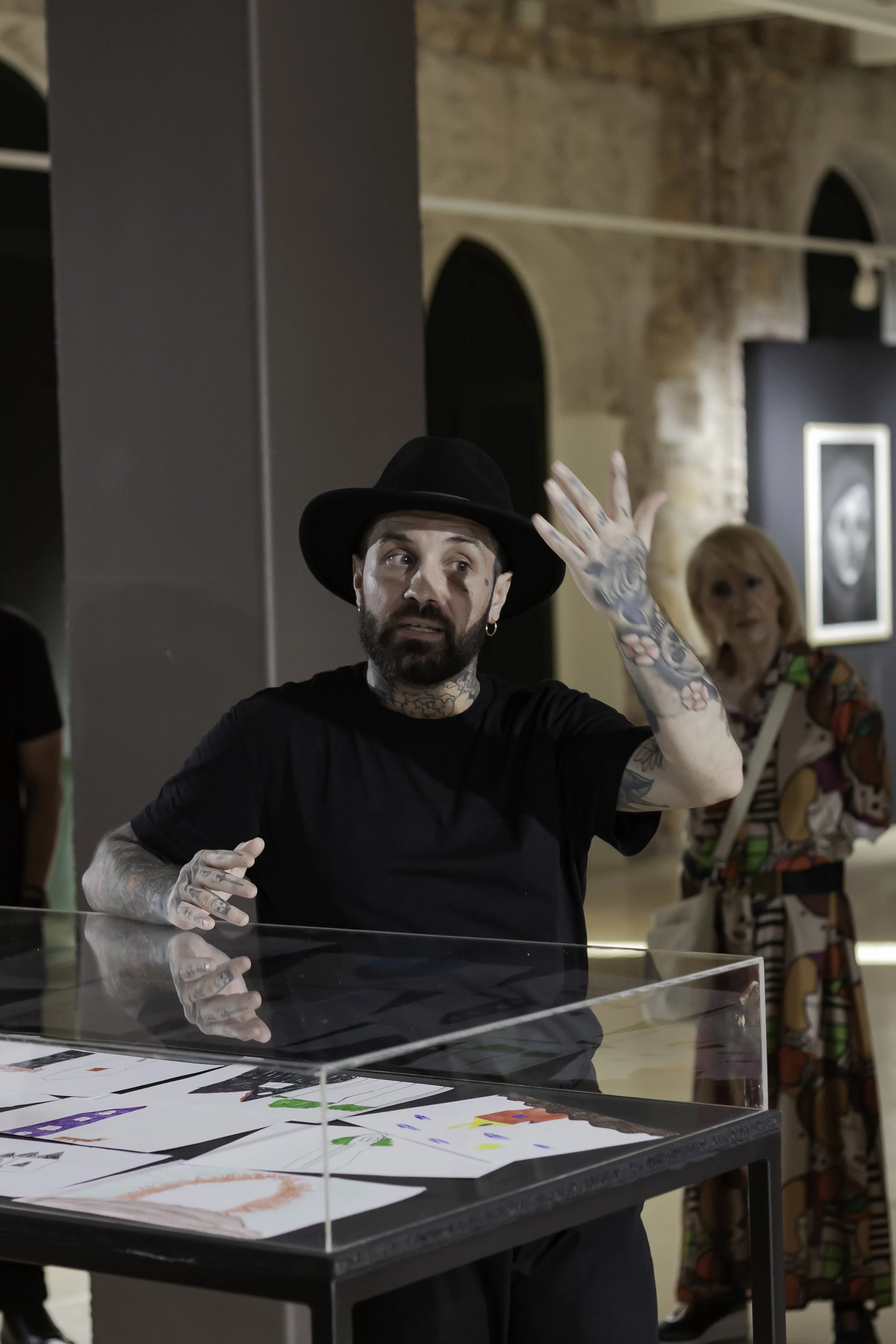
The artist Abel Azcona photographed at the inauguration at the Cuartel de Artillería in Murcia. / El artista Abel Azcona fotografiado elía de la inauguración en el Cuartel de Artillería en Murcia.
The Artillery Barracks of Murcia will be the venue for Abel Azcona's eighth step towards his mother. Curated by Pedro A. Cruz. / El Cuartel de Artillería de Murcia será la sede del octavo paso hacia la madre de Abel Azcona. Comisariado por Pedro A. Cruz.
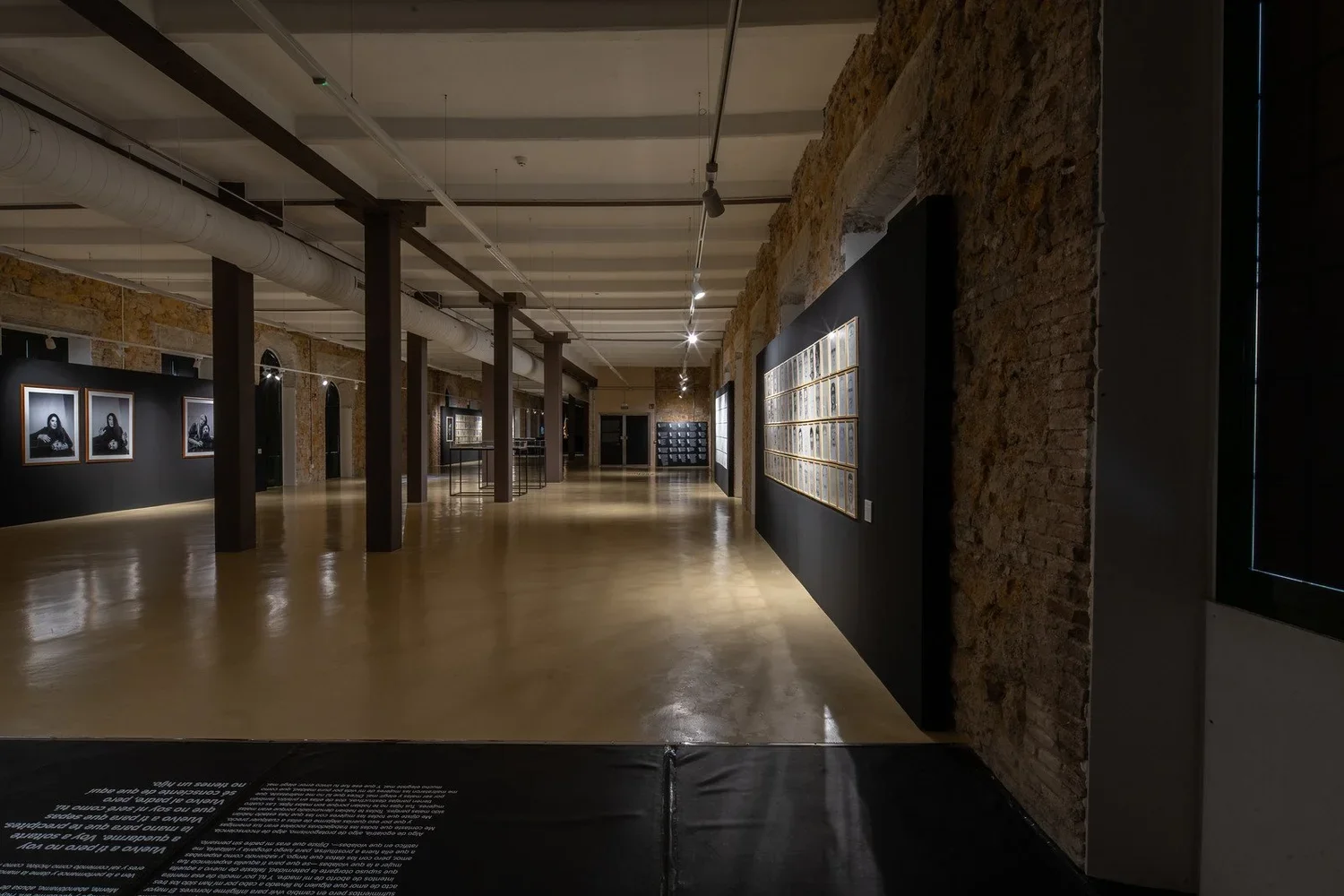
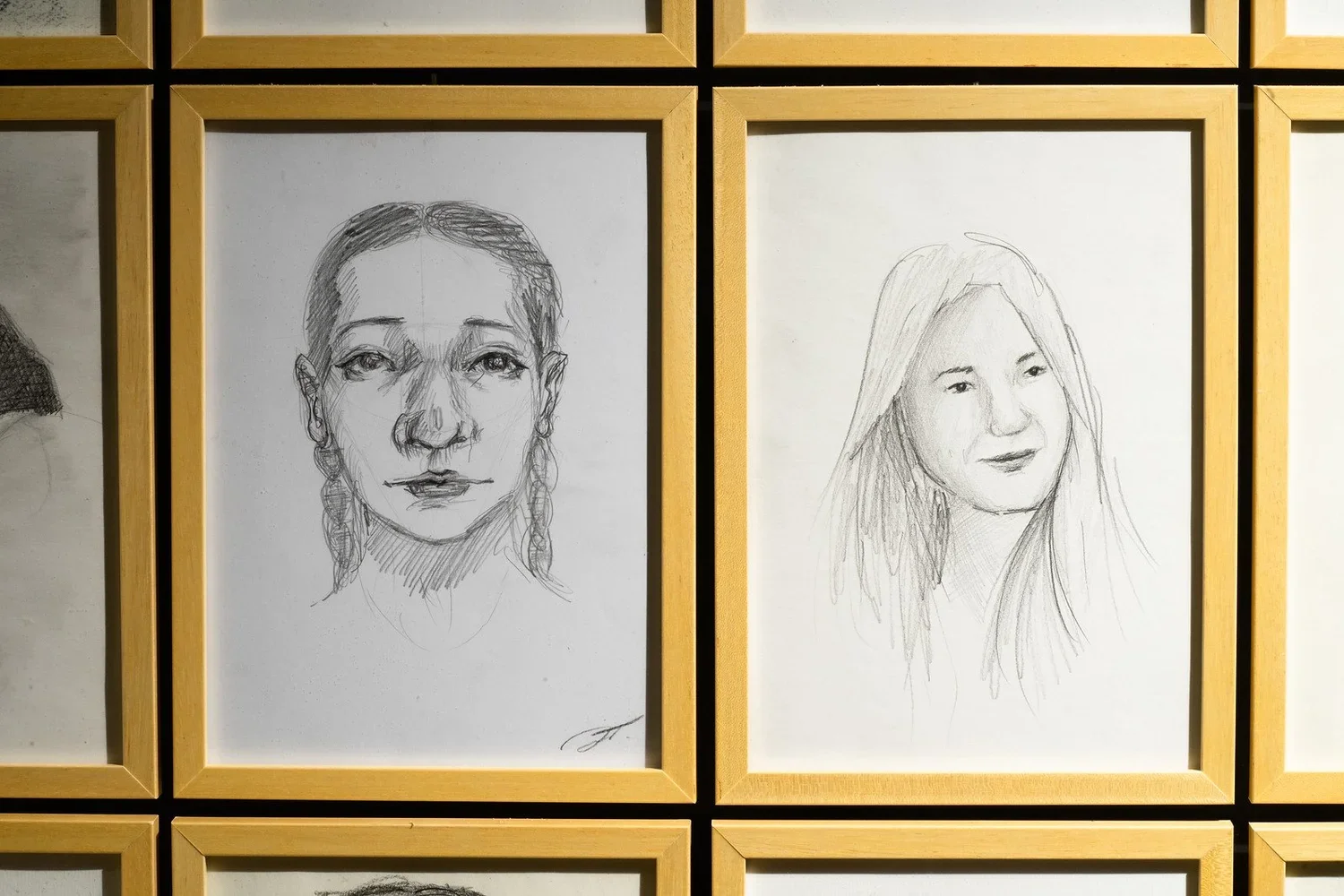
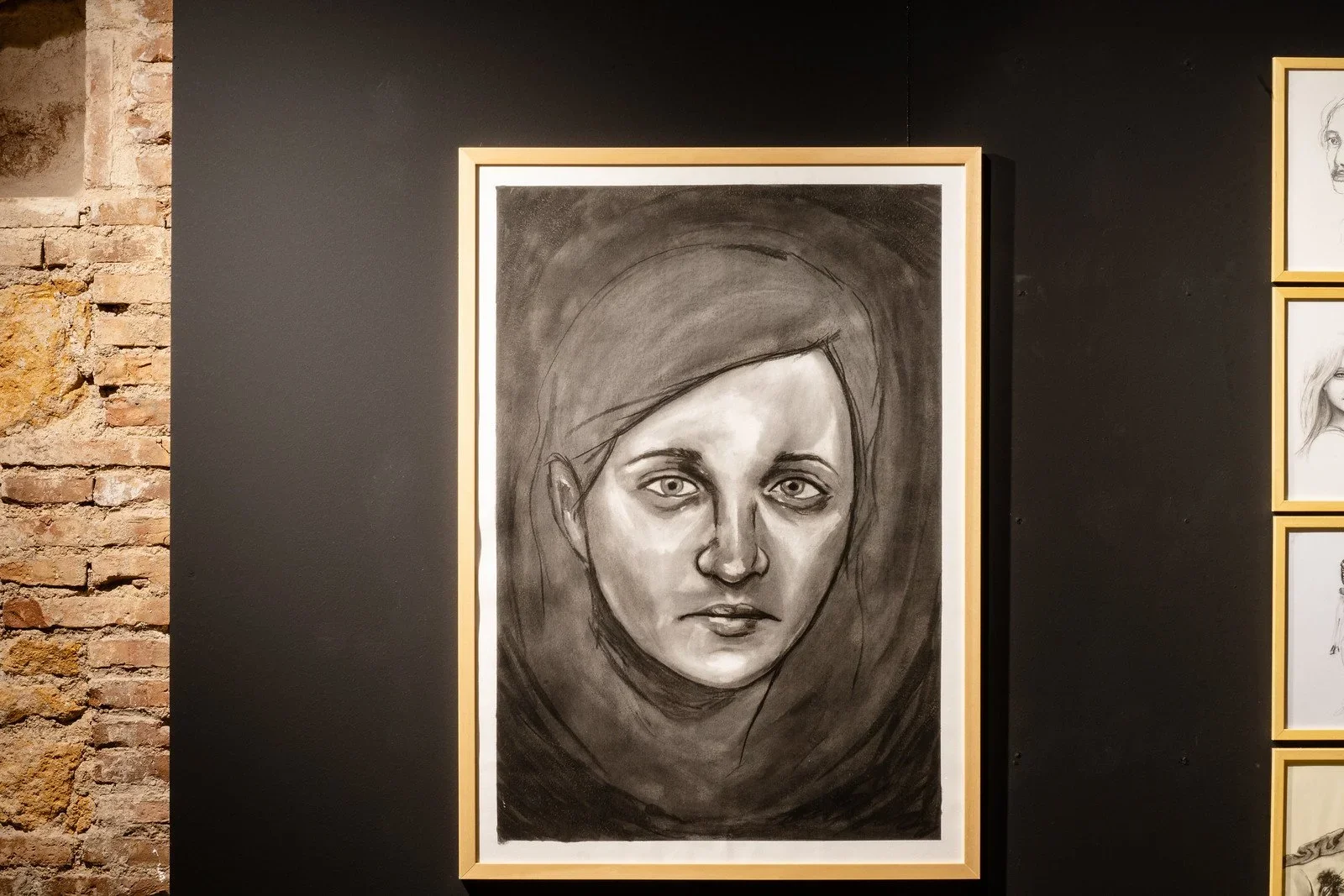
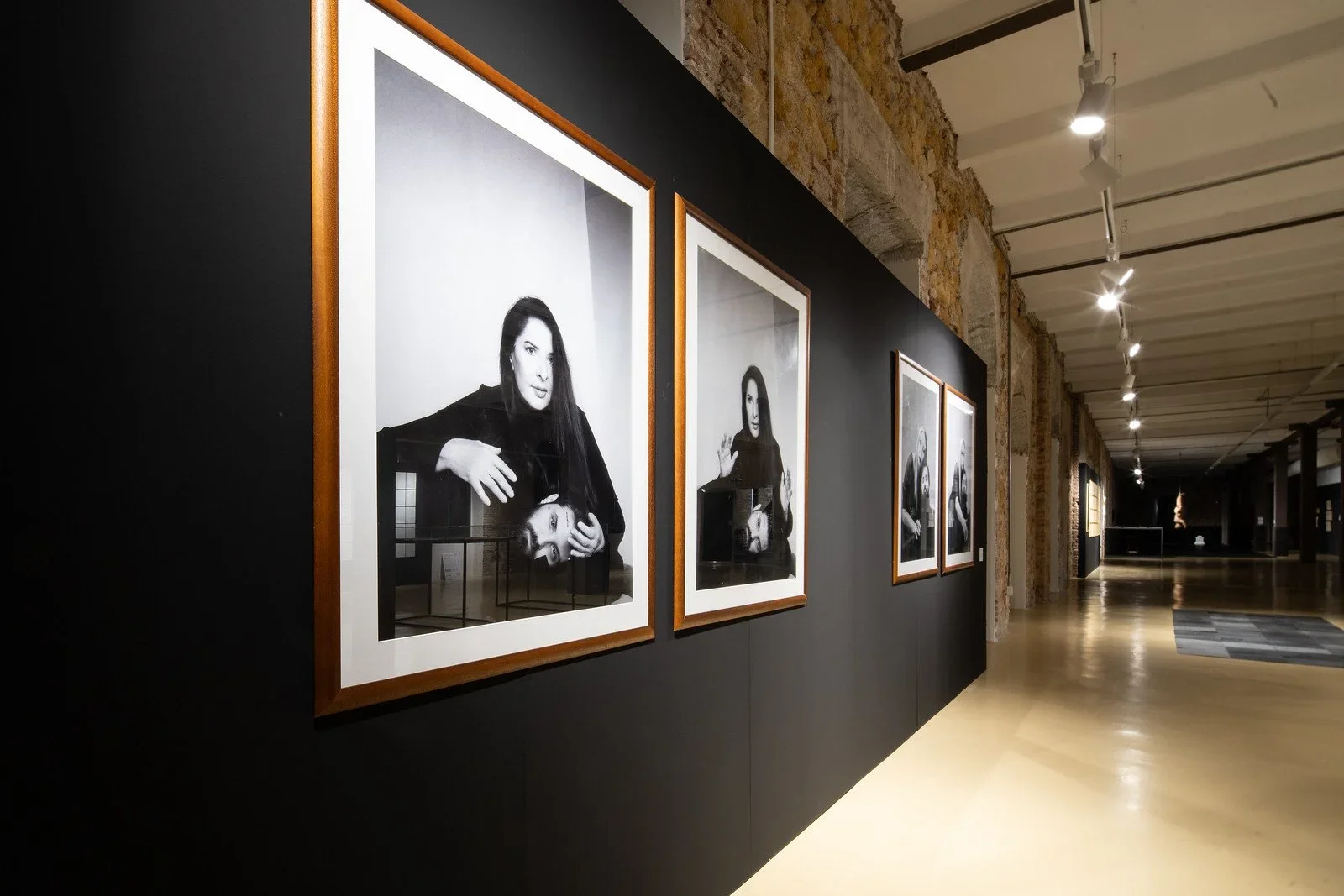
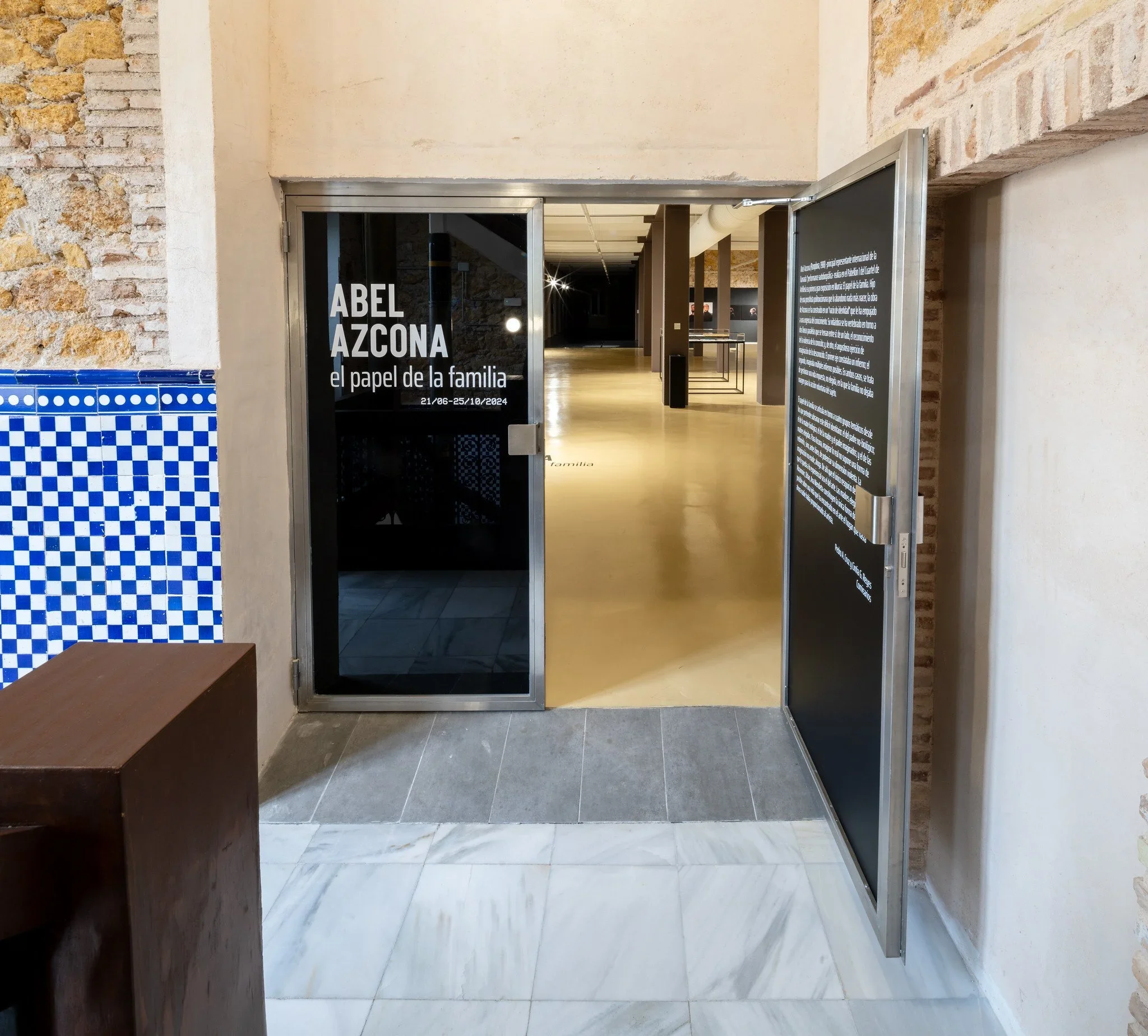
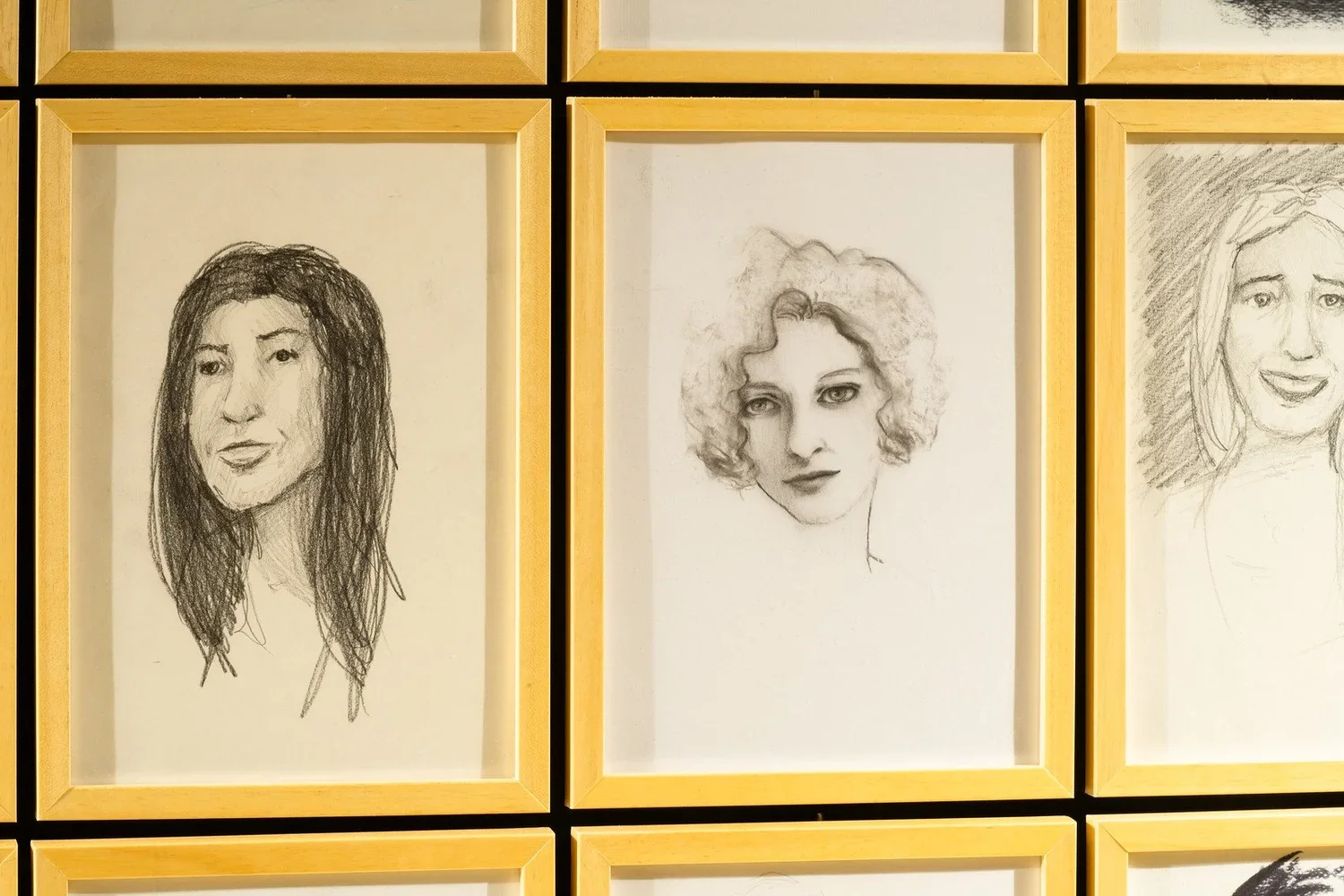
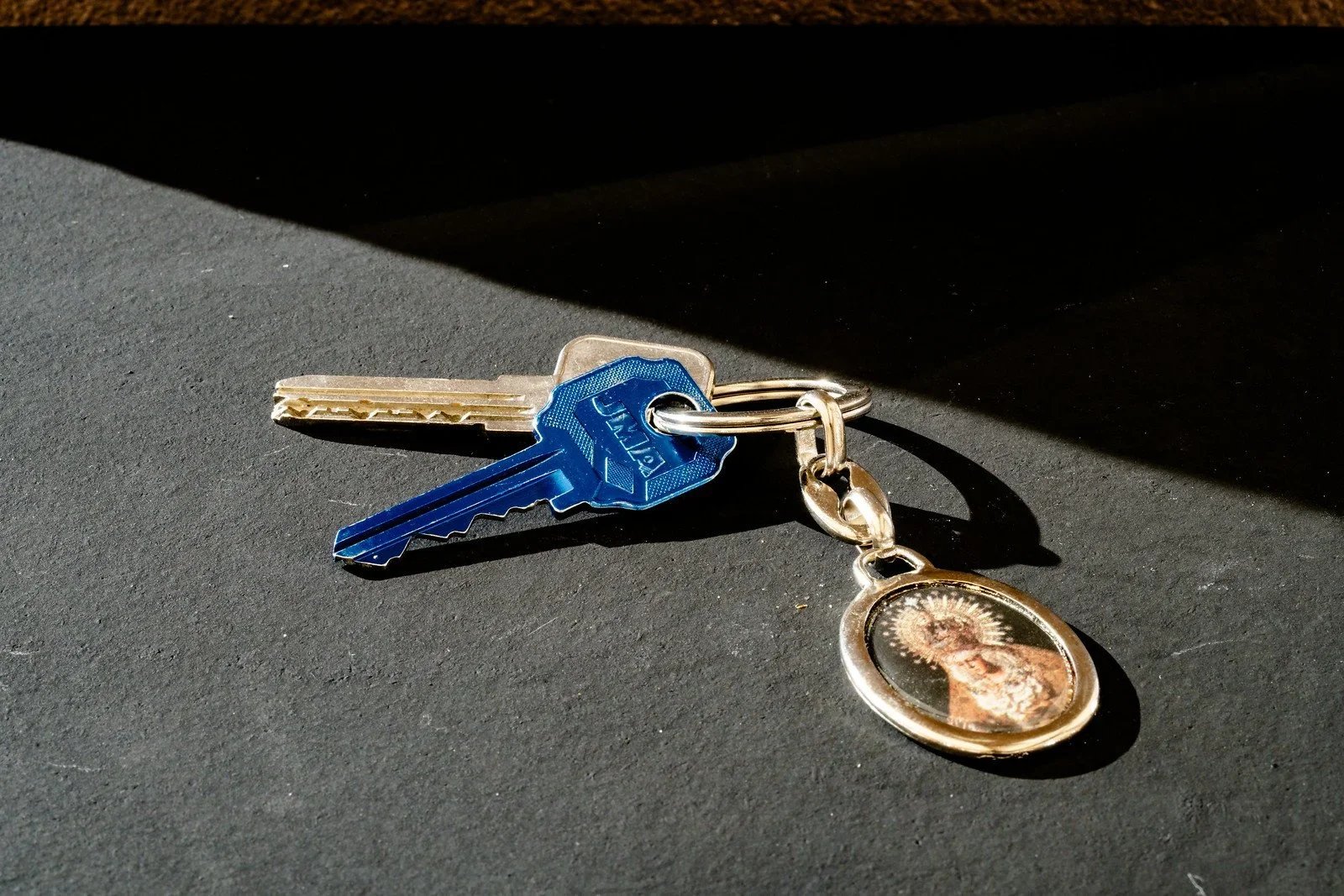
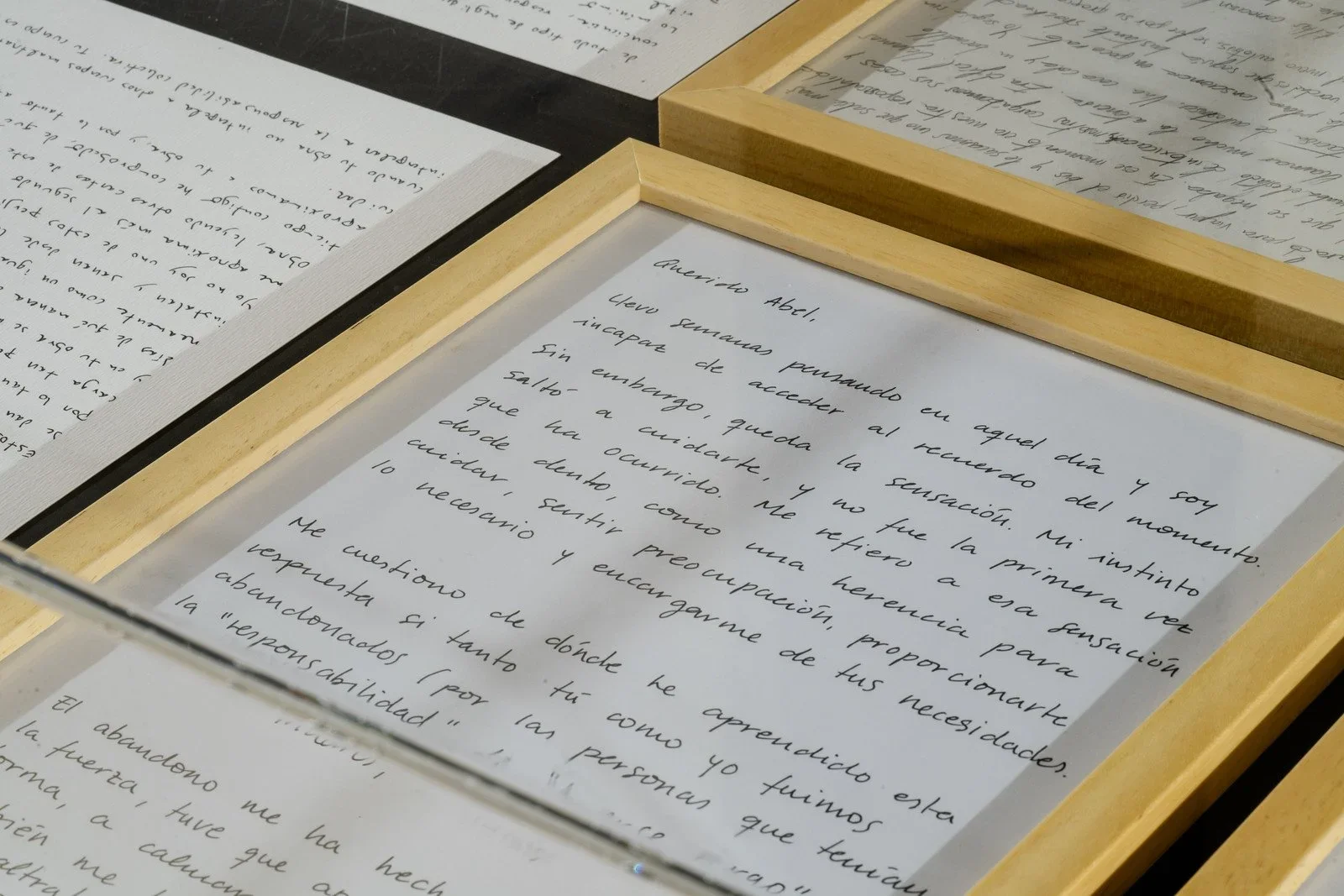
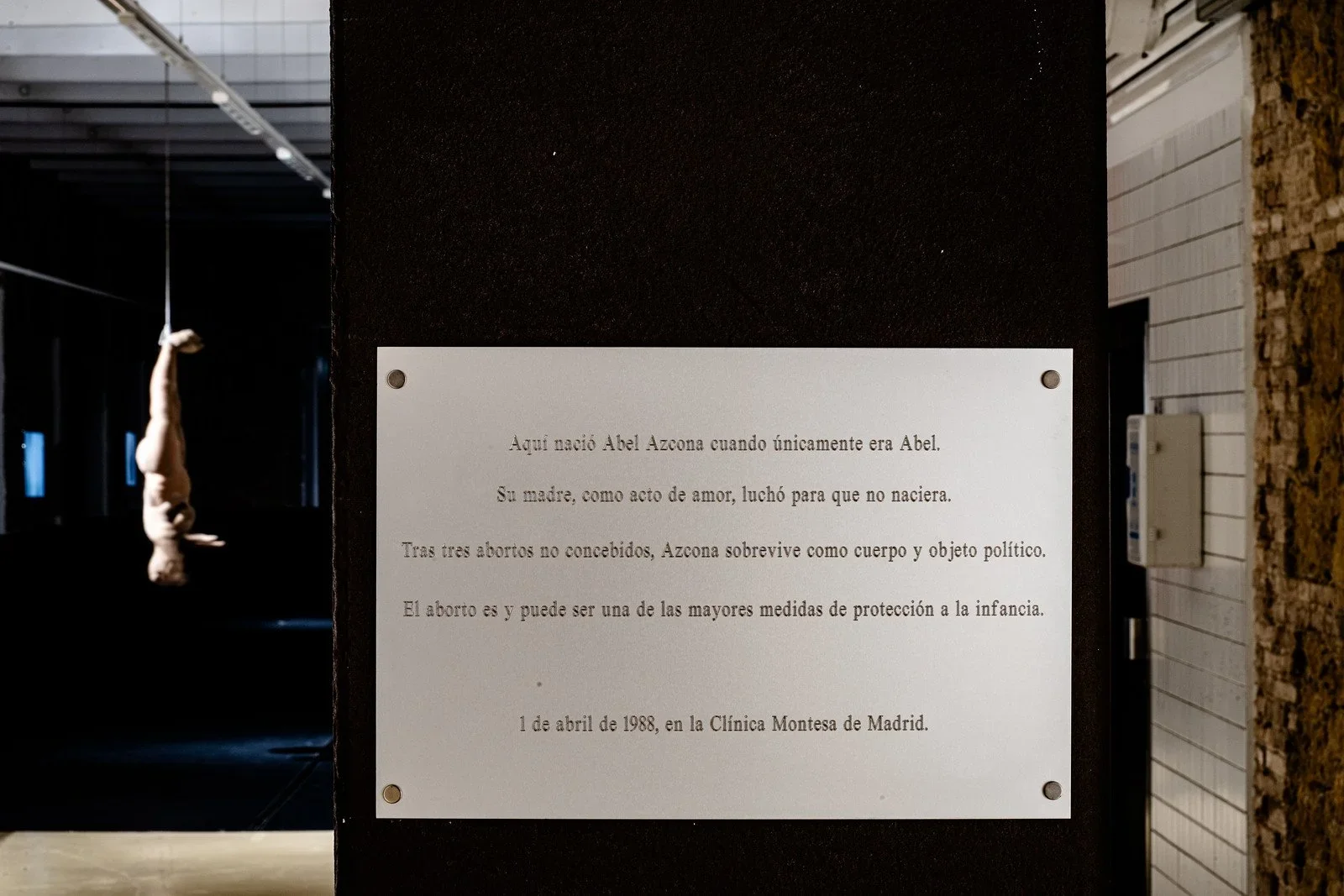
TYHE FIFTEENTH STEP was a performance carried out within the framework of the exhibition *The Role of the Family*, in which Azcona collectively recorded the name used by his mother for years: Victoria Luján Gutierrez. After a positive DNA test, it was revealed that this name was false and that her real name is Isabel Gómez Aranda. Thus, in this performance, where Azcona records the ‘dead’ name on an old 19th-century tomb, it serves as a closure to a previous stage and narrative, which now shifts and evolves with the new presence of the mother.
In parallel, I performed an emotional piece that I shared with and involved the entire visiting audience. Together, we intervened on a 19th-century tomb bearing the name I believed until a few months ago to be that of my biological mother. Upon discovering through a DNA test that the name is different, the ceremonial act of engraving the tomb signifies closure and farewell not only to the name in a literal sense but also to a part of the abandonment wound. Now, I must build my relationship with my mother in a different way. It is an intimate, painful, and resilient work and a goodbye to a ghost constructed over the years around the figure of my mother, whom I will meet at the end of this year in a live performance action.
EL DECIMOQUINTO PASO fue una performance realizada en el marco de la muestra El Papel de la Familia donde Azcona graba de manera colectiva el nombre utilizado por su madre durante años: Victoria Luján Gutierrez. Este nombre tras la prueba de ADN positiva se demuestra que fue falso y que el nombre real es Isabel Gómez Aranda. Así en esta performance donde Azcona graba el nombre muerto en una antigua tumba del sigo XIX es un cierre a una etapa y un relato anterior que ahora torna y evoluciona con la nueva presencia de la madre.
En paralelo realicé una performance emotiva que colectivicé y volqué en todo el público visitante. Entre todos intervenimos una tumba del siglo XIX con el nombre que hasta hace pocos meses yo creía que era el de mi madre biológica. Al aparecer y tras la prueba de ADN y comprobar que el nombre es otro, el acto ceremonial de grabado de la tumba supone un cierre y una despedida no solo del nombre de manera literal, sino de parte de una herida de abandono, al ahora tener que construir mi relación con mi madre de manera diferente. Es una obra íntima, dolorosa y resiliente y es un adiós a un fantasma construido durante años en torno a la figura de mi madre, a la que conoceré al final de este año en una acción performativa en vivo.
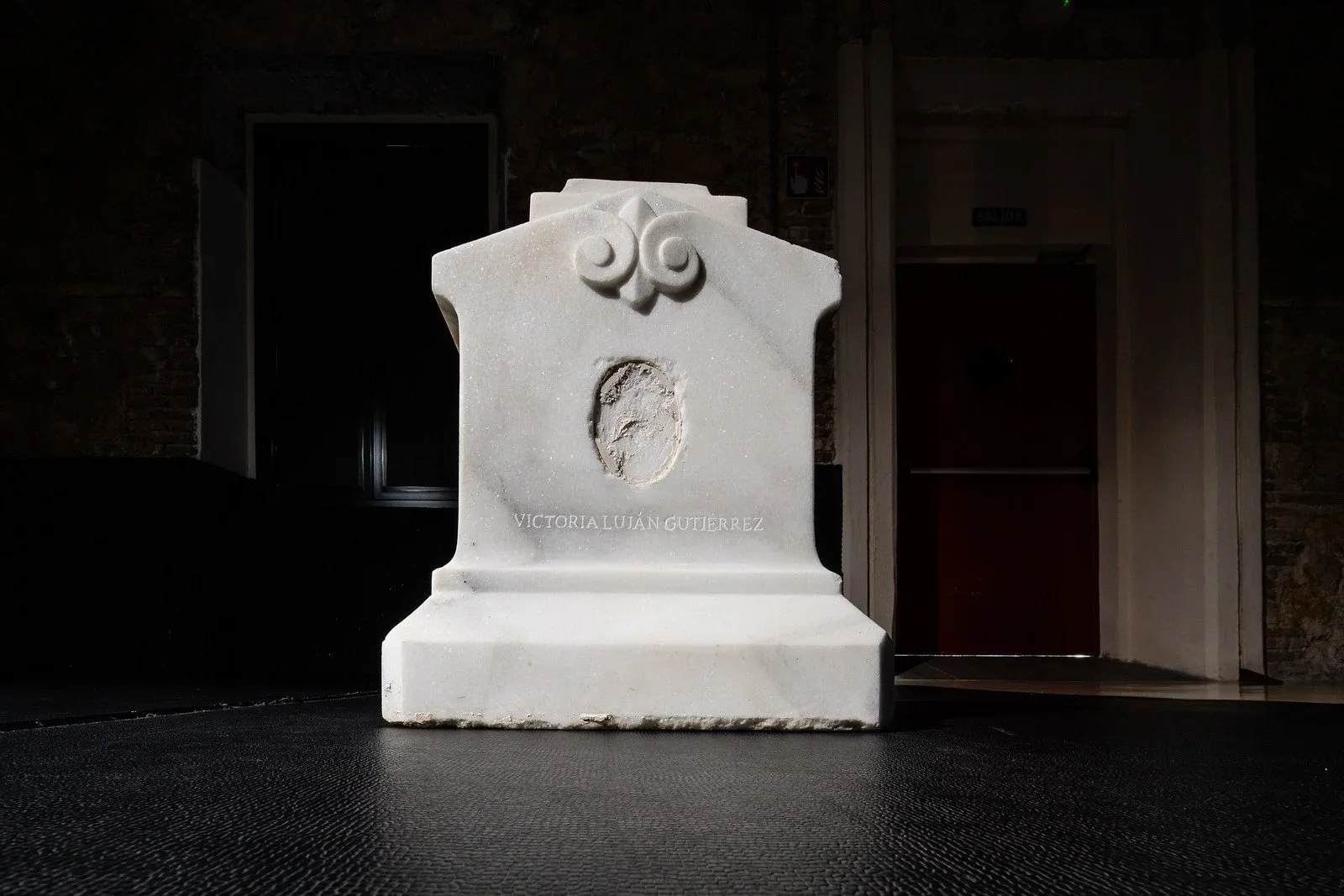
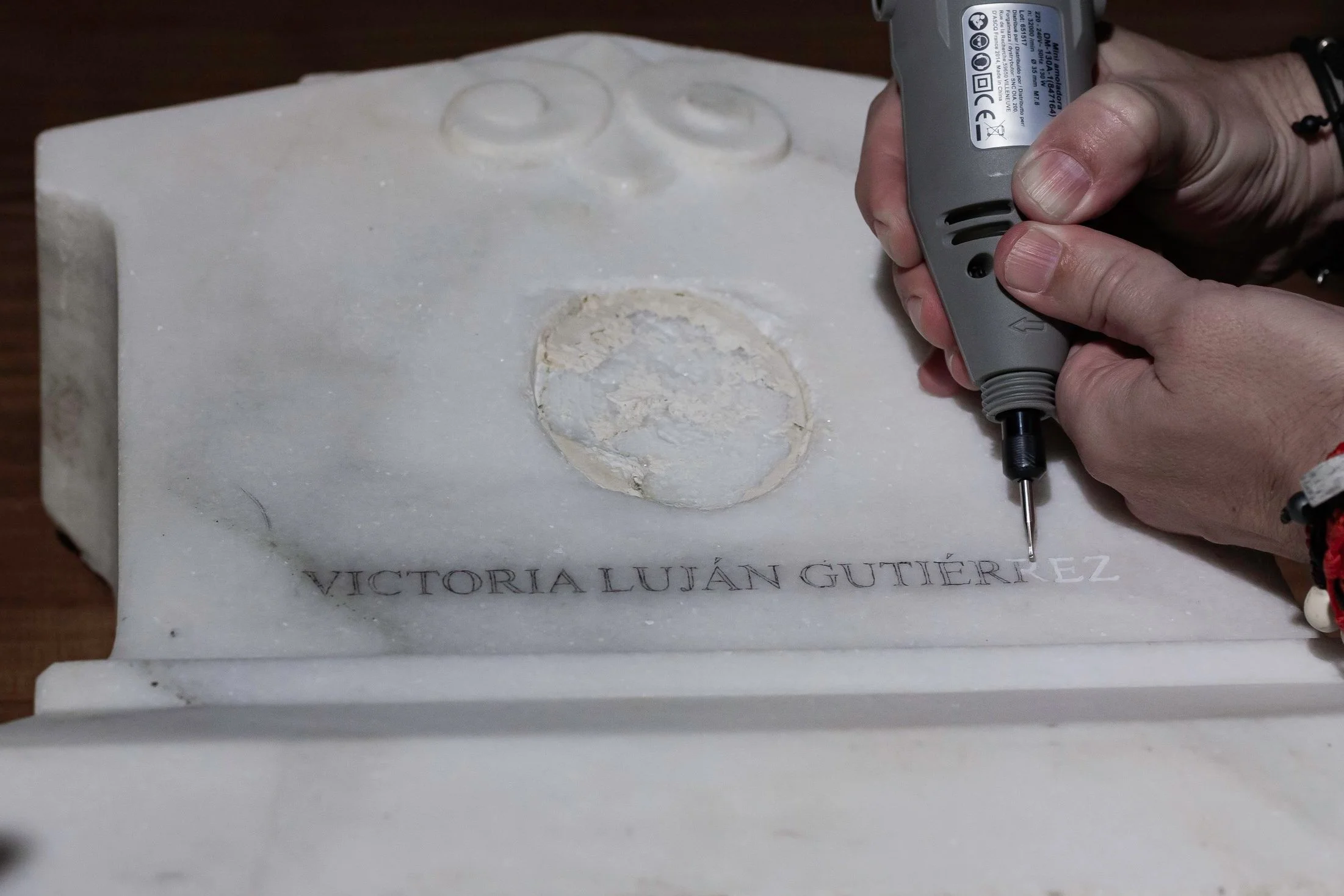
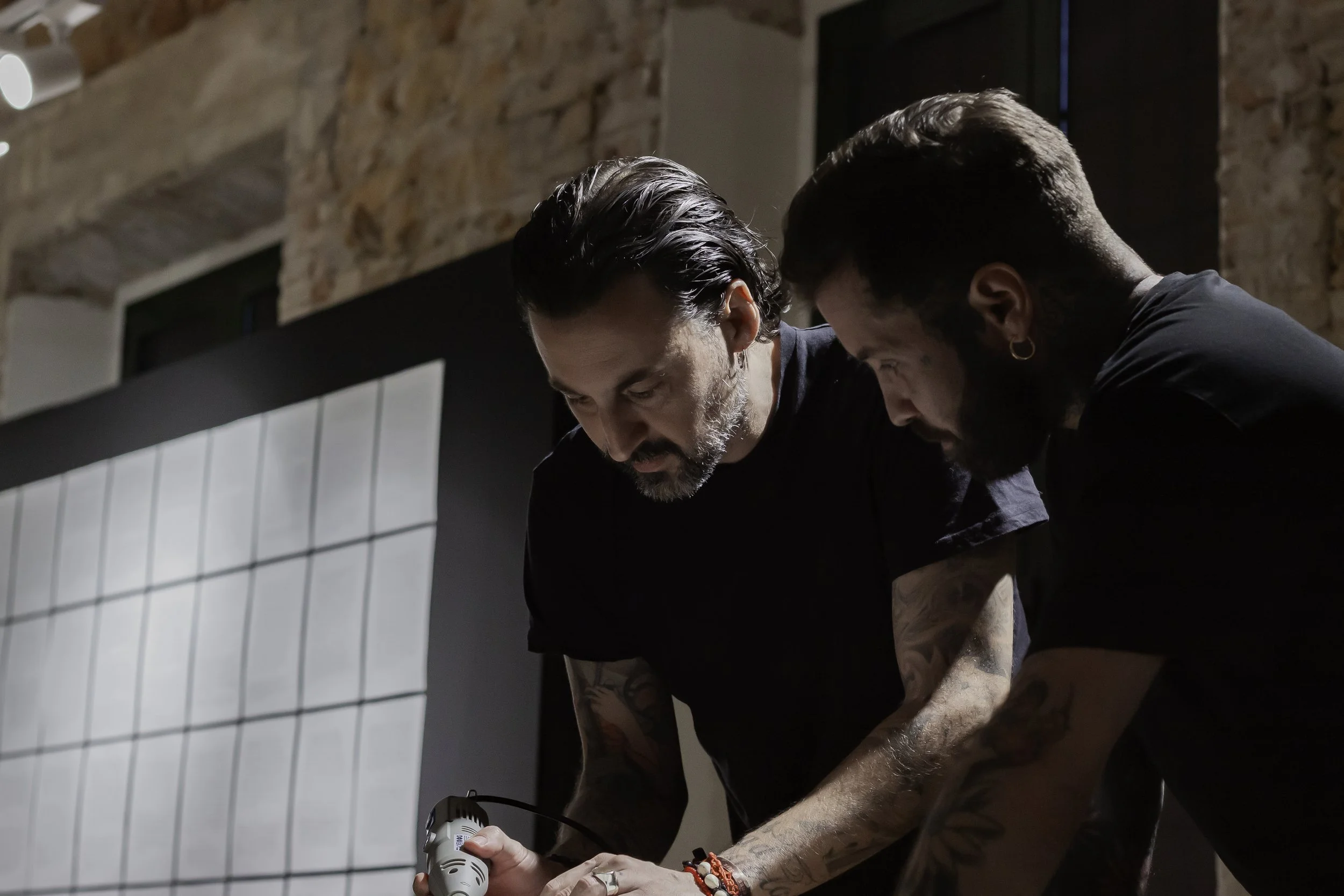
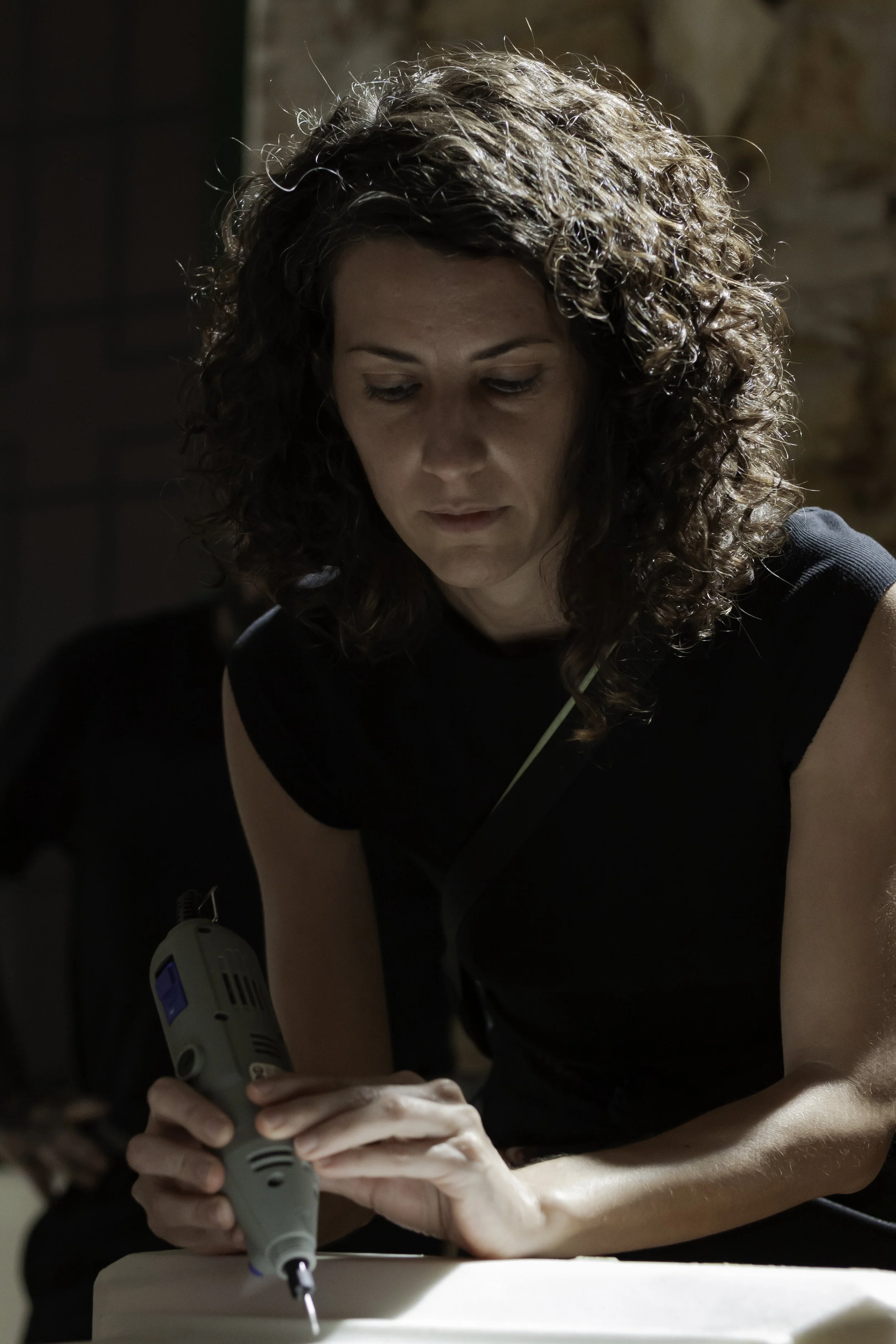
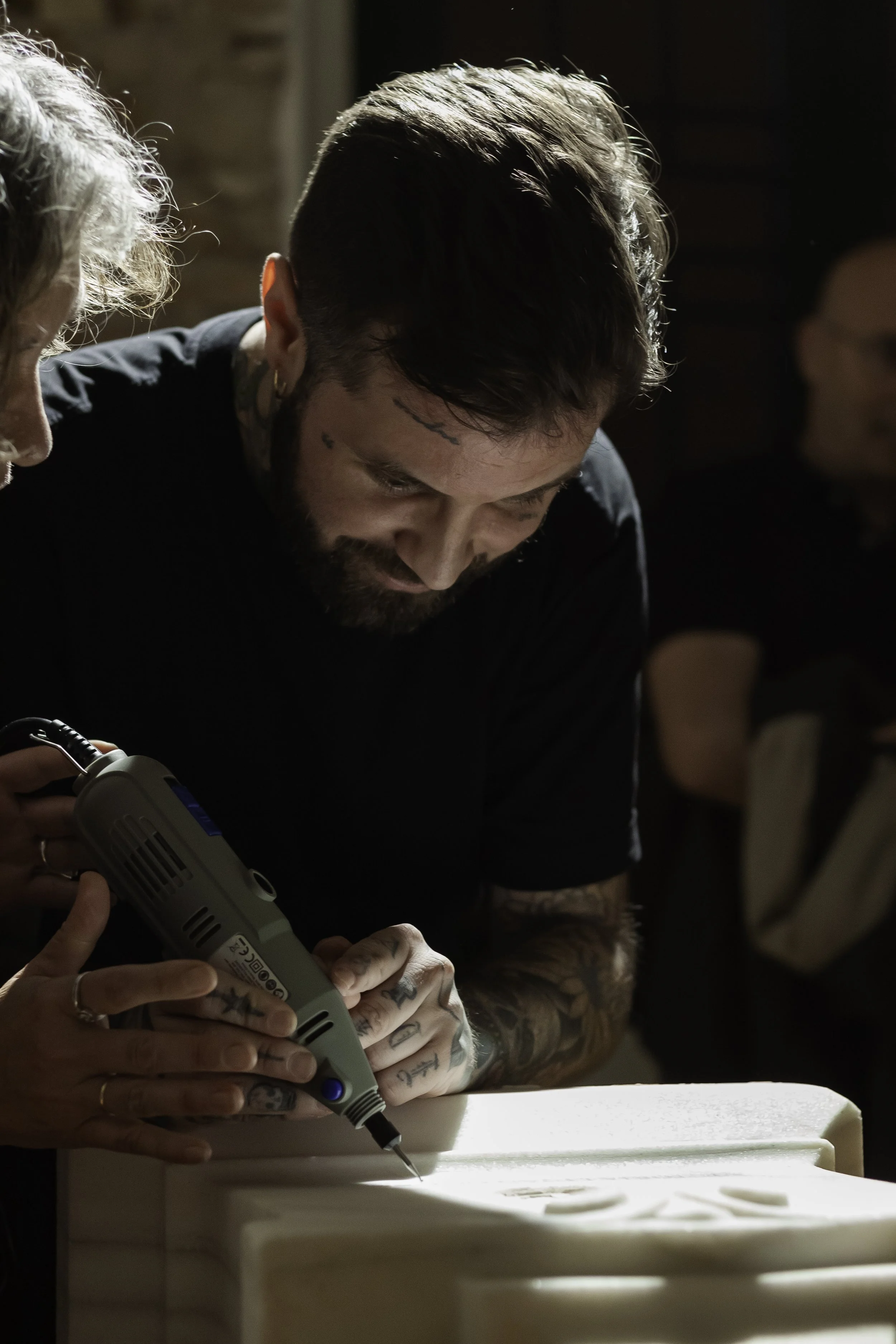
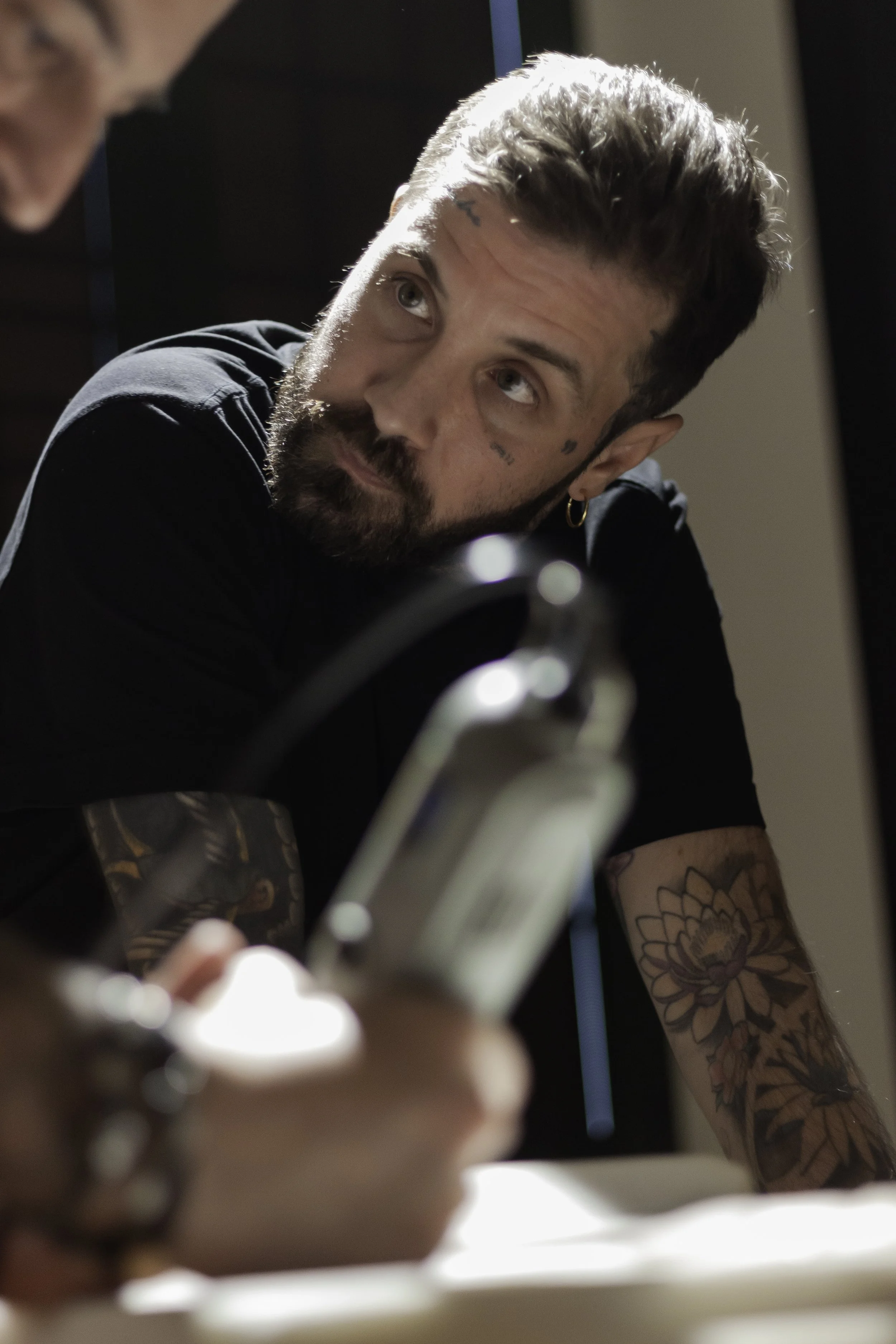
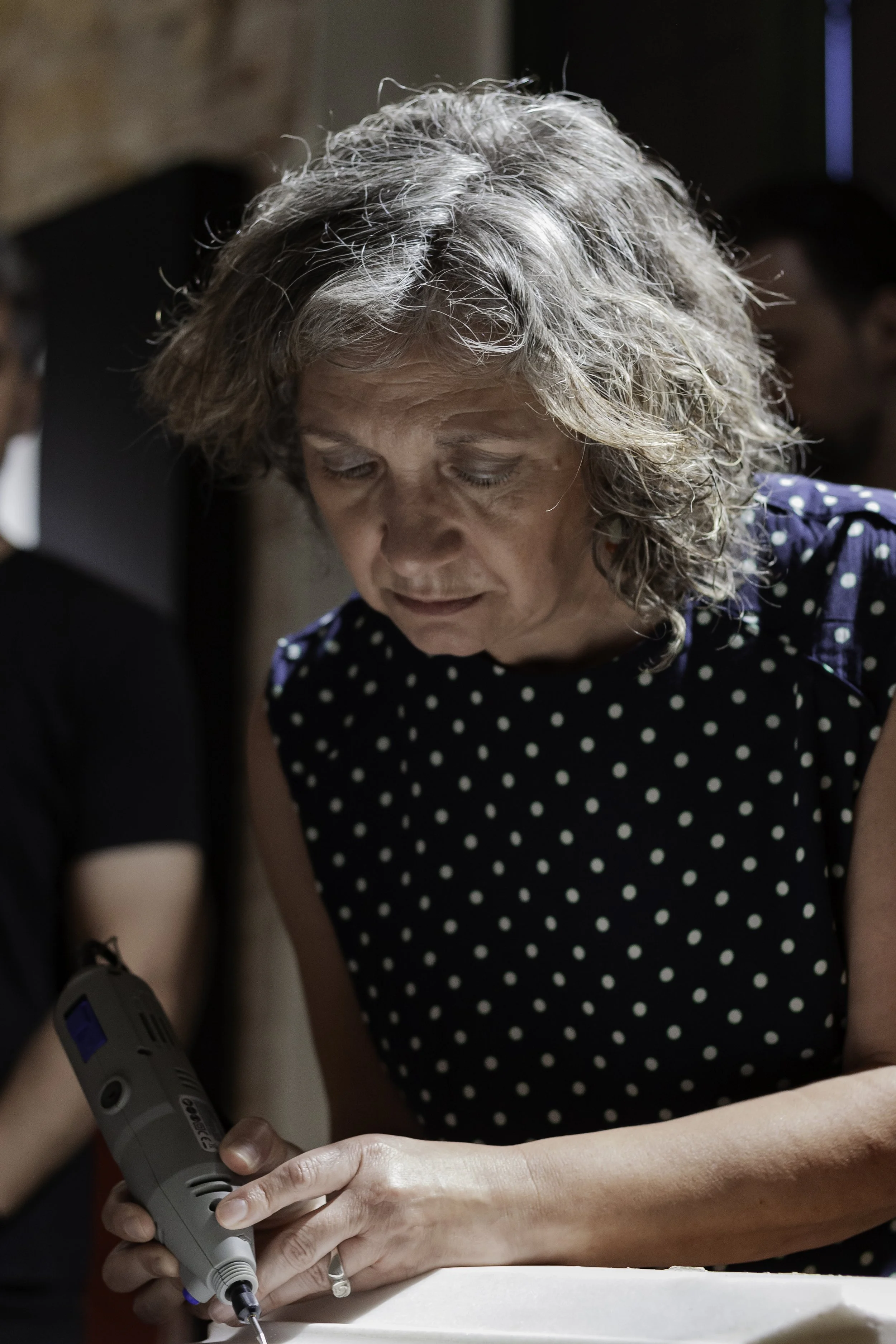
THE SIXTEENTH STEP, carried out by Azcona at the Montesa Maternity Hospital, represents a closure regarding the performances the artist himself has carried out in the place where he was born. The maternity hospital, frequented by Carmelite Teresian nuns and linked to the theft of children, remains open, with a different use but without any major changes. Azcona takes the hospital’s clock, which he later uses in other performances, addressing the inevitability of birth and bringing his works at the maternity hospital to a close, prior to finally meeting the mother who gave birth to him.
EL DECIMOSEXTO PASO llevado a cabo por Azcona en la Maternidad de Montesa, supone un cierre en cuanto las performances que el propio artista ha llevado en el lugar donde nació. La maternidad frecuentada por monjas carmelitas teresianas y vinculada al robo de niños sigue abierta, con otro uso, pero sin ningún gran cambio. Azcona sustrae el reloj de la maternidad que más tarde utilizará en otras performances, hablando de la obligatoriedad del nacimiento y cerrando las obras en la maternidad, previo a conocer por fin a la madre que le parió.
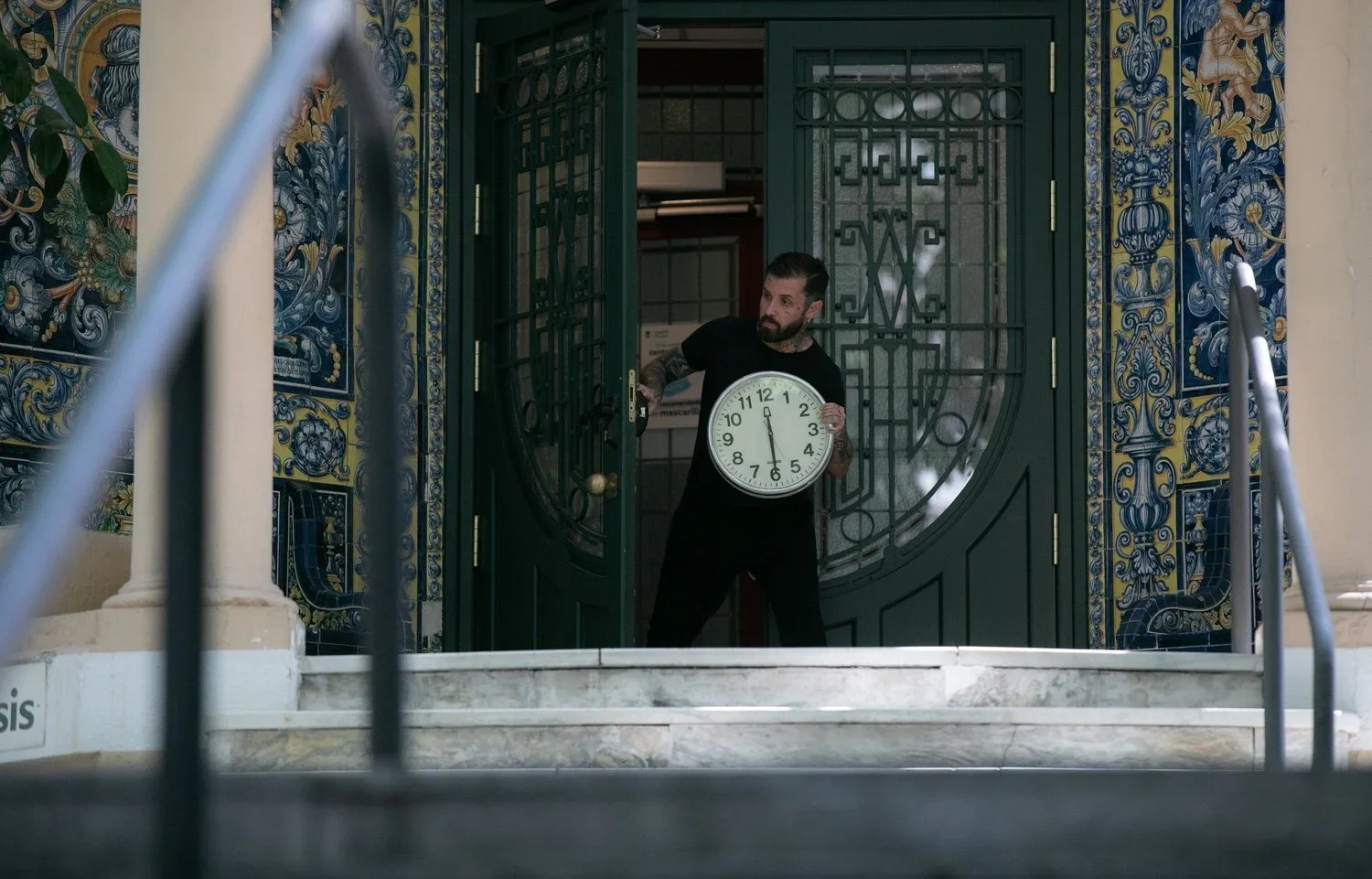
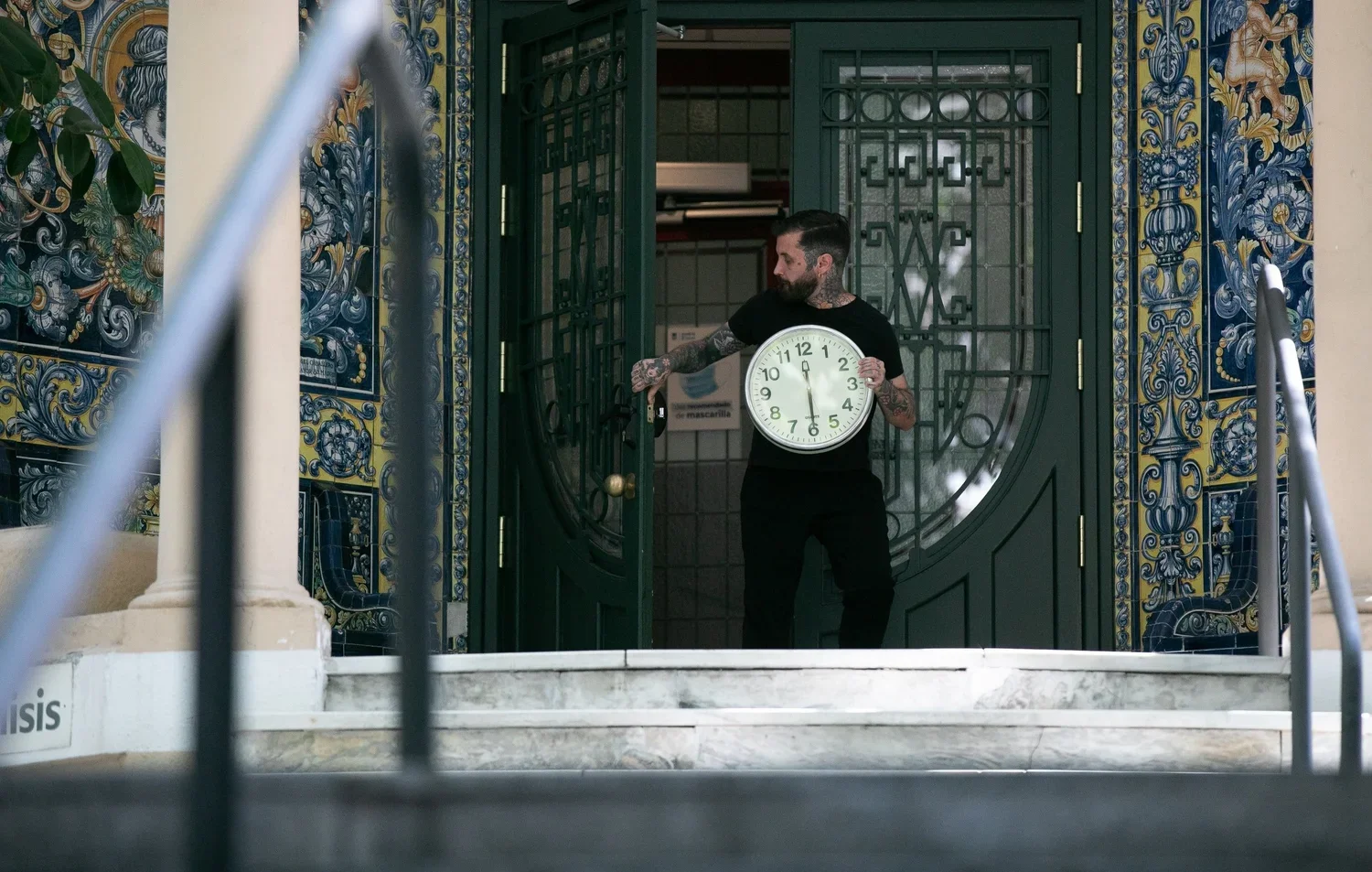
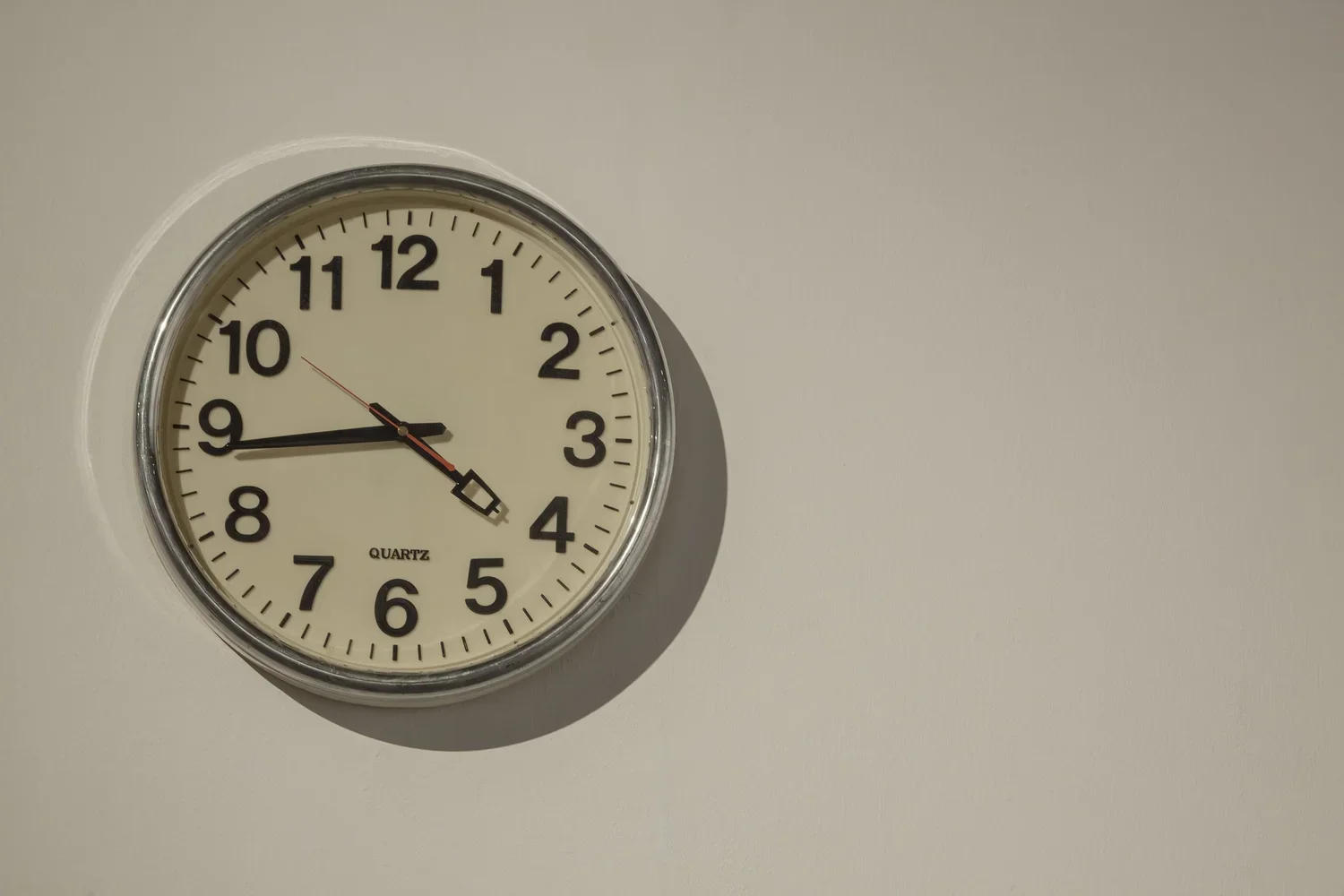
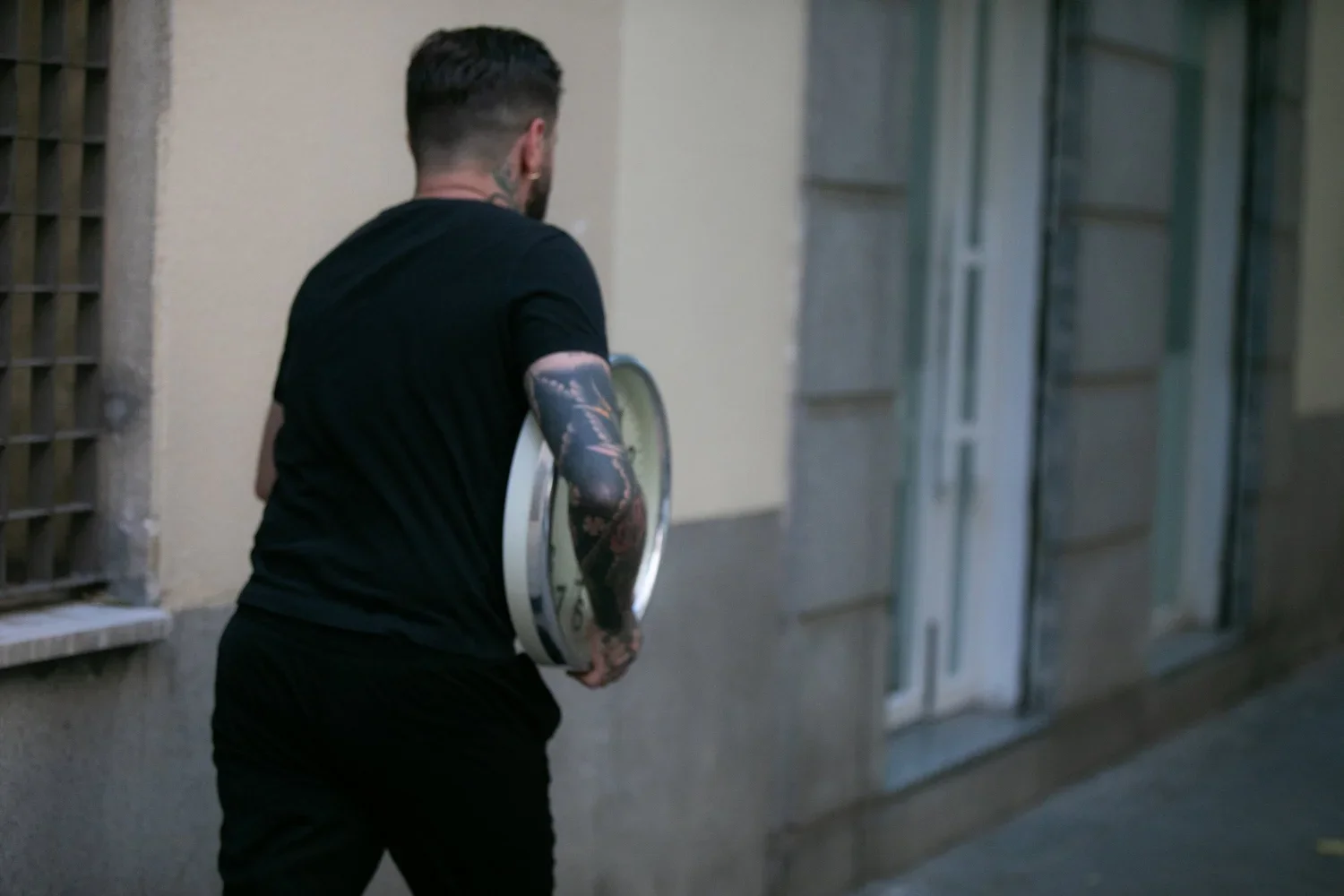
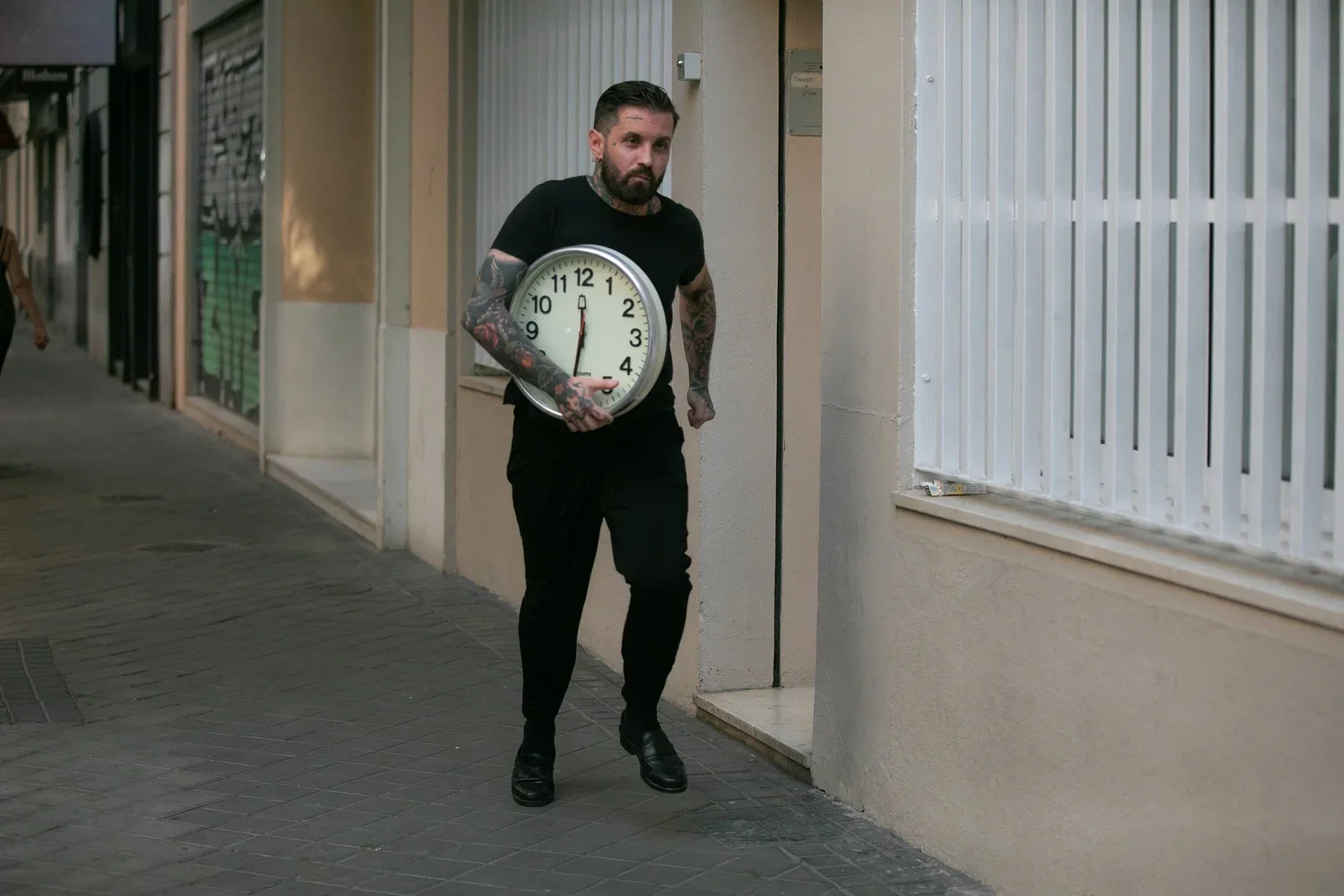
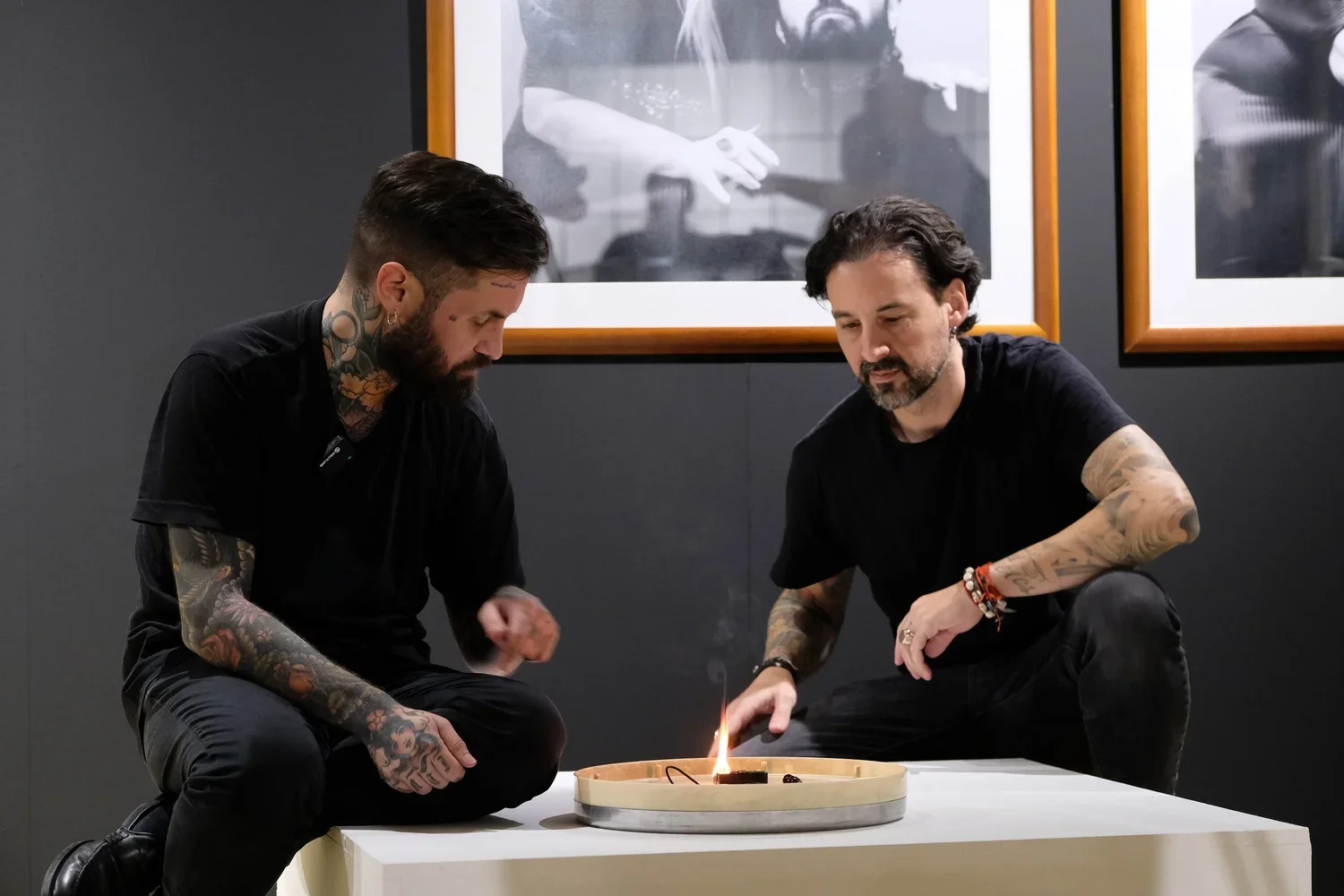
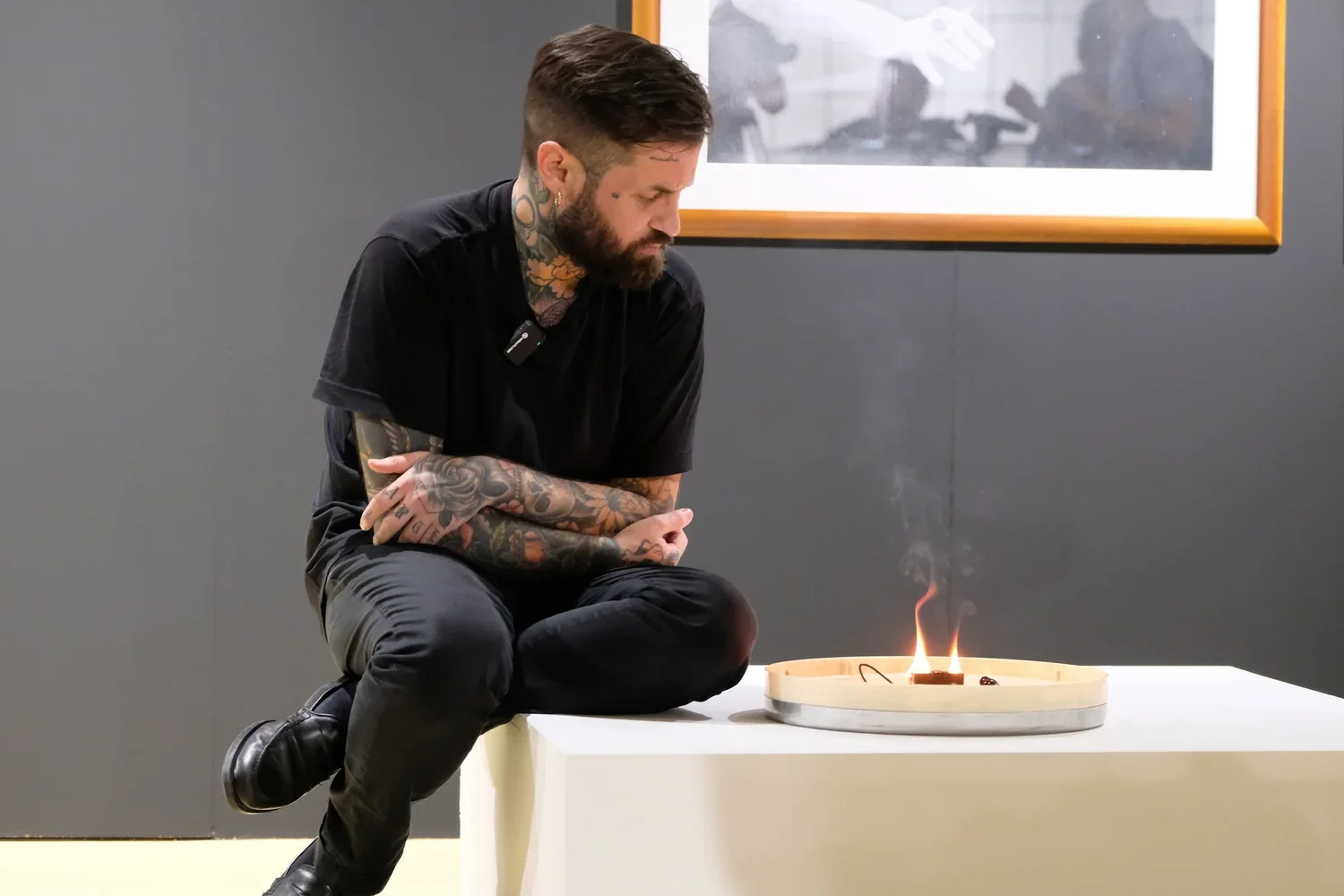
THE SEVENTEENTH STEP or The Abandoners, is an important performance according to Azcona, aimed at recovering and healing part of the feeling of abandonment that remained inside him regarding his biological mother. In this action, dozens of mothers in Murcia and Tegucigalpa participated, activating, through letters and handwritten notes of abandonment by mothers of their own newborn children, interventions in the streets.
EL DECIMOSÉPTIMO PASO o Las Abandonadoras. Performance importante según Azcona para recuperar y sanar parte del sentimiento de abandono que permanecía en su interior respecto a su madre biológica. En esta acción decenas de Madres en Murcia y en Tegucigalpa activaron desde cartas y manuscritos de abandono de madres de sus propios hijos recién nacido en calles.
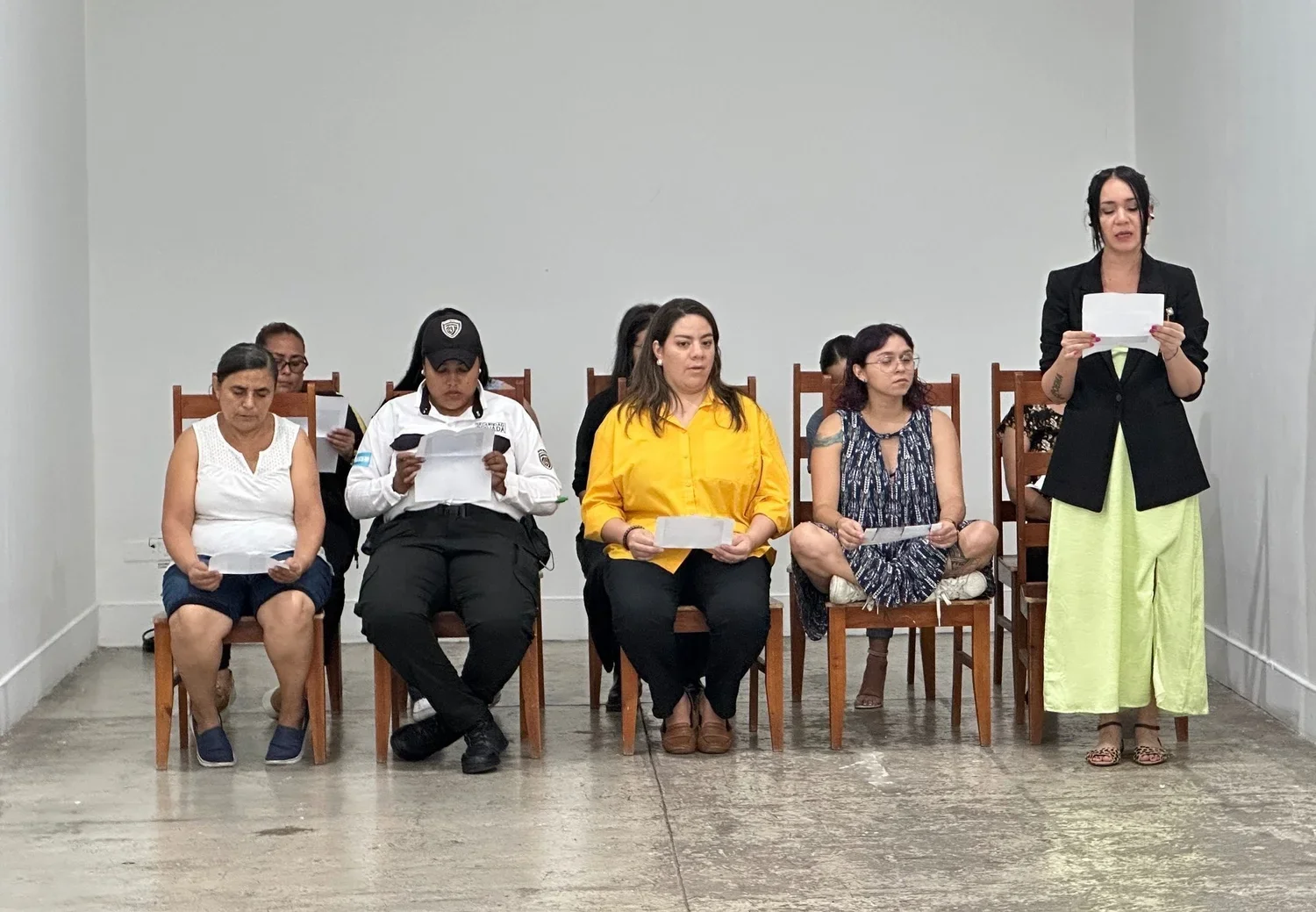
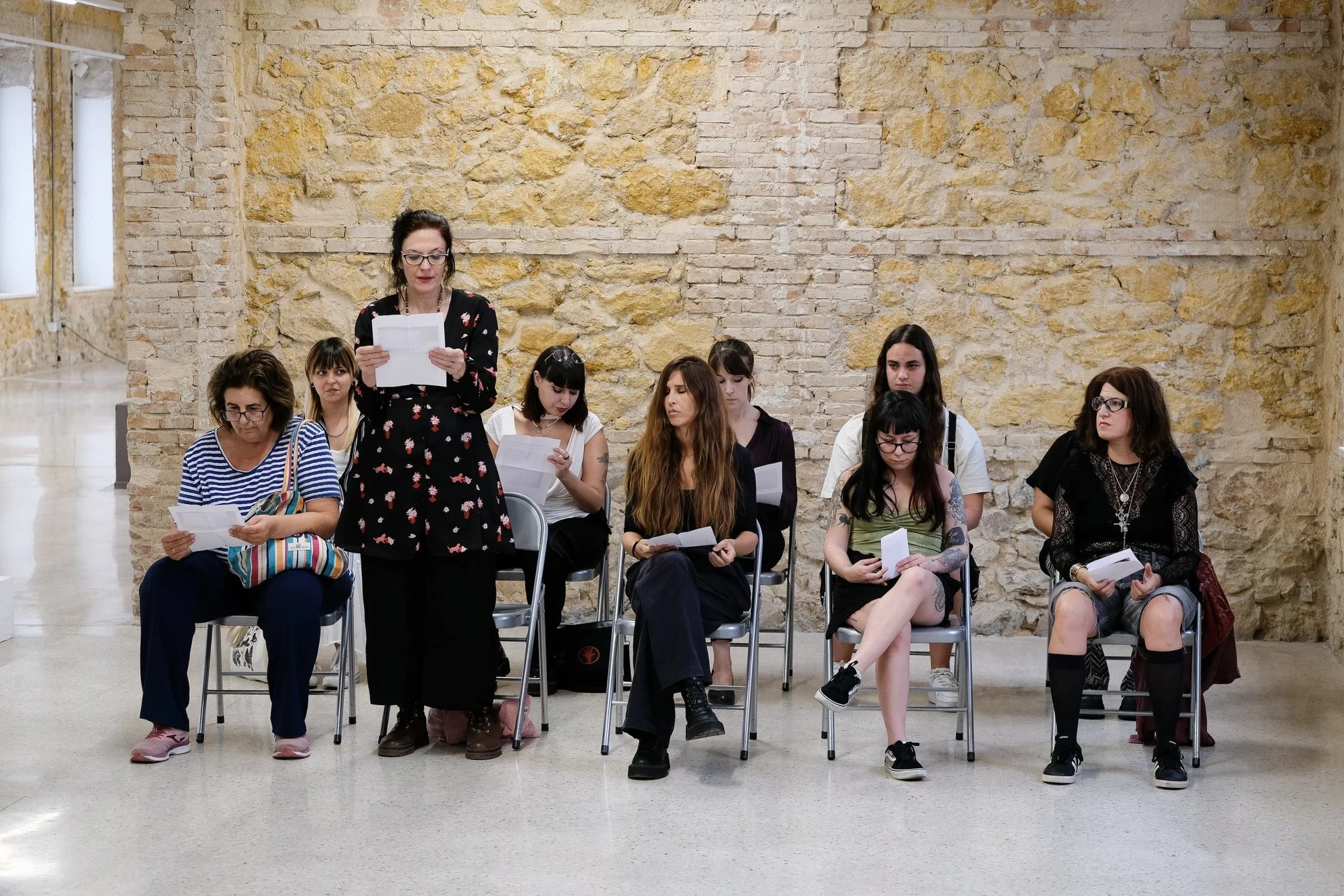
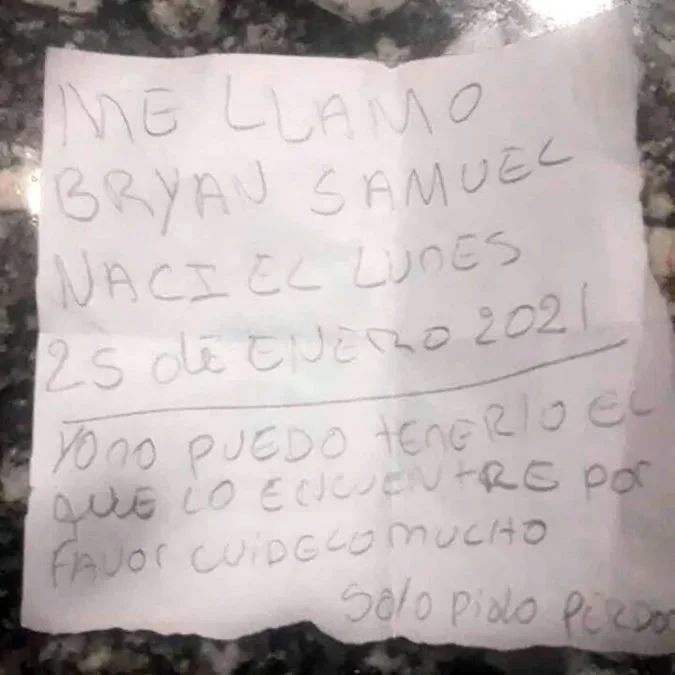
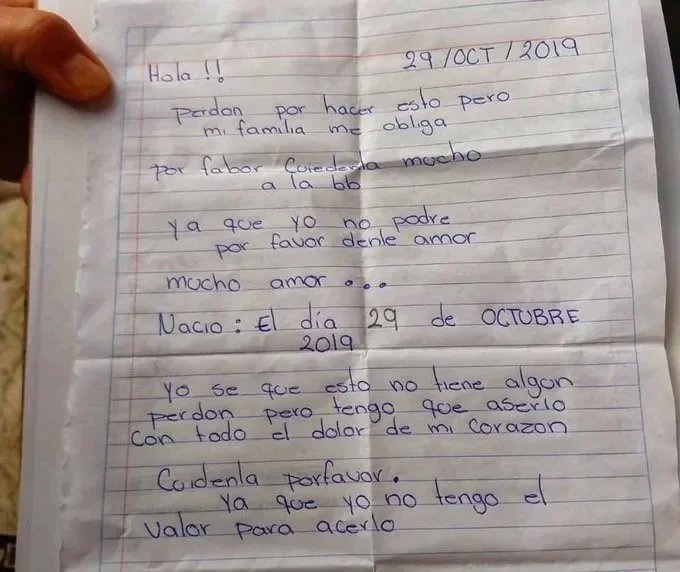
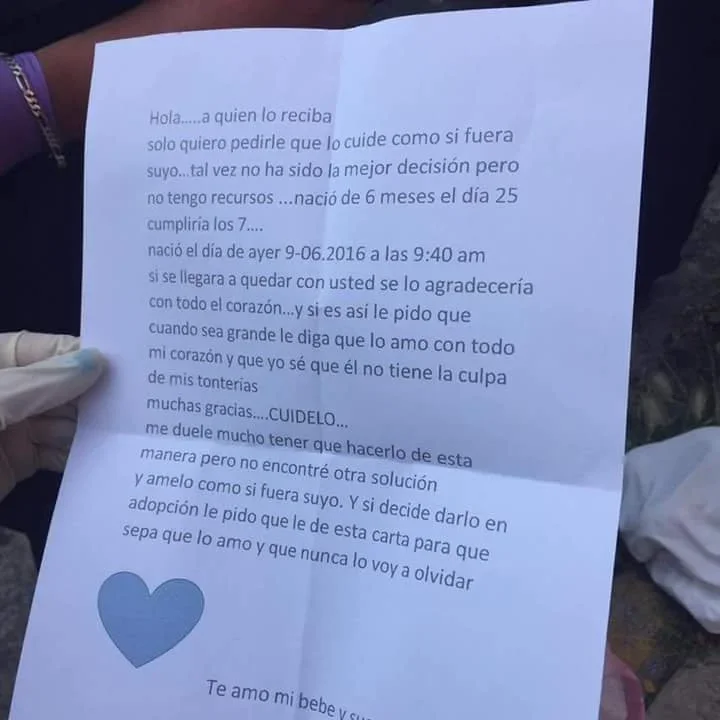
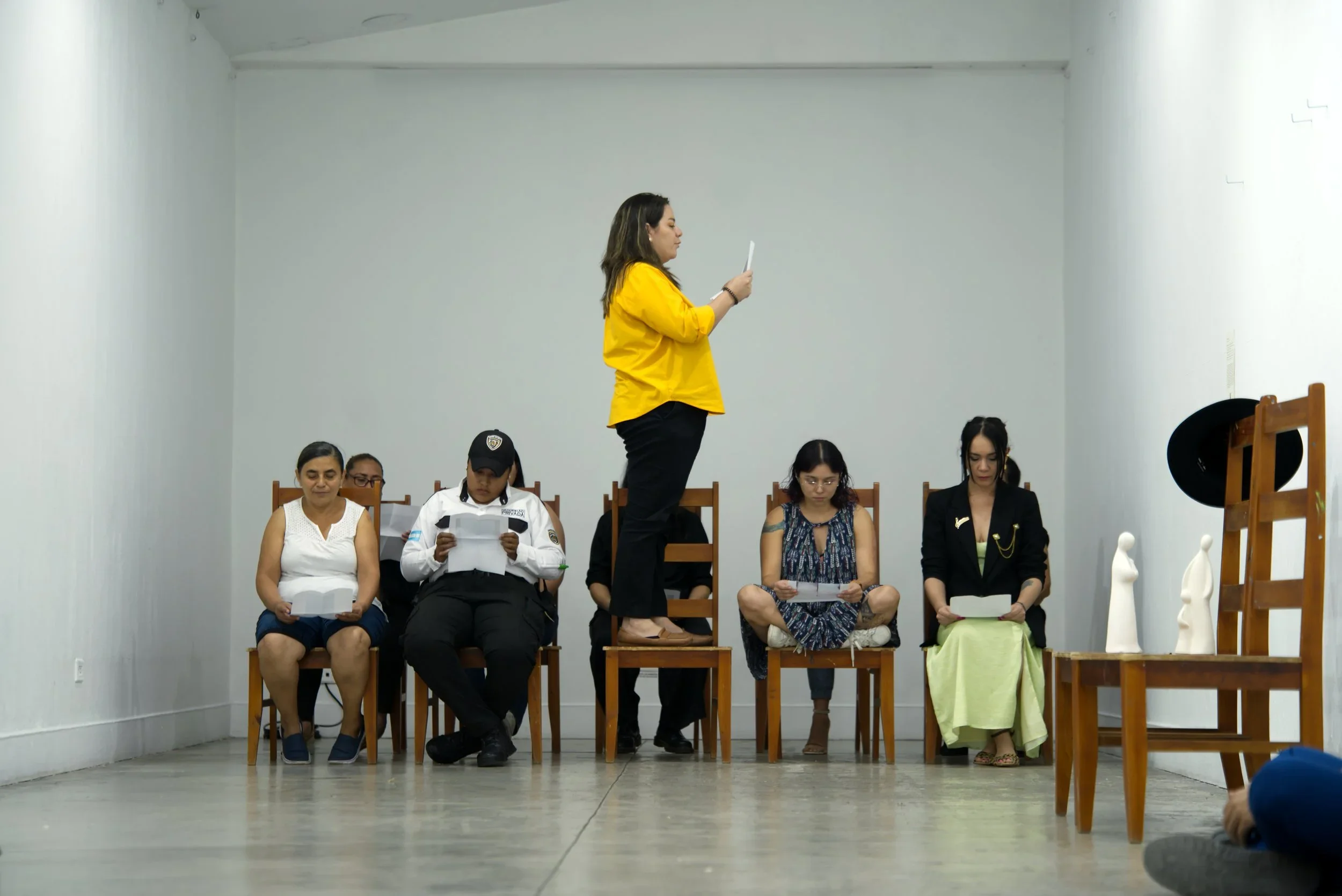
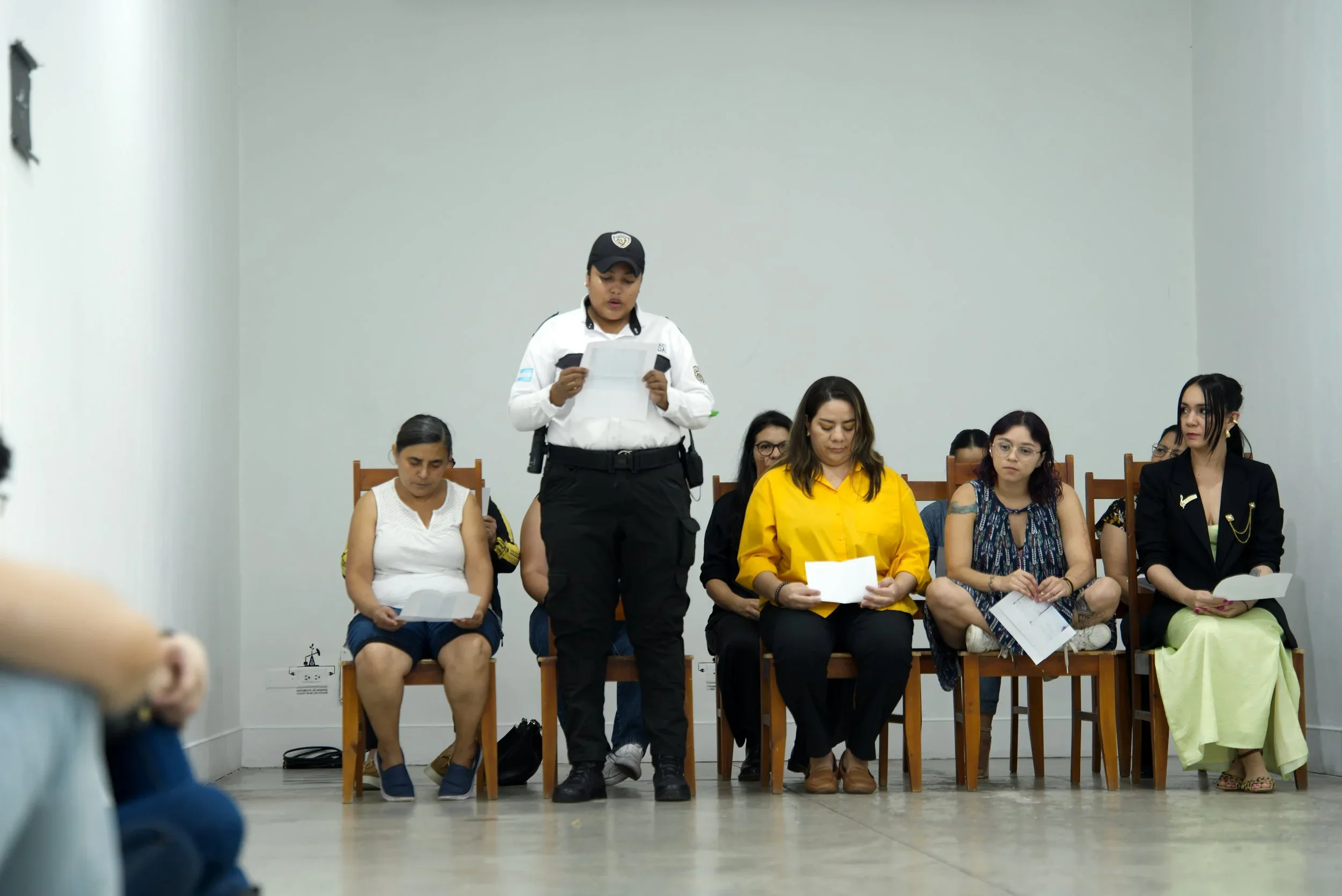
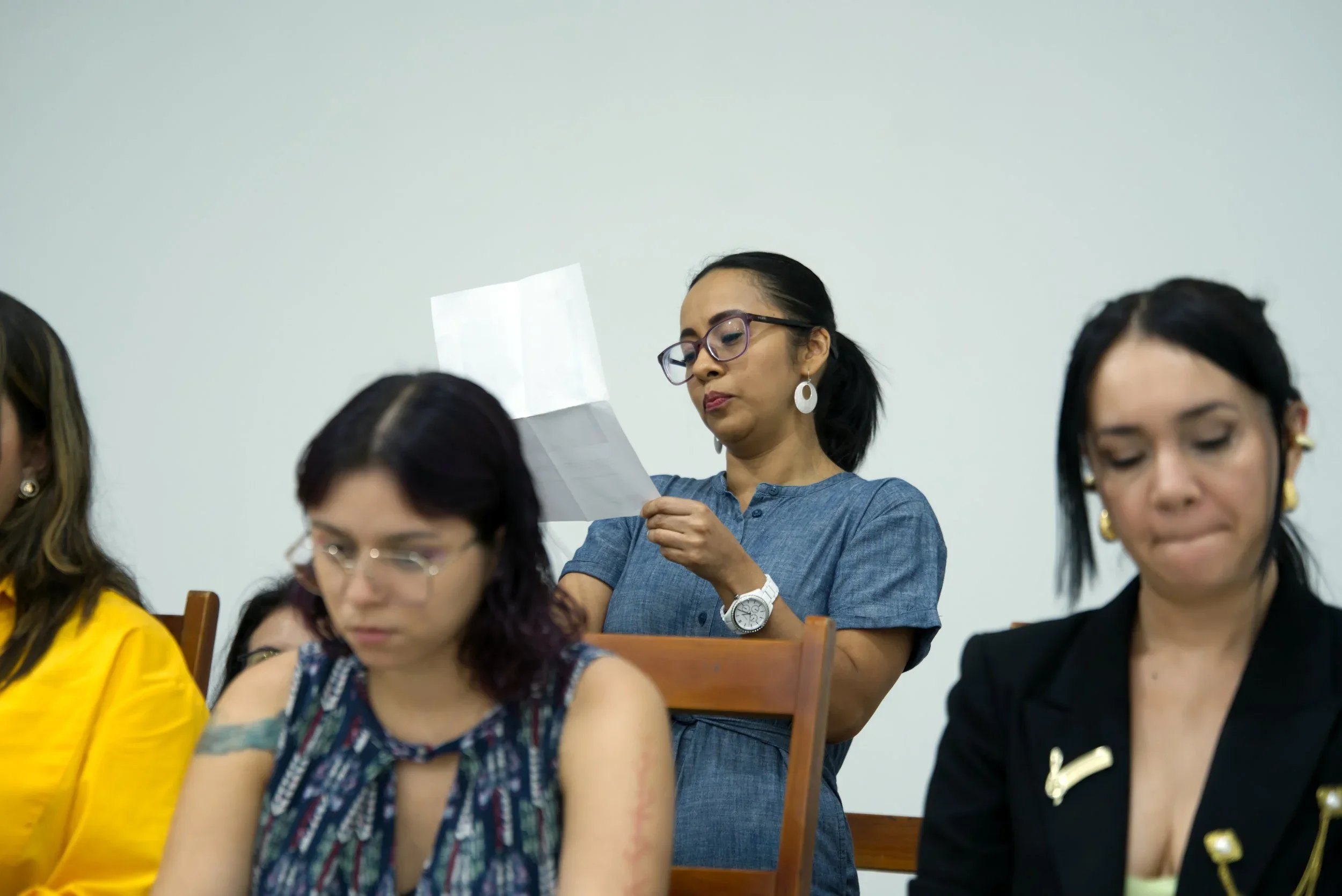
THE EIGHTEENTH STEP, or nine brief performances, was aimed at preparing to meet a mother. A few days before the closing of *The Role of the Family* at the Artillery Barracks, Azcona carried out nine new actions as a conclusion to all projects related to the mother, some of them key for being ready to meet his mother a few months later.
EL DECIMOCTAVO PASO o nueve performances breves para prepararse para conocer a una madre. Pocos días antes de la clausura de El papel de la Familia en el Cuartel de Artillería Azcona activa nueve nuevas acciones como cierre de todos los proyectos en torno a la madre, algunas de ellas claves para estar listo para conocer a su madre unos pocos meses después.
Nine brief actions to prepare the body and mind for meeting a mother. Friday, October 11. The nine procedural actions will be carried out continuously from the artillery barracks onto the street and neighboring artistic spaces. Free admission.
Within the framework of ABEL AZCONA. THE ROLE OF THE FAMILY, an intimate and performative act unfolds in nine actions, transforming the museum space into a place for resolving family conflicts. All of Azcona’s works are activated as performative processes at different stages. In this way, the artist—through documents, objects, words, body, and installation—will intervene with the clock stolen from the maternity ward where he was born, engage with different mothers and other letters of abandonment, call his mother or the imagined figure of her; embrace the soft fabric mother he commissioned as a substitute for his own due to feelings of abandonment; say a definitive goodbye to all ghost and substitute mothers; engrave on metal and in memory the keys that represent his expulsion from his family; consider annulling his adoption or seeking a new one; propose ways for the audience to meet a mother; or invite his own mother to finally meet him in a grand final action.
FIRST BRIEF ACTION – THE HOUR I WAS BORN
In this first action, with the clock taken from the Montesa maternity ward, Azcona will intervene in the mechanism with fire to stop it forever at the exact hour of his birth: 4:45 p.m.
SECOND BRIEF ACTION – THE ABANDONERS
Second activation with mothers reading real abandonment letters from mothers who left them with their newborn children on the street.
THIRD BRIEF ACTION – MOM
A sound action in which the artist, through repetition, seeks a process of participation and empathy with visitors. Abel Azcona was born on April 1, 1988, the result of an unwanted pregnancy. His mother, a young poly-drug user who worked in prostitution, abandoned him a few days after birth.
FOURTH BRIEF ACTION – THE EMBRACE OR THE SOFT MOTHER
The final stage of the artistic process around the soft mother involves interaction between the artist and the figure. After receiving her at his home, Azcona slept and interacted with her in daily life. The soft mother was commissioned from another artist and sculptor, who designed and created this substitute mother for Azcona based on sketches.
"My imaginary mother will be by my side on gray days. My imaginary mother would be a place of refuge and embrace. My imaginary mother would be soft, gentle, and comforting. My imaginary mother would never abandon me."
FIFTH BRIEF ACTION – THE KEYS
In this fifth action, he will engrave the keys of his adoptive family’s house—which no longer open the door—onto different metal plates to preserve their memory. After the action, he will walk through the streets of Murcia to the river and throw the original keys as closure and ending.
SIXTH BRIEF ACTION – AND IF NOW I DON’T WANT A MOTHER
A repetition and writing action in the Bóvedas of Murcia.
SEVENTH BRIEF ACTION – GOODBYE TO ALL SUBSTITUTE MOTHERS
The seventh action consists of throwing out of the museum window all the works created to replace a mother or to occupy that place left by abandonment. Upon the appearance of the biological mother, Azcona disposes of some works created to fill that void.
EIGHTH BRIEF ACTION – THE FAMILY LAWYER
A meeting with a family lawyer to discuss the possibility of adoption by the biological mother.
NINTH BRIEF ACTION – THE MANDATORY MICROPHONE
All visitors to the exhibition must participate in the final action at a microphone in the room to give Azcona their advice, preparing him a few days before meeting his biological mother.
Nueve acciones breves para prepararse corporal y mentalmente para conocer a una madre. Viernes, 11 de octubre. Las nueve acciones procesuales se realizaran de manera continua desde el cuartel de artillería en calle y espacios artísticos colindantes. Entrada libre.
En el marco de ABEL AZCONA. EL PAPEL DE LA FAMILIA encontramos un acto íntimo y performativo en nueve actos mediante la conversión del espacio museístico en un lugar de resolución de conflictos familiares. La totalidad de obras de Azcona se activan como procesos performativos en diferentes etapas. De esta manera el artista mediante documento, objeto, palabra, cuerpo e instalación intervendrá el reloj robado de la propia maternidad donde nació, dialogará con diferentes madres y otras cartas de abandono, llamará a su madre o la figura imaginada de la misma; abrazará a la madre de tela blanda que encargó como sustitución de la suya propia ante el sentimiento de abandono, se despedirá de manera definitiva de todas las madres fantasmas y sustitutas, grabará en metal y su memoria las llaves que representan la expulsión de su familia , planteará la anulación de su adopción o buscará una nueva, propondrá al espectador maneras de conocer a una madre o invitará a la suya propia a conocerse por fin en un gran acción final.
PRIMERA ACCIÓN BREVE - LA HORA EN QUE NACÍ. En esta primera acción con el reloj sustraído en la maternidad de Montesa, Azcona intervendrá la maquinaria con fuego para paralizarlo para siempre en la hora exacta en que nació: las 16.45h.
SEGUNDA ACCIÓN BREVE - LAS ABANDONADORAS. Segunda activación de madres leyendo cartas de abandono reales de madres que las depositaron junto a sus hijos recién nacidos en calle.
TERCERA ACCIÓN BREVE - MAMÁ. Acción sonora donde el artista mediante la repetición busca un procesos de participación y empatía con el visitante. Abel Azcona nació el 1 de abril de 1988, fruto de un embarazo no deseado. Su madre, una joven politoxicómana que ejercía la prostitución, le abandonó a los pocos días de nacer.
CUARTA ACCIÓN BREVE - EL ABRAZO O LA MADRE BLANDA. La etapa final del proceso artístico acontecido en tono a la madre blanda contempla la interacción del artista con la misma. Tras recibirla en su domicilio Azcona durmió e interaccionó con ella en su día a día. La madre blanda fue encargada a otro artista y escultor que mediante bocetos terminó diseñando y creando esta madre sustituta para Azcona. «Mi madre imaginaria estará a mi lado los días grises. Mi madre imaginaria sería un lugar de refugio y abrazo. Mi madre imaginaria sería blanda, suave y confortable. Mi madre imaginaria no me abandonaría nunca.»
QUINTA ACCIÓN BREVE - LAS LLAVES. En esta quinta acción grabará las llaves de la casa de su familia adoptiva que ya no abren la puerta en diferentes placas metálicas para preservar su memoria, y tras la acción caminará por las calle de Murcia hasta el río donde lanzará las llaves originales como cierre y final.
SEXTA ACCIÓN BREVE - Y SI AHORA NO QUIERO UNA MADRE. Acción de repetición y escritura en las Bóvedas de Murcia.
SÉPTIMA ACCIÓN BREVE - ADIÓS A TODAS LAS MADRES SUSTITUTAS. La séptima acción consiste en arrojar por la ventana del museo todas las obras que fueron creadas para sustituir a una madre, o creadas para ocupar ese lugar desde el abandono. Ante la aparición de la madre biológica, Azcona se deshace de algunas obras creadas para ocupar ese vacío.
OCTAVA ACCIÓN BREVE - LA ABOGADA DE FAMILIA. Reunión con una abogada de familia para hablar de la posibilidad de una adopción por parte de la madre biológica.
NOVENA ACCIÓN BREVE - El MICRÓFONO OBLIGATORIO. Todos los visitantes de la muestra deben pasar en la acción final ante un micrófono en sala, para dar su consejo a Azcona para prepararlo pocos días antes de conocer a su madre biológica.
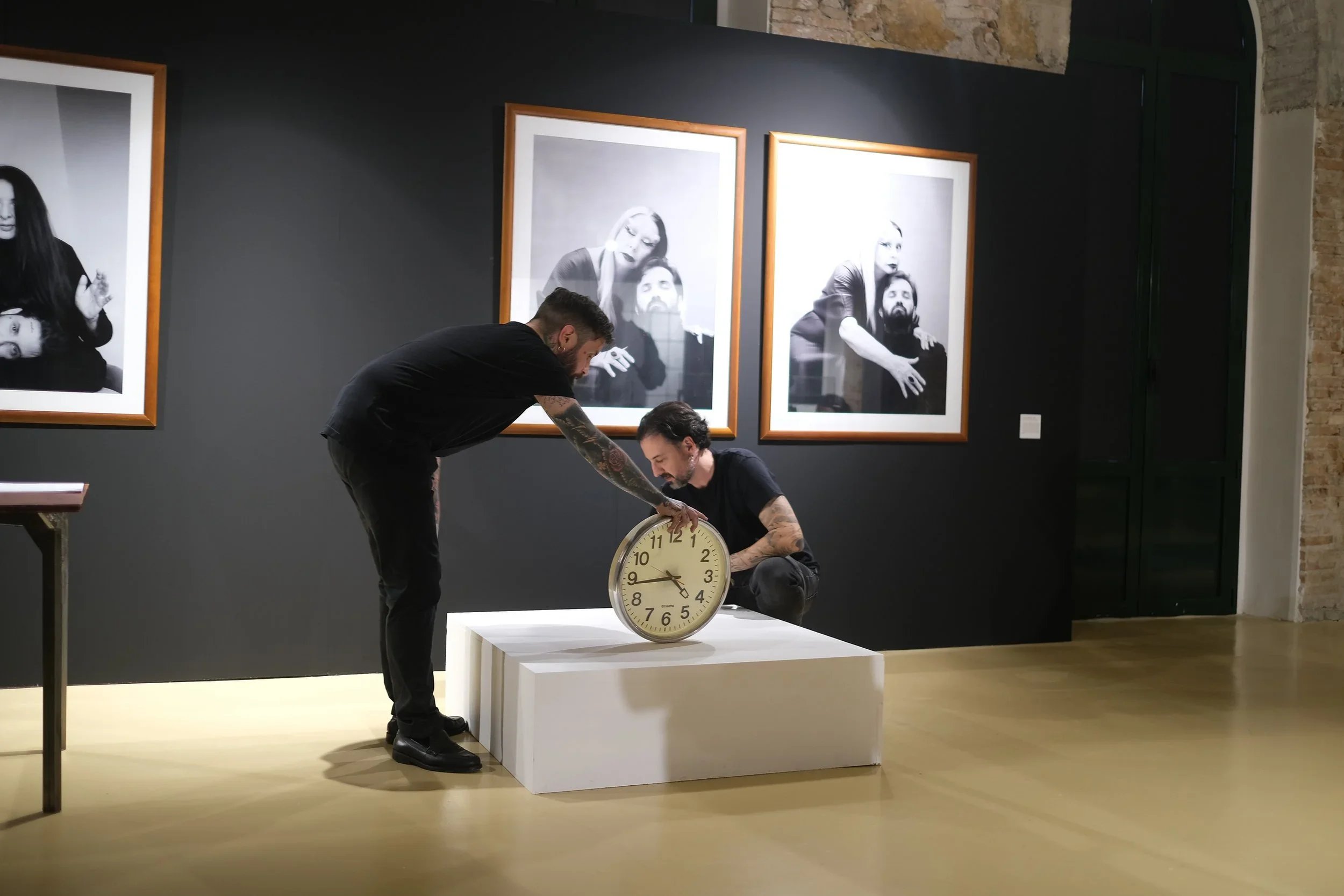
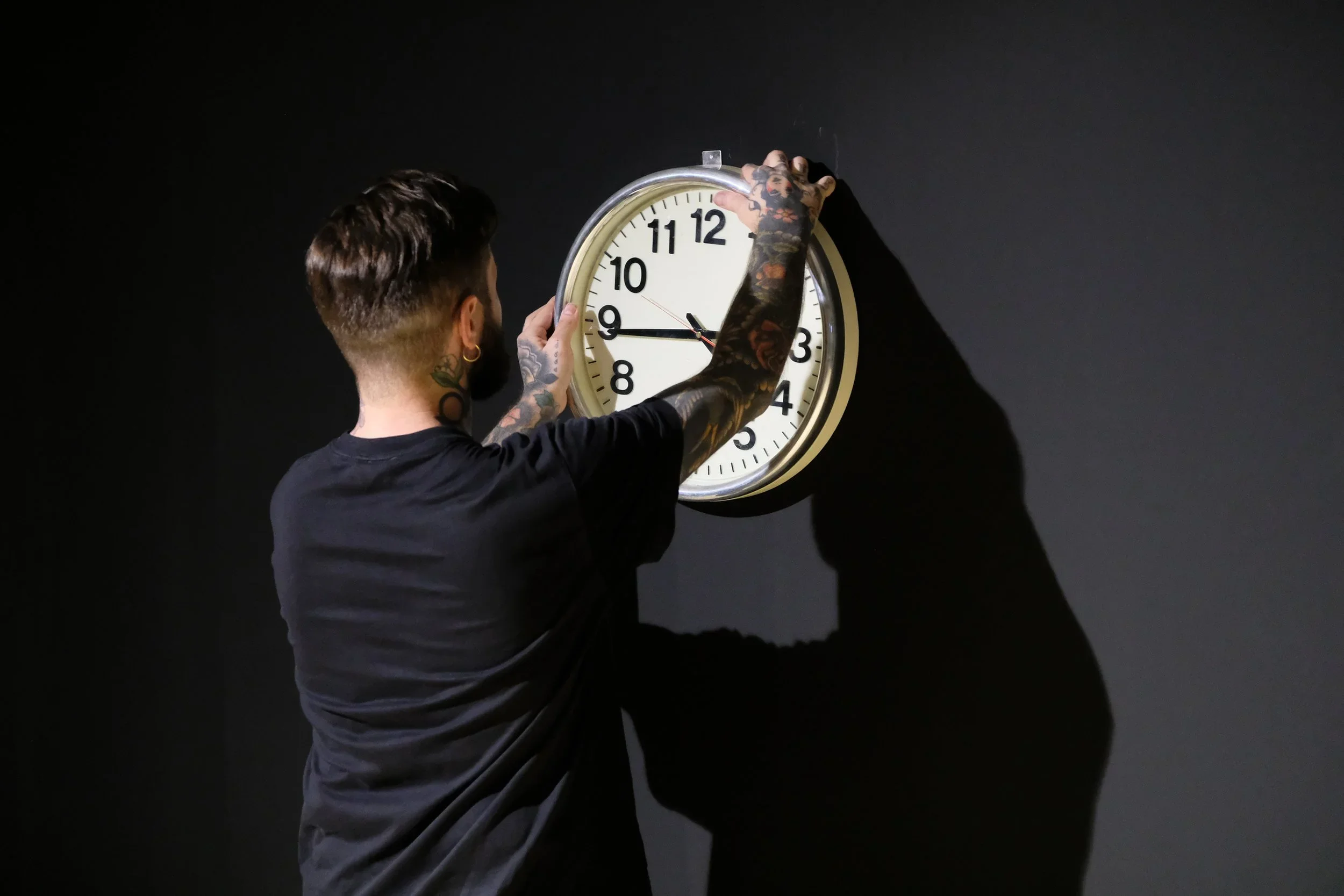
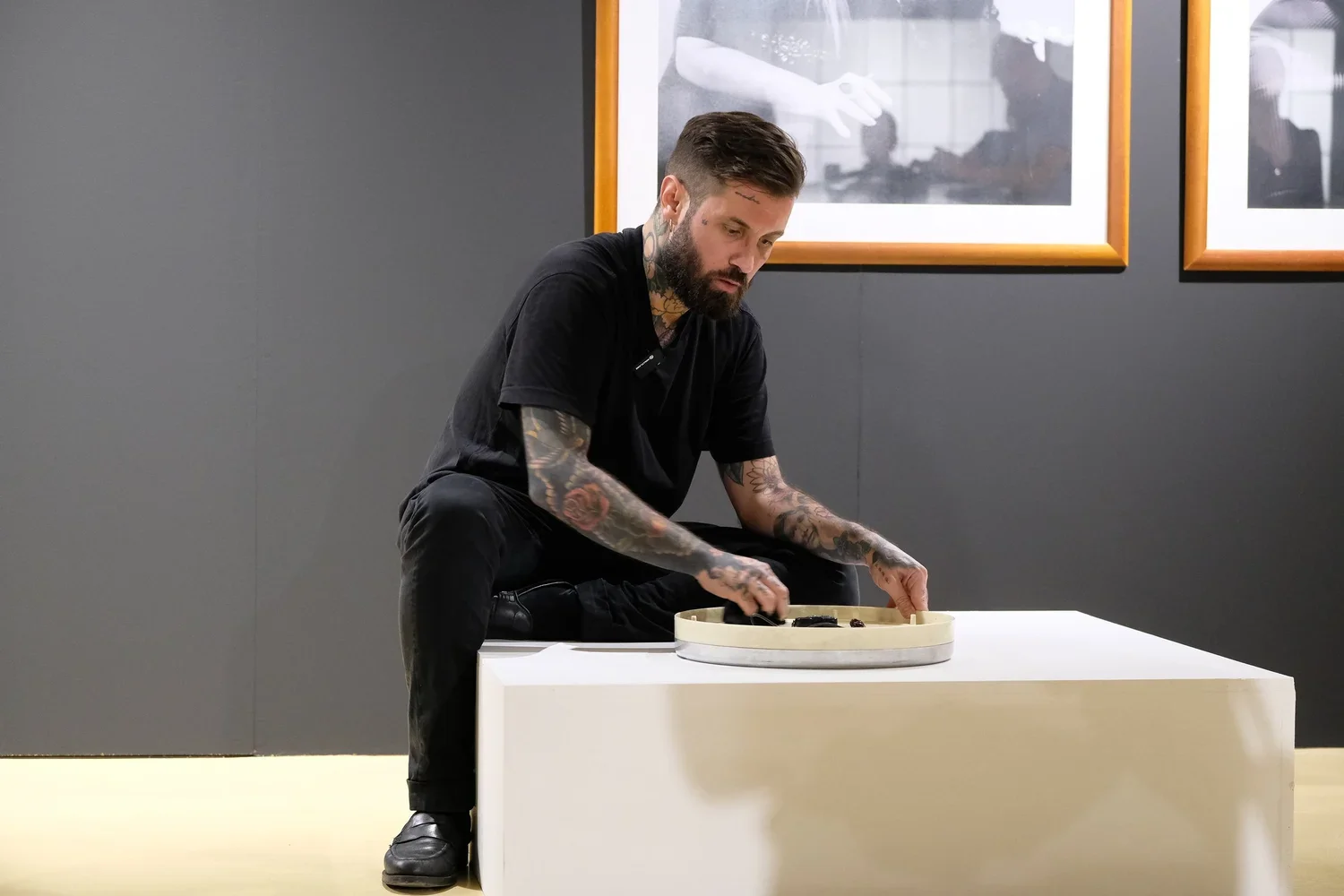
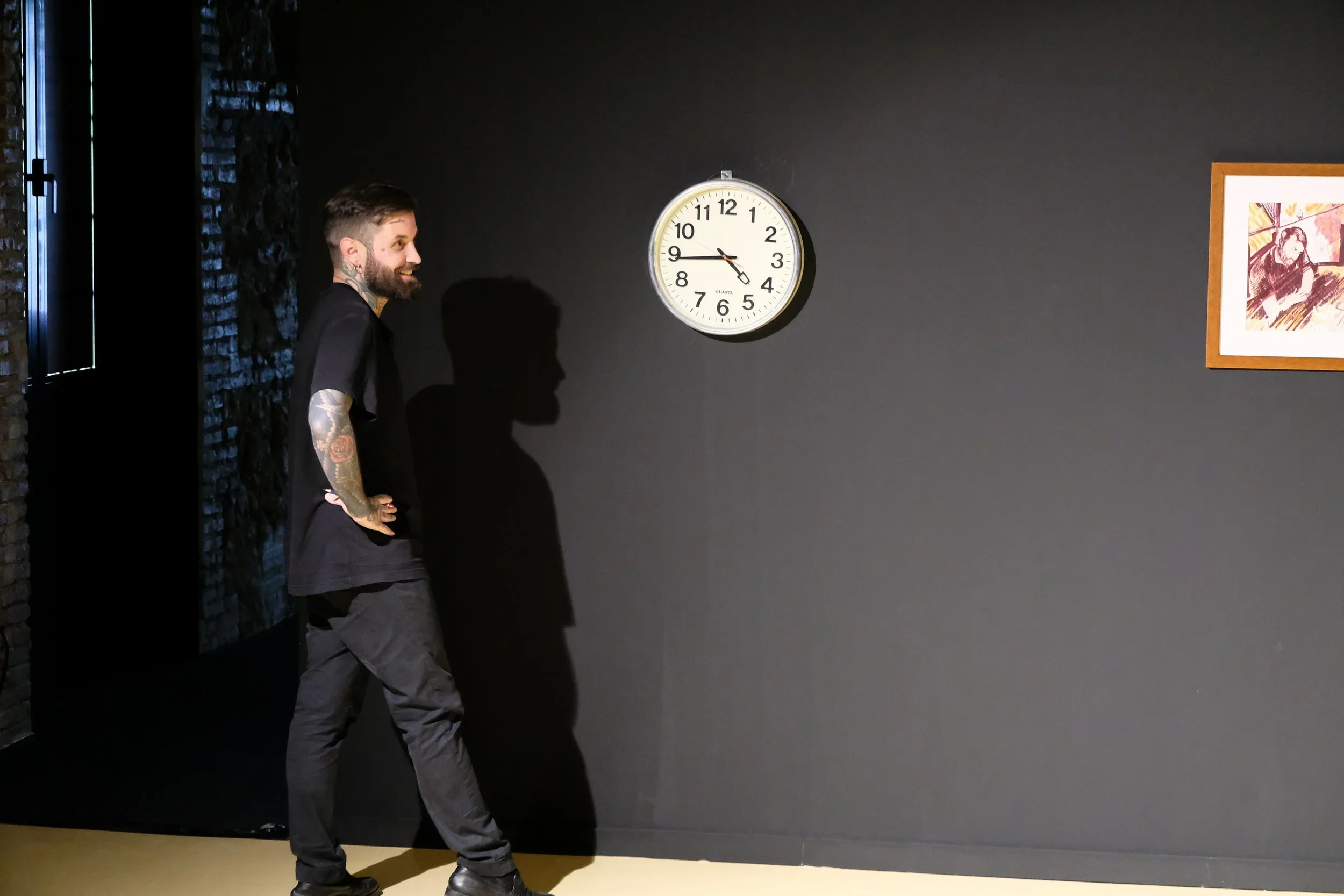
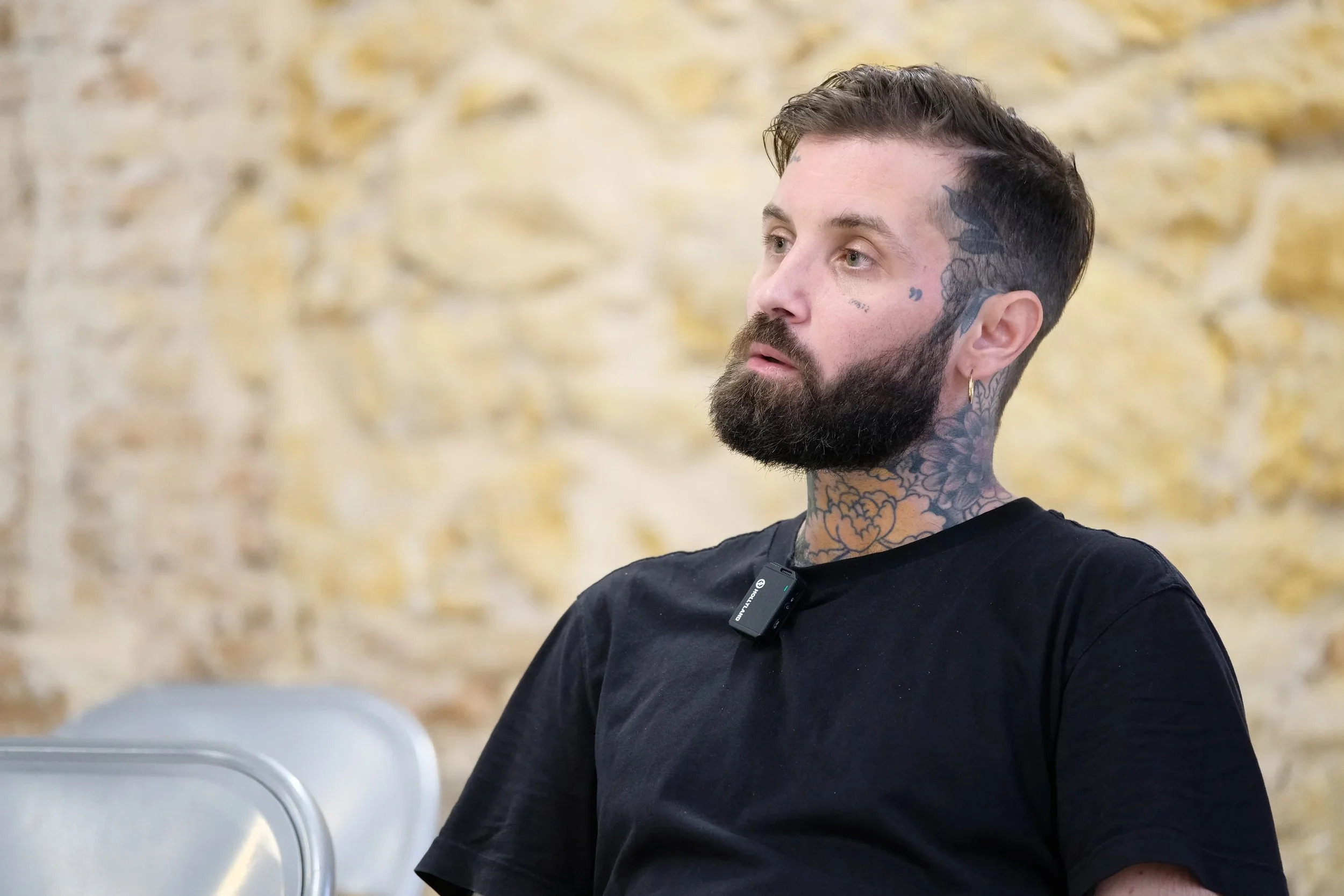
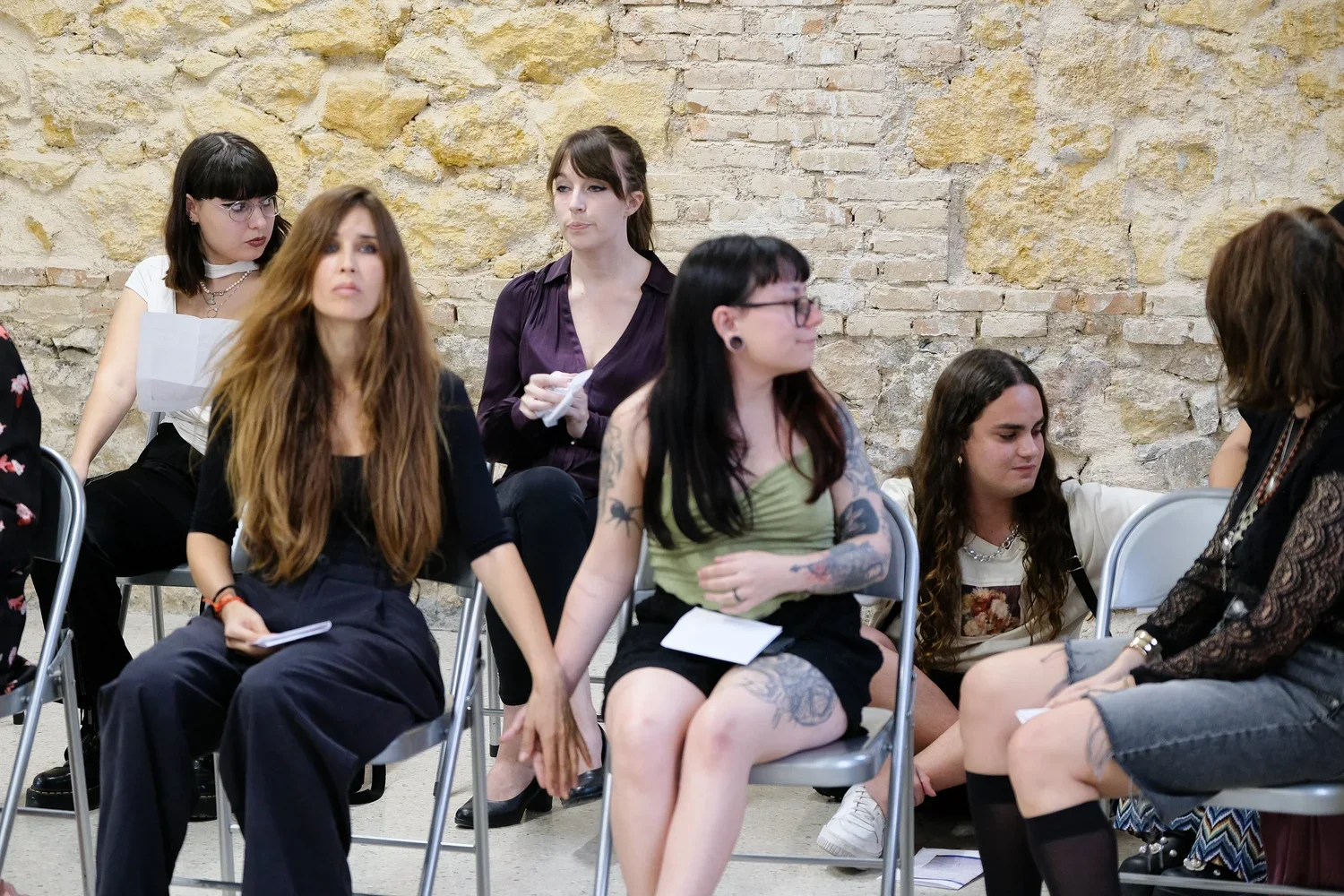
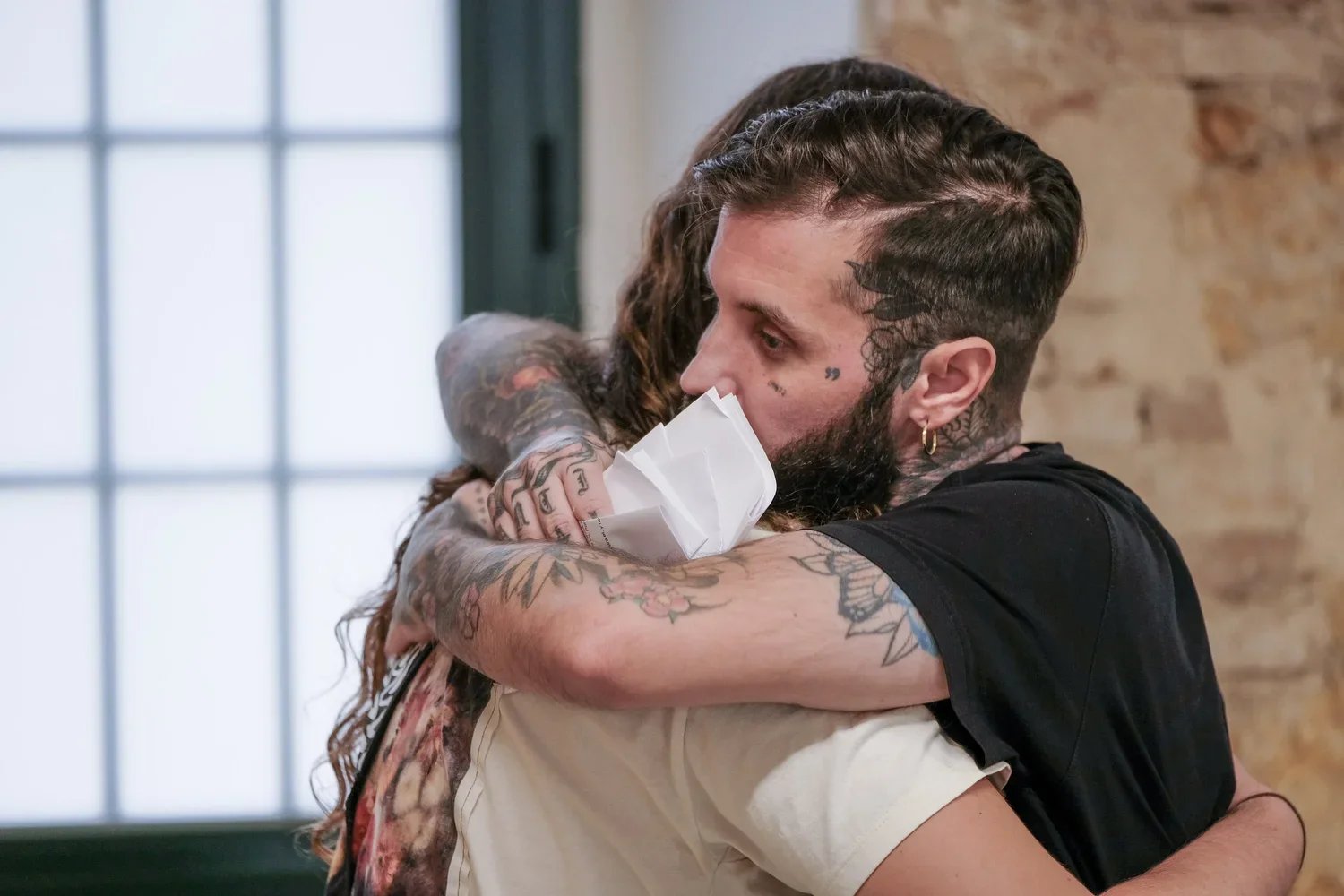
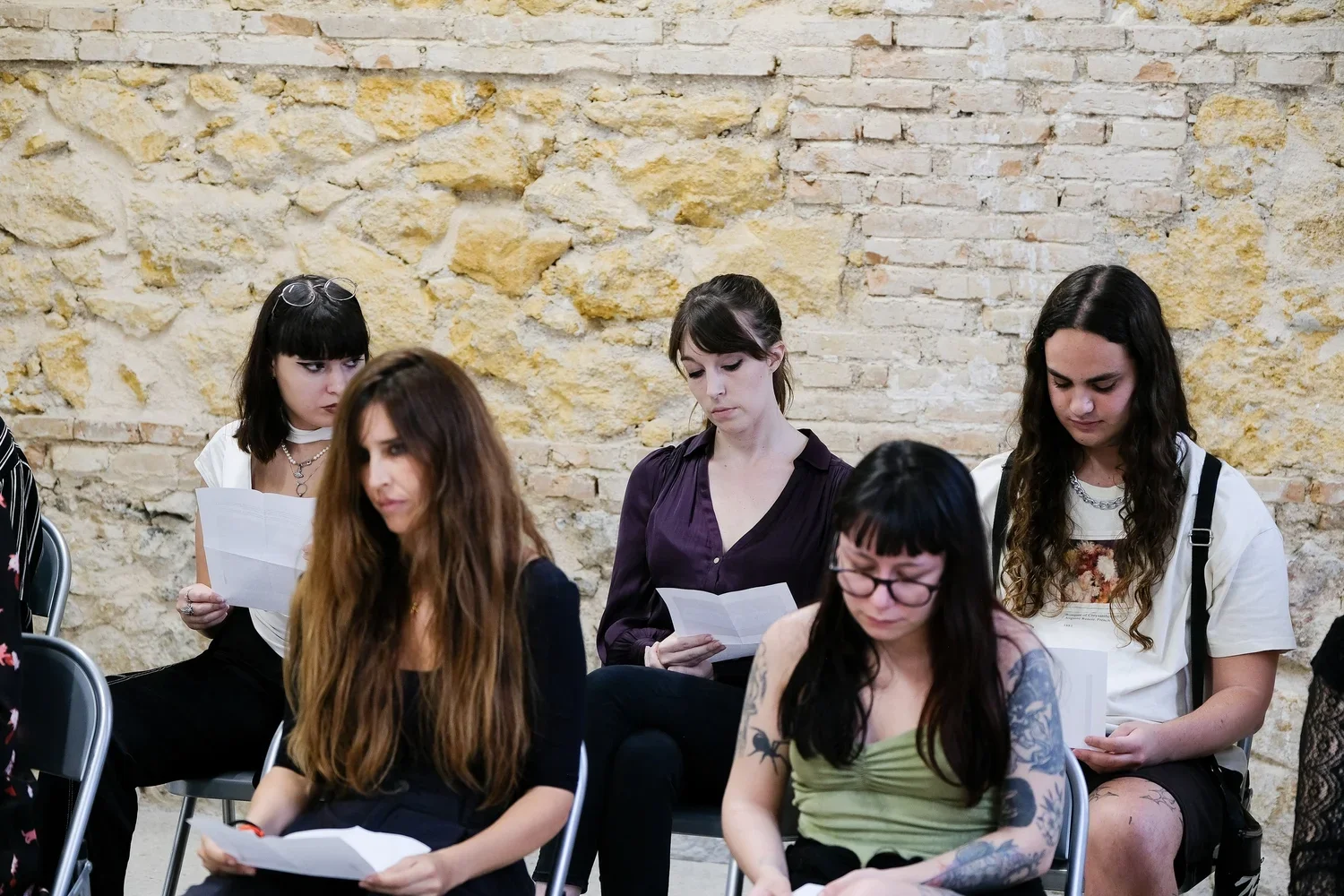
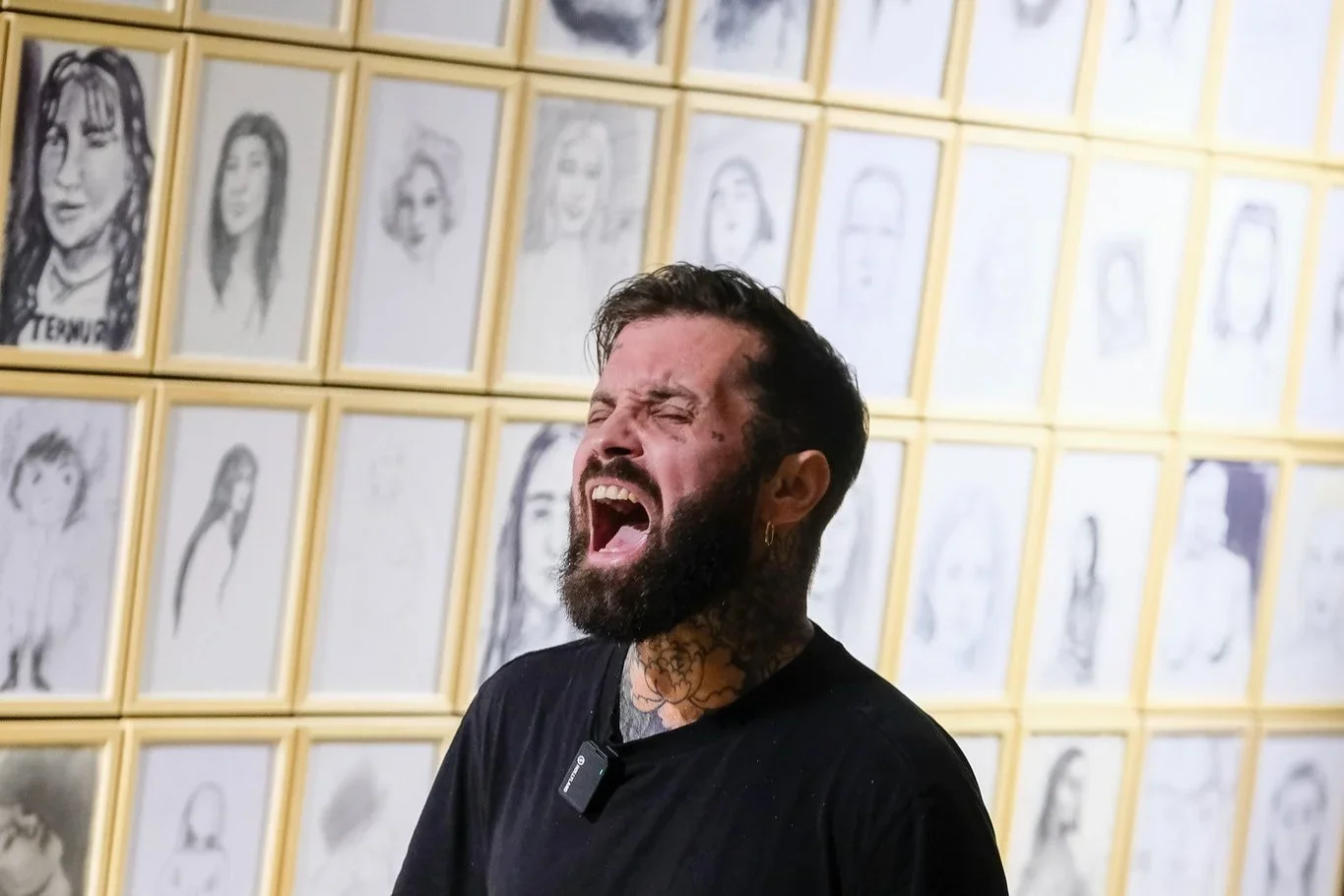
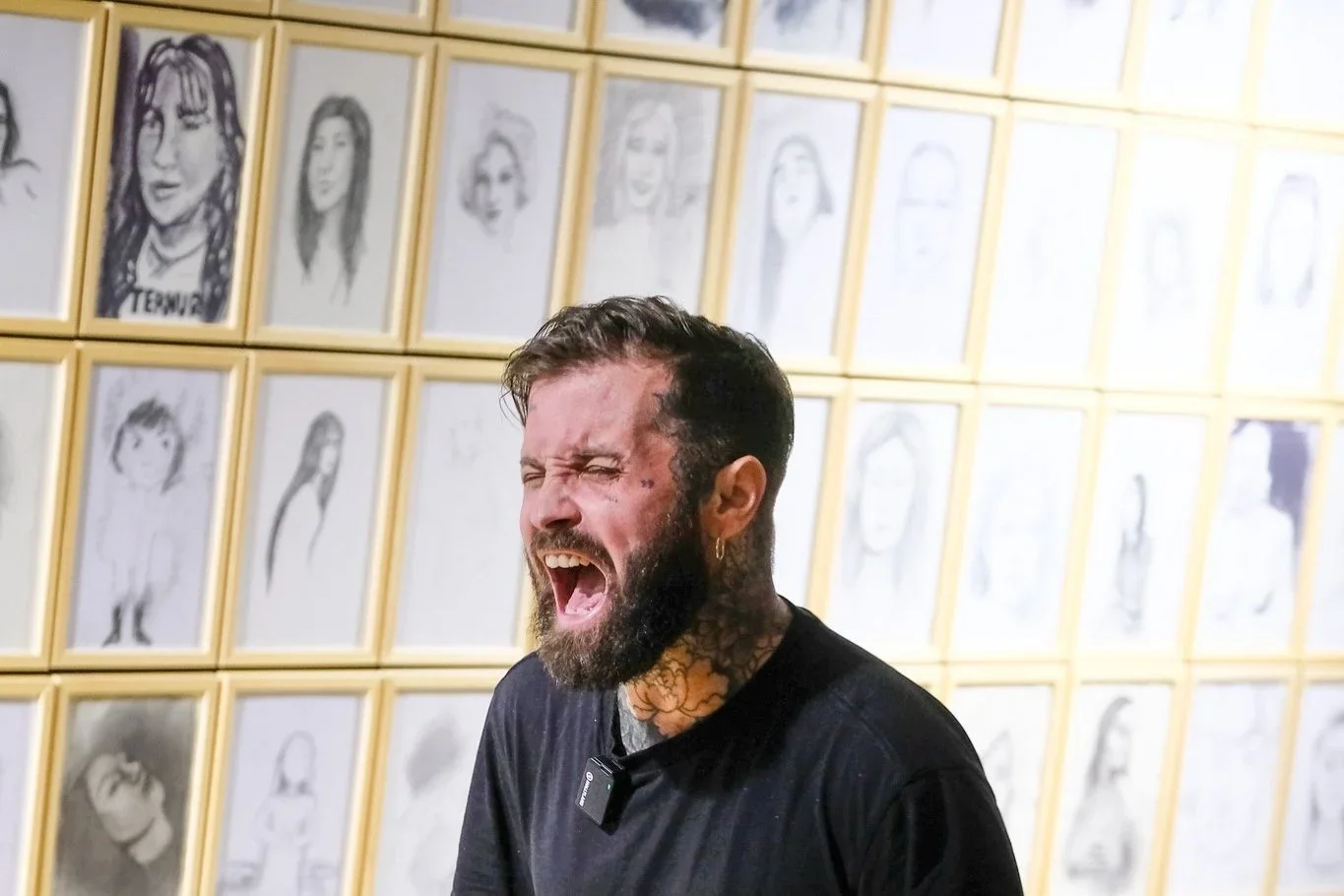
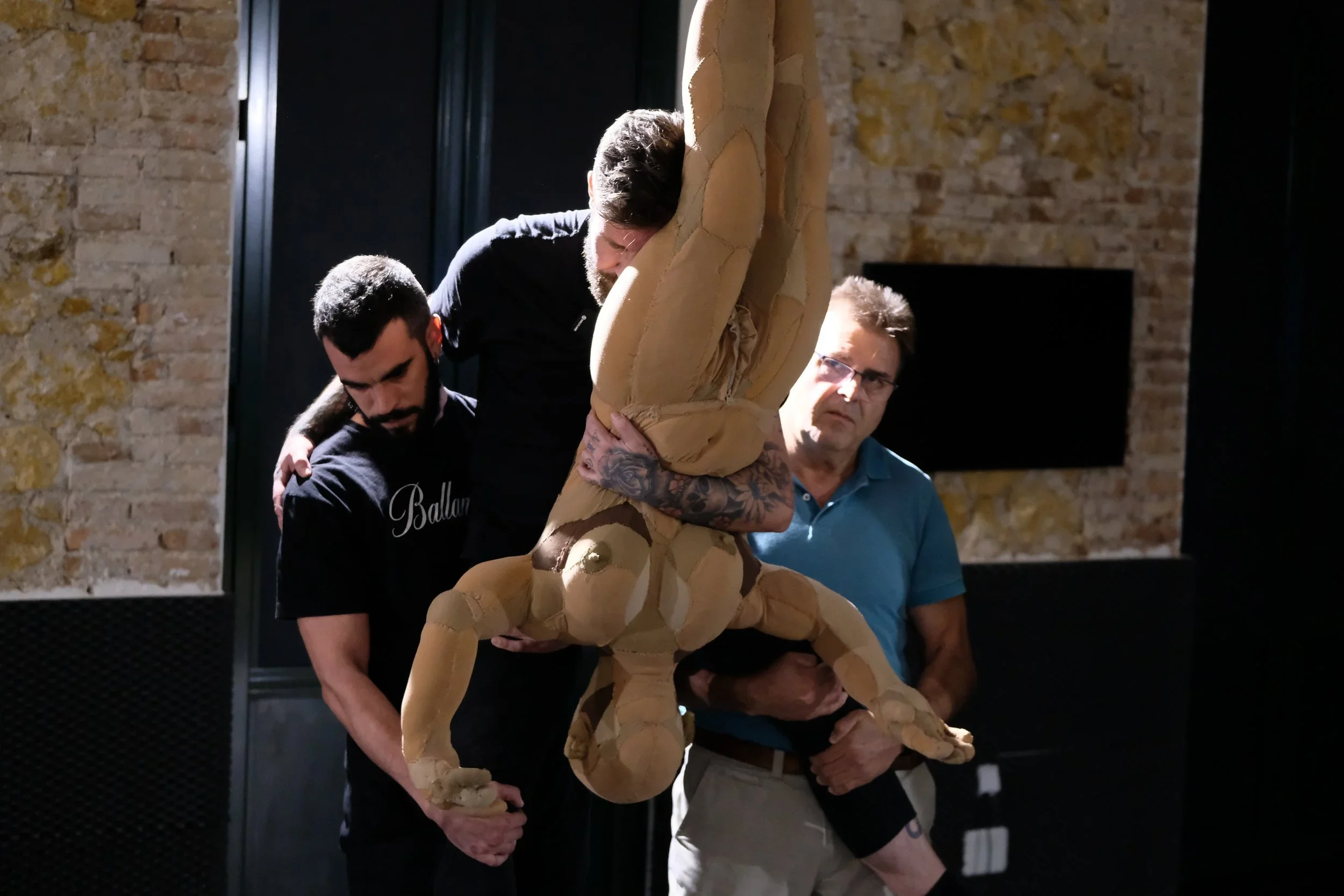
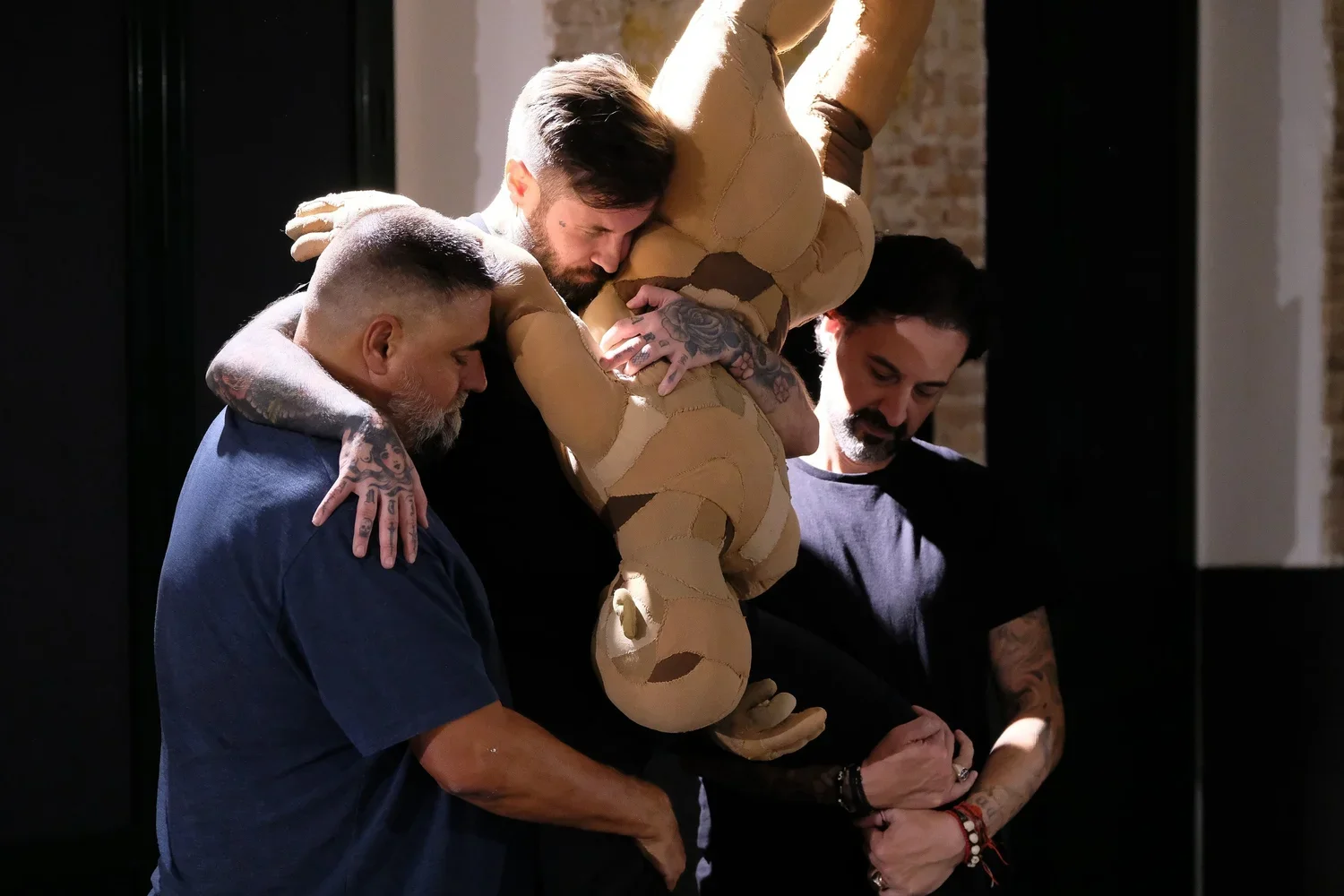
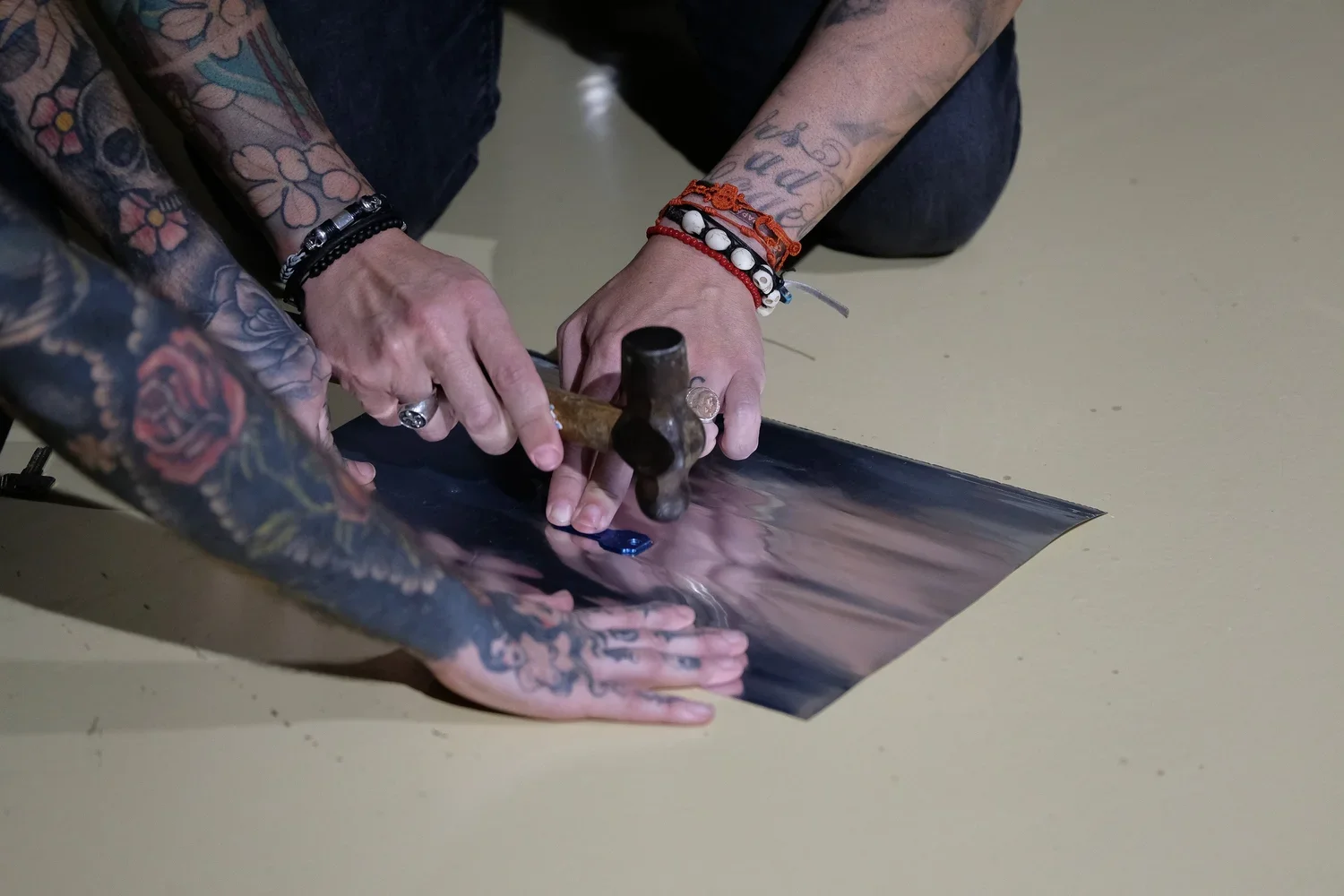
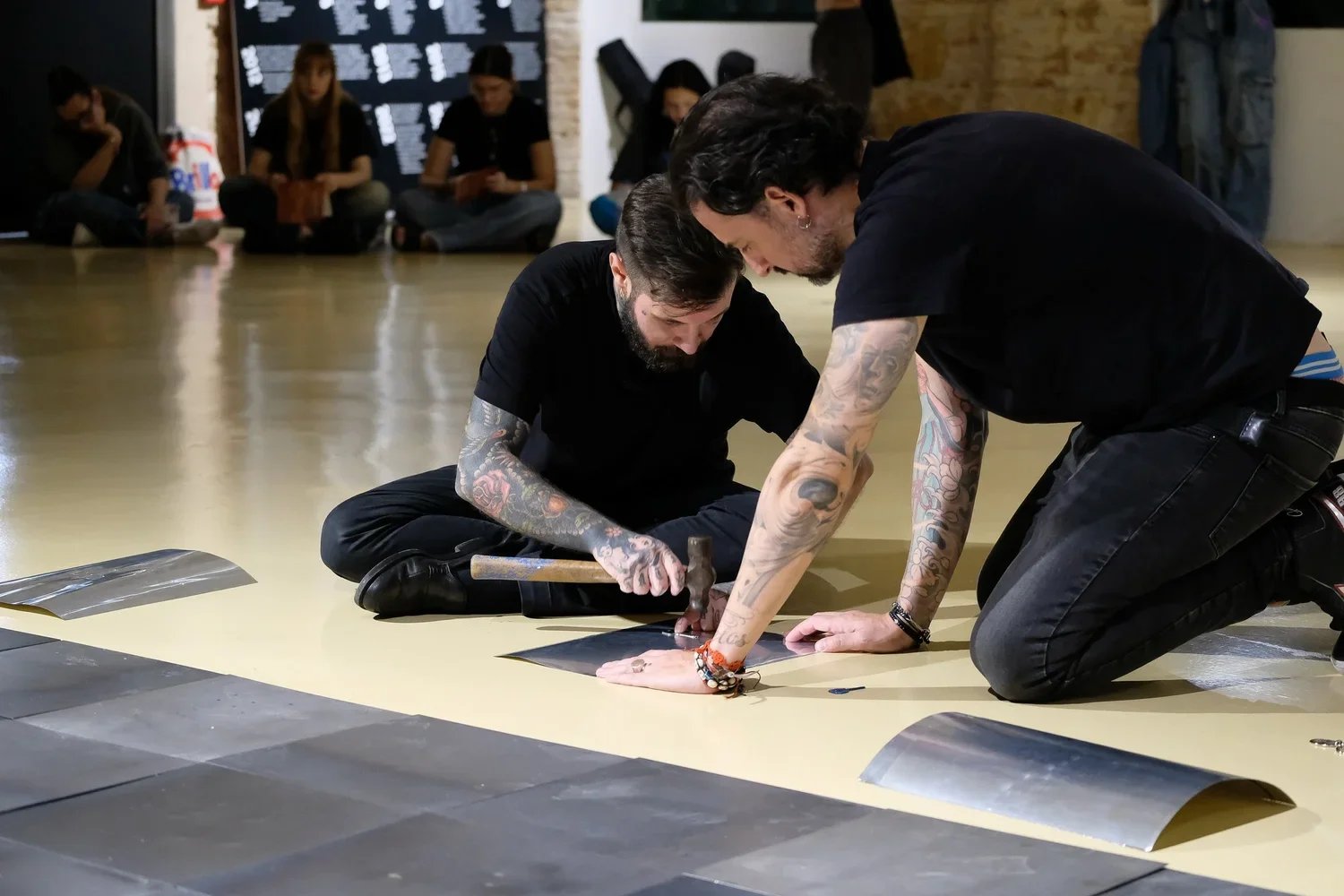
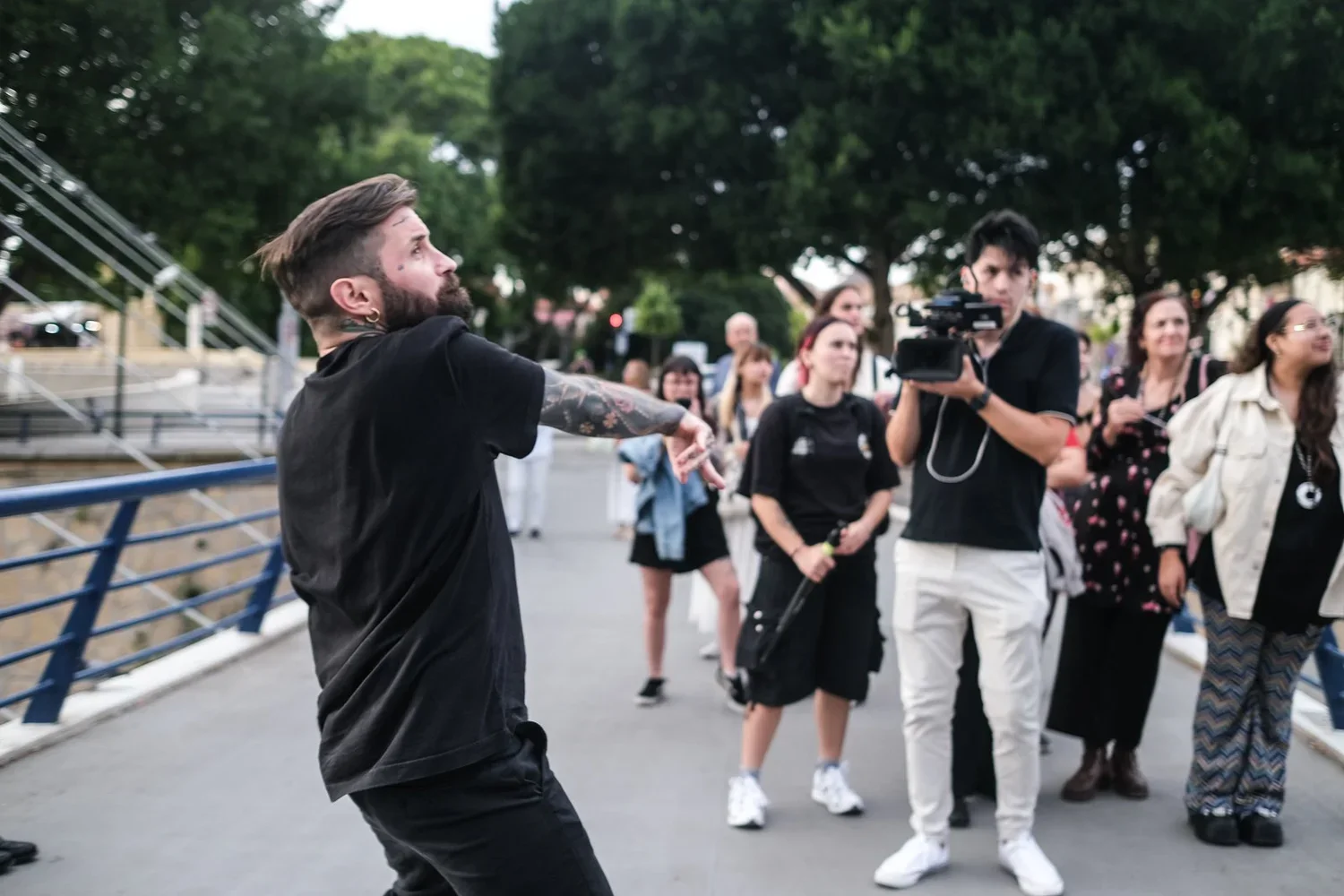
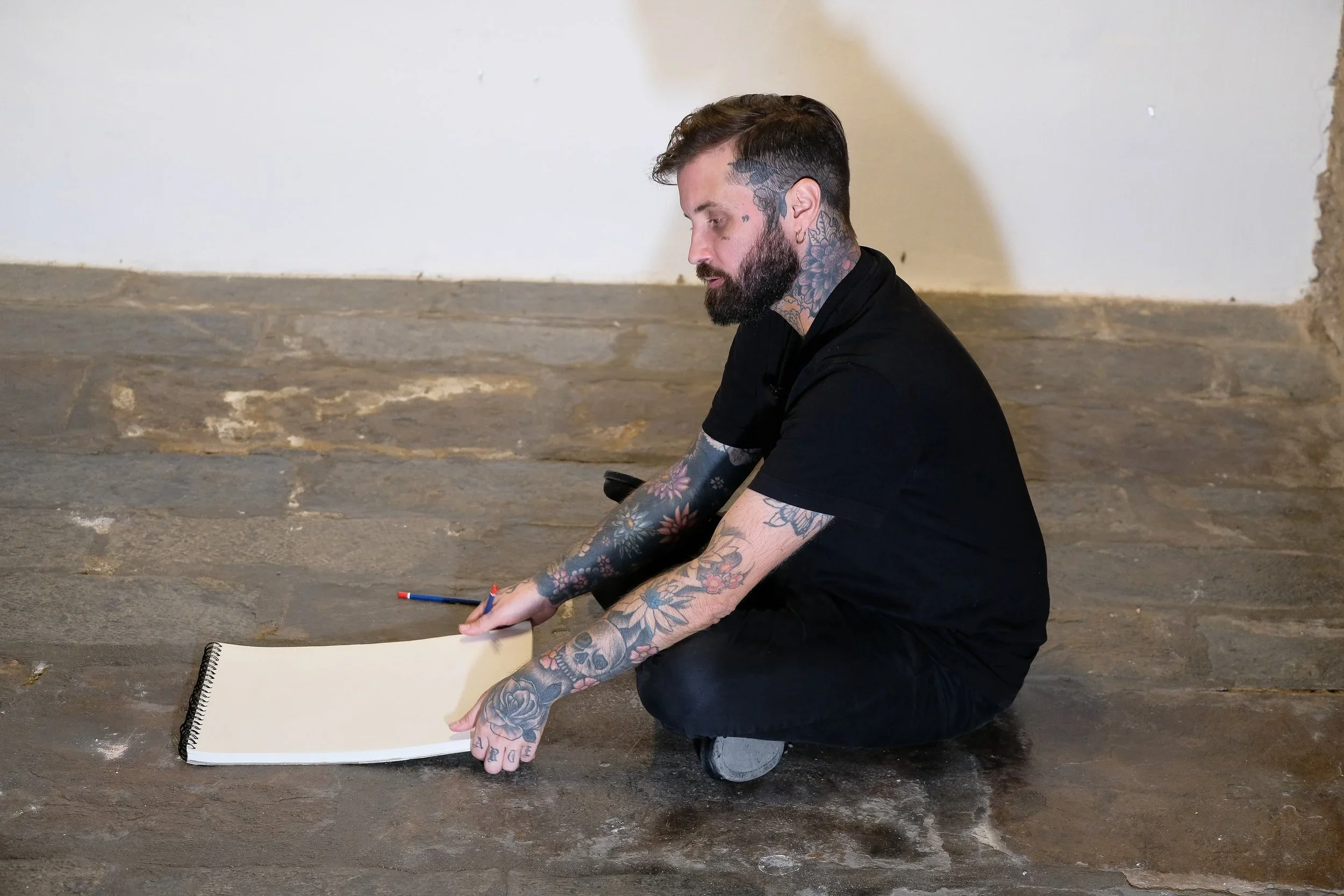
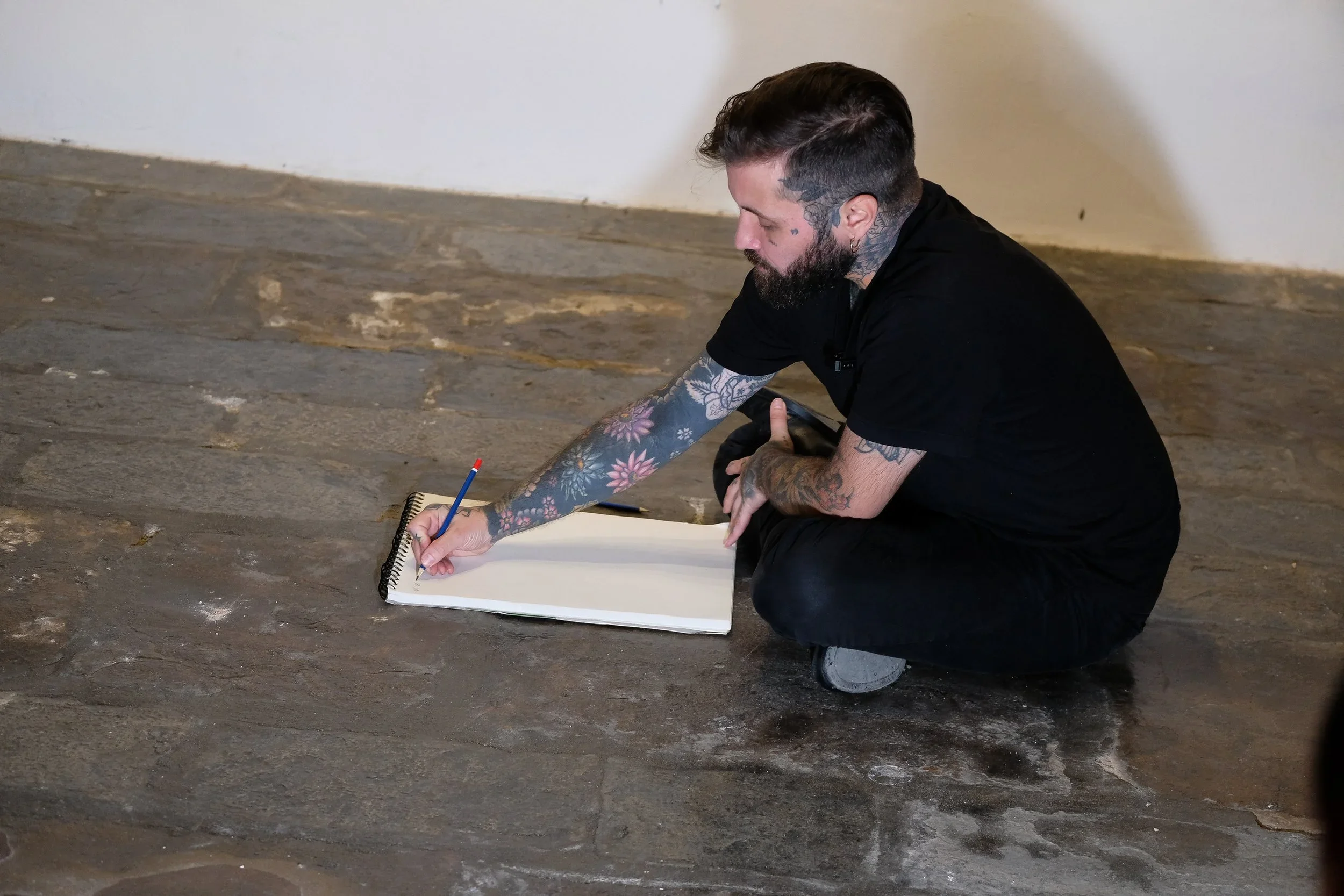
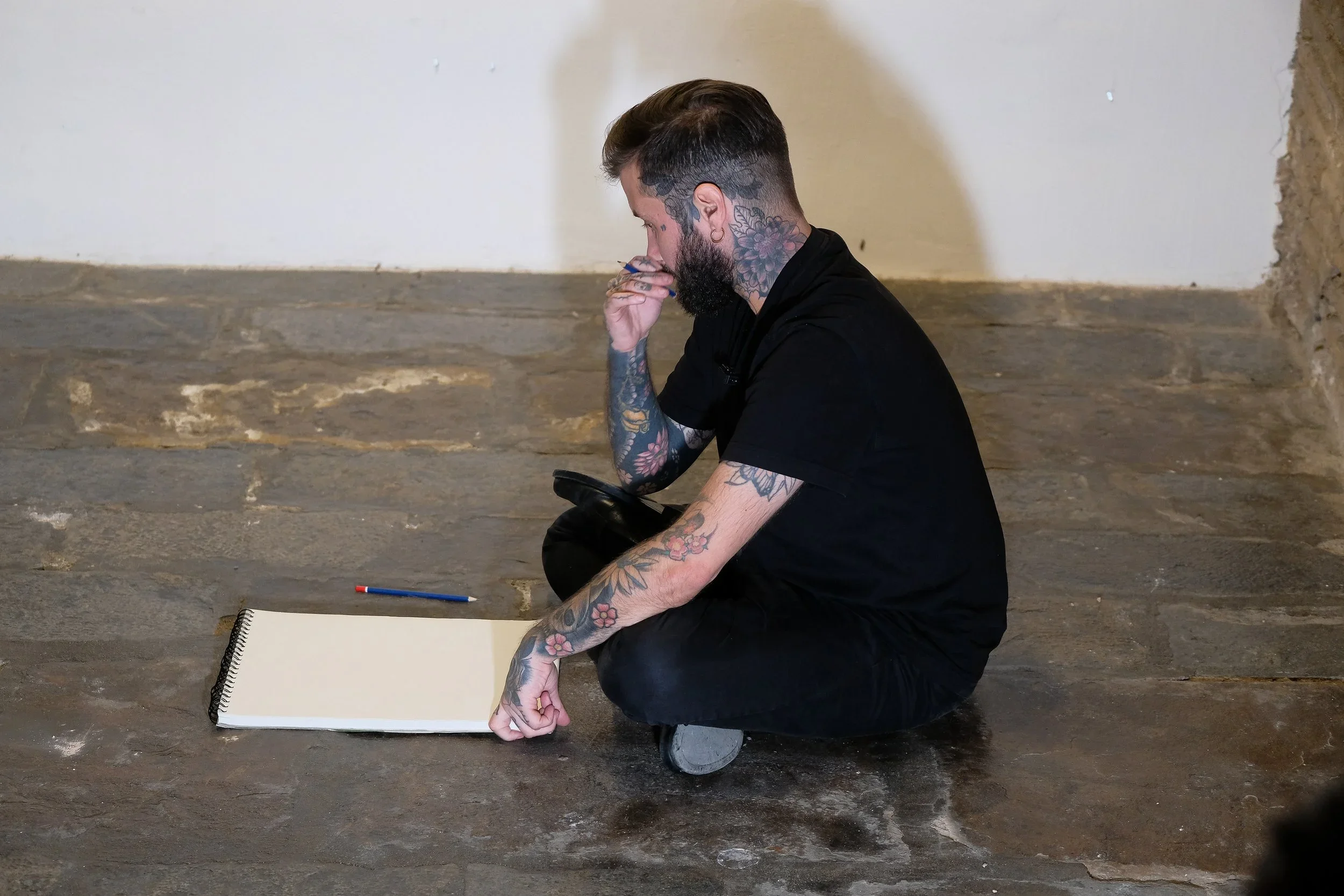
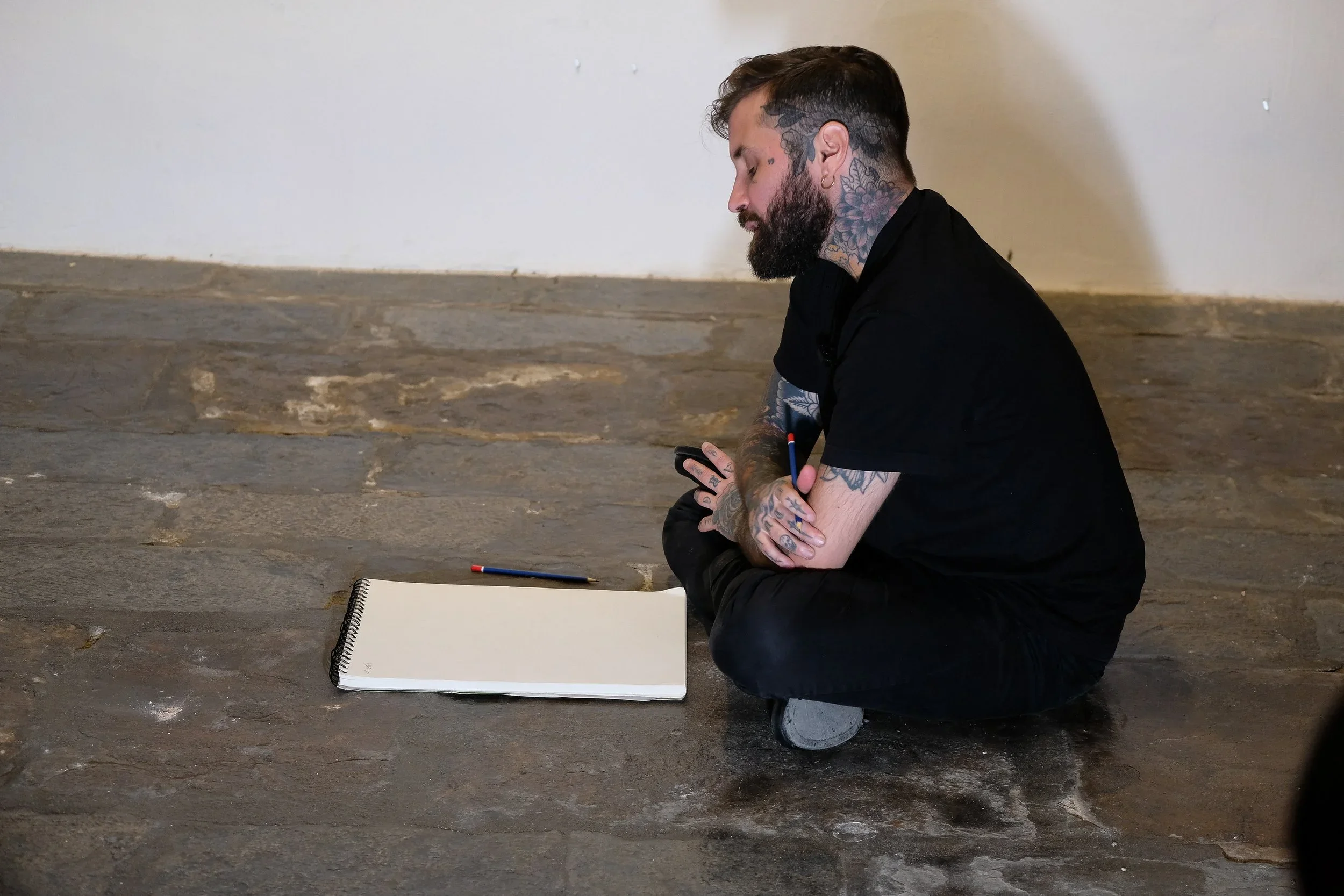
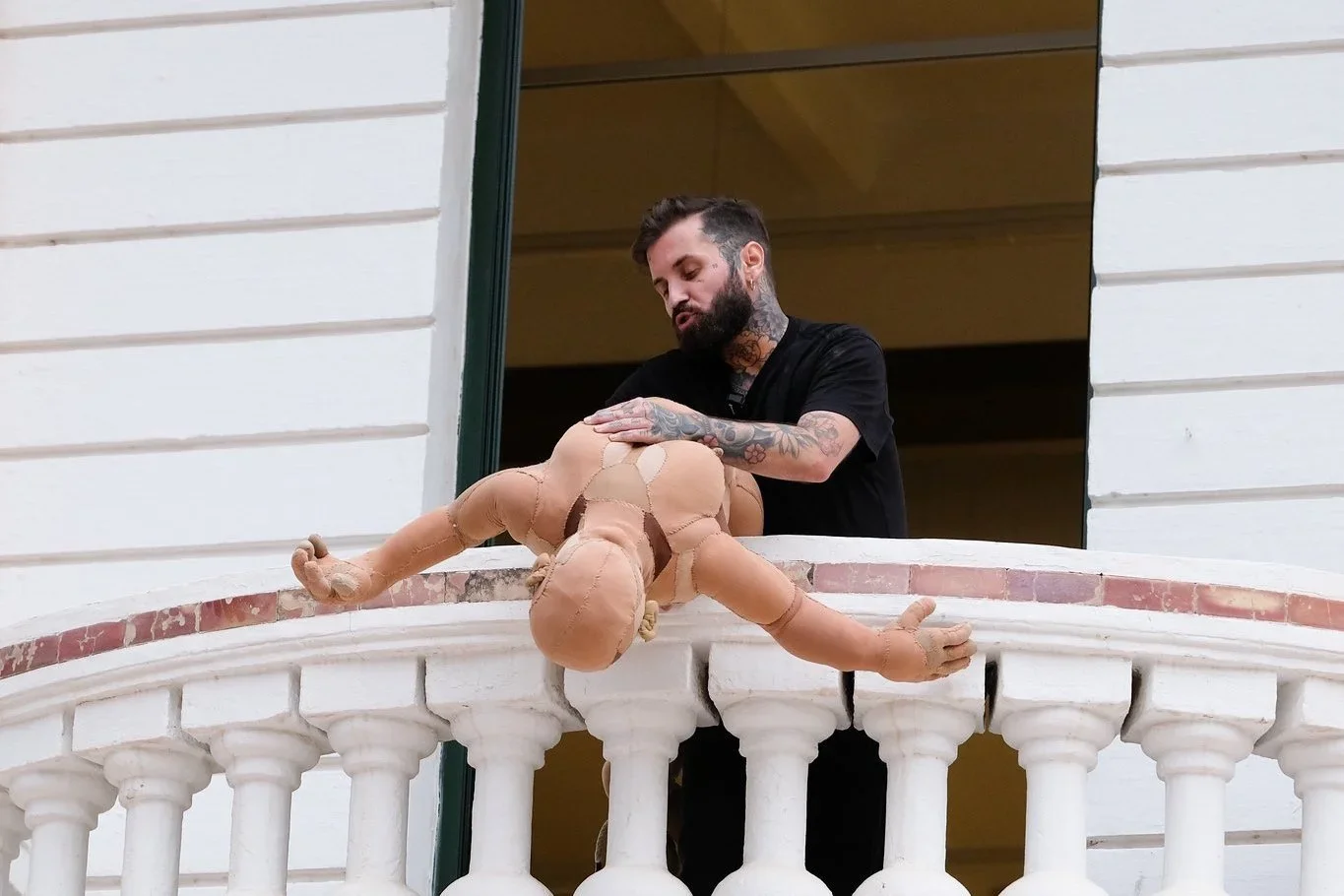
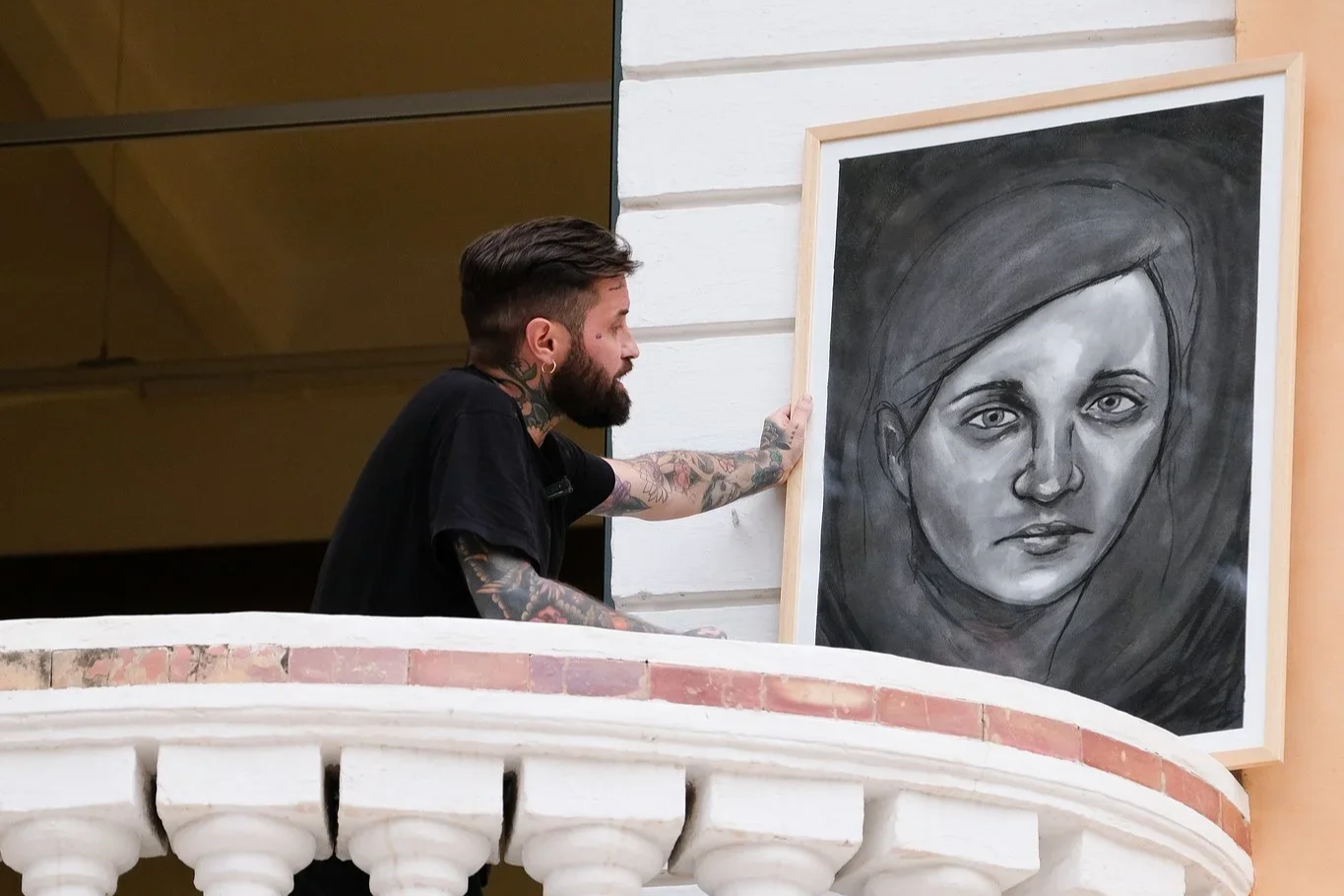
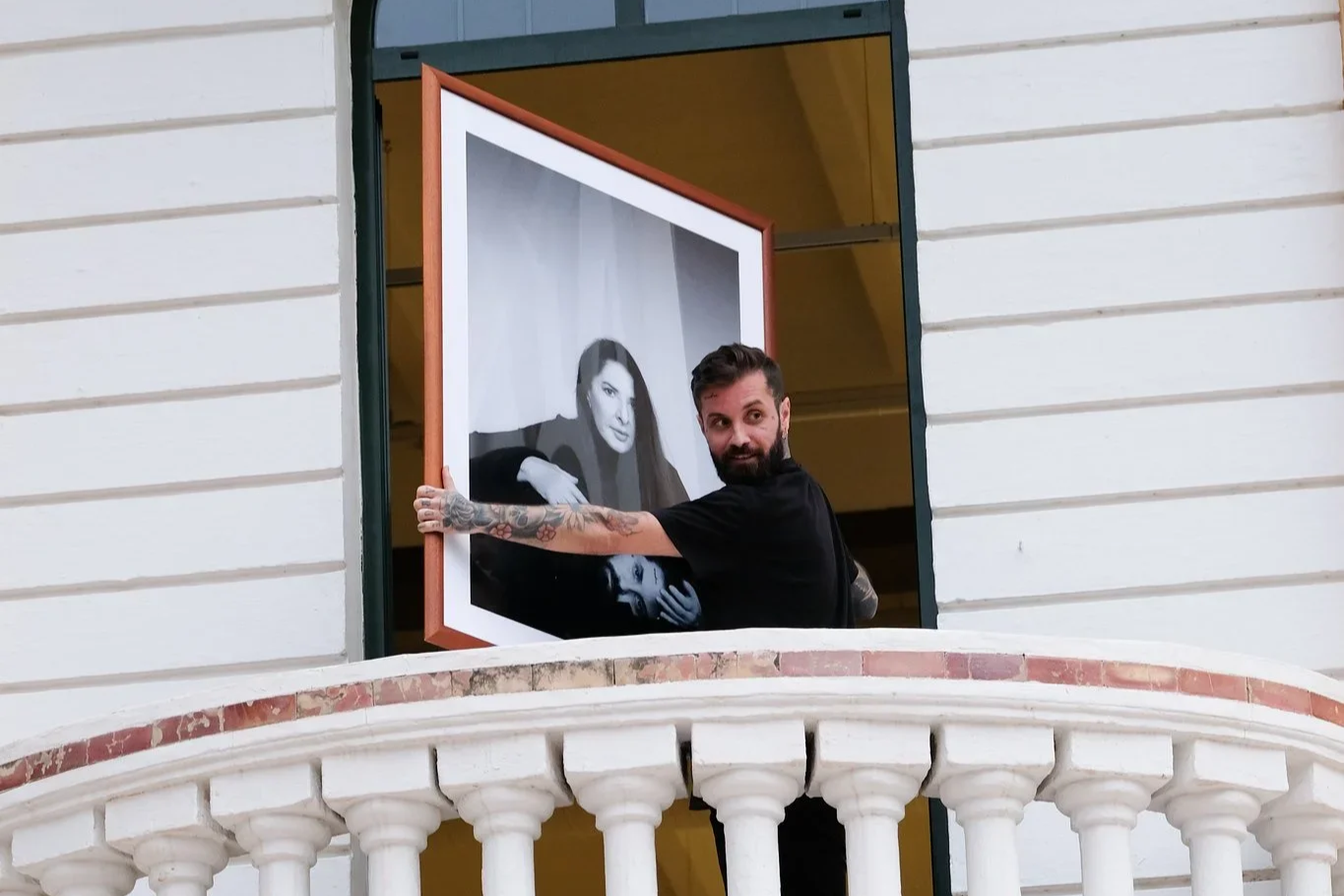
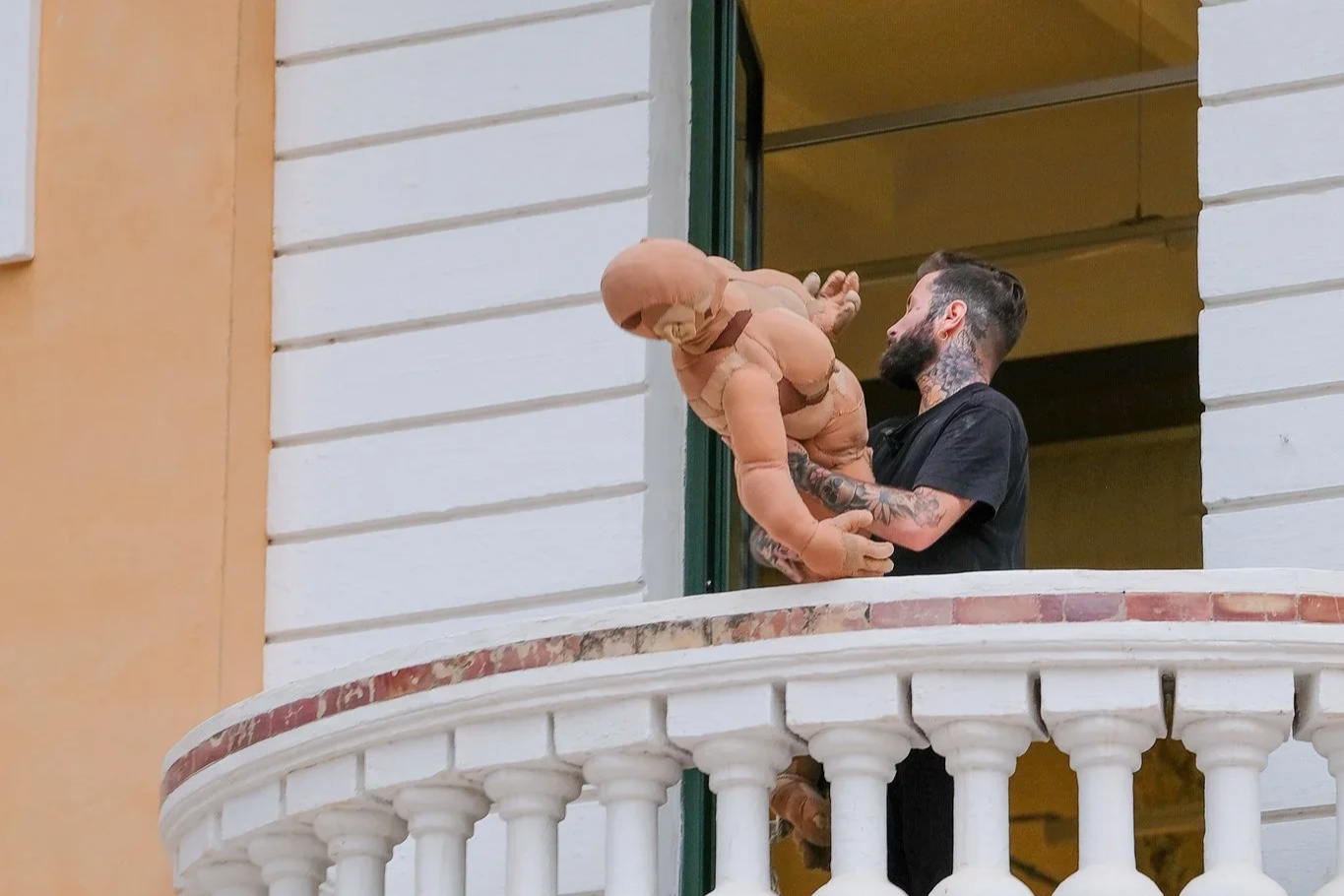
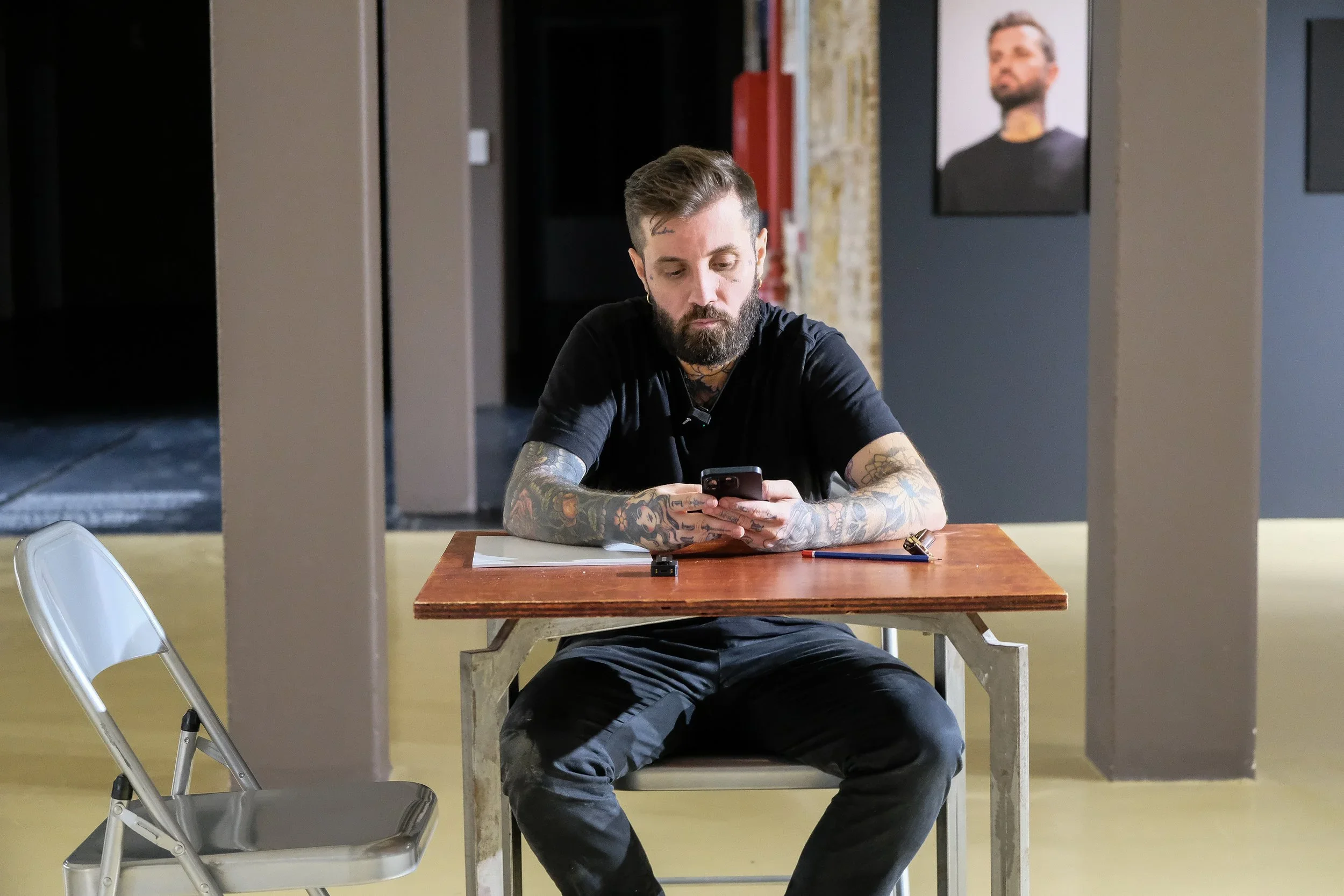
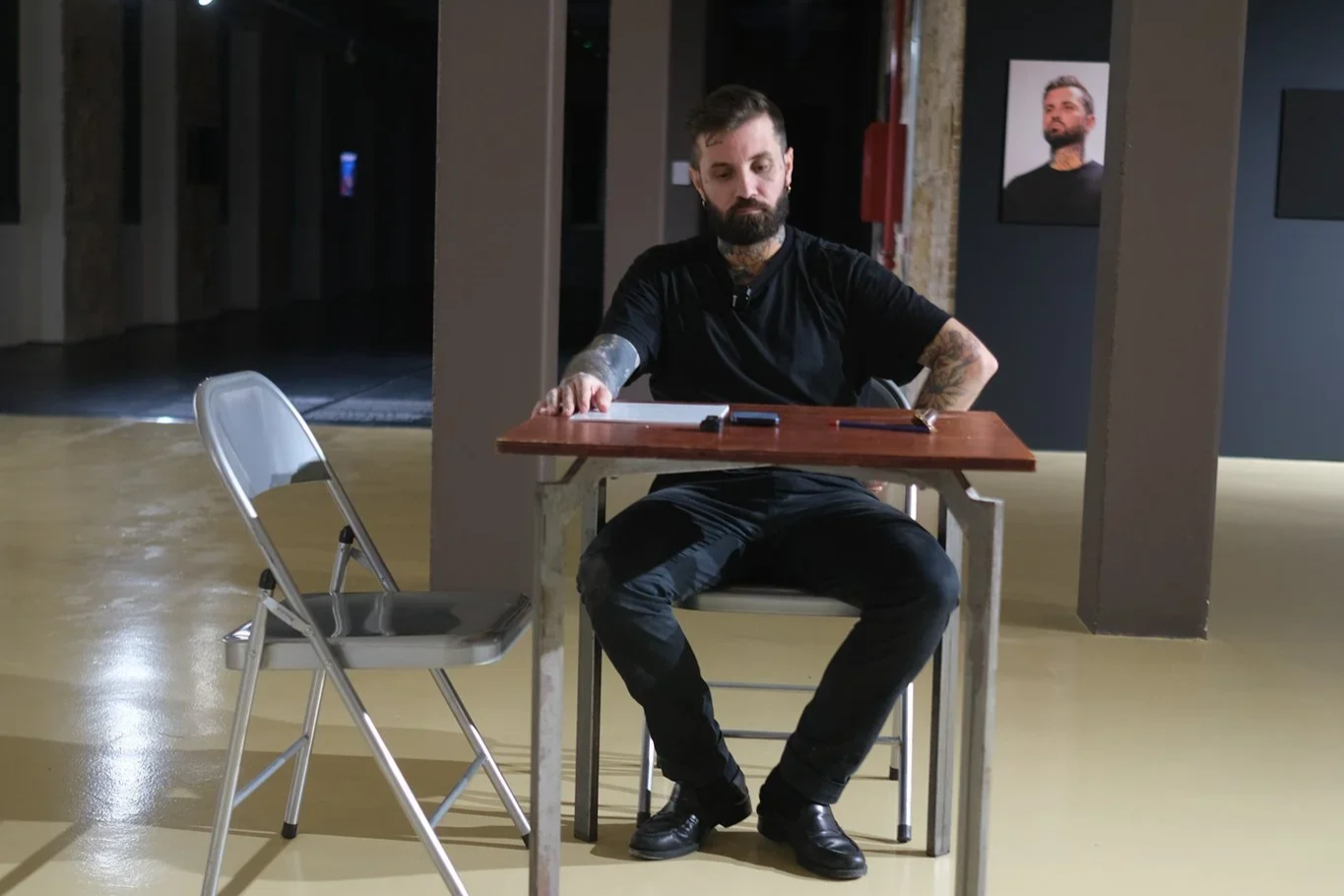
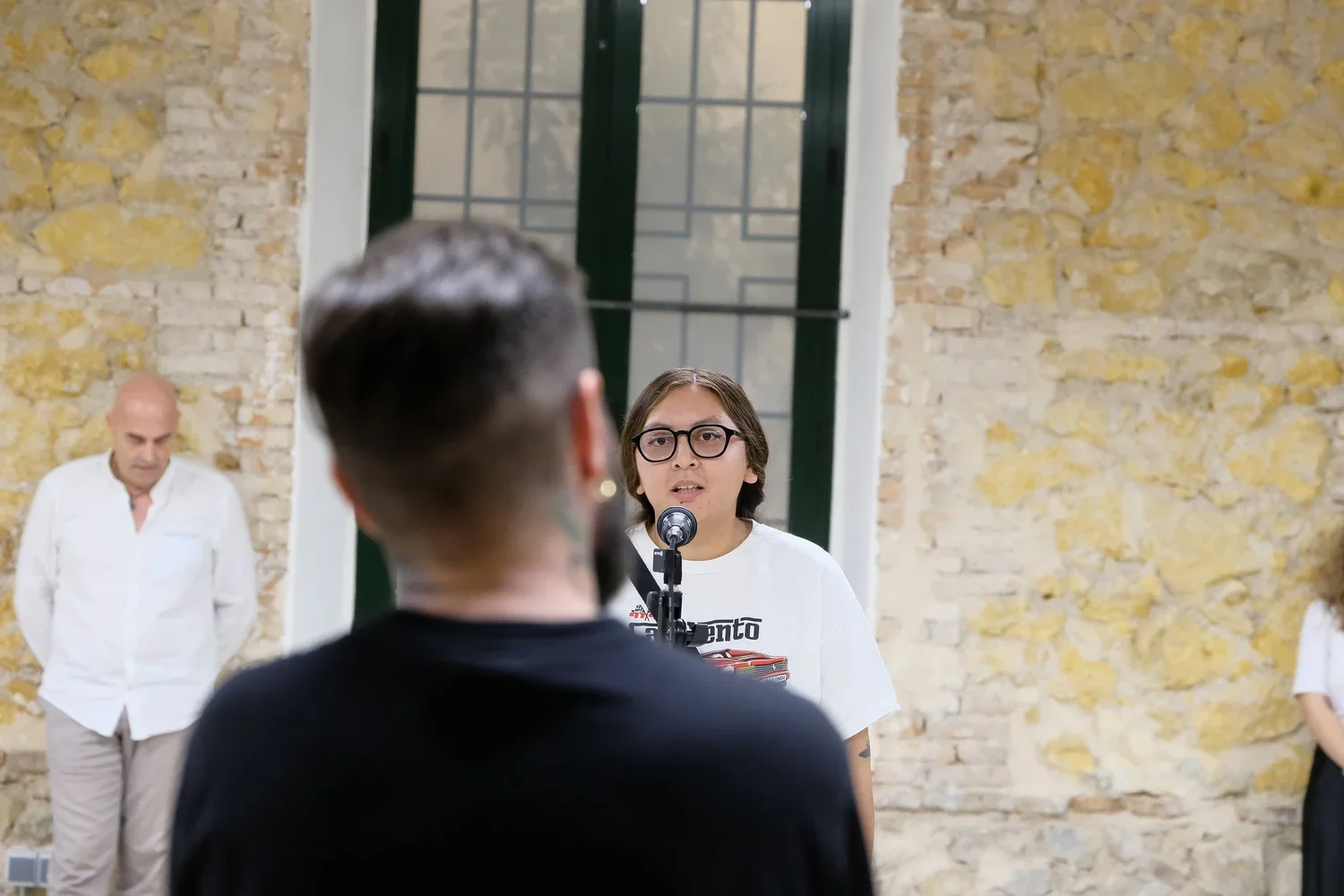
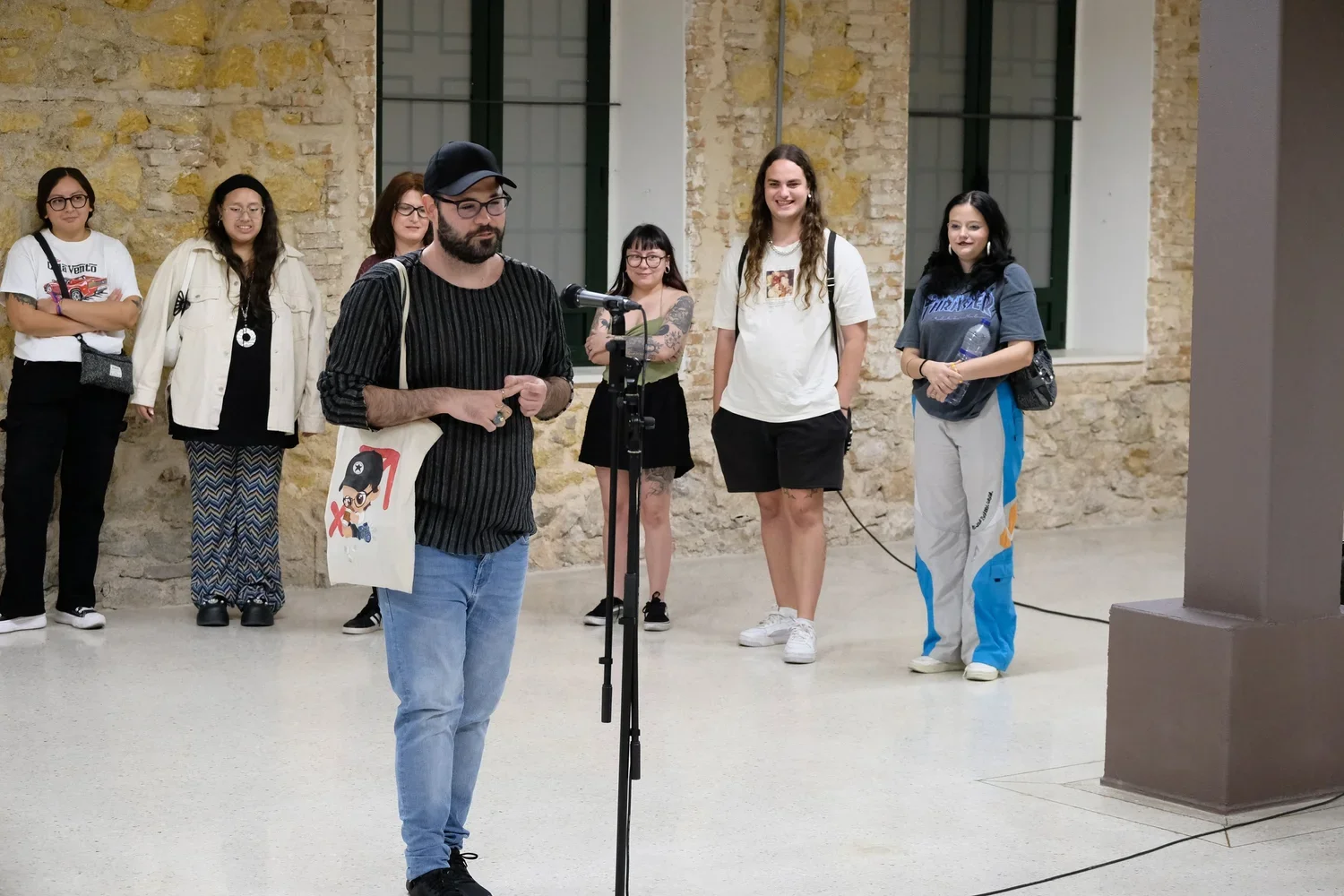
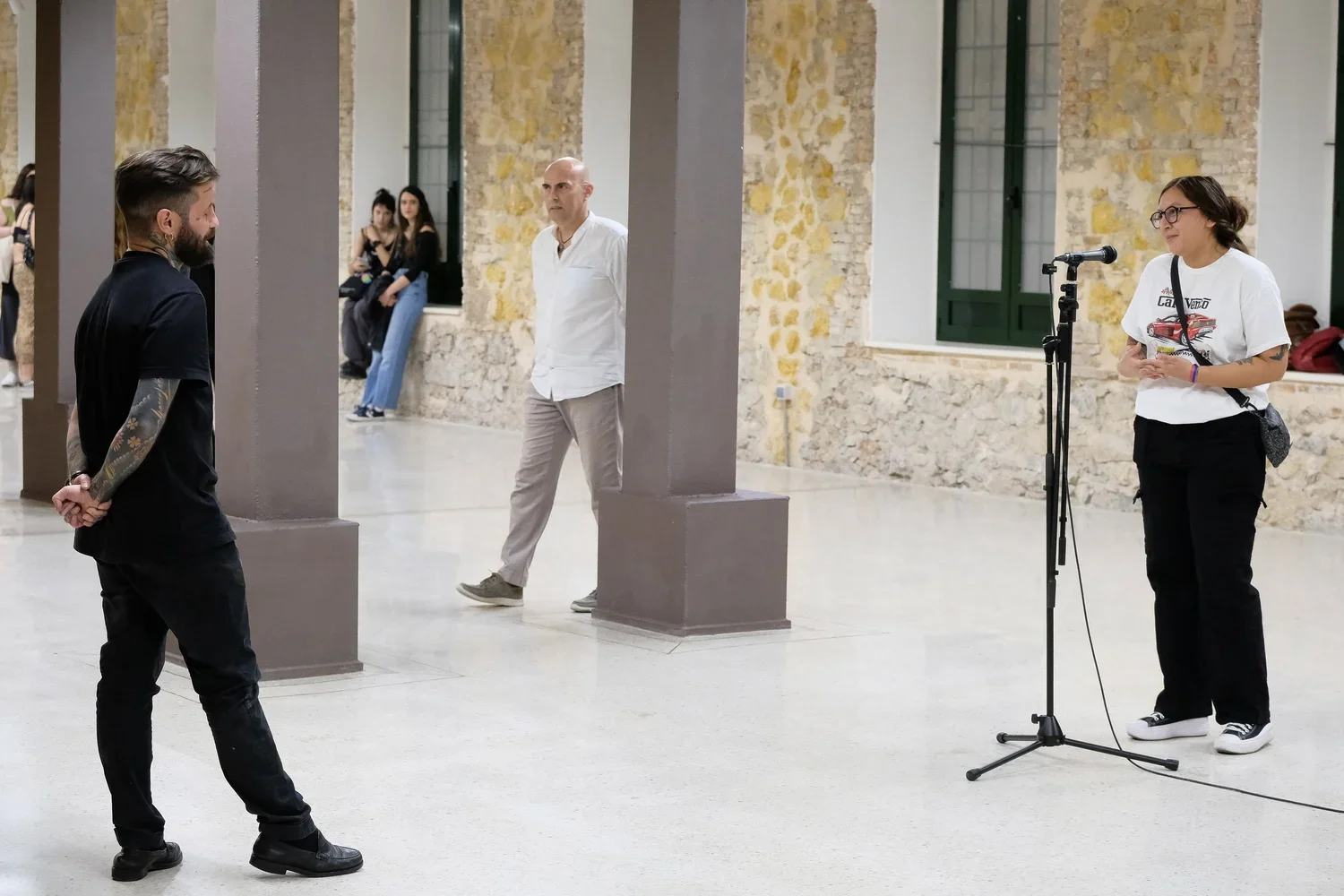
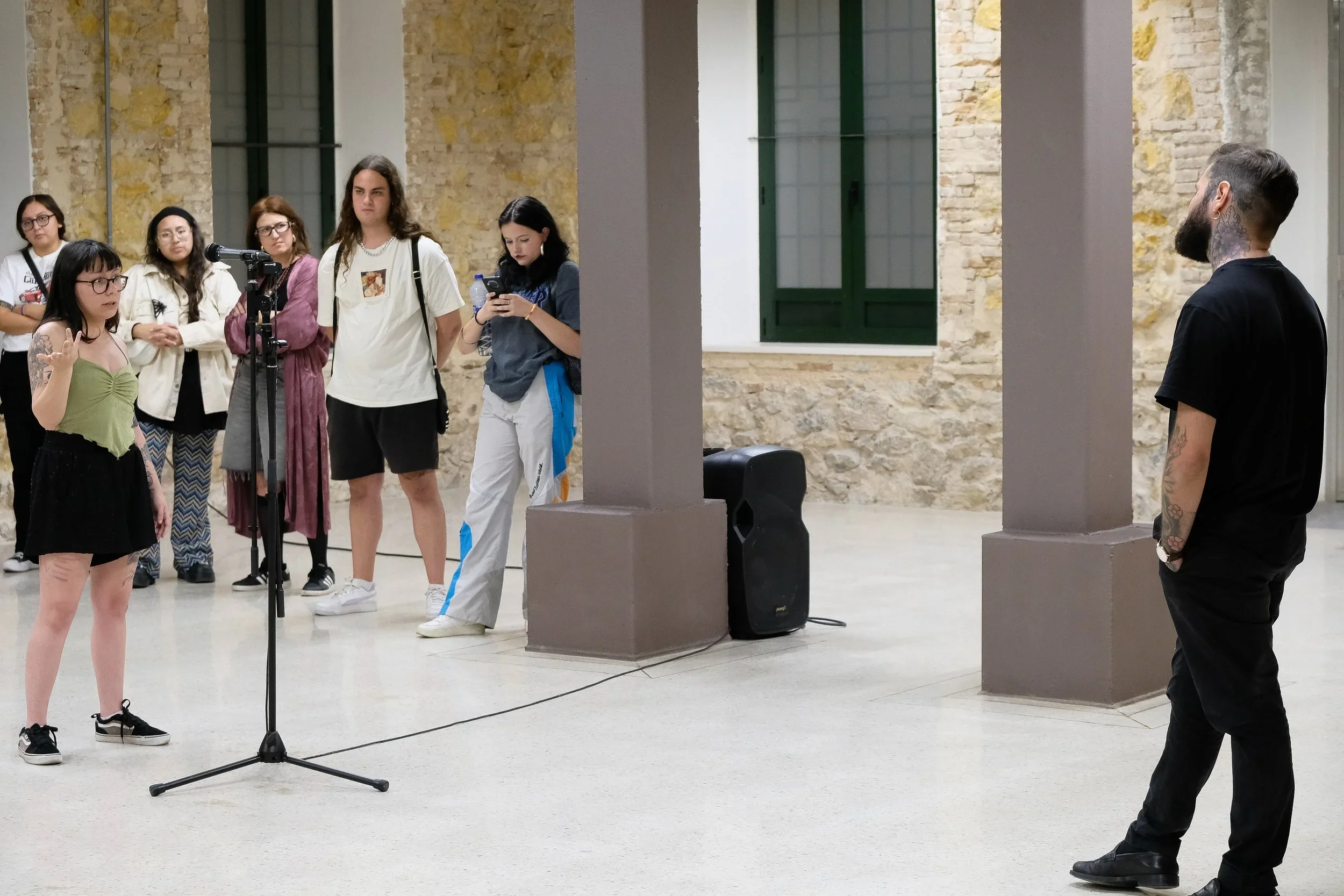
THE NINETEENTH STEP is understood as a compilation of diaries, documents, and writings containing reflections, sensations, and fears by Azcona himself over the year and a half of rapprochement between them. More than one hundred pages of various types, handwritten by the artist, with a final reflection on the day of the definitive encounter with his mother.
EL DECIMONOVENO PASO se entiende como una recopilación de diarios, documentos y escritos con reflexiones, sensaciones y miedos por el propio Azcona a lo largo del año y medio de acercamiento entre ambos. Más de cien hojas de diferentes tipos manuscritas por el artista con una reflexión final el día del encuentro definitivo con su madre.






THE TWENTIETH STEP or final encounter, between the mother (Isabel Gomez Aranda) and the son (Abel Azcona) took place after they had never seen each other since April 1, 1988—the date on which the mother abandoned the future artist while he was in the incubator, having been born with fetal alcohol syndrome. The encounter, held at the Círculo de Bellas Artes in Madrid as a performance with pedestals, involved hundreds of people supporting both of them and can be considered the closure of The Steps Toward the Mother.
EL VIGÉSIMO PASO o encuentro final entre la madre (Isabel Gomez Aranda) y el hijo (Abel Azcona) tras no haberse visto nunca desde el 1 de abril de 1988. Fecha en el que la madre abandonó al futuro artista en mientras se encontraba en la incubadora al haber nacido con alcoholismo fetal. El encuentro acontecido en el Círculo de Bellas Artes de Madrid mediante performance con peanas incluyo a cientos de personas sosteniendo a ambos y puede considerarse el cierre de Los pasos hacia la madre.
The performance "Mother and Son" by Abel Azcona at the Círculo de Bellas Artes is, at the same time, an act of resistance and healing that exposes the structural violence of the patriarchal system, not only through the figure of the mother but also through that of the son.** This biographical action is not limited to a personal reunion between Isabel and Abel; it is a space of confrontation where memory, pain, and personal history become tools of visibility and denunciation.
Through this work, Azcona and his mother embody a story of violence that traverses their bodies and lived experiences. Isabel’s biography—marked by drugs, prostitution, and gender-based violence—is a reflection of a structure that subjugates and precarizes the lives of so many women, turned into objects of a system that is not only patriarchal but also capitalist. Abel’s abandonment is not merely an individual decision, but the consequence of a system that casts women into extreme vulnerability. On the other hand, the artist’s story, marked by childhood abandonment and abuse, shows how these same forms of violence also affect childhood and male bodies that have grown up in the fragility of a society where toxic masculinity is the norm.
From a feminist perspective and from my point of view as a curator, *Mother and Son* is not just a performance about a reunion, but an action that confronts the oppression of vulnerable bodies. Azcona, whose work has explored the body as a territory of memory and resistance, inserts himself into a genealogy of performance art where his artistic mothers—Marina Abramović, Orlan, Yoko Ono—have made art a field of dispute and reconstruction. Here, the mother is not a symbolic figure, but a real presence—a body marked by violence—that meets her son in an artistic action that challenges the structures that have separated them.
Thus, the performance becomes practically the only medium capable of channeling the pain of this encounter, transcending and healing it through the collective. Feminism understood this from its inception: that the personal is political, that a specific story is the reflection of a broader system of oppression and violence. That the collective is a tool for healing. This is not just the story of Abel and Isabel, but the story of many women and children whose lives have been fractured by a system that perpetuates gender violence, abandonment, and exploitation.
On April 1, 2025, at the culmination of this process, Isabel and Abel will meet not only as mother and son but as bodies that have witnessed the same structural violence. This performance, which bears both their names in its title, is an act of reparation and resistance, and reminds us that art can heal, make visible, and question, becoming a space of shared memory and transformation.
Semíramis González
Curator
La performance "Madre e hijo" de Abel Azcona en el Círculo de Bellas Artes es, al mismo tiempo, un acto de resistencia y sanación que expone la violencia estructural del sistema patriarcal, no solo en la figura de la madre, sino también en la del hijo. Esta acción biográfica no se limita a un reencuentro personal entre Isabel y Abel; es un espacio de confrontación donde la memoria, el dolor y la historia personal se tornan herramientas de visibilización y denuncia.
A través de esta obra, Azcona y su madre acuerpan una historia de violencia que atraviesa sus cuerpos y experiencias vividas. La biografía de Isabel, marcada por las drogas, la prostitución y la violencia de género, es reflejo de una estructura que somete y precariza la vida de tantas mujeres, convertidas en objetos de un sistema no sólo patriarcal sino también capitalista. El abandono de Abel no es solamente un decisión individual, sino una consecuencia de un sistema que arroja a las mujeres a la extrema vulnerabilidad. De otro lado, la historia del artista, atravesada por el abandono infantil y el abuso, evidencia cómo estas mismas violencias afectan también a la infancia y a los cuerpos masculinos que han crecido en la fragilidad de una sociedad donde lo masculino tóxico es la norma.
Desde una perspectiva feminista y desde mi punto de vista como curadora, "Madre e hijo" no es solo una performance sobre un reencuentro, sino una acción que confronta la opresión de los cuerpos vulnerabilizados. Azcona, cuyo trabajo ha explorado el cuerpo como territorio de memoria y resistencia, se inserta en una genealogía de la performance donde sus madres artísticas—Marina Abramović, Orlan, Yoko Ono—han hecho del arte un campo de disputa y reconstrucción. Aquí, la madre no es una figura simbólica, sino una presencia real, un cuerpo marcado por la violencia que se encuentra con su hijo en una acción artística que desafía las estructuras que los han separado.
Es así que la performance se convierte en prácticamente el único medio capaz de canalizar el dolor de este encuentro, trascendiéndolo y sanándolo desde lo colectivo. El feminismo comprendió desde sus inicios esto precisamente: que lo personal era político, que una historia concreta es el reflejo de un sistema mayor de opresión y violencia. Que lo colectivo es una herramienta para la curación. Esta no es solo la historia de Abel e Isabel, sino la historia de muchas mujeres y niños cuyas vidas han sido fracturadas por un sistema que perpetúa la violencia de género, el abandono y la explotación.
Este 1 de abril de 2025, en la culminación de este proceso, Isabel y Abel no solo se encontrarán como madre e hijo, sino como cuerpos que han sido testigos de una misma violencia estructural. Esta performance, que los lleva a ambos en el título, es un acto de reparación y resistencia, y nos recuerda que el arte puede sanar, visibilizar y cuestionar, convirtiéndose en un espacio de memoria compartida y transformación.
Semíramis González
Curadora
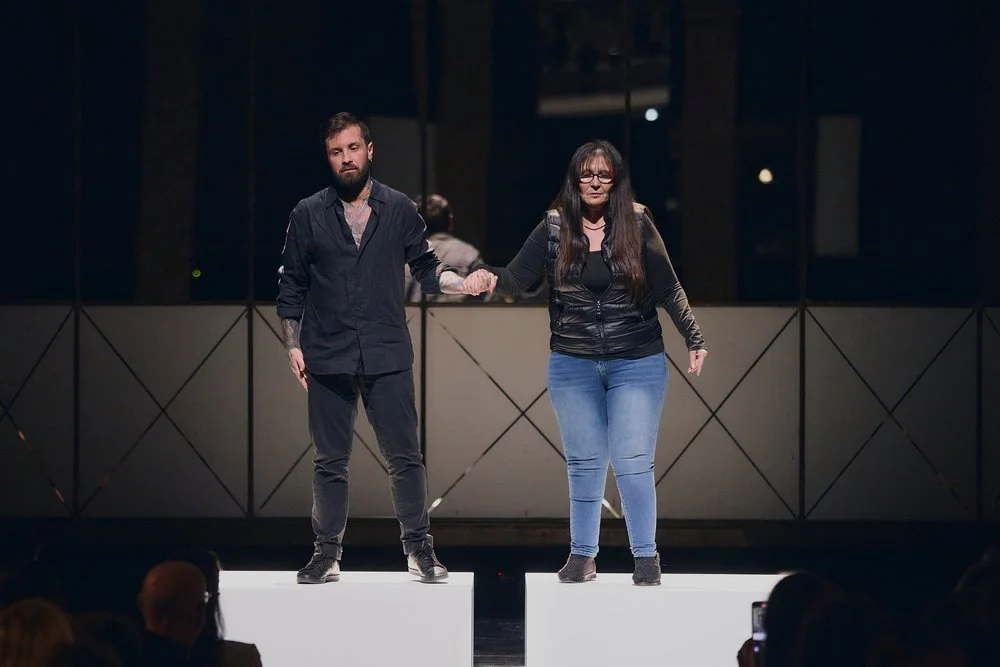
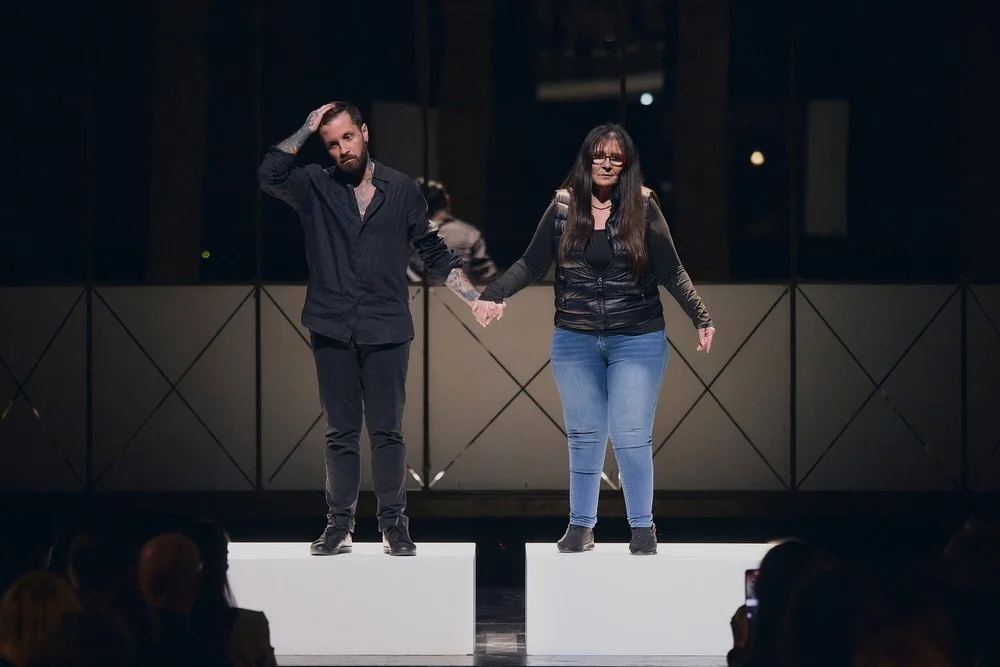
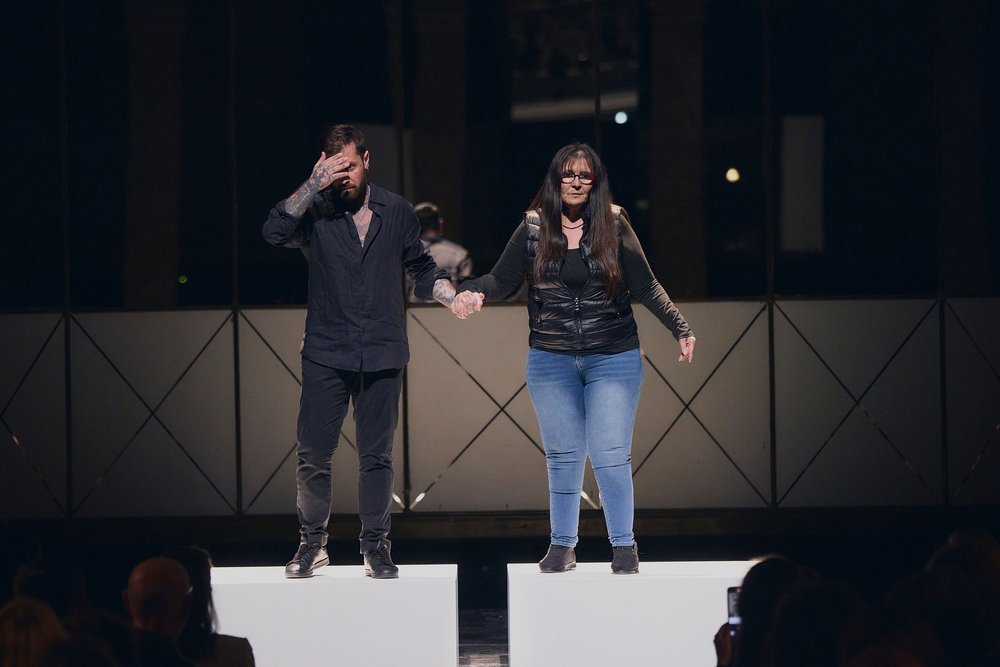
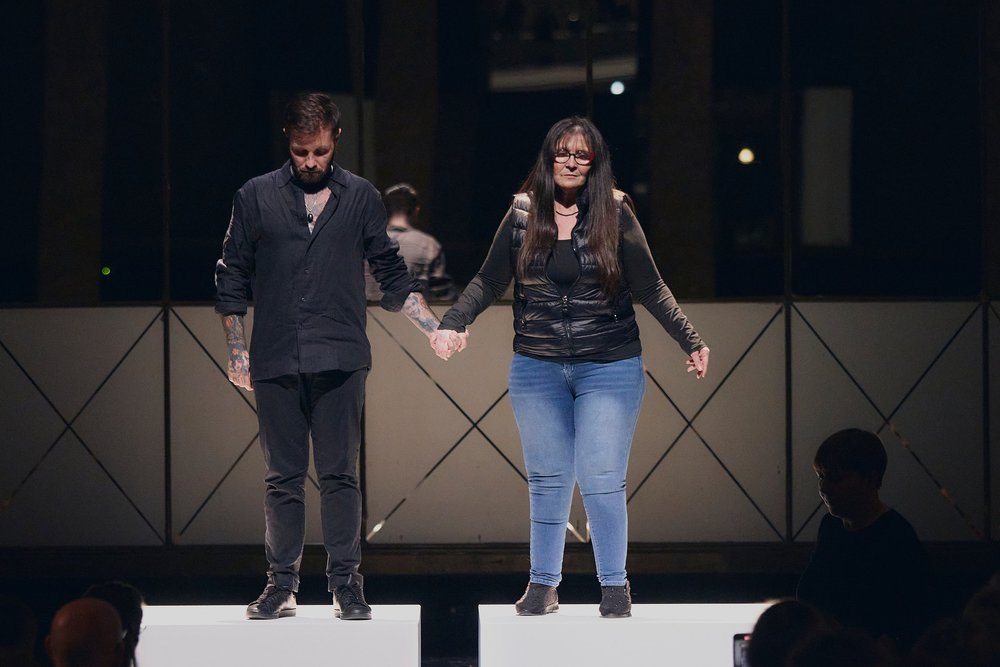
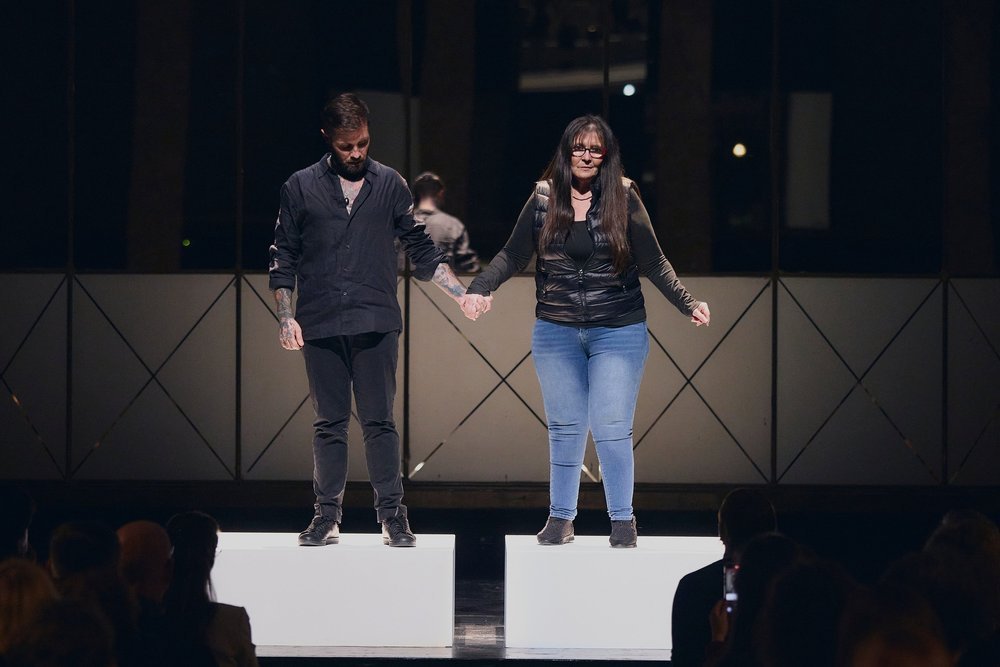
As a final step, on April 1, 2025, at the Círculo de Bellas Artes in Madrid, mother and son decided to take their first photograph together. In the same vein as all the previous photographs with the chosen mothers, such as ORLAN, Abramović, or Yoko Ono, Isabel and Abel photographed themselves at the conclusion of the performance.
A modo de último paso el 1 de abril de 2025 en el Círculo de Bellas Artes de Madrid, Madre e hijo deciden hacerse la primera fotografía juntos. Y en la misma línea de todas las fotografias realizadas anteriormente con Las madres elegidas como ORLAN, Abramović o Yoko Ono, Isabel y Abel se fotografían al final la performance.