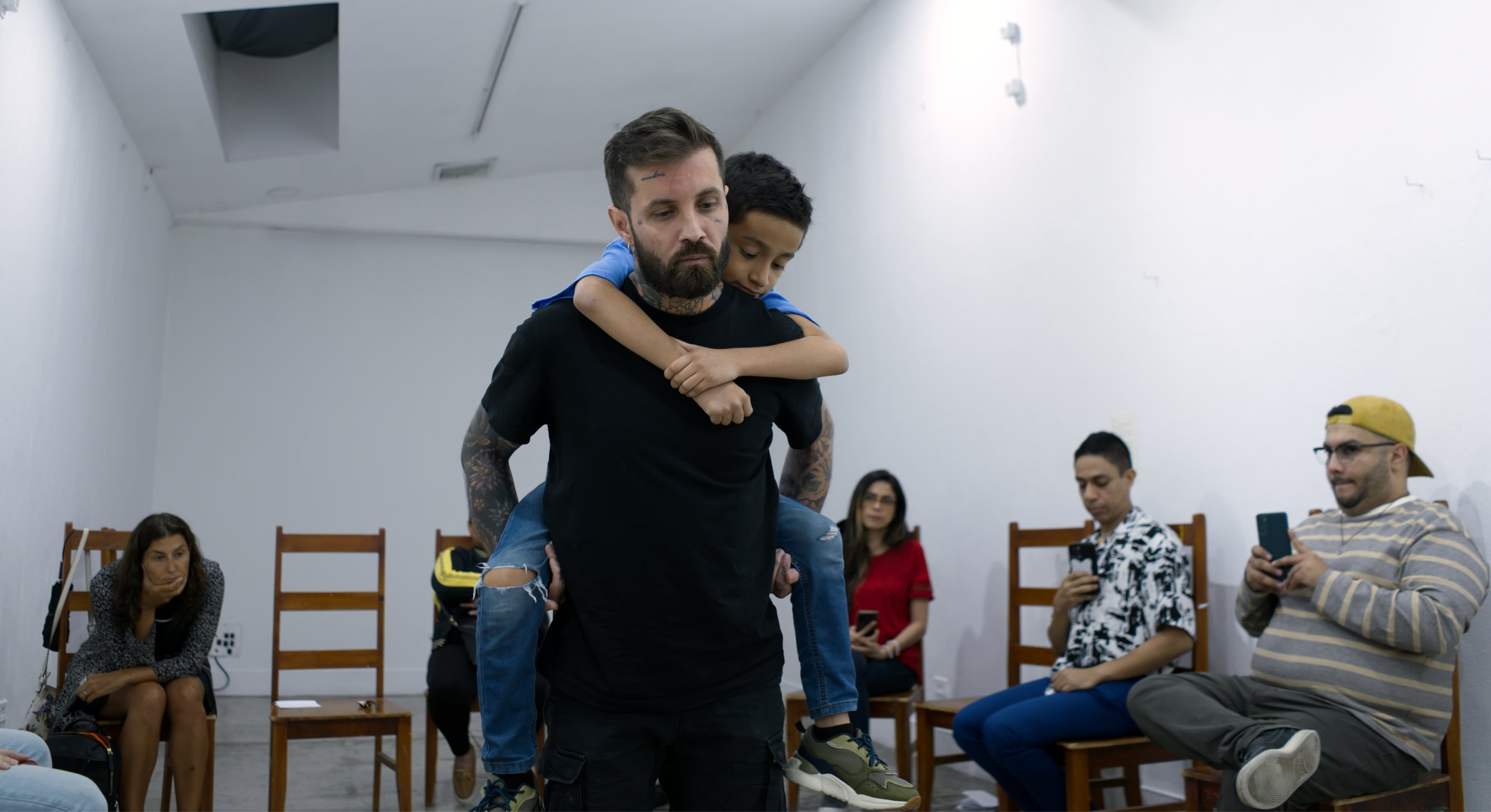
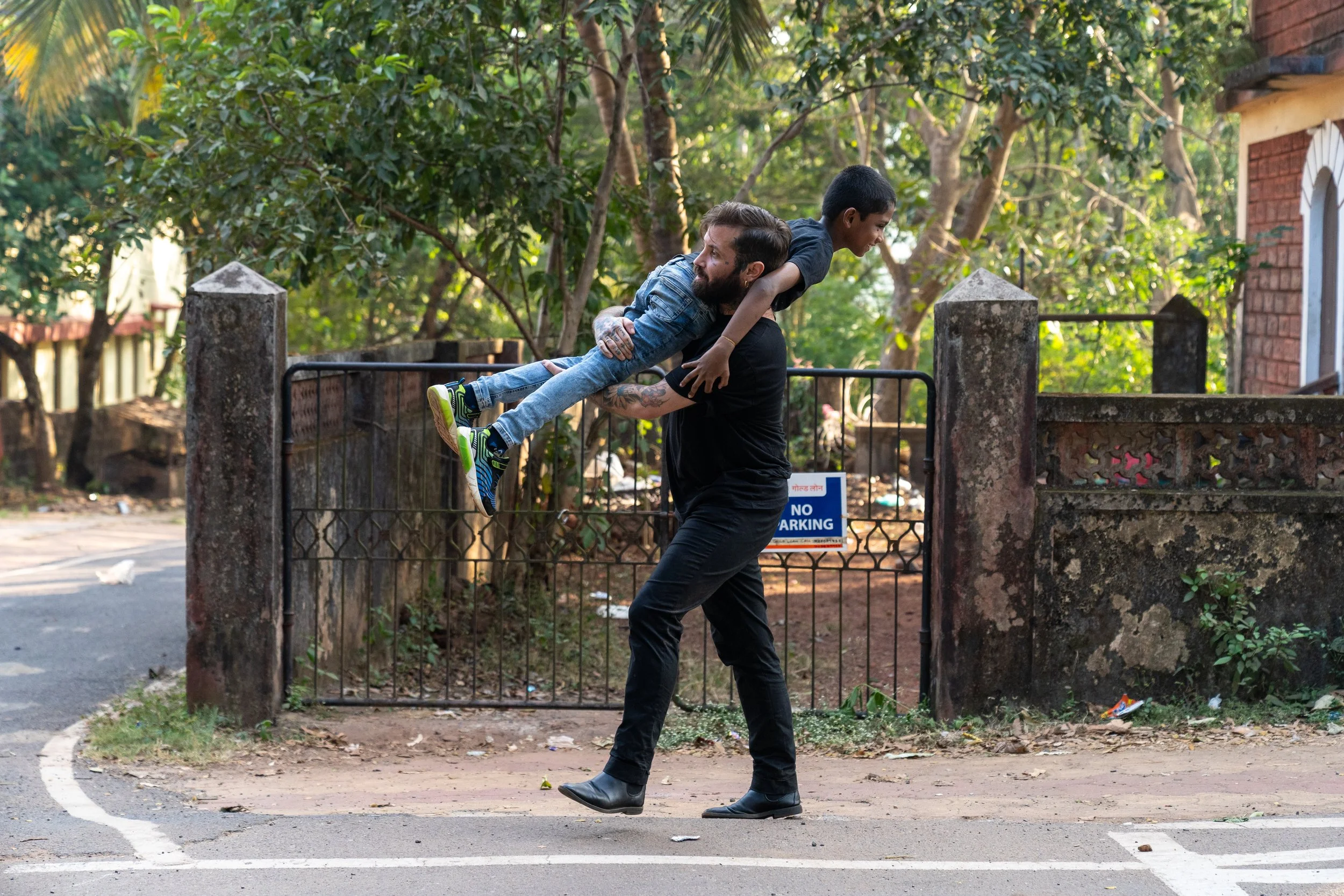
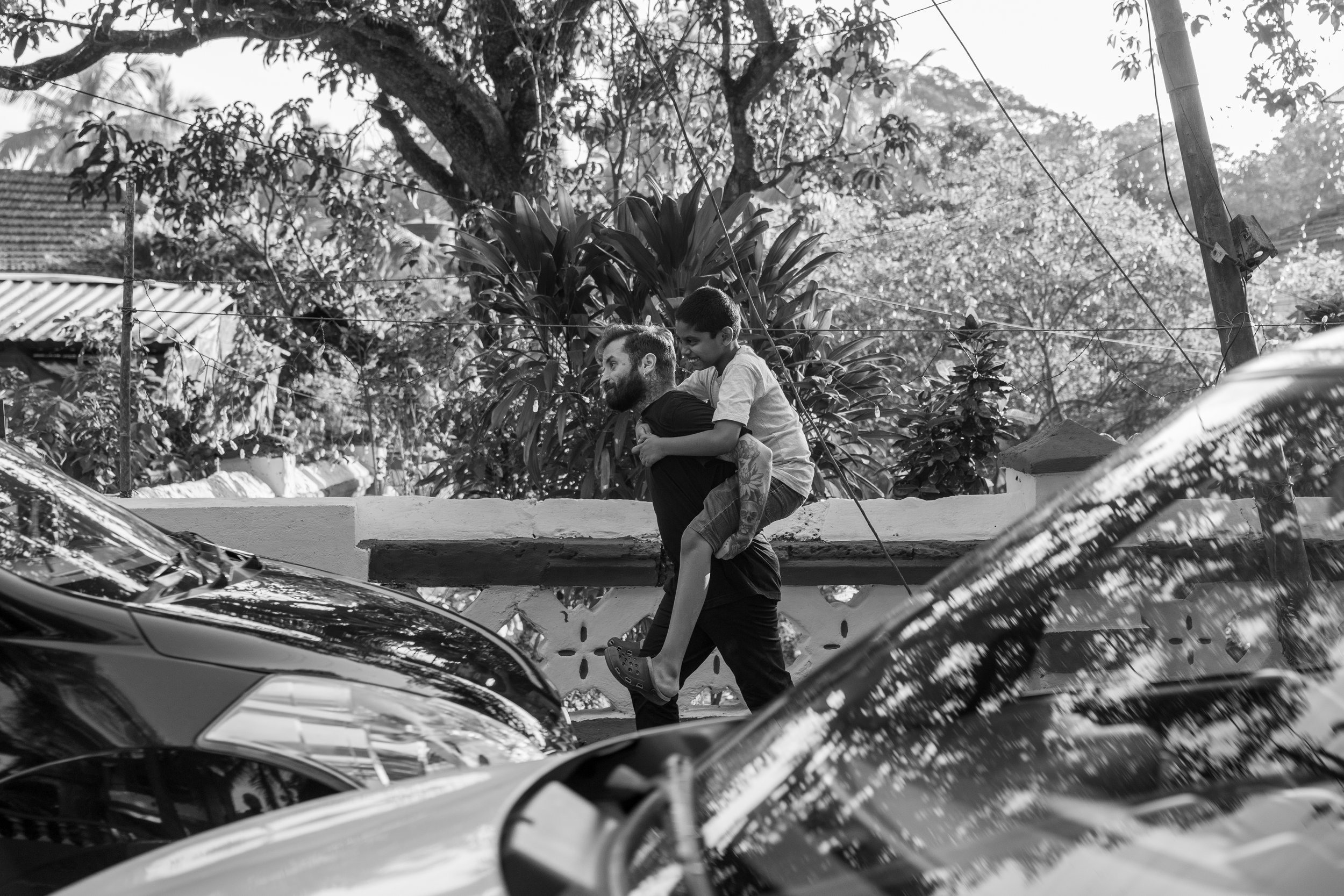
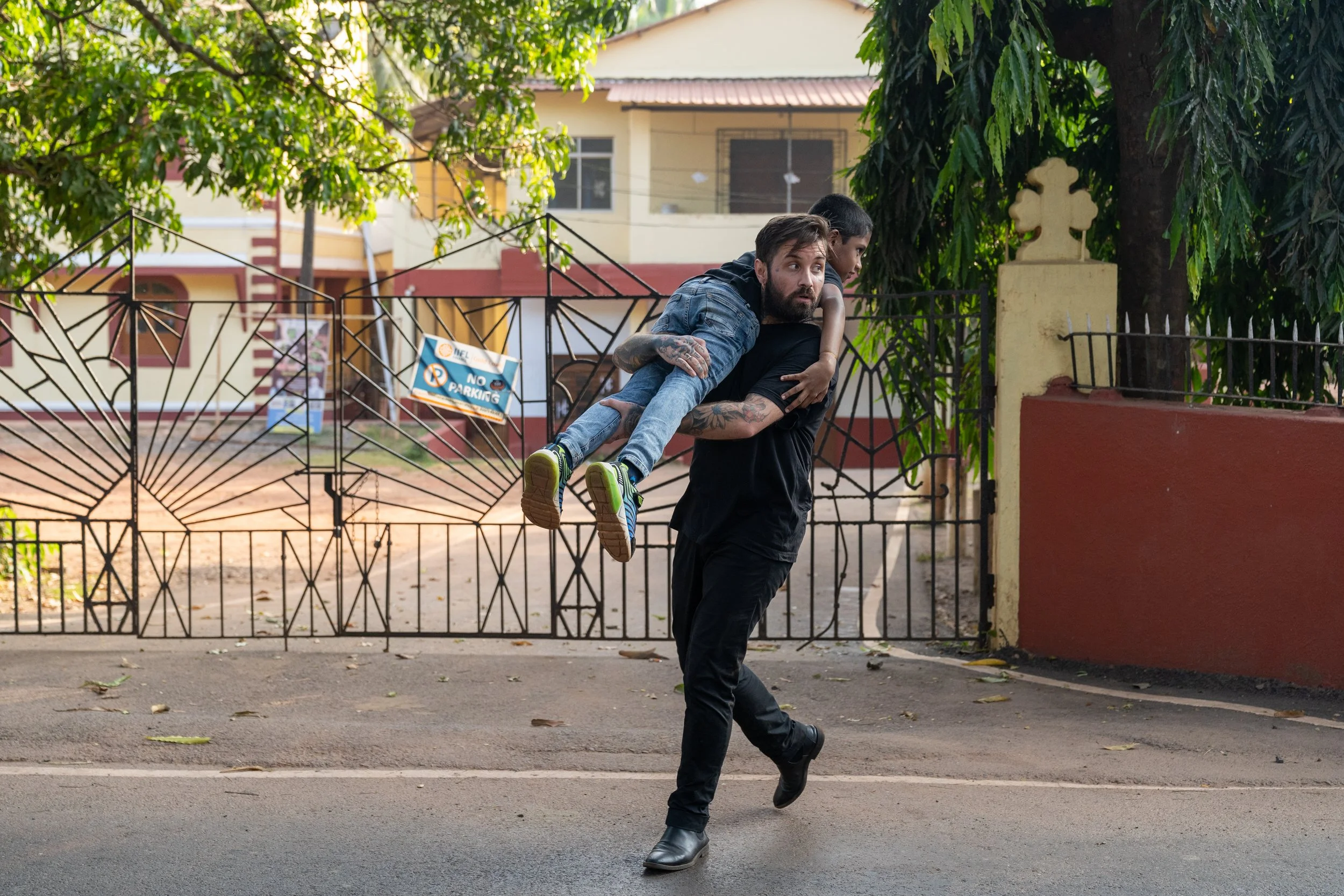
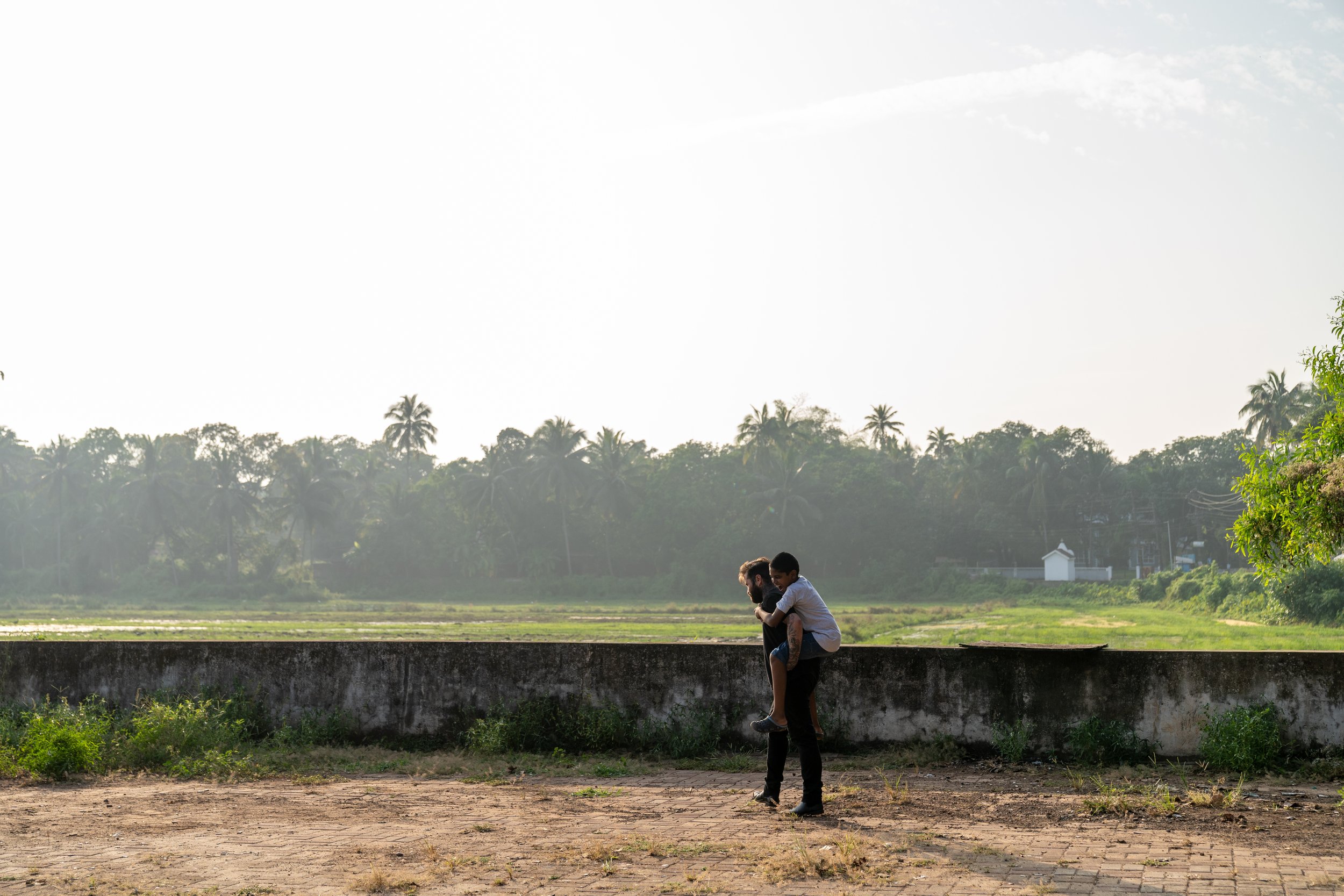
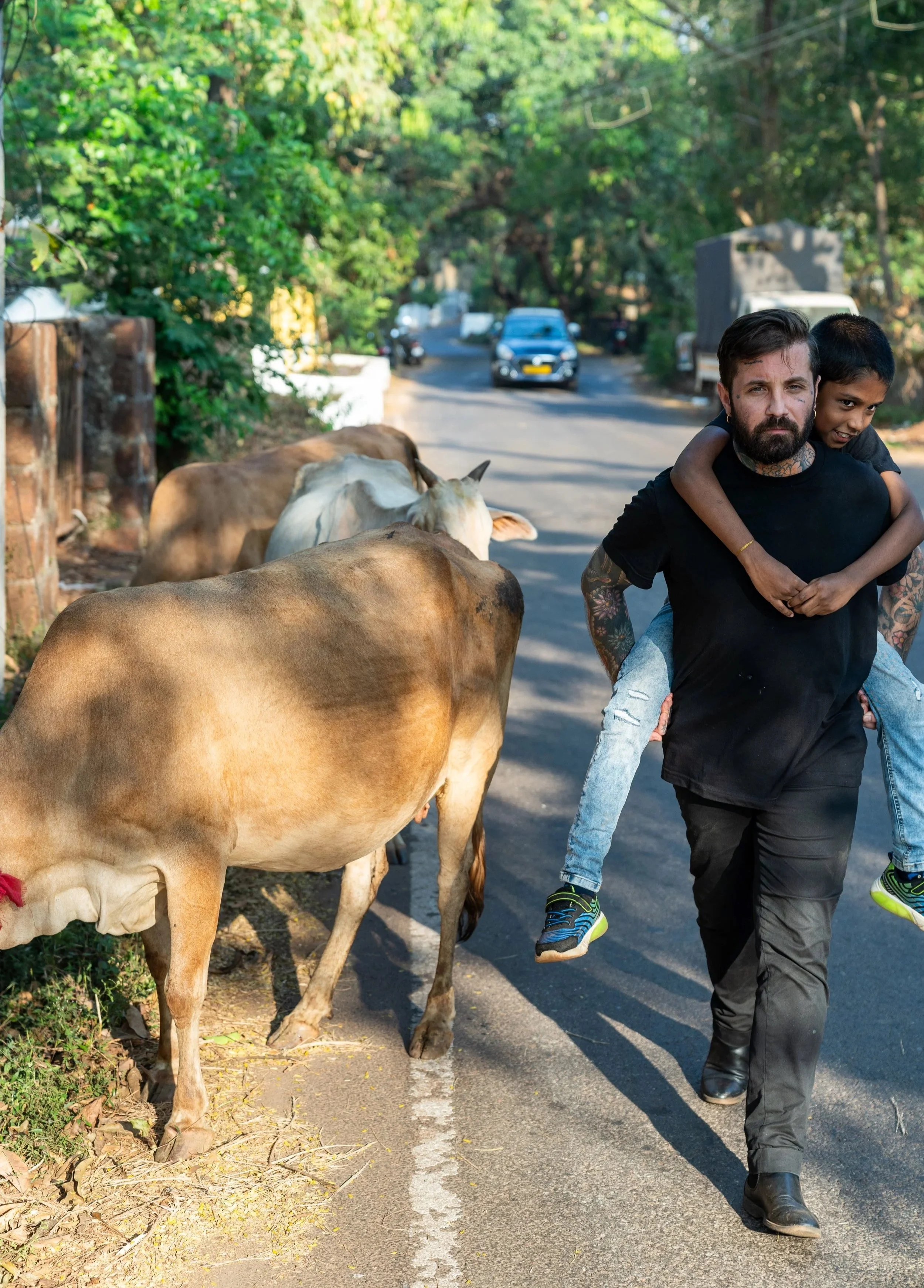
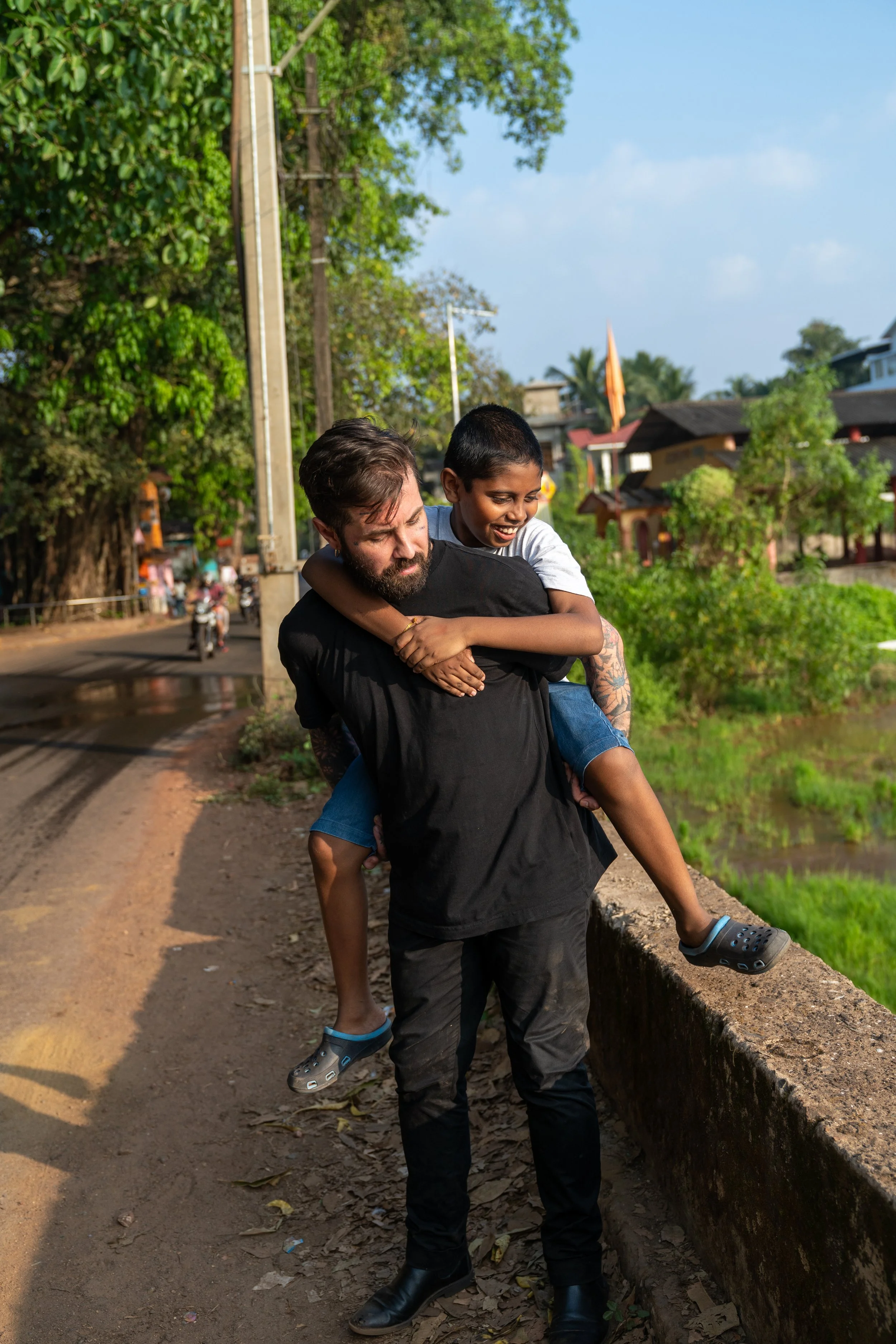
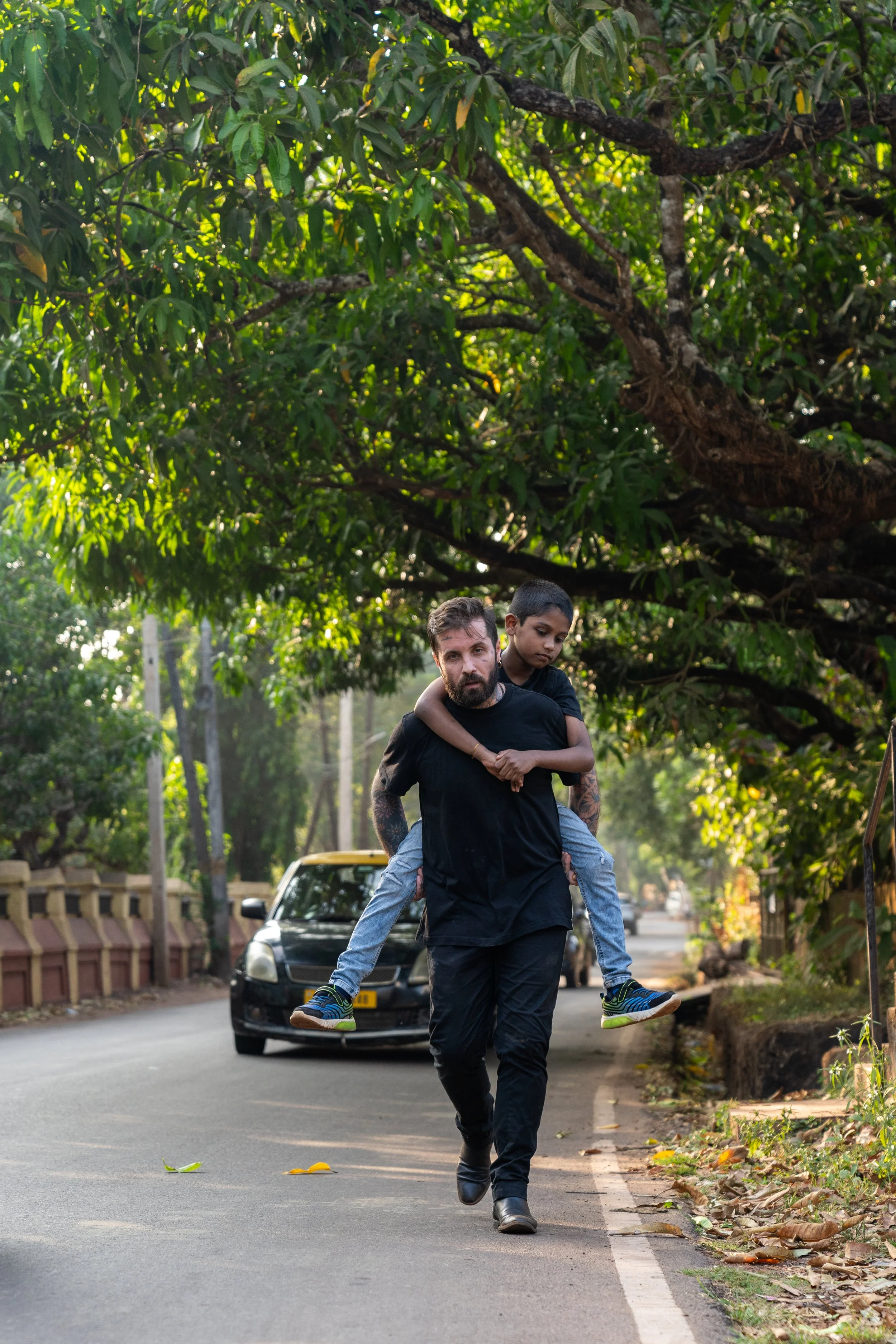
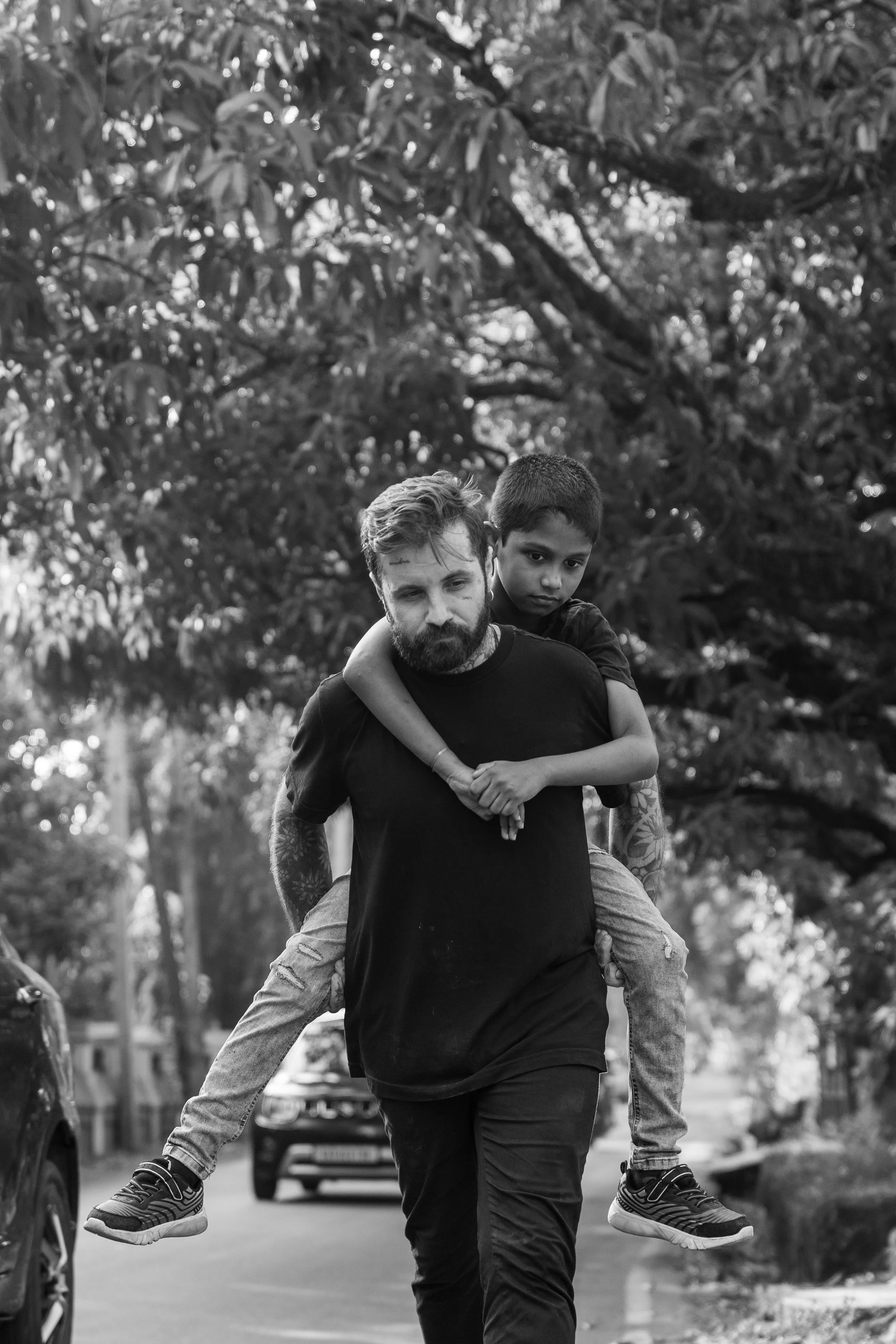
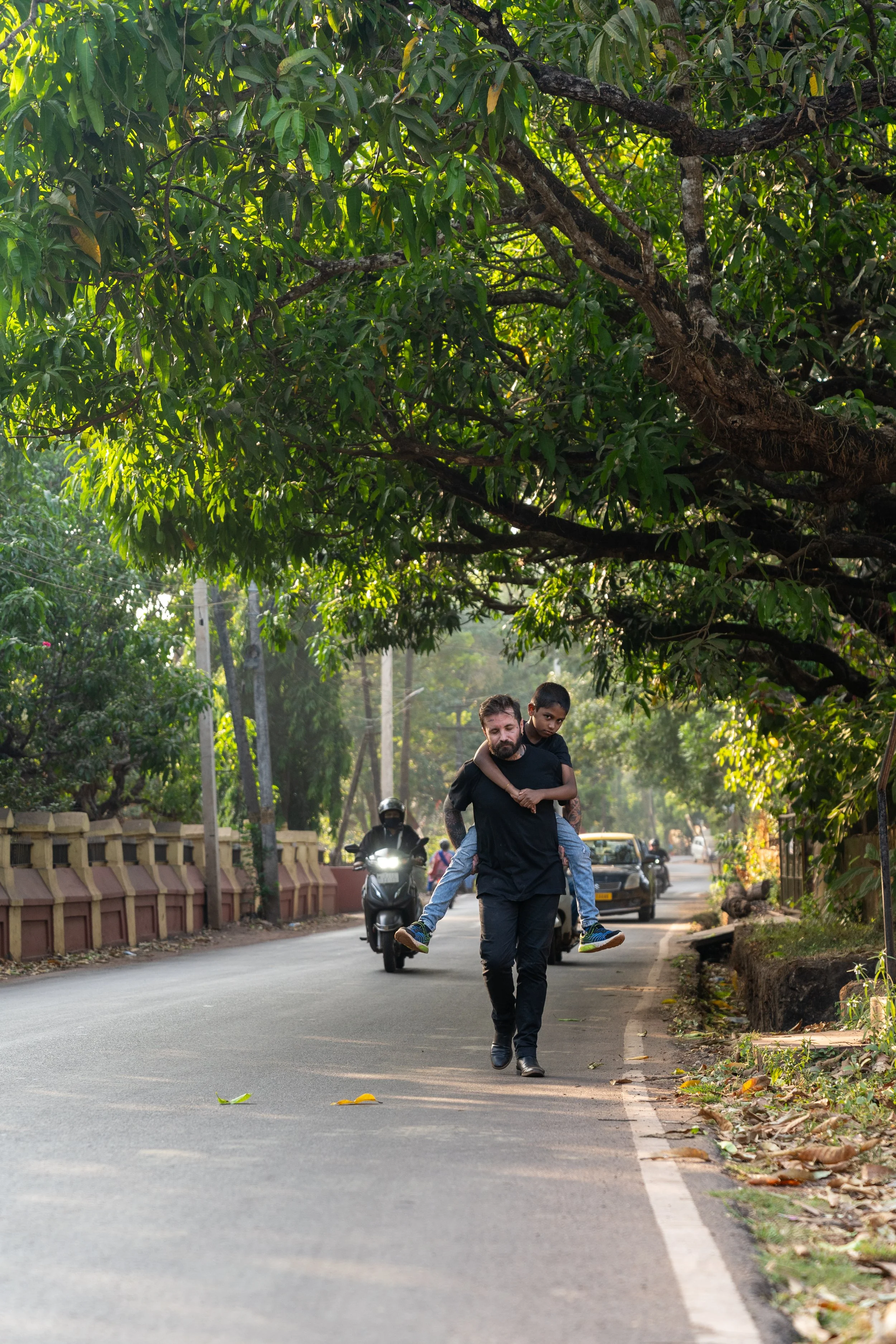
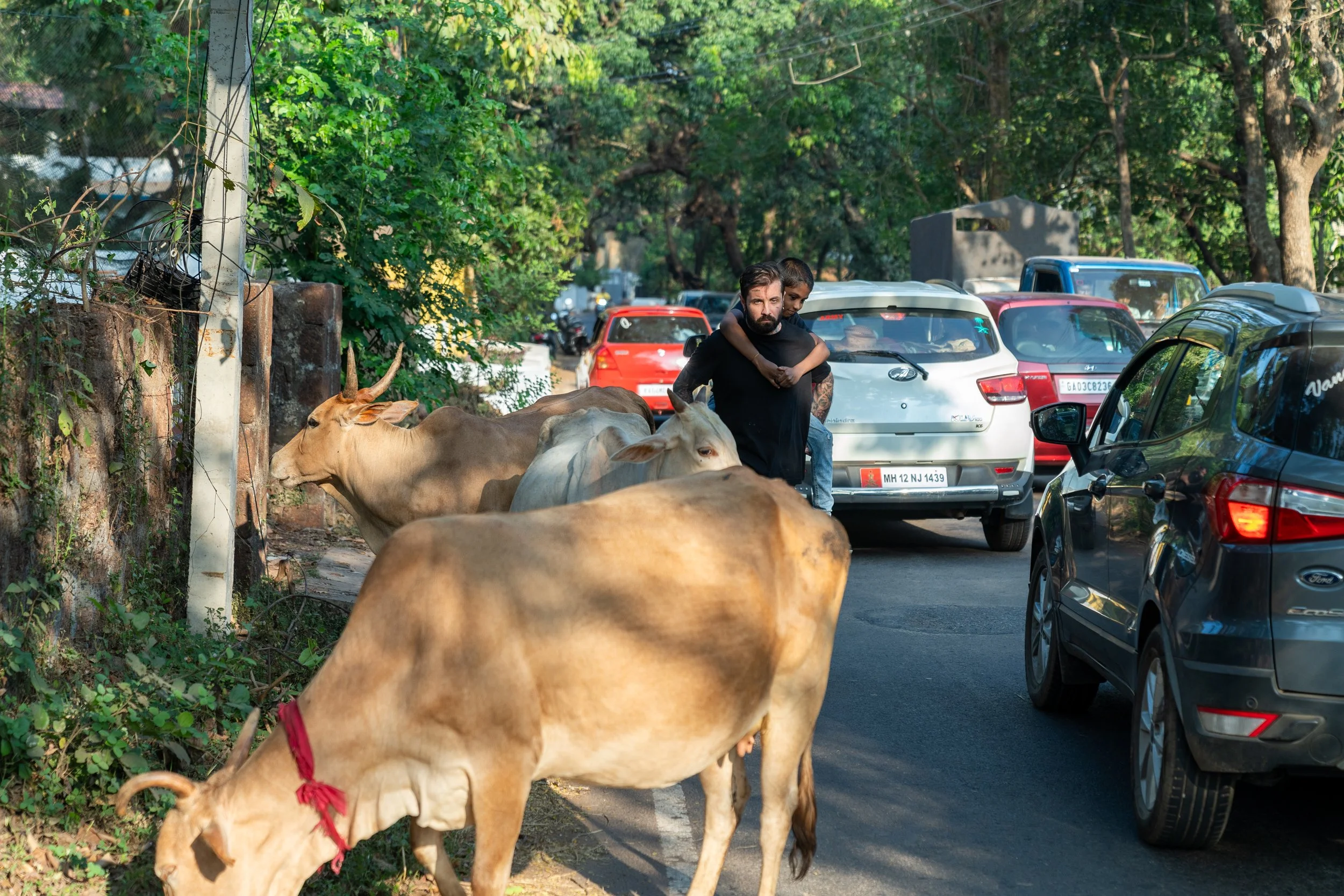
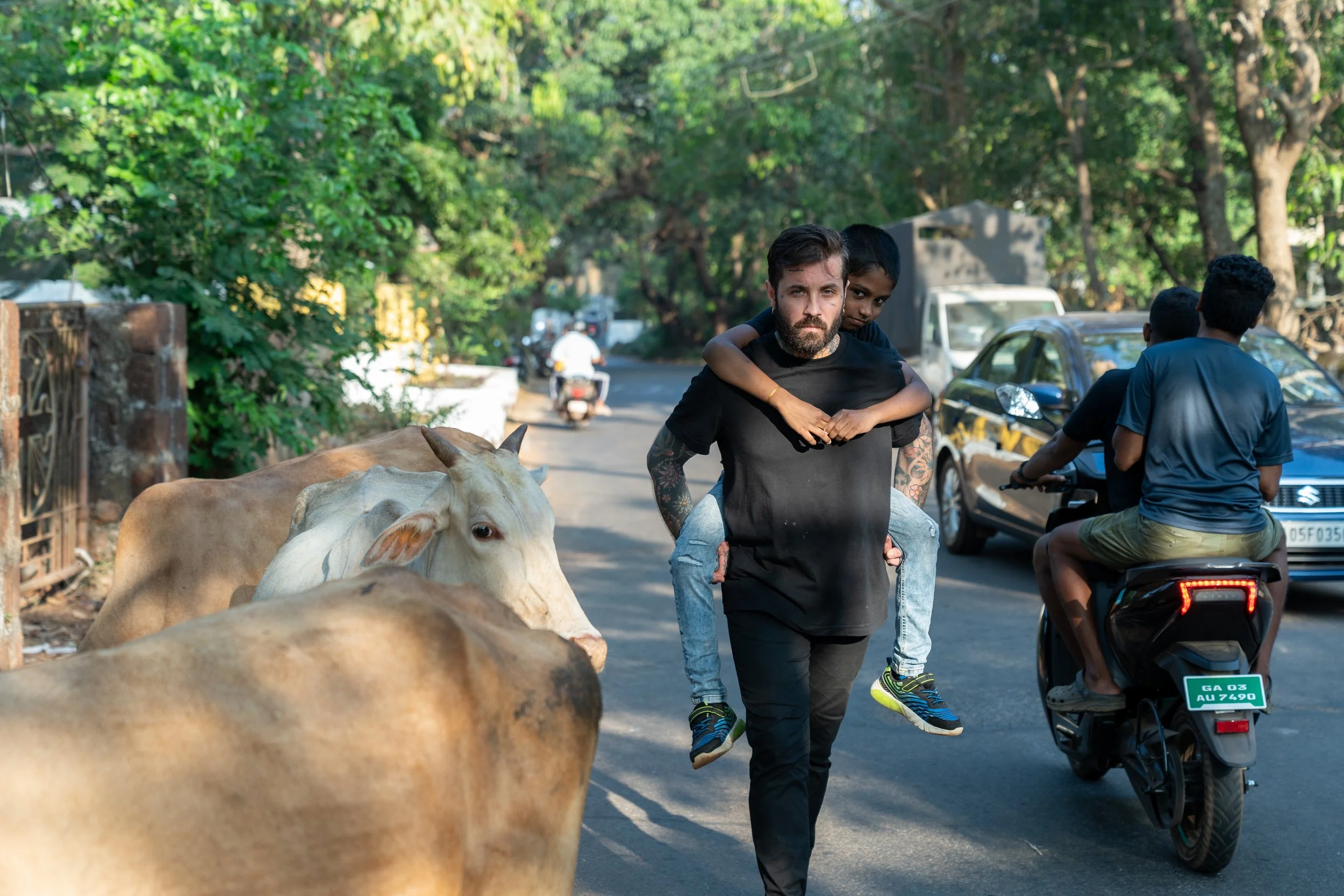
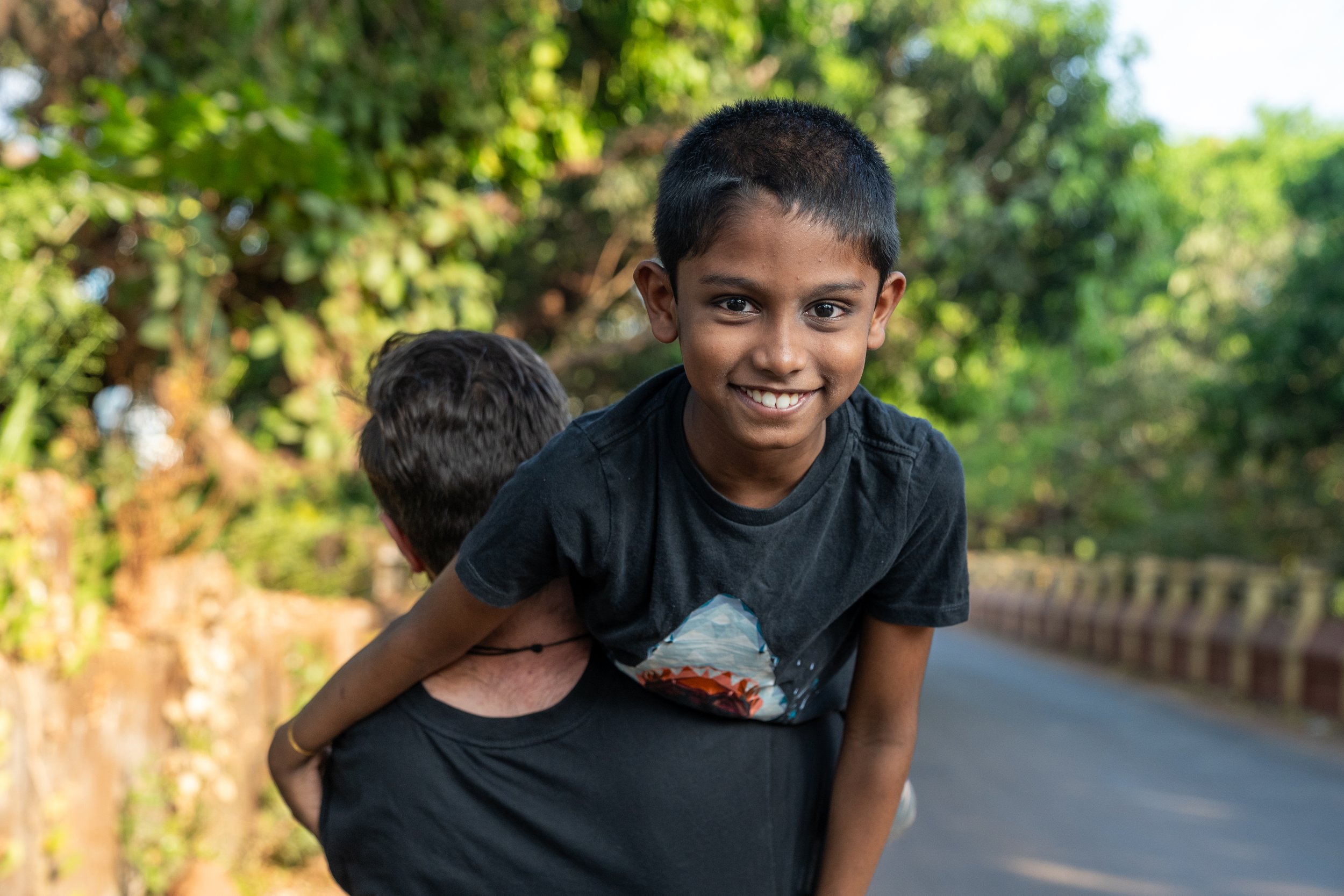
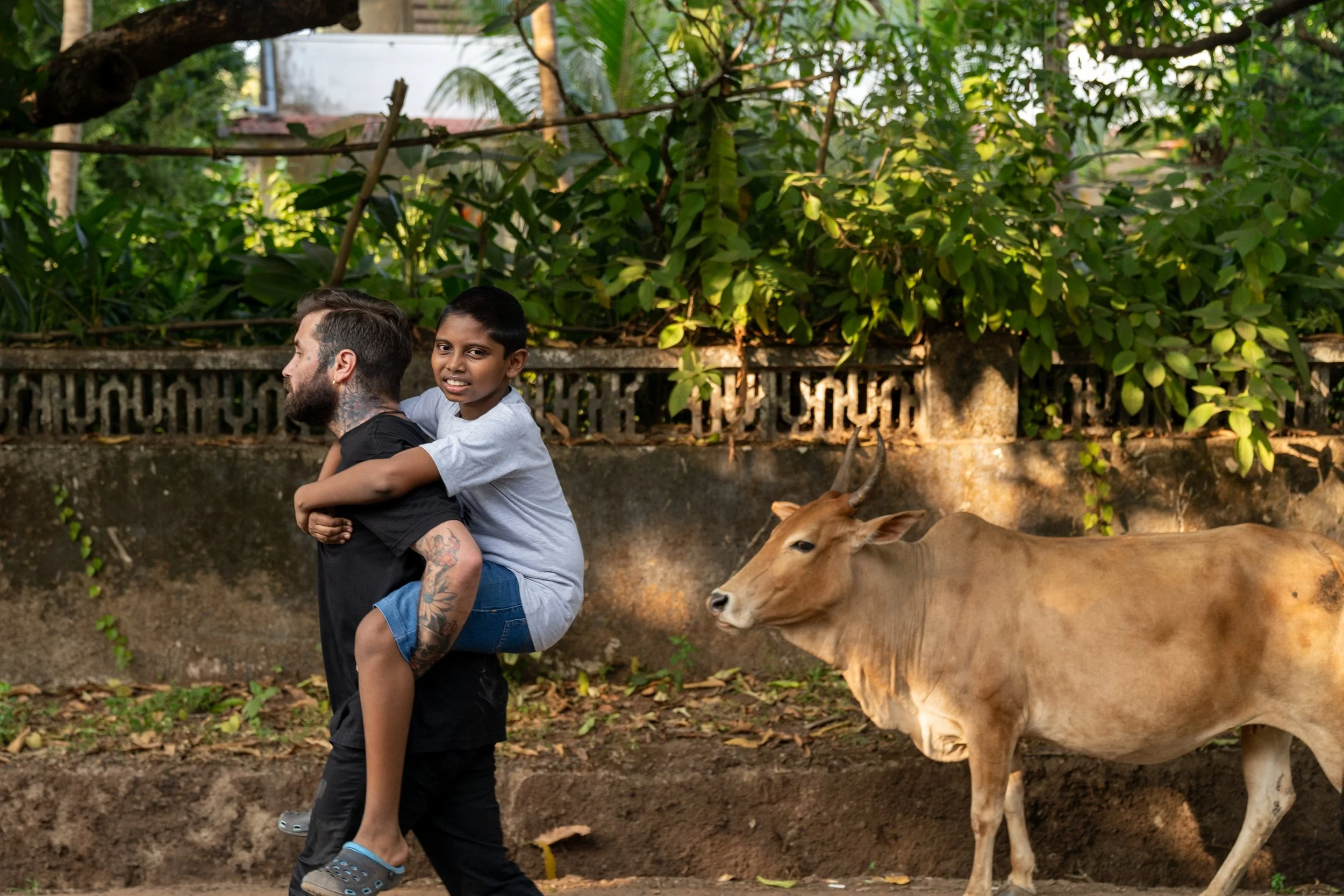
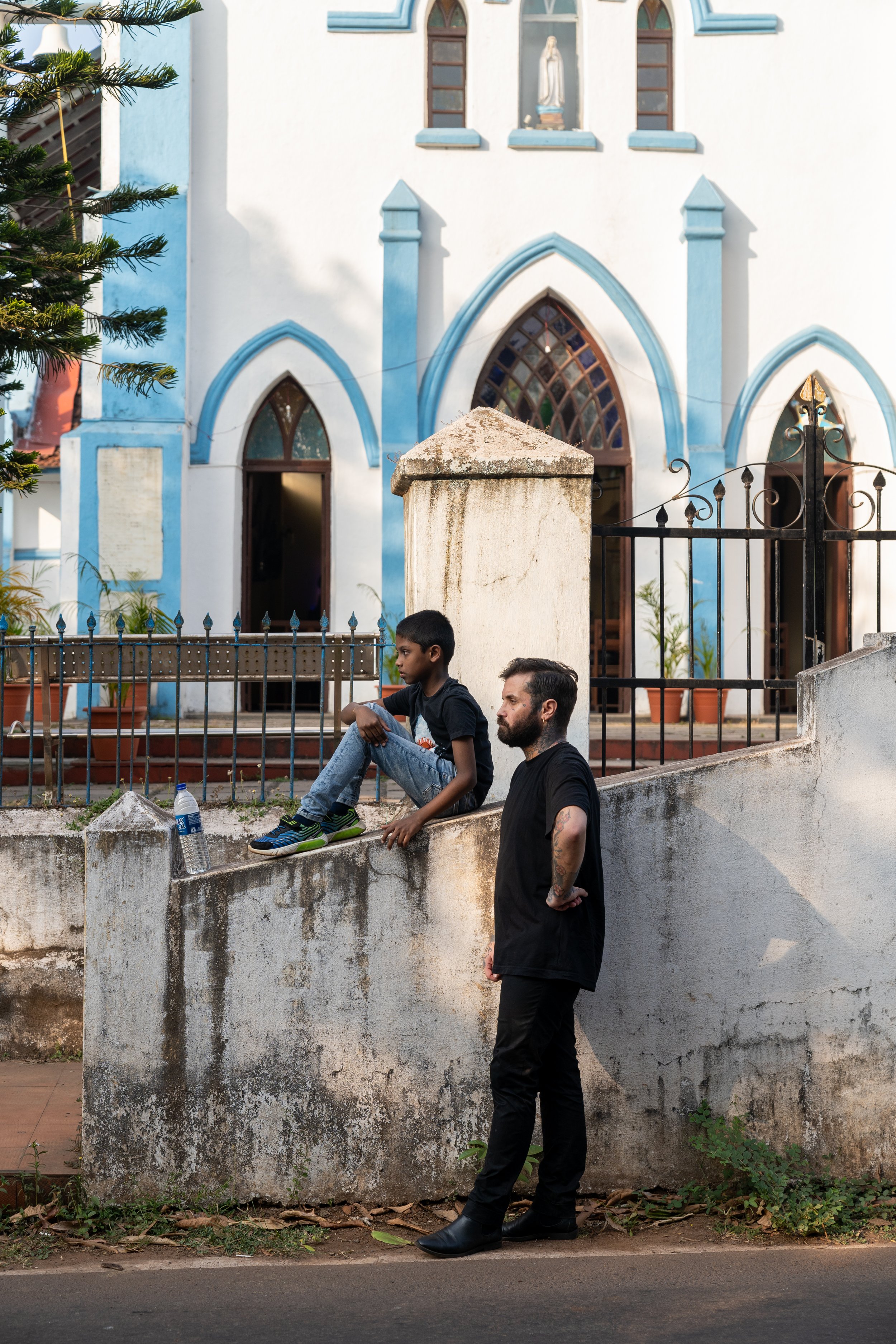
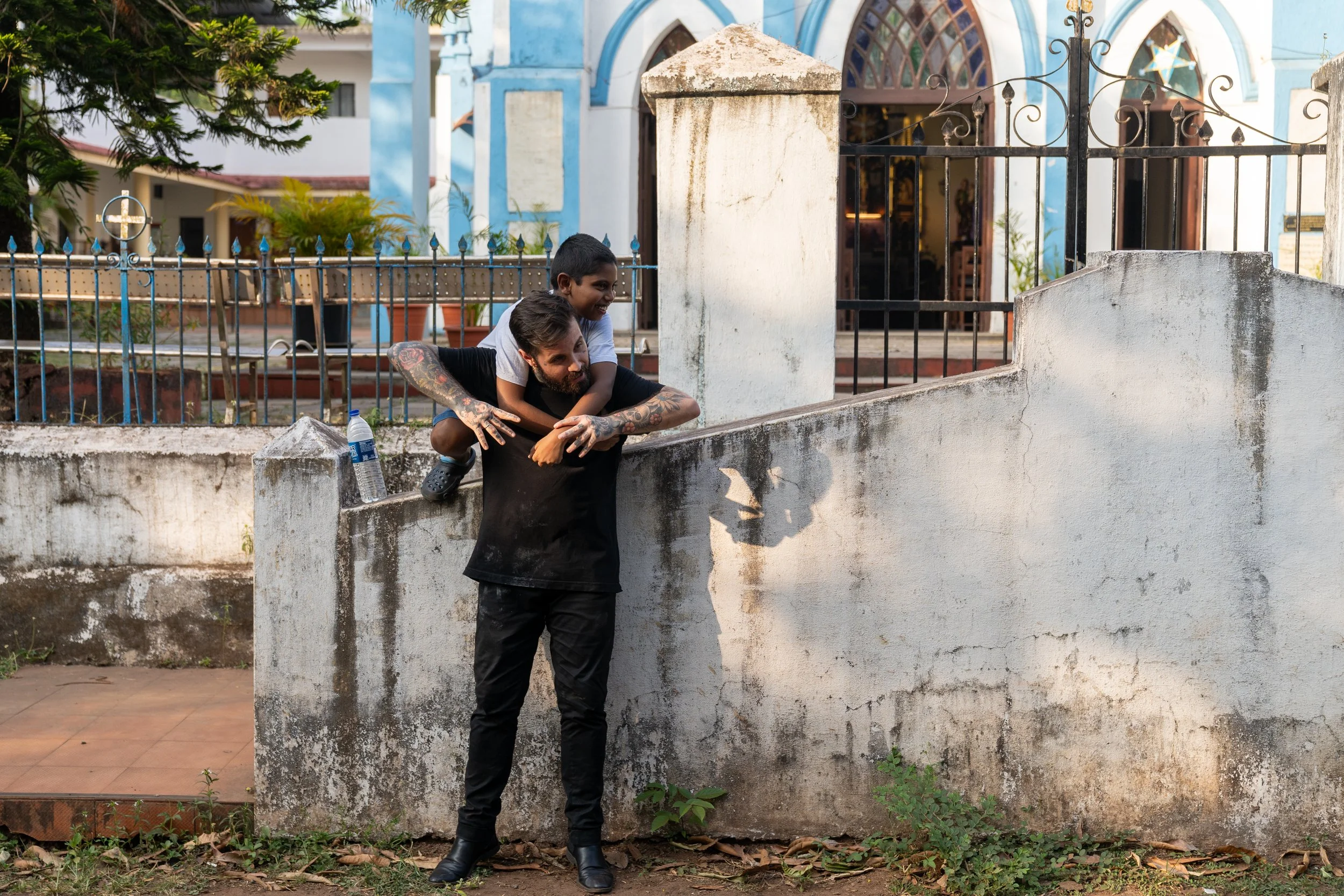
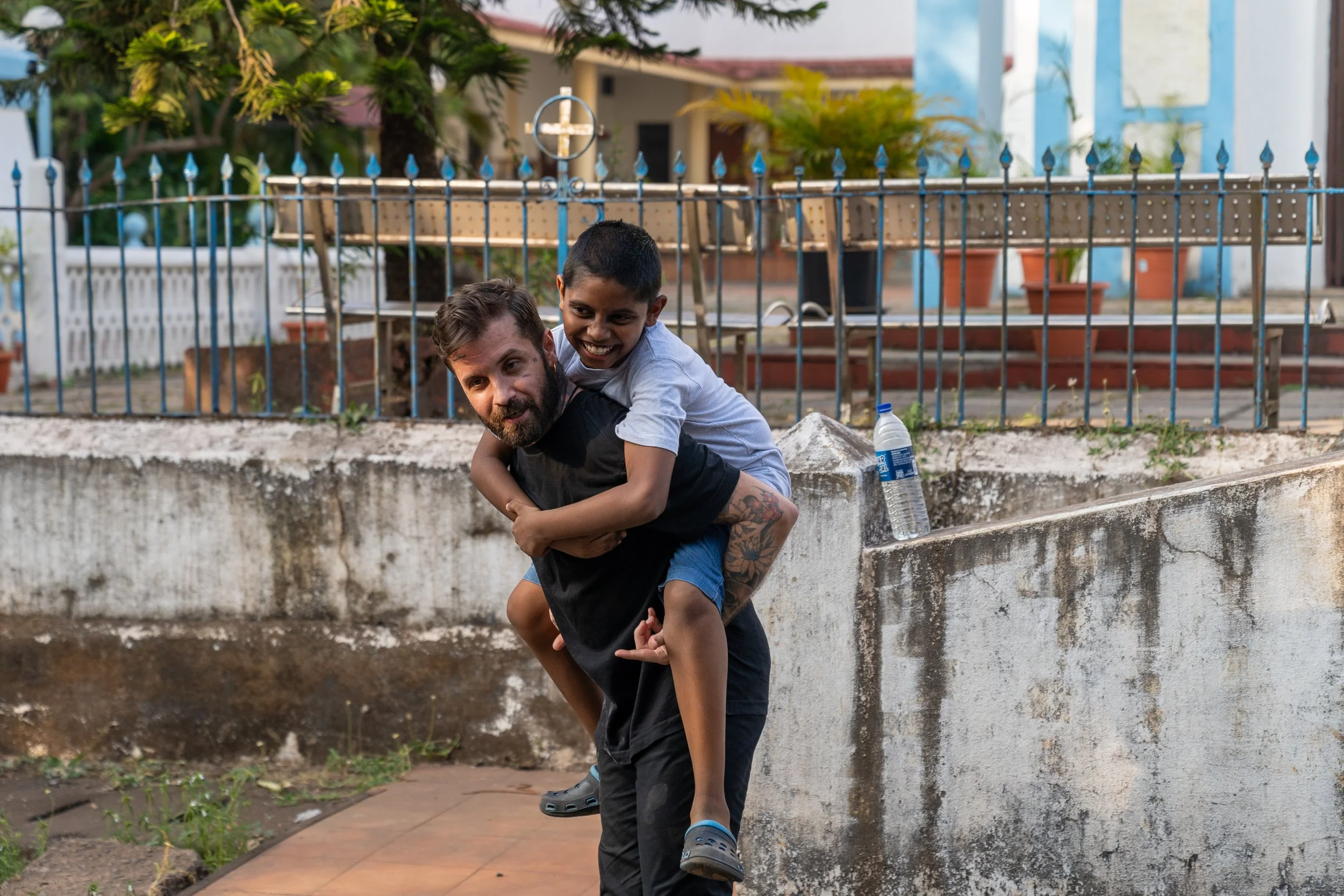
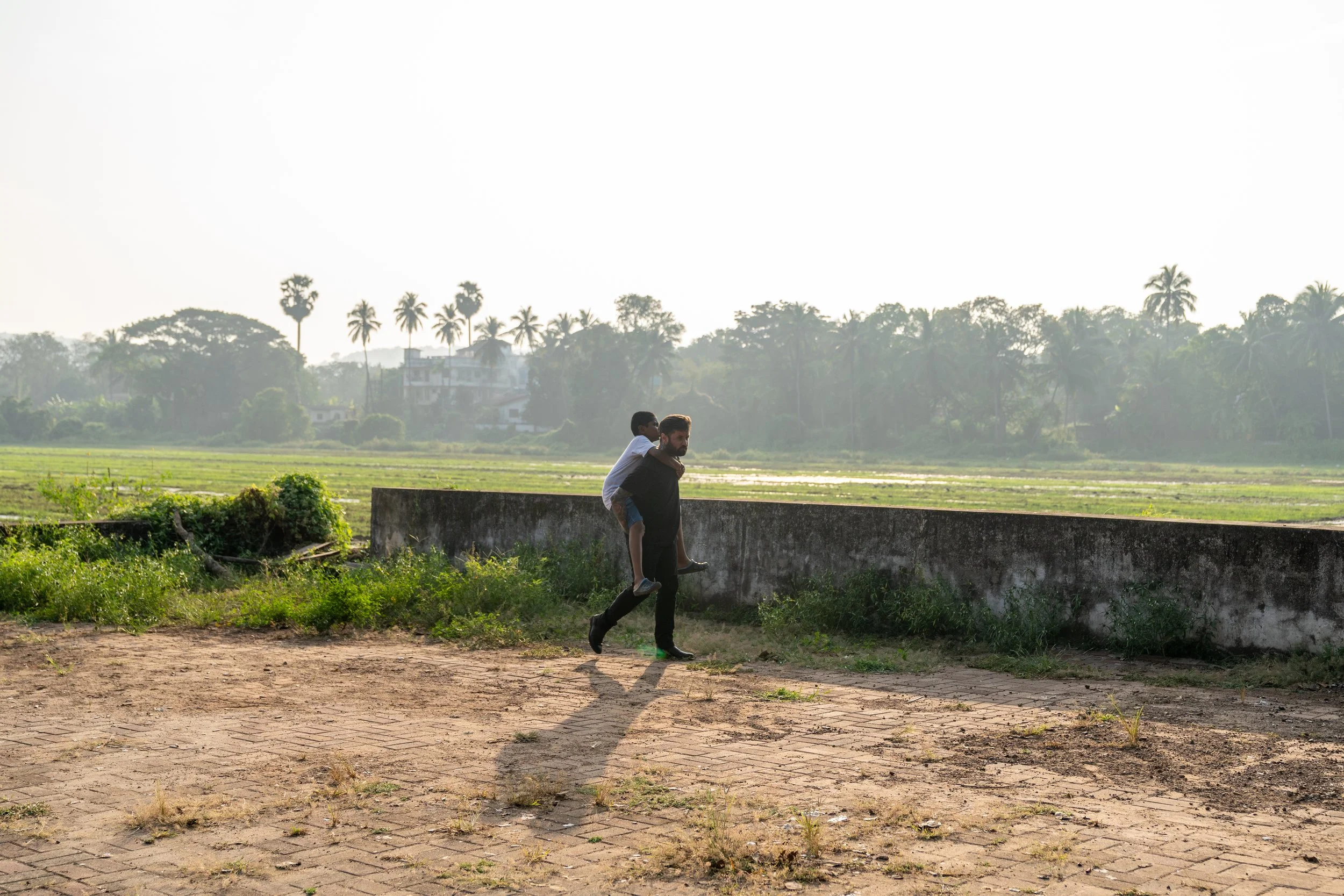
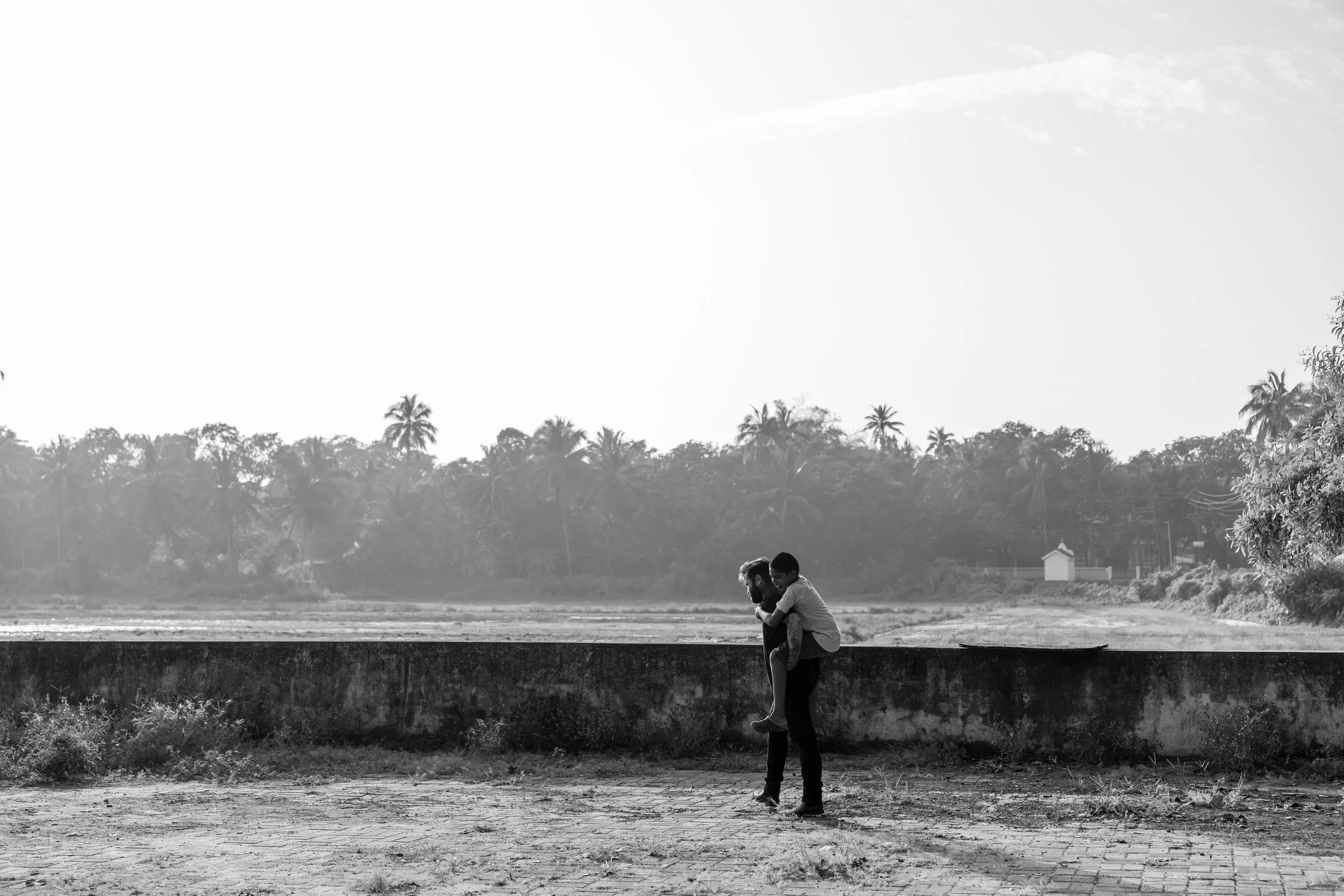
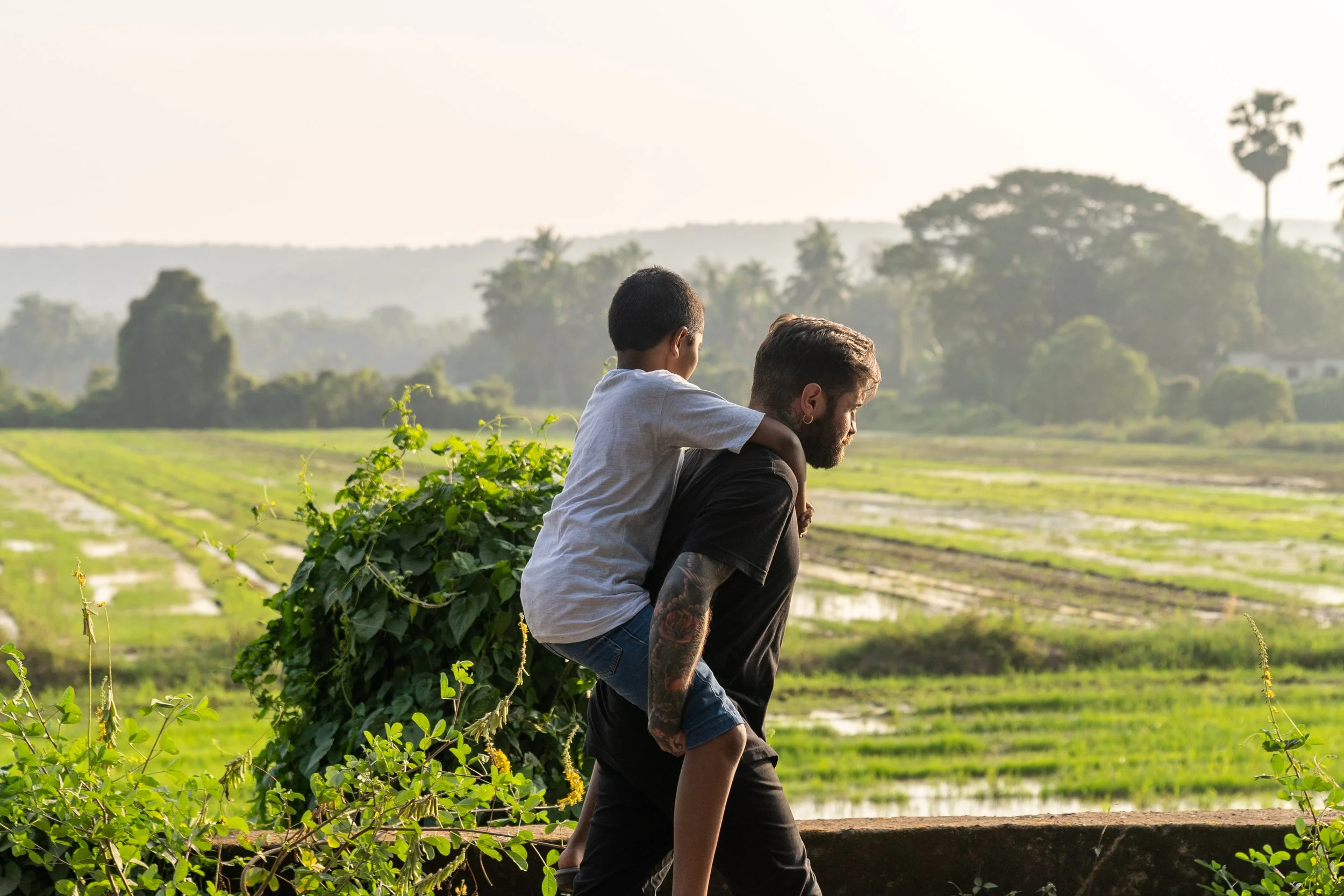
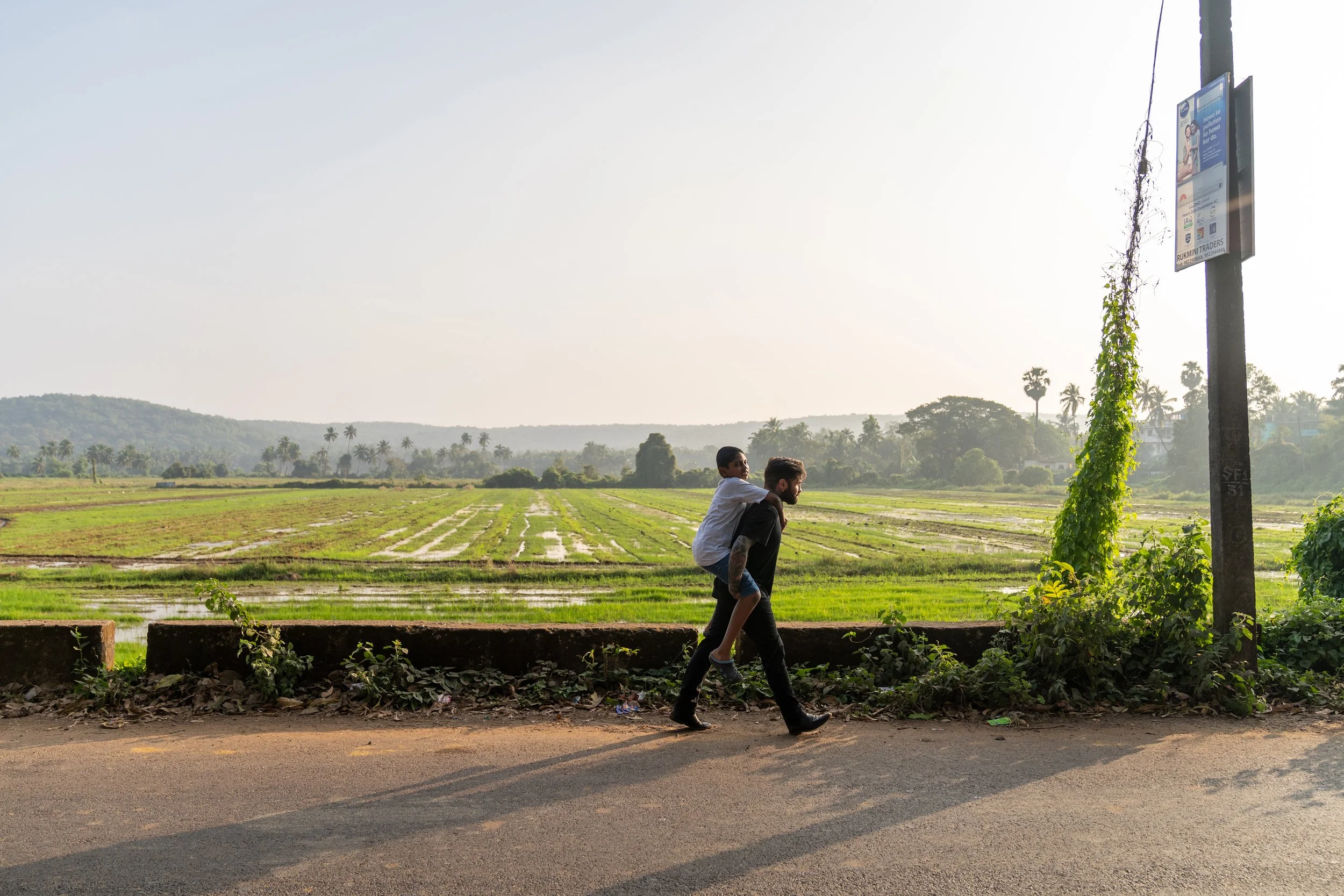
On December 12, 2023, in the state of Goa, India, Azcona created a new performance titled I Will Never Let You Fall. It was a long-duration piece centered on mistreated childhood. All the volunteer children came from orphanages where Azcona had been working and creating performances with them.
The action, which lasted several hours, consisted of walking for kilometers along roads connecting different Indian villages, carrying on his back a child who had experienced violence. It was a work of physical endurance, aligned with other pieces by Azcona, in which he pushes his body to the limit as a kind of regression to the violence he himself suffered during his childhood. However, this work moves away from violent imagery and, instead, approaches tenderness, care, and the resilient struggle shared by both bodies as they walk together.
The act of walking becomes an artistic, social, and political practice. To traverse means to cross a space or place in its entirety and length. One of the oldest ways of traversing space, and the most revolutionary one in our contemporary world, is the act of walking.
Francesco Petrarch, Jean-Jacques Rousseau, Henry David Thoreau, and Simone de Beauvoir explored the act of walking through diverse philosophical, sociological, and aesthetic lenses, demonstrating how an everyday action can also be radical, revolutionary, and transformative.
In the field of performance, this appears in practices such as Walking Art or mid 20th century walking-based art, as well as the method of the dérive, closely linked to Situationism and relational practice.
El 12 de diciembre de 2023 en el estado de Goa en India, Azcona creó una nueva performance bautizada No dejaré que te caigas nunca. Pieza de larga duración con infancia maltratada. Todas y todos los niños voluntarios formaban parte de orfanatos donde Azcona había estado trabajando y creando performance junto a ellos.
La acción, de varias horas de duración, consistía en andar kilómetros en carreteras que unían unos pueblos indios con otros con un niño con experiencias de violencias a sus espaldas. Una pieza de resistencia física en la linea de otras obras de Azcona, en las que pone el cuerpo al límite en una especie de regresión a las violencias sufridas por el artista en su infancia. No obstante esta obra se aleja de la idea violenta y se acerca la ternura, el cuidado y la lucha resiliente de ambos cuerpos conectados en el caminar.
El acto de caminar se convierte en una práctica artística, social y política. Recorrer significa atravesar un espacio o un lugar en toda su extensión y longitud. Una de las formas más antiguas de recorrer un espacio, y la más revolucionaria en nuestra contemporaneidad, es el acto de caminar.
Francesco Petrarca, Jean Jacques Rousseau, Henry David Thoreau o Simone de Beauvoir exploraban el acto de caminar desde diversos análisis filosóficos, sociológicos y estéticos que plantean cómo un acto realmente cotidiano puede, al mismo tiempo, ser radical, revolucionario y transformador.
En el campo de la performance, en diversas prácticas como el Walking Art o el Arte de andar mediados del siglo XX o el método de la dérive, estrechamente relacionado con el Situacionismo o la práctica relacional.
“Abel Azcona o la performance como sanación colectiva. En concreto la performance autobiográfica ya que toda su práctica artística es un grito de dolor, por los abusos, la violencia y la soledad extrema que marcaron su infancia. Desde sus años de formación, la performance confesional se convierte en su vía de salvación. Su objetivo no es la sanación individual, sus acciones generan una catarsis colectiva en la que conviven emociones de liberación, curación y venganza.”
“Abel Azcona, or performance art as collective healing. More precisely, autobiographical performance, as his entire artistic practice is a cry of pain responding to the abuse, violence, and extreme loneliness that shaped his childhood. From his early formative years, confessional performance became his path to salvation. His goal is not individual healing, rather, his actions generate a collective catharsis in which emotions of liberation, healing, and revenge coexist.”
The work was curated by Mitali Nath and created as part of the residency at Live Hive (Goa) and Abel Azcona’s tour in India during several months of 2023. Photography: Shikar Astogi.
La obra fue comisariada por Mitali Nath y realizada en el marco de la residencia en Live Hive (Goa) y la gira de Abel Azcona en la India varios meses de 2023. Fotografía: Shikar Astogi.
“It is truly powerful how Azcona approaches children scarred by violence around the world, not from a white savior stance, but through the intense connection between two bodies that have been abandoned, mistreated, and abused. The brutal violence they have endured creates a magical bond between them, as if, somehow, they merged into a single body and shouted that they are now stronger than ever.”
“Es realmente poderoso como Azcona se acerca a los niños atravesados por violencias en todo el mundo, pero no desde la postura del salvador blanco, sino desde la intensa conexión entre ambos cuerpos abandonados, maltratados y abusados. Las brutales violencias sufridas crean un acoplamiento mágico entre ambos cuerpos que de alguna manera se vuelven uno y gritan que ahora son más fuertes que nunca.”
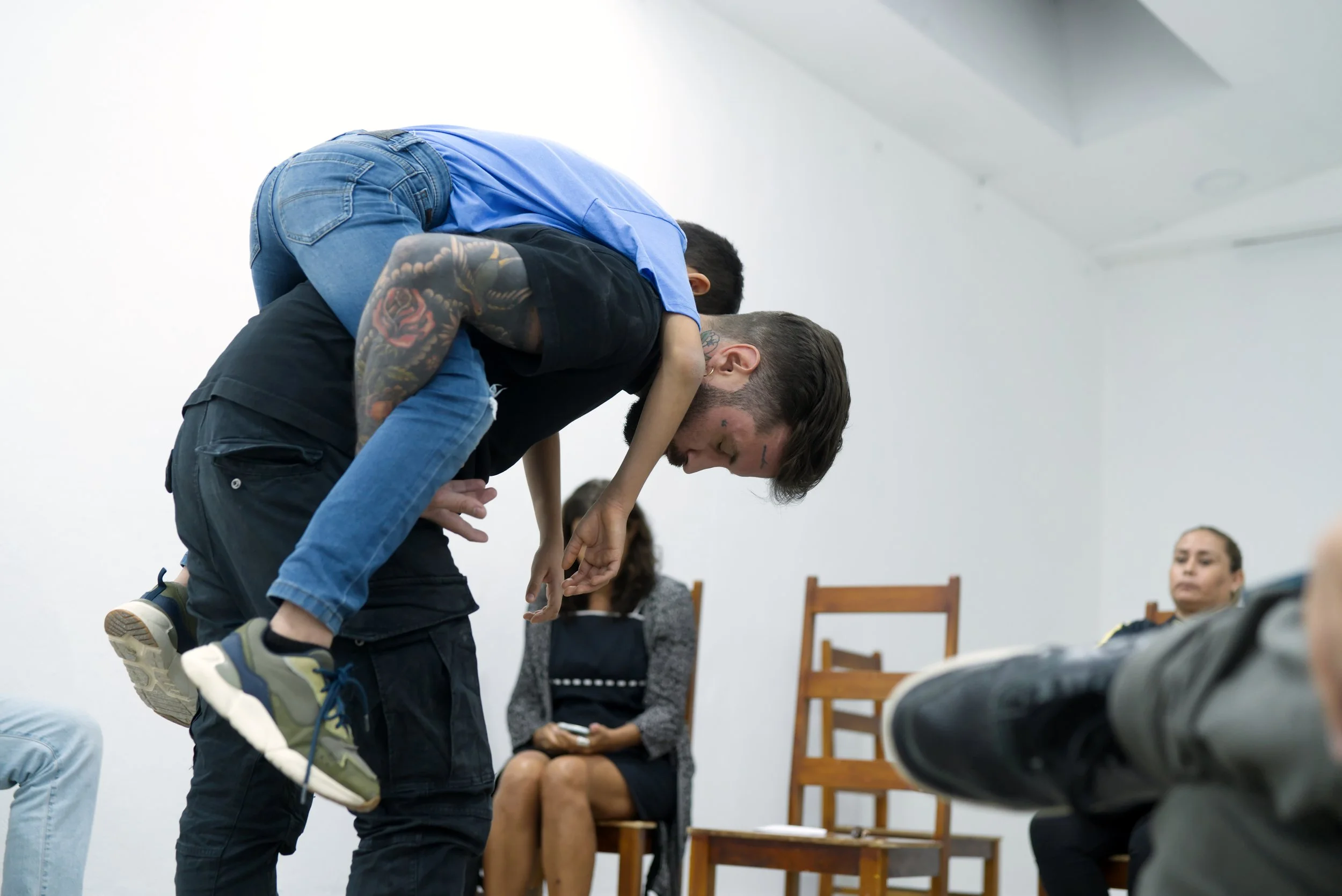
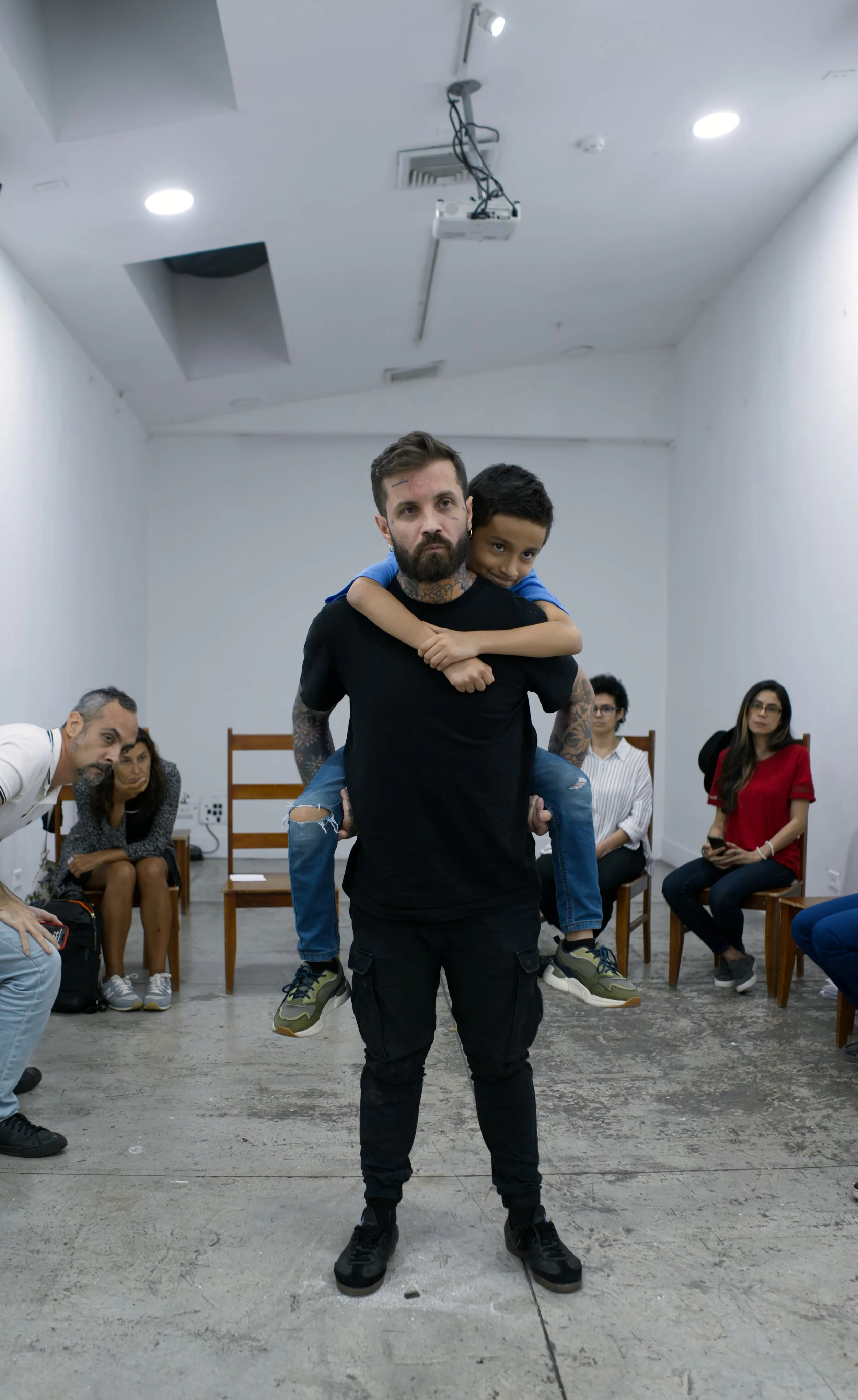
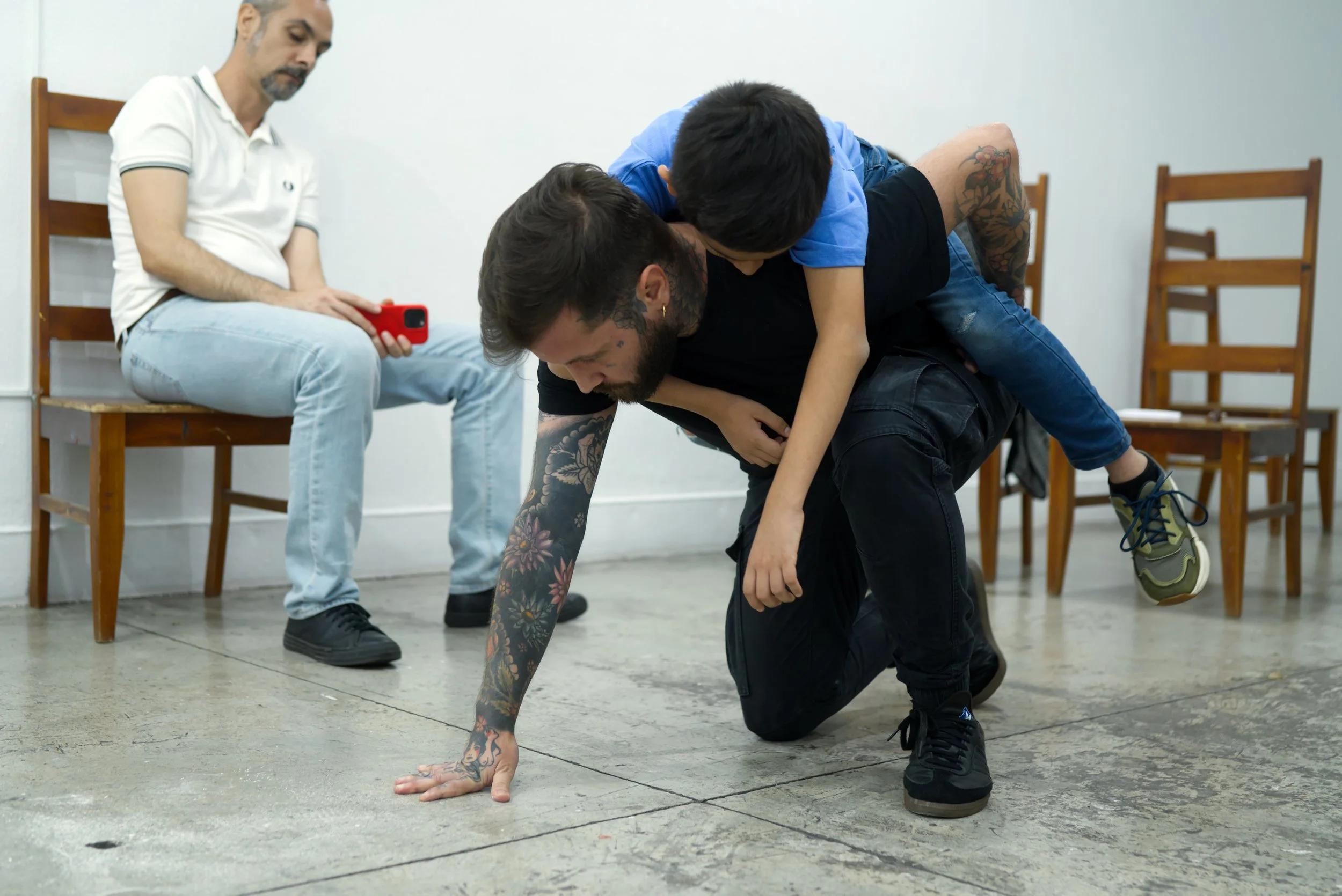
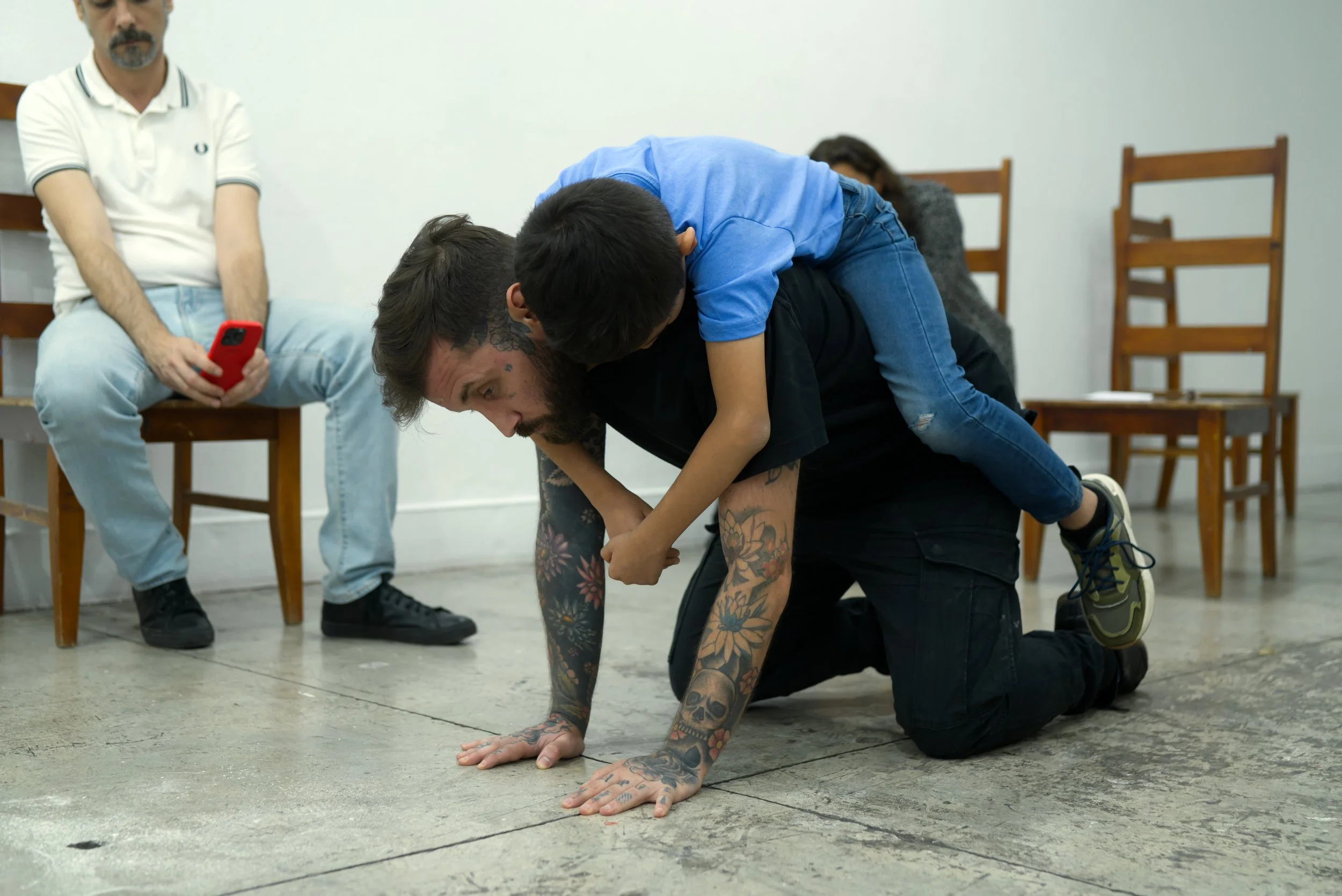
On September 3, 2024, at the Cultural Center of Tegucigalpa, Honduras, Azcona carried out a second part of the piece, this time with a child of Honduran origin. During Azcona’s trip to Costa Rica and Honduras, the artist, instead of walking for hours, created the work from the concept of endurance and long duration, but this time supporting the child’s weight in a static position, slowly sinking toward the ground due to exhaustion and the passage of time. In the first action in India, movement was key, while in this second activation in Honduras, the focus shifted to stillness as a form of resistance. In both works, Azcona brings us into a narrative of violence and resistance, and through the connection of both bodies, a new resilient spirit emerges, one that, in some way, had not been as present in the artist’s previous works.
El 3 de septiembre de 2024 en el Centro Cultural de Tegucigalpa, Honduras, Azcona accionó una segunda parte de la pieza esta vez junto a un niño de origen hondureño. En la obra creada en el marco del viaje de Azcona a Costa Rica y Honduras, el artista en vez de caminar durante horas accionó desde la idea de resistencia y larga duración, pero esta vez soportando el peso del niño de manera estática hasta ir poco a poco descendiendo hacia el suelo debido al agotamiento y el paso del tiempo. En la primera acción en la India el movimiento era clave y en esta segunda activación en Honduras la clave estaba en la resistencia de manera estática. En ambas obras Azcona nos acerca a un relato de historia de violencia, de resistencia y al conectar ambos cuerpos un nuevo espíritu resiliente, que de alguna manera no estaba tan presente en otras obras previas del artista.
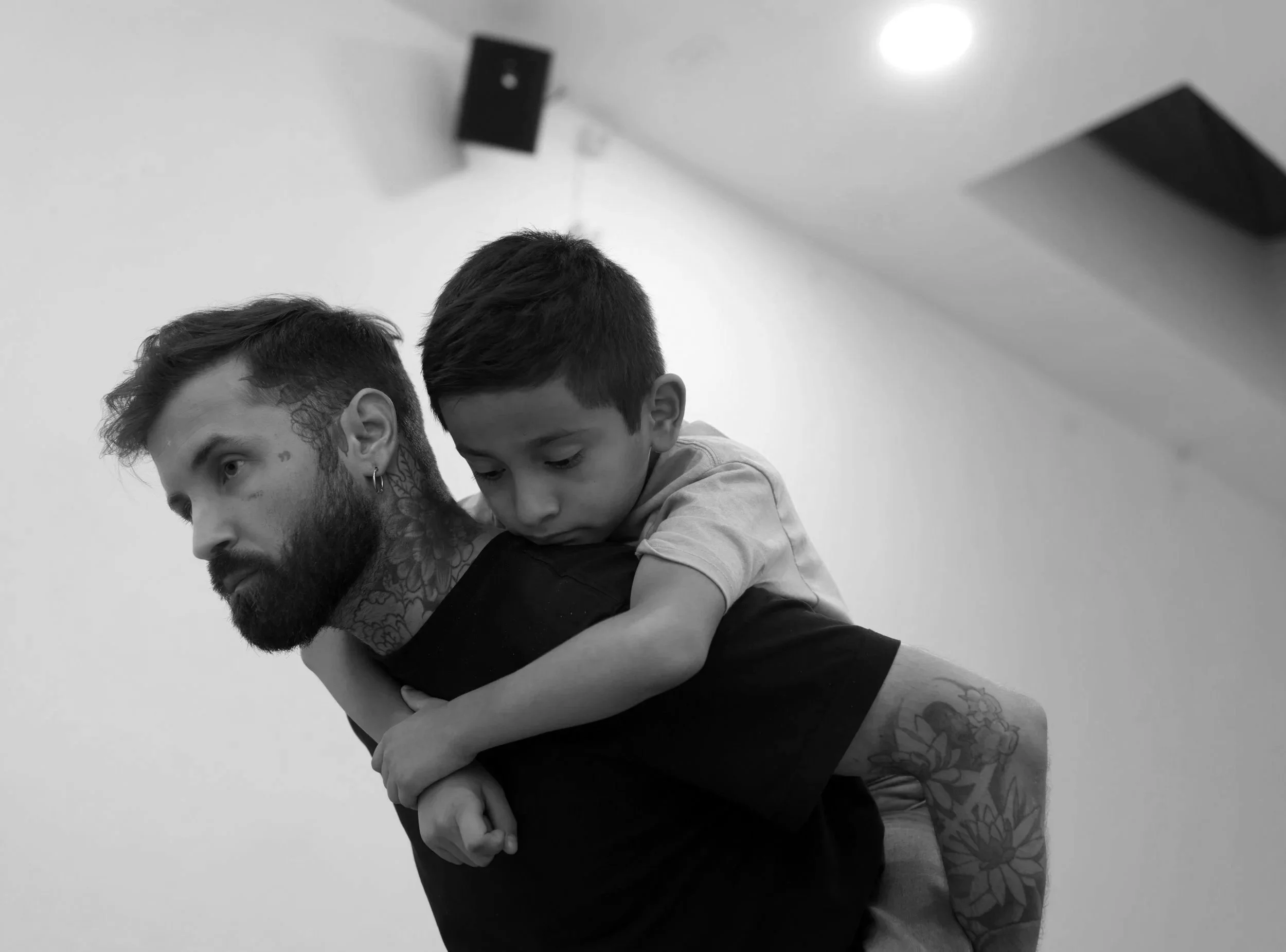
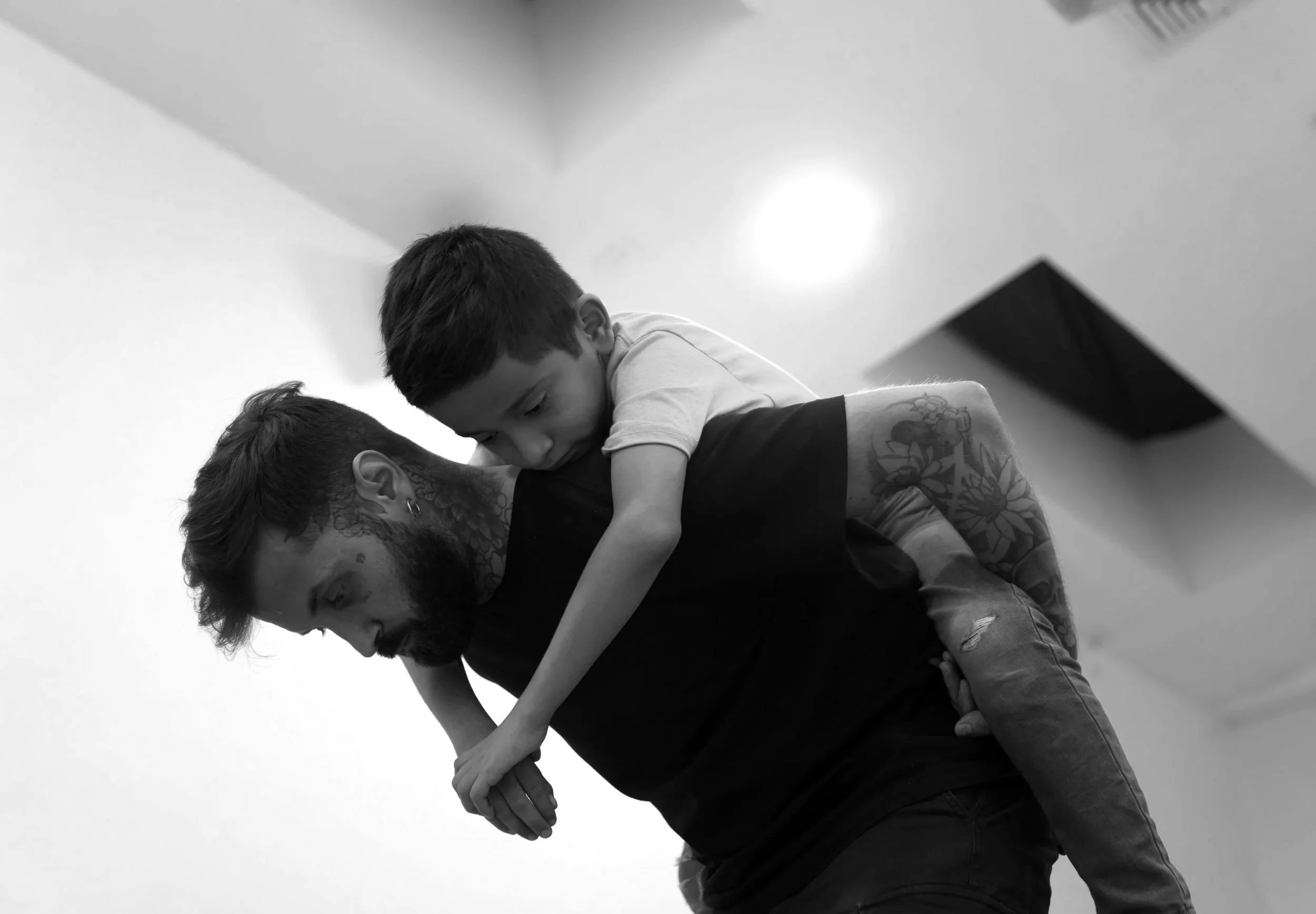
The work in Tegucigalpa was curated by LL Proyectos (Tegucigalpa, Honduras) together with MACRO Contemporary Art and with the collaboration of the Spanish Cultural Center in Tegucigalpa.
La obra en Tegucigalpa fue comisaria por LL Proyectos (Tegucigalpa, Honduras) junto a MACRO Arte Contemporáneo y la colaboración del Centro Cultural España en Tegucigalpa.